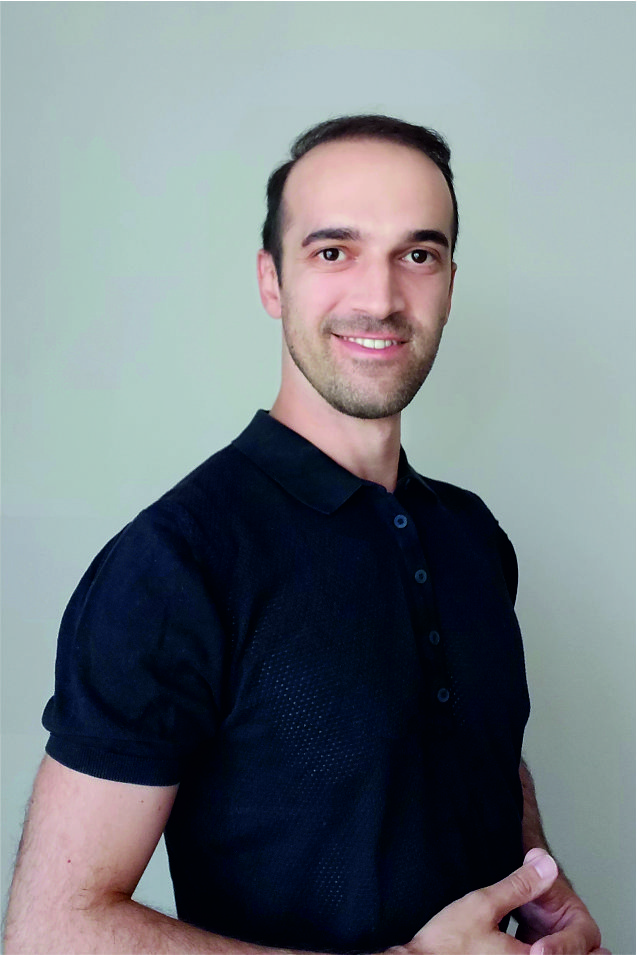
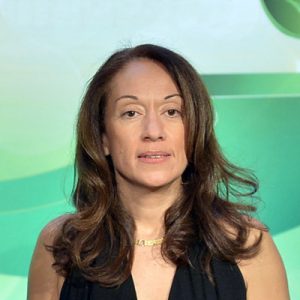
Vincenzo Maria Gentile is a Fixed-term Assistant Professor at the Department of Energy (DENERG) , Politecnico di Torino . He holds scientific appointments in both Energy Transition and Low-Carbon Architecture and Energy and Nuclear Engineering programs. His research spans heat and mass transfer , energy systems optimization , and indoor air quality monitoring . Key research areas include: Hydrogels for water-air separation Natural ventilation in emergency shelters Low-cost particle sensors in HVAC Solar thermal technology Recent publications focus on atmospheric water generation , bio-polymer coated heat exchangers , and personalized environmental control systems . Scientific awards include three international/national patents for Bio-Stopper , hydrogel-based heat exchangers , and water harvesting technologies . Teaching roles: PhD Course : Aerosol and Particle Measurement Master's Course : Energy Transition and Low-Carbon Architecture (Building Physics Module) Bachelor's Course : Environmental Technical Physics Supervised PhD students: Lakhdar Hamidatou (Energetics, 40th cycle) Alberto Saija (Energetics, 40th cycle) Matteo Calo' (Energetics, 38th cycle) Hamed Rasam (Energetics, 36th cycle) Current research projects include automotive cabin air quality monitoring (2025-2026) and collaborations with SOLAR Research Group within DENERG.
Ender PEKER is an Associate Professor in the Department of City and Regional Planning at Middle East Technical University's Faculty of Architecture in Ankara, Turkey. His academic career spans teaching, research, and practical applications in climate-responsive urban design and planning. With a PhD from the University of Reading (2016), he has established himself as a leading researcher in Turkey's urban climate adaptation field. His educational background includes a PhD in Real Estate and Planning from the University of Reading (2016), an MSc in Urban Design from Middle East Technical University (2010), and a BSc in City and Regional Planning from the same institution (2007), complemented by a visiting year at the University of Manchester (2005-2006). PEKER's research focuses on climate-responsive urban design and urbanism, thermal comfort in the built environment, campus design, participatory planning approaches, governance of climate action, and water management. His work bridges theoretical frameworks with practical applications, particularly examining how urban design can address climate challenges in Turkish cities. His research often employs participatory methods to engage communities in climate adaptation planning. Analysis of his recent publications reveals a strong focus on practical implementation of climate adaptation measures, particularly rainwater harvesting systems, thermal comfort solutions, and integrated approaches to climate and disaster risk management. His work increasingly emphasizes the governance challenges of implementing climate action at municipal levels in Turkey. Visiting Fellowship, Leibniz Institute for Research on Society and Space (2019) Mercator-IPC Fellowship (2018) Finalist at the "3 Minutes Thesis Competition", University of Reading, UK (2016) Çanakkale Green Urban Design Competition, Honourable Mention Award (2013) School of Real Estate and Planning PhD Studentship, University of Reading, UK (2012) AESOP Excellence in Teaching Award (2012) Visiting Fellowship, Oxford Brookes University, UK (2011) PEKER actively mentors students through thesis supervision and has led numerous research projects addressing climate challenges in Turkish cities. His research portfolio includes significant grants from the UK International Development Program, British Academy, and British Institute at Ankara, focusing on municipal climate adaptation, water management, and sustainable urban development. He has organized multiple international conferences including the Climate Responsive Urbanism Conference series and various symposia through the Urban and Regional Research Network.
Rebecca Namatovu is a Researcher at Copenhagen Business School, affiliated with the Department of Management, Society and Communication. Her work contributes to the UN Sustainable Development Goals through research on social entrepreneurship, informal economies, and post-conflict recovery in Africa. Specializes in women's economic empowerment and youth entrepreneurship Focuses on Uganda, Rwanda, and Sub-Saharan Africa Active in qualitative research methodology and participatory approaches Recent publications explore reflexivity in post-war contexts, informal cross-border trading, and sustainable management practices. Her research is cited in 94 Mendeley readers and featured in media outlets like Garowe Online and Modern Diplomacy.
Dr Ting Sun is an Associate Professor in the Department of Risk and Disaster Reduction at University College London , specializing in urban climate modelling and climate hazard risks. His multidisciplinary research spans hydrology, meteorology, and the built environment, with a focus on understanding and mitigating climate risks in urban areas. Education and Career PhD in Hydrology , Tsinghua University (2013) BEng in Hydraulic Engineering , Tsinghua University (2009) Visiting PhD Student , Princeton University (2011–2012) NERC Independent Research Fellow , University of Reading (2017–2022) Research Interests Dr Sun’s research centers on the impacts of weather and climate extremes—such as heat waves and extreme rainfall—on cities. He is particularly interested in urban climate modeling across scales, from neighborhood to global, and how these phenomena intersect with public health and building energy systems. He is the lead developer of the SUEWS (Surface Urban Energy and Water balance Scheme) model and its Python wrapper SuPy , and a core member of the UMEP (Urban Multi-scale Environment Predictor) development team. Recent Research Trends His recent publications reflect a strong focus on urban heat islands, precipitation enhancement by cities, structural uncertainty in urban climate models, and the integration of machine learning in environmental modeling. These works contribute significantly to understanding and predicting urban climate dynamics and their broader societal impacts. Scientific Awards and Recognition NERC Independent Research Fellowship (2017–2022) HEA Fellow (2023) Editorial Board Member , Scientific Data (2024–present) Topic Editor , Geoscientific Model Development (2025–present) Teaching and Supervision At UCL, Dr Sun leads modules such as IRDR0001 (Natural and Anthropogenic Hazards and Vulnerability) and IRDR0020 (Climate and Natural Hazard Risks) . He also contributes to external teaching and supervision of research degrees, and is available for consultancy, peer review, and mentoring. Labs and Teams He collaborates closely with the micromet team led by Prof. Sue Grimmond at the University of Reading, and is actively involved in the development and application of open-source tools like SuPy and UMEP for urban climate services and research.
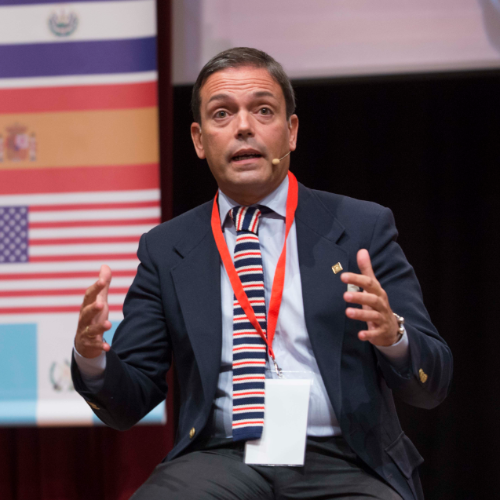
Jose Manuel Feria Dominguez is a Professor in the Department of Financial Economics and Accounting at the Faculty of Business and Economics, Pablo de Olavide University, Spain. His academic career centers on financial risk management with emphases on banking regulation, operational risk modeling, and Latin American financial systems, contributing significantly to both theoretical frameworks and practical applications in volatile economic environments. He earned his Doctorate from the University of Seville in 2004 with the thesis "Market risk: Methodologies for its measurement and control" under the supervision of Dr. José Luis Martín Marín and Dr. María Dolores Oliver Alfonso. His educational background established the foundation for his expertise in quantitative risk assessment methodologies. Professor Dominguez's research spans eight core domains: Financial Risk Management (specializing in Value at Risk and stress-testing), Banking Sector Analysis (particularly Latin American dollarization regimes), Corporate Finance (with focus on SME resilience), Operational Risk Modeling (Basel regulatory frameworks), ESG Finance (investor reactions to environmental disasters), Reputational Risk (corporate corruption impacts), SME Finance in developing economies, and Latin American Financial Markets. His methodological approach frequently employs structural equation modeling and comparative empirical analysis. Analysis of his 2022-2025 publications reveals three dominant research trajectories: (1) Organizational-financial resilience interconnections in Ecuadorian SMEs using advanced statistical modeling, (2) Banking sector efficiency studies examining net interest margins across dollarized/non-dollarized Latin American economies, and (3) ESG-reputational risk investigations measuring market reactions to environmental disasters and corruption scandals. These works consistently apply quantitative methodologies to real-world financial instability scenarios. As an active academic supervisor, he mentors graduate students in financial risk management and corporate finance through the Doctoral Program in Management Control and Finance. His institutional contributions include membership in the PAIDI Areas for Social and Legal Sciences and leadership in the GIFEM (Corporate and Market Finance) research group, where he explores innovative applications of open government principles to university strategic planning and develops simulation-based pedagogical approaches in financial economics education.
Dr. Somdeep Sen is an Associate Professor in International Development Studies at the International Development Research Group , Roskilde University, Denmark. He joined as a postdoc in 2018 and was promoted in 2020. His academic roles include Research Associate at the University of Pretoria (2025-2028), Editor of Critical Studies on Security (2024-), Visiting Professor at Tata Institute of Social Sciences (2023), and Distinguished Visiting Scholar at City University of New York (2022). His work spans academia, editorial boards, and international committees. PhD in Political Science, University of Copenhagen (2015) MA in Comparative Social Sciences, Humboldt Universität zu Berlin (2011) MA in International Relations and European Studies, Central European University (2009) BA in Political Science, St. Lawrence University (2007) His research interrogates race and racism in International Relations , with a focus on liberation movements, spatial politics, settler colonialism, and postcolonial studies. He has published extensively on decolonial theory, including the monograph Decolonizing Palestine (Cornell UP, 2020) and co-edited Globalizing Collateral Language (UGA Press, 2021). Recent collaborative work examines urban disaster risk in India and global far-right alliances. Scientific recognition includes a Global Development Studies Book Award Shortlist (2022). He contributes to public discourse in The Washington Post , Al Jazeera English , and Jacobin , while serving on academic freedom committees for the International Studies Association and British Society for Middle Eastern Studies.
Prof. Dr. SEVİNÇ TAŞTAN serves as Department Head of Nursing at Eastern Mediterranean University's Faculty of Health Sciences in Northern Cyprus. With over two decades of academic and clinical experience, she has established herself as a leading scholar in nursing education, surgical nursing, and patient care. Her leadership extends across multiple research domains and educational initiatives within the nursing discipline. PhD in Surgical Nursing from Gülhane Military Medical Academy (2005) MA in Nursing from Dokuz Eylül University (1999) BA in Nursing from Gülhane Military Medical Academy (1993) Professor Taştan's research spans multiple critical areas of contemporary nursing practice, with significant contributions to surgical nursing, geriatric care, disaster preparedness, and nursing education methodologies. Her work demonstrates particular expertise in developing and evaluating innovative educational approaches for nursing students and practitioners. She has pioneered research on the application of simulation techniques, flipped classroom models, and technology-enhanced learning in nursing education, while maintaining strong clinical connections through studies on patient outcomes in cardiac surgery, bariatric care, and chronic disease management. Her recent work increasingly focuses on mental health aspects of nursing practice and patient care. Analysis of Professor Taştan's publication record reveals a sustained trajectory of high-impact research across multiple nursing subdisciplines. Her work consistently appears in SCI and SSCI-indexed journals, demonstrating methodological rigor through numerous randomized controlled trials and cross-sectional studies. A notable pattern shows her evolving focus from foundational surgical nursing research toward broader applications in nursing education, geriatric care, and mental health integration. Her recent publications particularly emphasize innovative educational methodologies, disaster preparedness, and quality-of-life outcomes across diverse patient populations. 18. Nöroşirürji Hemşireliği Kongresi, Sözlü Bildiri Birincilik Ödülü (2024) Multiple EMU Research Incentive Awards (2018, 2020, 2021) 15. Cerrahi Hemşireliği Kongresi, Sözlü Bildiri İkincilik Ödülü (2016) Multiple GATA Askeri Sağlık Bilimleri Üçüncülük Ödülleri (2006-2015) Professor Taştan has supervised numerous graduate students through their thesis work, including PhD candidates like ÖZLEM AYDOĞDU (2023) and multiple master's students researching diverse aspects of nursing practice. Her mentorship extends to ongoing supervision of students examining professional commitment among surgical nurses, occupational error tendencies, and aromatherapy applications in medical procedures. Her research has attracted significant institutional support, evidenced by multiple EMU Research Incentive Awards recognizing the quality and impact of her scholarly contributions. She has also contributed to major collaborative research projects focused on surgical pathways, medication use, and standardized nursing terminologies. While specific laboratory affiliations aren't explicitly detailed in the available information, Professor Taştan's work is closely connected to clinical settings including cardiac surgery units, rehabilitation facilities, and community health contexts. Her research often involves collaboration with multidisciplinary teams across Eastern Mediterranean University's health science faculties and clinical partners in Northern Cyprus. She has been instrumental in developing educational simulation approaches that likely utilize campus-based simulation laboratories for nursing education.
Naser Kazemi Eilaki is an Assistant Professor at the Department of Civil Engineering and Environmental Sciences, Western Norway University of Applied Sciences. His work focuses on structural reliability, risk assessment, and infrastructure resilience against natural disasters including floods, earthquakes, and fires. Risk Analysis Fire Safety Engineering Water/Wastewater Network Risk Machine Learning Applications Offshore Structure Fatigue Analysis His research integrates advanced optimization algorithms like Harmony Search and Particle Swarm Optimization with artificial neural networks to develop reliability models for civil infrastructure. Key applications include corrosion risk assessment in pipelines, bridge pier scour reduction using gabion obstacles, and passive defense strategies for utility networks. Recent publications highlight trends in hybrid computational methods for structural reliability. These works combine probabilistic modeling with evolutionary algorithms, addressing challenges in seismic risk assessment, fire safety, and water loss prevention through pipeline integrity analysis. As an active academic, he contributes to resilience engineering through interdisciplinary approaches that bridge civil engineering and computational risk analysis frameworks.
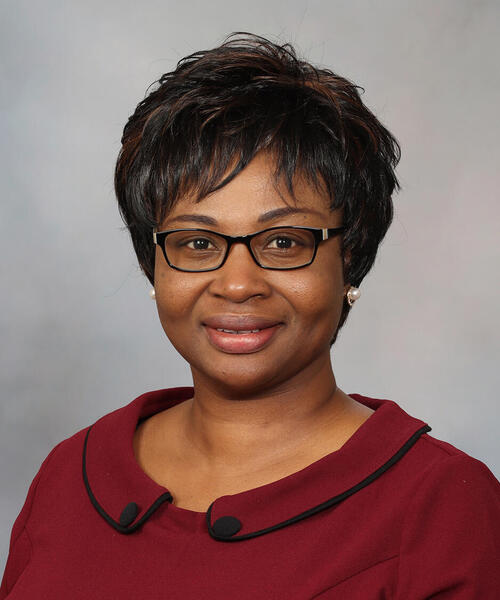
Gladys B. Asiedu, Ph.D., is an Associate Professor of Health Services Research at Mayo Clinic, working within the Health Care Delivery Research department at the Kern Center for the Science of Health Care Delivery. Her research focuses on ecological perspectives in healthcare delivery and how contextual components impact individuals, stakeholders, and healthcare processes through the application of family science and systems theory frameworks. Dr. Asiedu's research interests include: Linking micro and macro factors related to patient health and health systems using ecological and systems perspectives Addressing disparities and inequities in workplace, patient, and community settings Developing culturally tailored interventions for underrepresented groups including immigrants, refugees, and people with limited English proficiency Exploring factors contributing to successful recruitment of underrepresented groups into therapeutic cancer clinical trials Characterizing lived experiences of minority populations in healthcare settings Specializing in innovative qualitative research designs including participatory approaches and visual research methodologies Her recent publications demonstrate a strong focus on health equity, with research examining cancer clinical trials recruitment, healthcare spaces for youth experiencing racism, and emergency risk communication with minority communities. Dr. Asiedu's work consistently applies ecological frameworks to understand how contextual factors impact healthcare delivery and patient outcomes across diverse populations. Dr. Asiedu has made significant contributions to improving practice processes and procedures, including advances in enhanced patient safety in spine surgery, improved autopsy-related communication leading to increased autopsy rates, and expansion of teleneonatology healthcare delivery systems. Her methodological expertise includes photo elicitation, video reflexive ethnography, and community-engaged research approaches that ensure culturally appropriate methods when studying specific populations and clinical spaces.
Dr Chris Jacobson is an Adjunct Associate Professor and Principal Research Fellow at the University of Queensland's Centre for Policy Futures. She specializes in international development, focusing on resilience and adaptation, particularly in agriculture policy and implementation across Southeast Asia and the Pacific Islands. Bachelor of Science, Lincoln University Canterbury Doctor of Philosophy in Environmental Management, Lincoln University Canterbury Her research bridges policy and action to enhance food security and sustainability, emphasizing agrarian change dynamics and monitoring/evaluation for adaptation. She has led projects in Cambodia, Vietnam, Solomon Islands, and Pacific nations like Kiribati and Fiji, culminating in a current focus on knowledge brokering for Environmental and Human Health (One Health) in Cambodia. Chris's recent publications analyze coastal management laws in Australia and Brazil, climate resilience in Cambodia, and water management in socio-ecological landscapes. While her formal scientific awards are not explicitly listed, her contributions to policy development for smallholder livelihoods and environmental sustainability are significant. Scientific Planning Group member, Asia Pacific Network for Global Change Research Contributor to UN Satoyama Initiative Principal researcher for Pacific Community (SPC) Extension Strategy She remains available for supervision, with a history of advising on climate migration and land cover change. Her work integrates Indigenous perspectives and cross-cultural approaches to environmental research and management.
Dr. Fırat Soner Alıcı is an Assistant Professor in the Department of Civil Engineering at Başkent University, Ankara, Türkiye. His academic career focuses on earthquake engineering and structural dynamics, with a particular emphasis on seismic assessment, energy dissipation mechanisms, and advanced analytical methods like generalized pushover analysis. PhD in Civil Engineering, Middle East Technical University (2019) MSc in Civil Engineering, Middle East Technical University (2012) BSc in Civil Engineering, Middle East Technical University (2009) Dr. Alıcı’s research spans several key areas in seismic engineering, including: Energy-based seismic design and analysis Pushover analysis for torsionally coupled systems Damping spectra and inelastic deformation estimation Seismic performance of critical infrastructure Viscous damping efficiency in earthquake response reduction Numerical simulation of protective structures His publications reflect a strong focus on both theoretical and applied earthquake engineering, covering: Input energy prediction models Viscous damping systems Hysteretic energy distribution Post-earthquake structural evaluations Generalized force vector applications Seismic isolation technologies Dr. Alıcı has received the TDMD 2021 Research Incentive Award from Türkiye Deprem Mühendisliği Derneği. His research has been supported by multiple grants as both principal investigator and researcher. He actively contributes to the academic community as a reviewer for Bulletin of the Seismological Society of America and Seismological Research Letters (2024). His work addresses critical infrastructure resilience, with applications in healthcare facilities and power substation equipment.
Сергій Миколайович Журавель is a Senior Lecturer at the Department of Occupational Safety and Environmental Protection within the Faculty of Construction, Architecture and Design at National University 'Zaporizhzhia Polytechnic'. With academic activity spanning since 2010, he holds multiple advanced degrees including specialized training in civil defense and occupational safety. His professional credentials include associated membership in the European Community for Occupational Safety (ESOP) and the International Foundation of Scientists and Educators (IESF). Dr. Zhuravel's research focuses on critical areas of occupational safety, civil defense, and emergency management. His educational background spans electromechanics, economics, and civil security, creating a unique interdisciplinary perspective on safety systems. His scholarly output demonstrates particular attention to Ukraine's specific safety challenges, including ecological security in conflict-affected regions and wartime safety protocols. The analysis of his 15 most recent publications reveals a strong emphasis on practical safety implementation, with significant contributions to civil defense education, emergency response systems, and occupational risk management. His work shows increasing relevance to Ukraine's current security context, particularly evident in his 2022-2023 publications addressing ecological safety in conflict zones. Certificate of Honor from the Department of Civil Protection of the Zaporizhzhia Regional State Administration (2021) Certificate of Honor from National University 'Zaporizhzhia Polytechnic' (2019) Certificate from the Zaporizhzhia City Council Administration for Oleksandrivskyi District (2018) Dr. Zhuravel has developed comprehensive educational resources including textbooks and terminological dictionaries that standardize safety terminology across Ukrainian institutions. His professional development activities demonstrate commitment to contemporary safety challenges, including specialized training in wartime first aid and explosive risk prevention completed in 2023. His work bridges theoretical safety frameworks with practical implementation in Ukraine's evolving security environment.
Patricia García Pazo is an Assistant Professor in the Department of Nursing and Physiotherapy at the University of the Balearic Islands (UIB), where she has taught since 2018. She holds dual expertise as a nurse and psychologist, with a PhD in Health Sciences (2022) and a Master in General Health Psychology (2017). Her teaching includes Psychosocial Sciences Applied to Health, Psychiatric Nursing, and Critical Care subjects across Nursing and Physiotherapy degrees. PhD in Health Sciences (2022) Master in General Health Psychology (2017) University Postgraduate in Critical Care (2007) Diploma in Nursing (1995) and Bachelor in Psychology (2001) Her research focuses on virtual reality applications in nursing education, smoking cessation technologies, and mental health interventions during emergencies. She led a VR-based nursing assessment project funded by IRIE and contributes to the MICINN-funded GROWING HEALTHY initiative. Her work spans high-impact publications (11 articles, 9 in Q1 journals) and over 20 conference presentations. Recent projects include developing the mHealth apps NoFumo+ (for smoking cessation) and GROWINAPP (emotional tracking in development). She also authored psychoeducational stories and book chapters on mental health nursing. Her awards include the 2023 Agenda 2030 Prize for academic contributions to sustainable health. 1st Prize for PDI in Agenda 2030 Awards (2023) As a researcher, she collaborates with the Chronicity and Evidence in Health (CurES) group under the Balearic Islands Health Research Institute (IdisBa). She has tutored 759+ hours of nursing practicum students and contributed to 6 teaching innovation projects, including VR integration in critical care education.
Justine MARTY serves as an Assistant Professor in the Department of Operations Management and Information Systems at KEDGE Business School, within the School of Operations, Supply Chain and Information Management. She teaches core courses in Supply Chain Management, Sustainable Supply Chain Management, and Logistics, integrating research insights into pedagogy. Her academic credentials include: PhD in Operations Management from CERAG laboratory, University of Grenoble Alpes, completed within the NEED for IoT transversal project. Her thesis examined downstream stakeholder roles in sustainable nanotechnology supply chains. Dr. Marty's research centers on sustainable supply chain innovation, specifically how customer, consumer, and user integration drives environmental responsibility. Key areas include humanitarian logistics coordination, sustainable procurement in construction, and rare metals sourcing, addressing critical gaps in stakeholder influence on supply chain sustainability. Analysis of her 2021-2024 publications reveals a cohesive trajectory toward stakeholder-centric sustainability models. She has developed influential frameworks like the activities-resources-actors model for humanitarian coordination and comprehensive approaches for downstream actor integration, with increasing focus on decarbonization strategies and ethical resource management across global supply networks.
Professor Katia Lazaridis (Constantia-Ekaterini) is a faculty member at Harokopio University's Department of Geography, specializing in Environmental Management and Technology. She holds a doctorate in Environmental Engineering from the University of Leeds (1998) and has extensive experience in waste management research. Education: Physics (B.Sc.) - National and Kapodistrian University of Athens (1989); Environmental Protection Technologies (M.Sc.) - University of Leeds (1991) Research Focus: Circular Economy, Food Waste Management, Industrial Ecology, Biowaste Valorization, Extended Producer Responsibility, and Environmental Risk Assessment Her recent work explores AI-based waste tracking systems, household food waste quantification, and bioplastic production from organic residues. She contributes to educational programs including "Environmental Risks and Safety" and "Waste Management in the Circular Economy". Current projects involve the "Applied Geoinformatics" and "Climate Crisis, Risks and Disasters" postgraduate programs. Her SCOPUS ID is 6603260648.