Vienna University of Economics and BusinessAustria
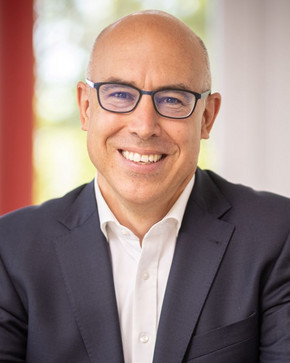
Gabriel Felbermayr is a Professor of Economics at Vienna University of Economics and Business (WU) and Director of the Austrian Institute of Economic Research (WIFO) since 2021. He holds a PhD in Economics and has held academic positions at the University of Munich (ifo Center for International Economics), Kiel University (Chair in Economics), and the University of Tübingen. University Professor: WU Vienna (2021–) Director: WIFO Vienna (2021–) President: Kiel Institute (2019–2021) Research Interests include international trade theory, labor markets in open economies, European integration, migration economics, and climate-trade intersections. His work combines theoretical models with empirical policy analysis, focusing on globalization challenges, supply chain disruptions, and economic sanctions. Current Projects Trump 2.0 Transatlantic Tariff Scenarios Scientific Awards include recognition for his research contributions, though specific award names are not detailed in the text. He has led major projects for institutions like the Austrian Economic Chamber and the Foundation for Family Businesses. Education includes studies at the University of Linz and University of Florence (PhD). His publications span journals like Journal of International Economics , Review of World Economics , and World Development .
University of Natural Resources and Life Sciences ViennaAustria
Maria Papathoma-Köhle is an Associate Professor at the Institute of Alpine Natural Hazards , University of Natural Resources and Life Sciences, Vienna. She holds a PhD in Tsunami Vulnerability Assessment from Coventry University (UK) and has held roles as Academic Coordinator of the MSc 'Risk Prevention and Disaster Management' at University of Vienna. Her research focuses on natural hazard vulnerability , particularly wildfire and flood risks in alpine regions, with methodological expertise in indicator-based vulnerability assessment and physical vulnerability indices . Education: PhD in Natural Hazards (Coventry University, UK) MSc in Environmental Management (University of Durham, UK) Geology Degree (University of Athens, Greece) Research: Specializes in wildfire vulnerability indices, flood risk modeling, and climate change adaptation frameworks. Developed the Physical Vulnerability Index (PVI) for buildings and contributed to EU-funded projects like FLOODLABEL and EXTEND. Awards: Elise Richter Scholarship (2016) Back to Research Grant (2012) Young European Scientist Award (2002) Projects: Led FWF-funded research on physical vulnerability indicators and collaborated on EU programs for wildfire preparedness. Current work includes climate change adaptation tools for Austrian infrastructure. Advising: Supervised 6 Master's/PhD students on wildfire and flood vulnerability topics. Publications: Over 106 peer-reviewed works; recent articles focus on wildfire indices, IPCC risk diagrams, and dynamic flooding assessment.
University of Natural Resources and Life Sciences ViennaAustria
Nikolaus Müllner is a researcher at the Institute of Safety and Risk Sciences at the University of Natural Resources and Life Sciences, Vienna (BOKU). His work centers on nuclear safety, reactor technology, risk assessment, and thermal-hydraulic modeling, particularly for VVER-type reactors. He actively contributes to international nuclear safety discourse through conferences and peer review. His research interests include nuclear reactor safety, severe accident analysis, licensing of small modular reactors, best estimate plus uncertainty (BEPU) methods, and environmental impact assessments in nuclear contexts. He applies simulation tools like RELAP5, MELCOR, and SCDAPSIM to analyze accident scenarios and validate safety systems. His expertise spans both technical and policy aspects of nuclear energy. Müllner has delivered numerous lectures at international conferences such as NURETH, ICONE, and IAEA events, focusing on topics like core damage frequency, station blackout scenarios, and aging management. His recent publications reflect a trend toward integrating technical safety analysis with regulatory and societal considerations, particularly in European contexts. He has served as a reviewer for journals including Energy Strategy Reviews , Progress in Nuclear Energy , and International Journal of Disaster Risk Reduction , contributing to the scientific quality of research in energy and risk domains. Supervision and Community Engagement: Supervised master’s theses on topics such as small modular reactor safety, RELAP5 modeling, and environmental aspects of nuclear licensing. Active in international research networks like INRAG (International Nuclear Risk Assessment Group). Engaged in public knowledge transfer through lectures and media contributions on nuclear policy and safety. Laboratories and Research Groups: While not explicitly tied to a specific lab, his work is closely associated with nuclear simulation and risk assessment frameworks, likely involving collaboration with experimental facilities such as the PSB-VVER test facility. His research is conducted within the interdisciplinary environment of BOKU’s Safety and Risk Sciences department.
University of Natural Resources and Life Sciences ViennaAustria
Gernot Stöglehner is a Full Professor at the Institute of Spatial Planning, Environmental Planning and Land Rearrangement , part of the Department of Landscape, Water and Infrastructure at the University of Natural Resources and Life Sciences, Vienna (BOKU) . He holds a doctorate and habilitation in environmental planning, with a career spanning research, teaching, and applied consultancy. His research focuses on sustainable spatial planning, land use efficiency, integrated spatial and energy planning, climate resilience, and environmental assessment . He investigates how urban and regional development patterns impact energy demand, environmental quality, and climate adaptation, advocating for land-saving strategies and resilient settlement structures. His work bridges planning theory with practical policy tools. The recent publications reflect a strong trend in spatial resilience, energy transition, climate change adaptation, and sustainable land use . Articles cover topics such as flood recovery, urban energy modeling for electric vehicles, bioeconomy spatial aspects, and methodological foundations of planning. His research is highly applied, often contributing to policy frameworks and strategic planning instruments. Preis der Prof. Anton-Kurir-Stiftung zur Unterstützung des wissenschaftlichen Nachwuchses (2004) Stöglehner has led or participated in over 60 research projects, many as principal investigator, funded by the Austrian Research Promotion Agency (FFG), the European Commission, and Austrian federal and regional governments. His projects often involve interdisciplinary teams and knowledge transfer to municipalities and planning authorities. He actively advises on spatial and energy strategies for communities and regions. He leads a research group focused on spatial planning and environmental policy, contributing to doctoral programs and major initiatives like the BOKU Energy Cluster. His work is central to the university’s efforts in sustainability and climate action.
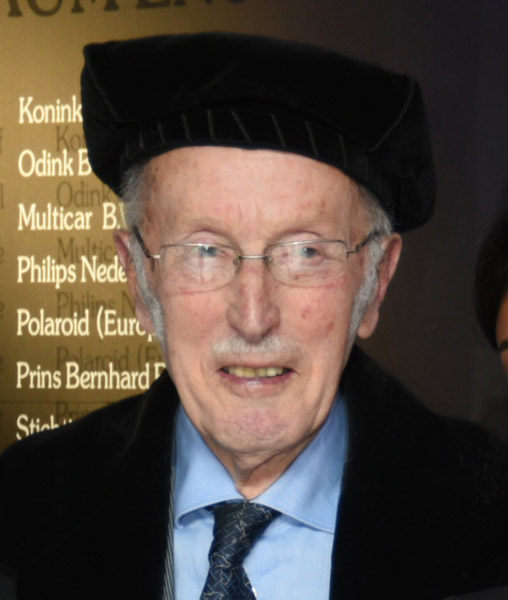
Herman Verstappen (1925–2020) was a renowned Dutch geographer and geomorphologist. He served as a full Professor of Geomorphology at the International Institute for Aerospace Survey and Earth Sciences (ITC) in the Netherlands (1957–1989), later becoming an Emeritus Professor. His career included roles such as President of the International Geographical Union (1992–1996) and leadership in disaster reduction initiatives. He held dual citizenship (Dutch) and specialized in applied geomorphology, aerospace technology applications, and natural hazard mitigation. Education: B.Sc. and M.Sc. in Physical Geography (University of Utrecht, 1942–1949) Ph.D. in Physics and Mathematics (University of Utrecht, 1953), thesis on Jakarta Bay geomorphology. Research Interests: Applied geomorphology, disaster risk reduction, tropical landform evolution, and aerospace remote sensing techniques. His work focused on Indonesia, Southeast Asia, and global arid zones. Awards: Knight in the Order of the Netherlands Lion (1989), Alexander Csoma de Kóros Medal, and multiple international fellowships. Labs/Teams: Founded ITC’s Applied Geomorphological Survey Division and led the Serayu Valley Project (Indonesia-Netherlands collaboration). His educational initiatives trained hundreds of geomorphologists globally.
University of Natural Resources and Life Sciences ViennaAustria
Johannes Hübl is a Full Professor at the University of Natural Resources and Life Sciences, Vienna (BOKU), leading the Institute for Alpine Natural Hazards within the Department of Landscape, Water and Infrastructure. His research focuses on alpine mass movement dynamics—particularly debris flows, rockfalls, and floods—with emphasis on risk management, mitigation engineering, and climate change adaptation. He maintains an active project portfolio including EU-funded initiatives and Austrian federal collaborations. His primary research interests include the physical processes of debris flows (surge dynamics, run-up behavior, sediment transport), rockfall hazard assessment, flood protection engineering, and climate change impacts on alpine hazards. Recent work pioneers advanced monitoring techniques like pulse-Doppler radar and LiDAR for real-time measurement of flow velocity and height, directly informing protective dam design and early warning systems. He also develops GIS-integrated simulation models for granular flows and risk assessment. Hübl's publications trend toward high-resolution field studies of debris flow dynamics, with significant focus on spatial impact distribution, statistical discharge modeling, and wildfire-hazard linkages. This reflects growing priorities in climate-resilient infrastructure and quantifiable risk assessment methodologies across European alpine regions. Scientific awards: No awards, fellowships, or medals are documented in the provided materials. Advising and grants: Professor Hübl has supervised numerous university theses as indicated by his profile. His grant leadership spans over 30 projects since 1994, including: EU projects: Nature-Based Solutions for Climate-Resilient Infrastructure (2024-2028), THARMIT (2000-2003) Austrian federal funding: 20+ projects with BMLFUW/BMF (e.g., rockfall detection, sediment management) International commissions: Bhutan flood mitigation (2000), Melamchi River reviews (2023) Industry collaborations: Check dam failure analysis, Cougar Creek optimization Labs and teams: He directs field monitoring operations including the Illgraben (Switzerland) and Gadria Creek (Italy) test sites. His institute employs physical modeling (hydraulic experiments, laser scanning) and develops real-time warning systems for alpine catchments, working closely with Austrian watershed management agencies and European consortia on event documentation and structural countermeasures.
Priv.-Doz. Mag. Dr. Raimund Kovacevic is a Senior Lecturer at the Department for Economy and Health at the University for Continuing Education Krems. His research focuses on health economics, epidemiological modeling, and optimization in healthcare systems. He has contributed to projects such as the 'Nachhaltige Gesundheitsversorgung im Spannungsfeld zwischen Tradition und Evidenzbasierung' and 'Centre for Evidence-based Health Economics: Community Health Nursing in Lower Austria,' funded by state and institutional grants. His work spans mathematical models for disease control (e.g., vaccination strategies for waning immunity), stochastic optimization in healthcare decision-making, and energy market pricing mechanisms. Notable collaborations include studies on community nursing interventions and pandemic response strategies. Kovacevic has presented at international conferences, including OR 2024 and the World Congress on Nursing Education, and holds an 'Outstanding reviewer award 2016.' Key Research Themes: Optimal control in healthcare, epidemiological dynamics, risk-averse bargaining models, and energy market analyses. Grants & Projects: Includes projects on sustainable healthcare systems and community nursing evaluations, supported by federal and institutional funding. His expertise bridges mathematical methods with practical healthcare and economic challenges, emphasizing evidence-based solutions for complex system dynamics.
University of Natural Resources and Life Sciences ViennaAustria
Prof. Aniruddha Sengupta is an Associate Professor in the Department of Civil Engineering at the Indian Institute of Technology (IIT) Kharagpur, India. He leads research in geotechnical engineering with a focus on natural hazard mitigation, particularly in the Himalayan region. He has extensive industry experience from his tenure at Harza Engineering Company (now MWH Global) in Chicago, USA, where he worked on hydroelectric infrastructure projects. Research Interests: His work centers on earthquake engineering, micro-mechanics of soils, ground improvement techniques, and landslide modeling. He has conducted long-term field monitoring of the Lanta Khola landslide in North Sikkim under a DST-funded project, integrating geotechnical, geological, and geophysical methods for hazard assessment. Publication Trends: His recent publications emphasize landslide initiation mechanisms, rainfall thresholds, and multi-method geophysical investigations in the Eastern Himalayas. These works reflect a strong interdisciplinary approach combining field instrumentation, geotechnical analysis, and environmental monitoring for disaster risk reduction. Principal Investigator, "Modeling and Monitoring of Landslide Hazard in Sikkim Himalayas" (DST, Government of India) Consultant for government and private agencies on geotechnical projects Contributing author, Chapter 6: "Earth Retaining Structures" in Geotechnical Engineering Handbook (J. Ross Publishing, 2010) Scientific Engagement: Prof. Sengupta has published over 26 journal papers and 30 conference papers. His work bridges academic research and practical engineering solutions, particularly in high-risk mountainous terrains. Labs and Field Projects: He leads field-based research initiatives involving instrumentation and long-term monitoring of landslides, such as the Lanta Khola site on the North-Sikkim Highway, contributing to real-time hazard management strategies.
Harald Raupenstrauch serves as Professor and Chair of the Department of Thermal Processing Technology, maintaining an active research profile with over 340 publications and theses. His work bridges fundamental thermal engineering with industrial applications in metallurgy and waste management systems. His research spans thermal processing, pyrometallurgy, waste management, and recycling technologies. Key focus areas include landfill fire prevention, slag treatment for metal recovery, lithium-ion battery recycling, and risk communication in environmental disasters. He develops computational models for metallurgical systems while addressing sustainability challenges in industrial processes. Recent publications (2024-2025) demonstrate a clear trajectory toward sustainable resource recovery, with emphasis on phosphide formation in slag treatment, battery recycling via the InduRed reactor, and thermo-mechanical modeling of converters. His work consistently integrates environmental risk mitigation with metallurgical innovation, particularly in Balkan waste management contexts. No scientific awards are documented in the provided materials. Dr. Raupenstrauch has supervised 146 academic works, indicating substantial mentorship activity. His international collaborations—evidenced by activities at institutions like the Technical University of Crete—and high publication output suggest robust grant funding for thermal processing research despite specific grants not being detailed. As Department Chair, he leads research on the InduRed reactor for battery recycling and thermo-mechanical modeling of metallurgical systems. His team maintains active international partnerships, including recent work with Serbian researchers on landfill fire mitigation and ongoing projects at Greek academic institutions.
John Pallister is a Research Geologist at the USGS Cascades Volcano Observatory and leader of the Next-Generation Volcano Hazard Assessment project. He previously served as Chief of the USGS-USAID Volcano Disaster Assistance Program (VDAP) from 2004-2018 and has held adjunct professor positions at multiple universities worldwide including University of Colorado, University of Arizona, Portland State University, Nanyang Technical University, Université Blaise Pascal, University of Pittsburgh, and University of Hawaii Center for the Study of Active Volcanism. Ph.D., 1980, Geology - University of California, Santa Barbara, CA B.Sc., 1974, Geology - Emory University, Atlanta, GA Federal Executive Institute, U.S. Federal Executive Qualification, 1996 Dr. Pallister's research spans volcanology, volcanic emergency response, monitoring techniques, forecasting methodologies, and petrology. His work focuses on improving volcano hazard assessment and early warning systems through innovative monitoring approaches and international collaboration. He has been instrumental in developing best practices for volcano observatories worldwide and has contributed significantly to understanding volcanic processes during major eruptions including Mount St. Helens, Pinatubo, Merapi, and Chaitén. His expertise bridges scientific research with practical disaster risk reduction strategies. His publication record demonstrates consistent contributions to volcanic hazard assessment, eruption forecasting, and monitoring technologies. The articles show an evolution from fundamental petrologic studies of ophiolites and magma chambers to applied research on eruption forecasting, satellite monitoring techniques, and volcano observatory best practices. A clear trend emerges toward increasingly collaborative, interdisciplinary research focused on practical applications for volcanic risk reduction. U.S. Geological Survey: G.K. Gilbert fellowships for research on Precambrian Ophiolites (1984-1986) U.S. Geological Survey: G.K. Gilbert fellowships for petrologic studies of Mount Pinatubo (1994-1995) 1992 University of Arizona: Lowell Distinguished Field Geologist 1999 U.S. Vice Presidential Hammer Award for work on the National Atlas 2000 U.S. Geological Survey Customer Service Award University of California, Santa Barbara: Distinguished Alumnus Award 2006 U.S. Department of Interior (DOI) Distinguished Service Award 2016 Samuel J. Heyman Service to America Medal, Finalist Dr. Pallister has advised numerous graduate students across multiple institutions, serving on PhD committees for research on mantle xenoliths, caldera petrology, geomorphology, and remote sensing applications in volcanology. His policy contributions include serving on Science and Program Committees for USGS-INGV-IAVCEI Volcano Observatory Best Practices Workshops, providing external advisory services for the DOMERAPI project on Merapi Volcano, and delivering briefings to high-level officials including the Indonesian Vice President and Chilean President Michelle Bachelet during volcanic crises. He has testified before U.S. Congress on geologic hazards and mapping. As leader of the Next-Generation Volcano Hazard Assessment project and former Chief of VDAP, Dr. Pallister directs teams focused on improving volcanic crisis response capabilities worldwide. His work with the USGS Cascades Volcano Observatory involves monitoring active volcanoes in the Pacific Northwest, while his international collaborations through VDAP have strengthened volcano monitoring capabilities in numerous countries facing volcanic threats.
Prof. Manfred Kleidorfer is a University Professor of Environmental Technology at the University of Innsbruck’s Faculty of Engineering. He leads the Department of Environmental Technology, focusing on urban water management, climate adaptation, and sustainable infrastructure. His work integrates engineering, environmental science, and policy to address challenges like flooding, drought resilience, and resource efficiency in alpine regions. Research: Prof. Kleidorfer’s research emphasizes urban drainage systems, nature-based solutions (e.g., blue-green infrastructure), and climate change impacts. Notable projects include BlueGreenCities (enhancing alpine city resilience through green infrastructure) and RECONECT (regenerating ecosystems via NBS for hydro-meteorological risk reduction). He also co-leads initiatives like BEJOND (stormwater treatment beyond design limits) and CONQUAD (assessing urban water system adaptations). Publications & Tools: He has authored over 50 peer-reviewed articles on topics like hydraulic modeling, urban heat mitigation, and flood risk management. His team developed tools like Achilles (vulnerability assessment for water infrastructure) and Smart Rain Barrels (IoT-based stormwater management). These innovations received recognition, including the 2011 Tiroler Innovationspreis for Achilles . Grants & Partnerships: Funded by EU H2020, Austrian Research Promotion Agency (FFG), and the Climate and Energy Fund, his projects partner with municipalities, SMEs, and international consortia. Key collaborations include Tyrolean utilities (e.g., Innsbruck Municipal Utilities AG) and global networks like the Aqua Urbanica initiative. Labs & Teams: His department operates specialized labs for software development (e.g., Smart Water Control ), hydraulic modeling, and environmental monitoring. The team includes experts in GIS, complex network analysis, and life cycle assessment, ensuring interdisciplinary problem-solving.
Arthur Kanonier is a Professor at the Department of Land Policy and Land Management (E280-08) at Vienna University of Technology (TU Wien). His work focuses on spatial planning, land policy, and climate adaptation strategies. He leads several research projects including 'Climate Proofing of (Urban) Planning Instruments' and 'Steuerung von Freizeitwohnsitzen in Österreich', addressing issues like second-home regulation and sustainable land use. His research interests include land policy frameworks, urban planning instruments, and strategies to mitigate soil sealing and promote climate resilience. He frequently presents on topics such as Austria's land strategy, the role of spatial planning in addressing natural hazards, and sustainable urban development. Key projects involve analyzing financial compensation mechanisms for spatial planning (Finanzausgleich), evaluating climate adaptation policies, and developing recommendations for managing recreational housing. His publications emphasize interdisciplinary approaches to environmental governance and policy implementation. He has been involved in numerous grants and collaborative projects, contributing to academic discourse through books like 'The Colours of Spatial Planning' and student-led research initiatives. His work bridges academic research with practical policy solutions for sustainable land management.
Bettina Pospisil (BA MA) is a Researcher in the Department for Security Studies at the University for Continuing Education Krems , Austria. She focuses on cybersecurity, disinformation, and technology-human interaction, with particular expertise in Cybercrime analysis , Smart Home security , and Emergency response systems . Principle investigator for Young Citizen Scientists against Disinformation (2024–2026) Collaborates on C-ITS (Cooperative Intelligent Transport Systems) for urban safety Active in fake news pattern analysis and hate speech categorization Key publications in Springer, IEEE, and DeGruyter journals Her work spans interdisciplinary collaborations with technical and social science experts. Research keywords include: Cybersecurity , Disinformation , IoT security , and Digital criminology . She contributes to policy-relevant studies on social media safety and emergency ICT systems. Co-author in 15+ scientific publications (2015–2025) Active in European research programs (FFG, KIRAS, Bundesländer funding) Regular speaker at international conferences (EuroSPI, CogSIMA, 4S)
Mitchell de Sousa is an architect and PhD candidate at the Technical University of Berlin specializing in autonomous urban management strategies for Argentine contexts, while serving as an Assistant Researcher at the University of Buenos Aires' Faculty of Architecture, Design and Urbanism and Tutor for the Dual Degree Master program in Urban Planning and Mobility. His work bridges German academic rigor with Argentine urban challenges through collaborations with CETAM and ISR research centers. Education: Architect, University of Buenos Aires Postgraduate Studies in Urban Planning and Mobility, Dual Degree Master (University of Buenos Aires and Technical University of Berlin) De Sousa's research critically examines urban mobility systems within popular and informal economies, developing place-based territorial management tools for Latin American municipalities. His work integrates spatial analysis of urban boundaries with socio-economic studies of marginalized communities, emphasizing practical applications for municipal practitioners in contexts like Trelew's 'Planta de Gas' neighborhood and Buenos Aires' Riachuelo River basin. His publication trajectory reveals consistent thematic evolution from 2018-2021, progressively deepening interdisciplinary connections between landscape architecture, urban mobility, and popular economy frameworks. The research demonstrates methodological innovation through participatory mapping of urban boundaries and visual sociology approaches, consistently targeting practical urban intervention strategies rather than purely theoretical contributions. Scientific Awards: Riachuelo en transformación. Hacia un nuevo estatus urbano de lugar, ACUMAR, Argentina As a Master's program Tutor, De Sousa directly mentors students in urban planning methodologies while conducting field research through institutional partnerships with CETAM and IGEOPAT. His academic guidance focuses on translating theoretical mobility frameworks into context-specific Argentine applications, supported by the dual institutional framework of Technical University of Berlin's Institute for Urban and Regional Planning and UBA's Faculty of Architecture. De Sousa operates within three key research ecosystems: CETAM (Transportation Studies Center) at UBA for mobility economics research, ISR (Superior Institute of Urbanism) for territorial management frameworks, and IGEOPAT at National University of Patagonia for Patagonian urban case studies, creating a unique transnational research network focused on Latin American urban challenges.
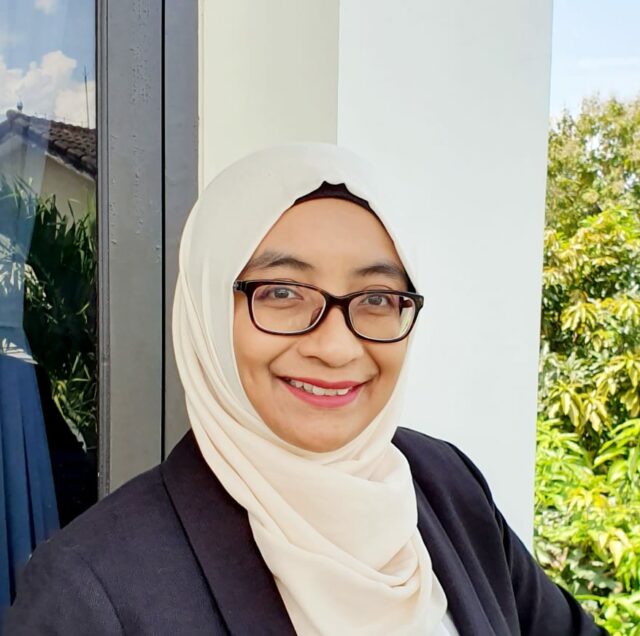
Prof. Wiwandari Handayani serves as Professor and Head of the Department of Urban and Regional Planning, Faculty of Engineering at Diponegoro University, Indonesia. She concurrently leads the Center for Urban and Regional Resilience Research (CURE) and contributes to national climate policy initiatives including the New Capital Authority. Her academic qualifications include: Bachelor's in Urban and Regional Planning from Diponegoro University Master's in Urban and Regional Planning from Bandung Institute of Technology (ITB) Master's in Population Studies from Australian National University (ANU) Doctoral degree in Regional Development Planning from University of Stuttgart, Germany Her research centers on urban resilience in climate-vulnerable coastal regions, with emphasis on flood risk governance, community-based adaptation, and sustainable land-use planning. She examines the intersection of rapid urbanization, environmental degradation, and climate change impacts through participatory approaches that integrate local knowledge with scientific analysis. Analysis of her 2017-2024 publications reveals consistent focus on Central Java's urban challenges, particularly Semarang. Key trends include evolving methodologies from vulnerability assessments to transformative resilience frameworks, increasing attention to pandemic-disaster interactions, and growing emphasis on multi-stakeholder governance for adaptive water management in rapidly urbanizing coastal zones. No specific scientific awards (prizes, medals, or fellowships) were documented in source materials. Her research funding portfolio demonstrates significant international recognition: KONEKSI grant from Australian Government KOICA program funding from South Korea LUCE grant from USA Asian Cities Climate Change Resilience Network (ACCCRN) under Rockefeller Foundation She directs CURE and previously managed the Laboratory of Regional Development and Environmental Management (2012-2021). As founding board member of Diponegoro University's SDGs Center, she integrates resilience research with sustainable development goals through networks including GCSMUS (SDG 11 focus), NUPS (Migration and Climate Change), and Global Resilient Cities Network.