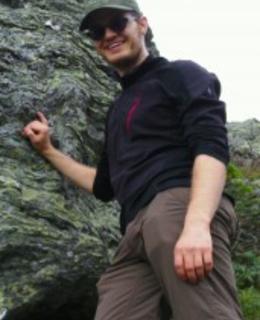
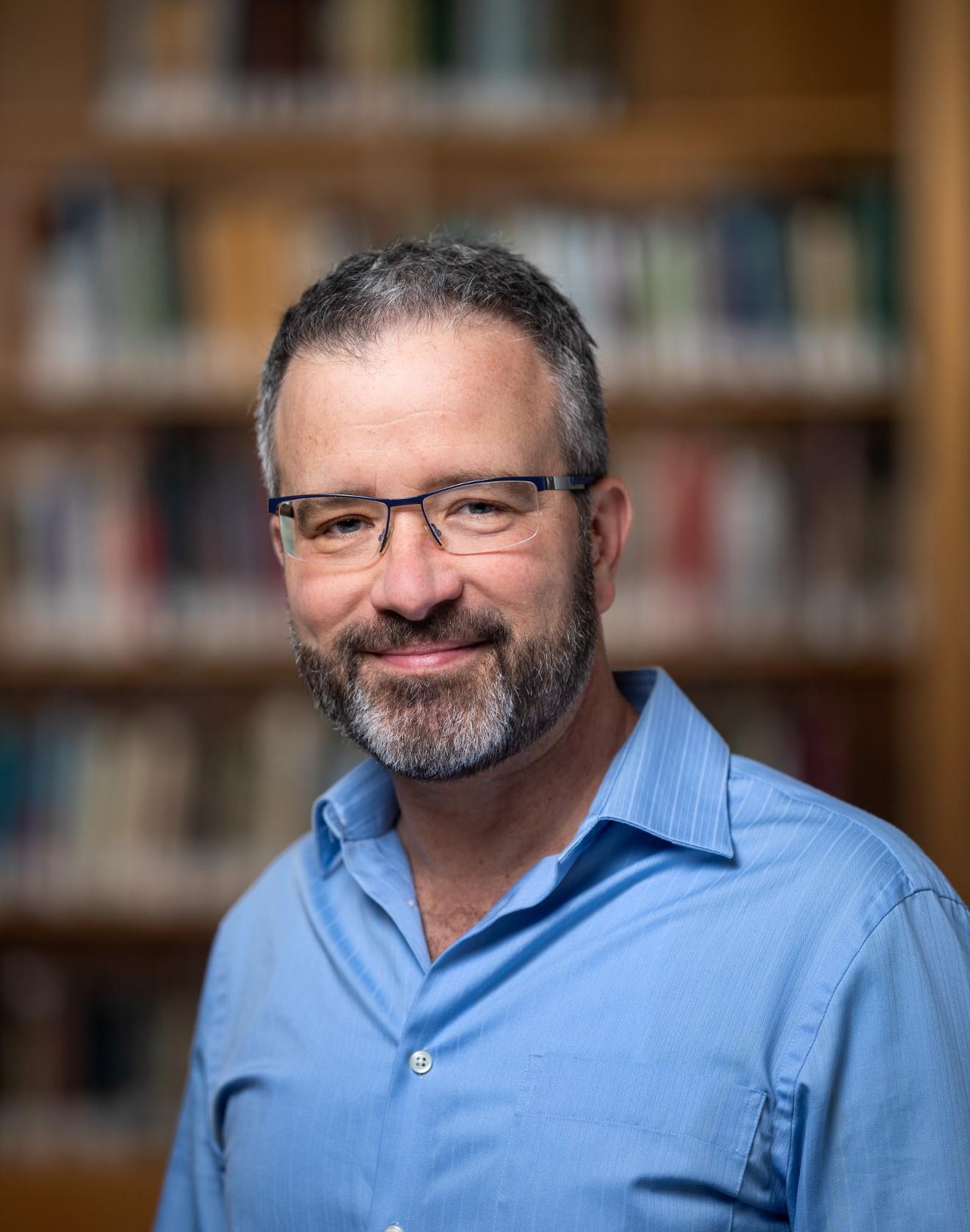
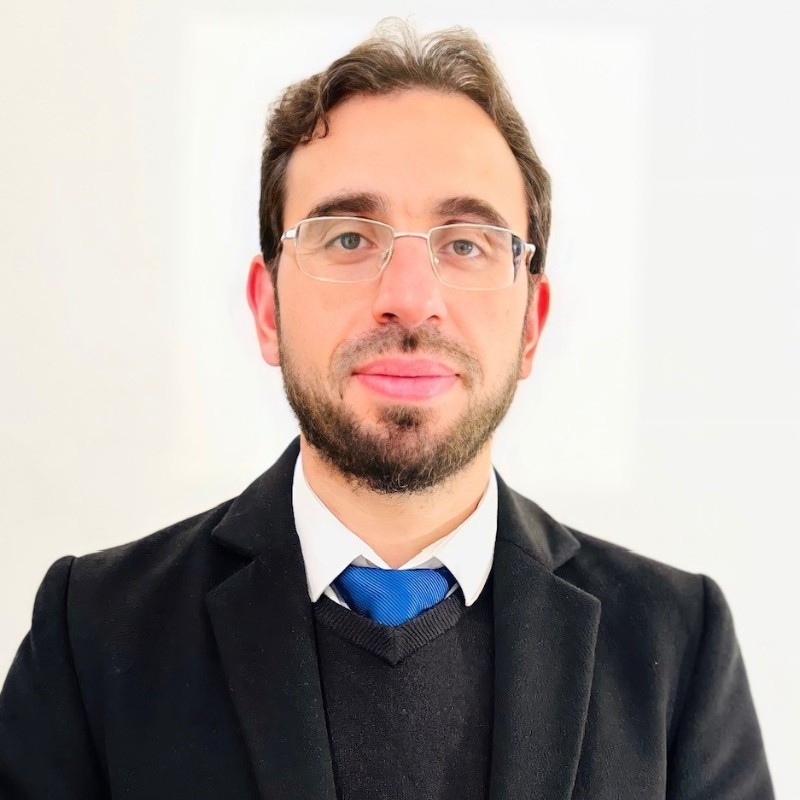
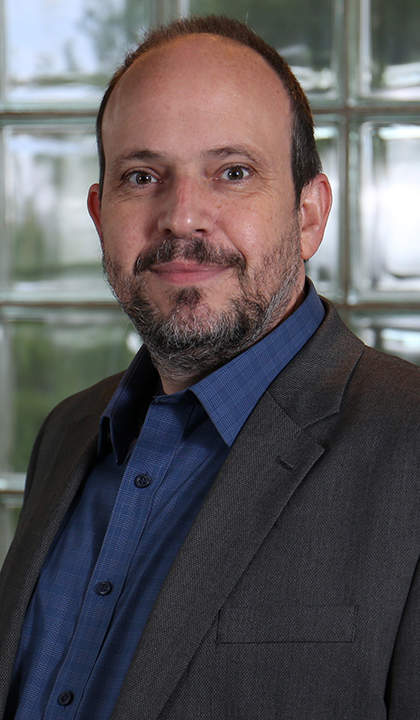
Brandon Karchewski is an Associate Head (Undergraduate) and Teaching Professor in the Department of Earth, Energy and Environment at the University of Calgary. He earned his PhD in Civil Engineering from McMaster University and teaches courses including Engineering Geology, Computational Methods, and Natural Disasters. His research program focuses on: Computational methods in geophysics and geomechanics Geoscience education innovation Climate change impacts on frozen soils Inverse modeling applications Karchewski has pioneered virtual field experiences and developed open-source tools for modeling climate impacts on permafrost. His educational research examines metaphor use in geoscience communication and field pedagogy. Recent computational work includes Python-based permafrost modeling and stochastic inversion methods for biogeochemical transport. He leads the geophysics field school program emphasizing team-based learning. Award recognition includes: Geoscience Teaching Award (2019) Best Poster Award for teaching innovation research (2018) Team Teaching Excellence award (2016) Multiple teaching assistant awards
Dr. Sabin Tabirca is a Senior Lecturer at the School of Computer Science and Information Technology, University College Cork (UCC). He holds a BSc from Bucharest University and a PhD from Brunel University. His research focuses on Artificial Intelligence, Data Analytics, Algorithmics, Interactive Media, and HCI, with applications in computational cancer modeling, mobile health (mHealth), and parallel computing. He coordinates MPT Activities and is affiliated with the CRR Group and BCRI Centre. Notable awards include UCC's President Award for Innovation in Teaching (2007), IT@Cork Leader Award (2008), and UCC Staff Recognition Award (2013). His teaching includes modules like Parallel and Grid Computing, Mobile Application Design, and Graphics for Interactive Media. Dr. Tabirca has supervised over 70 MSc students and numerous PhD candidates, many of whom now hold academic and industry roles globally. His research includes developing mHealth apps for cystic fibrosis patients, 3D cancer visualization tools, and frameworks for mobile parallel computing. Publications span mHealth design pipelines, cancer prediction models, and mobile gaming for health education. He actively engages in interdisciplinary projects, blending computer science with medical and biological applications.
Prof. Gregorio Iglesias is a Professor of Marine Renewable Energy at University College Cork (UCC) and Honorary Professor of Coastal Engineering at the University of Plymouth. His expertise lies in Marine Renewable Energy and Coastal Engineering, with a focus on wave and tidal energy systems, offshore wind integration, and coastal protection strategies. He has secured over €12M in research funding as Principal Investigator and authored/edited key texts such as Wave and Tidal Energy (Wiley) and Ocean Energy and Coastal Protection (Springer). Education: BEng (Civil Engineering, 1992), MEng (Civil Engineering, 1993), PhD (Engineering, 2001). Research Interests: Advanced modeling of wave energy converters, floating offshore wind turbines, coastal erosion mitigation, and climate change impacts on marine energy resources. His work bridges theoretical advancements and practical applications, including coasts like the Port of Gijón (Spain) and the Shannon Estuary. Recent publications highlight climate-driven renewable energy transitions, multi-hazard coastal resilience frameworks, and techno-economic assessments of offshore systems. He chairs the IEC Standards panel for wave energy device testing and serves as Subject Editor for Energy (Elsevier) . Professional Activities: Lead of Marine Renewable Energy research at MaREI (Ireland), former Head of the COAST Engineering Group at Plymouth (2012–2018), and member of PIANC’s Universities Consortium. His work has generated 5,459 citations with an h-index of 41. Teaching: Delivers modules on Ocean Energy (NE4003/NE6005) and Hydraulics (CE3007).
Dr. Paul Leahy is a Lecturer in Wind Energy Engineering at University College Cork (UCC) and a funded investigator in the SFI MaREI Centre for Energy, Climate, and Marine Research. He leads research on wind energy, circular economy applications for decommissioned turbine blades, and climate change impacts. His work includes the Re-Wind project, a transdisciplinary initiative funded by SFI, NSF, and Northern Ireland's Department for the Economy. He co-supervises six PhD students and has examined over 20 theses globally. Education: BE Electrical Engineering (1995), PhD Electrical Engineering (2001), Postgraduate Certificate in Teaching & Learning in Higher Education (2018). Research & Awards: Research focuses on wind energy forecasting, energy storage, and greenhouse gas emissions. Notable awards include the Environmental Research Letters' 2013 Highlight and an ISI Highly Cited Paper (2012). He contributed to IPCC Special Reports on climate change mitigation and co-edits Renewable & Sustainable Energy Reviews. Grants & Projects: Secured €320,000 for Re-Wind and led multiple EU, EPA, and industry-funded projects. Current research includes lifecycle assessments of repurposed turbine blades and hydrogen production via offshore wind. Teaching & Outreach: Coordinates modules like NE6003 Wind Energy Engineering and contributes to energy systems education. Engages in public lectures and policy initiatives like Energy Cork Cluster leadership. Labs & Teams: Collaborates with multidisciplinary teams on infrastructure repurposing (e.g., BladeBridges) and climate adaptation strategies for agriculture and peatlands.
Anne Elise Steen-Hansen is a Professor in Fire Safety Engineering at the Department of Civil and Environmental Engineering , Norwegian University of Science and Technology (NTNU). She specializes in fire dynamics, building materials resilience, and post-fire analysis. Her research focuses on improving fire safety in buildings through statistical modeling, regulatory compliance, and interdisciplinary collaboration. Affiliations: NTNU, SINTEF Building Research, RISE Fire Research AS Key Expertise: Fire energy calculations, structural fire resistance, forest fire dynamics, fatal fire investigations Recent work includes a 2022 report on post-fire learning mechanisms funded by the Research Council of Norway, and 2023 lectures addressing fatal fire patterns and institutional learning. She contributes to national fire safety standards via the Building Research Series. Collaborations with industry partners (SINTEF, RISE) enable applied research in fire prevention technologies and policy development. Active in conferences such as the Fire Promise Conference (Lysaker) and Environment & Fire Prevention Conference (Stavanger).
Goong Chen is a Professor at Texas A&M University (TAMU) within the College of Arts & Sciences. His research focuses on Control Theory, Applied Mathematics, and interdisciplinary applications in computational mechanics, fluid dynamics, and quantum systems. He holds a Ph.D. from the University of Wisconsin (1977) and a B.S. from National Tsing-Hua University (1972). His research interests span computational biomechanics, forensic modeling, nanofluidics, and mathematical physics. Recent work includes modal analysis of animal motion, crash mechanics of aircraft, and forensic reconstruction of disasters. He has contributed to theoretical advancements in PDEs, nonlinear dynamics, and quantum computing. Chen’s articles address cutting-edge topics like thermoelastic plates, Volterra equations, and DFIM systems. He has pioneered numerical methods for complex systems using OpenFOAM and finite element techniques. His computational models have been applied to real-world scenarios such as submarine implosions and chemical warfare forensics. No academic awards are explicitly listed, but his extensive publication record reflects significant contributions to applied mathematics and engineering. He leads research teams focused on interdisciplinary challenges in computational science and engineering.
Christopher Boone is a Professor and former Dean of the College of Global Futures and the School of Sustainability at Arizona State University (ASU). He holds affiliate roles in the Biosocial Complexity Initiative and the Global Futures Scientists and Scholars program. His research focuses on sustainable urbanization, environmental justice, and vulnerability in the context of global environmental change. Boone earned his Ph.D. in Geography from the University of Toronto (1994) and has led interdisciplinary initiatives like the Central Arizona-Phoenix Long-Term Ecological Research (CAP LTER) program. Affiliations: School of Sustainability, College of Global Futures, Global Council for Science and Environment Education: Ph.D. (1994), M.A. (1989) from University of Toronto; B.A. (1987) from Queen’s University His research integrates historical GIS methods, socio-ecological gradients, and urban sustainability frameworks. Notable work includes studies on environmental justice in Baltimore’s park systems, land fragmentation in Phoenix, and the legacy effects of urban segregation. Boone has advised over 40 funded research projects, including initiatives on urban climate adaptation and sustainability education. Recipient of the Tyler Prize Executive Committee role and co-founder of the National Sustainability Society, Boone also serves on editorial boards for journals like Cell Reports Sustainability and Environmental Justice . His teaching spans urban sustainability, environmental justice, and interdisciplinary research methods.
Dr. Takahiro Yabe is an Assistant Professor at the Department of Technology Management and Innovation (TMI) and the Center for Urban Science + Progress (CUSP) within New York University's Tandon School of Engineering. His research focuses on computational social science and network science approaches to model urban resilience against disasters, pandemics, and technological disruptions. He holds a Ph.D. from Purdue University (2021) and degrees from the University of Tokyo (BS 2015, MS 2017). Previously, he was a Postdoctoral Associate at MIT's IDSS and Media Lab under Sandy Pentland and Esteban Moro. Research interests include urban resilience, human mobility, socioeconomic networks, inequality, and computational modeling. He leads the Resilient Urban Networks (RUN) Lab, an interdisciplinary group developing data-driven tools for urban systems analysis. His work has been published in top journals like Nature Human Behaviour, PNAS, and Nature Machine Intelligence. Recent grants include NSF funding for EV charging infrastructure planning (SAI 2024) and post-disaster mobility governance (HDBE 2024). Notable awards include the NICE STEP Researchers recognition (2024). His lab collaborates with urban planners, policymakers, and global institutions to advance equitable urban resilience strategies. Current projects involve open mobility data standards, disaster recovery policy assessment, and AI-driven urban modeling. Students supervised include PhD candidates Vaidehi Raipat (urban policy), Callie Clark (mobility equity), and DongHak Lee (socioeconomic networks). The lab also hosts visiting scholars like Mavin De Silva (EV charging systems) and supports master's students in mobility analysis and disaster response.
Laurence C. Smith is the John Atwater and Diana Nelson University Professor of Environmental Studies at Brown University, affiliated with the Institute at Brown for Environment & Society (IBES) and the Department of Earth, Environmental and Planetary Sciences (DEEPS). Previously, he served as UCLA's Geography Department Chair and Professor. His research focuses on Arctic environments, water resources, and remote sensing, with over 150 peer-reviewed publications and $16M in NSF/NASA grants. He has contributed to IPCC reports and leads NASA's SWOT mission for global water monitoring. Key awards include the Guggenheim Fellowship (2006-07), AGU Fellow (2015), and Walter P. Kistler Book Award (2012) for *The World in 2050*. Education: PhD, Cornell University (1996) MS, Indiana University (1991) BS, University of Illinois at Urbana-Champaign (1989) Research Interests: Arctic systems, hydrology, satellite remote sensing, and climate change impacts. His work bridges natural and social sciences, addressing topics like Greenland meltwater dynamics and northern resource development. Recent projects include methane emissions from Arctic lakes and river avulsion monitoring via SWOT. Awards: Phi Beta Kappa Visiting Scholar (2020-21) AGU Fellow (2015) Walter P. Kistler Book Award (2012) Guggenheim Fellowship (2006-07) Teaching & Grants: Teaches courses on water systems and scientific writing at Brown. Secured major grants from NASA and NSF, totaling over $16M. Advises graduate students in environmental studies and geosciences. Labs/Teams: Collaborates with IBES, DEEPS, and global institutions like the World Economic Forum on Arctic development and NASA's SWOT mission. Active in interdisciplinary research networks.
Amal N Trivedi is a Professor of Health Services, Policy and Practice and Professor of Medicine at Brown University. His research focuses on quality of care, healthcare disparities, and the impact of patient/provider incentives on healthcare equity. He teaches health policy to medical students and residents, and leads a course on Quality Measurement and Improvement for graduate students. His work has been published in top-tier journals like the New England Journal of Medicine and JAMA, with a focus on Medicare/Medicaid policy, dialysis disparities, and post-acute care outcomes. Key research interests include analyzing healthcare systems' performance, particularly for vulnerable populations such as Medicare Advantage enrollees, dialysis patients, and those with Alzheimer’s disease. His studies often address structural inequities, such as racial disparities in kidney failure incidence linked to historical redlining, and the impact of policy changes like Medicaid expansion and Medicare Advantage network structures. Dr. Trivedi’s articles consistently explore themes of healthcare access, payment models, and social determinants of health. Recent work highlights disparities in Medicare Advantage disenrollment patterns, the effects of burn pit exposure on military veterans, and the role of vertical integration in healthcare systems. His research frequently informs policy debates on improving healthcare equity and quality. Despite no listed scientific awards, his prolific publication record and contributions to high-impact journals underscore his academic influence. His advising and grant activities, while not explicitly detailed, are implied through collaborative studies with institutions like the VA and federal agencies.
Dr. Mouhamad Shaker Ali Agha is a Senior Teaching Fellow (Associate Professor, Scholarship Track) in the Department of Management Science at the University of Strathclyde, where he earned his PhD and MSc. He specializes in operations management, enterprise resource planning (ERP), and technical risk management, serving as Programme Director for the MSc Business Analysis and Consulting and the International Master in Project Management (IMPM). A Senior Fellow of the Higher Education Academy (UK) and a Certified Management & Business Educator, he focuses on supply chain risk and resilience, digital supply chains, Industry 4.0, and renewable energy sector challenges. His research has been recognized through awards like the Strathclyde Business School Excellence Teaching Award (2022) and the 2024 Supply Chain and Logistics Competition Second Place Award. He actively supervises six PhD students, emphasizing real-world applications of research. His work includes collaborative projects on Industry 4.0 adoption barriers for SMEs and virtual reality in education, supported by grants such as the EPSRC-funded DTP 2224 project (2025–2028). He also contributes to professional activities like peer reviewing for journals and conferences. Education: PhD and MSc in Management Science from the University of Strathclyde. Research Interests: Supply chain resilience, digital transformation in supply chains, renewable energy sector logistics, and operational innovation. His work intersects with UN Sustainable Development Goals related to industry, innovation, and infrastructure (SDG 9) and climate action (SDG 13). Grants & Projects: Co-investigator in the EPSRC DTP 2224 project (2025–2028) and principal investigator in the Virtual and Physical Reality in Operations Management project (2023–2024). Collaborates with institutions like the FUTO Centre of Excellence in Sustainable Procurement. Awards: Highlighted awards include the 2024 Certified Management & Business Educator, 2022 Teaching Excellence Award, and recognition as a Senior Fellow of the Higher Education Academy (2021).
Stephen C. Smith is Professor of Economics and International Affairs and Chair of the Department of Economics at George Washington University. He is also Research Fellow at the Institute of Labor Economics (IZA), Nonresident Senior Fellow at the Brookings Institution, and member of the BRAC-USA Advisory Council. He previously served as Director of the Institute for International Economic Policy (IIEP) and as founding director of GW’s International Development Studies Program. Ph.D. in Economics, Cornell University His research focuses on development economics, particularly poverty reduction, climate change adaptation, and the economics of cooperatives and employee participation. His work combines rigorous empirical analysis with policy relevance, drawing on field research in Bangladesh, India, Uganda, Senegal, Germany, and other countries. He has authored or co-authored over 50 journal articles and several influential books, including the widely adopted textbook Economic Development (13th ed., 2020) with Michael Todaro and Ending Global Poverty: A Guide to What Works . His recent publications span topics such as agricultural extension in Uganda, works councils in Germany, multidimensional poverty targeting in Bangladesh, and climate adaptation in India. These works reflect a consistent focus on policy evaluation, institutional design, and the economic mechanisms underlying poverty traps and development outcomes. Fulbright Research Scholar Jean Monnet Research Fellow IZA Research Fellow Visiting Fellow, Brookings Institution Nonresident Senior Fellow, Brookings Institution Fulbright Senior Specialist UNICEF Senior Research Fellow Smith has supervised numerous doctoral students and taught core courses in development economics at undergraduate, master’s, and PhD levels. He has been Principal Investigator on major research projects funded by USAID/BASIS, including work on training, technology, and credit in smallholder agriculture. He has also served as Associate Editor of the Journal of Economic Behavior and Organization and consulted for the World Bank, UNDP, ILO, and USAID. His research program integrates fieldwork, policy engagement, and academic scholarship to advance understanding of effective strategies for global poverty reduction.
Michael Elliott is an Associate Professor and Department Chair in the Department of Epidemiology and Biostatistics at the College for Public Health and Social Justice, Saint Louis University. He holds a Ph.D. in Public Health and an M.S. in Preventative Medicine from Ohio State University. His research focuses on diabetes management, air pollution's impact on diabetes, maternal and child health, and the built environment's influence on health outcomes. He employs biostatistical modeling, GIS, and public health informatics to study health behaviors, obesity prevention, vaccination uptake, and syndromic surveillance. His work is supported by major funding bodies including the National Cancer Institute, American Cancer Society, and NIDDK. The two most recent publications highlight his work on preventing inpatient hypoglycemia using real-time informatics and predictive modeling, reflecting a strong emphasis on data-driven clinical interventions and patient safety. His expertise spans statistical computing (particularly SAS), study design, and large-scale community health data analysis. Professional Affiliations: American Public Health Association (APHA) American Diabetes Association (ADA) Dr. Elliott teaches courses such as Applied Data Management, Principles of Biostatistics, Statistical Programming (SAS), Public Health Capstone, and Biosecurity and Disaster Preparedness Capstone. He has extensive experience mentoring students and leading research teams, though specific advisees are not listed. He is actively involved in community research using GIS to assess how physical environments affect diabetes risk and treatment outcomes. His work integrates interdisciplinary approaches across epidemiology, biostatistics, environmental health, and behavioral science to improve population health outcomes.
Danny McGowan is Professor of Finance and Head of the Department of Finance at Birmingham Business School, University of Birmingham . He holds a PhD in Economics from the University of Nottingham and has a strong academic background in economics and finance. Education: PhD in Economics, University of Nottingham, 2010 MSc in Economics, University of Bristol, 2007 BSc in Economics, University of Bristol, 2003 His research centers on applied microeconomics with a focus on financial intermediation, banking, mortgage markets, and household finance . He frequently employs quasi-experimental methods to study the impact of regulation, competition, and institutional frameworks on financial institutions and markets. His recent work explores the societal determinants of wealth inequality, lending, and entrepreneurship, as well as the effects of deposit market competition and mortgage default. His publication record is impressive, with articles in leading journals such as the Review of Financial Studies , Journal of Financial and Quantitative Analysis , and Journal of Financial Intermediation . The recent articles show a consistent trend in analyzing bank conduct, risk management, regulation, and the real effects of financial markets , often using natural experiments and policy changes as identification strategies. Research Funding and Recognition: Principal Investigator on a ~£400,000 Leverhulme Research Project Grant Over £500,000 in research funding from ESRC, British Academy, and Leverhulme Trust Research cited in House of Commons inquiries and by media outlets Advising and Grants: He has successfully advised four PhD students to completion, all of whom have secured academic positions. His research is supported by major grants from UK research councils, demonstrating the significance and impact of his work in the field of finance. Professional Engagement: He is an active member of leading professional associations including the American Finance Association, American Economic Association, European Finance Association, and Royal Economic Society, and regularly presents his work at international conferences.
Dr Annika Beelitz is a Lecturer in Accounting at the Department of Accounting, Birmingham Business School, University of Birmingham. She serves as the Senior Academic Tutor and contributes to teaching in advanced financial accounting. Her research focuses on corporate social responsibility, corporate communication, and sustainability reporting, particularly in crisis contexts. Education: PhD in Accounting, Bangor University, 2017 MSc in Accounting and Finance, Bangor University, 2010 BA in International Cultural and Business Studies, University of Passau, 2009 Her research interests lie at the intersection of accounting, communication, and sustainability. She employs qualitative and interpretive methods, especially discourse analysis, to explore how organizations communicate during legitimacy crises, such as nuclear incidents or climate-related disclosures. Her work is interdisciplinary, bridging accounting, linguistics, and organizational studies. The recent publications highlight a consistent focus on corporate discourse, sustainability framing, and CSR communication. Her studies analyze both textual and strategic aspects of reporting, with increasing attention to climate change and net-zero transitions. She has published in top-tier journals such as the Journal of Business Ethics , Accounting, Auditing & Accountability Journal , and International Journal of Corpus Linguistics . Professional Service: Executive Member, Interdisciplinary Perspectives Special Interest Group (IPSIG), British Accounting and Finance Association (BAFA) Editorial Review Board, Accounting Forum Ad hoc reviewer for: Journal of Business Ethics, Social and Environmental Accountability Journal, British Accounting Review, Accounting, Auditing & Accountability Journal, Sustainability Accounting, Management and Policy Journal, Accounting and the Public Interest, Critical Perspectives in Accounting, Journal of Business Research Dr Beelitz is actively involved in the academic community, providing peer review services and contributing to editorial work. She supervises qualitative research projects, particularly those involving interpretive text analyses in CSR and corporate communication. There is no mention of external grants or lab affiliations, but her research collaborations are evident through co-authored publications. She does not appear to have a named research lab or team, but her work is embedded within broader academic networks in accounting and sustainability research.