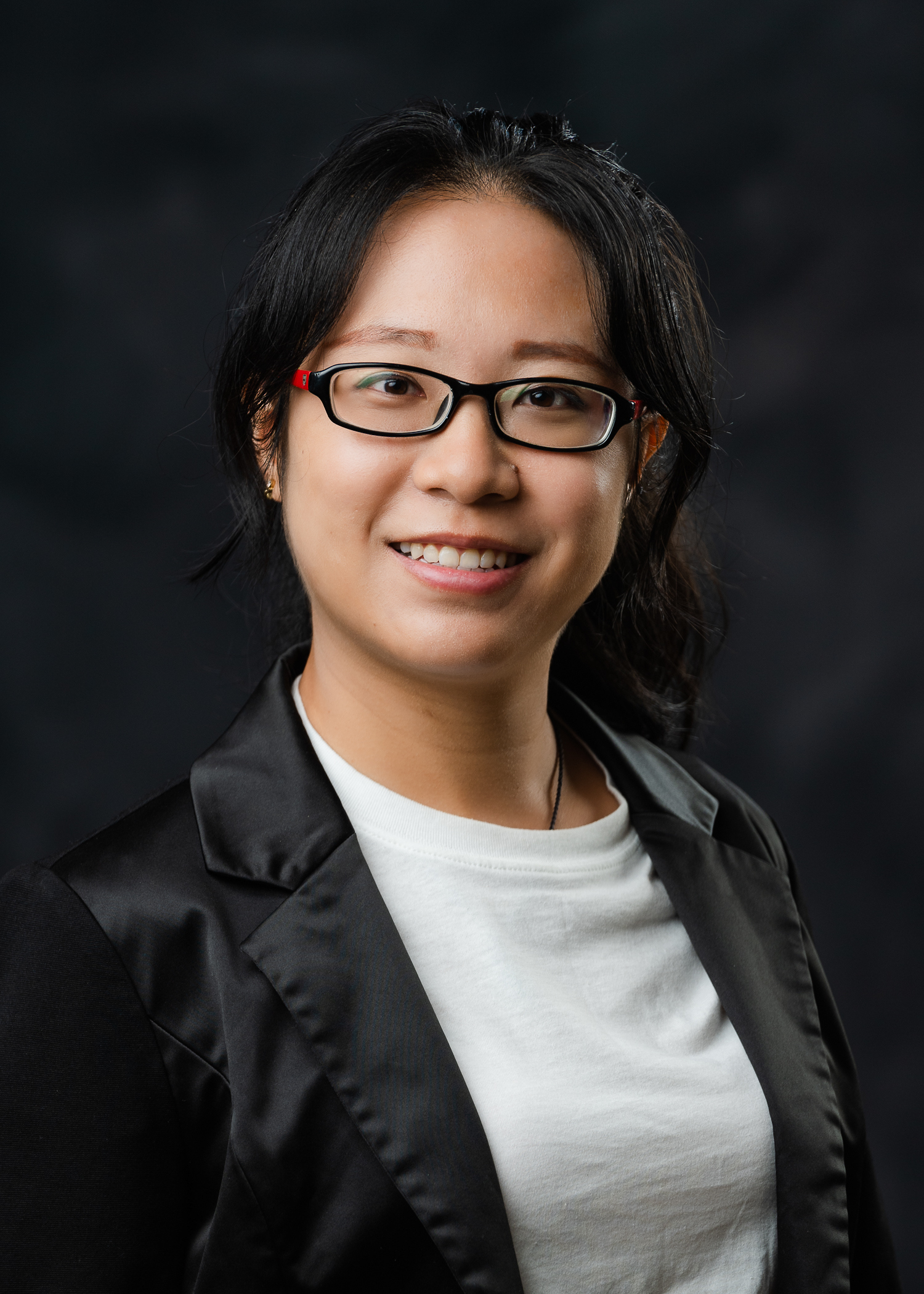
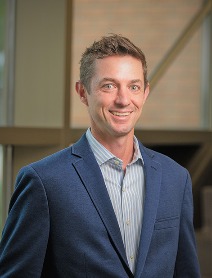
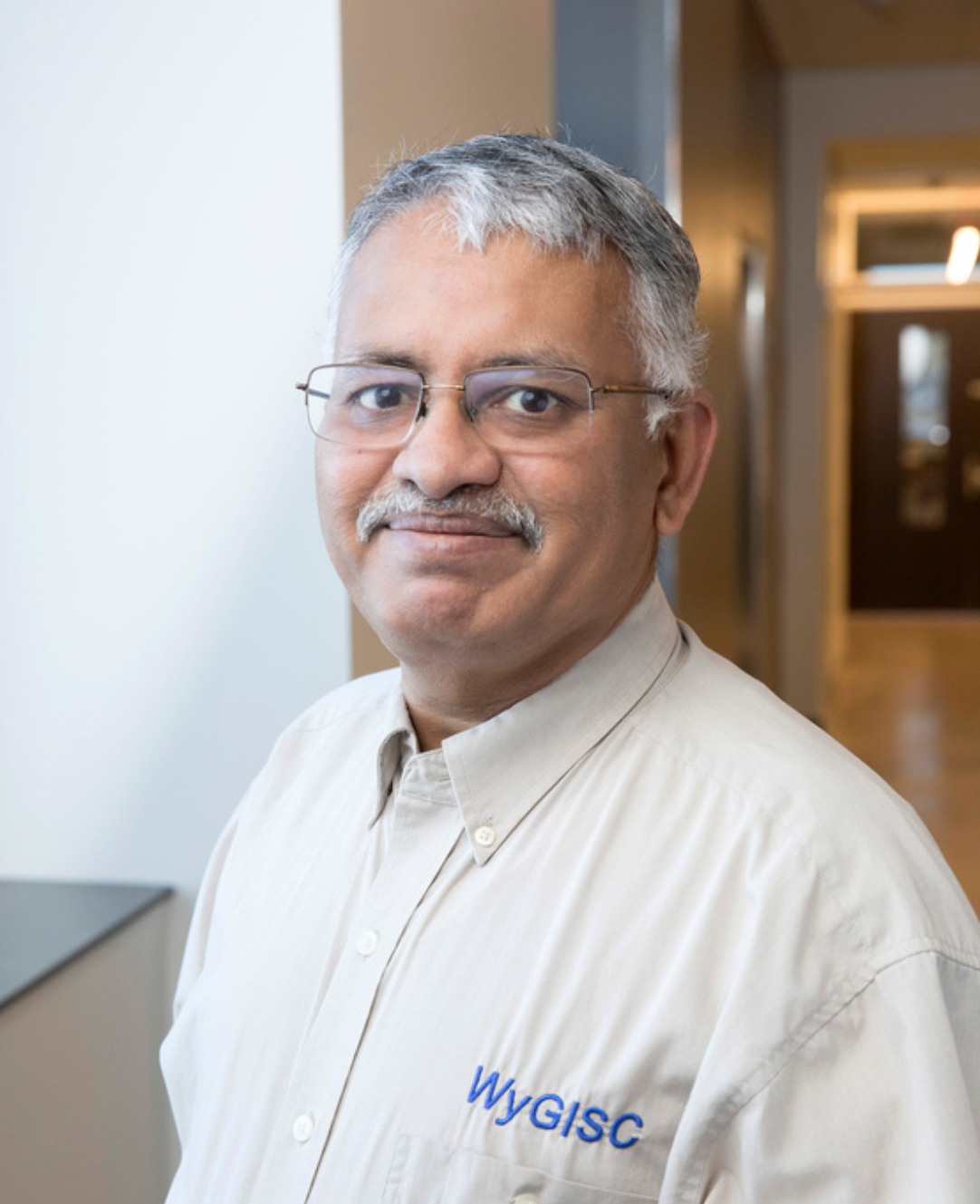
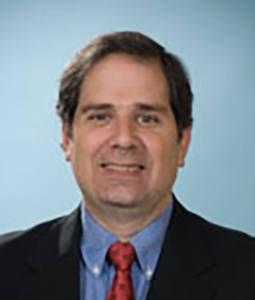
Lu He is an Instructor of Supply Chain Logistics at the College of Business, Mississippi State University. He holds a Ph.D. in Industrial and Systems Engineering (SUNY Binghamton, 2020), an MS in Industrial and Systems Engineering (SUNY Binghamton, 2015), and a BM in Logistics Management (Southeast University, 2014). His research focuses on healthcare operations optimization, machine learning applications in clinical decision-making, supply chain resilience, and wearable robotics. Notable contributions include surgical scheduling algorithms, predictive models for patient readmissions, and disaster inventory management frameworks. His work bridges operations research and healthcare analytics to improve system efficiency and patient outcomes. Publications span healthcare technology, disaster planning, and urban crime modeling. He has collaborated on projects involving neural networks for medical signal processing and agent-based simulations. While no awards are listed, his interdisciplinary research demonstrates expertise in applying advanced analytical methods to real-world challenges. He advises in the areas of supply chain logistics and healthcare systems, with a focus on practical implementation through optimization and data-driven approaches.
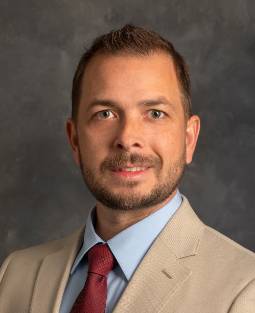
Dr. Jinzhu Yu is an Assistant Professor at the University of Texas at Arlington, holding primary affiliation in Civil Engineering and a secondary appointment in Industrial, Manufacturing, and Systems Engineering. He earned his Ph.D. in Interdisciplinary Systems Engineering from Vanderbilt University and conducted postdoctoral research at Rensselaer Polytechnic Institute. His work focuses on resilient urban systems through network science, operations research, and AI/ML. Research interests include infrastructure resilience, disaster management, transportation networks, and decision-making under uncertainty. Education: PhD, Interdisciplinary Systems Engineering, Vanderbilt University (2020) MS, Civil Engineering, Tongji University (2016) BS, Civil Engineering, Tongji University (2013) Research Highlights: Dr. Yu develops models for infrastructure resilience, climate adaptation, and equity. Recent projects include TxDOT-funded work on transportation asset management and crowd-sourced bicycle/pedestrian safety data. His lab integrates data science and network analytics to enhance urban systems. Awards: Urban Resilience Fellow (2024) STARs Award (2022) Student Merit Award (2017) Grants & Advising: Active projects include $319K TxDOT grant (2024) and leadership in NSF reviews. Supervises interdisciplinary students in civil engineering, systems engineering, and computer science.
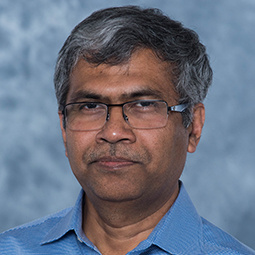
Jingshu Luo is an Assistant Professor of Finance at the University of Mississippi, holding the Liberto-King Professorship in Insurance. She is affiliated with the Department of Finance within the School of Business Administration. Her research focuses on corporate risk management, insurance economics, and corporate finance, with notable contributions to journals like the Journal of Risk and Insurance and Journal of Real Estate Finance and Economics. Dr. Luo earned her Ph.D. in Risk Management and Insurance from Temple University (2016). She was named a National Association of Insurance Commissioners (NAIC) Research Fellow in 2021, reflecting her expertise in regulatory policy and insurance economics. Her work frequently examines topics such as Medicaid expansion impacts, corporate risk management dynamics, and urban development in China. Her recent research trends emphasize policy analysis (e.g., NAIC model laws diffusion, ACA Medicaid expansion effects) and economic drivers of urban phenomena (e.g., skyscraper construction in China). Courses taught include FIN 341 (Risk Management and Insurance) and FIN 441 (Commercial Insurance). Awards: NAIC Research Fellow (2021) Advising/Grants: No advisees listed; grant information not specified. Labs/Teams: Not explicitly mentioned, but her research collaborations are likely tied to institutional insurance and finance initiatives.
Thomas Sharkey is a Professor in the Department of Industrial Engineering at Clemson University's College of Engineering, Computing and Applied Sciences (CECAS). His research focuses on network optimization, interdiction, and resilience with applications in public sector problems including human trafficking disruption and Arctic emergency response. Education: Ph.D. in Industrial and Systems Engineering, University of Florida (2008) M.S.E. in Mathematical Sciences, Johns Hopkins University (2004) B.S. in Mathematical Sciences, Johns Hopkins University (2004) Research Interests: Dr. Sharkey's work centers on network optimization and interdiction, with a strong emphasis on real-world applications. His research spans network resilience , supply chain security , and public sector operations research . Recent efforts have concentrated on disrupting human trafficking networks through sophisticated network interdiction models and enhancing emergency response in the Arctic. His interdisciplinary approach often involves collaboration with law enforcement, policymakers, and community stakeholders to address complex societal challenges. Publication Trends: Over the past five years, Dr. Sharkey's research has increasingly focused on human trafficking disruption and Arctic emergency response. His work integrates network interdiction models with real-world data to develop actionable strategies for law enforcement. A notable trend is the application of bilevel and multi-objective optimization to model attacker-defender dynamics in illicit networks. Additionally, his research on fundamental surprise events, such as the COVID-19 pandemic, has contributed to operational resilience frameworks for critical infrastructure. Professional Affiliations: Institute of Industrial and Systems Engineers (IISE) Institute for Operations Research and the Management Sciences (INFORMS) Advising and Grants: Dr. Sharkey has led multiple federally funded projects, including an NSF CAREER award (2013) for "New Scheduling Models for Supply Chain Restoration, Construction, and Redesign" and a Collaborative Research grant (2013) on "Dynamic Resource Allocation Models for Law Enforcement Operations against Illegal Drug Trafficking". His research portfolio also includes RAPID and D-ISN TRACK 1 grants addressing infrastructure restoration and human trafficking disruption. As a professor, he mentors graduate students in operations research and industrial engineering, though specific advisee names are not provided in the source material. Labs and Teams: Dr. Sharkey contributes to the Resiliency and Security in Complex Networks research thrust within the Department of Industrial Engineering. He collaborates with interdisciplinary teams, including the Network Science Center at Clemson, to develop models for critical infrastructure protection and illicit network disruption. His transdisciplinary projects often involve partnerships with law enforcement agencies, non-governmental organizations, and community stakeholders.
Yu Zhang is Professor of Civil Engineering at UT Arlington, specializing in water systems resilience. His NOAA and NASA-funded research develops predictive models for flood risks, drought impacts, and coastal infrastructure vulnerabilities. He directs projects exceeding $2M in funding. Research Focus: Zhang integrates satellite data with hydrologic models to forecast extreme weather impacts. His work supports reservoir operations and climate adaptation planning across Texas, emphasizing marginalized communities' vulnerability. Teaching: Courses include Remote Sensing in Hydrometeorology and Advanced Hydrology, training students in geospatial analysis and climate modeling techniques. Professional Service: Associate Editor for Journal of Hydrometeorology and active contributor to NASA precipitation measurement initiatives.
Ramesh Sivanpillai is an Instructional Professor at the University of Wyoming's School of Computing, part of the Wyoming Geographic Information Science Center (WyGISC). He holds a PhD in Forestry from Texas A&M University and has extensive academic credentials including a GIS Professional (GISP) certification and a Certified Project Manager in disaster response. His research focuses on remote sensing applications for agriculture, flood mapping, land cover change, and machine learning integration. He teaches courses such as Remote Sensing for Agricultural Management and UAS Sensors and Platforms. Education: PhD, Texas A&M University (2002); MS, University of Wisconsin–Green Bay (1995); MPhil, Bharathiar University (1992); MSc, Cochin University of Science & Technology (1990); BSc, PSG College of Arts & Science (1987). Professional Affiliations: American Society for Photogrammetry & Remote Sensing (ASPRS Fellow 2021), Society of American Foresters, American Geophysical Union. Research Interests: Remote sensing of small crop lands, flood inundation mapping, phenology analysis, and machine learning for feature recognition in aerial imagery. Recent projects include rapid flood mapping with satellite images and identifying epiphytes using neural networks. Publications emphasize Landsat data applications, flood inundation techniques, and machine learning in environmental monitoring. Over 20 peer-reviewed articles since 2016 highlight his contributions to remote sensing science. Grants include ongoing AmericaView StateView Program funding for Wyoming, supporting Landsat data operations and education outreach. Professional service includes roles as Regional Director of ASPRS Rocky Mountain Chapter and editorial positions in Frontiers of Earth Science and Journal of Applied Remote Sensing . Advising spans undergraduate and graduate students in remote sensing research, with notable projects on flood mapping biases, water body segmentation, and UAV-based crop monitoring. His outreach includes K-12 educational programs integrating satellite imagery to teach Earth science concepts.
Associate Professor Fernando Heineck Comiran is a faculty member at the University of San Francisco, specializing in accounting and finance. His research focuses on earnings management, accounting fraud, voluntary disclosure, and security valuation. He examines how disclosure impacts stock returns and explores market reactions to natural disasters. Prior to academia, he worked as an engineer optimizing telecom networks in Brazil. Ph.D. in Business Administration (Accounting) from UC Berkeley (2014) M.Sc. in Finance and Accounting from Federal University of Rio Grande do Sul (2009) B.S. in Electrical Engineering from Federal University of Rio Grande do Sul (2005) His research integrates real-world applications with academic inquiry, particularly analyzing individual investor behavior and corporate incentives. Recent work includes studies on subprime crisis impacts on oil companies and currency risk management using VaR models.
Patrick J. DeMouy is a Senior Lecturer in the Department of Management at the Darla Moore School of Business, University of South Carolina. With over 30 years of professional experience, he has served as Owner of DeMouy Consulting since 1991, specializing in strategic planning, market development, and management consulting for over 250 municipalities and national corporations. He holds an MBA from the University of South Carolina (1982) and a B.S. in Commerce from the University of Virginia. DeMouy’s research and teaching focus on strategic management, business ethics, sustainable technology, and case method education. Notable projects include proposing methyl hydrate viability research (2014), developing LEED series lectures (2014), and co-creating a global virtual case competition (2011–present). His case studies span diverse topics like healthcare ethics, disaster response, and corporate governance. He has advised IMBA and undergraduate case teams to numerous national and international accolades, including first place in the National Hispanic MBA Case Competition (2015) and multiple top finishes at John Molson Competitions. As faculty advisor, he also supported the Women’s Lacrosse team (2012–2016) and organized business fraternity case competitions. DeMouy’s professional background includes roles as Audit Manager at Farm Bureau Insurance (1987–1991), Investment Portfolio Manager at Standard Federal Savings and Loan (1985–1987), and broker at Smith Barney (1983–1985). He is a Certified Public Accountant and holds Series 7 securities licensing.
Nicholas D. Boltin is an Assistant Professor in the Department of Biomedical Engineering at the Molinaroli College of Engineering and Computing, University of South Carolina. He has held this position since 2018, following the completion of his Ph.D. in Biomedical Engineering at the same institution. His educational background includes a B.S. in Engineering from Appalachian State University (2005). Research Focus: Dr. Boltin specializes in healthcare decision support systems using interdisciplinary approaches from data science. His work spans: Advanced data analytics (machine learning, statistical modeling, dimension reduction) Translational informatics tool development (software engineering, human-computer interaction) Applications in emergency triage, biomaterial outcomes, and spectroscopic analysis Publication Trends: His 15 most recent articles (2014-2025) demonstrate strong emphasis on machine learning applications in clinical settings, with recurring themes in: Predictive modeling for surgical outcomes and biomaterial interactions Emergency department triage optimization during mass casualties Infrared spectroscopy for biomedical and forensic applications Teaching: Currently instructs undergraduate and graduate courses including BMEN 211 (Modeling & Simulation), BMEN 361 (Instrumentation), BMEN 391 (Kinetics), and BMEN 589 (Data Analytics).
Dr. Jasim Imran is Professor of Civil and Environmental Engineering at the University of South Carolina's College of Engineering and Computing. His research applies fluid mechanics to geophysical and engineering challenges in water systems. Key investigations include: Sediment dynamics in river networks and turbidity currents Dam/levee breach mechanisms and flood prediction Computational hydraulics for disaster scenarios Experimental modeling of erosion processes His recent work develops predictive frameworks for flood management and infrastructure resilience. Dr. Imran teaches graduate and undergraduate courses in fluid mechanics and hydraulic engineering, emphasizing field-relevant computational methods.
Matthew Janssen is a Research Assistant Professor at the Department of Civil, Environmental, and Ocean Engineering, Stevens Institute of Technology. His research focuses on coastal hazards, littoral processes, and developing computationally efficient models to assess risks to coastal infrastructure using field observations, numerical modeling, and data-driven techniques. He holds a PhD (2022), MS (2016), and BS (2011) in Ocean Engineering from Stevens Institute of Technology and the University of Rhode Island, respectively. His work emphasizes understanding storm erosion potential, dune performance under climate change scenarios, and the impact of coastal structures. Notable contributions include methodologies for quantifying storm erosion considering sea level rise and probabilistic forecasting of coastal storm impacts. He currently serves as Assistant Director of the NJ Coastal Protection Technical Assistance Service and has prior industry experience with firms like Rising Tide Waterfront Solutions and McLaren Engineering Group. Key Research Areas: Coastal resilience, numerical modeling, climate adaptation, dune dynamics, sediment transport. Recent Focus: Long-term dune performance under extreme and nuisance erosion events; integration of machine learning (CART models) for erosion prediction. Publications highlight his work on hurricane impacts, breakwater effectiveness, and navigation channel management. He received the John P. Breslin Award (2022) and is active in professional societies like ASBPA and COPRI. His technical reports include analyses of New Jersey beach sediment characteristics and shoreline impacts at North Wildwood. He collaborates on projects balancing engineering solutions with ecological and economic considerations.
Foad Mahdavi Pajouh is an Associate Professor at the School of Business, Stevens Institute of Technology, where he holds the Jack Howe Fellowship. Previously, he served as an Assistant Professor at the University of Massachusetts Boston (2014–2021) and a Research Assistant Professor at the University of Florida (2012–2014). He earned his PhD in Industrial Engineering from Oklahoma State University (2012), and earlier degrees from Tarbiat Modares University (MS, 2006) and Sharif University of Technology (BS, 2004). His research focuses on theoretical, computational, and algorithmic optimization, with applications in big data analytics of complex networks. Key areas include business analytics, social network analysis, financial network analysis, and cybersecurity. His work emphasizes clique relaxations, network interdiction, and resilient network design. Recent studies address influential group detection, risk-averse clustering, and robust infrastructure planning. Publications highlight contributions to clique detection algorithms, network resilience, and optimization models. Over 30 peer-reviewed articles appear in top journals like European Journal of Operational Research , INFORMS Journal on Computing , and Annals of Operations Research . His work bridges graph theory and real-world network challenges in finance, cybersecurity, and environmental systems. Notably absent are explicit mentions of awards or grants, though his prolific publication record and academic roles suggest significant professional recognition. No student advisees are listed in the provided information.
Milton Halem is a Research Professor in the Department of Computer Science and Electrical Engineering at the University of Maryland, Baltimore County (UMBC), affiliated with the College of Engineering and Information Technology. He also holds an Emeritus position as Chief Information Research Scientist at NASA Goddard Space Flight Center's Earth Sciences Directorate. His expertise spans machine learning, quantum computing, atmospheric science, and climate modeling. Halem's research focuses on integrating AI with environmental systems, including wildfire digital twins, planetary boundary layer estimation, and climate forecasting. Key research interests include applying deep learning to wildfire prediction, developing quantum algorithms for optimization, and advancing climate observation systems. His work bridges disciplines like remote sensing, cybersecurity, and geophysical data analytics. Awards include NASA's Exceptional Scientific Achievement Medal (2022), Outstanding Leadership Medal (2018), and the Distinguished Service Medal (1996). Affiliations: UMBC CSEE, NASA Goddard (Emeritus) Notable Projects: Wildfire Digital Twin Initiative, SOAR atmospheric radiances system, AI-enhanced air quality forecasting Publications emphasize machine learning applications in climate science, quantum computing, and environmental monitoring. Collaborations include NASA, NOAA, and academic partners worldwide. Current projects explore AI-driven climate models and real-time wildfire impact assessment systems.
Dr. Yong Tan is an Associate Professor in Economics and Finance at the University of Bradford's School of Management, part of the Faculty of Management, Law & Social Sciences. He holds a PhD in Economics from the University of Portsmouth, alongside postgraduate qualifications in Higher Education and professional fellowships (FHEA). His research focuses on financial economics, production economics, and banking efficiency, with publications in high-impact journals such as the Journal of International Financial Markets, Institutions and Money and European Journal of Operational Research. Yong’s work emphasizes multi-criteria decision-making (MCDM), supply chain resilience, and sustainability. Notable achievements include a top 2% global ranking by Stanford University and top 0.5% recognition by ScholarsGPS. He teaches courses in Microeconomics, International Economics, and Financial Markets. His research has addressed topics like green credit impacts on bank efficiency, blockchain in supply chain management, and pandemic-era healthcare system performance. Awards include featured status for his paper on Chinese banking profitability in the Journal of International Financial Markets.
Luke Taylor serves as a Lecturer in Forensic Anthropology at the University of Greenwich's School of Science within the Faculty of Engineering and Science. A Certified Forensic Anthropologist (Cert-FAIII), he brings extensive practical expertise from national mass fatality incidents, high-profile homicide investigations across multiple UK police forces since 2011, and humanitarian recovery operations for missing U.S. military personnel. His scholarly focus centers on forensic anthropology and archaeology applications in crime scene investigation and mass disaster contexts, emphasizing the analysis of human remains in legal frameworks. He integrates field experience into forensic identification methodologies and victim recovery protocols, with particular emphasis on cold case resolution and humanitarian forensic missions. While actively teaching undergraduate modules including Forensic Archaeology & Anthropology and Forensic Identification and Investigation, no graduate student supervision or research grants are documented in the source material. His professional practice directly informs curriculum development through real-world casework integration. Taylor operates within the University of Greenwich Forensic Science Team and collaborates with specialized humanitarian units focused on the search and recovery of fallen United States military personnel classified as missing in action or prisoners of war.