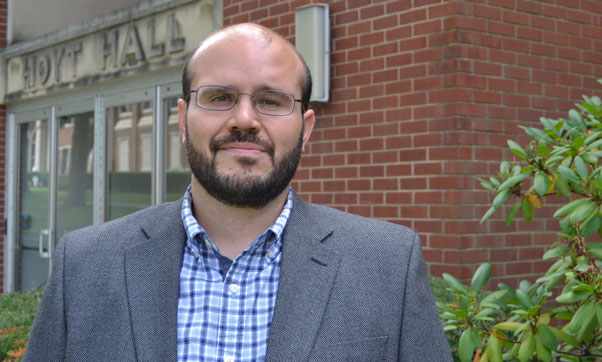
DIEGO FERNANDEZ NOVOA is a postdoctoral researcher affiliated with the Department of Applied Physics at the Faculty of Sciences , University of Vigo. He is associated with the Marine Research Center of the University of Vigo in Ourense campus, working within the research group FA9 EphysLab (Earth Physics Laboratory). Research interests focus on hydrology , climate change impact modeling , and remote sensing for coastal and riverine systems. His work includes: Flood risk management using numerical simulations Machine learning applications for river flow forecasting Climate change projections for extreme hydrological events Salinity dynamics in estuaries under extreme precipitation Hydrodynamic modeling of historical catastrophic floods Publications reveal expertise in MODIS satellite data applications for turbid plume characterization (Iberian Peninsula, French Atlantic) and interdisciplinary collaborations in oceanography education . His work spans from 2013 to 2025, covering multiscale analyses and knowledge transfer initiatives.
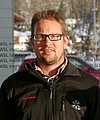
Dr. Yves Bühler is a leading researcher at the Swiss Federal Institute for Forest, Snow and Landscape Research (WSL) , heading the Alpine Remote Sensing group within the Alpine Environment and Natural Hazards unit. His work focuses on remote sensing applications for snow and avalanche research, rock-ice avalanches, and alpine mass movement monitoring using drones, SAR satellites, and machine learning. Education: PhD in Remote Sensing (University of Zurich, 2005-2009), High-School Teaching Certification (MAS SHE, 2003-2005). Key projects: Large-scale avalanche mapping in India, drone-based snow depth monitoring, and thermomechanical modeling for hazard indication. Research Trends : Recent publications highlight advancements in machine learning for avalanche segmentation , multi-sensor displacement monitoring , and climate change integration into hazard models . His work bridges geomechanics , remote sensing technology , and operational risk mitigation across Switzerland, Himalayas, and international collaborations. Scientific Contributions : He has received a Research Fellowship at the University of Otago and led leadership programs at FHNW. His team developed RAMMS::LSHIM for large-scale hazard mapping and pioneered low-cost lidar for avalanche monitoring.
Assoc. Prof. Nadia Marinova, PhD holds an academic position at the New Bulgarian University , serving in the Department of Administration and Management . With a career spanning since 1996, she has held administrative roles such as Director of the Center for Distance Learning and coordinated numerous national/international projects. Education includes a PhD in Project Management from NBU and a Master's in Economics from UNSS Sofia. She teaches courses like Marketing Strategies in Tourism and Project Management in International Tourism . Her research focuses on Marketing, Tourism, Management, and Project Management , with recent work analyzing business model changes during pandemics, IoT applications in radar systems, and risk management in tourism. While her publications address both theoretical and practical aspects, collaborative projects with organizations like ENYC and EU programs dominate her career. Her projects include EU-funded initiatives like Transborder Integrated Tourism Business Center and industry collaborations with Lukoil Neftochim Burgas. She has contributed to youth policy frameworks and developed training modules for sustainable transport and leadership programs.
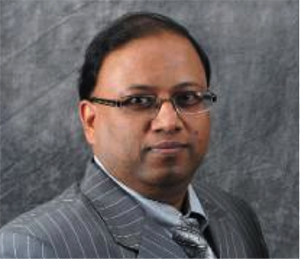
Dr. Usman Hadi serves as an Assistant Professor in the School of Engineering within Ulster University's Faculty of Computing, Engineering and Built Environment at the Jordanstown campus. His academic trajectory includes a Ph.D. in Electronic Engineering from the University of Bologna (2020), followed by postdoctoral research at Aalborg University and industry experience as an External Research Engineer at Nokia Bell Labs in Denmark (2019-2021). His educational foundation comprises: PhD in Electronic Engineering, University of Bologna (2020) Master's in Digital Predistortion for Compensation of Nonlinearities in Radio over Fiber Links, University of Bologna Dr. Hadi's research spans cutting-edge domains in wireless communications and AI-driven networking solutions. His primary focus includes 5G/6G technologies, Time Sensitive Networks, Radio over Fiber systems, and machine learning applications in telecommunications. Recent work emphasizes AI-enhanced signal detection for MIMO systems, UAV-based communication frameworks, and IoT security architectures, with significant contributions to optical front-haul optimization and wireless sensor networks. Analysis of his publication record reveals a strategic emphasis on AI integration for next-generation wireless systems. Key trends include deep learning applications for MIMO detection in 6G networks, digital twin implementations for UAV fault detection, and secure IoT frameworks for drone communications. His work consistently bridges theoretical advancements with practical implementations in optical and wireless front-haul systems, particularly through the MADNI (Made in UU) drone platform. Notable recognitions include: Top 2% Cited Researcher designation for three consecutive years (2021-2023) Research and Impact Fund Award (2023) Dr. Hadi supervises two PhD students: Ms. Cara Rose (Department of Economy-funded, 2023-present) and Mr. M.Y. Daha (Vice Chancellor's Research Studentship, 2022-present). His active research portfolio includes drone-based climate resilience initiatives funded by the British Council (2025-2026) and IoT-driven cybersecurity frameworks supported by Innovate UK (2025), alongside participation in EPSRC-funded infrastructure projects. He leads the MADNI drone research platform, which integrates state-of-the-art 5G connectivity, object detection, and facial recognition capabilities. His laboratory maintains active collaborations with Nokia Bell Labs, University of Manchester, University of East Anglia, Manchester Metropolitan University, University of Texas, and Boise State University, focusing on next-generation communication technologies and sustainable development applications aligned with UN SDGs.
David Beirman is a Senior Lecturer in the Management Discipline Group at the University of Technology Sydney (UTS), specializing in Tourism Risk, Crisis and Recovery Management , and Destination Marketing . With a Ph.D. and postgraduate degrees in Sociology from the University of NSW, his academic journey is complemented by a 30-year career in the Australian travel industry (1981-2009), including roles in retail travel, wholesale operations, destination marketing, and human resources. Education: Ph.D., Sociology, University of NSW (1990) MA (Hons), University of NSW (1983) BA (Hons), University of NSW (1971-1976) Dip.Ed., University of NSW (1975-1976) His research focuses on Tourism Risk Management , Destination Recovery , and Sustainable Tourism Practices . Recent publications include the 2024 edited handbook Handbook on Crisis and Disaster Management in Tourism , a 2024 chapter on pandemic governance, and 2023 analyses of post-COVID travel bubbles and media expectations. He developed a six-phase image repair framework for pandemic recovery campaigns, building on his 2015 work with the Pacific Asia Travel Association (PATA) on crisis management manuals used in 66 countries. Key industry roles include: Co-chair, CAUTHE Tourism Risk, Crisis and Recovery Special Interest Group (2012–present) Founder and National Secretary, Eastern Mediterranean Tourism Association (2000–2012) Member, DFAT Consular Consultative Group (2003–present) Board Member, Australian Travel Careers Council (2018) He teaches Tourism Risk Management and Managing Risk and Opportunity at UTS, and has advised governments in Australia, Asia, Africa, and North America. His 2015 Nepal recovery strategy work included a tourism workshop for local leaders, while 2016 projects involved crisis manuals for Council of Australian Tour Operators and Randwick Council. Notable achievements: Editorial roles in Journal of Hospitality and Tourism Management (2016) and International Journal of Event Management Research (2014) Keynote speaker at APEC Counter-Terrorism Workshop (2017), Thai National Tourism Forum (2017), and Pacific Insights Tourism Conference (2017) Consultant for DFAT on travel advisories since 2003, shaping global models adopted by UK, Canada, and New Zealand
Divya Chandrasekhar is an Associate Professor and current Chair in the Department of City & Metropolitan Planning at the University of Utah. Her expertise focuses on community recovery from disasters, with research examining post-disaster community participation, capacity building, networking among recovery institutions, and disaster recovery policy across South and Southeast Asia, the Caribbean, and the U.S. Dr. Chandrasekhar's educational background includes: Bachelor's degree in Physical Planning from the School of Planning and Architecture, New Delhi (2003) Master's degree in Urban and Regional Planning from the University of Illinois at Urbana-Champaign (2005) Ph.D. in Urban and Regional Planning from the University of Illinois at Urbana-Champaign (2010) Her research centers on post-disaster community recovery planning, disaster mitigation, adaptation planning, and long-term capacity building for disaster resilience. She investigates stakeholder decision-making processes and their interaction with socioeconomic, institutional, and policy systems across all geographies and all natural hazards. Her work emphasizes community participation, networking among recovery institutions, and building local capacity to enhance disaster resilience. Dr. Chandrasekhar's scholarly output demonstrates a consistent focus on disaster recovery across multiple contexts including Hurricane Sandy, Hurricane Maria in Puerto Rico, and earthquakes in the U.S. Her research spans community recovery, business resilience, nonprofit capacity, and public housing recovery, with increasing attention to intersectional approaches and social equity in disaster contexts. Among her notable recognitions: Career Champion of the Year (2021, University of Utah) Banner Project (2020, University of Utah) Top Researcher Honoree, Celebrate U (2017, University of Utah) Dr. Chandrasekhar has secured significant research funding from the National Science Foundation, National Institute of Transportation and Communities, Department of the Interior, and the Natural Hazards Center at Boulder. She serves on multiple professional committees including the Utah State Hazard Mitigation Team, the Roundtable on Risk and Resilience of Extreme Events of the National Academies of Science, Engineering and Medicine, and has served on the Utah Seismic Safety Commission. She leads research teams examining disaster recovery processes and has established collaborations across multiple institutions and government agencies to advance understanding of community resilience and recovery planning.
Sanjay Madria is a Curators’ Distinguished Professor in the Department of Computer Science at Missouri University of Science and Technology. His research spans mobile and sensor computing , machine learning , cloud security , and blockchain , with applications in underground mining safety , UAV systems , and disaster response . PhD: Indian Institute of Technology, Delhi (1995) His work integrates secure sensor cloud architectures , delay-tolerant network optimization , and AI-driven risk assessment . Recent publications focus on UAV swarm detection , reinforcement learning for mining environments , and privacy-preserving social media analytics . Scientific Awards include IEEE Best Paper Awards , NRC Fellowships , and JSPS Fellowship . Funded by NSF , NIST , DOE , Honeywell , and Boeing . He contributes to IEEE/ACM Distinguished Speaker programs and leads the Center for Intelligent Infrastructure at Missouri S&T.
Dr. Abolghasem Sadeghi-Niaraki is an Associate Professor in the Department of Computer Science and Engineering at Sejong University's College of Engineering, where he has served since 2017. He leads the eXtended Reality (XR) Research Center and holds a Research Professor position at the Super-Realistic XR Technology Research Center (2022-2030). Previously, he was an Assistant Professor at INHA University's Department of Geo-Informatics Engineering (2009-2017). Recently appointed as a Fellow at Harvard University's Spatial Data Lab (SDL), he conducts collaborative research in spatiotemporal data analytics and geo-AI. Dr. Sadeghi-Niaraki's research spans Geo-AI, XR technologies, Machine Learning, Metaverse applications, and IoT. His work focuses on applying AI to geospatial problems, developing immersive technologies for education and cultural heritage, and creating predictive models for natural hazards. He has secured significant funding for XR Metaverse research from the Ministry of Science and ICT, focusing on Real-Virtual integration. His interdisciplinary approach combines computer science with environmental science, urban planning, healthcare, and education. His research portfolio demonstrates strong trends in geospatial AI applications for environmental monitoring, particularly in natural hazard prediction (floods, wildfires, earthquakes), as well as innovative educational applications of VR/AR. Recent work shows increasing integration of large language models with immersive technologies and a growing focus on healthcare applications within virtual environments. Dr. Sadeghi-Niaraki has received significant recognition including: Top 2% Scientist Worldwide (Stanford-Elsevier 2024) Fellow at Harvard SDL, Center for Geographic Analysis Australian Endeavour Fellowship Recipient Member of IEEE & AAG (American Association of Geographers) He has led over $9.3 million in research funding, supervised 40+ Master's and 6+ Ph.D. students, and collaborated with 14 universities across 8 countries in immersive technology development. His laboratory work centers on the eXtended Reality Research Center at Sejong University, where his team develops patented methods for context-aware AR/VR systems applied to tourism, cultural heritage, and smart city planning.
James D. Brooks serves as Chair and Professor in the Department of Electrical and Computer Engineering at Grove City College, leveraging 17 years of industry experience from GE Transportation and GE Research to bridge academic theory with real-world engineering applications. His educational credentials include: Ph.D. in Systems Engineering, Rensselaer Polytechnic Institute M.S. in Electrical and Computer Engineering, Georgia Institute of Technology B.S. in Electrical Engineering, Grove City College Research centers on human-automation interaction (examining how control system design impacts operator trust and performance) and queueing systems with human agents (developing mathematical models for systems like hurricane debris removal). This work integrates control theory, human factors, and operations research to solve complex socio-technical problems in transportation and disaster response. Recent publications (2023-2025) reveal dominant trends in railroad automation, with emphases on adaptive vehicle control, distributed systems coordination, safety protocol implementation, and human-machine interface optimization. Key subfields span autonomous train handling, energy management, real-time decision support, and cognitive workload reduction. Notable achievements include: Over 30 issued U.S. patents in vehicle and building automation systems He actively mentors students through senior design projects and industry-collaborative research, emphasizing curiosity, integrity, and deep system understanding. His industry partnerships with Wabtec and legacy GE entities provide students with direct exposure to autonomous vehicle development and building automation challenges. Research initiatives focus on translating theoretical models into deployable solutions, particularly through simulation platforms for industrial prototyping and human factors integration in railroad control systems.
Tetsuya Torayashiki is an Assistant Professor at Waseda University's Center for Data Science, specializing in disaster management, business continuity planning, and resilience research. With extensive experience across multiple Japanese institutions including Tohoku University and University of Hyogo, his work bridges academic research with practical applications in disaster risk reduction. Education Background: 2012.04 - 2015.03: Doctoral Course, Graduate School of Societal Safety Sciences, Kansai University 2010.04 - 2012.03: Master Course, Graduate School of Societal Safety Sciences, Kansai University 2006.04 - 2010.03: Faculty of Engineering, Civil and Environmental Engineering, Kansai University Torayashiki's research focuses on understanding how businesses and communities can better prepare for and recover from disasters. His work spans economic statistics, business administration, social systems engineering, and disaster prevention engineering. He has made significant contributions to understanding public-private partnerships during disasters, business continuity management, and the challenges of stranded commuters during major seismic events. His research often examines lessons from the Great East Japan Earthquake and applies them to prepare for future disasters like the anticipated Nankai Trough earthquake. His extensive publication record demonstrates a consistent focus on practical disaster management solutions, with recent work examining temporary shelter planning for stranded commuters, business continuity during power outages, and the effectiveness of public-private disaster response partnerships. His research combines quantitative analysis with field studies to develop actionable insights for policymakers and businesses. Scientific Awards: 2023 Regional Security Society Annual Outstanding Paper Award 2024 Regional Security Society Encouragement award 2021 Institute of Social Safety Science (ISSS) BCAOO 2019 International Institute of Disaster Science, Northeastern University Excellent Poster Award 2017 Tohoku University-affiliated research institute consortium Winner Torayashiki has secured multiple research grants from Japan Society for the Promotion of Science, including current projects on quantifying resilience as a transformative force (2025-2030) and assessing post-disaster industrial recovery support methods. He actively contributes to policy development through committee memberships with organizations like the Regional Security Society and the Natural Disaster Research Council. As part of the Waseda University Center for Data Science, he leads research on applying data science methodologies to disaster management challenges and contributes to the Regional Safety Academy Summer School program, which trains the next generation of disaster management professionals.
Tom Dyson is an Area Specialized Agent in Agromedicine at NC State University's Cooperative Extension Service, serving Gaston County Center and 100 additional counties including Eastern Band of Cherokee Indians (EBCI). Based at 1303 Dallas-Cherryville Hwy, Dallas, NC 28034, he focuses on agricultural health and safety across diverse domains. Contact: tom_dyson@ncsu.edu | (828) 465-8240 | (704) 740-2006 Service Area: 100 NC counties including Alamance, Buncombe, Mecklenburg, and Wake Research Interests: Agricultural Safety (chainsaw protocols, pesticide handling, disaster response) Invasive Species Management (spotted lanternflies, fire ants) Plant Health & Diagnostics (late blight, azalea deficiencies) Community Agriculture Initiatives (public gardens, workshops) Recent Publication Trends: 15+ articles spanning 2017-2023 address practical agricultural safety measures, invasive pest control, plant disease diagnostics, and community horticulture programs. Topics range from chainsaw safety to spotted lanternfly mitigation, with emphasis on actionable field solutions. Community Engagement: Coordinates multiple agricultural outreach programs including: 4-H Youth Development (Real Money, Embryology, School Gardening) Volunteer Networks (Master Gardener℠, Master Food Volunteers) Environmental Stewardship (Fire Ant Bait Spreader Program, Farmland Protection Plan)
Rodolfo Metulini is a Researcher (RTD-B) in Statistics for Experimental and Technological Research (SECS-S/02) at the Department of Economics, University of Bergamo. He serves as Principal Investigator for the PRIN/PNRR project 'SIGNUM: Study of mobile phone signals for evaluating mobility-environment interconnections in Lombardy'. His career includes postdoctoral positions at the University of Brescia, Scuola Superiore Sant'Anna Pisa, and IMT Lucca. PhD in Statistical Methodology for Scientific Research (2013), University of Bologna Former Researcher at University of Salerno (RTD-A) Metulini's research spans three primary domains: travel flow analysis using gravity models and spatial interaction approaches for international trade studies; sports analytics focusing on player movement dynamics and marginal utility in football/basketball; and urban mobility modeling through mobile phone data with complex seasonality time series models. His methodological innovations combine matrix completion techniques with functional data clustering for environmental-socioeconomic applications. Recent research trends demonstrate cross-sectoral expertise in applying statistical learning to diverse domains: 1) environmental risk assessment using mobile network data for flood exposure forecasting; 2) urban policy analysis through counterfactual modeling of traffic restrictions; and 3) economic modeling for CO2 emissions prediction. His technical approach integrates dynamic harmonic regression with VARX models for mobility forecasting. As thesis advisor for Computer/Mechanical Engineering students, Metulini promotes data-driven approaches in mobility and sports domains. His publications in journals like Annals of Operations Research and Optimization Letters showcase interdisciplinary methodology combining statistical theory with practical applications in environmental risk management and sports performance analysis.
Luis Rodriguez serves as Associate Professor in the Department of Agricultural and Biological Engineering within the College of Agricultural, Consumer and Environmental Sciences (ACES) at the University of Illinois at Urbana-Champaign. His academic leadership spans transdisciplinary research at the critical nexus of food, energy, and water systems, with particular focus on disaster resilience and community engagement initiatives. Dr. Rodriguez earned his educational foundation at Rutgers University with a B.S. (1995), M.S. (1999), and Ph.D. (2002) in Bioresource Engineering, complemented by doctoral work in Industrial and Systems Engineering. His professional trajectory includes progression from Assistant Professor (2005-2012) to Associate Professor (2012-present) at UIUC, with prior research appointments at NASA facilities and Orbital Space Sciences Corporation. His research program integrates Big Data analytics, modeling, and decision support systems to address food-energy-water security challenges, environmental impacts of agricultural production, and social constraints on engineered systems. Current projects emphasize reliability, resiliency, and sustainability in engineered solutions, particularly through his leadership of the INFEWS-ER (Innovation at the Nexus of Food, Energy, and Water Systems - Educational Resources) initiative. Recent scholarly output reveals strong concentration on biomass supply chain optimization, cyberGIS applications, microbial community modeling, and disaster resilience engineering, with significant methodological contributions to spatial analytics and transdisciplinary systems approaches. Dr. Rodriguez has received multiple teaching honors including the NACTA Teacher Fellow Award (2011), Engineering Council Outstanding Advisor (2012), consistent recognition as an Excellent Teacher (2012-2018), and the prestigious J. Kent Mitchell Teaching Excellence Award (2019). His service includes the ACES Research Policy Committee and Chief Advisor role for Agricultural and Biological Engineering. He directs the UIUC Puerto Rico Disaster Relief Program, which has conducted multiple service-learning trips following Hurricane Maria. This initiative exemplifies his commitment to community-engaged engineering, where students develop microgrids, remove invasive species, and implement sustainable solutions through partnerships with Amizade and Caras Con Causa. His course portfolio includes ABE 398 Disaster Relief Study Tour, ABE 452 Engineering for Disaster Resilience, and multiple Global Disaster Resilience courses across engineering and agricultural disciplines.
David Nitsch serves as Assistant Professor and Program Director for the Emergency and Disaster Management Master of Science program at Thomas Jefferson University's East Fall Campus in Philadelphia, Pennsylvania. His educational background includes a PhD (All But Dissertation) in Public Policy with foreign policy focus from Liberty University (2023), a Master of Science in Public Health from American Military University (2016), and National Registry Paramedic certification. Research expertise spans emergency management systems, disaster response protocols, and vulnerabilities of displaced populations. His work integrates public health preparedness with security operations, informed by extensive field experience in high-risk environments including Iraq and Afghanistan. He maintains active engagement with international medical service teams addressing underserved populations. As Program Director, he oversees curriculum development and academic operations for the MS program. Prior leadership roles include Director of the Bureau of Technological Hazards at the Pennsylvania Emergency Management Agency and medical team leadership positions with state emergency response units.
Professor Mohammad REIHANEH is an Assistant Professor of Operations Management at IÉSEG School of Management. He holds a Ph.D. in Operations Management from the University of Massachusetts (USA), an MSc in Industrial Engineering from Isfahan University of Technology (Iran), and a BSc in Applied Mathematics from Ferdowsi University of Mashhad (Iran). His research focuses on optimization algorithms, vehicle routing problems, scheduling theory, and logistics systems. He is a member of the LEM research group and has published extensively in top-tier journals such as the European Journal of Operational Research and the Journal of the Operational Research Society. Education: 2018: Ph.D., Operations Management, University of Massachusetts, USA 2012: MSc, Industrial Engineering, Isfahan University of Technology, Iran 2009: BSc, Applied Mathematics, Ferdowsi University of Mashhad, Iran Research Interests: Mohammad’s work emphasizes practical applications of optimization in logistics and healthcare systems. He develops exact algorithms (e.g., branch-and-price) and heuristic methods for complex routing problems, maintenance scheduling, and resource allocation in healthcare settings. His contributions bridge theoretical advancements in operations research with real-world operational challenges in industries like renewable energy (offshore wind farms) and humanitarian logistics. Publications: His recent work addresses cutting-edge challenges such as multi-period offshore wind farm routing, hemodialysis center scheduling, and food bank distribution optimization. He frequently collaborates with international researchers on projects involving vehicle routing, reliability engineering, and control chart design for manufacturing systems. Advising & Grants: No specific student advisees or grant details are listed in the provided materials.