Hengameh Saberi is an Associate Professor at Osgoode Hall Law School , York University. Her academic journey includes an LLB and LLM from the University of Tehran, an LLM from McGill University, and an SJD from Harvard University. Education: LLB (Tehran), LLM (Tehran), LLM (McGill), SJD (Harvard) Her research spans diverse areas including international law , jurisprudence , and interdisciplinary intersections with disability law , human rights , and Islamic legal thought . She has also explored historical and philosophical dimensions of international legal frameworks and pragmatism. Professor Saberi has previously taught at institutions such as Brown University, University of Tennessee College of Law, Boston University School of Law, and Harvard University. She held post-doctoral fellowships at Harvard Law School’s Institute for Global Law and Policy and the Harvard Law School Project on Disability.
Joanna N. Erdman is an Assistant Professor and MacBain Chair in Health Law and Policy at Dalhousie University's Schulich School of Law. Her work focuses on reproductive rights, health equity, and human rights within legal frameworks. She has extensively researched abortion law, global health policies, and gender equality in healthcare access. Erdman's scholarship addresses intersections between law, public health, and human rights, particularly in contexts like abortion accessibility, HPV vaccine equity, and prenatal care ethics. Her research interests emphasize harm reduction strategies, evidence-based lawmaking, and transnational legal perspectives. Erdman has contributed to influential discussions on constitutionalizing abortion rights in Canada, WHO guidelines on safe abortion practices, and the implementation of CEDAW in healthcare systems. Her work often critiques legal barriers to healthcare access and advocates for policy reforms grounded in human rights principles. Erdman has collaborated with leading scholars like Rebecca J. Cook and Bernard Dickens on publications analyzing abortion law and medical ethics. Her articles frequently appear in interdisciplinary journals such as the International Journal of Gynecology and Obstetrics and Emory Law Journal . While no formal grants or awards are cited here, her extensive citation count (over 5,000 downloads on SSRN) underscores her impact in health law research. Erdman’s recent work includes updating global abortion policy analyses and exploring gender equality in health systems through CEDAW frameworks. She maintains an active research agenda on transnational healthcare law and its implications for marginalized communities.
Xuan Thuy Nguyen is an Associate Professor in the Childhood and Youth Studies Program at Carleton University's Faculty of Arts and Social Sciences. Her research focuses on decolonial disability studies, gender, and social justice in the Global South. Currently on sabbatical leave (2023), she leads three major research projects funded by SSHRC: ENGAGE (2021-2024): Examines leadership potential of girls with disabilities through decolonial knowledge systems TDKRA (2016-2023): Challenges knowledge gaps in Vietnam through research-activism connections EDID (2020-2027): Co-investigator role in fostering inclusion across Canada, Haiti, South Africa, and Vietnam Her research portfolio demonstrates strong interdisciplinary focus across disability studies, global development, and feminist theory. Key publications address participatory visual methods, intersectionality, and decolonial approaches to disability inclusion. Scientific recognition includes 2022-2023 FASS Research Excellence Award. She mentors students in transnational social justice research and has supervised multiple MA/PhD candidates in Canada and Vietnam.
Thomas Schanding serves as Associate Professor and Department Head in the Department of Educational and Counselling Psychology, and Special Education at the University of British Columbia's Faculty of Education. He concurrently directs the Psychological Services and Counselling Training Centre. Previously, he held significant roles including core faculty in Special Education and Associate Director of Outreach and Leadership for the decade-long LoneStar LEND program at the University of Texas Health Science Center at Houston, alongside clinical supervision positions at Baylor College of Medicine/Texas Children’s Hospital. His educational foundation includes doctoral coursework at the University of Southern Mississippi (APA-accredited) and doctoral internship with Cypress-Fairbanks Independent School District (APA-accredited). Doctoral Coursework: University of Southern Mississippi Doctoral Internship: Cypress-Fairbanks Independent School District Dr. Schanding's research centers on social-emotional learning (SEL) and behavioral/mental health (B/MH) through three interconnected pillars: (1) assessment methodologies for SEL/B/MH, (2) evidence-based interventions to enhance youth well-being, and (3) cultural-linguistic considerations in school-community contexts. His clinical expertise spans Autism Spectrum Disorders and 2SLGBTQIA+ youth experiences, operating within Cognitive-Behavioral and Ecological theoretical frameworks. The SMART Lab ( https://blogs.ubc.ca/smartlab ) drives his applied research agenda focusing on inclusive practices and mental health promotion. Analysis of his recent publications reveals consistent emphasis on SEL assessment tools, helicopter parenting dynamics, and diversity-inclusive frameworks in school psychology. Key trends include validation studies of early literacy screeners, exploration of LGBTQ+ mental health predictors, and critical examinations of equity in educational literature, reflecting his commitment to evidence-based social justice. His scholarly contributions have been recognized through: President’s Distinguished Faculty Research Award, University of Houston – Clear Lake (2020) Group Teaching Excellence Award, University of Houston (2011) Early Career Scholar, Society for the Study of School Psychology (2009) As an educator, Dr. Schanding has supervised numerous practicum and intern students across settings including school districts and hospital systems. His leadership extends to directing the Psychological Services and Counselling Training Centre at UBC and previously leading outreach initiatives for neurodevelopmental disabilities through the LEND program. His teaching portfolio includes EPSE 506 (Applied Psychopathology), EPSE 555 (Academic & Social-Emotional Assessment), and specialized courses on Autism Spectrum Disorders. The SMART Lab (Social, Mental health, and Academic Research Team) operates as his primary research vehicle, conducting community-engaged projects on SEL implementation, mental health screening, and culturally responsive interventions for diverse youth populations, with particular attention to inclusive practices for 2SLGBTQIA+ students.
Afsoun Afsahi holds a PhD in Political Science from the University of British Columbia (UBC) and is currently a Post-doctoral Researcher at Goethe-Universität in Germany. She specializes in Political Theory, with a focus on deliberative democracy, multiculturalism, gender dynamics, and innovative research methodologies. Her doctoral work explored deliberative democracy frameworks, multicultural policy evaluation, and gender disparities in civic engagement. Afsahi’s recent research examines regulatory mechanisms for speech in liberal democracies and the application of the all-affected principle through justice frameworks. Education: PhD in Political Science, University of British Columbia Research Interests: Deliberative democracy theory and practice Multiculturalism policy analysis Gender equity in public participation Quantitative and experimental methodology development Ethical speech regulation in pluralist societies Awards: Post-doctoral Fellowship, Goethe-Universität, Germany (2017) Advising & Grants: While specific grant details are not mentioned, her work demonstrates sustained engagement with foundational research questions in political theory and applied democratic practices. Her academic trajectory reflects a focus on bridging theoretical insights with practical governance challenges.
Meredith Bessey is an Assistant Professor in the Department of Applied Human Nutrition at Mount Saint Vincent University (Halifax, Canada). She holds a PhD from the University of Guelph and dual bachelor's degrees in Applied Human Nutrition and Psychology from MSVU and Dalhousie University. Her research focuses on critical perspectives of food, bodies, and healthcare systems, employing qualitative and arts-based methodologies. She is an Associate Editor of the Journal of Critical Dietetics and Co-Editor of Excessive Bodies: A Journal of Artistic and Critical Fat Praxis and Worldmaking. Education: PhD, Applied Human Nutrition (2025), University of Guelph MSc, Applied Human Nutrition (2020), Mount Saint Vincent University BSc (Honours), Applied Human Nutrition (2017), Mount Saint Vincent University BSc (Honours), Psychology (2012), Dalhousie University Research Interests: Her work critiques weight stigma in healthcare and dietetics practice, explores eugenic legacies in fitness systems, and advocates for inclusive body-positive frameworks. Methodologically, she integrates feminist neomaterialism, disability studies, and queer theory to challenge normative health paradigms. Recent projects include studies on bariatric surgery discourse, holiday health advertising, and undergraduate food insecurity. Teaching Areas: NUTR 2211: Intermediate Human Nutrition NUTR 3325: Advanced Human Nutrition and Metabolism NUTR 4408/4409: Medical Nutrition Therapy Selected Publications: She has contributed to peer-reviewed journals like Qualitative Health Research, Body Image, and Social Sciences, focusing on themes of health equity, critical dietetics, and embodied research practices.
Sheryl N. Hamilton is a Professor at Carleton University's School of Journalism and Communication and the Department of Law and Legal Studies . She earned her J.D. from the University of Saskatchewan (1988), M.A. in Communication from Carleton University (1995), and Ph.D. in Communication Studies from Concordia University (2000). Her research explores pandemic culture , sensory legal studies , and disease media , analyzing how bodily experiences, media representations, and regulatory frameworks intersect. Current projects examine genetic science, non-human personhood, and pandemic-era social norms through the lens of science fiction and interdisciplinary methodologies. She held the Canada Research Chair in Communication, Law and Governance (2003-2013) and is a Fellow of the Royal Society of Canada (2014). Her published work includes award-winning books like Becoming Biosubjects and Impersonations , focusing on communication theory, personhood, and cultural regulation. Teaching areas include: Communication and the Senses, Disease and Media, Bodies and Regulation, Intellectual Property, Science and Media, and Qualitative Methods. Scientific Awards : Canada Research Chair (2003-2013) Royal Society of Canada Fellow (2014) G.J. Robinson Book Prize (2012) Canadian Law and Society Association Best Book Prize (2010) Over her career, she has supervised 46 Master’s students , 8 Ph.D. students , and numerous postdoctoral fellows across topics including surveillance , privacy , gender and media , and law and emotions .
Robert Stock is an Associate Professor for Cultures of Knowledge at the Department of Cultural History and Theory at Humboldt University Berlin. He is also the Principal Investigator (PI) in the cluster of excellence "Matters of Activity. Image Space Material" . His research focuses on cultures of knowledge, digital media and disability, museum accessibility, Luso-African cultural decolonization processes, and environmental humanities. He completed his PhD in 2017 at Justus Liebig University Giessen, exploring cultural decolonization and documentaries between Mozambique and Portugal. As a postdoc, he worked at the University of Konstanz in the project "Media and Participation" . Robert Stock collaborates extensively with international institutions, including Jagiellonian University (Krakow) and the University of São Paulo, on projects like "Multi-species homemaking in toxic coastal zones" . He co-edited Techniques of Hearing (2022) and has published widely on disability activism, urban mobility, and material agency. He organizes interdisciplinary events such as the STS HUB 2025 conference and the Symbiotic Futures symposium, emphasizing collaborative and critical approaches to contemporary challenges. Education: PhD in Cultural Studies, Justus Liebig University Giessen, 2017 Postdoctoral Research at University of Konstanz Research Interests: His work bridges cultural theory, disability studies, and environmental humanities. Notable themes include: Accessibility in digital and physical spaces More-than-human material agency (e.g., symbiotic wood, paraffin pollution) Critical approaches to technology and decolonial methodologies Grants & Projects: Leads the "Matters of Activity" cluster and collaborates on EU-funded initiatives. Recent projects include: COIL (Collaborative Online International Learning) programs on mangroves and toxic zones Exhibitions like Symbiotic Wood and Vegetal Companions Public engagement through workshops and film screenings Labs/Teams: Coordinates the Network Dis/Ability and Digital Media and mentors researchers like Rahel Kesselring. His team includes collaborators such as Karola Dierichs and Claudia Mareis in interdisciplinary material studies.
Dr. Pia Kontos is a Senior Scientist at KITE-Toronto Rehabilitation Institute (University Health Network) and a Professor at the Dalla Lana School of Public Health, University of Toronto. She holds academic appointments at multiple institutions, including the Institute of Medical Science and Rehabilitation Sciences Institute (University of Toronto). Her research focuses on dementia care, stigma reduction, relational caring, and arts-based methodologies. She has pioneered initiatives using film and dance to foster inclusive dementia care and has contributed to policy development in aging and health equity. Education: Ph.D., M.A., B.A. (specific fields not explicitly stated but inferred as public health or social sciences). Research Interests: Critical social theory applied to health, embodiment theory, qualitative research methodologies, and ethics in healthcare. Her work emphasizes the intersection of citizenship, embodiment, and relationality in dementia care. Key Projects: Co-led initiatives to reduce dementia stigma via documentary films (e.g., 'Cracked'). Developed arts-based interventions for social inclusion of people with dementia. Investigated end-of-life decision-making and sexuality in long-term care settings. Awards: Mid-Career Investigator Prize (CIHR, 2021). Early Researcher Award (Ontario, 2012–2017). Career Scientist Award (Ontario, 2007–2009). Grants & Collaborations: Funded projects include CIHR, Alzheimer Society of Canada, and AGE-WELL grants. Collaborations span healthcare institutions, universities, and advocacy organizations. Labs/Teams: Leads interdisciplinary teams in qualitative health research and dementia advocacy through platforms like the Centre for Critical Qualitative Health Research.
Mieke Koehoorn serves as Vice Dean, Academic Affairs, and Professor at the School of Population & Public Health within the University of British Columbia . Her academic oversight includes strategic planning, faculty development, and maintaining academic standards. She has held leadership roles such as UBC Vancouver Senator and Head of the Division of Occupational and Environmental Health. Research Interests : Dr. Koehoorn focuses on occupational health, gendered work environments, work disability, and data linkage for epidemiological studies. Her work addresses disparities in workers’ compensation, safety protocols, and health equity in digital health interventions. Article Trends : Recent publications emphasize work disability duration , gender and immigrant disparities , digital STI testing systems , and occupational hazard exposure , reflecting interdisciplinary approaches combining epidemiology, policy analysis, and social determinants of health. Awards : Canadian Institutes for Health Research Chair in Gender, Work and Health Michael Smith Health Research Scholar Award Senior Scholar Awards Administrative Contributions : She has served as Associate Director of Faculty Affairs and Research for the School of Population & Public Health and co-led the Partnership for Work, Health and Safety with WorkSafeBC.
Dr. Constance MacIntosh is a Professor at Dalhousie University's Schulich School of Law, specializing in health law, Indigenous governance, and immigration policy. Her research examines legal frameworks for Indigenous health systems, refugee protections, and human rights implementation. Her primary research interests include: Constitutional aspects of Indigenous health governance Legal barriers in immigration systems Human rights protections for vulnerable populations Policy implementation of international treaties Her publications focus on healthcare accessibility, treaty rights implementation, and cross-cultural legal frameworks, with recent work examining Medicare services for Indigenous communities and disability rights conventions. Awards recognizing her contributions include: Class of 1967 Teaching Award (2023) Law Students' Society Teaching Excellence Award (2020-2021) Immigrant Settlement Association Award (2019) Elizabeth Hall Feminist Advocacy Prize (2015) She directs the Dalhousie Health Justice Institute and has served as Viscount Bennett Professor of Law and Director of the Health Law Institute.
Jonas-Sébastien Beaudry is an Associate Professor at McGill University's Faculty of Law with joint appointments at the School of Population and Global Health (2023-present) and previously at the Institute for Health and Social Policy (2018-2023). He holds the Canada Research Chair in Health, Inclusion and Policy and serves as founder and lead convenor of McGill's Disability Working Group, an interdisciplinary initiative advancing disability rights scholarship and practice. Education: Doctor of Laws (D.Phil.), University of Oxford, 2014 Master of Laws, Harvard Law School, 2007 BCL/LLB program, McGill University, 2004 Admission to the Quebec Bar, 2006 Professor Beaudry's research critically examines disability rights, particularly for people with severe cognitive disabilities, within legal and ethical frameworks. His work bridges health law, bioethics, and human rights theory, with significant contributions to understanding autonomy, equality, and social inclusion for marginalized populations. His scholarship challenges conventional legal paradigms through interdisciplinary approaches that integrate philosophy, ethics, and social justice perspectives. His recent publications reveal a growing focus on bioethical questions surrounding medical aid in dying, euthanasia, and the rights of intellectually disabled individuals, while maintaining consistent engagement with disability law fundamentals. His work spans legal theory, medical ethics, and social justice, demonstrating remarkable interdisciplinary breadth while preserving a clear commitment to disability rights and inclusion across multiple domains. Scientific Awards: Pierre Elliott Trudeau Foundation scholar Canada Research Chair in Health, Inclusion and Policy Boulton Fund Scholar Henigson Human Rights Fellowship Professor Beaudry has advised disability organizations on strategic litigation since 2015 and has been consulted by the Quebec Bar, federal Department of Justice, and Senate on health policy and equality issues. His research has received funding from FQRSC, SSHRC, and the Quebec Bar Foundation. He actively supervises graduate students working on health law, disability ethics, animal law, and human rights theory. Through the Disability Working Group, Professor Beaudry has established a significant interdisciplinary forum connecting academic research with practical applications in disability rights advocacy. His volunteer work with L'Arche and engagement with disability communities demonstrates his commitment to grounding theoretical scholarship in lived experience and practical applications.
Dr. Svetlana Yanushkevich is a Professor in the Department of Electrical and Software Engineering at the Schulich School of Engineering, University of Calgary. She is also a Full Member of the Hotchkiss Brain Institute and the Mathison Centre for Mental Health Research and Education. Her research focuses on biometric technologies, decision support systems, biomedical applications, and computational intelligence. She leads the Biometric Technologies Laboratory, developing strategies for risk assessment in biometric systems and healthcare monitoring through machine reasoning and signal processing. Education : BSc/MSc in Electrical Engineering (1989), State University of Informatics and Radioelectronics, Minsk PhD in Electrical Engineering (1992), same institution Dr. Habilitated in Technical Sciences (1999), Warsaw University of Technology Research Interests : Dr. Yanushkevich’s work spans biometric system design (e.g., gait analysis, facial attributes), decision support via probabilistic models (Bayesian networks, causal inference), biomedical applications (stroke rehabilitation, wearable sensors), and computational intelligence for data science. She emphasizes fairness, bias mitigation, and trustworthiness in AI systems, particularly in healthcare and accessibility contexts. Recent Research Trends : Her recent publications address causal modeling for accessibility barriers, UAV operator cognitive workload, and medical device optimization in radiation therapy. She explores AI ethics, stress contagion in human-robot teams, and cross-spectral biometric systems. Awards & Recognition : 2024 FEIC Fellow (Engineering Institute of Canada) 2019 Research Excellence Award (Schulich School of Engineering) 2001 Senior IEEE Membership Advising & Grants : She coordinates courses like ENCM 509 (Biometric Systems Design) and ENEL 610 (Biometric Technologies). Her research is supported by grants focusing on healthcare AI, accessibility technologies, and computational epidemiology. Labs & Collaborations : Her Biometric Technologies Lab collaborates with institutions like Hokkaido University and the IEEE Computational Intelligence Society. Projects include wearable health monitoring, decision support platforms, and AI-driven epidemiological modeling.
Charles J. Russo serves as the Joseph Panzer Chair in Education in the School of Education and Health Sciences and Research Professor of Law at the University of Dayton. He directs the Ph.D. program in Educational Leadership and also holds affiliation with the School of Law and College of Arts and Sciences (Prelaw). Russo is a leading scholar in education law, with particular expertise in constitutional law as it applies to educational settings, religious freedom in education, special education law, and student rights. His research has significantly shaped understanding of the intersection between legal principles and educational practice, with a global perspective gained through international collaborations. His extensive publication record shows a consistent focus on emerging legal issues in education, with recent work examining religious freedom cases, special education law developments, student safety concerns including vaping, and First Amendment rights in educational settings. His articles demonstrate how Supreme Court decisions directly impact educational practice and policy. McGhehey (Achievement) Award from Education Law Association (2002) Joseph Panzer Chair in Education Russo has directed the Ph.D. program in Educational Leadership at the University of Dayton since his appointment. He has served as editor for multiple academic journals and sits on more than a dozen editorial boards. His international speaking engagements have taken him to 34 U.S. states and 31 countries across six continents. He has held visiting professorships at numerous international institutions including universities in Australia, Bosnia and Herzegovina, South Africa, Malaysia, Brazil, Turkey, China, and Macedonia.
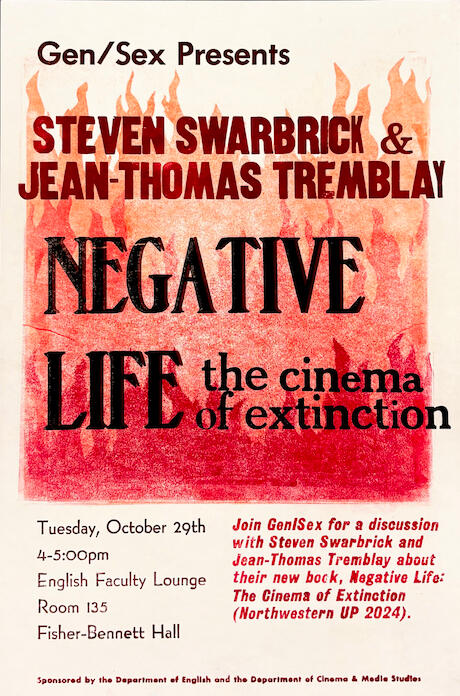
Jean-Thomas Tremblay is an Associate Professor of Environmental Humanities and Director of the Graduate Program in Social & Political Thought at York University’s Faculty of Liberal Arts & Professional Studies. He holds appointments in the Department of Humanities, English, and interdisciplinary programs like Science & Technology Studies. His research bridges environmental humanities, sexuality studies, and film studies, focusing on the interplay between embodiment, environment, and biopolitical forces since the 1970s. Education : PhD in English Language and Literature from the University of Chicago, with a Graduate Certificate in Gender and Sexuality Studies. Previously an Assistant Professor of English at New Mexico State University. Research & Publications : Authored Breathing Aesthetics (2022) and Negative Life: The Cinema of Extinction (2024, co-authored). Current projects explore critiques of environmentalism funded by SSHRC grants. His work interrogates ecocritical assumptions about aesthetics’ role in socialization. Awards : Finalist for the 2025 Ecocritical Book Award (ASLE). His scholarship has been reviewed in ISLE , Cultural Geographies , and Representations . Engagement : Advisory Board member for differences: A Journal of Feminist Cultural Studies , Contributing Editor to Discourse: Journal for Theoretical Studies in Media and Culture . Active in conferences and media discussions on environmental humanities and film. Grants & Labs : SSHRC Insight Development Grant (2024) for “Eco-subtraction: Downsizing the Environmental Humanities.” Directs a graduate program fostering interdisciplinary social/political thought.