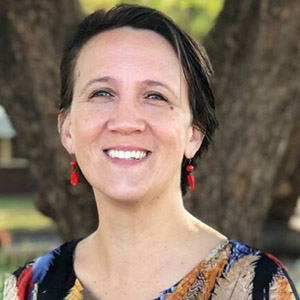
Dr. Sarina Kilham is a Lecturer in Agricultural Extension and Rural Sociology at the Gulbali Institute's Agricultural, Environmental and Veterinary Sciences school. Her research focuses on sustainable rural livelihoods, autonomy in development programs, and biofuel strategies in Brazil and Timor-Leste. She holds a PhD from the University of Technology Sydney (2017) and has extensive experience with international development organizations like the UN and NGOs. Her work bridges sociology and agriculture, addressing food justice, disability-inclusive disaster resilience, and urban food systems innovation. She teaches courses like AGR220 and AGR202, and supervises graduate students examining social dimensions of agriculture and food systems. Recent grants include funding for regenerative agriculture's economic/social dimensions and knowledge translation in agriculture (Soil CRC). She collaborates with the City of Sydney and TASA on urban food systems projects. Awards include grants supporting Timor-Leste education programs and disability advocacy. Her podcast What's Sociology Got to Do with It? highlights applied sociological insights. Kilham's work contributes to UN SDGs on education, sustainable cities, and climate action.
Dr. Catalin Brylla is a Principal Lecturer in Film and Television at Bournemouth University and Deputy Director of the Centre for the Study of Conflict, Emotion and Social Justice. He holds a PhD in Media and Communication from Goldsmiths, University of London, and has served as an external examiner for media programs at the University of Newcastle and the University of Glasgow. His research focuses on media audiences, representation, stigma reduction, and the social impact of media, with a particular emphasis on marginalized groups such as disabled individuals, African communities, and women in minority contexts. Brylla’s work is practice-led and impact-driven, aiming to challenge stereotypes through documentaries and interdisciplinary collaborations. He has produced several films, including Zanzibar Soccer Dreams (2016), June’s Patchwork (2018), and The Terry Fragments (2021), which explore themes of disability, gender, and cultural identity. His academic contributions include co-editing volumes such as Cognitive Theory and Documentary Film and Documentary and Disability , and publishing extensively on cognitive film theory and social justice. Brylla’s accolades include being a Fellow of the Society for Cognitive Studies of the Moving Image and the Higher Education Academy. He has secured grants from the AHRC, British Academy, and others for projects addressing disability advocacy and media engagement in marginalized communities. His editorial roles include serving on the boards of Screen Bodies and Disability & Society Journal , and he actively promotes diversity and inclusion in academic and media sectors through his leadership roles. As a supervisor, he mentors PhD students researching topics like media mapping for dementia patients and gentrification activism in Hackney. His teaching spans documentary practice, media theory, and ethics, reflecting his commitment to bridging academic research, creative practice, and societal impact.
Virpi Vellonen is a Lecturer at the University of Eastern Finland , affiliated with the Special Education department under the School of Educational Sciences and Psychology . Her work focuses on leveraging educational technology to support children with autism spectrum disorders (ASD) , emphasizing inclusive pedagogy and student well-being . She has led projects like Student Teacher Well-Being: Deepening Understanding and Building Support (STeWDUBS) , which explored stress and resilience in teacher training. Research Interests : Designing technology-enhanced learning environments for ASD students, strength-based educational models , and DIY (do-it-yourself) educational tools . Key Contributions : Validating inclusion measures in Finnish higher education, analyzing narrative research in teacher well-being, and pioneering participatory design with ASD children and families. Email : virpi.vellonen@uef.fi
Olivia Lewis is a Clinical Assistant Professor in the College of Education at Oregon State University . Her work focuses on mental health equity, counseling practices, and inclusive education for marginalized student populations. Credentials: Ph.D., National Certified Counselor (N.C.C.) Contact: olivia.lewis@oregonstate.edu | 541-737-5959 Research Focus Dr. Lewis investigates mental health access, suicide prevention, and wellness disparities for college students—particularly those with intellectual and developmental disabilities—using single-case research designs and nature-based interventions. Her recent work explores leadership development in first-generation students through outdoor adventure. Key Article Trends Her publications (2022–2025) emphasize: Qualitative analysis of mental health barriers in inclusive postsecondary programs EcoWellness counseling frameworks for neurodiverse populations Methodological rigor in single-case research design Interdisciplinary support systems for students with disabilities Mental health disparities during the pandemic for LGBQ+ communities
David A. Bergin is a Professor of Educational Psychology at the University of Missouri, specializing in student motivation, STEM learning, and the development of interest. He holds a PhD and an Educational Specialist degree from Stanford University. His work emphasizes understanding how motivation influences academic and informal learning, particularly for underrepresented groups. Bergin is a past president of APA's Division 15 (Educational Psychology) and has contributed to editorial boards of top journals like Journal of Educational Psychology . Research Interests : Bergin investigates how interest and motivation drive learning outcomes, classroom engagement, and career choices. He explores the impact of teacher-student relationships, competition, and cultural factors on student achievement. His recent work includes studies on robotics-based engineering education, interdisciplinary neuroscience curricula, and interventions for underrepresented students. Awards & Recognition : Outstanding College Teaching Award (University of Missouri College of Education, 2018) Fulbright Scholar (2013, teaching motivation courses in Chile) Key Contributions : Co-author of Child and Adolescent Development in Your Classroom (3rd ed.), a widely used teacher-training textbook. He has also developed the Classroom Engagement Inventory and contributed to TIMSS data analysis on international education trends. Advising & Grants : Bergin has advised numerous studies on STEM motivation, low-stakes testing, and college access programs for marginalized students. His grants include funding for neuroscience education initiatives and engineering design learning projects.
Professor Cathy Lewin is a leading academic in the field of Education and Educational Technology at Manchester Metropolitan University, where she has been employed since 2001. With a background in mathematics and computer science, she transitioned from software engineering to educational research after completing her PhD at the Open University in 1997. Her work focuses on digital pedagogy, socio-cultural theories of learning, and the integration of technology in educational settings. Co-editor of the British Journal of Educational Technology (2023–present) Former Editor of Learning, Media and Technology (2004–2010) External examiner for MSc Educational Research (University of Bristol, 2012–2015) and Open University courses Lewin’s research has significantly influenced educational policy through large-scale evaluations for organizations such as the Education Endowment Foundation, European Commission, and UK Government. She has led or co-led projects including the EU FP7 iTEC project, Whole School SEND Review, and Oasis Horizons iPad initiative. Her methodological expertise spans quantitative and qualitative approaches, with a particular emphasis on mixed methods and socio-cultural frameworks. Recent publications examine topics like digital pedagogy, the impact of social media on teacher professional development, and the integration of formal and informal learning through technology. Her work has been instrumental in shaping guidance reports for educators, such as the EEF’s Using Digital Technology to Improve Learning , which has informed technology investments in schools globally. IFIP Service Award for contributions to the International Federation of Information Processing Editorial Board member for multiple journals including Pedagogy, Culture and Society Lewin supervises doctoral students in areas such as digital pedagogy, computing education, and sociocultural theories of learning. She welcomes supervisees exploring the intersection of technology, inclusion, and educational practices.
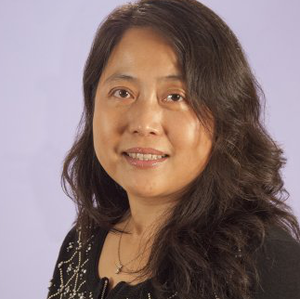
Xiaojun (Jenny) Yuan is an Associate Professor at the University at Albany, State University of New York, within the College of Emergency Preparedness, Homeland Security, and Cybersecurity. Her research focuses on Human-Computer Interaction (HCI) and Information Retrieval, emphasizing user interface design and human information behavior. She has secured grants from institutions like the Institute of Museum and Library Services and the New York State Education Department. Dr. Yuan holds a Ph.D. from Rutgers University and the Chinese Academy of Sciences, alongside advanced degrees in Statistics and Computer Science. She actively contributes to professional committees (e.g., ACM SIGIR, ASIS&T) and editorial boards, including the Aslib Journal of Information Management and Annual Review of Information Science and Technology . Her work addresses technology accessibility, pandemic response systems, and inclusive design for marginalized populations. Her research spans decades, with notable contributions to voice search optimization, cultural aspects of interface design, and technology adoption patterns during crises. Recent studies investigate algorithmic fairness, privacy concerns in aging populations, and pandemic-era educational technology. Dr. Yuan's interdisciplinary approach bridges computer science, sociology, and public health to tackle real-world challenges like health equity and emergency preparedness. Grants: Institute of Museum and Library Services, SUNY Seed Grant, NY State Education Department Editorial Roles: Aslib Journal of Information Management, Annual Review of Information Science and Technology Professional Memberships: ASIS&T, ACM, IEEE Her publications highlight trends in conversational search systems, gamified learning tools, and the societal impacts of AI. Ongoing research explores culturally responsive keyboard designs and pandemic data visualization for underrepresented groups.
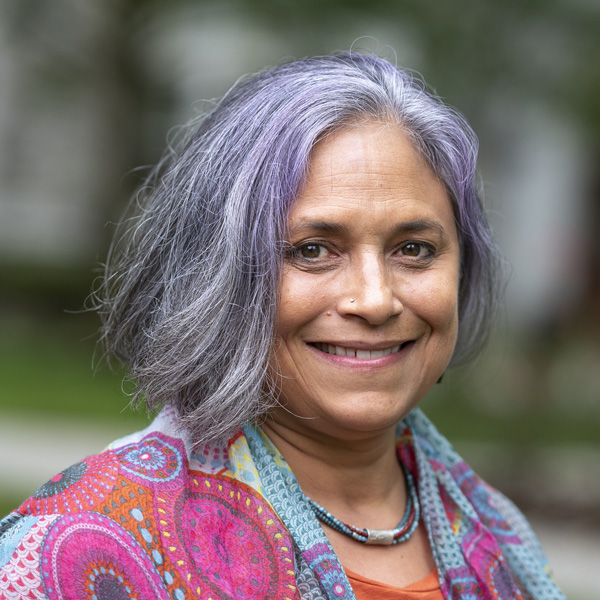
Associate Professor of Biology and Assistant Chancellor for Inclusivity and Belonging at the University of Wisconsin-Whitewater, Anneke Lisberg specializes in enhancing student success through initiatives like the STEM Boot Camp program. Her work focuses on supporting first-generation students, underrepresented minorities, and those from low socioeconomic backgrounds. She collaborates with committees addressing disability concerns, mental health, and student success. As co-director of the STEM Boot Camp, she helps incoming students transition to university life through academic preparation and mentorship, significantly improving graduation rates. Her 2019 Tedx Youth talk, Bridge to College , highlights her research on barriers facing underserved student groups. Her role as Assistant Chancellor emphasizes cross-campus collaboration to institutionalize inclusive policies. She advocates for environments where students collaborate effectively with peers and faculty to achieve academic goals.
James Cornford is an Associate Professor in Organisational Behaviour at the Norwich Business School, University of East Anglia (UEA). He joined UEA in 2009 from Newcastle University, where he held roles including Senior Lecturer and Principal Research Associate. His research focuses on multi-agency organisational change in public sectors, information technology-driven organisational transformation, and regional development processes. He has led or co-investigated projects funded by the ESRC, EPSRC, European Commission, and UK government departments. **Career & Affiliations**: Associate Professor, Norwich Business School (2009–present) Co-founder of the Centre for Social and Business Informatics (now part of KITE at Newcastle University) Visiting Fellow at Newcastle University’s KITE Member of the EPSRC Peer Review College **Research Interests**: Public sector transformation through ICT integration E-government and customer focus in public services Regional development strategies and innovation ecosystems Network governance and multi-stakeholder collaboration His recent work explores challenges in information sharing across public services, the impact of AI in healthcare, and the role of science parks in supporting entrepreneurs. He has published extensively on topics like virtual universities, e-government policy, and the socio-economic effects of industrial closures. **Grants & Projects**: Smart Data Analytics for Business and Local Government (ESRC-funded, 2014–2020) Regionalising Adoption in Yorkshire and Humberside (Barnardo’s, 2016–2017) He leads the BSc in Business Analytics and Management and teaches modules on project management, innovation, and data management. His work bridges academic research and practical policy implications in public service innovation and organisational change.
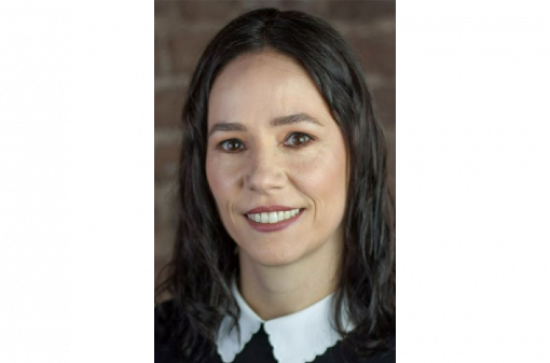
Prof. Uta Schmidt is a Professor of Feminist Theology and Gender Studies at Augustana University in Neuendettelsau, Germany. She holds a doctorate in theology from Philipps University Marburg (2002) and habilitation in Old Testament studies from Justus Liebig University Giessen (2012). Her academic career includes roles as a research associate, pastor, and acting professor, culminating in her current position since 2022. Her research focuses on feminist exegesis, gender analysis in religious texts, Old Testament anthropology, and apocalyptic literature. Key projects include studies on Isaiah’s eschatology and the Hedwig Jahnow Research Project on feminist hermeneutics. She co-edited volumes on biblical narratives and trauma, and her recent work explores vulnerability in prophetic texts. Teaching emphasizes intersectional approaches to theology, combining biblical exegesis with gender theory, queer studies, and postcolonial perspectives. Her courses and seminars promote critical engagement with biblical texts and contemporary theological issues. She chairs the European Society for Women's Theological Research in Germany and contributes to international scholarly societies. Publications span monographs, essays, and lexicon entries, addressing themes like gender in biblical narratives, apocalyptic writings, and feminist hermeneutics. Her work bridges theology with social justice, critiquing traditional exegetical methods and advocating for inclusive, gender-equitable interpretations.
Stephanie Flores-Koulish is a Professor and Program Director of Curriculum and Instruction for Social Justice at Loyola University Maryland. Her work focuses on critical media literacy education, identity studies among adoptees, and equitable education practices in urban contexts. She holds a Ph.D. in Curriculum & Instruction from Boston College, an M.S. in Special Education from Syracuse University, and a B.A. in Creative Arts from San Jose State University. Key research areas include critical media literacy pedagogy, intersectional identities of Latinx adoptees, and anti-racist curriculum design. She actively contributes to professional organizations like NAMLE (National Association for Media Literacy Education) and ASAC (Alliance for the Study of Adoption & Culture), while mentoring future educators through programs like the Institute for Recruitment of Teachers (IRT). Her recent publications explore post-pandemic media education futures, the intersection of adoption narratives with Latino diaspora experiences, and urban teacher responses to societal crises like Freddie Gray's death. Over two decades of scholarship demonstrate a commitment to bridging academic research with community-engaged practice in Baltimore City. Professional service includes board membership with NAMLE and leadership roles in adoption advocacy groups. Her teaching spans courses like Media Literacy Education (RE 601), Curriculum Theories (ED 651), and Power/Identity in Education (ED 659).
Carlo Leget (born 1964) is a full professor of care ethics at the University of Humanistic Studies in Utrecht, the Netherlands, a position he has held since 2012. He serves as chair of the care ethics department and is responsible for the Master in Care Ethics & Policy program. Leget is also the director of research at the university and a member of the Health Council of the Netherlands. Previously, he served as vice-president of the European Association for Palliative Care from 2012-2019 and co-founded the EAPC reference group on spirituality. Leget has a background in theology, medical ethics and care ethics. His research focuses on the intersection of care, meaning and end of life issues. He developed the diamond model for existential care at the end of life in secularized societies, based on medieval art of dying traditions. This model has been widely adopted in the Netherlands and Belgium, integrated into medical monitoring systems for palliative patients, and is currently being validated across 7 European countries through the EU-project Raphael. His research spans interdisciplinary collaborations across ethics, philosophy, medical science, nursing science, anthropology, psychology and theology. Current research centers around care ethics development combined with empirical studies on vulnerability across life stages, loss and grief, moral epistemology, and phenomenology. Leget has written three books and numerous scientific papers, some translated into German, Spanish and Portuguese. Recent publications demonstrate consistent focus on palliative care ethics, existential dimensions of healthcare, and practical applications of care ethics frameworks across diverse healthcare settings including end-of-life care, dementia care, and pediatric palliative care. His work shows strong integration of theoretical care ethics with practical healthcare applications. Member of the Health Council of the Netherlands Former vice-president of the European Association for Palliative Care (2012-2019) Co-founder of the EAPC reference group on spirituality Director of the Center for Grief and Existential Values Committee member at 's Heeren Loo Advisory board member for 'Nu Niet Zwanger' at GGD GHOR Nederland Leget supervises numerous research projects and has directed 25 supervised works. Current research projects include integrating palliative care approaches for heart failure patients, examining age limits in healthcare legislation, studying vulnerability in families with medically complex children, analyzing ethical dimensions of COVID-19 policy choices, and exploring autonomy in maternal-midwife relationships. He leads the EU-project Raphael which will validate his diamond model across 7 European countries starting in January 2024. Leget directs research activities at the University of Humanistic Studies and leads the Center for Grief and Existential Values. His interdisciplinary teams include collaborators from medical science, nursing, theology, anthropology, and psychology, reflecting his commitment to cross-disciplinary approaches to care ethics and end-of-life issues.
Mags Crean is an Assistant Professor in Social Policy at Maynooth University, within the Department of Applied Social Studies under the Faculty of Social Sciences. She holds degrees from University College Dublin, including a PhD in Social Justice. Her research focuses on educational inequalities, poverty, equality, social class, care, health, ageing, and critical education. She has extensive experience in community and NGO sectors addressing policy areas like housing, health, and education. Notably, she served as an Independent county councillor, emphasizing participatory policy processes. Crean's research projects include roles as Principal Investigator for 'Dementia Advocacy: A human rights and social justice lens' and co-PI for 'Zero Tolerance Meath community prevention project'. She has led evaluations of social inclusion programs and dementia services. Her 2008 UCD Egalitarian World Initiative scholarship highlights her commitment to civil society roles. Professional service includes board memberships with Purple House Cancer Support, Wicklow Inclusion and Disability Committee, and East Coast Regional Drugs & Alcohol Task Force. Teaching focuses include Advanced Social Policy, Ageing and Social Policy, and Education Inequalities at undergraduate and postgraduate levels.
Ian Matheson is an Associate Professor in the Faculty of Education at Queen's University, specializing in Special Education. He holds a PhD in Education (Cognitive Studies) from Queen's University (2018), an MEd in Cognitive Studies (2013), a BEd in Primary/Junior Division (2011), and a BSc in Psychology (2010) from Trent University. His research focuses on inclusive education practices, supporting students with exceptionalities, and addressing the needs of early career teachers. Specific interests include reading comprehension strategies, teacher self-efficacy, and motivation in educational settings. He previously served as faculty in Inclusive Education at the University of Regina before joining Queen's. Matheson is affiliated with the Canadian Research Centre for Inclusive Education and holds executive roles in the Canadian Association for Educational Psychology. His publications (2017) explore teacher induction programs, early career challenges, and parental collaboration in special education contexts.
Evdokia Pittas is an Assistant Professor at the Department of Education, University of Nicosia. She holds a DPhil in Education from the University of Oxford, with research focusing on special educational needs, dyslexia, language disorders, and literacy development. Her work emphasizes experimental studies in educational interventions and assessments, including contributions to the COST Action CLILNetLE as a Management Committee member. She has edited a Special Issue on post-COVID-19 effects on students with developmental disabilities. Education: PhD in Education (University of Oxford, 2012) MSc in Special Educational Needs (Brunel University London, 2005) Bachelor in Philosophy, Pedagogy & Psychology (National & Kapodistrian University of Athens, 2004) Research Interests: Evdokia’s research spans morphological awareness in literacy, bidialectal language effects, psychometric measurement, and inclusive education strategies. She explores how phonological, morphological, and dialectal awareness influence reading/spelling development, particularly in children with learning difficulties. Recent Trends in Publications: Her recent work addresses post-pandemic educational challenges for students with disabilities, CLIL (Content and Language Integrated Learning) outcomes in lesser-taught languages, and the role of technology in inclusive education. She systematically reviews systemic impacts of the pandemic on educational performance and advocates for evidence-based pedagogical strategies. Labs/Teams: Collaborates within international networks like CLILNetLE and leads research on literacy interventions through her academic roles at the University of Nicosia.