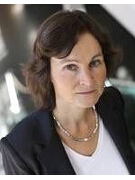
Dan Spielman is the Sterling Professor of Computer Science and holds joint appointments as Professor of Statistics and Data Science and Mathematics at Yale University. He is affiliated with the Department of Mathematics within the Faculty of Arts and Sciences. His research focuses on spectral graph theory, algorithms, linear systems, and their applications in computer science, mathematics, and statistics. He has been recognized as an ACM Fellow for his contributions to theoretical computer science and mathematics. Dr. Spielman's work bridges theoretical and applied domains, with notable advancements in graph sparsification, Laplacian solvers, and the resolution of the Kadison-Singer problem. His research also encompasses algorithmic design, optimization, and probabilistic methods. Key grants include NSF funding for projects like 'Generalized Algebraic Graph Theory: Algorithms and Analysis' (2016). His scientific awards include the ACM Fellowship (2011), acknowledging his impactful contributions to algorithms and complexity theory. Spielman’s interdisciplinary approach integrates spectral graph theory with practical applications, addressing fundamental problems in computation and mathematics.
Andreas Markoulakis is a Lecturer in the Department of Economics at the University of Warwick. He teaches modules including EC134: Topics in Applied Economics, EC229: Economics of Strategy, and EC138: Introduction to Environmental Economics. His research spans Behavioral Economics, Experimental Economics, and Microeconometrics, with a focus on energy policy, environmental economics, and pedagogical innovations. He has conducted studies on the One-Minute Paper (OMP) teaching intervention, analyzing its impact on student engagement and comprehension across seminar sessions. This intervention, implemented in EC138, employs paper-based feedback to assess student understanding and has shown discrepancies in responses when framing questions differently (e.g., addressing hesitant students explicitly). Education: PhD in Economics from the University of Kent Key research areas: Energy security policy, creative production incentives, and the application of experimental methods in economics Teaching responsibilities include advising international students and assessing graduate teaching assistants His work on the OMP intervention highlights lower comprehension rates when questions explicitly acknowledge student hesitation, suggesting potential barriers for non-native English speakers or shy students. He also explores long-term learning retention and the correlation between OMP feedback and academic performance. Future research directions include expanding the OMP analysis to broader student demographics and integrating assessment with formal exam performance data. Contributions to educational practices include publishing findings on small-group teaching effectiveness and fostering transparent communication between instructors and students. Ongoing projects involve studying semiconductor economics' impact on labor markets and AI's role in creative industries.
Larry Heck is a Professor at the Georgia Institute of Technology with joint appointments in the School of Electrical and Computer Engineering and the School of Interactive Computing. He holds the Rhesa S. Farmer Advanced Computing Concepts Chair and is a Georgia Research Alliance Eminent Scholar. His research focuses on machine learning, deep learning, natural language processing, conversational systems, and speech/speaker recognition. He directs the AI Virtual Assistant (AVA) Lab, advancing next-generation AI assistants. Dr. Heck has held leadership roles in industry, including at Microsoft, Google, Samsung, and Viv Labs, and has over 50 U.S. patents. Education: BSEE from Texas Tech University (1986) MSEE and PhD in Electrical Engineering from Georgia Tech (1991) Research Interests: Dr. Heck’s work bridges machine learning and human-centric AI, with emphasis on conversational systems, multimodal interaction, and real-world applications. His AVA Lab develops AI assistants that integrate visual, auditory, and contextual cues for natural interaction. Recent projects include multimodal sensor integration, dialogue systems for caregiving networks, and embodied AI for avatar animation. Awards: IEEE Fellow (2020) Academy of Distinguished Engineering Alumni, Georgia Tech (2017) Distinguished Engineer Award, Texas Tech University (2017) Advising & Grants: While primarily focused on industry collaboration, Dr. Heck mentors students through Georgia Tech’s interdisciplinary programs. His research is funded by government agencies and corporate partnerships, including the NSA and DARPA. Labs & Teams: The AVA Lab collaborates with academia and industry to create AI systems that understand context, gestures, and environment. Current initiatives include multimodal dialogue datasets (e.g., OKCV, SensorQA) and reinforcement learning frameworks for real-time systems.
Professor Annie Mahtani is a Professor of Electroacoustic Composition and Practice at the University of Birmingham's Department of Music. She holds a BMus (Hons), MA, MPhil, and PhD from the University of Birmingham and Birmingham City University. Her work focuses on electroacoustic music, acousmatic composition, multichannel audio, spatialisation, and field recordings, with significant contributions to site-specific installations and cross-disciplinary collaborations. She co-directs the SOUNDkitchen collective and serves on key boards such as the British ElectroAcoustic Network (BEAN) and the British Section of ISCM. Her research explores the sonic identity of environmental sounds, large-scale multichannel composition, and ambisonic audio techniques. As a performer with BEAST (Birmingham Electroacoustic Sound Theatre), she develops live acousmatic performances and soundwalks. Recent projects include Becoming Tree (an immersive audio retelling of a literary work) and Minimum Monument , performed at Birmingham Hippodrome. She actively collaborates with dance and theatre companies like Rosie Kay Dance Company. Professor Mahtani teaches undergraduate and postgraduate modules in electroacoustic composition and is involved in admissions and curriculum leadership. Her works have been performed globally in festivals like Klang! Électroacoustique and Sound + Environment, showcasing her innovative contributions to contemporary music and sound art.
Heidi Stöckl is a Professor of Public Health Evaluation at Ludwig Maximilian University of Munich (LMU) and holds an Honorary Professorship at the London School of Hygiene and Tropical Medicine (LSHTM). She leads the Public Health Evaluation group at LMU's Institute for Medical Information Processing, Biometry and Epidemiology (IBE), and serves as a Special Graduate Faculty member at the University of Guelph, Canada. Her research focuses on gender-based violence, HIV/AIDS, and health systems strengthening in low- and middle-income countries. Stöckl has led the WHO Collaborating Center on Research on Gender-Based Violence and Health and directed the Gender Violence & Health Centre at LSHTM. She has extensive experience in global health research, including modeling violence prevalence and investigating violence's impact on HIV transmission and maternal health. Education: 2006-2009: DPhil in Evidence-based Social Intervention, University of Oxford (Nuffield College) 2005: MSc in Sociology, University of Oxford 2000-2005: Diploma in Political Science, Free University of Berlin and LMU Munich Research Interests: Prioritizes intimate partner violence (IPV), sexual violence, and their intersections with HIV/AIDS, mental health, and socioeconomic factors. Her work addresses structural determinants of violence, including economic inequality and gender norms, with a focus on sub-Saharan Africa and Southeast Asia. Methodologically, she combines epidemiological approaches with qualitative studies to inform policy and intervention design. Key Contributions: Has published over 100 peer-reviewed articles, including seminal work on global IPV prevalence, child sexual violence meta-analyses, and the health impacts of trafficking. Her team's Burden of Proof study quantified violence's health effects, influencing global health metrics. She also leads initiatives on pandemic-related violence and health system resilience.
Nicole Wein is an Assistant Professor in the Department of Electrical Engineering and Computer Science at the University of Michigan, where she is a member of the Theory of Computation Lab within the Computer Science and Engineering Division. Her research focuses on theoretical computer science, particularly graph algorithms and lower bounds across various domains including distance-estimation, dynamic, parameterized, distributed, and online algorithms. Education: PhD in Computer Science from MIT, advised by Virginia Vassilevska Williams Master's in Computer Science from Stanford University B.S. in Computer Science/Mathematics from Harvey Mudd College Nicole's research centers on theoretical aspects of graph algorithms and computational complexity. She investigates fundamental questions about how algorithms can efficiently handle changing data, extract information from graphs in linear time, and understand the structure of shortest paths, especially in directed graphs. Her work spans multiple algorithmic paradigms including dynamic algorithms that adapt to changing inputs, parameterized approaches for hard problems, and fine-grained complexity that establishes precise relationships between problem difficulty. Analysis of Nicole's recent publications reveals a strong focus on graph algorithms, particularly shortest path problems, spanners, and hardness results. Her work often bridges theoretical insights with practical implications, developing novel techniques for distance estimation, dynamic graph processing, and approximation algorithms. A significant portion of her research examines the structural properties of graphs that enable or constrain efficient computation, with applications across computer science. Nicole actively mentors students at various levels. She currently advises PhD student Jubayer Nirjhor and has worked with undergraduate researchers including Sam Hiken (now a pre-doc at MIT), Michael Wang, and Tony Zhang. Her teaching includes foundational courses like EECS 376: Foundations of Computer Science and specialized courses such as EECS 598: Graph Algorithms. Nicole contributes to the academic community through service as a program committee member for major conferences including SOSA 2025, FOCS 2025, SODA 2025, and others. She co-organized the June 2023 DIMACS workshop on Modern Techniques in Graph Algorithms and previously organized Algorithms Office Hours at MIT to improve communication between theory and applications of algorithms.
Lynn Blewett is a Professor in the Division of Health Policy and Management at the University of Minnesota's School of Public Health. She directs the State Health Access Data Assistance Center (SHADAC), a Robert Wood Johnson Foundation-funded initiative supporting state-level health access evaluation. Her work focuses on health insurance coverage, Medicaid/CHIP, immigrant health, and international health systems. PhD, Health Services Research, Policy, and Administration, University of Minnesota MA, Public Affairs, Hubert H. Humphrey School of Public Affairs BA, Psychology, University of Wisconsin Her research examines disparities in healthcare access, state policy impacts on coverage, and data infrastructure development. She led the creation of the University of Minnesota's Census Research Data Center, the only health-focused RDC in the U.S. Key publication themes include pandemic healthcare resilience (2020), all-payer claims databases (2023), and long-term Medicaid eligibility modeling (2022). Trends show sustained focus on data-driven policy solutions and equity in healthcare access. Member, National Academy of Social Insurance Board of Scientific Counselors, National Center for Health Statistics Board member, AcademyHealth She has secured grants from the Robert Wood Johnson Foundation and directed SHADAC's federal survey access initiatives. Her advocacy for data transparency extends to global health systems analysis, informed by her Senate legislative experience in health policy. As SHADAC director, she manages teams analyzing state health programs and collaborates with the University of Minnesota Medical Center. The Census RDC under her leadership provides critical infrastructure for health services research.
Chinmay Kulkarni is an Assistant Professor at Carnegie Mellon University's Human-Computer Interaction Institute, where he leads the Expertise@Scale lab. His research integrates large-scale data and automation to transform learning, work, and mentoring systems. Education : Ph.D. in Computer Science from Stanford University (recipient of the Arthur P Samuel Award) Previous Affiliations : Microsoft Research, Barcelona Supercomputing Center His research spans: Human-Computer Interaction design for massive collaboration Voice-controlled interfaces and AI tools Future of work in remote/hybrid environments Behavioral economics through tech interventions Creative entrepreneurship support systems Algorithmic feedback in education Recent publications with AI and education focus show strong trends in voice technology, peer feedback mechanisms, and scalable learning platforms. His lab's systems have been used by >100,000 users across 150 countries. Scientific Awards : Arthur P Samuel Award (Stanford thesis award) Advising & Grants : NSF grant recipient US Department of Education funding Office of Naval Research support Departmental fellowship Labs : Directs Expertise@Scale lab developing systems adopted by Coursera and edX. Current research group includes PhD students Yasmine Kotturi, Julia Cambre, Pranav Khadpe and Masters student Sayan Chaudhry.
Prof. Dr. iur. Dipl.-Soz. Marion Albers holds the Chair for Public Law, Information and Communication Law, Health Law and Legal Theory at the Faculty of Law, University of Hamburg. She has been a Full Professor at Hamburg University since October 2009 and serves as Managing Director of multiple research institutions including the Cyber Law Clinic and the Hamburg Center for Bio-Governance. Her academic career spans prestigious positions at the University of Augsburg, Humboldt-University Berlin, and international collaborations with institutions in Brazil, Japan, and the United States. Education: Studies of Law, Sociology, Political Sciences and Economy at the Free University of Berlin and University of Bielefeld State Exam in Law and Diploma in Sociology Doctorate of Law in Crime Prevention and Provisions for Prosecution at University of Bielefeld Habilitation in Informational Self-Determination at Humboldt-University Berlin Professor Albers' research focuses on the intersection of law, technology, and human rights, with particular expertise in data protection law, digital constitutionalism, bioethics, and health law. Her work examines how traditional legal frameworks adapt to emerging technological challenges, especially regarding informational self-determination in the digital age. She has pioneered research on the horizontal effect of fundamental rights, the legal implications of biotechnologies, and the balance between security measures and privacy protections. Her scholarship consistently bridges theoretical legal concepts with practical applications in rapidly evolving technological contexts. Analysis of her recent publications reveals a strong trajectory toward digital constitutionalism, with increasing focus on data subject rights within digital governance frameworks. Her work demonstrates sophisticated engagement with EU data protection regulations while simultaneously exploring comparative approaches across jurisdictions including Japan and Brazil. A consistent thread throughout her scholarship is the exploration of how constitutional principles apply in digital environments, particularly regarding the protection of personal data as a fundamental right. Scientific Awards and Fellowships: Scientific award of the Claussen-Simon-Foundation (2015) Opus Magnum-Fellowship of the Volkswagen Foundation (2015-2016) Fellow at Alfried Krupp Wissenschaftskolleg Greifswald (2014) Fellow at the Institute for Advanced Study Berlin (2017/2018) Professor Albers has secured significant research funding including the Volkswagen Foundation's Opus Magnum Fellowship and has served as Principal Investigator for the German/Brazilian DAAD/CAPES PROBRAL Research Project "Internet regulation and internet rights" (2015/2018). She has supervised numerous doctoral candidates and established productive international research collaborations, particularly with Brazilian institutions. Her advisory work extends to governmental bodies including service as an expert in the German Council for Scientific Information Infrastructures (RfII) since 2018 and previous membership on the Bundestag's Advisory Committee "Ethics and Law of Modern Medicine" (2003-2005). She directs the Hamburg Center for Bio-Governance (since 2013) and the Cyber Law Clinic at the Faculty of Law (since 2012), creating interdisciplinary research environments that bridge legal scholarship with practical applications in bioethics, health law, and digital governance. Her leadership extends to editorial roles including the book series "Schriften zum Bio-, Gesundheits- und Medizinrecht" and numerous edited volumes on data protection and constitutional law.
Mitchell L. Stevens is a Professor at Stanford University’s Graduate School of Education and holds a courtesy appointment in the Department of Sociology. He co-directs the Stanford Center on Longevity and leads the Pathways Network and Futures Project on Education and Learning for Longer Lives . His research bridges organizational sociology and educational innovation, focusing on equity in academic pathways, data-driven institutional practices, and the sociology of higher education. Education: PhD in Sociology (Northwestern University, 1996); BA in Sociology (Macalester College, 1988). Stevens’ scholarly work examines alternative schooling , educational policy , gendered academic decision-making , and lifelong learning . His recent publications analyze the intersection of machine learning and enrollment trends , merit rituals in admissions , and the marketization of higher education . He employs mixed methods, including large-scale data analysis and comparative-historical frameworks. Stevens mentors doctoral students and postdoctoral researchers, with advisees including Daniela Ganelin, Philip Hernandez, Hansol Lee, Léon Marbach, Melanie Shimano, Joao M. Souto-Maior, Bernardo Mackenna, and Katie Spoon. His lab, the Pathways Network , develops analytics tools to enhance educational equity and institutional practices. Current teaching includes courses on Higher Education , Stanford’s Historical Context , and Organizational Analysis .
Professor Michael Manhart is affiliated with the Technical University of Munich (TUM) as an Extraordinary Professor in the Department of Hydromechanics . His research focuses on fluid mechanics, turbulent flow dynamics, and computational fluid dynamics (CFD) simulations, particularly in porous media and environmental fluid mechanics. Education: Not explicitly stated in the provided text. His recent publications investigate turbulent flow over random sphere packs, scalar transport at porous-turbulent interfaces, acoustic resonances in HVAC systems, and nonlinear oscillatory flow modeling. He employs advanced numerical techniques like direct numerical simulations (DNS) and large-eddy simulations (LES) to study flow structures, energy budgets, and particle transport mechanisms. Professor Manhart collaborates with researchers such as Yoshiyuki Sakai, Simon Wenczowski, and Daniel Quosdorf. His work addresses applications in environmental engineering, hydraulic modeling, and industrial fluid dynamics, with a strong emphasis on validating computational models against experimental data (e.g., PIV measurements). He leads the Professorship for Hydromechanics at TUM, conducting high-fidelity simulations and experimental studies on topics like wall shear stress estimation, sediment erosion around cylinders, and turbulence decomposition in complex flows.
Jelena Mirkovic serves as Principal Scientist at USC Information Sciences Institute (USC/ISI) and Research Associate Professor at the University of Southern California's Thomas Lord Department of Computer Science. She has held faculty positions at USC since 2010, progressing from Research Assistant Professor to her current role as Research Associate Professor since 2017, while also serving as Project Leader at USC/ISI. Her educational background includes: PhD in Computer Science from UCLA (2003) MS in Computer Science from UCLA (2000) B.Sc. in Computer Science from University of Belgrade, Serbia (1998) Mirkovic's research spans network security, human-centered attacks, and cybersecurity experimentation infrastructure. Her work focuses on critical security challenges including botnets, denial-of-service attacks, IP spoofing, vulnerability scanning, and user-centric privacy. She has pioneered methodologies for security experiments and led major infrastructure projects including the DETER testbed and SPHERE (Security and Privacy Heterogeneous Environment for Reproducible Experimentation). Analysis of her recent publications reveals consistent innovation across multiple security domains. Her work demonstrates strong technical depth in DDoS defense systems (particularly DNS protection), binary vulnerability analysis, privacy-preserving systems, and security experimentation infrastructure. A notable trend is her focus on bridging theoretical security concepts with practical implementation through large-scale testbeds and real-world data analysis. Her significant scientific achievements include: IEEE Senior Member distinction Best paper award at IEEE COMSNETS 2023 for DNS DDoS defense research Mirkovic has secured substantial research funding as Principal Investigator or Co-PI on numerous grants from NSF, DHS, and other agencies. Current major projects include SPHERE (Security and Privacy Heterogeneous Environment for Reproducible Experimentation), DISCERN (Datasets to Illuminate Suspicious Computations), and modernizing DeterLab education infrastructure. She has successfully led multiple REU sites focused on cybersecurity education and workforce development. She directs the STEEL (Security Research Lab) at USC/ISI, which develops innovative security solutions through interdisciplinary research in network security, human factors in security, and cybersecurity experimentation infrastructure. The lab emphasizes practical implementations that address real-world security challenges while advancing theoretical understanding of security systems.
Peg Rawes is Professor of Architecture and Philosophy at University College London's Bartlett School of Architecture , where she directs research and leads the MA Architectural History program. Her work bridges architectural theory with philosophy, focusing on relational architectural ecologies through three intersecting areas: human/nonhuman life practices, planetary poetics, and housing ecologies. Director of Research, UCL Bartlett School of Architecture (2023-present) REF2029 Lead for Bartlett School EDICPI for EU TACK project (2020) BAUHOW5 PI for European architecture schools partnership (2016-20) Research explores biophilic design , decolonial architecture , and feminist spatial practices across three streams: Architectural ecologies : Human/nonhuman relations in 'Bioprotopia' (2023), vulnerability visualization (2021) Planetary poetics : Climate emergency dialogues (2021), Irigarayan aesthetics (2020) Housing biopolitics : Care frameworks (2017), Spinozist ethical ratios (2015) Key funded collaborations include EU TACK's Communities of Tacit Knowledge (2020) and AHRC's Equal by Design (2016). She contributes to architectural peer review for journals and international research councils while maintaining global partnerships with institutions like Cornell , ETH Zurich , and University of Minnesota .
Roel C.G.M. Loonen is an Associate Professor at the Unit Building Physics and Services within the Department of the Built Environment at Eindhoven University of Technology (TU/e), Netherlands. He holds joint appointments with EAISI High Tech Systems and EIRES Research groups, focusing on building performance simulation and energy systems. His work bridges academic research with practical applications through collaborations with SMEs in the building industry. Loonen received his BSc and MSc (cum laude) in Building Services from Eindhoven University of Technology, followed by a PhD in 2018 with a dissertation on 'Approaches for computational performance optimization of innovative adaptive facade concepts.' His educational background has positioned him as a leading expert in building performance simulation and sustainable building technologies. His research interests center on developing and applying modeling and simulation strategies to support decision-making for designing buildings that combine high indoor quality with minimal environmental impact. Key areas include adaptive facades, building-integrated renewable energy systems, and energy-efficient building envelopes. He specializes in creating and validating new building performance simulation models to advance innovative building technologies. His recent publications demonstrate a strong focus on practical applications of building performance simulation, with emphasis on residential energy efficiency, photovoltaic systems, and occupant-centered approaches to building design. The work shows increasing integration of machine learning techniques with traditional building simulation methods, particularly for sensitivity analysis and optimization of building performance. REHVA Young Scientist Award (2021) Best PhD supervisor award from Department of the Built Environment, TU/e (2018) First prize - REHVA International student competition (2011) Smart daylight control for optimal building performance (NWO Take-off award, 2018) Best paper award (2021) Loonen actively supervises PhD and Master's students, evidenced by his Best PhD Supervisor Award in 2018. He manages multiple research projects including Sustainable Summer Comfort (2024-2027), Modeling Innovative Use Scenarios for Future Domestic Comfort (2023-2026), and Just Prepare (2022-2026), with funding from sources including the Dutch Research Council (NWO). His professional service includes being a board member of the Dutch-Flemish IBPSA affiliate and co-chair of IBPSA World's website committee, plus reviewing for 35 academic journals. He leads research within the Building Performance group, focusing on creating practical tools and methodologies that bridge the gap between theoretical building performance models and real-world implementation in the construction industry. His work particularly emphasizes the integration of occupant behavior and practices into building performance models, recognizing that human factors are critical to achieving sustainable building performance in practice.
Chang Hyun Park is an Assistant Professor at the Department of Information Technology, Uppsala University, where he is part of the Uppsala Architecture Research Team. His research focuses on computer architecture with emphasis on memory systems, virtualization, and system software optimization. Dr. Park completed his doctoral studies at KAIST (Korea Advanced Institute of Science and Technology) in South Korea, where he was advised by Professor Jaehyuk Huh. Prior to his current position, he served as a post-doctoral researcher at Uppsala University working with Professor David Black-Schaffer. Dr. Park's research spans several critical areas in computer architecture and systems: Virtual memory systems and address translation mechanisms Cache hierarchy optimization and memory systems design Support for non-volatile memory and heterogeneous memory systems Virtualization technology and optimizations for cloud environments High-speed I/O device integration and accelerator support His publication record demonstrates a consistent focus on improving memory system performance, particularly in virtualized environments. Over the past decade, his work has evolved from fundamental virtual memory optimizations to addressing challenges in emerging memory technologies and large-scale system architectures. Recent publications show increasing emphasis on heterogeneous memory systems, graph processing workloads, and hardware-software co-design approaches. Dr. Park actively collaborates with researchers at Uppsala University, particularly with Professor David Black-Schaffer, and maintains connections with his alma mater KAIST. His work appears regularly in top-tier computer architecture conferences including ISCA, MICRO, ASPLOS, and MEMSYS.