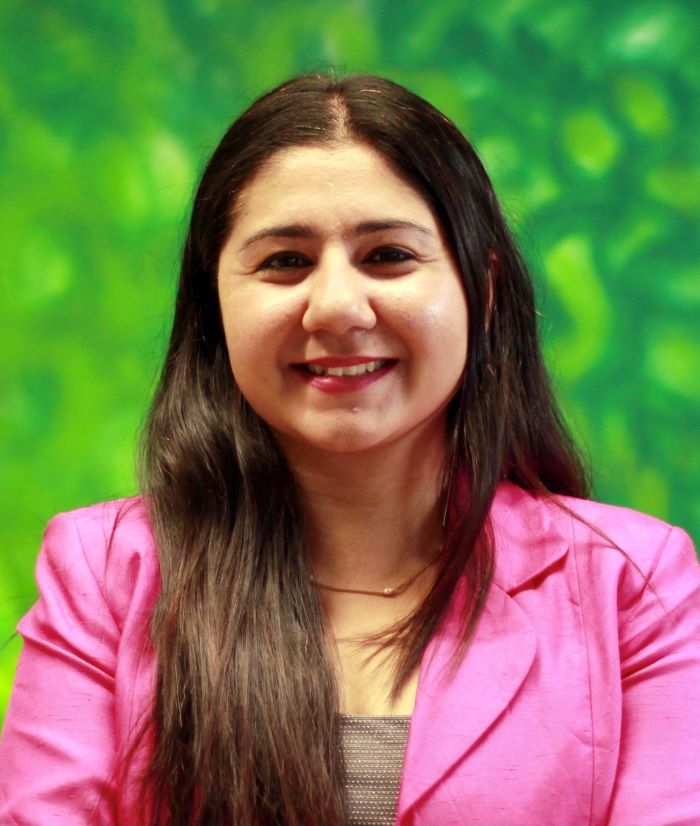
Lauren Zarzar is a Professor in the Department of Chemistry at Penn State University, affiliated with the Eberly College of Science. Her research intersects chemistry, materials science, and fluid dynamics, focusing on microscale systems and advanced synthesis techniques. Key research themes include surfactant chemistry , direct laser writing , and structural color . She explores nonequilibrium droplet systems, hybrid materials, and interfacial actuation mechanisms, with applications in water sustainability and energy systems. Recent publications highlight innovations in nanophase engineering , multi-bounce interference optics , and active droplet patterning . Trends show a strong emphasis on catalysis , microscale manufacturing , and dynamic emulsion systems . 2022 : Camille Dreyfus Teacher-Scholar Award 2025 : Presidential Early Career Award for Scientists and Engineers (seed grant recipient) 2022 : Eberly Distinguished Faculty Mentoring Award (seed grant recipient) Zarzar’s work involves collaborations with interdisciplinary teams across materials synthesis, optical engineering, and environmental research. Her lab develops lithography methods and photonic materials with support from grants like the NSF CAREER award (2021) and Penn State seed grants.
Deng Weiwei is a Professor and Department Head of the Department of Mechanics and Aerospace Engineering at Southern University of Science and Technology (SUSTech) in Shenzhen, China. Previously, he served as an Associate Professor with tenure at Virginia Tech (2015-2017) and as an Assistant Professor at the University of Central Florida (2010-2015). He completed his postdoctoral training at Yale University (2008-2010) after earning his Ph.D. in Mechanical Engineering from Yale in 2008. His educational background includes: Bachelor of Engineering Mechanics from Tsinghua University (1995-1999) Master of Engineering Mechanics from Tsinghua University (1999-2001) Ph.D. in Mechanical Engineering from Yale University (2003-2008) Deng's research focuses on experimental fluid dynamics of micro- and nanoscale systems , particularly examining droplets, jets, and thin films. His work bridges fundamental fluid mechanics with practical applications in printing technologies, solar cell fabrication, and advanced manufacturing. He has made significant contributions to understanding electrohydrodynamic phenomena, droplet impact dynamics, and the controlled generation of microstructures through electrospray techniques. His laboratory has discovered novel fluid dynamics phenomena, including the resonance between light pressure perturbations and droplet instability, leading to uniform droplet splitting. The team also pioneered "electrofluidic disk atomization," using high-frequency AC electric fields to control jet instabilities. These discoveries have enabled more precise control over droplet generation processes, with applications in microfabrication and printing. Deng's scholarly output shows a clear progression from fundamental electrohydrodynamics to applied manufacturing technologies. His early work focused on basic electrospray mechanisms and droplet generation, while more recent publications emphasize applications in solar cell fabrication, flexible electronics, and advanced printing techniques. The consistent thread throughout is the manipulation of microscale fluid phenomena for technological advancement. His notable recognition includes: NSF CAREER Award (2015) Deng leads an active research group that has secured multiple major grants, including a National Natural Science Foundation of China special project (2020), a key project (2019), and a general project (2018). Prior to returning to China, he led three National Science Foundation projects in the United States. His student entrepreneurial team won first prize in the Southeast region of the Clean Energy Entrepreneurship Competition sponsored by the U.S. Department of Energy, receiving $100,000 in startup funding and an invitation to visit the White House. The DENGLab at SUSTech focuses on experimental fluid mechanics research with emphasis on microscale phenomena. The lab regularly hosts photography competitions to document fluid phenomena visually, demonstrating Deng's commitment to both scientific rigor and creative presentation of research findings.
Daniel Rau is an Assistant Professor in the Department of Mechanical Engineering at the University of Wyoming. His research focuses on advancing polymer additive manufacturing (AM) technologies, particularly Direct Ink Write (DIW) and Vat Photopolymerization (VP), to enable multifunctional parts for healthcare and energy applications. Ph.D., Mechanical Engineering, Virginia Tech (2022) B.S., Mechanical Engineering, Virginia Tech (2017) The RAM Lab examines three core areas: materials innovation, process development, and functional applications. Current work emphasizes soft elastomers, real-time process monitoring, multimaterial VP, and process reliability improvements. Publications highlight advancements in polymer AM, including rheological frameworks for printability, dual-cure systems, hybrid DIW-VP integration, and post-processing methods for high-performance polymers. Research spans years 2018–2024, emphasizing energy applications and healthcare technologies. Teaching responsibilities include Intermediate Mechanics of Materials (ME 3010) for undergraduates and Plasticity and Viscoelasticity (ME 5438) for graduate students. Assistant Professor, University of Wyoming (2024–Present) Postdoctoral Research Associate, University of Virginia (2022–2024)
Edward A Dauer is a Clinical Professor in the Department of Biomedical Engineering at the College of Engineering, University of Miami. His work spans biomedical and civil engineering disciplines, focusing on biomaterials development and material science applications. Biomedical Engineering: Scaffold design for immunomodulation and peripheral nerve repair Civil Engineering: Protein-modified biocementation and nanoparticle-reinforced construction materials His research in biomedical engineering includes 3D scaffold fabrication for fibroblastic reticular cell maintenance and autoimmune therapy, while environmental applications involve electrohydromodulation for phosphate recovery. Material science work covers Kevlar composites and Polyurethane scaffold characterization, with biocementation studies analyzing protein effects on calcium carbonate precipitation. Publication trends show expertise in interdisciplinary material design , with articles covering topics from diabetogenic T cell modulation to bioremediation and composite durability . Key methodologies include scaffold fabrication, electrochemical recovery systems, and microstructural analysis across biological and civil engineering applications.
William E. Bentley is the Robert E. Fischell Distinguished Professor of Engineering at the University of Maryland, College Park, where he serves as the Inaugural Director of the Robert E. Fischell Institute for Biomedical Devices and Director of the Maryland Technology Enterprise Institute (Mtech). He holds dual appointments in the Fischell Department of Bioengineering and the Department of Chemical and Biomolecular Engineering, with additional affiliation at the Institute for Bioscience and Biotechnology Research. Dr. Bentley earned his Ph.D. in Chemical Engineering from the University of Colorado at Boulder in 1989, following a Master of Engineering and Bachelor of Science in Chemical Engineering from Cornell University. His academic journey began at the University of Maryland in 1989, where he has remained throughout his distinguished career, founding the Fischell Department of Bioengineering and establishing himself as a leader in the field. His pioneering research focuses on the interface between biology and electronics, developing methodologies to interrogate and control molecular signaling both inside and outside of cells. Dr. Bentley's lab uses metabolic engineering and synthetic biology to rewire genetic circuits, with particular emphasis on bacterial quorum sensing systems and redox-based communication between biological systems and electronic devices. His groundbreaking work has established the field of 'electrogenetics,' which enables electronic control of biological function through redox signaling pathways. Current research explores creating 'smart' cellular systems that can recognize, compute, actuate, and deliver therapeutic agents in a programmed manner. Dr. Bentley's recent publications demonstrate a strong trend toward developing bidirectional communication between biological systems and electronic devices, with applications in protein analysis, biosensors, and therapeutic delivery systems. His work increasingly focuses on redox-based information processing and the development of 'biohybrid' systems that bridge the gap between electronics and biology, representing a paradigm shift in how we interface with biological systems. Among his numerous honors are: Distinguished University Professor (2016) Robert E. Fischell Distinguished Chair of Engineering (2016) Charles Thom Award, Society of Industrial Microbiology and Biotechnology (2013) AIChE Food, Pharmaceutical and Bioengineering Division Award (2012) University System of Maryland Regents' Faculty Award for Research (2011) Fellow of the American Chemical Society, American Academy of Microbiology, AAAS, and AIMBE Dr. Bentley has mentored more than 40 PhD students and 15 postdocs, many of whom now hold leadership positions in industry, federal agencies, and academia. His research has been continuously supported by major grants from NIH, NSF, DOD, DOE, FDA, and USDA, reflecting the interdisciplinary nature and significance of his work. He co-founded Chesapeake PERL, a protein manufacturing company based on insect larvae as mini bioreactors, demonstrating his commitment to translating research into practical applications. He leads the Biomolecular and Metabolic Engineering Laboratory, which has developed innovative approaches to biofabrication and electro-bio interfaces. Current research focuses on creating systems that enable 'programming' of biological function through redox communication, with applications in treating bacterial infections, developing next-generation biosensors, and advancing our understanding of cellular communication networks. His laboratory maintains active collaborations with industry partners and international research groups, particularly with institutions in Italy through the UMD-Trento partnership.
Peter Kofinas serves as Professor and Chair of the Department of Chemical and Biomolecular Engineering at the University of Maryland, with affiliate appointments in Bioengineering, Materials Science and Engineering, and the Fischell Institute for Biomedical Devices. Previously, he held roles as Associate Dean of Faculty Affairs and Graduate Programs in the A. James Clark School of Engineering and Associate Chair of the Fischell Department of Bioengineering. His educational background includes B.S., M.S., and Ph.D. degrees in Chemical Engineering and Materials Science from the Massachusetts Institute of Technology. After completing postdoctoral research at MIT, he joined the University of Maryland faculty in 1996. Research Focus: Kofinas directs the Functional Macromolecular Laboratory , specializing in functional polymers for medical, energy, and electronics applications. His work spans polymer electrolytes for lithium-ion batteries , additive manufacturing of magnetodielectric nanocomposites , biodegradable surgical sealants for adhesion prevention and wound healing, and structural color biosensors for pathogen detection. Recent projects include sprayable surgical materials, hemorrhage control hydrogels, and point-of-care diagnostic devices. His publications reveal a strong emphasis on energy storage materials (30% of recent work), surgical biomaterials (25%), and printable electronics (20%), with growing interest in point-of-care diagnostics and antimicrobial wound dressings. Senior Outstanding Research Award (2012) Two Outstanding Invention of the Year Awards (2007, 2001) National Science Foundation CAREER Award (1999) Engaged Faculty Award (2011) University of Maryland Keystone Professorship (2005–2012) Kofinas has graduated 23 PhD students (3 now in faculty positions), 9 MS thesis students, and mentored over 100 undergraduates. His entrepreneurial activities include founding startup companies commercializing laboratory innovations. He directs the Functional Macromolecular Laboratory, which integrates polymer synthesis, nanomaterials engineering, and biomedical device development across multiple collaborative projects with clinical and industrial partners.
Dr. Vytautas Dūdėnas is a Researcher at the Institute of Theoretical Physics and Astronomy (ITPA) within the Faculty of Physics at Vilnius University. His primary research focuses on particle physics theory and phenomenology, with specific expertise in quantum field theory, renormalization techniques, and beyond standard model physics. His work bridges theoretical frameworks with experimental applications in laser physics and optics. Dr. Dūdėnas' research interests span particle physics theory, quantum field theory, renormalization methods, and beyond standard model physics. His recent publications demonstrate a significant focus on laser-matter interactions, nonlinear optics, and advanced optical techniques. His work explores fundamental aspects of particle interactions while applying these principles to cutting-edge optical technologies and material processing techniques. The consistent theme across his research is the investigation of fundamental physical phenomena through both theoretical frameworks and experimental applications. Analysis of his recent publications reveals a strong emphasis on Bessel beams, supercontinuum generation, femtosecond laser processing of materials, and advanced optical techniques. His work demonstrates expertise in both theoretical physics concepts and their practical applications in photonics and materials science. The interdisciplinary nature of his research connects fundamental particle physics with applied optical technologies. Dr. Dūdėnas teaches advanced physics courses including Quantum Field Theory II and Mechanics, contributing to the education of future physicists at Vilnius University. His ORCID profile (0000-0001-9405-9959) provides access to his complete publication record, while his research outputs are extensively documented on INSPIRE-HEP.
Dr. Domas Paipulas is an Associate Professor at Vilnius University , affiliated with the Laser Research Center (LRC) . His work focuses on laser microprocessing of materials , integrated optics , and modification of optical properties , with applications in sensing and photonic device fabrication. Research Highlights: Ultrashort pulse interactions, hybrid glass-polymer microsystems, GRIN microoptics development Projects: EU-funded femtosecond laser microprocessing (2020-2023), Lithuanian Research Council grants He has supervised 1 PhD graduate and currently mentors 1 PhD student . Teaching includes Optical Systems (Master's), Optical Systems Design , and foundational physics courses. As a Faculty Council member , he contributes to academic governance.
Dr Florian Ströhl is a Senior Researcher (equivalent to Research Professor) at the Department of Physics and Technology , UiT The Arctic University of Norway in Tromsø. He leads a highly interdisciplinary program that bridges optics, biology and medicine, acting as Principal Investigator on the ERC Starting Grant LiBriNa , the RCN FRIPRO SOLIS project, and the EU MSCA MitoQuant consortium. Education: Ph.D. Biotechnology (2018), University of Cambridge, UK M.Sc. Advanced Optical Technologies with honours & distinction (2014), University of Erlangen-Nuremberg, Germany B.Sc. Medical Engineering with BMBF award (2012), University of Erlangen-Nuremberg, Germany Research Interests: Dr Ströhl’s work revolves around advanced optical system development , spanning the full chain from optical theory and photolithography to instrumentation and biomedical application . Core themes include light-sheet microscopy , mechanosensitive Brillouin nanoscopy , label-free super-resolution techniques , and integrated photonics . Application domains cover dementia research , kidney & liver pathology , cardiac imaging and sustainable aquaculture . Scientific Awards & Funding: 2025 ERC Starting Grant—20 million NOK 2023 RCN Innovation Grant—1 million NOK 2021 RCN FRIPRO Young Research Talent Grant—8 million NOK 2019 EU Horizon 2020 MSCA Grant—2.1 million NOK EMBO Fellow, Nano DTC Fellow, OPTICA Senior Member Grants, Teams & Mentoring: Dr Ströhl currently directs a diverse team of post-docs, PhD candidates and engineers in the Ultrasound, Microwaves and Optics research group. He actively welcomes master’s thesis students and visiting scientists. All projects are supported by Norwegian and European funding frameworks and emphasize open science , cross-disciplinary collaboration and public outreach via video tutorials and popular-science talks.
Yoshito Nozaki serves as an Assistant Professor (Junior Researcher) at Waseda University's Research Organization for Nano & Life Innovation since 2015, currently holding this position as of 2023. His work bridges microfluidics, thin film physics, and nano/micro-systems with applications in chemical synthesis and materials science. His research focuses on advanced microfluidic systems for precise droplet generation, enabling breakthroughs in chemical synthesis, organic reactions, and microreactor design. Key innovations include 3D microchannel architectures for sub-10μm droplet production, tail-breakup mechanisms for single-micron droplets, and organic solvent-compatible devices. His work demonstrates significant reductions in reagent consumption, reaction times, and byproducts compared to conventional methods. Analysis of his 13 publications (2016-2021) reveals consistent focus on droplet manipulation physics and thin film magnetic materials . The publications show strong international collaboration (Scopus h-index: 5) with primary emphasis on experimental device fabrication and fluidic characterization. His most impactful work involves microdroplet-based azo compound synthesis achieving 900x faster reaction times and 10x lower reagent concentrations. Professional memberships include: Japan Society of Applied Physics (2014-present) Surface Science Society of Japan (2013-present) His laboratory within the Research Organization for Nano & Life Innovation specializes in microfabrication techniques including soft lithography, focused ion beam machining, and silicon/glass device integration. Current projects emphasize chemical applications of microdroplets and magnetic thin film development for next-generation electronic devices.
Davide Masato is an Assistant Professor in the Department of Plastics Engineering at the University of Massachusetts Lowell's Francis College of Engineering. He holds a Ph.D. in Industrial Engineering from the University of Padova (Italy) and previously served as a post-doc researcher there and a visiting scholar at the University of Bradford (UK). His research tackles polymer processing, sustainable manufacturing, and micro injection molding, funded by NASA, US ARMY, and REMADE. Education includes: Ph.D. Industrial Engineering, University of Padova (2018) M.S. Mechanical Engineering, University of Padova (2014) B.S. Industrial Engineering, University of Padova (2011) Research interests span polymer processing , micro injection molding , and sustainable manufacturing , with innovations in mold engineering, surface texturing, and recycled materials. His work integrates experimental and simulation approaches to optimize manufacturing efficiency and reduce environmental impact. Recent publications (45+ journals) focus on injection molding advancements, recycled polymers, surface engineering, and sustainable processes. Trends include high-impact studies on laser texturing, pressure-controlled molding, and hybrid manufacturing techniques. Awards and honors: Teaching Excellence Award (2021) Global Innovation Talent Award (2020) Best Paper Award, SPE Injection Molding Division (2018) Honorable Mention Awards, World Congress on Micro and Nano Manufacturing (2017) He advises capstone projects and graduate research, with funding from federal grants and industry. Projects include thermoforming of recycled plastics, 3D-printed tooling, and sustainable material development. His lab, the Masato Research Group, focuses on polymer circularity and collaborates with international partners.
Zhibin Yu is an Associate Professor in Industrial & Manufacturing Engineering and Materials Science & Engineering at the FAMU-FSU College of Engineering, Florida State University. His research centers on scalable manufacturing of electronic devices using printed and additive techniques, with applications in flexible optoelectronics and energy systems. His educational background includes: Ph.D. in Materials Science and Engineering from UCLA (2010) M.S. in Polymer Science and Engineering from Tsinghua University, China (2003) B.S. in Chemical Engineering from Tsinghua University, China (2001) Dr. Yu's work spans printed electronics , perovskite-based optoelectronics , and ultra-flexible/stretchable devices . His lab develops photodetectors, LEDs, and solar cells using conjugated polymers, solution-processable semiconductors, and composite materials. Key innovations include additive thin-film manufacturing and composites for electronics/optics , enabling breakthroughs in wearable sensors and radiation detection systems. Analysis of his 2023-2025 publications reveals dominant themes in perovskite-polymer composites for X-ray detectors and flexible displays, coupled with digital twin modeling for mechanical stability. His work bridges materials science and manufacturing engineering to solve scalability challenges in next-generation electronics. Dr. Yu actively mentors Ph.D. students, including graduates Tommy Geske and Xin (Minnie) Shan (2019), and current researchers Clark Li, Sue Mao, and Melissa Davis. His Yu Lab team focuses on translating fundamental materials research into manufacturable electronic systems. The Yu Lab pioneers scalable fabrication methods for optoelectronic devices, emphasizing perovskite composites and polymer-derived ceramics. Current projects target medical imaging sensors, wearable health monitors, and radiation-hardened electronics through advanced additive manufacturing and materials engineering.
Dr. Akansha Mehta is a Researcher at the Department of Glass Processing, FunGlass Centre for Functional and Surface Functionalized Glass at Alexander Dubček University of Trenčín, Slovakia. Her work focuses on sustainable materials development with emphasis on waste valorization and environmental applications. Education: Ph.D. (Chemistry) from Thapar Institute of Engineering and Technology, Patiala, India (2015-2018) M.Sc. (Chemistry) from Thapar Institute of Engineering and Technology, Patiala, India (2013-2015) B.Sc. (General Chemistry) from Kurukshetra University, Thanesar, Haryana, India (2010-2013) Dr. Mehta's research spans multiple areas of sustainable materials science, with particular expertise in waste glass upcycling , photocatalysis , and water treatment technologies . Her work bridges fundamental materials science with practical environmental applications, developing innovative solutions for converting industrial waste into functional materials. She has made significant contributions to the development of highly porous ceramic membranes , additive manufacturing of glass ceramics , and photocatalytic systems for environmental remediation . Her interdisciplinary approach combines materials synthesis, characterization, and application testing to address pressing environmental challenges. Analysis of Dr. Mehta's recent publications reveals a consistent focus on sustainable materials development, particularly in waste valorization and environmental applications. Her work demonstrates a progression from fundamental photocatalytic mechanisms to practical applications in water treatment. The research shows strong interdisciplinary connections between materials science, environmental engineering, and chemical engineering, with increasing emphasis on 3D printing technologies for sustainable material fabrication. Scientific Awards: L'Oréal-UNESCO For Women in Science, Slovakia (2023) ACS Best Presentation Award (2022) Best Poster Award at National Conference on Material Science (2018) MRSI Scholarship for student talk at IIT Mumbai (2017) Dr. Mehta actively supervises PhD students, currently serving as primary supervisor for Maria Waqar's research on "Upcycling of industrial waste glass into valuable components for water treatment applications" and co-supervisor for Mansi Dua's work on "Additive manufacturing of advanced porous and photocatalytic glass ceramic wastewater purifying membranes." Her research is supported by multiple grants including Horizon 2020 project FunGlass (2017-2024), Slovenian Research Agency project P2-0337, and VEGA national Slovak grant (1/0110/23) where she serves as Principal Investigator. Dr. Mehta leads research within the FunGlass Centre, collaborating with international partners including University of Padova (Italy), CEITEC (Czech Republic), and multiple industrial partners such as Nuova Ompi, Stevanato Group Italy, and RONA. Her team focuses on developing advanced materials for environmental applications, particularly 3D printed photocatalytic membranes and electrodes for water treatment systems.
Jordi Llorca Pique is a Professor in the Department of Chemical Engineering at the Eastern Barcelona School of Engineering (EEBE), part of the Polytechnic University of Catalonia (UPC). He is affiliated with the Institute of Energy Techniques and leads multiple research initiatives focused on sustainable energy solutions. His research expertise spans catalysis, hydrogen production, renewable energy, environmental engineering, and advanced materials science. Llorca Pique's work focuses on developing novel catalytic materials for energy conversion processes, particularly in hydrogen production, CO2 utilization, and sustainable fuel development. His laboratory employs advanced techniques including Direct Ink Writing for catalyst fabrication and investigates both fundamental reaction mechanisms and practical applications for clean energy technologies. The most recent publications reveal a strong trajectory in developing structured catalytic materials for hydrogen production, CO2 conversion to valuable chemicals, and advanced materials for energy applications. His work demonstrates particular innovation in additive manufacturing of catalytic structures, bimetallic catalyst systems, and novel approaches to CO2 hydrogenation. The research shows increasing interdisciplinary collaboration across materials science, chemical engineering, and environmental science domains. Llorca Pique has successfully supervised multiple PhD students and leads several major research groups including CCEM (Center for Research in Multiscale Science and Engineering of Barcelona), NEMEN (Nanoengineering of Materials Applied to Energy), CER-H2 (UPC Hydrogen Research Center), and ENCORE (Energy, Catalysis, Process and Reaction Engineering). His work has received significant funding from competitive national and European research programs. His laboratory maintains strong industry connections and focuses on translating fundamental research into practical energy solutions, particularly in the areas of hydrogen economy and carbon-neutral fuel production. The research group actively collaborates with international partners and participates in European research initiatives addressing sustainable energy challenges.
Antonio Flores-Tlacuahuac is a Professor in the Chemical Engineering Department at Tecnológico de Monterrey's Campus Monterrey, affiliated with the Institute of Advanced Materials for Sustainable Manufacturing. His research spans sustainable process systems engineering with emphasis on optimization, machine learning applications, and resource nexus modeling. Chemical Engineering Degree, Universidad Autónoma de Puebla Ph.D. in Philosophy, University of London His research interests focus on developing advanced computational frameworks for sustainable engineering systems. Key areas include Bayesian optimization for chemical processes, machine learning applications in polymerization and separation systems, and integrated modeling of water-energy-carbon systems. His work bridges fundamental process engineering with sustainability challenges, particularly in renewable energy integration and CO 2 capture technologies. Analysis of his 2024-2025 publications reveals a strong trend toward hybrid AI-optimization methodologies, with 60% of recent work incorporating Bayesian approaches. The research spans from molecular-scale catalyst design to community-scale energy systems, demonstrating exceptional breadth while maintaining technical depth in process systems engineering. Mexican Researcher Certification - Level 3 Flores-Tlacuahuac mentors doctoral students through courses including Automation and Control of Chemical Processes and Doctoral Research series. His research portfolio includes significant contributions to the Centro Mexicano de captura, uso y almacenamiento de CO 2 , with funding evidenced by extensive publication output in high-impact journals. Current projects focus on quantum-classical hybrid algorithms for bioprocess optimization and machine learning frameworks for pandemic surveillance. He leads research within the Institute of Advanced Materials for Sustainable Manufacturing, with strong emphasis on UN Sustainable Development Goals including Affordable and Clean Energy, Climate Action, and Sustainable Cities. His work integrates multiple stakeholder perspectives in sustainable system design, particularly for rural energy solutions and circular economy implementations.