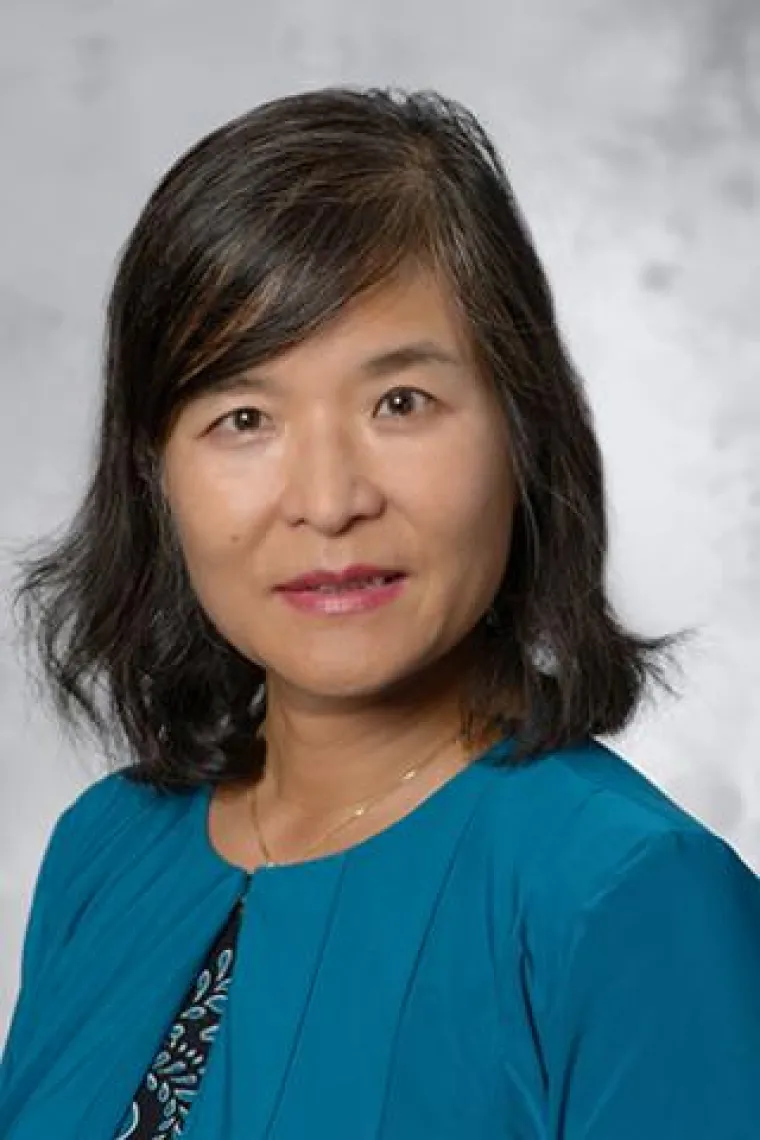
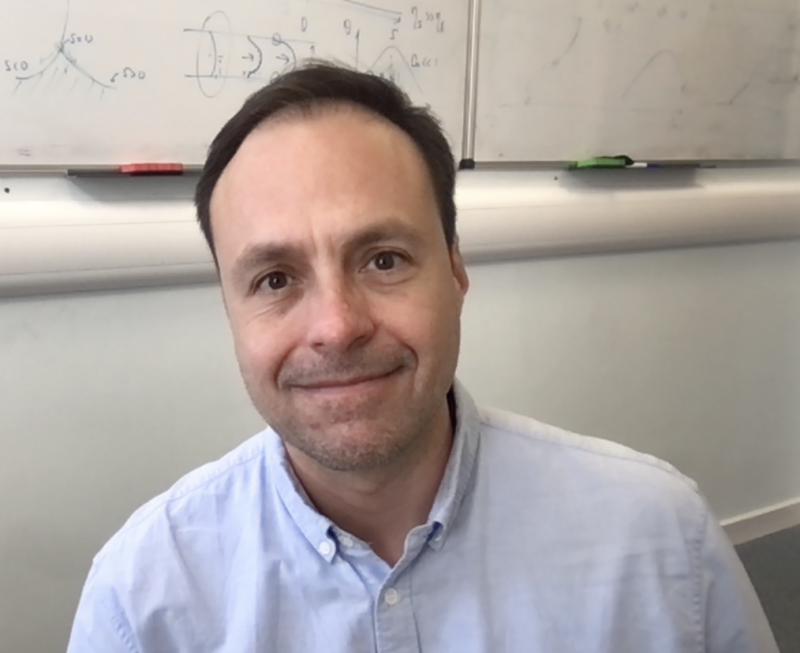
Jennifer Duan is a Professor with a joint appointment in the Department of Hydrology and Atmospheric Sciences and the Department of Civil Engineering and Engineering Mechanics at the University of Arizona. Her research focuses on hydraulics, sediment transport, and fluvial geomorphology, with expertise in experimental studies and computational modeling of turbulent flow, sediment transport dynamics, and channel morphological processes. Dr. Duan holds a PhD in computational hydroscience and engineering from the University of Mississippi. She leads research initiatives addressing water quality modeling, surface-groundwater interactions, and the application of advanced technologies like drone-based monitoring for discharge estimation. Her work integrates field experiments, numerical simulations, and machine learning to solve complex environmental and engineering challenges. Notably, she has pioneered studies on post-wildfire hydrological impacts, sediment transport in vegetated channels, and pathogen resuspension in irrigation systems. She also actively mentors early-career professionals through initiatives like the Mentoring Institute for Sediment Transport (MIST). Dr. Duan’s contributions span interdisciplinary applications, including flood fragility analysis for infrastructure resilience and net-zero urban water systems. Her research has direct implications for sustainable water management, environmental restoration, and disaster mitigation.
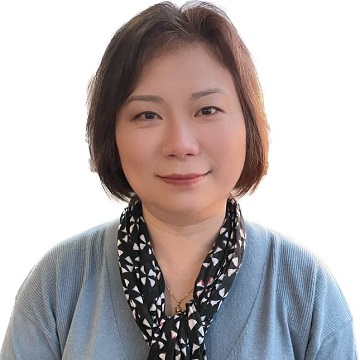
Louisa Lam is an Associate Professor in Nursing at the Australian Catholic University , Faculty of Health Sciences, School of Nursing, Midwifery and Paramedicine (Victoria). She holds adjunct Associate Professor positions at Monash University and Federation University Australia , reflecting her extensive collaborative research and academic leadership. PhD in Medicine (Public Health), Australian Catholic University Master of Public Health, Monash University Postgraduate Diploma in Advanced Clinical Nursing (Coronary Care) Graduate Certificate in Higher Education Her research focuses on cardiovascular disease management, emergency and intensive care, clinical trials, and nursing workforce wellbeing . She is particularly known for her work on burnout, resilience, workplace aggression, and shared decision-making in mental health . Her expertise in systematic reviews and meta-analyses strengthens evidence-based practice in nursing and public health. The 15 most recent publications reflect a strong trend toward mental health, workforce wellbeing, education interventions, and public health during and after the pandemic . Key areas include psychological distress among healthcare workers, resilience training, nursing education, and organizational strategies for patient safety. Her work often involves cross-country collaborations, especially with researchers in China and Southeast Asia. Scientific Awards: Top cited article 2019-2020, Journal of Psychiatric & Mental Health Nursing Dean's Recognition Award 2020, Federation University 2009 Research Week Prize, The Alfred Centre and Monash University Advising and Grants: Louisa Lam has full HDR supervisory accreditation and has mentored numerous PhD and Master’s students. She serves as a grant reviewer for the Ministry of Health, Singapore, and is actively involved in research funding evaluation. Her editorial role as an editor for Collegian further demonstrates her scholarly influence. Labs and Teams: She collaborates with multi-institutional and international research teams, particularly in mental health, emergency care, and public health. She is affiliated with the Australasian Nursing and Midwifery Clinical Trials Network and the NSW Cardiovascular Research Network, contributing to large-scale research initiatives.
Dr. Esther Mondragón is a Senior Lecturer in the Department of Computer Science at City St George's, University of London, within the School of Science and Technology. She is a member of CitAI (the Artificial Intelligence Research Centre at City) and directs the virtual Centre for Computational and Animal Learning Research. Her academic leadership includes serving as Chair of the School of Science and Technology Research Degrees Committee and former Director of the MSc in Artificial Intelligence. PhD Psychology, University of the Basque Country, Spain MSc Psychology, University of the Basque Country, Spain BSc Psychology, University of the Basque Country, Spain Dr. Mondragón is a computational cognitive neuroscientist whose research lies at the intersection of artificial intelligence and cognitive neuroscience. Her primary focus is on bio-inspired AI, particularly reinforcement learning models of cognition grounded in associative learning principles. She develops computational frameworks that bridge natural and artificial cognition, including influential models like the Double Error Dynamic Asymptote (DDA) and the Rescorla-Wagner Drift-Diffusion Model (RWDDM). Her work extends to deep learning integration, Hebbian learning, representational learning, and episodic memory in AI. She has also contributed to understanding perceptual learning, rule acquisition in animals, and timing mechanisms in conditioning. The 15 most recent publications reflect a strong trend in computational modeling of learning, with increasing integration of deep learning and neuro-inspired architectures. Her work spans theoretical cognitive science, applied AI, and software development for simulation. Key themes include associative mechanisms in representation, temporal modeling, and biologically plausible neural networks. She frequently collaborates with researchers like Eduardo Alonso and others across disciplines. Member, Spanish Society for Comparative Psychology (SEPC) Member, Cognitive Science Society International Affiliate, Pavlovian Society Member, Division 6: Society for Behavioral Neuroscience and Comparative Psychology, American Psychological Association (APA) Senior member, The Society for the Study of Artificial Intelligence and the Simulation of Behaviour (AISB) Dr. Mondragón actively supervises PhD students including Corina Cătărău-Cotuțau, Alexander Dean, and Mpagi Kironde. She has supervised several to completion, such as Esther Mulwa, André Luzardo, and Niklas Kokkola. She has secured significant research funding as PI/Co-PI on projects like 'INDUSTRIAL PhD SCHOLARSHIP, BOSCH AASS' (£140,000, Innovate UK), 'DEEPSYNC: AUTOMATED VFX FOR VIDEO DUBBING' (£143,000, Innovate UK), and 'FREE ENERGY PRINCIPLE FOR ADAPTIVE COGNITIVE ARCHITECTURES' (£98,000, DSTL). She also serves as a reviewer for the US National Science Foundation, BBSRC, NCN Poland, and numerous high-impact journals. She directs the virtual Centre for Computational and Animal Learning Research, which fosters interdisciplinary collaboration among cognitive scientists, neuroscientists, biologists, mathematicians, and computer scientists. She also leads the Knowledge Graphs Interest Group at The Alan Turing Institute.
Jeffrey S. Urbach is a Professor in the Department of Physics at Georgetown University, where he also holds the Interdisciplinary Chair in Science and serves as Vice Provost for Research. He has previously served as Chair of the Physics Department (2000–2001, 2004–2007, 2016–2020) and as Director of the Institute for Soft Matter Synthesis and Metrology (2011–2015). His academic leadership extends to co-founding and co-directing the Program on Science in the Public Interest until 2011. His education includes a B.A. in Physics from Amherst College (1985), a Ph.D. from Stanford University (1993), and a postdoctoral fellowship at the University of Texas at Austin (1993–1996). He joined Georgetown as an Assistant Professor in 1996 and was promoted to Professor in 2006. Prof. Urbach's research centers on complex dynamics and biophysics , with a focus on systems that exhibit emergent behavior, such as shear-thickening fluids, vibrating granular materials, cytoskeletal networks, and migrating neurons. His group employs tools from statistical physics and nonlinear dynamics , combined with advanced imaging, image analysis, and computational modeling, to derive quantitative descriptions of seemingly disordered systems. He has received significant recognition including the Sloan Research Fellowship, the Presidential Early Career Award for Scientists and Engineers (PECASE), and is a Fellow of the American Physical Society. His research has been supported by major funding agencies such as the National Science Foundation (NSF), National Institutes of Health (NIH), NASA, Air Force Office of Scientific Research (AFOSR), NIST, Petroleum Research Foundation, Research Corporation, and the Whitaker Foundation. Prof. Urbach has advised numerous students and mentored researchers through his lab and the Institute for Soft Matter, though specific names are not listed in the provided text. He has also contributed to science policy, having served as an AAAS Science and Technology Policy Fellow at the U.S. Department of Energy during 2009–2010. He leads or has led key research initiatives including the Institute for Soft Matter Synthesis and Metrology and is affiliated with interdisciplinary efforts such as the Science Policy Interest Group and the Program on Science in the Public Interest. His work bridges fundamental physics with biological and engineering applications, aiming to uncover universal principles in complex systems.
Mark Sandler is a Professor of Signal Processing and Director of the Centre for Digital Music at Queen Mary University of London. He leads the School of Electronic Engineering and Computer Science and contributes to the Centre for Multimodal AI. His work spans Digital Signal Processing, Machine Learning, and their applications in Audio and Music Technology, including source separation, neural audio synthesis, and physics-informed models. He has pioneered research in music informatics, sound synthesis, and AI-driven creativity. Awards include Fellowships from the Royal Academy of Engineering (FREng), IEEE (FIEEE), IET (FIET), and Audio Engineering Society (FAES). Research interests include audio segmentation, harmonic analysis, and interdisciplinary projects with computer vision. He has authored numerous publications on topics like neural synthesizers, knowledge distillation, and spatial audio systems. His contributions extend to semantic web technologies for music production and interactive audio applications. Current projects focus on low-latency synthesis, machine learning for music tagging, and adaptive audio systems. Awards and grants highlight leadership in digital music innovation. His academic roles include supervising research groups and directing interdisciplinary initiatives. The labs under his leadership include the Centre for Digital Music and collaborations with industry partners on audio engineering and immersive technologies.
Tak Shing Chan is a researcher in the Mechanics research group at the Department of Mathematics, University of Oslo. His work focuses on wetting dynamics, droplet behavior, capillarity, and micro-nano fluidics, with applications in soft matter physics and biophysics. He employs analytical and numerical methods to study phenomena such as viscoelastic perturbations, elastocapillary effects, and interfacial instabilities. His research contributes to understanding adhesive mechanisms in biological systems and optimizing fluidic systems in engineering contexts. Key projects include the Dynamic wetting on soft solids (DyWeSS) initiative. His publications span topics like capillary bridges, film deposition, and the physics of adhesive organs in animals. Collaborations with institutions like the Norwegian Geotechnical Institute and international universities highlight his interdisciplinary approach. His work bridges fundamental fluid mechanics with applied problems in materials science and biophysics.
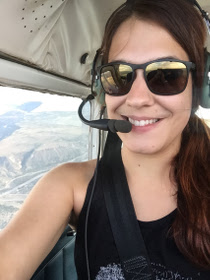
Sarah Cassie Burnett is a Hedrick Assistant Adjunct Professor at the University of California, Los Angeles (UCLA), Department of Mathematics. Her research focuses on fluid dynamics, machine learning, and data assimilation, with emphasis on experimental and computational studies of geophysical fluid dynamics, particularly in the context of the Three-Meter Spherical Couette experiment. She holds a PhD from the University of Maryland and has conducted post-baccalaureate research at Los Alamos National Laboratory. Her work integrates numerical methods, nonlinear modeling, and experimental validation in dynamo flows and particle-laden systems. Education: B.S. in Applied Math and B.A. in Physics from University of North Carolina at Chapel Hill (summa cum laude). PhD in Applied Mathematics, Statistics, and Scientific Computing from University of Maryland. Post-baccalaureate studies at Los Alamos National Laboratory and research collaborations at ISTerre (Grenoble, France) and Lathrop Lab. Research interests include: computational fluid dynamics, magnetohydrodynamics, granular flow modeling, and data-driven approaches for geophysical systems. She has pioneered studies on particle-laden thin-film flows, bidisperse system separation, and dynamo experiments simulating Earth's core dynamics. Recent work emphasizes fluid dynamics visualization through the APS Gallery of Fluid Motion and explores instrumentation optimization for spherical Couette experiments. Teaching includes programming courses (PIC series) and applied mathematics modules at UCLA. Awards: NSF Graduate Fellowship, L'Oréal For Women in STEM Postdoc Fellowship, George A. Snow Memorial Award Outreach: Directed Girls Talk Math summer program at UMD, promoting STEM equity through media and mentorship Grants: NSF GROW Award, Wylie Dissertation Fellowship Labs/Teams: Principal researcher in UCLA Mathematics Department's fluid dynamics group. Collaborator with Lathrop Nonlinear Dynamics Lab and ISTerre.
Foad Kiakojouri is a Research Fellow at the Department of Structural, Building and Geotechnical Engineering (DISEG), Politecnico di Torino, where he actively contributes to research and teaching. He is affiliated with the Doctoral School (SCDOTT) and serves as a course collaborator and teaching assistant across multiple programs, including PhD, Master’s, and Bachelor’s levels in Civil and Environmental Engineering and Architecture. His research focuses on structural robustness , progressive collapse , and protective structures under extreme loading conditions such as blast, impact, fire, and seismic events. His expertise spans computational engineering, structural safety, and sustainable infrastructure, aligning with UN SDGs 9 and 11. His recent publications highlight a strong trend in progressive collapse assessment , retrofitting techniques , and numerical modeling of structural response under dynamic loading. The works emphasize both theoretical frameworks and practical applications in civil infrastructure resilience. Scientific Recognition: Guest Editor, Sustainability (2022–present) Member of National Research Group (PRIN) on structural robustness (2025–2027) Advising and Grants: Foad Kiakojouri supervises two PhD students: Francesco Pimpinella and Elahe Zeinali Miankooh, whose research focuses on flexible rockfall barriers and impact-induced collapse. He is involved in competitively funded research, including the PRIN project A quantitative framework for structural robustness assessment . Labs and Research Projects: His work is centered on advanced computational and experimental studies within DISEG, focusing on: Progressive collapse under fire, blast, and impact Performance of metallic sandwich panels and stiffened plates Strengthening techniques to mitigate structural collapse Protection of critical structural members
Michel Beaudouin-Lafon is a Professor of Computer Science at Université Paris-Saclay, affiliated with LISN (Laboratoire Interdisciplinaire des Sciences du Numériques), a joint lab between Université Paris-Saclay, CNRS, and Inria. He is also a member of the French Academy of Sciences, a senior fellow of the Institut Universitaire de France, and an ACM Fellow. He currently serves as deputy director of LISN and chairs the ACM Europe Technology Policy Committee. He previously directed LRI, the former computer science laboratory of Université Paris-Sud. His research interests are centered on human-computer interaction, with a focus on instrumental interaction , generative theories of interaction , interaction substrates , and collaborative computing . He has pioneered novel interaction techniques involving gesture, sound, and multi-surface environments, notably through the WILD project. His theoretical work aims to unify principles of interaction beyond traditional application boundaries. The recent publications of Michel Beaudouin-Lafon reflect a consistent focus on foundational aspects of interaction, including interaction histories, cross-document workflows, and the design of substrates that support flexible and powerful user tools. His work bridges theoretical modeling with practical system design, often exploring how users reason with and through digital tools. Themes of collaboration, consistency, and cognitive support run through his recent research. His scientific honors include: CNRS Silver Medal ACM Fellow (2022) ACM SIGCHI Lifetime Service Award ERC Advanced Grant and Proof-of-Concept Grant Senior Fellow, Institut Universitaire de France Member, French Academy of Sciences Michel Beaudouin-Lafon has advised over 35 PhD students, including Ignacio Avellino, Germán Leiva, and Wanyu (Abby) Liu. He has led major research infrastructure projects such as Digiscope and CONTINUUM , and is a co-director of the 38M€ eNSEMBLE project on the future of digital collaboration. He founded the Francophone HCI association AFIHM and has held numerous leadership roles in ACM and SIGCHI, including Technical Program Co-chair of CHI 2013 and editorial board membership for ACM TOCHI and ACM Books. His research is conducted within the Ex-Situ group, a joint research team between LISN, CNRS, and Inria, which focuses on situated and instrumental interaction. The group explores how users interact with complex systems across multiple devices and contexts, emphasizing continuity, traceability, and cognitive support.
Dr. Brenda Eschenbrenner is a Professor in the Department of Accounting, Finance, and Economics at the University of Nebraska at Kearney (UNK), within the College of Business & Technology. She is a Certified Public Accountant (Inactive Registrant) with extensive industry experience as a Senior Finance Manager at Gateway, Inc. and Senior Auditor at Deloitte & Touche, LLP. Her academic work bridges cutting-edge research and practical application in emerging technologies. Ph.D. in Management Information Systems, University of Nebraska - Lincoln M.B.A., University of Nebraska - Lincoln B.S. in Business Administration, University of Nebraska at Kearney Her research focuses on emerging technologies such as artificial intelligence, the metaverse, data analytics, and information systems usage, particularly in accounting and education. She explores user competency, human-computer interaction, and the integration of technology in professional training. Her work emphasizes both theoretical contributions and real-world applicability. The analysis of her recent publications reveals a strong trend in AI and fintech applications in accounting , mobile wallet adoption, blockchain auditing, and experiential learning through digital platforms. Her research spans disciplines including information systems, accounting, education technology, and cybersecurity, often applying behavioral models like TAM to understand technology adoption. Dr. Eschenbrenner has received numerous scientific honors, including: UNK CBT Outstanding Faculty Award for Teaching and Research Ron and Carol Cope Professorship Pratt-Heins Foundation Faculty Award for Scholarship/Research Faculty Member of the Year, Beta Alpha Psi (3 years) Multiple Becker Faculty Research Incentive Fund Awards In terms of advising and grants, while specific students are not listed, she has secured multiple research incentive awards supporting her work. Her professional service includes serving on the Editorial Review Board for AIS-THCI and as a Board Member of The IMA Platte Valley Chapter, reflecting her active engagement in the academic and professional accounting community. Dr. Eschenbrenner is a strong advocate for experiential learning, designing curricula that emphasize hands-on experiences to build foundational knowledge and essential skill sets. Though no formal lab or research team is mentioned, her research direction suggests leadership in technology-integrated accounting education and emerging tech applications, positioning her at the forefront of digital transformation in the field.
Kathy Pain is a Professor at the University of Reading, affiliated with the School of the Built Environment. Her research lies at the intersection of urban development, globalization, real estate, and planetary health, with a strong focus on city networks, polycentricity, and the spatial dynamics of economic flows. Her research interests include urban governance, the role of advanced producer services in global cities, real estate investment, and the integration of health and environmental considerations into urban planning. She explores how cities are interconnected through financial and service networks, and how these relationships shape urban form and policy. Her recent work increasingly emphasizes planetary health, examining the co-production of knowledge and the commercial determinants of urban health. The recent articles highlight a shift toward interdisciplinary urban research, combining urban economics, public health, and sustainability. Themes include co-production in planetary health, short-termism in urban development, and the influence of commercial real estate on planning decisions. Her methodological approaches involve network analysis, spatial modeling, and critical policy evaluation, often applied to global city regions and polycentric urban systems. Scientific Awards: No awards explicitly mentioned in the provided text. Kathy Pain has been involved in major research initiatives such as the TRUUD (Tackling Root Causes Upstream of Unhealthy Urban Development) consortium, indicating significant grant funding and collaborative leadership. She has advised or collaborated with numerous researchers across disciplines, though specific PhD students are not listed. Her editorial roles and co-edited volumes reflect her influence in shaping scholarly discourse in urban studies. She has contributed to key research networks such as the Globalization and World Cities (GaWC) Research Network and has worked on policy-relevant reports for organizations like the Urban Land Institute and the European Spatial Observation Network (ESPON). Her work bridges academic research and urban policy, particularly in the UK and Europe.
Dr. Zachary Paul Alcorn is an interdisciplinary reservoir engineer and geoscientist at the Department of Physics and Technology at the University of Bergen, where he serves as Research Director for the Norwegian Petroleum Research Center, NCS2030 (National Center for Sustainable Subsurface Utilization of the Norwegian Continental Shelf). His research bridges laboratory observations with field performance, focusing on multiphase fluid flow during CO2 injection processes in subsurface reservoirs. He teaches courses PTEK 211 and ENERGI 365 while leading multiple research projects including 'Optimizing CO2 Foam Mobility Control for Field Pilots' and 'In-situ Quantification of CO2 Flow and Mobility Control for Improved Carbon Utilization and Storage'. Dr. Alcorn's research interests center on CO2 foam applications for enhanced oil recovery (EOR) and carbon storage. He has developed expertise in special core analysis, reservoir characterization, geologic and reservoir modeling, numerical simulation, and field pilot design. His work specifically focuses on CO2 foam mobility control, investigating how foam can reduce gas mobility, improve CO2 utilization, and decrease gas-oil ratios in heterogeneous reservoirs. His research spans from pore-scale phenomena to field-scale implementation, with particular attention to how geological heterogeneity affects fluid flow behavior. His publication record shows a strong focus on CO2 foam technology, with research progressing from fundamental pore-scale investigations to field-scale implementation. The articles demonstrate an evolving research trajectory from basic foam characterization to practical field applications, with increasing attention to monitoring techniques and integration with carbon capture, utilization, and storage (CCUS) frameworks. Recent work emphasizes the relationship between rock properties and foam performance, surfactant formulations for challenging reservoir conditions, and methods for monitoring and interpreting field pilot results. Dr. Alcorn leads the NCS2030 research center and has been involved in multiple significant projects related to CO2 utilization and storage. His work has resulted in numerous field pilot implementations, particularly in heterogeneous carbonate reservoirs, with a focus on integrating laboratory findings with practical field applications. He actively collaborates with researchers across institutions and regularly presents findings at major industry conferences including SPE events and specialized CCUS conferences. His laboratory work focuses on pore-scale and core-scale investigations of CO2 foam behavior under reservoir conditions. He has developed methodologies for monitoring foam performance through pressure measurements and other techniques. His team works extensively with various rock types, particularly heterogeneous carbonates, to understand how geological properties affect foam generation, stability, and mobility control. Current research directions include nanoparticle-stabilized foams, surfactant formulations for high-salinity environments, and methods to quantify foam effects on CO2 storage capacity.
Gerard Arbat Pujolras is an Associate Professor in the Department of Chemical, Agricultural and Agri-Food Technology at the University of Girona (UdG), where he teaches in the School of Engineering and the Faculty of Sciences. He is a member of the Research Group on Irrigation Engineering and Management and leads the international PRIMA-Horizon 2020 project PROMEDRICE, focusing on sustainable water practices in Mediterranean rice ecosystems. Research Interests: His work centers on water management in agroecosystems, particularly rice cultivation, with expertise in reclaimed water use, filtration systems, and sustainable irrigation. He investigates environmental impacts, water efficiency, and governance in agricultural contexts, contributing to climate-resilient farming practices. The analysis of his recent publications reveals a consistent focus on water sustainability in agriculture, especially in Mediterranean regions. His research spans reclaimed water applications, irrigation efficiency, nutrient dynamics, and climate adaptation, often involving interdisciplinary modeling and field studies. These works reflect strong alignment with environmental engineering, agricultural science, and sustainable development goals. Scientific Awards: Advanced Research Accreditation (equivalent to Full Professor) from AQU Catalunya (2020) Advising and Grants: While specific student names are not listed, Dr. Arbat supervises research within his group and leads major funded projects. He currently directs the international PROMEDRICE project under the PRIMA-Horizon 2020 program, involving 12 institutions across five Mediterranean countries, demonstrating significant grant leadership and collaborative research capacity. Labs and Research Teams: He is an active member of the Research Group on Irrigation Engineering and Management at UdG, contributing to innovation in water reuse and sustainable agricultural systems. His team engages in national and international projects, particularly those addressing water scarcity and ecosystem protection in rice-based agroecosystems.
Jun.-Prof. Dr. Marco Rahm is an Assistant Professor in the Department of Physics at Technische Universität Kaiserslautern, where he leads the junior research group on Metamaterials and Transformation Optics. His research focuses on the design and application of artificial electromagnetic materials for terahertz (THz) technology, including active modulation, sensing, and novel optical components. He maintains close collaborations with the Fraunhofer Institute for Physical Measurement Techniques (IPM) and Duke University’s Center for Metamaterials and Integrated Plasmonics. Research Interests: Marco Rahm's research lies at the intersection of metamaterials, transformation optics, and terahertz photonics. He investigates how engineered materials can manipulate electromagnetic waves in unconventional ways, enabling applications such as invisibility cloaking, subwavelength sensing, and dynamically tunable optical devices. His work emphasizes both theoretical design and experimental realization of THz components using metamaterials with reconfigurable properties. Publication Trends: His recent publications reveal a strong focus on terahertz metamaterials, with key themes including gradient-index lenses, surface wave control, active modulation using graphene or semiconductors, and transformation-optical devices. The works span high-impact journals in optics and applied physics, demonstrating expertise in both fundamental theory and device engineering. Scientific Awards: Excellent Poster Award, 4th Workshop on Terahertz Technology (2009) Advising and Grants: He supervises multiple PhD and diploma students, including Benjamin Reinhard, Peter Weis, and Jens Neu, guiding research in THz sensing, tunable metamaterials, and surface waves. His group benefits from institutional support through the Fraunhofer Attract program and international partnerships, particularly with Duke University, enabling cutting-edge research in electromagnetic metamaterials. Labs and Teams: Rahm leads the junior research group 'Metamaterials and Transformation Optics' at TU Kaiserslautern, closely linked with the Fraunhofer IPM group he also directs. The team includes physicists and engineers working on micro/nanofabrication, optical characterization, and simulation of metamaterials, forming an interdisciplinary effort in advanced THz optics.
Rodrigo Ledesma Aguilar is a Reader in Chemical Engineering at the University of Edinburgh, School of Engineering, affiliated with the Institute for Multiscale Thermofluids. His research focuses on interfacial phenomena, including multiphase flows, wetting, capillarity, and engineered liquid-infused surfaces. He teaches undergraduate and postgraduate courses in Process Dynamics and Control and Chemical Engineering Research Projects. Education: PhD in Physics, University of Barcelona DEA in Physics, University of Barcelona Diploma in Chemical Engineering, National Autonomous University of Mexico Research Interests: His work centers on fundamental and applied aspects of fluid-surface interactions, particularly in engineered surfaces with tailored wettability. He investigates phenomena such as contact line dynamics, capillary imbibition, droplet snapping, and biofilm resistance, with applications in microfluidics, antifouling coatings, and heat transfer. His research combines experimental, theoretical, and computational approaches. Publication Trends: His recent publications (2019–2025) show a consistent focus on liquid-infused and slippery surfaces, with emphasis on stability, wettability control, droplet dynamics, and antibiofilm performance. Key journals include Langmuir , ACS Applied Biomaterials , and Physical Review Fluids , reflecting interdisciplinary work at the intersection of fluid mechanics, materials science, and chemical engineering. Scientific Awards and Memberships: Fellow of the Higher Education Academy Member of the Institute of Physics Member of the EPSRC College of Reviewers Member of the UK Consortium of Mesoscale Engineering Sciences Advising and Grants: Dr. Ledesma Aguilar supervises PhD students and postdoctoral researchers. He has served as Principal Investigator and Co-investigator on multiple research projects funded by the Leverhulme Trust, EPSRC, and UK government bodies. These projects focus on wettability-patterned liquid surfaces, biofilm-resistant coatings, and antiviral surfaces, with total funding spanning from 2019 to 2026. Labs and Teams: He leads a research group within the Institute for Multiscale Thermofluids, collaborating closely with Professors Glen McHale and Gary Wells. His team works on experimental and theoretical aspects of fluid-surface interactions, utilizing facilities in microfluidics, surface characterization, and materials synthesis.