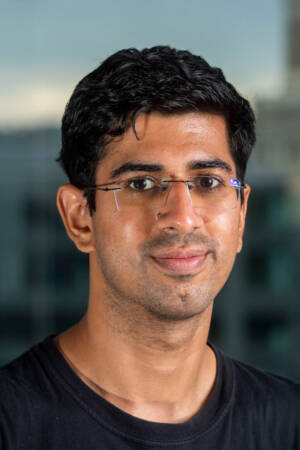
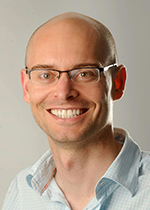
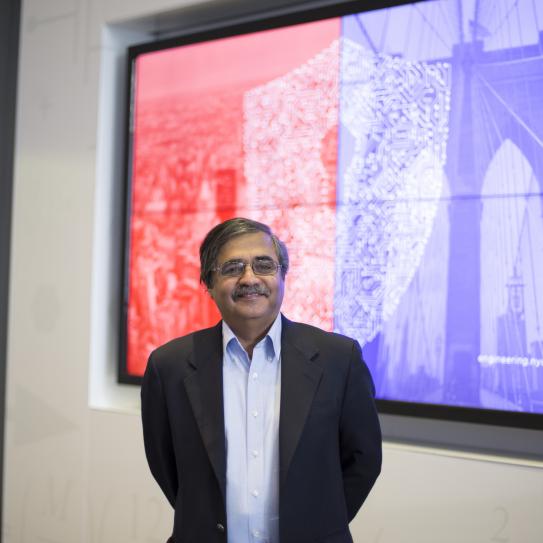
Shubham Tulsiani is an Assistant Professor at Carnegie Mellon University's Robotics Institute, where he leads the Computer Vision group and the Physical Perception Lab. His research focuses on inferring physically and spatially grounded representations from perceptual inputs, with applications in 3D vision, robot manipulation, and neural scene reconstruction. He directs an active research group with multiple PhD and Master's students. Research interests center on 3D scene understanding , robot learning , and generative modeling , with specific emphasis on: self-supervised perception, neural rendering, multi-view geometry, manipulation from visual inputs, and physics-based reasoning. The lab develops methods that leverage physical world constraints as supervisory signals. Recent publications demonstrate strong focus on diffusion models for 3D tasks , sparse-view reconstruction , and robotic manipulation transfer . Key trends include neural inverse rendering, view synthesis from limited observations, and translating human interactions to robot actions. Awards include: Best Student Paper Award at CVPR 2015 Advising includes supervision of 5 PhD students, 4 MS students, and undergraduates. Lab alumni hold positions at Google, Stanford, Meta, and Princeton. The Physical Perception Lab collaborates with FAIR Pittsburgh and the CMU Computer Vision group.
Dr. Tommaso Marcato is a Lecturer at the Department of Chemistry and Applied Biosciences, ETH Zürich. He earned his MSc in Chemical and Bioengineering from ETH Zürich after completing his BSc in Chemical Engineering at Politecnico di Milano, Italy. His research focuses on perovskite light-emitting diodes (PeLEDs), emission anisotropy, and light-outcoupling efficiency, with a particular emphasis on transition dipole moment orientation and nanocrystal self-assembly. His publications span topics such as Stabilization of CsPbI₃ nanoplatelets via metal iodide doping Molecular orientation engineering in OLEDs Ultraflexible self-powered optoelectronics Electroluminescent metasurfaces using perovskite nanocrystals His work aims to overcome photon trapping in devices by manipulating emitter orientation and exploring quantum confinement effects. Dr. Marcato's recent articles (2019–2025) demonstrate expertise in Hybrid perovskite systems Quantum dot applications Photonic device architecture Surface passivation techniques . He is part of the Shih group at ETH Zurich and has received funding from ETH-33 18-2 for his research on graphene-templated molecular alignment in LEDs.
Pieter Abbeel is a Professor in the Department of Electrical Engineering and Computer Sciences (EECS) at the University of California, Berkeley. He leads the Berkeley Robot Learning Lab and co-directs the Berkeley Artificial Intelligence Research (BAIR) Lab. His work focuses on advancing AI and robotics through deep reinforcement learning, imitation learning, and unsupervised learning, with applications in automation, healthcare, and education. Abbeel's research also explores the societal implications of AI and its potential to revolutionize other scientific and engineering fields. Education: Ph.D. in Computer Science, Stanford University (2008) M.S. in Electrical Engineering, KU Leuven, Belgium (2000) Research Interests: Robotics, AI, Machine Learning, Reinforcement Learning, Autonomous Systems, and Applications in Surgery, Manufacturing, and Education. Recent Article Trends: Focus on multimodal learning, robot manipulation, protein structure prediction, and scalable AI systems. Key areas include sim-to-real transfer, embodied AI, and foundation models for decision-making. Awards & Honors: IEEE Kiyo Tomiyasu Award (2022) ACM Prize in Computing (2021) IEEE Fellow (2018) MIT Tech Review TR35 (2011) Advising & Grants: Advises startups and has received grants from NSF, DARPA, and industry partnerships. Notable students include those advancing robotics, reinforcement learning, and bioAI. Labs & Initiatives: Berkeley Robot Learning Lab, BAIR Lab, and collaborations with the Center for Human-Compatible AI (CHAI). Founded companies include Gradescope, Covariant, and Berkeley Open Arms.
Jan Jokisch is a Researcher and PhD student at the Max Planck Institute for Empirical Aesthetics in Frankfurt am Main, Germany, affiliated with the Heisenberg research group. His academic background includes a Master's in Comparative Literature from Johannes Gutenberg University Mainz and the University of Massachusetts Amherst, and a Bachelor's in Comparative Literature and Philosophy from Mainz. He has lectured in German language and literature at Argentine universities and served as a translator for the DEFA Film Library. His research focuses on drama history, quantitative and digital literary studies, and methodologies in the humanities, with current collaboration on the DFG-funded 'Forager Folklore Database (FFDB)' project. Education highlights include a thesis on 'Epistemological Horror in Literature' (2021) and a BA thesis reinterpreting Shklovsky's literary theory through Heidegger's phenomenology (2018). Jokisch has been recognized with DAAD scholarships (2019, 2021) and the Gutenberg Lehrkolleg Award (2018). He has authored and edited conference proceedings, including works on distant reading methodologies and interdisciplinary language studies. His academic work bridges computational analysis with traditional humanities, emphasizing the role of technology in literary research. Collaborations and editorial roles reflect his commitment to fostering international student scholarship and innovative research practices.
Tim G. J. Rudner is an Assistant Professor in the Department of Statistical Sciences at the University of Toronto, a Faculty Member at the Vector Institute, and a Title A Fellow at Trinity College, University of Cambridge. He was previously an Assistant Professor and Faculty Fellow at New York University. University: University of Toronto School: Faculty of Arts and Science Department: Department of Statistical Sciences Affiliation: Vector Institute, Trinity College (Cambridge) He holds a PhD in Computer Science and an MSc in Statistics from the University of Oxford, where he was advised by Yee Whye Teh and Yarin Gal, and a BS in Applied Mathematics and Economics from Yale University. PhD: Computer Science, University of Oxford MSc: Statistics, University of Oxford BS: Applied Mathematics and Economics, Yale University His research focuses on building robust, transparent, and trustworthy machine learning systems, particularly for high-stakes applications. He develops probabilistic models that improve generalization under distribution shifts, provide reliable uncertainty estimates, and enable fair and interpretable predictions. His work spans generative models, large language models, healthcare, and biomedical discovery. The recent publications highlight a strong trend toward function-space modeling, Bayesian regularization, and AI safety. Tim's work emphasizes principled uncertainty quantification, robustness to subpopulation and semantic shifts, and the development of frameworks for AI governance and specification. His research bridges theoretical advances with real-world applications, especially in safety-critical domains like medicine and defense. Tim has received numerous accolades including being named a Rhodes Scholar, Qualcomm Innovation Fellow, and 2024 Rising Star in Generative AI. He was awarded a $700,000 Foundational Research Grant and a $30,000 Apple Seed Grant for improving LLM trustworthiness. Rhodes Scholar Qualcomm Innovation Fellow AISTATS Notable Paper Award (2024) Outstanding Paper Award, ICLR GenAI4DM Workshop (2024) Apple Seed Grant ($30,000) Foundational Research Grant ($700,000) NeurIPS Spotlight Talk 2024 Rising Star in Generative AI He actively mentors students, particularly first-generation and low-income scholars, and has contributed to major policy frameworks including the OECD AI Classification Framework and a series of CSET issue briefs on AI safety. His work demonstrates a strong commitment to responsible AI development, combining technical rigor with societal impact. Tim leads research efforts at the intersection of machine learning theory and practical deployment, with ongoing projects in generative modeling, reliable LLMs, and AI governance. His lab produces high-impact work regularly published at top-tier conferences such as NeurIPS, ICML, and AISTATS.
Nasir Memon is a Professor of Computer Science and Engineering at the New York University Tandon School of Engineering and concurrently serves as the Dean of Engineering at NYU Shanghai. He has been a faculty member at NYU Tandon since September 1998. Memon is a co-founder of NYU's Center for Cyber Security (CCS) and NYU Abu Dhabi, and the founder of key initiatives such as the OSIRIS Lab, CyberSecurity Awareness Week (CSAW), the NYU Tandon Bridge program, and the Cyber Fellows program. His work focuses on advancing cybersecurity education and addressing systemic biases in AI-driven systems. Education: Ph.D., Computer Science, University of Nebraska Master of Science, Mathematics, Birla Institute of Technology and Science (BITS), Pilani Bachelor of Engineering, Chemical Engineering, BITS, Pilani Research Interests: Media Forensics and Authentication Biometric Security and Privacy Data Compression and Privacy-Preserving Techniques Network Security and Incident Response AI Ethics and Fairness in Machine Learning Cybersecurity Education and Workforce Development Awards and Honors: IEEE Fellow (2010) SPIE Fellow (2014) Jacobs Excellence in Education Award (2002) NSF CAREER Award (1997) Advising and Grants: Advises Ph.D. students like Anubhav Jain and Govind Mittal, and mentors Master’s students such as Rishit Dholakia. Recipient of NSF grants and funding from NYU Abu Dhabi and Indiana University Bloomington for projects like computational tools for fact-checking and AI-driven bias mitigation. Labs and Teams: Directs the OSIRIS Lab, a leading research group in cybersecurity and AI. Leads initiatives at the NYU Center for Cybersecurity (CCS) and collaborates with NYU Abu Dhabi’s Center for Cyber Security.
Changxi Zheng is an Associate Professor in the Department of Computer Science at Columbia University's School of Engineering and Applied Science (SEAS). He directs Columbia's Computer Graphics Group (C2G2) within the Columbia Vision and Graphics Center (CVGC). After receiving his PhD from Cornell University, he joined the faculty of Computer Science Department at Columbia, where he has established himself as a leading researcher in computer graphics and scientific computing. Dr. Zheng's research spans multiple areas of applied computer science with a particular focus on computer graphics and scientific computing. His work centers around developing numerical models for simulating physical phenomena involving complex motions such as fluids, bubbles, and thin rods, along with their resulting acoustic waves. Leveraging computational insights from these models, he devises methods for improving tangible object creation, enabling novel human-computer interactions, and developing software tools for acoustic and photonic devices. His research has attracted significant public interest and media coverage, including projects like FontCode, AirCode, and Computational Metallophone Design. His recent publications reveal a strong interdisciplinary approach, bridging computer graphics, physics simulation, machine learning, and hardware design. His work demonstrates consistent innovation in computational methods for simulating physical phenomena and applying these techniques to practical problems in 3D printing, acoustic modeling, and interactive systems. The breadth of his research spans from fundamental physics-based simulations to practical applications in industry. Columbia SEAS Dean's Fellow (for advised students) NSF Graduate Research Fellow (for Ruilin Xu) Snap Research Fellow (for Rundi Wu) CKGSB Fellow (for Yun Fei) Adobe Research Fellow (for Gabriel Cirio) Marie Sklodowska-Curie Individual Fellow (for Rundi Wu) Best Paper Award at ACM International Conference on Multimedia (ACMMM), 2019 Dr. Zheng actively mentors a diverse group of students, including current PhD candidates and postdoctoral researchers. His research group has received support from various sources that enable their innovative work in computational graphics and physics-based simulation. He has supervised numerous successful students who have gone on to positions at leading technology companies including Adobe, Tencent, Facebook, and academic institutions. As director of Columbia's Computer Graphics Group (C2G2) within the Columbia Vision and Graphics Center (CVGC), Dr. Zheng leads a vibrant research team focused on advancing the state of the art in computer graphics, physics-based simulation, and their applications. The group maintains strong collaborations with industry partners and academic institutions worldwide, fostering an environment of innovation and practical application of theoretical concepts.
Supratik Guha is a Professor at the Pritzker School of Molecular Engineering and Senior Advisor to Argonne National Laboratory's Physical Sciences and Engineering directorate. His work bridges industrial R&D with academic and national lab research, focusing on quantum computing , semiconductor materials , and sensor networks for water and soil monitoring. Guha leads Argonne’s quantum information science strategy and serves as Faculty Director for the University of Chicago Center in Delhi. Education: PhD in Materials Science (USC, 1991), BTech in Engineering Physics (IIT Kharagpur, 1985) Research interests span multiple domains: Quantum technologies focusing on erbium-doped oxides for quantum memory and quantum interconnects Sensor networks for soil and water quality monitoring using cyberphysical systems Nanofabrication techniques including controlled spalling for heterogeneous material integration Advanced memory technologies exploring ferroelectric and optically addressable memory at atomic scales Scientific awards include: Election to National Academy of Engineering (2015) APS Prize for Industrial Applications of Physics (2015) Vannevar Bush Faculty Fellow (2018) Fellow of Materials Research Society and American Physical Society IBM Corporate Award (2013) Advising notable students like Manish Kumar Singh (co-founder memQ ), Cheng Ji (now at Intel), and Vamsi Nittala (now at Micron Technology). His group contributes to major DOE , NSF , and USDA funded projects including: Q-NEXT - DOE National Quantum Information Center AIFARMS - NSF/USDA AI for Agriculture Institute Thoreau Project - Geospatial sensor networks Labs and teams operate across University of Chicago and Argonne National Lab , with facilities for molecular beam epitaxy , nanofabrication , and optical/electrical characterization . The group has spawned startups like memQ (quantum networking) and K1 Semiconductors (wide-bandgap material transfer).
Perla Maiolino serves as an Associate Professor in Engineering Science at the University of Oxford and Principal Investigator of the Soft Robotics Lab (SRL) within the Oxford Robotics Institute. Her academic foundation includes BEng, MEng, and PhD degrees in Robotics and Automation from the University of Genoa, where she pioneered CySkin technology for distributed tactile sensing in robots—later exhibited at the Science Museum in London. She expanded her expertise during a 2017-2018 postdoctoral fellowship at Cambridge University's Biologically Inspired Robotics Lab, focusing on soft robotics and tactile perception. Dr. Maiolino's research centers on developing artificial skin systems, soft robotic actuators, and distributed sensing architectures. Her work bridges biological inspiration with engineering innovation to create robots capable of safe human interaction and dexterous manipulation in unstructured environments. Key contributions include compliant beaded-string jamming mechanisms for anthropomorphic fingers, monolithic 3D-printed soft pneumatic arms (JAMMit!), and distributed time-of-flight sensor networks for robotic self-awareness. Recent publications (2024-2025) reveal a strong convergence of tactile sensing with machine learning, featuring optical flow for gesture recognition, diffusion models for artificial skin simulation, and zero-shot sim-to-real transfer techniques. Her team has made significant advances in multi-modal sensing integration, variable stiffness actuation, and scene flow estimation for robots operating in dynamic surroundings. Scientific Awards No specific awards were documented in the provided institutional materials. Advising and Grants While her leadership of the Soft Robotics Lab implies active student supervision and grant management, detailed information about advisees or funded projects was not included in the source documentation. Labs and Teams As Principal Investigator of the Soft Robotics Lab at Oxford Robotics Institute, Dr. Maiolino directs research on tactile perception systems, soft actuation mechanisms, and sensor-integrated robotic structures. The lab's work focuses on applications requiring safe physical interaction, including healthcare robotics and human-robot collaboration scenarios, with emphasis on multi-material 3D printing and embedded sensing technologies.
Mark Gales is Professor of Information Engineering at the University of Cambridge and an Official Fellow at Emmanuel College. He is currently on sabbatical leave for the 2024/25 academic year. Prior to his academic career, he worked as a consultant at Roke Manor Research Ltd, developing radar systems, before transitioning to speech and language processing. PhD in 'Model-Based Techniques for Robust Speech Recognition' (University of Cambridge, 1995) BA in Electrical and Information Sciences (University of Cambridge, 1988) His research focuses on speech and language processing , particularly in automated language assessment and low-resource speech technology . He leads the Automated Language Teaching and Assessment (ALTA) Institute , which collaborates with Cambridge University Press & Assessment (CUP&A) to develop commercial tools like Linguaskill and Speak & Improve . These platforms provide automated spoken/written assessment for millions of users globally. Recent publications highlight his work in LLM-driven speech processing , including adversarial attacks on foundation models, end-to-end spoken error correction, and uncertainty estimation frameworks. His team's research spans multilingual capabilities, with deployments in languages ranging from Dholuo to Tok Pisin . Awards : IEEE Fellow, ISCA Fellow Leadership : Fellows' Steward at Emmanuel College Mark has contributed extensively to Hidden Markov Model (HMM) applications in speech recognition, which underpinned early automatic speech systems. His work now bridges LLM-based language assessment with cross-lingual transfer learning and robustness testing for real-world deployments.
Dana Anderson is a Professor of Physics and JILA Fellow at the University of Colorado Boulder. He holds dual affiliations with the Department of Physics and JILA, a joint institute between the University of Colorado Boulder and the National Institute of Standards and Technology (NIST). His research focuses on ultracold atoms, quantum computing, and atomtronics, with applications in quantum sensing and space-based experiments. He currently serves as Chief Strategy Officer (CSO) of Infleqtion (formerly ColdQuanta), a quantum technology company he co-founded. Anderson is a principal investigator in the Quantum Pathways Institute, a NASA-funded initiative to develop quantum-based Earth-sensing technologies. He collaborates with institutions like NIST, JPL, and ColdQuanta on projects such as the Cold Atom Laboratory (CAL) for space-based ultracold atom research. His work has been recognized by TIME Magazine and led to significant grants, including a $15M NASA award for quantum space research. Research interests include atomtronics (hybrid atom-electronics systems), neutral atom quantum computing, and ultracold atom gyroscopes. His group develops novel atom chip technologies, such as window atom chips enabling high-resolution imaging, and explores applications like matterwave transistors and quantum inertial sensors. Current projects include shaken lattice interferometry for navigation and Rydberg atom-based microwave sensors. Anderson has pioneered concepts like the matterwave transistor oscillator and contributed to the first neutral atom quantum computing arrays. His work bridges fundamental physics and applied technologies, with a focus on translating quantum phenomena into practical devices. He actively mentors students and postdocs in experimental atomic physics and quantum engineering.
Professor Nagi Gebraeel serves as the Georgia Power Early Career Professor in the H. Milton Stewart School of Industrial and Systems Engineering at Georgia Institute of Technology, where his research integrates predictive analytics, machine learning, and optimization for industrial IoT applications. His work focuses on real-time equipment diagnostics, prognostics, and operational decision-making in critical infrastructure systems. Education: Ph.D. in Industrial Engineering (2003), Purdue University M.S. in Industrial Engineering (1998), Purdue University Research Focus: Dr. Gebraeel develops statistical learning algorithms for IoT-enabled maintenance, repair, and operations (MRO), with emphasis on federated learning frameworks for distributed fault diagnosis and cybersecurity protection against Industrial Control System (ICS) attacks. His research spans manufacturing, power generation, and deep space habitats through NASA's HOME Space Technology Research Institute, where he pioneers self-aware habitat systems. Recent work addresses data heterogeneity in high-consequence industrial environments using causal-informed analytics. Publication Trends: His 2024-2025 publications demonstrate a strong trajectory toward distributionally robust optimization for maintenance logistics, federated learning architectures for distributed fault diagnosis, and prognostics for complex systems like offshore wind farms and industrial robots. Key themes include handling imbalanced data in fault diagnosis, state-space representations for interdependent systems, and cybersecurity integration in manufacturing networks. Awards and Recognition: NSF CAREER Award (2007) SAE Aircraft Electrical Power System Recognition Award (2008) SAE Materials Modeling and Testing Recognition Award (2006) IEEE-AUTOTESTCON Certificate (2006) Fellow of the Institute of Industrial and Systems Engineers Advising and Funding: Dr. Gebraeel mentors doctoral students including Michael Ibrahim (2025 IISE Best Student Paper winner), Heraldo Rozas (now Assistant Professor at University of Chile), Ayush Mohanty, and Nazal Mohamed. He secured a $500,000 NSF grant in August 2025 for AI-driven cybersecurity in distributed manufacturing networks and leads NASA-funded research on deep space habitat systems. His work bridges academic research with industry applications through Georgia Tech's Strategic Energy Institute collaborations. Research Infrastructure: He directs the Analytics and Prognostics Systems laboratory at Georgia Tech's Manufacturing Institute and leads the Predictive Analytics and Intelligent Systems (PAIS) research group. Previously, he served as associate director of Georgia Tech's Strategic Energy Institute (2014-2019), fostering data science applications in energy systems.
Christopher R. Knittel is the George P. Shultz Professor of Energy Economics and Professor of Applied Economics at the Massachusetts Institute of Technology (MIT) Sloan School of Management . He serves as Director of MIT’s Center for Energy and Environmental Policy Research (CEEPR), Director of the MIT Climate Policy Center, and Deputy Director for Policy at the MIT Energy Initiative (MITEI). PhD, University of California, Berkeley (1999) M.A., University of California, Davis (1996) B.A., California State University, Stanislaus (1994) His research focuses on energy economics, environmental policy, and machine learning applications in energy systems. He leads interdisciplinary initiatives like the Climate Action Through Education program for high schools and co-directs the E2e Project with UC Berkeley and University of Chicago. Recent publications analyze data center energy dynamics, hydrogen technologies, Russian oil sanctions, and transportation policy reforms. His work emphasizes policy cost-effectiveness, emissions equity, and energy market responses to regulation.
Marcia O’Malley is the Thomas Michael Panos Family Professor in Mechanical Engineering, Computer Science, Electrical and Computer Engineering, and Bioengineering at Rice University’s George R. Brown School of Engineering. She chairs the Department of Mechanical Engineering and directs the Mechatronics and Haptic Interfaces (MAHI) Lab. Her research focuses on haptics and robotic rehabilitation, particularly wearable robotic systems for training and rehabilitation in virtual environments. She holds adjunct roles at Baylor College of Medicine and the University of Texas Medical School. Educated at Purdue University (B.S., 1996) and Vanderbilt University (M.S./Ph.D., 1999/2001), Dr. O’Malley has been recognized with prestigious awards, including the ONR Young Investigator Award, NSF CAREER Award, and multiple fellowships. She has twice won Rice’s George R. Brown Award for Superior Teaching. Her work bridges engineering and medicine, addressing human-robot interaction challenges in surgical training, workforce safety, and neurorehabilitation. The MAHI Lab develops devices like the hBracelet and Rice Haptic Rocker to enhance human-robot collaboration. She co-founded Houston Medical Robotics, Inc., applying her innovations to real-world medical applications. Research Interests: Haptics, wearable robotics, neural interfaces, surgical training metrics, and rehabilitation robotics. Labs/Teams: MAHI Lab (Biosciences Research Collaborative), collaborations with medical institutions. Grants/Awards: Extensive funding from NSF, ONR, and industry partnerships; leadership in editorial roles for IEEE Transactions on Haptics.
Andrea Bajcsy serves as an Assistant Professor in the Robotics Institute and School of Computer Science at Carnegie Mellon University, leading the Interactive and Trustworthy Robotics Lab (Intent Lab). Her work focuses on enabling robots to safely interact with open-world environments through novel algorithms in control theory and machine learning. Her educational background includes a Ph.D. in Electrical Engineering & Computer Science from UC Berkeley under Anca Dragan and Claire Tomlin, followed by a postdoctoral position with Jitendra Malik and industry experience at NVIDIA's Autonomous Vehicle Research Group. Research centers on quantifying robot confidence, computing safe interaction policies for nuanced hazards (tearing, spilling, breaking), and aligning AI with human values. Key methodologies integrate optimal control, reinforcement learning, dynamic game theory, and deep learning, applied to robotic arms, quadrotors, quadrupeds, and autonomous vehicles. Core areas include safety for physical human-robot interaction, robot learning for manipulation, and world modeling. Recent publications (2024-2025) reveal a concentrated effort on uncertainty-aware safety mechanisms, out-of-distribution adaptation, and language-based safety specification. Her work increasingly bridges conformal prediction with interactive learning while leveraging vision-language models for real-time policy steering, as evidenced by multiple CoRL, RSS, ICRA, and ICLR acceptances. Scientific Awards: NSF CAREER Award (2025) Advises four active PhD students (Kensuke Nakamura, Ravi Pandya, Junwon Seo, Yilin Wu) and leads research funded by the NSF CAREER grant. Organizes community initiatives including the Northeast Systems and Control Workshop and ICRA workshops on Safely Leveraging VLMs in Robotics and Public Trust in Autonomy. Directs the Intent Robotics Lab, which develops theoretical frameworks and practical implementations for open-world robot safety. The lab maintains strong industry ties through NVIDIA collaborations and emphasizes real-world deployment across multiple robotic platforms.