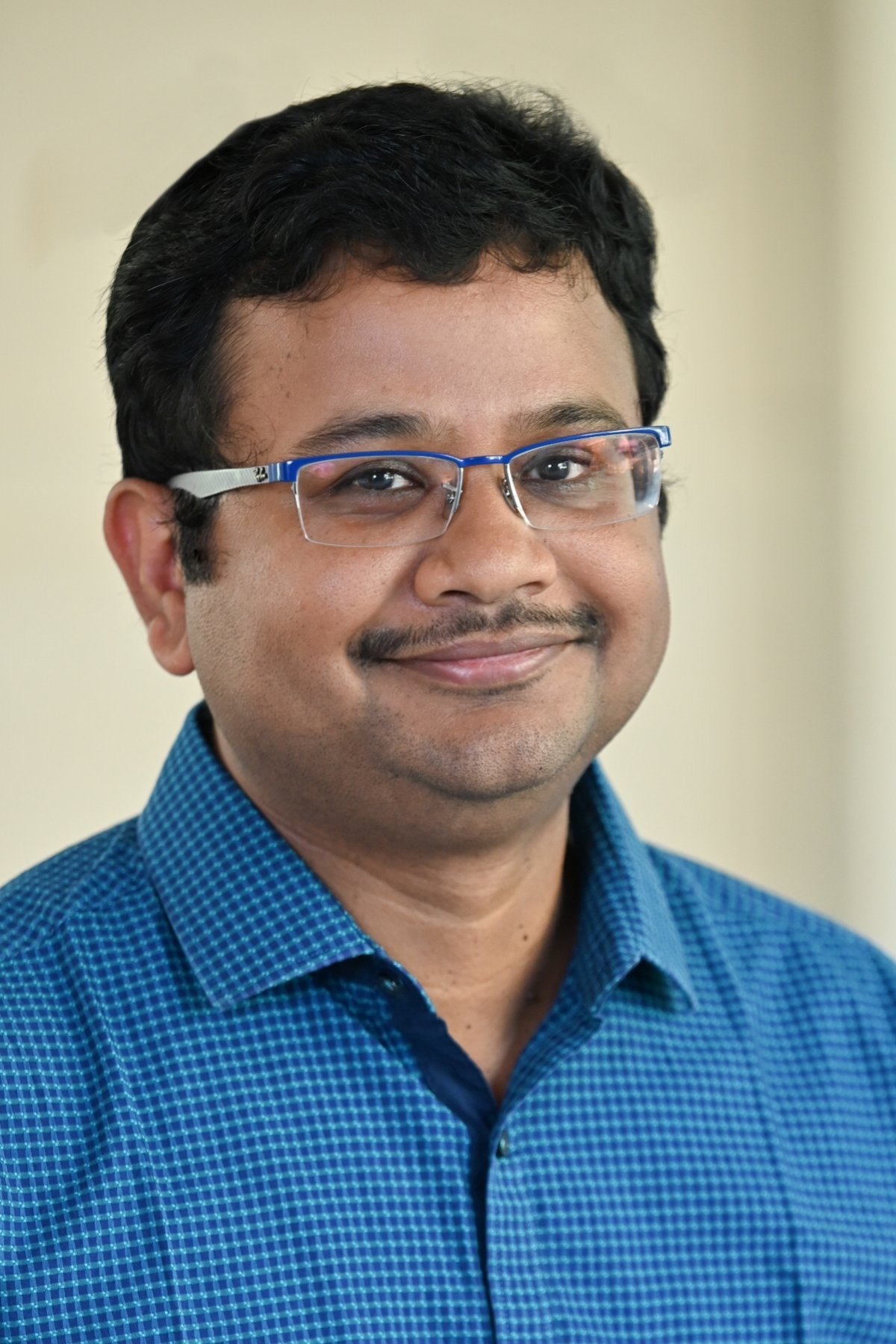
Arnab Sen is an Associate Professor at the School of Mathematics, University of Minnesota. His research focuses on probability theory and discrete harmonic analysis, with emphasis on models from statistical physics such as spin glasses, random graphs, random matrices, and random polynomials. PhD in Statistics, UC Berkeley (2010), advised by Steven N. Evans and Elchanan Mossel Postdoctoral Fellow, Statistical Laboratory, University of Cambridge His research spans discrete probability , statistical physics , and random matrix theory , addressing topics like disorder chaos in spin glasses, eigenvalue distributions, and quantum percolation. He has taught graduate and undergraduate courses including Random Matrix Theory , Introduction to Stochastic Processes , and Multivariable Calculus . His recent publications analyze spin glass models, random matrices, and combinatorial systems.
Cesare Franchini is a full Professor at the University of Vienna's Faculty of Physics, leading the Computational Materials Physics research group. His work focuses on theoretical understanding and computational modeling of quantum materials using first principles methods, particularly VASP. He maintains an active research program with numerous postdocs, PhD students, and collaborations across multiple institutions including the University of Bologna. Professor Franchini's research centers on quantum materials with many interacting degrees of freedom (lattice, spin, and electron orbital) that enable novel electronic and magnetic phases. His specific interests include metal-insulator transitions, polaron physics (electron-phonon interactions), non-collinear spin orderings, topological Dirac/Weyl phases, multiferroism, and superconductivity. He has increasingly incorporated machine learning data-driven tools and diagrammatic Monte Carlo techniques into his computational approaches. Analysis of his recent publications (2024-2025) reveals a strong focus on polaron physics across multiple material systems, with significant work on hematite, titanium dioxide, and quantum paraelectrics like KTaO3. His research increasingly integrates machine learning with traditional first-principles methods, particularly for studying hydrogen diffusion, surface science phenomena, and electronic structure calculations. There's also substantial work on single-atom catalysis and the application of advanced computational techniques to understand fundamental charge transport mechanisms in energy materials. Professor Franchini actively supervises numerous PhD students and postdocs, including Andrea Angeletti, Viktor Birschitzky, Lorenzo Celiberti, and several others working on diverse aspects of computational materials physics. He leads or participates in major research projects including TACO (Taming Complexity in Materials Modeling), DCAFM (Doctoral College Advanced Functional Materials), and the recently launched Spin-orbit entangled anharmonic polarons project. His group maintains strong collaborations with experimentalists at Charles University, Technical University of Vienna, and other international institutions.
Michael J. Ragusa is an Associate Professor of Chemistry at the Department of Chemistry, College of Arts and Sciences, Dartmouth College , specializing in molecular mechanisms of selective autophagy . His research integrates structural biology , biochemical reconstitution , and cell biology to understand how cells degrade toxic components like damaged organelles. Education: B.S. in Chemistry from Siena College, Ph.D. in Biochemistry from Brown University His work focuses on autophagy , particularly the role of Atg proteins in membrane tethering and cargo selection. His lab has published extensively on mitophagy , ALFY , and Atg11 , linking defects in these pathways to cancer , neurodegeneration , and infectious diseases . Recent studies highlight mechanisms of vesicle clustering and dimerization-dependent membrane interactions . Dr. Ragusa teaches courses such as CHEM 5: General Chemistry , CHEM 42: Biological Chemistry II , and CHEM 95.05: Protein Crystallography . His lab employs techniques like X-ray crystallography , NMR spectroscopy , and membrane reconstitution to dissect protein-lipid interactions.
Prof Jean Van Den Elsen is a Professor of Biochemistry at the University of Bath , affiliated with the Department of Life Sciences and several research centers including the Centre for Sustainable Chemical Technologies (CSCT) , Centre for Therapeutic Innovation , and Milner Centre for Evolution . They are actively accepting doctoral students and leading multidisciplinary projects at the intersection of structural biology and immunology. Education: Not explicitly mentioned Appointments: University of Bath (current), with collaborations across Chemistry, Biology & Biochemistry departments Research Focus: The laboratory investigates protein structural biology in two major areas: Complement System Interactions: Studying how pathogenic microbes like Staphylococcus aureus evade host immunity through complement system manipulation , with structural analysis of proteins such as C3d and C5 complexes. This work directly informs vaccine design and autoimmune disease treatment . Glycation Mechanisms: Developing diagnostic tools for detecting non-enzymatic sugar modifications linked to diabetes , Alzheimer's , and aging, with commercial partnerships like Abcam . Article Trends: Recent publications demonstrate: Structural analysis of complement evasion proteins (2022-2025) Engineering knob domains as miniature antibodies (2023) Evolutionary studies on cooperative behavior (2021-2025) Advancements in peptide synthesis platforms (2022-2023) Applications of AI protein folding (2020) Scientific Contributions: ORCID: 0000-0002-0367-1956 BBSRC Funding recipient (2023) 100+ citations across 76 research outputs Student Mentorship: Directly supervising 4 current PhD students and 1 postdoc, with a track record of mentoring 11 previous students including Daphne Jackson Fellows and MSCA researchers. Collaborations: Maintains active partnerships with Dr. Tony James (Chemistry), Dr. Rob Williams (Biochemistry), and industry partners UCB Celltech and Porton Biopharma Ltd. Their work contributes to UN Sustainable Development Goals 3 (Good Health), 12 (Responsible Consumption), and 13 (Climate Action).
Pia Vogel is a Professor in the Department of Biological Sciences at Southern Methodist University (SMU), where she leads research on nucleotide-binding proteins using Electron Spin Resonance spectroscopy and molecular modeling. Her work focuses on elucidating structural mechanisms in ATP synthase, multidrug resistance transporters, and calcium channels with biomedical applications in cancer therapy and neurodegenerative diseases. Education: Ph.D., University of Kaiserlautern Dr. Vogel's research program investigates three interconnected domains: the rotary mechanics of FoF1-ATP synthase (particularly the external stalk subunit b-dimer), the structural basis of multidrug resistance in P-glycoprotein and MRPs, and ATP-regulated calcium release via ryanodine receptors. Her laboratory employs site-specific spin labeling, ESR spectroscopy, and computational modeling to resolve protein dynamics and interactions at molecular resolution, contributing to understanding energy transduction in ATP synthase and mechanisms of drug resistance. Analysis of her 15 most recent publications (2020-2025) reveals a dominant focus on developing and characterizing P-glycoprotein and BCRP inhibitors to overcome chemotherapy resistance in cancer. These studies integrate computational screening, ATPase assays, and cell-based models to evaluate inhibitor efficacy, with emerging applications in Alzheimer's research through amyloid-β transport studies. The work demonstrates consistent methodological synergy between biophysical characterization and therapeutic development. Dr. Vogel maintains an active research group supported by sustained funding, evidenced by continuous publication output and laboratory infrastructure. Her team employs multidisciplinary approaches spanning biophysics, biochemistry, and computational biology to address fundamental questions in membrane protein function. Her laboratory facilities in DLSB 221 include specialized Electron Spin Resonance instrumentation and dual Linux computing clusters for molecular dynamics simulations. The research environment supports collaborative projects extending her work into cancer therapeutics and neurodegenerative disease mechanisms through partnerships with clinical and computational researchers.
Owen Skinner is an Assistant Professor in the Department of Chemistry and Chemical Biology at Northeastern University, affiliated with the Barnett Institute of Chemical and Biological Analysis. He leads the Skinner Lab, which specializes in high-resolution mass spectrometry to study protein-metabolite interactions in health and disease. Skinner earned his Ph.D. from Northwestern University and conducted postdoctoral research at Massachusetts General Hospital. His research focuses on thiol redox regulation, vitamin cofactor metabolism, and oxidative phosphorylation dynamics. Education: Ph.D. in Chemistry (Northwestern University), Postdoctoral Fellowship in Analytical Chemistry (Massachusetts General Hospital). Research interests include proteomics, metabolomics, mitochondrial dysfunction, and metabolic signaling. The lab actively recruits graduate students, undergraduates, and postdoctoral researchers across Northeastern's scientific community. Affiliations: Barnett Institute, College of Science Lab Members: PhD students Yifan Liu, Michael Xiao, Angela Rojas-Merchan; Undergraduates Helena Rittenhouse, Ridha Shah; High School collaborator Helen Loango Techniques: Native mass spectrometry, proteomics, metabolomics, redox biology Publications span mitochondrial metabolism, metabolic biomarkers in septic shock, and enzyme engineering. The lab emphasizes interdisciplinary collaboration and supports students through Northeastern's experiential learning programs.
Jana Shen is a Professor in the Department of Pharmaceutical Sciences at the University of Maryland School of Pharmacy, where she leads an interdisciplinary research group at the intersection of chemistry, biology, physics, and computer science. Her lab develops and applies advanced simulation and data science tools to understand biomolecular mechanisms and accelerate drug discovery. Education: Postdoc, The Scripps Research Institute (2003–2007) PhD, University of Minnesota at Twin Cities (1999–2003) MS, University of Calgary, Canada (1996–1999) Diplom-Chemie, Bergische Universität Wuppertal, Germany (1991–1995) Her research focuses on molecular simulation , data science , and computational biophysics , with applications in kinases , GPCRs , transmembrane transporters , and pH-responsive materials . She has pioneered the development of continuous constant pH molecular dynamics (CpHMD) methods and their applications in drug design and biomolecular mechanisms. The recent publications highlight a strong trend in computational drug discovery , particularly in covalent inhibitors , opioid receptor mechanisms , antiviral design , and the integration of machine learning with molecular dynamics . These works span high-impact journals such as eLife , JACS , Nature Communications , and ACS journals. Scientific Awards: National Science Foundation CAREER Award American Chemical Society HP Outstanding Junior Faculty Award Junior Faculty Research Award (University of Oklahoma, 2008, 2009) Phi Kappa Phi, University of Minnesota Louise T. Dosdall Graduate Fellowship Nova Graduate Fellowship Dr. Shen has mentored numerous PhD students and postdoctoral fellows, many of whom have gone on to successful careers in academia and industry. Her research is supported by major agencies including the National Institutes of Health , National Science Foundation , and FDA . She leads the Shen Lab, which actively develops open-source tools such as DeepCys , CpHMD , and PKAD-3 , and maintains databases for covalent ligandability and pKa predictions.
Dr. Youngchan Kim is a Lecturer in Quantum Biology at the University of Surrey , serving as Director of the Quantum Biology Doctoral Training Centre (QB-DTC). He is affiliated with multiple departments including the School of Biosciences, Advanced Technology Institute, and Quantum Sciences Group. PhD in Physics (2011), Korea Advanced Institute of Science and Technology MSc in Physics (2008), KAIST BSc in Physics (2006), Chung-Ang University Graduate Certificate in Learning and Teaching (2022), Advance HE His research focuses on quantum phenomena in biological systems at physiological temperatures, particularly using femtosecond optical spectroscopy and genetically engineered fluorescent proteins to explore evolutionary adaptations and develop quantum-bio-inspired technologies like room-temperature single-photon sources. The 15 most recent publications span quantum biology, biophotonics, and optical spectroscopy, with particular emphasis on quantum coherence in biological systems , terahertz birefringence , fluorescent protein dynamics , and biomedical imaging innovations . These works demonstrate his interdisciplinary approach bridging physics, biology, and medical applications. As QB-DTC Director, he leads transdisciplinary initiatives fostering collaboration between quantum physics and biosciences. His technical expertise includes time-correlated single-photon counting , common-path interferometry , and ultrafast fluorescence depolarization techniques.
Professor Masashi Okubo at Waseda University's School of Advanced Science and Engineering specializes in electrochemistry and energy materials development. With cross-appointments at Kyoto University and the Advanced Collaborative Research Organization for SmartSociety, his work focuses on sustainable battery systems including aqueous proton batteries, MXene-based electrodes, and oxygen-redox chemistry. His research bridges fundamental materials science with practical energy storage applications through combined experimental-theoretical approaches. Education : Ph.D. in Basic Science (2005) and M.Sc./B.Sc. in Basic Science from The University of Tokyo Research Strengths : Solid-state ionics and intercalation chemistry MXene electrode engineering Oxygen-redox reaction mechanisms High-rate energy storage systems Hydrate-melt electrolyte optimization Scientific Contributions include: Discovering near-zero-volume-phase battery materials Developing distortion-relieving voids in host structures Elucidating multiorbital bond formation in oxygen-redox reactions Advancing aqueous redox-flow battery catholyte design Prominent Awards : Waseda Research Award (2021) ACS Reviewer Excellence Award (2018) Ministry of Education Young Scientist Award (2017) Multiple Young Investigator Awards (2016)
Prof. Sofía Calero is a Full Professor at the Eindhoven University of Technology (TU/e) and Vice Dean of the Department of Applied Physics & Eindhoven School of Education. She leads the Materials Simulation & Modelling group, focusing on computational methods for renewable energy and nanostructured materials. MSc (1995) and PhD (2000), University Complutense of Madrid Marie Curie Fellow (2001–2003), University of Amsterdam Ramón y Cajal Fellow (2004) and Full Professor (2017) at University Pablo de Olavide (Spain) Her research bridges computational physics-chemistry and industrial applications, developing force fields, algorithms, and simulation methods to reverse-engineer material properties. She specializes in adsorption , metal-organic frameworks , zeolites , and molecular simulation , contributing to SDGs like climate action and clean energy. Recent publications focus on halide perovskites , carbon dioxide capture , and nanostructured materials , with software tools like RASPA and iRASPA as key outputs. Articles span Nano Letters , Chem , and Journal of Physical Chemistry C . ERC Proof of Concept Grant (2018) Marie Curie Excellence Award (2005) Fellow of the Royal Society of Chemistry (2024) She has supervised 36 research works and taught courses like Advanced Materials Modelling and Mechanics . Her work involves collaborations with industries and institutions across Europe.
Thomas Ouldridge is a Royal Society University Research Fellow and Reader in Biomolecular Systems at the Department of Bioengineering, Faculty of Engineering, Imperial College London. He leads the 'Principles of Biomolecular Systems' group, which focuses on theoretical and computational modeling of complex biochemical systems, particularly exploring the interplay between molecular details and emergent behaviors like sensing, replication, and self-assembly. His work integrates natural systems analysis with synthetic biology applications, aiming to engineer artificial analogs of biological processes. His research spans interdisciplinary areas including stochastic thermodynamics, DNA-based computation, and molecular reaction networks. Key affiliations include the Physics of Life, Synthetic Biology Hub, and the Leverhulme Centre for Cellular Bionics. He has contributed to over 60 peer-reviewed articles since 2009, with recent work emphasizing energy-efficient molecular information processing and thermodynamic limits of biochemical systems. Awards: Royal Society University Research Fellowship (current). Labs/Teams: Principles of Biomolecular Systems Group, collaborating with multiple centers including the Centre for Synthetic Biology and Institute of Chemical Biology. Grants/Positions: Maintains research funding through the Royal Society and UKRI grants, focusing on non-equilibrium biomolecular systems and synthetic biology tools. Recent publications highlight advances in DNA templating networks, stochastic thermodynamic modeling of computation, and optimal protocols for molecular copying systems. His work bridges foundational physics with applied biotechnology, aiming to push the boundaries of synthetic biological engineering.
Søren Lundbye-Christensen is an Associate Professor and Biostatistician affiliated with the Clinical Institute at the Faculty of Health Sciences, Aalborg University, and Aalborg University Hospital in Denmark. He specializes in biostatistical support for medical research, with a strong emphasis on cardiovascular and epidemiological studies. His research interests include biostatistics, survival analysis, cohort studies, clinical epidemiology, and statistical modeling in public health. He has contributed to a wide array of healthcare research, particularly in cardiovascular diseases, cancer, maternal health, and infectious diseases. His methodological expertise spans time-to-event analysis, registry-based research, and interval-censored data modeling. The recent publications highlight a strong trend in applying advanced statistical methods to large-scale clinical and population-based datasets. His work often involves collaboration with medical researchers to derive prognostic models, validate clinical databases, and assess public health outcomes. Key themes include cardiovascular risk, fertility, cancer biomarkers, and implementation of medical training programs. Scientific Contributions and Recognition: Published over 320 research articles and datasets. Active contributor to methodological advancements in biostatistics. Regular peer reviewer, including for journals like the R Journal. Public engagement through media appearances on statistics and health. Academic Advising and Grants: Søren has supervised 31 student theses, formally serving as PhD supervisor for 14 theses and as a biostatistical advisor for 19 others, primarily in mathematics and statistics. He has participated in numerous research projects funded through institutional and national grants, including studies on seasonal disease trends, postoperative complications, and metabolic disease prediction. His work often involves interdisciplinary collaboration across medicine, public health, and data science. Labs and Research Teams: He is embedded in collaborative research networks at Aalborg University Hospital and Aalborg University, contributing statistical expertise to clinical research groups. He is involved in projects utilizing Danish national health registries and has contributed to the development and validation of clinical databases. His work supports both hypothesis-driven medical research and methodological innovation in biostatistics.
David S. Cafiso is a Professor in the Department of Molecular Physiology and Biological Physics at the University of Virginia. His research focuses on the molecular mechanisms of membrane transport and cell signaling, utilizing advanced techniques such as EPR spectroscopy, high-resolution NMR, and solid-state NMR. He has made significant contributions to understanding membrane protein structure and function, particularly in relation to synaptic vesicle exocytosis and bacterial nutrient transport. Education: AB, PhD in Biophysics from the University of California, Berkeley; Postdoctoral training at UC Berkeley and Stanford University His research interests span Biochemistry, Biophysics, Structural Biology, Neuroscience, and Microbiology. Recent work highlights conformational dynamics in membrane proteins, lipid-protein interactions, and the role of electrostatics in signaling. Publications emphasize PIP2 regulation, C2 domain function, and TonB-dependent transport systems, with applications in both bacterial physiology and neurosecretion. Professor Cafiso's laboratory investigates two primary areas: (1) Membrane protein attachment mechanisms critical for cell signaling, and (2) Solute transport across lipid bilayers in gram-negative bacteria. His studies often integrate biochemical, structural, and biophysical approaches to probe dynamic processes in membrane biology.
Prof. Dr. Michael Horn-von Hoegen is a full professor in the Faculty of Physics at the University of Duisburg-Essen , Germany. His research focuses on ultrafast structural dynamics , surface physics , and 2D materials , particularly using electron diffraction and plasmonic imaging techniques. He leads the Horn-von Hoegen Group , which plays a central role in the Collaborative Research Center CRC 1242 Non-Equilibrium Dynamics of Condensed Matter in the Time Domain , where his team investigates driven phase transitions and phonon systems with sub-femtosecond temporal resolution. Location: Office Window MF260, Faculty of Physics, Lotharstr. 1-21, 47057 Duisburg Contact: Tel. +49 (203) 379 1439 | Fax +49 (203) 379 1555 His research spans ultrafast electron diffraction of photo-induced phase transitions in atomic wires and topological materials , with recent breakthroughs on Kibble-Zurek dynamics in the Si(001) surface and chiral plasmon polaritons . The group’s 15 most recent publications (2025-2022) address phenomena such as negative thermal expansion in 2D materials , electron-phonon coupling in Pb/Si heterostructures , and quantum pathway analysis in Bismuth films . These works are categorized under disciplines like Condensed Matter Physics , Nanooptics , and Ultrafast Dynamics , with subfields including Ising Model Transitions , Plasmon Focusing , and Time-Resolved Diffraction . Prof. Horn-von Hoegen serves as DFG Liaison Officer for the University of Duisburg-Essen, providing guidance on Deutsche Forschungsgemeinschaft (DFG) proposals . His group has mentored notable researchers including Dr. Simon Sindermann (postdoc at IBM), Dr. Anja Hanisch-Blicharski (Leopoldina Fellow), Dr. Hichem Hattab (Leopoldina Fellowship), and Dr. Marin Petrovic (Humboldt Fellow). The group’s laboratory facilities include advanced ultrafast electron diffraction and photoemission microscopy systems, enabling studies of atomic-scale processes such as molecular dynamics simulations of laser-excited surfaces and domain wall motion in Si(553)-Au systems .
John Straub is a Professor of Chemistry at Boston University, affiliated with the Chemistry Department. His research focuses on theoretical and computational studies of protein dynamics, thermodynamics, and phase transitions in molecular systems. He leads efforts to develop advanced algorithms for simulating phase changes in complex systems, including work supported by a National Science Foundation (NSF) grant (CH-1114676) to improve computational methods for phase transition modeling. His group has pioneered generalized simulated tempering and replica exchange algorithms, enabling more accurate simulations of phenomena like vapor-liquid phase changes and peptide aggregation. Dr. Straub also engages in science outreach through collaborations with the Pinhead Institute, supporting K-12 education programs and student internships. His research spans diverse topics such as cholesterol interactions in lipid membranes, amyloid fibril formation mechanisms, and the structural basis of protein aggregation in neurodegenerative diseases. His computational methods have been applied to study membrane proteins, lipid rafts, and the role of environmental factors in protein behavior. Key contributions include modeling amyloid-β aggregation pathways and investigating the impact of membrane composition on protein stability.