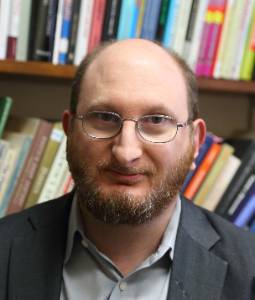
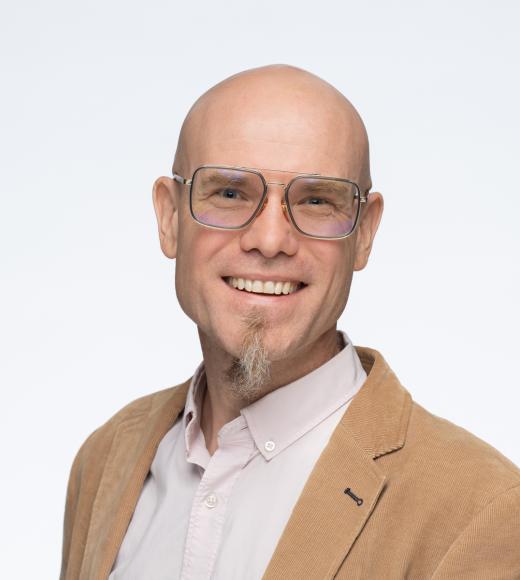
Joseph A. November is an Associate Professor in the Department of History at the University of South Carolina, affiliated with the McCausland College of Arts and Sciences. His research focuses on the history of biomedical computing, distributed computing, and the intersection of technology and medicine. He holds a Ph.D. from Princeton University (2006), an M.A. from the University of Chicago (2002), and a B.A. from Hamilton College (1997). His work includes the award-winning book Biomedical Computing: Digitizing Life in the United States (2012), which explores the co-development of biomedicine and computing technologies. Current projects include Revolutions@home , examining distributed computing in protein folding research, and a biography of computing pioneer Robert S. Ledley. He has received grants from the NSF, NIH, and the Charles Babbage Institute. Teaching interests span the history of science and technology, including courses on the history of medicine, digital humanities, and the role of games in historical education. He actively contributes to professional organizations like SHOT and the History of Science Society. Awards include the Computer History Museum Prize (2013) and the National Institutes of Health DeWitt Stetten Fellowship (2007-2008). His research bridges historical analysis with contemporary issues in technology and biomedical ethics.
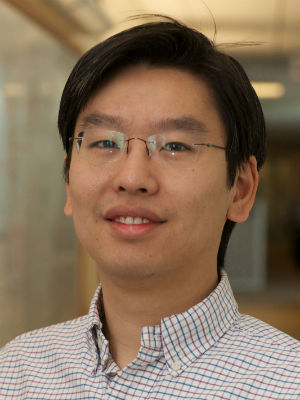
Harris H. Wang is an Associate Professor in the Department of Systems Biology and Department of Pathology and Cell Biology at Columbia University's Vagelos College of Physicians and Surgeons, where he also serves as Interim Chair of Systems Biology. He is affiliated with the Center for Computational Biology and Bioinformatics (C2B2) and the Integrated Program in Cellular, Molecular and Biomedical Studies (CMBS). B.S., Physics and Mathematics, MIT Ph.D., Biophysics, Harvard University Dr. Wang's research lies at the intersection of systems and synthetic biology, focusing on developing foundational technologies for genome engineering, microbiome manipulation, and synthetic genomics. His lab pioneers methods such as MAGE, MAGIC, CAST, and CAMII to enable high-throughput genetic manipulation, in situ microbiome engineering, and AI-driven microbial culturomics. Key research themes include understanding microbial community dynamics, engineering cellular memory systems, designing biocontained genetic circuits, and applying synthetic biology to human health challenges in personalized medicine and infectious disease. His recent publications reveal a strong trend in spatial and functional metagenomics, CRISPR-based microbiome editing, and synthetic biology tools for data storage and genetic stability. The articles span high-impact journals like Nature , Science , and Nature Biotechnology , reflecting his leadership in developing scalable, programmable biological systems. Scientific Awards: NIH Director’s Early Independence Award Forbes 30 Under 30 in Science Sloan Research Fellowship NSF CAREER Award ONR Young Investigator Award Burroughs Wellcome Fund PATH Award Schaefer Scholar Blavatnik National Award Vilcek Prize PECASE Dr. Wang has advised numerous PhD and postdoctoral researchers, many of whom have gone on to independent scientific careers. His lab is supported by major grants from NIH, NSF, DARPA, DOE, and foundations including the Bill & Melinda Gates Foundation and CZ Biohub NY. He is actively involved in educational initiatives, including organizing Columbia’s iGEM team and the Cold Spring Harbor Laboratory Synthetic Biology course. The Wang Lab is based at the Columbia University Irving Medical Center and is part of national consortia such as the Engineering Biology Research Consortium (EBRC) and the Genome Project-Write (GP-Write) initiative. The lab develops and applies cutting-edge technologies in automation, machine learning, and synthetic biology to engineer microbiomes for applications in medicine, global health, and climate change.
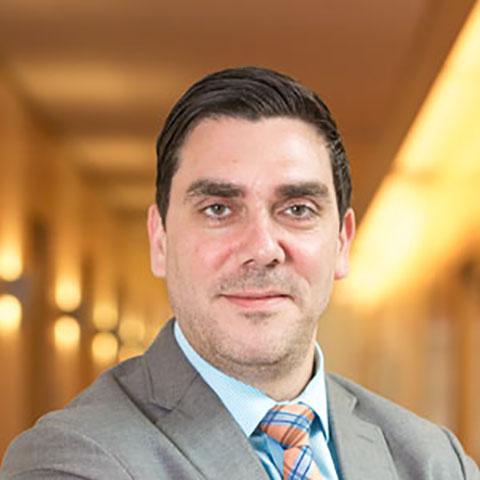
Gabriel A. Silva is a Professor in the Shu Chien-Gene Lay Department of Bioengineering at UC San Diego’s Jacobs School of Engineering, with a joint appointment as Assistant Professor in Ophthalmology. His research bridges neuroscience, theoretical physics, and applied mathematics to explore how the brain encodes and processes information, leveraging quantum logic and algorithms for advanced neural modeling. University: University of California, San Diego School: Jacobs School of Engineering Department: Shu Chien-Gene Lay Department of Bioengineering Academic Rank: Professor Joint Appointment: Assistant Professor in Ophthalmology Research Interests: Silva focuses on neural computation at cellular and network scales, aiming to abstract biological mechanisms into mathematical models that emulate brain-like processing. His work has implications for understanding neurological disorders, developing neural engineering nanotechnologies, and advancing AI systems through emergent complexity. Recent Article Trends: His publications span quantum-enhanced neural modeling, EEG-based disease detection, nonlinear dynamics in brain networks, and interdisciplinary applications of graph theory. Emerging themes include the integration of category theory for network analysis and AI optimization via emergence-promoting schemes. Labs & Teams: Affiliated with UC San Diego’s Institute of Engineering in Medicine, Silva leads research at the intersection of bioengineering, ophthalmology, and neural systems, fostering collaborations with neuroscience and quantum computing domains.
Professor Daniel Catchpoole serves as Deputy Head of School (Research) at the School of Computer Science, University of Technology Sydney (UTS), holding dual appointments at UTS and The Children's Hospital at Westmead. With over 20 years of research experience, he bridges computational sciences and pediatric cancer research through the Biomedical Data Science Lab in the Australian Artificial Intelligence Institute. His work integrates data analytics, artificial intelligence, and software development with molecular cancer biology to transform pediatric cancer treatment pathways. PhD in Cancer Cell Biology, University of New South Wales (1991-1995) Founding Fellow, Royal College of Pathologists Australasia (2010-present) Head, Children's Hospital at Westmead Tumour Bank (2001-present) Professor Catchpoole's research focuses on translational applications of genomics in childhood cancers, particularly acute lymphoblastic leukemia and neuroblastoma. His work combines high-throughput genomic technologies with advanced computational analysis to develop systems biology approaches for cancer patient assessment. Recent projects explore virtual reality applications for complex genomic data visualization and copper chelation therapies to enhance neuroblastoma immunotherapy. His research has received significant funding from Cancer Institute NSW, Sony Foundation, ARC, and NHMRC. His publication record spans biomedical data science, cancer genomics, and virtual reality applications in oncology. Recent work demonstrates leadership in 3D latent diffusion models for tumor segmentation, biobank economics, and innovative immunotherapies. His research consistently addresses the critical need for actionable knowledge from complex multidimensional biomedical data. Editorial Board Member, Cancers (2023) Associate Editor, Innovations in Digital Health, Diagnostics and Biomarkers (2019) Founding member and first President, Australasian Biospecimens Network Association Professor Catchpoole has supervised 17 Honours students (including 6 First Class Honours), 3 MSc students, and 12 PhD candidates across multiple institutions, with 6 current PhD students. His collaborative research bridges UTS's Faculty of Engineering and IT with The Children's Cancer Research Unit at The Children's Hospital at Westmead. Significant research funding includes Cancer Institute NSW grants, Sony Foundation VR projects, and ARC Discovery Projects focused on genomic data analysis and clinical decision support systems. His leadership extends to building frameworks for translational research, managing biobanks and clinical data linkages, and navigating governance requirements for cancer research. The Tumour Bank at Kids Research, CCRU, represents his long-standing commitment to pediatric cancer infrastructure development.
Empa - Swiss Federal Laboratories for Materials Science and TechnologySwitzerland
Thijs Defraeye is a Senior Scientist at Empa (Swiss Federal Laboratories for Materials Science and Technology) and Adjunct Professor at Dalhousie University. He holds a PhD in Building Physics from KU Leuven (2011) and a Master's in Civil Engineering (2006). His work focuses on optimizing food supply chains through multiphysics simulations and digital twins, addressing challenges in refrigerated transport, postharvest quality preservation, and energy-efficient food processing. He leads the SimBioSys group, developing solutions for perishable goods logistics and electrohydrodynamic technologies. Research interests include: Biophysics of food systems Digital twin applications in agriculture Electrohydrodynamic drying Thermal management in cold chains Sustainable food technologies Recent work emphasizes reducing food loss through physics-based modeling of refrigerated containers, ventilated packaging optimization, and scalable evaporative cooling systems. His studies bridge engineering principles with biological processes, aiming to enhance global food security and environmental sustainability.
Enrico Macii is a Full Professor at the Politecnico di Torino, affiliated with the Interuniversity Department of Regional and Urban Studies and Planning (DIST) and the Department of Control and Computer Engineering (DAUIN). He leads the Electronic Design Automation (EDA) research group and holds key roles as Scientific Advisor for the Politecnico-STMicroelectronics partnership and Scientific Contact for the European Chips Joint Undertaking. Research Interests: His work spans digital circuits and systems, energy efficiency, smart cities, Industry 4.0, and smart manufacturing. He focuses on embedded and cyber-physical systems, low-power design, neuromorphic computing, AIoT, and sustainable urban development. Recent Publications: His recent research demonstrates strong trends in edge AI, neuromorphic computing, and smart energy systems. Articles highlight innovations in low-power hardware acceleration, federated learning, physics-informed AI, and digital twin applications for urban and industrial systems. There is a clear emphasis on deploying AI efficiently on constrained devices and integrating physical models with machine learning. J. William Fullbright Fellowship (1993) Best paper award IEEE European Design Automation Conference (1996) Best paper award ACM/IEEE Great Lakes Symposium on VLSI (2008) DAC Service Award (2014) IEEE Fellow (2006) DATE Fellow (2014) Advising and Grants: He has supervised over 25 PhD students in computer engineering, AI, and urban systems. His research is funded by major EU programs (Horizon 2020, PNRR, KDT JU), national (PRIN, FAR), and regional grants, as well as industrial contracts with STMicroelectronics, Michelin, and Cefriel. He leads numerous high-impact projects in smart manufacturing, energy efficiency, and digital twins. Labs and Teams: He is a core member of the EDA Group, an interdepartmental research team at Politecnico di Torino focusing on VLSI-CAD, bioinformatics, smart cities, and Industry 4.0. He also contributes to IAM@PoliTo (Integrated Additive Manufacturing) and leads multiple EU and national research consortia.
Martin Hilbert is a Professor at the University of California, Davis, jointly affiliated with the Department of Communication and Computer Science. He is a leading scholar in digital technology, algorithmic systems, and computational social science, and chairs the campus’s designated emphasis in Computational Social Science. His work bridges theory and practice, integrating information theory with social science to understand the digital age. Education: Ph.D., Communication, Annenberg School of Communication, University of Southern California, 2012 Ph.D., Economics and Social Sciences, Friedrich-Alexander University Erlangen-Nuremberg, Germany, 2006 Dipl.-Kfm. (Master of Business Administration), Friedrich-Alexander University Erlangen-Nuremberg, Germany, 2003 Professor Hilbert's research focuses on the digital transformation of society, using formal tools from information theory to analyze AI and algorithmic systems. His work spans digital ethics, cognitive biases, and the evolution of communication in networked environments. He is particularly known for his pioneering study on global information capacity and early warnings about algorithmic manipulation in politics. His recent publications reveal a consistent trend of applying information-theoretic frameworks to social and digital phenomena, with a strong emphasis on measuring algorithmic impact, digital inequality, and the interplay between human cognition and automated systems. His work frequently appears in high-impact journals across disciplines, reflecting its interdisciplinary nature. Professor Hilbert has made significant contributions to public policy, having designed the first digital action plan for Latin America and the Caribbean at the United Nations and served as an Economic Affairs Officer for 15 years. His technical assistance has reached over 20 countries and major corporations. He is also an innovator in digital education, with online courses taken by over 100,000 students worldwide. Advising and Grants: Chairs the Designated Emphasis in Computational Social Science at UC Davis Teaches graduate and undergraduate courses in information theory, digital technology, and computational social science Has received research support through academic and policy-oriented grants (specifics not listed) Labs and Teams: He is associated with the Center for Computational Science (C2) and the Center for Science and Society (CSS) at UC Davis, which support interdisciplinary research on digital systems and their societal implications. These centers foster collaboration between computer scientists, social scientists, and policymakers.
Professor Arokia Nathan is affiliated with the Department of Engineering at the University of Cambridge , where he holds the Chair in Photonic Systems and Displays. His work bridges semiconductor device engineering, flexible electronics, and intelligent systems. Specializes in Thin-Film Transistors (TFTs) for displays and sensors Key contributions to digital microfluidics and neuromorphic computing Focus on ultra-low-power and high-frequency CMOS circuits Advances in oxide semiconductor materials and hybrid electronics Recent publications highlight trends in neuromorphic perception , flexible battery technologies , and RF/wireless communication systems . His research also emphasizes bioinspired robotics , wearable electronics , and intelligent IoT devices .
Mél Hogan is an Associate Professor in the Department of Film and Media at Queen's University and host of The Data Fix podcast. She serves as MA/PhD supervisor within her department, though currently not accepting new students while remaining available for supervisory committees and exams via Zoom. Her research critically examines the environmental impacts of data infrastructures through environmental humanities, critical data studies, and science and technology studies (STS). She employs qualitative, research-creation, and ethnographic methods to investigate data centers, archival theory, and elemental media, with particular focus on how digital technologies intersect with climate crisis and ecological systems. Her work bridges media studies with environmental concerns, emphasizing cultural, social, and historical dimensions of technology. Recent publications (2022-2025) reveal consistent thematic evolution toward data center ecologies, climate-tech intersections, and materialities of digital storage. Key trends include solastalgia (environmental distress) in cloud computing, archival responses to extinction, and critical examinations of AI's environmental costs. Her scholarship demonstrates increasing interdisciplinary reach across media archaeology, environmental humanities, and critical infrastructure studies. Dr. Hogan actively supervises graduate students with interdisciplinary projects using qualitative methods in communication/media studies, environmental humanities, and critical theory. She explicitly notes unsuitability for technical problem-solving projects or quantitative social science approaches, emphasizing her preference for critical-humanistic perspectives on data, media, and technology. Her advising philosophy centers on collaborative exploration of environmental impacts within data infrastructures.
Prof. Robert Grass is a Lecturer at the Department of Chemistry and Applied Biosciences at ETH Zurich, affiliated with the Institute for Chemical and Bioengineering Sciences. His research focuses on innovative applications of nanotechnology, DNA-based storage systems, and sustainable catalytic processes for CO2 valorization. Grass has pioneered silica-encapsulated DNA technologies for traceability in healthcare, environmental monitoring, and anti-counterfeiting measures. His work bridges chemical engineering with information technology, addressing challenges in long-term data preservation and molecular-level security. Current projects include developing compostable DNA storage materials and designing catalysts for methanol synthesis from CO2, contributing to both environmental sustainability and energy systems. Grass's interdisciplinary approach integrates nanomaterials design, enzymatic processes, and machine learning to advance next-generation storage and sensing technologies. Research Interests: Development of DNA-based storage systems with error-correction mechanisms Nanoparticle engineering for medical and environmental applications Catalytic materials for CO2 conversion and green chemistry Bio-inspired security systems using molecular randomness Sustainable materials for long-term data preservation His recent work highlights advancements in silica-encapsulated DNA tracers for tracking pathogen transmission dynamics, as well as low-nuclearity catalysts enabling efficient methanol synthesis from CO2. Grass actively explores the intersection of nanotechnology and digital information, including cryptographic applications leveraging DNA's inherent complexity.
Dr. José Luis Calvo Rolle serves as a Professor in the Department of Industrial Engineering at the School of Engineering, Universidade da Coruña (UDC), specializing in Systems Engineering and Automation. His research focuses on intelligent control systems, fault detection, and virtual instrumentation within the Cybernetic Science and Technology Research Group. Teaches across multiple programs including Master's in Industrial Computing and Robotics, Textile Technology, and Occupational Risk Prevention Coordinates thesis supervision across Industrial Engineering and related disciplines His research spans intelligent control systems and optimization, with significant contributions in virtual sensors, fault detection, and AI-driven modeling for industrial applications. Current projects integrate machine learning with industrial processes for naval construction, wastewater treatment, and precision livestock farming, demonstrating cross-disciplinary impact from energy systems to agricultural technology. Recent publications reveal strong trends in applying deep learning to industrial metaverse frameworks, wastewater optimization, and livestock monitoring systems. His work bridges theoretical control engineering with practical implementations in energy management, naval manufacturing, and sustainable agriculture, frequently utilizing dimensionality reduction and one-class classification techniques. Dr. Calvo Rolle actively mentors students through thesis supervision across multiple engineering disciplines and coordinates research projects with diverse funding sources including the European Commission, Spanish National Research Agency, and industrial partners like Navantia and Telefónica. His laboratory work centers on the Cybernetic Science and Technology Research Group, developing testbeds for industrial automation, virtual instrumentation, and AI-driven monitoring systems. Current initiatives include digital twin implementations for naval manufacturing and smart energy management systems.
Elizabeth Yale is an Associate Professor in the Department of History at the University of Iowa, College of Liberal Arts and Sciences, where she also serves as Director of Undergraduate Studies. Her research lies at the intersection of the history of science, book history, and early modern European intellectual culture, with a focus on how knowledge was created and preserved in domestic and archival contexts. Her educational background includes a PhD in the History of Science from Harvard University (2008). She previously taught at Western Carolina University and Harvard before joining the University of Iowa. Dr. Yale's research explores the material and social practices of knowledge-making, particularly in early modern Britain. She emphasizes the role of families, manuscript culture, and archival infrastructures in the development of scientific thought. Her work spans themes such as gender, materiality, and the transmission of medical and natural knowledge. She teaches courses on early modern Europe, the history of science and medicine, book history, and gender, often incorporating hands-on analysis of texts through the University of Iowa Center for the Book. Her recent publications reveal a consistent interest in the material forms of knowledge—letters, lists, marginalia, and archives—and their role in shaping scientific epistemology. She frequently examines how women’s intellectual labor and domestic spaces contributed to scientific advancement. Her collaborative projects, including an NEH-funded initiative with Matthew Brown, aim to build innovative educational spaces for studying global print and manuscript cultures. Visiting Scholar, Max Planck Institute for the History of Science, Berlin (2016) President, Andrew W. Mellon Society of Fellows in Critical Bibliography (2021–2022) Senior Fellow, Andrew W. Mellon Society of Fellows in Critical Bibliography Dr. Yale has been active in mentoring and curriculum development, particularly through experiential learning programs like the Hawkeye History Corps. She has secured external funding, including an NEH Humanities Initiatives Grant, to support interdisciplinary teaching and research. Her advising likely extends to undergraduate and graduate students interested in history of science, gender studies, and material text analysis, though specific students are not listed. She is also engaged with public history, contributing accessible commentary to outlets like The Atlantic , Quartz , and Iowa Public Radio , bridging academic research with broader societal conversations on science, gender, and race. She is involved in collaborative scholarly communities, especially through the Rare Book School and the University of Iowa Center for the Book, where she contributes to projects that integrate book history with scientific and archival studies. These affiliations support a vibrant research and teaching environment centered on material knowledge practices.
Jon Thomson is an Associate Professor (Reader) in Fine Art at the Slade School of Fine Art, University College London, where he works with MA/MFA and PhD students. He is a visual artist specializing in digital and new media art, collaborating with Alison Craighead since 1993 under the name Thomson & Craighead. Their work explores how internet and communications networks transform our understanding of the world, examining the relationship between physical and digital space and how the internet alters our socio-political understanding of reality. Thomson studied at Duncan of Jordanstone College of Art in Dundee. In 1995, he co-founded The Slade Centre for Electronic Media in Fine Art (SCEMFA), bringing together artist-researchers working digitally on the cutting edge of contemporary art practice. He has maintained this research focus while developing his collaborative practice with Craighead. Thomson's research examines how the development of the internet has transformed perception of the world, particularly how our constant ability to be physically somewhere but virtually anywhere affects our understanding. His work considers the tension between global and local perspectives, and how modern communications inform our sense of place and self. Recent projects increasingly examine the impact of Big Data on society and how individuals can measure their experience against unfathomably large bodies of information and inhuman timescales. Thomson & Craighead's extensive exhibition history shows a consistent exploration of networked communication, with works spanning from early internet-based projects to contemporary explorations of genomic data and nuclear culture. Their practice demonstrates an evolution from examining basic internet infrastructure to addressing complex issues of data sovereignty, deep time, and the societal impacts of pervasive networked technologies. Thomson's research has been supported by significant funding including: AHRC small grant in the creative and performing arts (2007) Wellcome Trust Arts Award (£38,000) for Stutterer (2014) Collaborations with Channel 4 Television, Animate Projects, New Media Scotland, and Creative Scotland for Flat Earth Trilogy Thomson advises MA/MFA and PhD students at the Slade School of Fine Art. His collaborative practice has resulted in numerous exhibitions worldwide and three published monographs. They have developed innovative approaches to using live data streams, social media content, and scientific information as artistic materials, creating works that challenge conventional boundaries between art, technology, and science. Thomson co-founded SCEMFA, which remains a significant research center bringing together artist-researchers working at the intersection of digital technology and fine art. His work often involves interdisciplinary collaborations, such as with computational biologists at the University of Dundee and participation in the Nuclear Culture research project with Arts Catalyst London.
Davood Pourkargar is an Assistant Professor in the Tim Taylor Department of Chemical Engineering at Kansas State University. He is also a Graduate Faculty Member at the Food Science Institute and a Faculty Researcher at the Johnson Cancer Research Center. His work focuses on integrating data with first-principle models to understand complex systems across multiple scales. Ph.D. in Chemical Engineering from Pennsylvania State University (2015) M.S. in Process Simulation and Control from Sharif University of Technology (2010) B.S. in Chemical Engineering from Sharif University of Technology (2008) His research interests span computational multiscale modeling, digital twin development, applied artificial intelligence, and optimization-based control of complex process networks. Dr. Pourkargar's work integrates process systems engineering with artificial intelligence to address challenging problems in chemical, biological, energy, and food systems. He develops intelligent frameworks for controlling complex process networks, designing cyber-physical architectures for smart manufacturing, and advancing system identification using machine learning and process data analytics. A significant aspect of his research involves physics-informed machine learning applied to cancer dynamics modeling and drug distribution in the human body. Dr. Pourkargar's publication record shows a strong focus on predictive modeling and control of chemical processes, particularly ammonia synthesis systems, polysilicon reactor systems, and food extrusion processes. His recent work increasingly incorporates machine learning techniques, especially transformer architectures and physics-informed approaches, applied to both traditional chemical processes and emerging areas like organ-on-a-chip systems for drug discovery. 2024 Carl R. Ice College of Engineering Outstanding Assistant Professor Award NSF EPSCoR Research Fellowship 2023 Kansas EPSCoR First Award AFOSR Faculty Fellowship Big XII Faculty Fellowship Robert F. Smith School Distinguished Junior Researcher Award from Cornell University (2017) O. Hugo Schuck Best Paper Award (2014) Dr. Pourkargar has successfully mentored numerous graduate students through their master's and doctoral research, with several receiving departmental and college-level awards. His research has been supported by significant grants from the National Science Foundation, Kansas EPSCoR, and K-State's Global Food Systems initiative. His lab has presented extensively at major conferences including AIChE Annual Meetings and American Control Conferences. The Intelligent Systems and Process Systems Laboratory (ISPSL) led by Dr. Pourkargar operates computational and experimental facilities in Durland Hall. The lab is expanding into robotic additive manufacturing and autonomous biomanufacturing, supported by research infrastructure grants. The group maintains active collaborations with the Johnson Cancer Research Center and the Terasaki Institute for Biomedical Innovation.
Irene Rocchi is an Associate Professor in the Department of Environmental and Resource Engineering, specializing in Geotechnics & Geology at the Technical University of Denmark (DTU). Her research integrates experimental soil mechanics with innovative engineering solutions, focusing on ground characterization, soil behavior across scales, and sustainable geotechnical practices. She leads key projects such as SoIA (Soil is alive) and B-test, contributing to advancements in geotechnical instrumentation and interdisciplinary soil science. PhD, City University of Hong Kong (2010–2014) MSc in Civil Engineering, Politecnical School of Turin (2007–2009) Bachelor in Civil Engineering, University of Bologna (2004–2007) Her research interests center on experimental soil mechanics, with a strong focus on laboratory and field characterization, unsaturated soils, micro-scale analysis, and the influence of biological factors on soil behavior. She emphasizes innovation and the translation of research into practical engineering applications, particularly in flood protection, ground improvement, and sustainable infrastructure. The recent publications reflect a consistent trend in advanced geotechnical testing, probabilistic modeling, and interdisciplinary biogeotechnics. Her work spans from fundamental soil behavior studies to applied technologies like digital twins and energy storage in geomaterials, demonstrating a strong integration of mechanics, sustainability, and innovation. Semper Ardens Excellence Grant (Carlsberg Foundation) InnoExplorer Grant (B-test project) Irene Rocchi actively supervises PhD students and contributes to major research projects at DTU. She has been involved in industrial collaborations and has led funded projects focusing on sustainable underground construction, soil swelling, and infrastructure performance. Her work bridges academic research and real-world engineering challenges. She is involved in the SoIA research group and contributes to DTU’s Sustainable Geotechnics initiative, where she develops new sensing technologies and promotes interdisciplinary approaches to soil science. Her lab focuses on advanced soil testing, NMR-based homogeneity assessment, and biologically influenced soil mechanics.