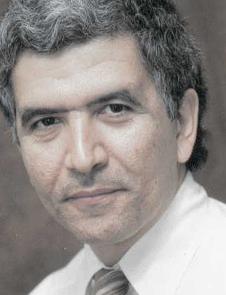
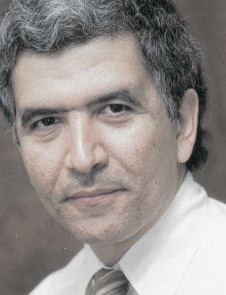
Shiyu Su is an Assistant Professor in the Department of Electrical and Computer Engineering at the University of Waterloo. His research focuses on high-speed data converters, wireless transceivers, digital phase-locked loops (PLL), and AI-assisted analog/mixed-signal design automation. He holds a Ph.D. from the University of Southern California (2019) and teaches courses such as ECE 340 (Electronic Circuits 2) and ECE 432 (Radio Frequency Integrated Devices and Circuits). Education: B.S. from Beijing University of Post and Telecommunication (China) and Queen Mary, University of London (UK), 2011; M.S. and Ph.D. from USC, 2013 and 2019, all in electrical engineering. Research Interests: High-speed ADCs/DACs RF/mm-wave transceivers Time-approximation filters (TAF) Analog/mixed-signal design automation Memristor-based computing Biomedical interfaces Key Awards: IEEE SSCS Predoctoral Achievement Award (2017–2018) Best Student Paper Award at IEEE RFIC (2022) Ming Hsieh Institute Scholar (2019–2020) Lab Focus: The Shiyu Su Lab develops integrated circuits for communications, sensing, and computing, with a focus on AI-driven methodologies and digital-analog co-design. Collaborations include work with Prof. Wei Wu (USC) on memristor-based systems.
David A. Johns is a Full Professor at the Department of Electrical and Computer Engineering within the University of Toronto . His career spans academic and industrial contributions to analog integrated circuits and high-speed communication systems. Co-founder of Snowbush Microelectronics (integrated circuit IP company) IEEE and Canadian Academy of Engineering Fellow Recipient of Darlington Best Paper Award and multiple teaching/design accolades Research Interests include analog integrated circuits for digital communication, data converters, phase-locked loops, and signal processing. His work bridges theoretical concepts with hardware implementation, focusing on full-duplex coax/twisted-pair systems, optical wireless links, and MEMS sensor interfaces. Teaching Contributions cover analog/digital electronics courses like ECE331, ECE354, ECE1371, and ECE1392. He emphasizes hands-on design and simulation tools like LTSpice. Awards & Recognitions : IEEE Fellow (2001) CAE Fellow (2012) Darlington Best Paper Award (1999) University of Toronto ECE Teaching Award (1999) CMC Design Award (1993) Advising involves 19 PhD/MASc theses on topics ranging from oversampling filters to low-power ADCs. His group has produced innovations in continuous-time modulators, MEMS accelerometers, and optical interconnects.
Professor Francis Dawson is affiliated with the Department of Electrical and Computer Engineering at the University of Toronto , under the Faculty of Applied Science and Engineering . He has been active in teaching and research since 1988, focusing on energy systems, power converters, and electromagnetic modeling. PhD in Electrical Engineering (University of Toronto, 1988) MASc in Electrical Engineering (University of Toronto, 1985) BASc in Electrical Engineering (University of Toronto, 1982) BSc in Physics (University of Toronto, 1978) His research spans static power converters , energy storage systems , signal processing in power applications, and electromagnetic compatibility . Recent publications focus on fault current limiters , digital phase-locked loops , and plasma physics , with keywords indicating strong ties to Electrical Engineering and Materials Science . Scientific accolades include: IEEE Fellow Myron Zucker Student Design Project 1st Prize (2012) K. Yamamoto Best Student Paper Award (2007) F. Farahmand 3rd Best Paper Prize (2005) He has collaborated on industrial projects in power electronics and contributed to the Power Group at the University of Toronto.
Prof. Frederic Nabki is an Associate Professor of Electrical Engineering at the École de technologie supérieure (Québec, Canada). He holds a B.Eng. (Honors) and Ph.D. in Electrical Engineering from McGill University. His primary research focuses on MEMS integration with CMOS systems, RF integrated circuits (RFICs), and ultra-wideband (UWB) systems. He leads the Microtechnology and Microsystems Laboratory (Micro²) and co-directs the CoFaMic Research Centre at UQAM, exploring novel MEMS fabrication processes and hybrid RF-MEMS systems. Education: B.Eng. (McGill, 2003), Ph.D. (McGill, 2010) Affiliations: IEEE Montreal Section Secretary Labs: CoFaMic (UQAM), Micro² (ETS) His research interests span MEMS resonators, phase-locked loops, and UWB transceivers. Notable contributions include patents in MEMS-CMOS integration and book chapters on MEMS resonators. He has secured funding from NSERC, CFI, and ReSMiQ, focusing on miniaturization, energy efficiency, and system-level integration challenges. Recent work emphasizes energy-efficient UWB systems, terahertz modulation, and deep learning-enhanced ultrasonic sensors. His interdisciplinary approach bridges microelectromechanical and electronic systems for applications in healthcare, aerospace, and industrial IoT. Awards: Governor General of Canada’s Academic Bronze Medal (2025). Grants and collaborations include NSF-funded projects on MEMS fabrication and partnerships with Quebec’s Microsystems Strategic Alliance. He advises on emerging trends in hybrid RF-MEMS systems and low-power sensor networks.
Fei Yuan is a Full Professor in the Department of Electrical and Computer Engineering at Toronto Metropolitan University (formerly Ryerson University). He holds a B.Eng. from Shandong University, an M.A.Sc. in Chemical Engineering, and a Ph.D. in Electrical Engineering from the University of Waterloo. His career includes roles as Lecturer at Changzhou Institute of Technology, Visiting Professor at Humber College and Lambton College, and Controls Engineer at Paton Controls Limited. At Toronto Metropolitan University, he served as Associate Chair for Undergraduate Studies, Department Chair (2010–2015), and Director of Quality Assurance in the Faculty of Engineering and Architectural Science (2015–2021). He is a Fellow of the IET, Senior IEEE Member, and registered Professional Engineer in Ontario. Research focuses on all-digital circuits, time-mode signal processing, mixed-signal converters (TDCs, ADCs), and low-power VLSI systems. Notable contributions include books on CMOS circuits, time-mode systems, and mixed-mode signal processing. Awards include the Dean’s Teaching Award (2017), Ryerson Research Chair (2005), and IET Fellowship (2016). Teaching includes courses on VLSI systems, CMOS mixed-signal circuits, and capstone design projects. Over 250 journal/conference papers and multiple book chapters highlight his expertise in circuits for communications, sensing, and biomedical applications. Active in professional service, grants, and academic governance at the university level.
Sebastian Magierowski is an Associate Professor in the Department of Electrical Engineering & Computer Science at York University's Lassonde School of Engineering. He holds a P.Eng designation and has held faculty positions at the University of Calgary (2004–2012) and York University since 2013. His research focuses on semiconductor systems, bioinformatics, and artificial intelligence, with particular emphasis on energy-efficient analog/digital chips, CAD/EDA tools, and applications like mobile DNA sequencing and DNA-based data storage. Dr. Magierowski's academic journey includes a PhD in Electrical Engineering from the University of Toronto (2004). His work bridges electrical engineering and biomedical innovation, with contributions to CMOS-based nanopore DNA sequencing systems, capacitive sensors for DNA storage monitoring, and FPGA-accelerated bioinformatics tools. His research also explores hardware acceleration for embedded systems and novel sensing technologies for point-of-care diagnostics. Key research themes include: Development of semiconductor-based biosensors (e.g., CMOS nanopore systems) Design of compact, portable diagnostic devices Integration of AI and machine learning in bioinformatics pipelines Advances in DNA data storage and retrieval mechanisms His recent publications highlight innovations in low-power circuits for DNA sequencing, thermo-FET sensing systems, and embedded RISC-V multicore architectures for miniature devices. While no awards are explicitly listed, his extensive publication record reflects impactful contributions to interdisciplinary engineering and biomedical research. Dr. Magierowski's work emphasizes cross-disciplinary collaboration, with applications spanning healthcare, environmental monitoring, and data storage. His research group focuses on translating theoretical advancements into practical, scalable technologies for emerging biomedical and computational challenges.
Mustapha CE Yagoub serves as a Professor in the School of Electrical Engineering and Computer Science at the University of Ottawa, where he has maintained an active academic position since joining in 2001. His professional background spans both industry and academia across three continents, with significant contributions to microwave engineering and RF circuit design. His research interests focus on RF/Microwave CAD, RFID Design, Neural networks for high-frequency applications, Planar antennas, and Applied electromagnetism. This specialization is reflected in his extensive publication record of over 300 journal and conference papers, along with two books including 'Conception de circuits linéaires et non linéaires micro-ondes' (2000) and 'Computer Manipulation and Stock Price Trend Analysis' (2005). His recent work demonstrates strong continuity in microwave circuit analysis, RFID applications, and neural network implementations for high-frequency systems, with particular emphasis on practical engineering solutions for wireless communications and sensor networks. As an educator, Professor Yagoub teaches undergraduate courses including Circuit Theory I (ELG 2538) and Electronics for Mechanical Engineers (ELG 3736), along with graduate-level Nonlinear Microwave Devices (ELG 6369). He actively supervises fourth-year undergraduate projects and graduate research in his specialty areas. Professor Yagoub maintains active professional standing as a Senior Member of the IEEE Microwave Theory and Techniques Society, a member of the Professional Engineers of Ontario (Canada), and a member of the Ordre des ingénieurs du Québec (Canada). His international academic journey began with engineering education at École nationale polytechnique in Algiers, continued with doctoral studies in Toulouse, France, and included academic positions at Houari Boumediene University of Science and Technology in Algiers before his current appointment at uOttawa.
Professor Mustapha Yagoub is a distinguished faculty member in the School of Electrical Engineering and Computer Science at the University of Ottawa, where he has been serving since 2001. With over 300 publications to his name, he specializes in RF/microwave engineering, neural networks applications, and RFID systems. His research bridges theoretical advances with practical industrial applications in wireless communications and microwave circuit design. Education: Dipl.-Ing. in Electronics, École Nationale Polytechnique, Algiers, Algeria (1979) Magister in Telecommunications, École Nationale Polytechnique, Algiers, Algeria (1987) Ph.D., Institut National Polytechnique, Toulouse, France (1994) Professor Yagoub's research spans several interconnected domains within electrical engineering, with particular emphasis on microwave circuit design and wireless communication systems. His work integrates neural network techniques with traditional microwave engineering approaches, creating innovative solutions for complex RF problems. He has made significant contributions to RFID technology, particularly for specialized applications like underground mining environments. His expertise in applied electromagnetics has led to numerous advances in antenna design and microwave component modeling. Analysis of Professor Yagoub's recent publications reveals a strong focus on practical microwave circuit design, with particular attention to low-noise amplifiers, RF parameter extraction techniques, and efficient circuit implementations for wireless communications. His work demonstrates consistent integration of electromagnetic theory with circuit design principles, often applying novel computational approaches to solve challenging problems in microwave engineering. Many publications address specific industry needs in wireless communications, RFID systems, and energy-efficient circuit design. Professional Affiliations: Senior Member, IEEE Microwave Theory and Techniques Society Professional Engineer, Ontario, Canada Member, Ordre des ingénieurs du Québec, Canada Professor Yagoub has supervised numerous graduate students through their research in microwave engineering and wireless communications. His extensive publication record suggests substantial research funding throughout his career, supporting work in microwave circuit design, neural network applications in RF systems, and RFID technology development. His collaborations with researchers across multiple institutions and countries have contributed to the international recognition of his work in microwave engineering. While specific laboratory details aren't provided in the available information, Professor Yagoub's research focus suggests he leads or has led laboratory facilities for microwave circuit design, RF measurement, and wireless communication systems testing. His work on neural network applications in microwave engineering indicates a computational research component alongside experimental work.
Mark Greenstreet is a Professor in the Department of Computer Science at the University of British Columbia. He specializes in formal verification, VLSI design, and analog/mixed-signal (AMS) circuit analysis. His research includes developing tools like PReach (a parallel model checker) and COHO (reachability analysis), with applications in cyber-physical systems and energy-efficient computation. He holds affiliations with the Institute for Computing, Information, and Cognitive Systems (ICICS). Research Focus: Formal verification of hardware/software systems, model checking, analog circuit verification, energy-time trade-offs in VLSI, and theorem-proving integration with SMT solvers. His work bridges theoretical mathematics and practical circuit design, addressing challenges in reliability, scalability, and performance. Awards & Recognition: Recipient of Best Paper Awards at ASYNC 2011 and ASYNC 2003 for contributions to synchronizer analysis and self-timed interfaces. His research is supported by NSERC, Intel, and Oracle. Supervision & Teaching: Supervised over 20 graduate students, focusing on formal methods, parallel computing, and verification. Teaches courses on parallel computation, formal verification, and computer architecture. Labs & Tools: Developed PReach and COHO as open-source verification tools. Active in research groups exploring analog circuit modeling, reachability analysis, and hybrid systems verification.