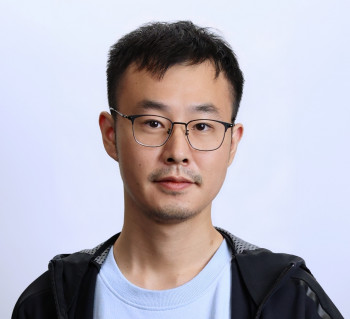
Ferdous Sohel is a Professor of Information Technology at Murdoch University and inaugural lead of the Agricultural Technologies program. His research spans AI, computer vision, and digital agriculture, with applications in medical imaging and environmental monitoring. He received the Mollie Holman Doctoral Medal and Vice Chancellor's Early Career Research Award. Research Impact: Developed innovative AI models for aquaculture oxygen prediction, 3D object tracking, quantum neural networks, and prohibited item detection. His work advances precision agriculture through hyperspectral classification frameworks and irrigation decision systems. Professional Service: Associate Editor for IEEE Transactions on Multimedia and senior IEEE member. Current projects include adversarial robustness for LiDAR systems and lightweight dormitory security networks.
John G Georgiadis is the Interim Chair and R. A. Pritzker Professor of Biomedical Engineering at Illinois Institute of Technology's Armour College of Engineering. He holds affiliations with the Illinois Tech Digital Medical Engineering and Technology (IDMET) Research and Education Center. His academic journey includes a Ph.D. (1987) and M.S. (1984) in Mechanical Engineering from UCLA, and a Diploma in Mechanical Engineering from the National Technical University of Athens (1983). Georgiadis’ research focuses on aging-related changes in the brain and skeletal muscle, leveraging MRI and computational models. Key projects include intramyocellular biotransport, cerebral microvasculature imaging, and multiscale brain mechanics. He has pioneered advancements in magnetic resonance elastography (MRE) for non-invasive tissue stiffness measurement, contributing to clinical applications in neurology and cardiology. His awards include the NSF Presidential Young Investigator Award (1991–1997) and Fellow status in the American Institute for Medical and Biological Engineering. Georgiadis has authored over 150 peer-reviewed publications and holds multiple patents in medical device technology and imaging techniques. His work bridges biomechanical engineering, computational imaging, and clinical diagnostics, with implications for aging populations and chronic disease management. Professional memberships include the Biomedical Engineering Society, IEEE, and AIMBE. His labs focus on translational research, integrating advanced imaging modalities with biomechanical principles to address complex biomedical challenges.
Prof Noel O'Connor is a Full Professor at Dublin City University's School of Electronic Engineering, specializing in cutting-edge research at the intersection of artificial intelligence (AI), medical imaging, robotics, and smart city technologies. His work spans applications such as cardiac MRI reconstruction, robotic manipulation using reinforcement learning, and the development of the Smart DCU Digital Twin for autism-friendly university environments. Research interests include AI-driven medical diagnostics, multimodal data fusion, and adaptive systems. His contributions to cardiac MRI reconstruction and transformer-based medical imaging analysis reflect a strong focus on healthcare innovation. He also explores ethical AI practices to reduce social bias in foundation models. Recent work emphasizes smart infrastructure projects, such as optimizing parking recommendations for electric vehicles and enhancing accessibility through digital twin frameworks. His research often integrates real-time sensor data and multi-agent systems to address complex urban challenges. No scientific awards are listed. Collaborations include the ASU-DCU International Research Program on Sensors and Machine Learning. Advising details and grant information are not explicitly provided.
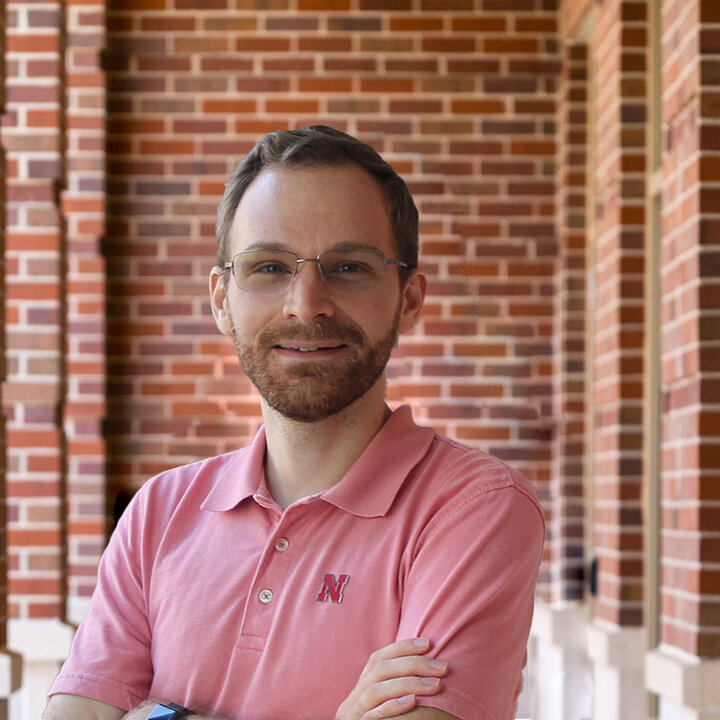
Seth Polsley is an Assistant Professor in the Jeffrey S. Raikes School of Computer Science and Management at the University of Nebraska-Lincoln. His academic home resides in the School of Computing, where he bridges intelligent systems design with human-computer interaction to enhance educational and universal computing experiences. BS in Computer Engineering (2014) - University of Kansas MS (2017) & PhD (2023) in Computer Engineering - Texas A&M University His research explores: Intelligent tutoring systems Brain-computer interfaces Accessible educational technologies Machine learning for child development assessment Sketch recognition in STEM learning Recent publications demonstrate expertise in tactile learning interfaces, sketch-based developmental assessment, and equitable AI systems. Key disciplines span Human-Computer Interaction, Machine Learning, and Educational Technology. Scientific recognition includes: James Blackiston Memorial Graduate Fellowship Sigma Xi Research Award With professional experience at Lexmark International and MIT Lincoln Lab, Polsley combines practical engineering with educational innovation. His work on sketch-based tools and wearable systems addresses both technical and societal challenges in computing.
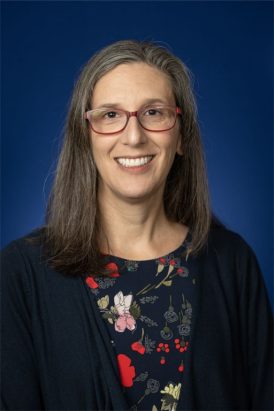
Professor Sonya Dal Cin is a Professor of Communication and Media and Professor of Psychology (by courtesy) at the University of Michigan, holding a joint appointment in the Research Center for Group Dynamics at the Institute for Social Research. She serves as Associate Chair for Graduate Studies in the Department of Communication and Media. Her work integrates social-cognitive research with communication science to study how media experiences shape thought, emotion, and behavior, particularly focusing on narrative engagement, identification with characters, and health-related outcomes. Dal Cin’s research spans health communication, stereotyping, adolescent development, and aging, with a focus on media’s role in societal and individual well-being. Education: Earned a B.A. (Hons.) from Queen’s University (Canada) and a Ph.D. in Psychology from the University of Waterloo, supported by a Canada Graduate Scholarship from CIHR. Postdoctoral training at the Norris Cotton Cancer Center (now Dartmouth Cancer Center) preceded her tenure at Michigan. Research Interests: Media’s impact on health behaviors and decision-making Narrative persuasion and story-based belief change Adolescent media consumption and development Entertainment media’s role in reinforcing/stereotypes Older adults’ media engagement patterns Advising & Grants: Currently prioritizing advising commitments beyond primary supervision for Fall 2025 applicants. Active in lab mentorship through the MAPiEL (Media And Psychology in Everyday Life) Lab, focusing on collaborative projects in media psychology. Labs/Teams: Director of the MAPiEL Lab, exploring interdisciplinary questions at the intersection of media, psychology, and societal issues.
Dr. Patrick Filippi is a Lecturer in Precision Crop Management at the School of Life and Environmental Sciences, University of Sydney. He is affiliated with the Precision Agriculture Laboratory and the Sydney Institute of Agriculture. His work focuses on integrating remote sensing, machine learning, and geostatistics to address challenges in precision agriculture, particularly in crop yield modeling, soil mapping, and environmental monitoring. Research interests include precision agriculture technologies, soil science applications, data-driven crop management, and the use of satellite and proximal sensing for agricultural decision-making. He has contributed to projects funded by the Grains Research and Development Corporation (GRDC) and the University of Sydney, focusing on spatial variability in crop production, soil constraints, and machine learning interpretability. Key achievements include developing the LimeSoDa dataset for soil mapping and winning the 2016 CSIRO AgData Challenge Hackathon. His grants span topics like nitrogen fixation mapping in legumes and frost/heat management analytics. Filippi collaborates closely with industry to translate research into practical tools for farmers. Awards: 2nd Place CSIRO AgData Challenge Hackathon (2016) Labs: Precision Agriculture Laboratory (https://precision-agriculture.sydney.edu.au/) Grants: Includes Strategic Partnership Seeding Grants (2024), GRDC-funded projects (2022–2024), and Start-Up Research Funding (2024).
Shahar Kovalsky is an Assistant Professor of Mathematics at the University of North Carolina at Chapel Hill (UNC-CH), with secondary appointments in the School of Data Science and Society and an adjunct role in the Department of Computer Science (both within the College of Arts and Sciences). He holds a Ph.D. in Computer Science and Applied Mathematics from the Weizmann Institute of Science, and B.Sc./M.Sc. degrees in Mathematics and Electrical Engineering from Ben-Gurion University. His research bridges optimization, geometry, computer graphics, machine learning, and their applications in biology and medicine. Kovalsky's work includes advancements in geometric modeling, medical imaging diagnostics, and evolutionary biology analysis. He has been recognized with awards such as the Günter Enderle Best Paper Award (Eurographics 2016) and the SGP 2015 Best Paper Award. Education: Ph.D., Computer Science & Applied Mathematics, Weizmann Institute of Science, Israel B.Sc./M.Sc., Mathematics & Electrical Engineering, Ben-Gurion University, Israel Research Interests: His work focuses on geometric optimization, machine learning for medical diagnostics (e.g., thyroid cytopathology), and computational methods in evolutionary biology. He develops algorithms for injectivity-preserving parameterizations, medical image analysis, and Gaussian process landmarking for morphometric studies. Key Contributions: Deep learning models for thyroid cancer prediction from smartphone images Geometric algorithms for surface parameterization and injectivity Applications of Gaussian processes in evolutionary shape analysis Awards: Günter Enderle Best Paper Award (Eurographics 2016) SGP 2015 Best Paper Award Teaching & Mentoring: Kovalsky advises graduate and undergraduate students (e.g., Fengyu Yang, Maddy Vinal) and teaches courses like Optimization in Machine Learning at UNC-CH. He also co-advises students in interdisciplinary projects with Caroline Moosmüller and Jeremy Marzuola. Labs & Affiliations: Member of the Carolina Center for Interdisciplinary Applied Mathematics (CCIAM) and previously a Phillip Griffiths Assistant Research Professor at Duke University (2017-2020).
Habiba Akter is a Lecturer in Networks and Digital Systems at Queen Mary University of London (QMUL), affiliated with the School of Electronic Engineering and Computer Science . She holds an MEng in Electronic Engineering and Computing (2016) and a PhD in Electronic Engineering (2021), both from QMUL. Her education prior to university was completed in Bangladesh. Her research focuses on Computer Networks , Evolutionary Algorithms , Fractal Patterns , and AI-Based Face Detection . She explores applications such as optimizing network routing, generating fractal patterns using genetic algorithms, and analyzing network tunneling protocols for enhanced security and efficiency. In teaching, she instructs undergraduate courses including Internet Protocols and Wireless Networks , integrating practical network design principles with theoretical foundations. No scientific awards or funded grants are explicitly listed. Her work includes collaborations on network topology analysis (e.g., the Fortaleza case study) and multi-constrained path optimization in tunnelled networks. No lab affiliations or team collaborations are mentioned in the provided information.
Dr. Ziquan Liu is a Lecturer (Teaching & Research) at Queen Mary University of London's School of Electronic Engineering and Computer Science, affiliated with the Centre for Multimodal AI. He holds a PhD from City University of Hong Kong (2023) and dual B.Sc./B.Eng. degrees from Beihang University (2017). His research focuses on trustworthy machine learning, adversarial robustness, and uncertainty quantification in foundation models. He has served as a reviewer for top conferences like NeurIPS, ICLR, and CVPR, earning an Outstanding Reviewer Award in 2021. His teaching includes modules on machine learning for visual data analysis and principles of machine learning. He supervises PhD students in AI safety and reliability, with notable work on conformal prediction, adversarial attacks, and multimodal learning. His research outputs span top venues such as ICML, CVPR, and NeurIPS, addressing challenges in algorithmic fairness, model certification, and cross-modal alignment.
Azhar Zam is an Associate Professor of Bioengineering at NYU Abu Dhabi (NYUAD) and associated faculty at NYU Tandon School of Engineering's Biomedical and Electrical Engineering departments. He holds a B.Sc. from University of Indonesia, M.Sc. from University of Luebeck (Germany), and Ph.D. from Friedrich-Alexander-University Erlangen-Nuremberg (Germany). His research focuses on developing smart optical devices for medical imaging/diagnostics, including laser surgery, OCT, photoacoustics, and AI-driven imaging systems. He leads the Laboratory for Advanced Bio-Photonics and Imaging (LAB-π) at NYUAD and has authored 85+ publications/patents. Education: Bachelor of Science, University of Indonesia M.Sc. Biomedical Engineering, University of Luebeck Ph.D. Engineering, Friedrich-Alexander-University Erlangen-Nuremberg Research Interests: Innovations in biomedical optics, optical-based smart sensors, AI-enhanced diagnostics, and miniaturized medical imaging systems. His work integrates advanced optical technologies with surgical robotics and clinical applications. Professional Contributions: Associate Editor for Frontiers in Photonics Biophotonics section; Reviews Editor for Frontiers in Ophthalmology Retina section. Previously held positions at University of Basel (Assistant Professor), University of Waterloo, and other institutions globally. Labs & Teams: Directs NYUAD's LAB-π lab focusing on bio-photonics innovations. Collaborates across NYU's global network and international partners.
Mark Bo Jensen is an Assistant Professor (tenure track) at the Department of Engineering Technology and Didactics, Technical University of Denmark (DTU), specializing in Energy Technology and Computer Science. His research is centered on Perception Engineering and Extended Reality technologies, particularly Virtual Reality (VR), with applications in human cognition, computer graphics, and scientific visualization. His research interests lie at the intersection of engineering and cognitive sciences, focusing on creating immersive and convincing extended reality experiences. Jensen applies his over 10 years of expertise in real-time computer graphics to advance VR systems for perception modeling, geometric data visualization, and material appearance simulation. His work contributes to fields such as medical diagnostics, 3D annotation, and photorealistic rendering. The recent publications highlight a strong trend in leveraging VR for scientific tasks, such as anatomical landmark annotation and visual field testing, as well as advancing core graphics techniques like meshlet optimization and diffusion-based stereo image generation. His research integrates computer vision, graphics algorithms, and human-centered design. While no scientific awards are currently listed, his active participation in research projects and consistent publication output indicate a growing academic profile. He has contributed to interdisciplinary collaborations involving medical, biological, and engineering domains. Jensen has been involved in advising and research projects, including serving as a PhD student in the 'Virtual Reality-Based Visualization of Geometric Data' project and currently as a project participant in 'AL-EYE: The Visual Aid'. These projects reflect his focus on applied VR solutions and data understanding. His work is conducted within the Energy Technology and Computer Science division at DTU, where he contributes to advancing perception-driven technologies and their practical implementation in scientific and medical contexts.
Prof. Dr.-Ing. Reimar Lenz is an Associate Professor at the Technical University of Munich (TUM) within the TUM School of Computation, Information and Technology. His research focuses on digital image acquisition, cooled cameras for microscopy, color image reconstruction, and videometry. He founded CCD Videometrie GmbH in 1999 and co-developed the 'Arriscan' film scanner, earning a Technical Oscar in 2010. Education: Studied electrical engineering at Technical University of Stuttgart and TUM (diploma 1980). PhD in 1986, habilitation in videometry/image processing (1989). IBM postdoc (1987-1988). Key achievements include the microscanning patent (1990), high-resolution museum cameras (MARC project), and CMOS sensor innovations. Awards include the Academy Scientific & Engineering Award (2010) and Heinz Maier-Leibnitz Medal. Manages CCD Videometrie GmbH and holds adjunct roles. Active in both academia and industry, bridging sensor technology and digital imaging applications.
Harvey Ballard is a Professor in the Department of Environmental and Plant Biology at Ohio University's College of Arts and Sciences. He serves as the Internships Coordinator, Herbarium Director, and Curator of Vascular Plants at the Floyd Bartley Herbarium. His work bridges molecular biology, taxonomy, and conservation, with strong institutional ties to national botanical networks and research centers. Research Interests: Dr. Ballard’s research focuses on plant systematics, phylogenetics, molecular ecology, and conservation genetics. His lab investigates evolutionary processes in plants, particularly in the genus Viola and the family Violaceae. Using molecular tools such as microsatellites and next-generation sequencing, his team studies hybridization, polyploidy, and breeding systems like chasmogamy and cleistogamy. His work has broad implications for understanding species formation and plant diversity. Publications & Research Trends: His recent publications reflect a strong emphasis on taxonomic revisions, phylogenetic analyses, and floristic contributions. The research spans new species descriptions, generic reclassifications, and molecular phylogenies, primarily in Violaceae and related families. The integration of traditional morphology with modern genomics underscores a multidisciplinary approach to plant systematics. Scientific Service & Recognition: Adjunct Faculty, Ohio State University Department of Horticulture and Crop Science Research Associate, Missouri Botanical Garden Research Associate, Carnegie Museum Member, BRAHMS Database System International Advisory Group Editorial Board, Acta Botanica Cracoviensia Program Director, U.S. Virtual Herbarium Database Network Member, Ohio Rare Plant Technical Advisory Committee Member, Ohio Flora Committee Violaceae Working Group, Species Plantarum Programme Advising and Grants: Dr. Ballard coordinates undergraduate internships and advising in plant biology. He led a National Science Foundation grant to digitize herbarium collections across Appalachian Ohio, creating a regional databasing and imaging network. He also engages in contract research with the U.S. National Arboretum for microsatellite development in ornamental shrubs. Laboratories and Teams: His lab collaborates with Dr. Sarah Wyatt on the genetic basis of mixed breeding systems in Viola . The team employs molecular techniques including ISSRs, microsatellites, and 454 shotgun sequencing. The Floyd Bartley Herbarium, under his curation, is a hub for botanical research and education, utilizing BRAHMS software for specimen management.
Özlem Özgöbek is an Associate Professor at the Department of Computer Technology and Informatics, Norwegian University of Science and Technology (NTNU). Her research spans artificial intelligence, machine learning, and recommender systems with a focus on privacy, fake news detection, and educational technology. NTNU - Department of Computer Technology and Informatics Her work explores multimodal fake news detection, privacy implications in recommender systems, and technology-enhanced classroom interaction. Recent publications analyze digital education trends and classroom tools. Özgöbek collaborates with international researchers and contributes to news recommendation workshops. Her projects address ethical AI, environmental sustainability, and real-time information processing.
Dr. Julia Mierau is a researcher at the Institute of Movement and Neuroscience, German Sport University Cologne. She is actively involved in projects related to digitalization in sports teacher education, cognitive performance, and exercise neuroscience. Her work bridges pedagogy and neuroscience, with a strong focus on EEG, motor performance, and digital learning tools. Institution: German Sport University Cologne Department: Institute of Movement and Neuroscience Email: j.mierau@dshs-koeln.de Phone: +49 221 4982-8613 Her research interests include electroencephalography, cognitive performance, exercise psychology, sports pedagogy, and digital media in education. She investigates how physical activity influences brain function and learning, particularly in educational contexts. The recent publications reflect a strong trend in digital innovation in sports education, EEG-based monitoring of exercise effects, and cognitive performance in athletes and children. Her work combines experimental neuroscience with practical pedagogical applications. Scientific Awards: ECSS Young Investigators Award (2011) Fellowship for Digital Higher Education Innovation (2019) Graduiertenstipendium (2007) Reisestipendium (2011, 2014) Dr. Mierau has been principal or co-investigator in multiple externally funded projects, including ComeSport, ComeIn, and S.P.O.R.T.S., focusing on digital competence development in teacher training. She also served as co-editor of the Journal for Study and Teaching in Sports Science in 2021 and 2022, demonstrating academic leadership. She collaborates extensively with researchers such as Jens Kleinert, Heiko Strüder, and Andreas Mierau, contributing to a robust network in sports neuroscience and pedagogy.