Oliver Deussen is a Professor of Visual Computing at the University of Konstanz, recognized by the German Informatics Society (GSI) as a Fellow for his contributions to computer science. His research focuses on visualization, robotics, and environmental modeling, particularly in plant and landscape representation. He has pioneered methods in image manipulation and robotic painting, emphasizing digitalization's societal impacts. His work spans computational biology (e.g., schooling fish behavior) and AI-driven creative technologies. Research Interests: Visualization techniques, swarm behavior analysis, robotic creativity, and interdisciplinary applications of computer science. He explores how computational methods can model natural systems and enhance human-machine interaction. Awards: Fellow of the German Informatics Society (GSI) His research often bridges theory and practice, with contributions to SLAM frameworks, style transfer algorithms, and uncertainty visualization tools. Collaborations in robotics and biology reflect his commitment to applied computational research.
Nicolas Roulin is an Associate Professor of Industrial/Organizational (I/O) Psychology at Saint Mary’s University, Halifax, Canada. He holds a PhD in Work and Organizational Psychology from the University of Neuchâtel, Switzerland, and previously served as a Senior Lecturer at the University of Lausanne and an Assistant Professor at the University of Manitoba. His research focuses on personnel selection, including impression management tactics, faking detection, employment discrimination, and innovative selection tools like social media and asynchronous video interviews. Education: Ph.D. in Work and Organizational Psychology, University of Neuchâtel M.Sc. and B.Sc. in Management, University of Lausanne Research interests include applicant behavior during selection processes, cross-cultural interview practices, and the integration of new technologies in recruitment. Key projects include studies funded by SSHRC (e.g., on asynchronous video interviews and cultural impression management). Awards: SIOP Fellow. Editorial roles include Associate Editor for the International Journal of Selection and Assessment (IJSA) and contributions to Personnel Psychology . He has authored/co-authored influential works like The Psychology of Job Interviews and the 8th edition of Recruitment and Selection in Canada . Consulting work includes advising multinational assessment firms and Canadian consulting companies. He actively supervises graduate students and teaches courses on staffing, assessment, and HR management.
Peter A. Stokes is a Research Professor at the École Pratique des Hautes Études (EPHE) within Université PSL in Paris, specializing in Digital Humanities applied to historical writing. He holds a PhD from the University of Cambridge and has held roles including Leverhulme Early Career Fellowship at the University of Cambridge and Senior Lecturer at King's College London. His research focuses on computational palaeography, multigraphism, and the analysis of historical handwriting. He co-directs eScriptorium, a software project for automatic transcription of manuscripts, and leads the Biblissima+ Cluster 4 project. Education: PhD, University of Cambridge (2006), Dissertation: English Vernacular Script, ca 990 – ca 1035 BA (Hons) in Classics and English Literature & BE (Hons) in Computer Engineering, University of Melbourne (2001) Exchange Studies, Georgetown University (1998) Research Interests: Combining palaeography with digital humanities and computer science, focusing on theoretical and practical aspects of handwriting analysis, multigraphism, and transversal palaeography. Key projects include eScriptorium, DigiPal Framework, and contributions to Exon Domesday and Models of Authority projects. Grants & Awards: European Research Council (ERC) grant for DigiPal (2011–14) AHRC grants for Exon Domesday and Models of Authority (2015–17) Medieval Academy of America Prize (2016) Teaching & Supervision: Leads courses in digital humanities and palaeography at EPHE and King's College London. Supervised PhD students in medieval manuscript studies and digital humanities, including Salomé Pichon and Matilda Watson. Labs & Collaborations: Co-director of eScriptorium; member of Comité International de Paléographie Latine and Humanistica (Digital Humanities association). Active in international projects like Biblissima+ and CultureLab.
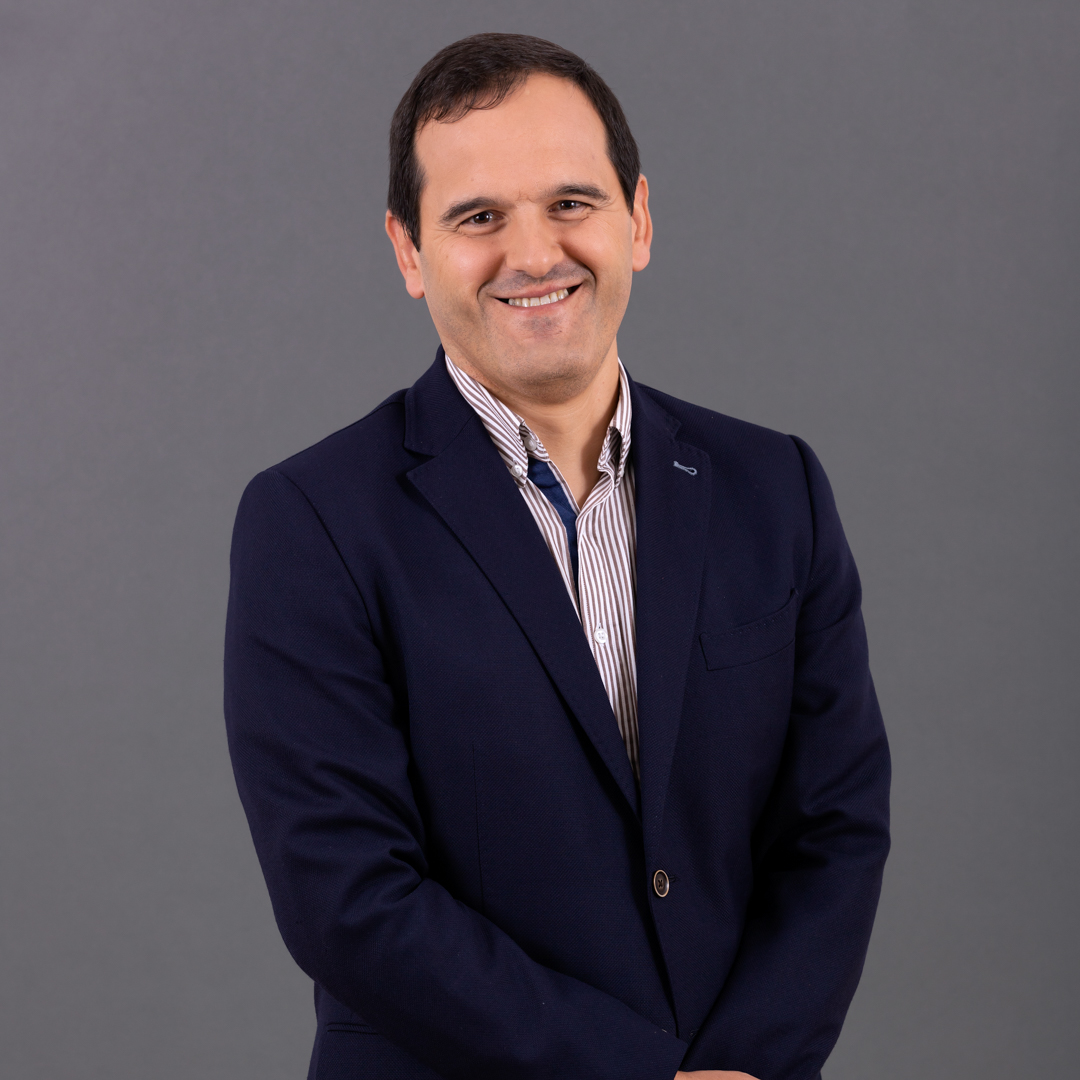
Nuno Fernandes Crespo is an Associate Professor at the Department of Strategic Management and Marketing, Lisbon School of Economics & Management (ISEG), University of Lisbon. He holds a PhD in Management (2013), a Master's in Management and Industrial Strategy (2004), and a Bachelor's in Management (1999) from ISEG. His research focuses on International Business, Entrepreneurship, and Strategic Agility in international new ventures (INVs), particularly during crises. He has published extensively in journals like International Business Review , Journal of International Management , and Technological Forecasting & Social Change . His 15 most recent works (2023–2025) explore themes including: Business model innovation during crises Supplier-country image effects in B2B marketing Sustainable entrepreneurship in family firms Digitalization and early internationalization strategies Country-of-origin stereotypes in industrial marketing Dynamic capabilities in INVs He supervises Master's students in topics spanning internationalization, digital transformation, family business strategy, and innovation. Professional roles include coordinating the Master's in Management and Industrial Strategy (2016–2022), serving on ISEG’s Executive Commission, and leading the Doctoral Program in Management (2018–2022). His methodology integrates empirical research, mixed methods, and configurational approaches.
Shawn Litster is a Professor in the Department of Mechanical Engineering at Carnegie Mellon University, where he leads cutting-edge research in sustainable energy conversion technologies. He is affiliated with the Wilton E. Scott Institute for Energy Innovation and serves as a Scott Institute Energy Fellow, contributing to major national initiatives in hydrogen and fuel cell systems. His work is supported by significant funding from the U.S. Department of Energy (DOE), ARPA-E, and the Office of Naval Research. Education: Ph.D. in Mechanical Engineering, Stanford University (2008) Master of Applied Sciences, University of Victoria (2005) Bachelor of Engineering, University of Victoria (2004) His research focuses on micro- and nanoscale transport phenomena in electrochemical energy systems such as fuel cells, batteries, and electrolyzers. Key interests include electrochemistry, multiphase flow in porous media, microfluidics, catalytic gasification, and computational fluid dynamics . He pioneers innovations in ionomer-free electrodes, high-oxygen-permeability materials, and low-iridium anodes to improve efficiency, durability, and cost-effectiveness. His recent publications (2021–2025) reveal a strong trend toward advanced diagnostics, operando characterization, machine learning integration, and multiscale modeling of fuel cell and electrolyzer systems. These works emphasize performance optimization, degradation analysis, and material innovation for heavy-duty and transportation applications. Scientific Awards: George Tallman Ladd Research Award, Carnegie Mellon University National Science Foundation CAREER Award Lieutenant Governor’s Silver Medal, University of Victoria Best Paper/Presentation Award, The Electrochemical Society Best Paper/Presentation Award, American Society of Mechanical Engineers (ASME) Litster has secured over $50 million in research funding as a sub-awardee in DOE hydrogen projects and led a $3.2M ARPA-E OPEN 2021 project on disruptive fuel cell electrodes. He is an inventor on two U.S. patents related to fuel cell design. He advises graduate students and leads the Laboratory for Transport Phenomena in Energy Systems , where his team develops novel materials and diagnostics for next-generation energy technologies.
Ales Popovic is a Full Professor of Information Systems at NEOMA Business School, France. He holds a PhD in Management and Information Systems. His research focuses on the value of information systems (IS) in organizations, digitalization, AI, behavioral and organizational issues in IS, and IT in inter-organizational relationships. He has published widely in journals like Journal of the Association for Information Systems and Technological Forecasting and Social Change . Dr. Popovic’s research explores topics such as fake news engagement on social media, blockchain adoption in real estate, and the impact of digital platforms on traditional media. He serves on editorial boards for journals including International Journal of Information Management and Industrial Management & Data Systems . His work bridges theoretical and practical aspects of IS, emphasizing business value creation and ethical considerations in AI. Key contributions include studies on digital transformation, crisis management technologies, and the role of privacy in technology adoption. His research frequently addresses contemporary challenges like misinformation dynamics, gig worker burnout, and healthcare AI applications.
Min Lee is a Full-time Assistant Professor of Computer Science at Singapore Management University's School of Computing and Information Systems (SCIS). Holding a PhD from Carnegie Mellon University (2021), Lee specializes in Artificial Intelligence with a focus on Human-AI Collaborative Systems and their applications in healthcare. Their research bridges technical innovation with human-centric design, emphasizing trustworthiness, explainability, and accessibility in AI systems. Research interests include decision-making optimization, human-machine collaboration, and AI-driven solutions for healthcare challenges such as stroke rehabilitation, elderly care monitoring, and clinical decision support. Lee has pioneered low-cost AI/robotic solutions for post-stroke rehabilitation exercises, integrating socially assistive robotics with real-time feedback mechanisms. Recent work highlights AI's role in enabling trustworthy clinical decision-making through explainable AI (XAI) techniques like counterfactual explanations and gradient-based methods. Their systems address ethical concerns in predictive healthcare and advocate for stakeholder-inclusive design processes. Awards and grants: No specific awards mentioned in the profile, though research has been supported through collaborative projects with clinical partners and iterative user evaluations involving therapists and patients. Advising focuses on multidisciplinary projects spanning AI, healthcare, and human-computer interaction. Current advisees include BHOSALE Rimmon Saloman, TRAN Truong Thuy, and YANG Xinlin. Lee collaborates closely with clinical stakeholders to translate technical advancements into practical healthcare solutions, emphasizing iterative design and real-world applicability. Labs/teams: Active in SCIS's AI and Data Science initiatives, leading projects on intelligent decision support systems, socially assistive robotics for rehabilitation, and human-centered AI ethics frameworks.
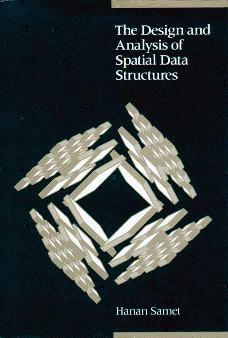
Hanan Samet is a Distinguished University Professor at the University of Maryland's Computer Science Department, affiliated with the Institute for Advanced Computer Studies (UMIACS) and the Center for Automation Research. He holds a Ph.D. from Stanford University (1975) and specializes in spatial databases, data structures, and geographic information systems. His research bridges computer science and geospatial analytics, with applications in image databases, computer vision, and spatio-temporal data management. Education: Ph.D., Computer Science, Stanford University, 1975 Research Interests: Focuses on spatial data structures, GIS, spatio-textual systems like NewsStand and CoronaViz, trajectory analysis, and metric indexing. His work emphasizes scalable algorithms for spatial networks and multimedia databases. Notable Projects: CoronaViz : Tracks disease spread via spatio-temporal data visualization NewsStand : Maps news articles geospatially SAND: Spatial browser for digital government Awards: ACM Paris Kanellakis Award (2014), IEEE McDowell Award (2015), UCGIS Research Award, and Fellowships in ACM/IEEE/AAAS. Recognized for advancing spatial database theory and practice. Grants/Advising: Leads NSF-funded projects on spatio-textual extraction and similarity search. Advises graduate students (e.g., Nicole Schneider, Montana Hoover) and undergraduate researchers. Labs/Teams: Active in UMIACS and the Center for Automation Research, collaborating on projects like VASCO (spatial visualization tools) and MARCO (image database systems).
Max Schleser is Associate Professor in Film and Television at Swinburne University of Technology, where he also conducts research with the Centre for Transformative Media Technologies (CTMT). He is an Adobe Creative Educator Innovator, Founder of the Mobile Innovation Network & Association (MINA), and Screening Director of the International Mobile Innovation Screening & Festival. His work spans academic, artistic, and community domains, with a focus on innovative screen practices. Max holds a PhD in Creative Arts from the University of Westminster, an MA in Art and Media Practice with Distinction, and a BA Hons. His research centers on immersive media, documentary film, and creative arts 4.0, particularly cinematic VR and interactive filmmaking. He investigates screen production, emerging media, and smartphone filmmaking as tools for community engagement, creative transformation, and transmedia storytelling. His recent publications reveal a strong trend toward integrating Generative AI into documentary and city film genres, exploring the 'AI eye' and computational non-fiction. He also investigates novel immersive production methods in VR, HyFlex pedagogies in film education, and collaborative mobile storytelling through workshops. His work consistently bridges creative practice with theoretical inquiry. Best Cinematography, International Cell Phone Cinema - Cannes (2025) Best Mobile Film, Nitiin International Film Festival (2024) Dean's Award for Teaching and Research, Swinburne University (2023) International Visiting Research Scholar, Auckland University of Technology (2024) Early Career Award - Research, Massey University (2012) Max leads multiple research grants focused on health storytelling, intergenerational connection, AI in screen industries, and sustainability education. He supervises creative projects and has conducted digital storytelling workshops for cultural institutes and government bodies worldwide. As founder of MINA and director of major festivals, he leads international networks in mobile media innovation. He also serves on the editorial board of the Media Practice and Education journal and has co-edited several key volumes on mobile media and storytelling.
Efthymios Papatzikis is a Professor of Infant Brain Development at Oslo Metropolitan University’s Faculty of Education and International Studies. He leads the Advanced Health Intelligence and Brain-Inspired Technologies (ADEPT) Research Group, focusing on brain development in the first 1500 days of life using neuroimaging, behavioral analysis, and AI-driven tools. Research Focus: Multimodal neuroimaging (qEEG, ABR, aEEG), computational neuroscience, AI in NICU diagnostics, and personalized sound/music interventions. Collaborations: Harvard University, Martinos Center for Biomedical Imaging, UCL, and Bergen University. Editorial Roles: Associate Editor for Frontiers in Pediatric Psychology, Guest Editor for Frontiers in Pediatric Neurology. His work bridges neuroscience with clinical neonatal care, emphasizing family-centered medicine and precision diagnostics. Recent projects include EU Cost Action CA22111 on real-world environments’ impact on brain development. Scientific Awards: Fellow of the Higher Education Academy (FHEA), UK Certified Specialist in Social Prescribing by the World Health Organization He contributes to journals as reviewer and editor, co-develops computational tools for NICU EEG analysis, and advises international foundations on maternal/child health and early childhood education.
Dr. Haibo He is the Robert Haas Endowed Professor in the Department of Electrical, Computer, and Biomedical Engineering at the University of Rhode Island (URI). As an IEEE Fellow and NSF CAREER awardee, his research focuses on computational intelligence, neural networks, and reinforcement learning with applications to smart grids and microgrid systems. Ph.D. in Electrical Engineering, Ohio University, 2006 M.S. in Electrical Engineering, Huazhong University of Science and Technology, 2002 B.S. in Electrical Engineering, Huazhong University of Science and Technology, 1999 His research interests include: Computational Intelligence Adaptive Dynamic Programming Reinforcement Learning Deep Learning for Power Systems Distributed Control in Microgrids Imbalanced Data Learning Recent research trends from publications (2018-2025) show a focus on: Multi-agent reinforcement learning for energy systems Digital twin frameworks for grid security Event-triggered control mechanisms Finite-time convergence algorithms Cyber-attack resilient control systems Evolutionary computation in power networks Awards: IEEE Fellow (2018) NSF CAREER Award (2017) Dr. He leads the Computational Intelligence and Self-Adaptive Systems (CISA) Laboratory at URI, which conducts fundamental research on computational intelligence methods with applications to power systems, data mining, and neural networks.
Shamik Sengupta is the Ralph E. and Rose A. Hoeper Professor at the University of Nevada, Reno (UNR) , where he serves as Professor in the Department of Computer Science & Engineering and Executive Director of the Cybersecurity Center . He holds a PhD in Computer Science from the University of Central Florida (2007) and a BE in Computer Science from Jadavpur University (2002). IEEE Senior Member Director, UNR Cybersecurity Center NSF CAREER Award Recipient
Dr. Mihai Sanduleanu is an Associate Professor of Electrical Engineering at Khalifa University of Science and Technology. He has extensive industry experience from Philips Semiconductors, Philips Research Eindhoven, IMEC, and IBM T.J. Watson Research Center, combined with academic appointments including Adjunct Professor at Eindhoven University of Technology. His educational background includes: MSc from Gh. Asachi Technical University of Iasi, Romania MEE from Technical University Eindhoven, The Netherlands PhD from University of Twente, The Netherlands Dr. Sanduleanu's research focuses on cutting-edge integrated circuit design across the frequency spectrum from RF to THz. His work spans wireless transceiver design, analog/mixed-signal circuits, high-speed communication systems, and innovative applications in healthcare monitoring. He has pioneered developments in mm-wave imaging for skin cancer detection, ultra-low power radios, and high-performance analog-to-digital converters. His scholarly contributions include: 53 granted US patents Over 104 papers published in IEEE Journals and Conferences 9 books or book chapters Citation h-index of 22 and i10-index of 46 Dr. Sanduleanu has received significant recognition including multiple Philips and IBM Research Awards. He serves on the Editorial Board of the Analog Integrated Circuits and Signal Processing Journal and has previously been Associate Editor for IEEE Transactions on Circuits and Systems. He has successfully mentored 21 MSc students and 7 PhD students to graduation. Currently, he advises PhD student Ahmed Mahdy and MSc student Aaron Zerai Tekleab. His research is supported through affiliations with the Center for Cyber-Physical Systems, with current projects focused on vital signs monitoring using 160GHz radar and non-invasive glucose detection using 120GHz sub-mm wave technology.
Dr. Erik Linstead is an Associate Professor and Senior Associate Dean at Chapman University, affiliated with the Fowler School of Engineering, School of Pharmacy, and George L. Argyros College of Business and Economics. His expertise spans Machine Learning, GPU Programming, Autism Spectrum Disorder, Assistive Technologies, Predictive Analytics, and Virtual Reality. Education: Bachelor of Science, Chapman University Master of Science, Stanford University Ph.D., University of California, Irvine Dr. Linstead's research integrates machine learning with diverse domains, including autism treatment, environmental monitoring, and software engineering. His recent publications focus on coral reef health, land surface temperature trends, and embedded machine learning systems. His scholarly work includes collaborations in remote sensing, medical informatics, and neurodiversity support. Articles highlight his interdisciplinary approach, applying AI to ecological challenges (e.g., Red Sea coral reefs, Nile Basin droughts) and human-centered technologies (e.g., VR therapy for autism, medication adherence analysis).
Lori Graham-Brady is a Professor in the Department of Civil and Systems Engineering at Johns Hopkins University's Whiting School of Engineering. She serves as Vice Dean for Faculty and directs the Center on AI for Materials in Extreme Environments (CAIMEE), while also holding secondary appointments in Mechanical Engineering and Materials Science and Engineering. Her research focuses on stochastic mechanics, multiscale modeling, and machine learning applications for understanding material variability under extreme conditions. Research areas include probabilistic mechanics, AI-driven materials design, and fragmentation modeling. Leadership roles: Director of CAIMEE, former Director of Center for Materials in Extreme Dynamic Environments, founding Director of HT-MAX, and founding Associate Director of HEMI (2012-2024). Education: PhD in Civil Engineering and Operations Research from Princeton University. Her recent work emphasizes AI for multiscale mechanics, error propagation in material characterization, and digital microstructure generation. Publications highlight stochastic modeling of ceramics, composites, and metals under impact and high-strain-rate loading. Scientific awards include the Presidential Early Career Award, Huber Civil Engineering Research Prize, and Fellowships in ASCE EMI and USACM. She led NSF IGERT programs and serves as Associate Editor for the ASCE Journal of Engineering Mechanics.