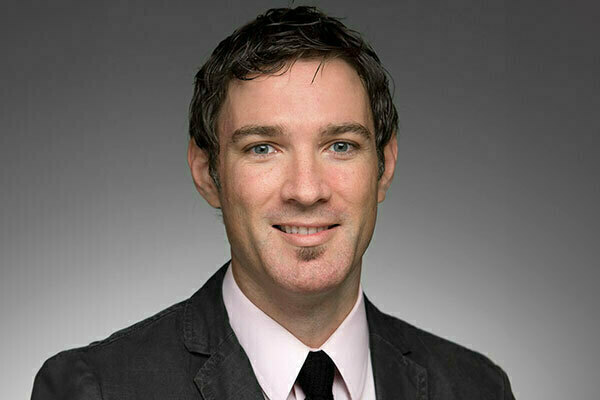
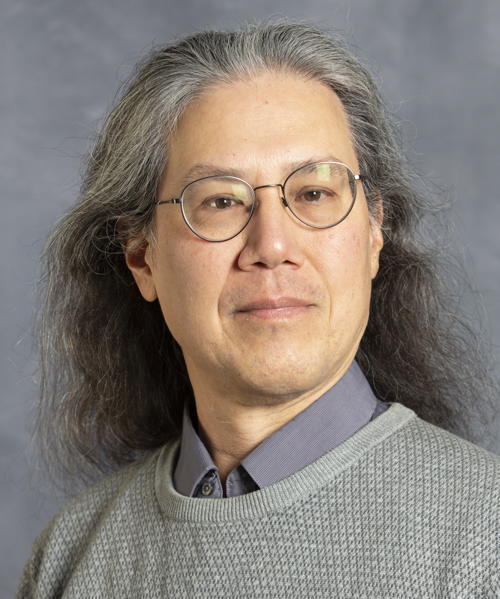
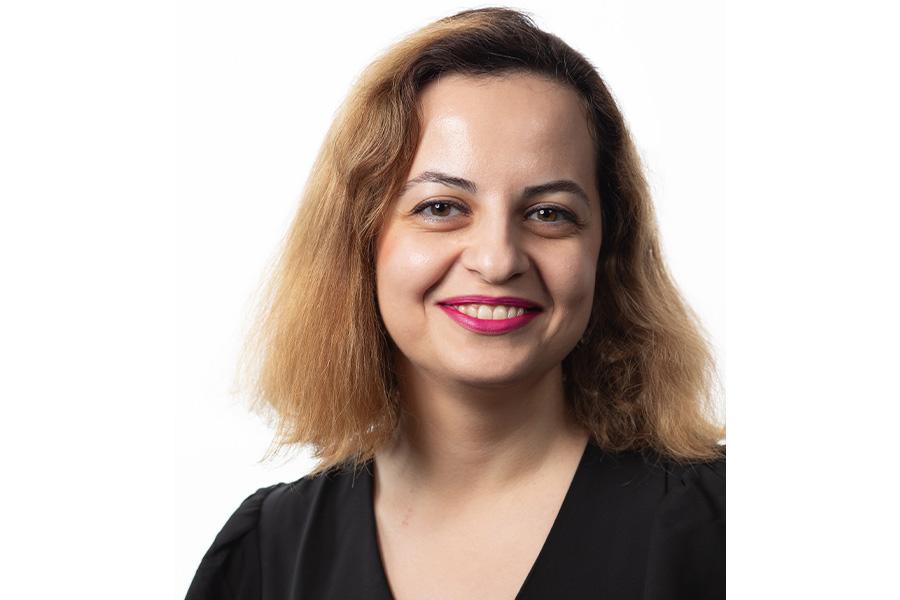
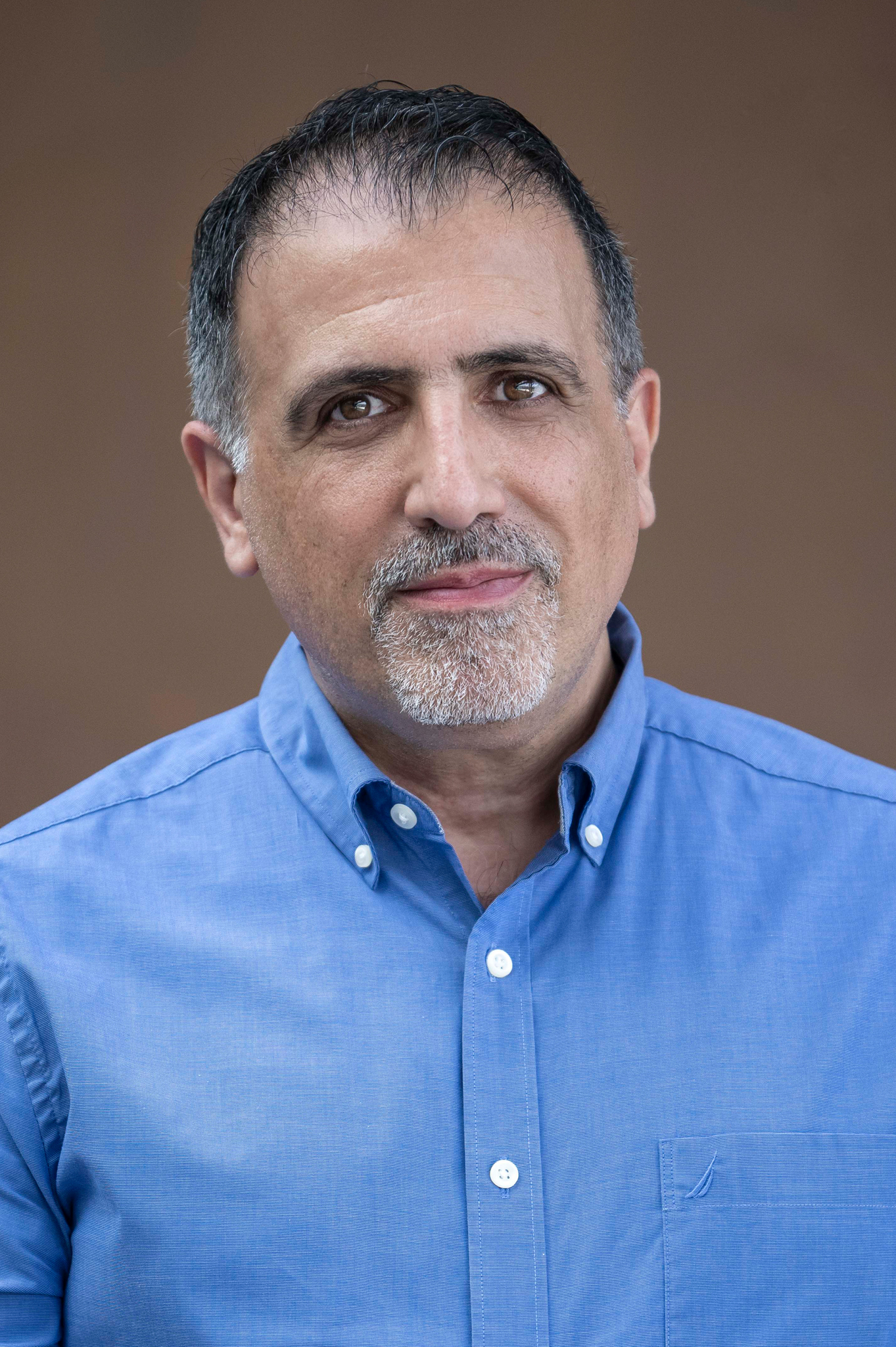
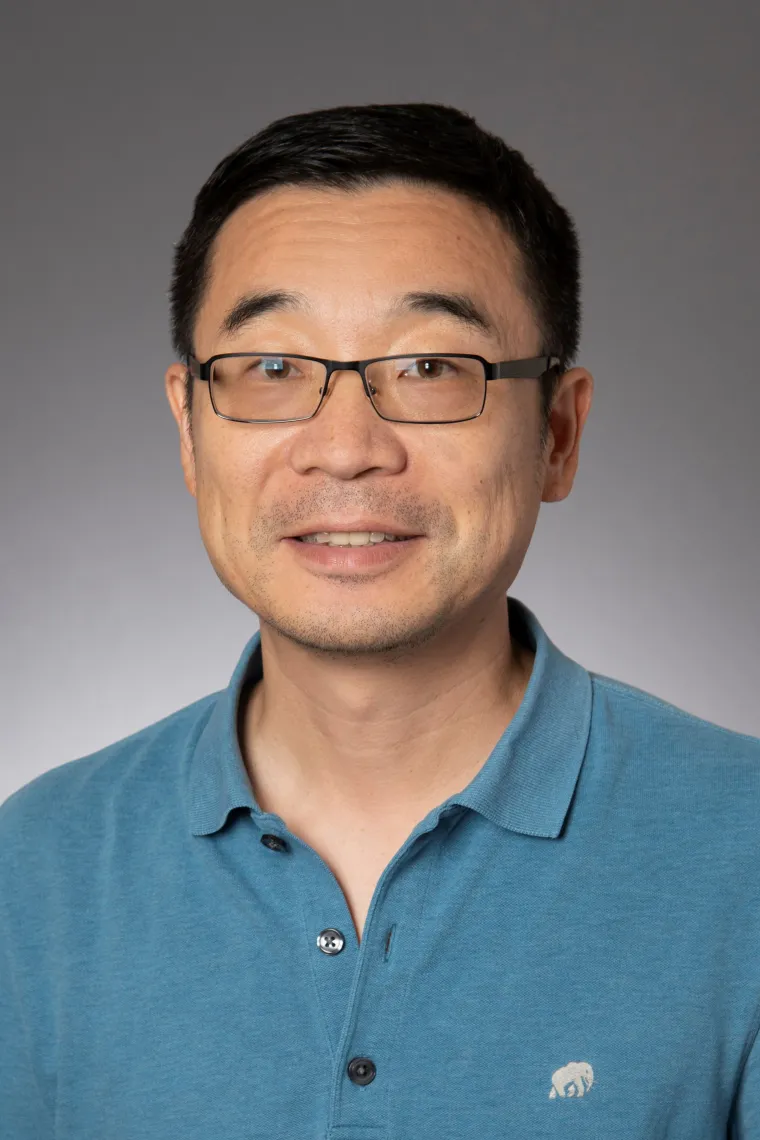
Dr A. I. Shihab is a Senior Lecturer at Kingston University's Faculty of Engineering, Computing and the Environment, Department of Networks and Digital Media. He teaches programming languages (C++/Java), data structures, web development, and AI/machine learning. His research focuses on affective computing and machine learning applications including: Acoustic event detection in sports environments Audio signal analysis for tennis match modeling Multi-camera visual surveillance systems Medical imaging analysis using fuzzy clustering techniques Publications demonstrate expertise in combining audio/video modalities for sports analytics (tennis rallies, court-shots) and developing Markov models for sound event sequence analysis. Contact: a.shihab@kingston.ac.uk
Matthew Payne is an Associate Professor in the Department of Film, Television, and Theatre at the University of Notre Dame. His affiliations include roles as Director of Graduate Studies and regional director for the Learning Games Initiative, a multi-institute research collective focused on game archiving and education. His research spans video game studies, media literacy, military entertainment, and the cultural history of video games. He explores play theory, media and war, and the intersection of media production with new technologies. The 15 most recent articles highlight his focus on video game studies, transmedia narratives, and the cultural implications of gaming. These works cover topics from Nintendo Amiibo to slow game time mechanics in Red Dead Redemption 2, with recurring themes of military representation and ludic storytelling. Matthew Payne has co-edited notable works including How to Play Video Games and Joystick Soldiers , emphasizing collaborative approaches to game studies and critical analysis of military gaming.
Dr. Reba Wissner is an Associate Professor of Musicology at the Schwob School of Music, Columbus State University, where she also serves as Interim Associate Dean in the Honors College. She specializes in film, television, and video game music, with a strong commitment to pedagogy and accessibility in higher education. Education: PhD, Musicology, Brandeis University, 2012 MFA, Musicology, Brandeis University, 2008 BA, Music and Italian, Hunter College, CUNY, 2005 Graduate Certificate, Higher Education Administration, Northeastern University, 2019 Graduate Certificate, Instructional Design, University of Wisconsin - Stout, 2020 Levels 1, 2, and 3 UDL Credentials, UDL-IRN Quality Matters Certified Peer Reviewer and Master Reviewer Dr. Wissner’s research centers on music in screen media, particularly Cold War-era television, and the intersection of music with cultural narratives. She is a leading voice in public musicology and Universal Design for Learning (UDL), advocating for inclusive and accessible music education. Her work spans historical analysis, pedagogical innovation, and interdisciplinary media studies. Her recent publications reflect a consistent focus on sonic storytelling, with books on The Twilight Zone , The Outer Limits , David Lynch, and Twin Peaks . She explores themes of nuclear anxiety, identity, and adaptation across media. Her editorial projects include the Oxford Handbook of Public Musicology and a guide on UDL in music history classrooms. Scientific Awards and Recognitions: Scholarship of Teaching and Learning Award, Columbus State University, 2022 Governor’s Teaching Fellow, Louise McBee Institute of Higher Education, 2022 Quality Matters Certified Peer Reviewer and Master Reviewer UDL Levels 1–3 Credentials Dr. Wissner has secured editorial contracts with Routledge and Oxford University Press, reflecting her leadership in the field. She mentors emerging scholars through collaborative editing and public scholarship initiatives. Her work in online learning and accessibility has shaped curriculum development and peer review standards. She leads the Public Musicology Certificate program and contributes to interdisciplinary studies and honors education. She is actively involved in research teams focused on media music and pedagogical innovation, integrating digital tools and inclusive design into music history education.
Kevin Crowston is a Distinguished Professor of Information Science at Syracuse University's School of Information Studies (iSchool), where he examines how information technology enables new organizational forms through empirical studies, theoretical modeling, and system design. His work focuses on coordination-intensive processes in virtual settings, with significant contributions to citizen science, data science teamwork, and journalism transformation. Education A.B. in Applied Mathematics (Computer Science), Harvard University, 1984 Ph.D. in Information Technologies, MIT Sloan School of Management, 1991 Research Focus : Crowston investigates coordination mechanisms in human-AI collaboration, particularly through projects like Gravity Spy (combining citizen scientists with machine learning for gravitational wave analysis) and journalism innovation (e.g., ReelFramer for AI-assisted news-to-video translation). His framework addresses how intelligent systems reshape work design, knowledge production, and team dynamics in scientific and media contexts. Publication Trends : Recent articles (2024-2025) reveal three dominant threads: (1) Human-AI co-creation in journalism (deskilling/upskilling dynamics, creative tool adoption), (2) Citizen science evolution with AI (co-learning systems, lexical entrainment), and (3) Socio-technical governance of intelligent machines (control-accountability alignment, project archetypes). These reflect his central inquiry into how technology reconfigures work structures. Scientific Recognition ACM Distinguished Speaker Research Leadership : Crowston currently directs two major NSF initiatives: (1) HCC grant 21-06865 on intelligent support for non-expert information navigation, and (2) FW-HTF grant 21-29047 exploring human-technology collaboration in journalism. He spearheaded a Research Coordination Network establishing socio-technical frameworks for work in the age of intelligent machines, culminating in a special issue of Information, Technology & People . Collaborative Infrastructure : He co-leads the Gravity Spy citizen science ecosystem (integrating LIGO physicists, machine learning systems, and volunteers) and serves as co-editor-in-chief of Information, Technology and People , previously editing ACM Transactions on Social Computing . His MIDST platform research advances stigmergic coordination for data science teams.
Dr. Bo Liu is an Associate Professor in the School of Computer Science at the University of Technology Sydney (UTS), where he serves as a core member and director of the AI Security and Privacy (AISP) Research Lab at the Australian Artificial Intelligence Institute (AAII). With expertise spanning cybersecurity, privacy protection, AI and machine learning, and wireless communications, Dr. Liu has established himself as a leading researcher in the field of AI security and privacy. Dr. Liu earned his PhD from the Department of Electronic Engineering at Shanghai Jiao Tong University in 2010. His academic journey at UTS has progressed from Senior Lecturer (November 2019-December 2022) to his current position as Associate Professor (January 2023-present). Dr. Liu's research focuses on the critical intersection of artificial intelligence and security, particularly addressing emerging threats in the age of advanced AI systems. His work spans multiple dimensions of security and privacy, including deepfake detection, privacy-preserving data synthesis, AI model security, and fair machine learning. He has pioneered approaches to detect AI-generated content, protect visual privacy through de-identification techniques, and address the complex relationship between algorithmic fairness and privacy preservation. His publication record demonstrates significant contributions across multiple cutting-edge research areas, with particular emphasis on detecting and mitigating threats from generative AI systems. His recent work reveals a strong focus on deepfake detection across multiple modalities (images, video, and audio), privacy-preserving techniques for sensitive data, and the security implications of emerging AI architectures like Retrieval-Augmented Generation systems. Dr. Liu has secured substantial research funding, including as Lead Chief Investigator on multiple ARC Discovery and Linkage Projects, totaling over $3.5 million AUD. His industry collaborations include partnerships with the NSW Department of Planning and the Reserve Bank of Australia, demonstrating the practical applicability of his research. As an academic leader, Dr. Liu serves as Associate Editor for IEEE Transactions on Broadcasting and actively contributes to the academic community through conference organization, peer review for top-tier venues, and assessment for ARC grant schemes. He also teaches courses including Penetration Testing, Ethical Hacking and Offensive Security, and supervises Masters and PhD students in cybersecurity and privacy research.
Sadaf Salehkalaibar is an Assistant Professor in the Department of Computer Science at the University of Manitoba, Winnipeg, Canada. She holds an office in the EITC building (E2-416) and has previously held academic positions at the University of Tehran, University of Toronto as a research associate, and visiting roles at McMaster University, Telecom Paristech, and National University of Singapore. Her research focuses on explainable artificial intelligence, generative models, and information theory with an emphasis on rate-distortion-perception tradeoffs in video and image processing. Her educational background includes teaching courses such as Signals and Systems, Digital Signal Processing, and Network Security at the University of Tehran. She currently teaches COMP4190 (Artificial Intelligence) at the University of Manitoba. Research interests revolve around developing efficient algorithms for AI systems, with key contributions in learned video compression, federated learning, and privacy-preserving techniques. Notable work includes the M22 algorithm for communication-efficient federated learning and the NSERC Discovery Grant-funded project on data-driven learning efficiency. Recent publications highlight advancements in perception loss functions, Gaussian vector source analysis, and secure distributed hypothesis testing. She actively serves on editorial boards (e.g., IEEE Transactions on Communications) and conferences (ISIT, ITW). Awards include the prestigious NSERC Discovery Grant (2025). Supervision highlights 13 MSc students at the University of Tehran, focusing on topics like privacy-preserving systems and distributed learning. Labs/teams: Leads research group at University of Manitoba focusing on AI and information theory applications in multimedia systems.
Nicolas Peyre is a Lecturer and Researcher in Information and Communication Sciences at the University of Toulouse Capitole, where he is affiliated with the Institute of Space, Territorial, Cultural and Communication Law (IDETCOM). He serves as Director of Studies for the Master 2 program in "Administration and Communication of Cultural Activities." His teaching includes Diplomacy of Influence (M2), History of Cultural Policy (M2), Business Intelligence (M1), Communication Law (L3), and Management of Cultural Events and Festivals (M2). Nicolas Peyre's research centers on cultural diplomacy and influence , examining how institutions like the French Institute and Alliance française function as instruments of soft power. His work explores the globalization of museum brands (particularly the Louvre and Centre Pompidou), the cultural and creative industries , and business intelligence in cultural contexts. He investigates how French cultural policy adapts to globalization through both traditional networks and digital platforms, with special attention to diplomatic applications. His recent publications reveal a strong focus on museum branding in international contexts , particularly analyzing the Centre Pompidou Málaga as a case study of cultural diplomacy. He critically examines how social media platforms like Instagram both support and challenge the globalization of museum brands, and connects sport, communication, and diplomacy to analyze how sporting events serve as vehicles for cultural influence. His work spans academic journals, book chapters, and critical commentary on current cultural partnerships. Nicolas Peyre actively contributes to academic discourse through his role as a consulting editor for The Journal of Arts Management, Law, and Society , membership on the editorial board of Hermès, La Revue (CNRS), and as co-founder of Lélia Productions. He has organized numerous international conferences and seminars on cultural diplomacy and influence, including the "Culture & Influence" research seminars at Toulouse Capitole University and co-organizing major international events on French cultural diplomacy.
Joe F. Khalil is a Professor in Residence at Northwestern University in Qatar's Communication Program. His research focuses on digital media industries, Arab television, youth culture, and alternative media in the Middle East. He co-authored influential works like *The Digital Double Bind* (Oxford UP, 2024) and co-edited *The Handbook of Media and Culture in the Middle East* (2023). His interdisciplinary work bridges media industries, digital cultures, and sociopolitical dynamics. **Education**: PhD in Mass Communication from Southern Illinois University (Carbondale), MA in Telecommunications from Ohio University. **Research Interests**: Digital media transformation, Arab TV industries, youth-generated media, rap culture, and global media power structures. **Grants & Awards**: Recipient of Qatar National Research Fund grants (2015-2016), Smith Richardson Foundation grant (2008), and fellowships at institutions including LSE and SOAS. Active in IAMCR and ICA. **Teaching**: Designs courses on global media, Arab TV industries, production research, and webseries development. Mentors students in both academic and professional pathways. **Professional Experience**: Former TV executive and radio DJ, with media expertise spanning Qatar, Lebanon, Saudi Arabia, and the U.S. Regular commentator on Al Jazeera and BBC, addressing Arab media and youth issues.
Britta Timm Knudsen is a Professor at Aarhus University, affiliated with the School of Communication and Culture, where she contributes to both the Experience Economy and Scandinavian Studies programs. Her research spans critical cultural theory, decolonial practices, digital media, and affective experimentation. University: Aarhus University School: School of Communication and Culture Position: Professor Email: norbtk@cc.au.dk Location: Jens Chr. Skous Vej 2, 8000 Aarhus C, Denmark Her research interests focus on cultural heritage, film and video, aesthetics, colonial legacies, and affective ambivalence. She explores how media and artistic practices engage with decolonial resistance, emotional geographies, and urban cultural memory. Her work often intersects with Indigenous perspectives, digital activism, and experimental methodologies. The recent articles reflect a strong engagement with decolonial visualities, translocal media events (such as the George Floyd video in Denmark), and playful resistance through internet memes. Her scholarship combines critical heritage studies with affect theory, digital culture, and postcolonial critique, forming a cohesive trajectory around memory, power, and representation. Britta Timm Knudsen has been involved in significant research projects such as Playing with Ghosts and ECHOES: European Colonial Heritage Modalities in Entangled Cities . She has supervised visiting PhD students, including Shama Patel, and secured external research funding. Her editorial roles in journals like International Journal of Heritage Studies and Nordicom Review demonstrate her academic leadership. Playing with Ghosts - Affective ambivalence in decolonial art practices (2023–2025) ECHOES: European Colonial Heritage Modalities in Entangled Cities (2018–2021) Emotionel geografi netværk (2008–ongoing) She is actively engaged in public discourse, having contributed to Danish media outlets such as DR P1 and various radio programs, discussing topics ranging from nostalgia in film to existential themes. Her work bridges academic research and public engagement, particularly in the context of colonial heritage and cultural memory.
Professor David Taubman is a distinguished academic serving as Professor and Deputy Head of School (Research) at the School of Electrical Engineering and Telecommunications (EE&T) at the University of New South Wales (UNSW) in Sydney, Australia. He is also co-director of Kakadu Software Pty. Ltd. and its affiliates Kakadu R&D and Kakadu GPU. With a career spanning over three decades, Professor Taubman has made significant contributions to the field of image and video compression, most notably as the author of the EBCOT coding algorithm adopted in the JPEG2000 international standard. Professor Taubman earned his B.Sc. in Mathematics and Computer Science (1986) and B.E. (Medal) in Electrical Engineering (1988) from the University of Sydney, followed by an M.Sc. (1992) and Ph.D. (1994) in Electrical Engineering from the University of California at Berkeley. His professional journey includes engineering work at the Electricity Commission of N.S.W. (1988-1990), research positions at Hewlett-Packard Laboratories in Palo Alto (1994-1998), and an academic career at UNSW where he progressed from Senior Lecturer (1998-2003) to Associate Professor (2004-2009) and finally to Professor (2009-present). He has held various leadership roles including Head of the EE&T Telecommunications Research Group (2003-2014), Head of the EE&T Signal Processing Research Group (2014-present), Director of Research for the School of EE&T (2011-2016), and Deputy Head of School (Research) since 2017. Professor Taubman's research interests center on image and video compression, with particular expertise in JPEG2000 standards and implementations. His work spans signal processing, wavelet transforms, scalable video coding, motion modeling, and multimedia systems. He has pioneered numerous compression algorithms and frameworks, including the EBCOT coding algorithm that became central to the JPEG2000 standard. His recent research focuses on efficient motion modeling with cuboidal partitioning, learned lifting-based transform structures, and high-throughput implementations of JPEG2000 for video applications. His work bridges theoretical foundations with practical implementations, as evidenced by the commercially successful Kakadu Software tools that have garnered around 500 commercial licensees. Analysis of Professor Taubman's recent publications reveals a consistent focus on advancing compression technologies with particular emphasis on scalability, efficiency, and adaptability. His work spans traditional image compression (JPEG2000 extensions), video coding (cuboid-based partitioning for UHD/360-degree video), and emerging applications (nanopore sequencing data compression). A notable trend is the integration of machine learning techniques with traditional compression frameworks, as seen in his work on learned lifting-based transform structures. His research maintains strong connections to real-world applications across diverse domains including medical imaging, astronomical data processing, and genomic sequencing. IEEE Fellow Engineers Australia Fellow (by invitation) Professor Taubman has served as Associate Editor for the IEEE Transactions on Image Processing for two four-year appointments (2003-2005 and 2010-2013). He has been actively involved in numerous research grants focused on image and video compression technologies, particularly those related to the JPEG2000 standard and its extensions. His work has received significant industry support, reflected in his consultancy with various U.S., Japanese, and Australian corporations. He has also contributed to international standards development as a member of Standards Australia Technical Committee MS-065 (mirroring ISO TC42 on Digital Photography) and as a constitutional member of Standards Australia Technical Committee IT-029 (Coded Representation of Picture, Audio and Multimedia/Hypermedia Information). Professor Taubman co-directs Kakadu Software Pty. Ltd. and its research affiliates Kakadu R&D and Kakadu GPU, which have developed the commercially successful Kakadu Software tools for JPEG2000. His research group at UNSW focuses on advanced image and video compression techniques, with particular expertise in wavelet-based methods, scalable coding, and motion modeling. The group maintains strong industry connections and has contributed significantly to the development and standardization of image compression technologies worldwide.
Professor Ramon Lobato (Swinburne University of Technology, School of Social Sciences, Media, Film and Education) is a leading scholar in media and cultural industries, specializing in digital distribution, streaming services, and cultural policy. With three Australian Research Council Fellowships, including a current Future Fellowship on Australian television in the smart TV ecology (2020-2025), his research bridges empirical analysis with critical theory to explore industrial transformations in the digital media landscape. Bachelor of Arts, University of Melbourne PhD in Cultural Studies, University of Melbourne Graduate Certificate in Learning and Teaching, Swinburne University His work focuses on: Streaming Media: Analyzing video-on-demand platforms, local content regulation, and global distribution dynamics Informal Media Economies: Examining piracy, geoblocking, and alternative distribution circuits Media Policy: Advising governments on smart TV regulation, data privacy, and platform accountability Recent research trends include smart TV datafication, ad-tech infrastructure, and the cultural implications of algorithmic content recommendation. His book Netflix Nations: The Geography of Digital Distribution (NYU Press, 2019) and co-edited MIT Press series Distribution Matters provide foundational insights into platform globalization and industrial practices. RMIT Award for Research Excellence in Technology, Communication, and Policy (2020) International Communication Association Outstanding Young Scholar (2016) Dean's Award for Outstanding Research, Swinburne (2015) Faculty ECR Research Excellence, Swinburne (2014) Udine Film Forum Best International Film Studies Book (2013) As a supervisor, Lobato welcomes PhD projects on media industries, technologies, and audiences. He collaborates with institutions like the Department of Infrastructure, Transport, Regional Development, Communications and the Arts (DITRDCA) and SBS on funded research, while co-editing the MIT Press book series Distribution Matters , dedicated to media distribution's social and cultural impact.
Beichuan Zhang serves as Associate Department Head and Professor in the Department of Computer Science at the University of Arizona, maintaining office GS 723 with contact details 520-621-4817 and bzhang@cs.arizona.edu. His academic leadership spans network architecture research and departmental administration within the university's computing ecosystem. Zhang holds a Ph.D. from the University of California at Los Angeles (2003), establishing his foundation in advanced networking systems. His doctoral work catalyzed a career focused on internet infrastructure evolution. Research centers on computer networks with specific expertise in Internet routing architecture, protocols, topology, and multicast systems. Zhang is a principal investigator in Named Data Networking (NDN), driving innovations in stateful forwarding planes, in-network caching (e.g., Nb-cache, BLEnD), and congestion control mechanisms. His work bridges theoretical networking models with practical implementations for wireless, satellite, and live-streaming environments. Analysis of 2021-2025 publications reveals strategic expansion into Low Earth Orbit satellite networks, where Zhang pioneers NDN adaptations for handover resilience and outage detection. Concurrently, his group optimizes video streaming protocols and wireless performance through interest bundling techniques. This dual trajectory demonstrates systematic progression from terrestrial networking to space-ground integrated architectures.
Dr. Jackie Cameron is a Lecturer and Deputy Programme Leader of the BA (Hons) Marketing with Digital Media at Edinburgh Napier University's Business School. With a PhD from the University of Stirling and industry experience in digital media/marketing across China, Europe, and Africa, she integrates academic expertise with practical insights. Her work focuses on digital marketing strategy, content marketing, and AI-era pedagogy. Education: PhD (Stirling), MA (Nottingham), BJRN (Rhodes), FHEA Her research explores human behavior in digital ecosystems, AI-driven content creation tools, and pedagogical innovations in assessment policies. Google Scholar publications highlight equity in deadline extensions, conscientious branding, and digital transformation. Recent lectures and workshops (e.g., BINUS Business School 2024) address AI integration in education. She contributes to conferences like the Global Brand Conference and serves as external examiner for MA/MSc programs at LIBF, Bournemouth, and Salford Universities. Active in scholarship of learning and teaching, she supervises research students across levels and locations (UK, Vietnam), convenes postgraduate modules, and develops research tools for media practitioners.
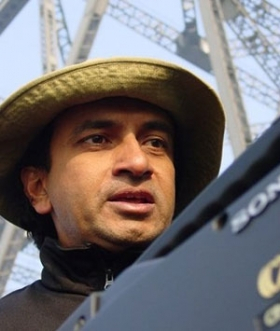
Sanjeev Chatterjee is a Professor at the University of Miami's School of Communication with primary appointments in the Department of Cinema and Interactive Media and secondary appointments in the Department of Journalism. He also serves on the faculties of the Salzburg Academy on Media and Global Change (since 2006) and the Young India Fellowship (since 2011). Chatterjee has been at the University of Miami since 1994, after previously teaching at Emerson College, Boston as an assistant professor starting in 1989. He earned his M.F.A. in Radio and Television from Brooklyn College in 1989 and an M.A. in English Literature from Delhi University in 1985. Chatterjee's research focuses on Documentary Media Making, Sustainability, Environment, and the Indian Diaspora. His work bridges academic scholarship with practical media production, creating documentaries that address global issues while serving educational purposes. He has developed numerous media projects that combine storytelling with social impact, particularly in the areas of water sustainability and cross-cultural understanding. His filmography demonstrates consistent engagement with environmental issues, particularly water resources, as seen in his acclaimed 'One Water' series and related projects. Chatterjee's work also explores urban environments, cultural identity, and diaspora communities, reflecting his interdisciplinary approach to media production. His documentaries have reached global audiences through film festivals, television distribution, and educational screenings worldwide. Fulbright Scholar (India) 2011 AMAP Prize at EcoVision film festival Best Environmental Feature Award at Artivist Film Festival Multiple Best Documentary awards at international film festivals King Award, Best of Festival at Broadcast Education Association Numerous technical merit awards for documentary production As an educator, Chatterjee has directed the University of Miami's semester abroad program in India (UIndia) since 2013 and founded the non-profit Media for Change in 2015. His administrative roles have included Vice Dean of the School of Communication (2006-2010) and founding Executive Director of the Knight Center for International Media (2007-2011). He has secured significant funding from organizations including the Knight Foundation, Florida Humanities Council, UNDP, UN Water, and the United States Institute for Peace to support his media projects. Chatterjee directs the University of Miami's semester abroad program in India and founded Media for Change, a Florida-based non-profit creating a global network of media changemakers. His work demonstrates a commitment to using media as a tool for social change, environmental awareness, and cross-cultural understanding.
Professor Adrian Hilton is a distinguished faculty member at the University of Surrey, serving as Director of the Centre for Vision, Speech and Signal Processing (CVSSP) and Director of the Surrey Institute for People-Centred AI. He is affiliated with the School of Computer Science and Electronic Engineering and leads the Visual Media Research Lab (V-Lab). His research focuses on pioneering next-generation 4D computer vision technologies that enable machines to understand and model dynamic real-world scenes. Key areas include 3D/4D shape capture, computer vision, machine learning, graphics, and animation for applications in sports analysis, film/TV production, virtual reality, and medical imaging. His work bridges the gap between real and computer-generated imagery, with notable contributions in volumetric capture, motion capture, and free-viewpoint video. Hilton's recent publications demonstrate a strong trend toward multimodal integration, particularly combining audio and visual processing for spatial audio applications, while advancing 4D reconstruction techniques for human performance capture. His work increasingly incorporates transformer architectures and neural rendering techniques for improved illumination estimation, shadow modeling, and multi-view consistency. Scientific Awards and Recognition Two EU IST Innovation Prizes Manufacturing Industry Achievement Award Royal Society Industry Fellowship (2008-2011) Royal Society Wolfson Research Merit Award in 4D Vision (2013-2018) Fellow of the Royal Academy of Engineering (FREng) Fellow of the International Association for Pattern Recognition (FIAPR) Fellow of the Institution of Engineering and Technology (FIET) Hilton actively mentors PhD and post-doctoral researchers through his leadership of CVSSP, which has a grant portfolio exceeding £31M and comprises 170 researchers. He has successfully commercialized several technologies, including systems used by the BBC for sports commentary visualization. His research collaborations span major industry partners including BBC, BT, Sony, Framestore, and The Foundry. He co-founded the G3 Games forum and the CVMP Conference on Visual Media Production, demonstrating strong engagement with the creative industries. Current research projects include the S3A Programme Grant in Future Spatial Audio and InnovateUK's ALIVE project for 360 video reconstruction.