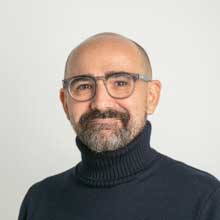
Dr. Sian Vaughan serves as Associate Professor in Research Practice at Birmingham City University and leads RAAD (Research in Art, Architecture, and Design) center. She holds strategic leadership roles in research communities, doctoral education, and large-scale academic projects. Current research focuses on research practices and cultures in creative disciplines Co-leader of Creative Pedagogies research cluster Active in CHEAD as Trustee and RIKE Alliance Chair Her expertise spans: Research practice methodologies Pedagogies in doctoral education Creative practice as knowledge generation Academic leadership in art/design Institutional research frameworks Hybrid teaching-research models Key project insights reveal: Development of flexible researcher communities Innovation in digital-physical supervision models Critical analysis of archival engagement in creative research Advocacy for para-academic research frameworks Recent publications and projects demonstrate her focus on: Transformative research supervision practices Archival materiality in art research Employability of creative researchers Institutional praxis in art education
James F. Peters is a faculty member in the Department of Electrical and Computer Engineering at the University of Manitoba, Winnipeg, Canada. His research lies at the intersection of computational topology, proximity theory, rough sets, and digital image analysis, with applications in computer vision, pattern recognition, and biologically-inspired computing. He has made foundational contributions to the theory of near sets and computational proximity, publishing extensively in journals and book series by Springer. His research interests include computational proximity, near sets, rough sets, digital image analysis, pattern recognition, and topological models of perception. These are evident from his numerous publications in theoretical and applied computer science, often in collaboration with researchers such as Andrzej Skowron, Sheela Ramanna, and Arturo Tozzi. His work spans mathematical foundations, computational models, and real-world applications in biomedical imaging and rehabilitation systems. The recent articles (2017–2025) show a strong trend toward integrating topology, physics, and neuroscience in the analysis of digital images and brain activity. Topics include proximal nerves, optical vortices, thermodynamics of emotions, and entropy in cosmology, indicating a broad interdisciplinary approach. His publications frequently appear in journals such as Entropy , Information Sciences , and Transactions on Rough Sets , as well as in Springer’s Lecture Notes in Computer Science and Intelligent Systems Reference Library series. He has authored or co-authored several books and special issues, notably in the Transactions on Rough Sets series, and has contributed to encyclopedic works on rough sets and computational intelligence. His editorial and collaborative roles highlight his leadership in the rough and near sets research community. Dr. Peters has advised or collaborated with several researchers, though specific student names are not listed in the provided text. He has been involved in projects related to adaptive learning, telerehabilitation gaming systems, and image classification using tolerance near sets. His work often involves grants and interdisciplinary teams, especially in computational intelligence and biomedical applications. He is associated with research groups and labs focused on computational intelligence, rough sets, and digital image analysis, often in collaboration with the University of Warsaw and other international institutions. His ongoing work continues to explore the mathematical foundations of perception and proximity in both artificial and biological systems.
Gaurav Nanda serves as an Assistant Professor in the School of Engineering Technology at Purdue University, where he leads research at the intersection of artificial intelligence and human-centered systems. His work develops intelligent decision support frameworks applicable across critical domains including occupational safety, smart manufacturing infrastructure, healthcare analytics, and educational technology. Education Background Ph.D. in Industrial Engineering, Purdue University Dual Degree: B.Tech. and M.Tech. in Agricultural and Food Engineering (Major) with Electrical Engineering Minor, Indian Institute of Technology Kharagpur His research program integrates applied machine learning and natural language processing to solve complex problems in safety analytics (injury surveillance systems), Industry 4.0 (IoT-enabled manufacturing), healthcare (breast cancer prediction models), and STEM education (MOOC feedback analysis). Current projects emphasize human-AI collaboration, with growing focus on ethical AI implementation and social justice integration in engineering contexts. The INDESS Research Group he directs develops systems that balance algorithmic precision with human factors considerations. Recent publications (2023-2025) demonstrate accelerating adoption of large language models and vision-language systems across application domains, particularly in safety analytics and educational technology. Key trends include human-in-the-loop validation frameworks, explainable AI interfaces, and multimodal data integration (eye-tracking, text, sensor data). His work increasingly addresses fairness considerations in AI deployment, especially regarding diversity in engineering education and workplace safety systems. Dr. Nanda actively mentors the next generation of engineers through the INDESS Research Group , advising Ph.D. candidates Madhumathi Ponnusamy and Shuning Yin, while previously supervising Master's graduates including Srushti Vichare and Meet Suthar. His research receives support through Purdue-affiliated institutes including ICON (Control/Optimization Networks), RDE (Digital Enterprise), and FWL (Future Work/Learning). He maintains active service roles as Editorial Board Member for the International Journal of Industrial Ergonomics and as reviewer for leading publications including IEEE Transactions on Learning Technologies and Safety Science. The research group maintains strong industry connections through the Purdue School of Engineering Technology, with projects spanning manufacturing automation, healthcare informatics, and educational technology platforms. Current initiatives focus on real-time anomaly detection systems, ethical AI frameworks for safety-critical applications, and inclusive curriculum development for engineering education.
Dr. Stavros Shiaeles is an Associate Professor in Cybersecurity at the Faculty of Technology , University of Portsmouth, and Co-Director of the Portsmouth AI and Data Science Centre (PAIDS) . With over 130 publications and 3000+ citations, he specializes in cybersecurity, applied AI, and threat mitigation frameworks. Academic Qualifications : PhD in Electrical and Computer Engineering (Democritus University of Thrace, 2013), MEng in Electrical and Computer Engineering (Democritus University of Thrace, 2007), MBA in Human Resource Management (University of Plymouth, 2016), and PG Cert in Academic Practice (University of Plymouth, 2017). Research Interests span cybersecurity, malware detection, blockchain, 6G networks, AI/ML applications, digital forensics, and post-quantum cryptography. His work addresses threats in IoT, financial systems, and critical infrastructure while exploring SDG4 (Quality Education) through cybersecurity training. Recent publications emphasize AI-driven anomaly detection (e.g., ransomware behavior analysis, 6G traffic monitoring), deepfake forensics, synthetic image attribution, and hybrid blockchain/AI security architectures. He also curates datasets for malware analysis and synthetic media classification. Scientific Awards : IEEE SMC TCHS Outstanding Service Award (2021). Grant Funding : Over €18M secured in EU Horizon 2020 grants, including €8M as Principal Investigator for the ongoing XTRUST-6G project. Active in KTPs, consulting, and research commercialization opportunities.
Pamela Rutledge, PhD, is a Professor at Fielding Graduate University’s School of Psychology, Department of Media Psychology, since 2008. She combines 20+ years of media production experience with academic expertise, teaching brand psychology, audience engagement, and narrative meaning. Dr. Rutledge consults with major studios like 20th Century Fox and Warner Bros., while maintaining a Psychology Today blog and media commentator role. Research Interests: Her work focuses on media psychology’s intersection with technology, including: AI’s influence on emotional connection and decision-making Digital habits shaping mental energy and productivity Media-driven resilience and emotional regulation Generational dynamics in digital culture (e.g., granfluencers, youth interactions) Recent Article Trends: 2024-2025 publications highlight AI’s psychological impact (chatbots, social media regulation), stress management during politically charged periods (elections), and media’s role in identity formation (digital reputation, rewatching movies). Themes emphasize practical strategies for navigating technology’s emotional and behavioral effects. Education: She holds a PhD and MBA, though specific institutions and graduation dates are not detailed in the provided text.
Raquel Gómez-Díaz is Professor at the University of Salamanca's Department of Library Science and Documentation within the Faculty of Translation and Documentation. She holds qualifications including a Diploma in Library Science and Documentation, Graduate degree in Documentation, and PhD from the University of Salamanca. She teaches across multiple programs including the Bachelor's in Information and Documentation, Master's in Digital Information Systems, Master's in Textual Heritage and Digital Humanities, and Doctoral program in the Knowledge Society. Her research explores digital reading technologies (devices, applications, social reading), information sources , and library science . Key focus areas include reading behavior analysis, digital literacy development, educational technology implementation, and knowledge dissemination frameworks. Her work bridges library sciences with digital humanities and educational innovation. Publications demonstrate strong emphasis on digital reading ecosystems , educational technology evaluation , and scholarly communication . Research consistently examines technology adoption in educational contexts, digital resource management, and reading community development across academic, public, and youth settings. She has supervised 11 doctoral students to completion with research spanning library science, digital humanities, and educational technology. Since joining the faculty in June 2013, she has completed three recognized research periods (sexenios), the most recent in 2023.
Simon Ruffieux is a Senior Researcher and Lecturer at the Department of Computer Science, University of Fribourg, and a member of the Human-IST Institute. He currently leads the HIP-Initiative (Human-IST x SwissPost Initiative) and coordinates academic projects related to Swiss Post. His academic roles include Lecturer and Senior Assistant , reflecting his active engagement in teaching and research. His research focuses on leveraging advanced technologies to support individuals, particularly those with special needs. Key areas include: Machine Learning and Data Science for urban systems (e.g., bike-sharing optimization) Human-Computer Interaction (HCI), especially gesture recognition and multimodal interfaces Augmented and Virtual Reality applications in rehabilitation and assistance Development of smart glasses for visually impaired users Physiological signal analysis for workload classification The 15 most recent publications reveal a strong trend in applying AI and data science to real-world challenges, particularly in assistive technologies and urban mobility. His work often involves interdisciplinary collaboration, integrating computer science with psychology, rehabilitation, and industrial applications. There is a consistent emphasis on user-centered design and real-world usability. Simon Ruffieux has not been mentioned as receiving specific scientific awards in the provided text. He has advised or collaborated with several researchers, including Nicolas Spycher, Samuel Torche, and Nicolas Ruffieux, on projects related to forecasting, AR, and gesture recognition. While no formal grant details are listed, his leadership of the HIP-Initiative suggests involvement in externally funded academic projects. His work is closely tied to the Human-IST Institute, where he contributes to interdisciplinary research in human-centered computing. He is actively involved in research teams focused on assistive technologies, gesture interaction, and data-driven urban solutions. The Human-IST Institute serves as the primary hub for his collaborative efforts, particularly through the HIP-Initiative with Swiss Post.
Dr Andrew Starkey is a Reader in the School of Engineering at the University of Aberdeen, where he also completed his PhD in 2001. He holds an Honours degree in Applied Mathematics from the University of St Andrews. He is actively involved in research and currently accepting PhD students in Engineering. His work bridges academia and industry, with a focus on AI applications in engineering, bioinformatics, and geosciences. University: University of Aberdeen School: School of Engineering Academic Rank: Reader Email: a.starkey@abdn.ac.uk Phone: +44 (0)1224 272801 Dr Starkey's research centers on Explainable AI (XAI) , Green AI , and Autonomous AI , with applications in robotics, econometrics, bioinformatics, seismic data analysis, and virtual reality. He has developed novel methods for feature selection, autonomous learning, and knowledge abstraction from agent-environment interactions. His work emphasizes low computational cost and transparency in AI systems. The most recent publications reflect a strong trend in applying AI to complex real-world problems, including digital rock technology, robotic grasping, real-time event detection, and medical data analysis. His interdisciplinary research combines machine learning with domain-specific knowledge in engineering and life sciences, often resulting in practical, industry-ready solutions. Millennium Product Award John Logie Baird Award for Innovation Enterprise Fellowship from Royal Society of Edinburgh and Scottish Enterprise Dr Starkey has supervised multiple research projects and secured funding from major bodies including EPSRC, BBSRC, and industry partners. His past work on the GRANIT project led to the development of AI-based condition monitoring for ground anchorages, resulting in commercialization through BlueFlow Ltd. He has collaborated with researchers across disciplines, including Dr Alasdair MacKenzie (bioinformatics), Dr Anne Schwab (seismic analysis), and Dr David Hazlerigg (genomics). He leads research in AI-driven engineering solutions and is the CEO of BlueFlow Ltd, a spinout company commercializing AI technologies developed at the University of Aberdeen. His lab focuses on developing autonomous, explainable, and environmentally sustainable AI systems for real-world deployment.
Massimiliano Nuccio is an Associate Professor at Ca' Foscari University of Venice, affiliated with the Venice School of Management. He holds roles such as Scientific Director of Bliss - Digital Impact Lab (since 2023), Honorary Research Fellow at Birmingham Business School (2021-2024), and Visiting Professor at Venice International University. His research focuses on Digital Transformation, Cultural Industries, Urban Development, and Business Analytics. He holds a PhD in Communication Economics (IULM University, 2007) and has taught at institutions like Bocconi University and Leuphana Universität. Teaching includes courses on Digital Marketing, Cultural Policy, and Data Analytics across undergraduate and graduate programs. His research explores intersections between digital technologies, cultural economics, and regional development. Recent work analyzes firm growth dynamics, creative clusters, and digital skills in cultural sectors. He has contributed to policy-oriented studies on urban regeneration and cultural district governance. He has led academic programs such as the Master's in Data Analytics for Business & Society and contributed to initiatives like the MADAS Master in Turin. His interdisciplinary approach bridges economics, management, and cultural studies, with publications in journals like Industrial and Corporate Change and Economic Geography.
Edward Wells is a research student at the University of Brighton, affiliated with the School of Humanities and Social Science, the Centre for Applied Philosophy, Politics and Ethics, and the Centre for Arts and Wellbeing. He holds an interdisciplinary academic background in creative writing and philosophy, with advanced degrees from Prescott College and Colorado State University. He serves as a part-time faculty member and adjunct instructor in higher education. Education: Master of Arts in Interdisciplinary Studies: Creative Writing and Philosophy, Prescott College (Awarded: 13 Aug 2023) Master of Fine Arts, Creative Writing (Awarded: 15 May 2020) Bachelor, English: Creative Writing: Fiction, Colorado State University (Awarded: 15 Dec 2013) Edward's research centers on creative writing, particularly fiction and poetry, with a focus on experimental and interdisciplinary approaches. Key themes include unreadability , irrealism , narrative vulnerability , and city-texts . His work bridges literary practice with philosophical inquiry, often engaging with urban environments, poetic responses, and digital methods such as Markov chains. His recent publications (2021–2024) reflect a strong engagement with avant-garde literary forms and hybrid creative-critical writing. Themes across these works include spatial narratives, algorithmic text generation, and the limits of reading and interpretation. He frequently publishes in journals like Impost and presents at interdisciplinary conferences. Professional Activities: Part-time Faculty (since 2021) Adjunct Instructor (2020–2022) Presenter at "City as Text: London" (2025) Chair, Great Writing International Creative Writing Conference (2024) Organiser, Festival for the Summer Solstice (2024) Organiser, REWILD conference (2023) Edward is actively involved in creative and academic communities, contributing to knowledge exchange, public festivals, and research events. While no formal advising or grant history is listed, his participation in peer-reviewed publications, conferences, and interdisciplinary projects demonstrates a growing scholarly and artistic presence.
Joel H. Steckel is a Professor of Marketing at the Leonard N. Stern School of Business, New York University, where he has been a faculty member since 1989. He currently serves as the Vice Dean for Doctoral Education and previously chaired the Marketing Department. His academic work bridges marketing science, strategy, and consumer behavior. His education includes: Ph.D. in Marketing/Statistics, University of Pennsylvania (1982) M.A. in Statistics, University of Pennsylvania (1980) M.B.A. in Management Science, University of Pennsylvania (1979) B.A. in Mathematics, Columbia University (1977) Professor Steckel's research focuses on marketing strategy, branding, marketing research, and consumer behavior measurement . He explores methodologies for one-to-one marketing and forecasting, with an emphasis on how brands signal identity and value. His work integrates statistical modeling with managerial decision-making to improve marketing effectiveness. The most recent articles reflect sustained engagement with brand relevance, consumer psychology, and strategic adaptation , particularly in the context of generational shifts and digital culture. His publications span top journals in marketing and decision sciences. His scientific contributions have been recognized through leadership roles and editorial appointments: Founding President, INFORMS Society for Marketing Science Co-Editor-in-Chief, Marketing Letters Professor Steckel has advised numerous doctoral students and led major academic initiatives at NYU Stern. He has held prior faculty positions at the University of California, Los Angeles, and the University of Pennsylvania. His research has been supported by academic and professional institutions, though specific grant details are not listed in the text. He continues to influence marketing thought through publications, interviews, and academic leadership. He is actively involved in research and academic administration, with no indication of retirement or reduced status.
Aldijana Bunjak is an Associate Professor at the University of Stavanger, affiliated with the UiS School of Business and Law, Department of Innovation, Management and Marketing. She is actively engaged in research and academic collaboration, with multiple publications in 2024 across leading journals in management, psychology, and organizational behavior. Research Interests: Her work centers on leadership, identity, burnout, workplace well-being, digital innovation, and employee performance. She investigates how identity leadership, authentic leadership, and relational identification influence individual and organizational outcomes. Her research also explores the impact of technostress, job autonomy, and workplace bullying on burnout and turnover, with implications for modern digital work environments. Publication Trends: The recent articles highlight a strong focus on psychological and behavioral aspects of leadership and work life. Themes include identity processes, emotional regulation, digital stress, and innovation. Her work often employs longitudinal and cross-lagged designs, indicating rigorous empirical methodology. Collaborative authorship is common, especially with European scholars in organizational psychology and management. Scientific Awards: No awards mentioned in the provided text. Advising and Grants: There is no explicit mention of students supervised or research grants obtained. However, her active publication record suggests ongoing research projects and likely supervision of graduate students, though not listed. She presents at international conferences, indicating engagement with the scholarly community. Labs and Teams: No specific research labs or teams are mentioned. However, her collaborations with researchers across Europe (e.g., Černe, Balzano, Epitropaki, Van Dick) suggest participation in international research networks focused on leadership, identity, and organizational health.
Professor Binhua Wang is Chair and Professor of Interpreting and Translation Studies at the Centre for Translation and Interpreting Studies, School of Languages, Cultures and Societies, University of Leeds, where he has been a faculty member since 2017. He previously held academic positions at Hong Kong Polytechnic University and Guangdong University of Foreign Studies, where he served as Associate Professor and Head of Department. He is an elected member of the European Academy of Sciences and Arts and a Fellow of the Chartered Institute of Linguists. His educational background includes a PhD in Interpreting and Translation Studies and a Certificate of Training in Public Administration from Oxford University. He also holds a Training for Trainers Certificate from the European Commission’s DG Interpretation. Professor Wang’s research focuses on interpreting and translation studies with interdisciplinary extensions into digital humanities, human-AI interactions, and cross-cultural studies of Chinese literature and culture. He has published extensively in top-tier SSCI/A&HCI/CSSCI journals and with leading publishers such as Routledge, Springer, and John Benjamins. His recent work explores metaverse interpreting, AI-assisted translation, and the sociocultural dimensions of interpreting norms. His recent publications reveal a strong trend toward digital transformation in translation and interpreting, with increasing emphasis on technology integration, cognitive processes, and interdisciplinary methodologies. Keywords across his articles highlight core themes in translation theory, discourse analysis, and digital scholarship, with subfields ranging from AI-augmented interpretation to historical translation movements and cognitive load in simultaneous interpreting. Elected Member, European Academy of Sciences and Arts Fellow, Chartered Institute of Linguists First Prize, China Ministry of Education Research Award (2024) AHC Partnership Award for Academic Supervision (2022) National-level Excellence Course Tutor (2007) Member, National-level Teaching Team (2010) Professor Wang actively supervises PhD candidates and has co-supervised multiple graduates who have published in top journals such as Meta , Perspectives , and The Translator . He has served as external examiner at institutions including UCL, SOAS, Durham, and Beijing Foreign Studies University. He leads major funded projects, including a UK government-funded initiative on computational linguistics and an EU-funded platform for conference interpreter training. His research has been supported by the Hong Kong Research Grants Council and China’s Ministry of Education. He is deeply involved in academic service, serving as Co-Editor of Interpreting and Society , Associate Editor of Frontiers in Psychology , and Founding Editor-in-Chief of the International Journal of Chinese and English Translation & Interpreting . He sits on the editorial boards of numerous international journals and book series, and regularly acts as a reviewer for top publishers and academic rankings.
Marta Arce Urriza is a Post University Professor at the Public University of Navarra, specializing in Business Management within the Department of Business Management at the Institute for Advanced Research in Business and Economics (INARBE). Her research focuses on consumer behavior in online and offline channels, multichannel retail strategies, and the impact of emerging technologies like AI on marketing and consumer adoption. She has contributed to doctoral programs in Economics, Business, and Law at her university and collaborates with institutions like the Autonomous University of Barcelona. Education: Earned a Doctorate in Business Administration and Management from the Public University of Navarra in 2009. Participated in research stays at the University of Chicago and University of Groningen. Research Interests: Consumer adoption of new technologies (e.g., AI chatbots, 3D printing) Online review dynamics and their influence on consumer decisions Privacy concerns in virtual assistant interactions Strategic comparisons between private labels and national brands in multichannel environments Recent Article Trends: Focus on generative AI’s role in retail, privacy implications of voice assistants, and leveraging text mining for brand analysis. Articles span journals like Journal of Retailing and Consumer Services and Technology in Society . Grants & Collaborations: Lead or co-PI in projects such as 'Generative AI Solutions for Intelligent Storytelling' (2025–2027) and 'Interaction with Virtual Assistants' (2022–2025), funded by Navarra Government and the Spanish Ministry of Science. Active in editorial roles for journals like Journal of Interactive Marketing . Labs/Teams: Involved in interdisciplinary research teams focusing on AI ethics, consumer behavior analytics, and multichannel strategy. Supervised doctoral student Miriam Alzate Barricarte’s thesis on electronic word-of-mouth implications.
Anh T. Ninh is an Associate Professor in the Department of Mathematics at William & Mary, where he also contributes to the M.S. program in Computational Operations Research within the Department of Computer Science. His academic work bridges mathematics, computer science, and healthcare applications, with a strong focus on optimization and machine learning. Research Interests: His primary research areas include optimization under uncertainty, machine learning, and their applications in healthcare systems, particularly in clinical trial design and pharmaceutical supply chain management. He develops advanced mathematical models to improve decision-making under uncertainty in complex operational environments. Publication Trends: His recent publications reflect a consistent focus on integrating stochastic and robust optimization with real-world healthcare logistics, clinical operations, and pharmaceutical planning. The works demonstrate a strong interdisciplinary approach, combining operations research, data science, and domain-specific knowledge to solve critical problems in health systems. Scientific Awards & Recognition: While no specific awards are listed in the provided text, his research is supported by the Bill & Melinda Gates Foundation, indicating significant recognition and impact in the field. He has also collaborated with major pharmaceutical companies such as Lifecell (now Abbvie), Sandoz, and IntegriChain, highlighting the practical relevance of his work. Advising and Grants: Dr. Ninh advises students through the Computational Operations Research program and leads externally funded research, including an active project on site selection funded by the Bill & Melinda Gates Foundation. His work bridges academia and industry, contributing to both theoretical advances and practical implementations in healthcare operations. Labs and Research Teams: While no formal lab name is mentioned, Dr. Ninh leads a research group focused on computational optimization and machine learning applications in healthcare. His team likely includes graduate students and collaborators from both mathematics and computer science, working on projects related to supply chain resilience, clinical trial efficiency, and data-driven healthcare decision-making.