Jorge Camba is an Associate Professor at the School of Engineering Technology and holds a courtesy appointment in the Department of Computer Graphics Technology at Purdue University . He also serves as a Senior Research Scientist (by courtesy) in the Department of Industrial Engineering at the University of Naples Federico II , Italy. PhD in Systems and Engineering Management (Universidad Politécnica de Valencia, Spain) MSc in Digital Media (East Tennessee State University) MSc in Computer Science (Universidad de Vigo, Spain) His research explores intelligent CAD systems , digital manufacturing , and mixed reality environments , focusing on model quality assurance , design intent communication , and collaborative design tools . Recent work investigates spatial cognition in CAD education , geometric variability analysis , and annotation-driven knowledge management . Key trends in his publications include parametric modeling strategies , 3D annotation systems , and XR applications in design evaluation. Awards include the Purdue Faculty Scholar (2021) and I3B Fellow (2021). He has presented at conferences on topics like Industry 4.0 , space habitat design , and digital product quality .
Onur KARDEŞ serves as Assistant Professor in the Department of Computer Engineering at Beykent University's Faculty of Engineering and Architecture since 2020. His prior academic appointments include: Research Assistant, Department of Computer Science, Stevens Institute of Technology (2004-2008) Lecturer, Department of Mathematics and Computer Science, Faculty of Arts and Sciences, Beykent University (2000-2004) His research integrates data mining, privacy-preserving computation, and artificial intelligence with practical applications in educational technology and urban systems. Key contributions include developing privacy-enhancing protocols for distributed data mining and pioneering generative AI solutions for automated student assessment and digital teaching assistants. Analysis of his 2023-2025 publications reveals accelerating focus on generative AI implementations, particularly in educational evaluation (automated examination paper analysis) and urban planning (AI-driven smart city frameworks). This evolution demonstrates strategic adaptation to emerging technologies while maintaining core expertise in secure computation and data mining.
Natalia Umansky serves as a Postdoctoral Research Fellow in Political Science at the University of Zurich's Faculty of Arts and Social Sciences, affiliated with the Institute of Political Science and the Digital Democracy Lab within the Digital Society Initiative (DSI). Her institutional profile highlights interdisciplinary engagement across DSI's Cybersecurity, Democracy, and Digital Humanities communities. Academic Background: PhD in Politics and International Relations (defence pending) from University College Dublin Iseult Honohan Scholar at University College Dublin's Connected_Politics Lab Her research pioneers Computational Social Science methodologies to analyze social media ecosystems, specializing in securitization theory applications to digital political communication. Current projects examine agenda-setting constellations in financial policy, hate speech detection frameworks, and TikTok's impact on youth political engagement. Methodologically, she integrates network analysis, natural language processing, and comparative case studies to investigate how security narratives propagate across digital platforms and influence democratic processes. Publication trends reveal a strategic evolution from foundational work on terrorism-migration linkages (2016) toward cutting-edge examinations of AI moderation systems (2024) and generative AI's role in security discourse (2025). Her scholarship consistently bridges political theory, data science, and platform governance with emphasis on empirical validation of computational models. Scientific Recognition: Iseult Honohan Scholar (University College Dublin) As a core member of Zurich's Digital Democracy Lab, Umansky contributes to high-impact collaborative projects analyzing digital threats to electoral integrity and developing transparency standards for algorithmic governance. Her work positions her at the forefront of computational political science, with emerging leadership in establishing methodological best practices for social media analysis in security contexts.
Gaang Lee is an Assistant Professor in the Department of Civil and Environmental Engineering at the University of Alberta's Faculty of Engineering, where he joined in 2022 after earning his Ph.D. from the University of Michigan. His research pioneers 'sympathetic' built environments that enhance safety, health, productivity, and comfort for workers and users through integration of wearable biosensors, AI, extended reality, and robotics with psychophysiological theories. Education: Ph.D in Civil and Environmental Engineering, University of Michigan, Ann Arbor (2022) - Emphasis: Construction Engineering and Management; Graduate Certificate in Computational Discovery and Engineering Graduate Certificate in Computational Discovery and Engineering, University of Michigan, Ann Arbor (2022) M.S. in Architectural Engineering, Yonsei University, South Korea (2012) - Emphasis: Construction Engineering and Management B.S. in Architectural Engineering, Yonsei University, South Korea (2010) Dr. Lee combats technological exclusion for marginalized groups (construction workers, older adults) by developing empathetic technologies for workplaces, buildings, and urban spaces. His work applies human sensing, AI, and digital twins to create environments that adapt to diverse human needs, with key projects spanning psychophysiological safety monitoring, human-robot collaboration, and inclusive urban design. He integrates psychophysiological and socio-cognitive theories to address real-world gaps in construction engineering and computer science. His recent publications (2023-2025) reveal strong trends in AI-driven safety hazard identification, biosensor-based stress/fatigue monitoring, and virtual reality for construction team dynamics. A critical emerging focus is equity-centered technology design, with increasing publications addressing inclusive built environments and technological access for vulnerable populations through graph-based algorithms, domain adaptation, and interpretable AI models. Scientific Awards: No awards mentioned in the provided text. Dr. Lee actively recruits students for his 'Empathetics' research group starting in 2026, prioritizing candidates with empathy, research motivation, and commitment to diversity and inclusion. While specific grants are not detailed, his research program receives institutional support from the University of Alberta and likely external funding given its interdisciplinary scope and industry relevance. He leads the 'Empathetics' research group (part of Attentive Hub) which emphasizes diversity as fundamental to innovation. Current projects include psychophysiological monitoring for occupational safety, trustable human-robot collaboration systems, and extended reality frameworks for empathetic built environments. The group collaborates with IHT LAB (https://www.iht-lab.com/) and focuses on deploying technologies that make daily surroundings safe, healthy, and truly inclusive for all individuals.
Paul Théberge is a Professor at Carleton University, cross-appointed to the Institute for Comparative Studies in Literature, Art and Culture and the School for Studies in Art and Culture (Music). He teaches graduate courses in Cultural Mediations (technologies of culture), Film Studies (sound in visual media), and Music (sound studies), reflecting his interdisciplinary academic home within Ottawa's major research institution. His research interrogates the material and cultural dimensions of sound technologies, with core expertise in music-technology-culture intersections, internet-mediated musical practices, and sonic applications in film/television. Théberge's scholarship bridges musicology, media studies, and science and technology studies, examining how recording technologies reshape creative practice and auditory experience across historical periods from analog tape to digital streaming platforms. Analysis of his 15 most recent publications reveals persistent engagement with sound's materiality—from multichannel audio histories to the embodied nature of listening—and consistent exploration of technological transitions, particularly the internet's disruption of traditional music production/distribution models. His work demonstrates deep methodological versatility spanning archival research, ethnographic observation, and creative composition. Scientific recognition includes: International Association for the Study of Popular Music (US branch, 1998) Society for Ethnomusicology (2000) While the source text doesn't specify current advising activities, his extensive editorial work (e.g., co-editing Living Stereo ) and composition output suggest significant mentorship through collaborative projects. His research has been supported through Canada Research Chair funding and industry partnerships like Sony Classical International.
Professor Sophia Drossopoulou is a Professor of Programming Languages in the Department of Computing at Imperial College London, part of the Faculty of Engineering. Her affiliations include the Centre for Cryptocurrency Research and Engineering and the Sound Programming Languages research group. She holds a visiting researcher position at Microsoft Research (UK) from May 2019 to May 2020. Her research focuses on foundational programming language design and formal methods, emphasizing concurrency, type systems, and program verification. Key areas include concurrent program reasoning (e.g., TaDA framework), memory management (reference capabilities, garbage collection), and secure systems (smart contracts, cyber-physical systems). She explores practical language extensions for performance optimization (e.g., cache locality) while maintaining safety guarantees through formal verification techniques. Her work spans theoretical contributions (formal semantics, logical frameworks) and applied systems (compilers, runtime verification tools like Zeno). Recent trends show strong engagement with actor-based models (Pony language), digital twins, and cybersecurity challenges in modern software systems. Awards and recognitions are not explicitly listed in the provided text, but her extensive publication record in top venues (ECOOP, POPL, TOPLAS) indicates academic impact. Her advising focuses on graduate students in systems programming and formal methods, though specific student names are not mentioned here. Labs and collaborations involve the Sound Programming Languages group at Imperial College, emphasizing interdisciplinary work between formal methods and practical language implementation. Current projects include improving concurrency semantics and verifying complex systems through compositional reasoning techniques.
Prof. Torsten Hiltmann is a Professor for Digital History at Humboldt University of Berlin (since 2020) and previously held roles such as Professor for Digital Humanities in History and Cultural Studies at the University of Münster (2013–2020). He specializes in Medieval History, Digital Humanities, and Heraldry, with a focus on the cultural and social dimensions of heraldic communication in medieval Europe. His research integrates digital methods, cultural history, and interdisciplinary collaboration. Education: PhD (cotutelle) in Medieval History from TU Dresden and EPHE Paris (2005), studies in Psychology and Philosophy. His research interests include the digital transformation of historical scholarship, medieval heraldic compendia, and the application of AI and semantic technologies to historical data. Key projects include the Digital Heraldry Ontology and contributions to the NFDI4Memory consortium. Publications span monographs like Spätmittelalterliche Heroldskompendien (2011) and numerous articles on digital methods, heraldry, and historical epistemology. Awards include the Dilthey Fellowship from Volkswagen Foundation (2013–2019). He leads initiatives such as the Interdisciplinary Center for Digitality at Humboldt University and serves on editorial boards like the Journal of Digital History . His work bridges traditional historical scholarship with cutting-edge digital methodologies.
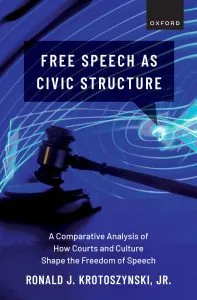
Professor Ronald J. Krotoszynski Jr. is a faculty member at the University of Alabama School of Law, specializing in constitutional law, free speech, and comparative legal systems. His recent works include the monograph Free Speech as Civic Structure (Oxford University Press, 2024) and the edited volume Disinformation, Misinformation, and Democracy (Cambridge University Press, 2024). Both publications analyze the interplay between judicial systems, cultural norms, and the protection of democratic values through legal frameworks. Research Focus: Comparative constitutional law, judicial review of speech regulation, and challenges to democracy in the digital age. Key Contributions: Argues that judicial interpretation, not constitutional text, defines free speech protections; explores regulatory approaches to combat disinformation without suppressing political expression. The book Free Speech as Civic Structure was nominated for the 2024 Book of the Year by the International Forum on the Future of Constitutionalism, recognizing its impact on constitutional studies. His scholarship emphasizes the role of courts in safeguarding expressive freedom against political self-interest, spanning jurisdictions like the U.S., Australia, Israel, and South Africa.
Professor Kamilla Elliott is a distinguished academic in Literature and Media at Lancaster University’s Faculty of Arts and Social Sciences. She holds a Professorship in English and Creative Writing, specializing in intermedial adaptation theory, Victorian literature, and the intersection of British fiction with visual media. Her career includes teaching at UC Berkeley and Harvard University, alongside extensive research on picture identification in Gothic and Victorian fiction. Educated at the University of Colorado (B.A., 1980), Boston University (postgraduate film, 1981–82), Harvard’s adult education program (A.L.M., 1991), and Harvard University (Ph.D., 1996), her expertise spans interdisciplinary studies of literature, film, and new media. Notable publications include Theorizing Adaptation (2020) and Portraiture and British Gothic Fiction (2012). Her research explores literature’s relationship with painting, photography, and digital media, with a focus on British 19th-century texts. She actively contributes to adaptation studies through editorial roles ( Journal of Adaptation in Film and Performance ) and global conferences. Awards include the Jim Welsh Prize for long-term excellence in adaptation studies. Elliott teaches Victorian literature, film adaptations, and media studies, integrating problem-based learning. She leads projects on adaptation theory and picture identification, including a forthcoming sequel on Victorian fiction (1836–1918). Her work bridges historical and contemporary media practices, emphasizing interdisciplinary dialogue.
Daswin De Silva is a Full Professor of AI and Analytics at La Trobe University, Australia, and Deputy Director of the Centre for Data Analytics and Cognition (CDAC). He also holds an Adjunct Professor position at Lulea University of Technology, Sweden. His expertise spans AI ethics, algorithm development, and applications in healthcare, energy, and education. He leads major initiatives like the La Trobe Energy AI Platform for net-zero emissions and the OptusU AI Micro-credentials program. Education: PhD in AI (Monash University, 2011). Awards include the Australian Awards for University Teaching (2021), Vice-Chancellor’s Teaching Award (2019), and Mid-Career Research Excellence Award (2018). Editor of five journals including IEEE Transactions on Industrial Informatics and Springer Discover AI. Research focuses on generative AI, ethical AI systems, and vector symbolic architectures. Recent work includes AI applications in healthcare diagnostics, energy efficiency, and smart cities. He has secured AU$14M in research funding and supervised 15 PhD completions with 10 current students. Leadership roles include Deputy Chair of La Trobe’s Research & Graduate Studies Committee and chairmanship of IEEE committees on Responsible AI and Web/Information Systems. Keynote speaker at global conferences like IEEE HSI, INDIN, and ETFA. Media engagements include ABC News, Forbes, and The Conversation.
R. Manmatha is an Adjunct Professor in the College of Information and Computer Sciences at the University of Massachusetts Amherst and a Principal Scientist at Amazon A9 since 2013. His academic journey includes a Ph.D. in Computer Science from University of Massachusetts Amherst (1997), an M.S. in Electrical Engineering from University of Hawaii (1986), and a B.Tech in Electrical Engineering from Indian Institute of Technology Kanpur (1983). Research Interests Manmatha's work spans Computer Vision , Information Retrieval , and Document Analysis . Key projects include: Developing Vision-Language Models for GUI grounding and OCR-free document understanding Creating Word Spotting techniques for historical manuscripts like George Washington's papers Advancing Image Retrieval through statistical and relevance models Building Meta Search systems using score distribution analysis Optimizing Diffusion Transformers for text-to-image generation Scientific Contributions His research has led to numerous publications in conferences like SIGIR , CVPR , and ICDAR , focusing on: Automatic Image Annotation using cross-media relevance models Scale Space Techniques for handwritten manuscript segmentation Alignment Methods for document-groundtruth generation Indian Language Document Search via locality-sensitive hashing Transformer-based architectures for multimodal and document tasks Advising & Collaborations Manmatha has mentored students including Jiwoon Jeon , Shaolei Feng , Toni Rath , Jamie Rothfeder , and Nitin Srimal . He co-founded Snaptell (acquired by Amazon) and contributed to Amazon's mobile search technology. Labs & Teams He leads the Multi-media Indexing and Retrieval (MIR) group at the Center for Intelligent Information Retrieval (CIIR) , focusing on non-textual information indexing through ASCII conversion and direct content analysis.
Khadicha Amarti serves as an External PhD Candidate at Vrije Universiteit Amsterdam's Faculty of Behavioural and Movement Sciences within the Clinical Psychology department. Her research bridges artificial intelligence and mental healthcare, with particular focus on reinforcement learning applications for improving mental health treatment adherence and outcomes. Her research interests center on Reinforcement Learning (100% specialization), Mental Health Applications (54%), and Cognitive Behavioral Therapy (50%) as evidenced by her research fingerprint. She investigates how machine learning algorithms can personalize digital mental health interventions, particularly for depression treatment and anxiety management. Her work explores multimodal data analysis including text, audio, and video inputs to predict mental health conditions and optimize treatment protocols. Amarti's publication record demonstrates consistent growth in AI-driven mental health research, with increasing focus on practical implementation of reinforcement learning in healthcare settings. Her work shows strong interdisciplinary collaboration across computer science and clinical psychology domains, with particular emphasis on translating theoretical AI models into clinically viable digital health tools. She has contributed to significant research projects including the e-Mental Health Innovation and Transnational Implementational Platform NW-Europe (2016-2020), where she served as a Project Researcher. Amarti also teaches the course eMental Health, Praktijk en Onderzoek scheduled for the 2025-2026 academic year, demonstrating her role in academic knowledge transfer.
Mario Romero is a Senior Associate Professor and Head of Unit at the Department of Science and Technology (ITN) within Linköping University. His research focuses on immersive visualization, media and information technology, and advanced manufacturing processes. He leads initiatives in digital twinning for production lines, leveraging 3D Gaussian splatting and vision models. Currently holds the position of Head of Unit, overseeing academic and research activities within his department. No scientific awards or grants are explicitly mentioned in the provided text. Mario Romero has no listed advisees or students in the given data. His work is affiliated with the Department of Science and Technology (ITN) at Linköping University, though specific lab or team affiliations are not detailed here.
Mona Agerholm Andersen is an Associate Professor at Aarhus University's School of Communication and Culture. She holds a PhD and specializes in communication management, particularly focusing on internal social media dynamics, employee engagement, and crisis communication. Her research addresses organizational change, responsible communication practices, and the role of digital technologies in corporate environments. Her work spans case studies in healthcare, family-owned businesses, and large Danish companies, emphasizing listening strategies during crises and innovation processes via internal platforms. She has presented lectures on topics like employee socialization and communication responsibility in turbulent contexts. Key publications include analyses of hospital crisis communication, coworker communication in responsible frameworks, and digital employee engagement models. No scientific awards are explicitly listed, though her active research presence is notable. No student advising or grant information is provided in the text.
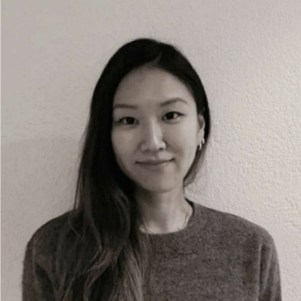
Ini Kong is a PhD candidate at Delft University of Technology's Faculty of Technology, Policy and Management (TPM), within the Engineering Systems and Services Department. She is affiliated with the Information and Communication Technology group. Her research focuses on designing quantum-secure Public Key Infrastructure (PKI) systems and developing growth-stage models to guide organizations toward a controlled transition to quantum-safe futures. Ini holds an MSc in Environment and Society studies from Radboud University (Netherlands) and a BA (Honors) in Political Science and Sociology from the University of Toronto (Canada). During her MSc, Ini conducted a research internship at Provincie Gelderland’s Energy Transition department, contributing to the Wijk van de Toekomst program through her thesis on knowledge management systems for local energy initiatives, which proposed governance models for municipalities and stakeholders. Her expertise spans ICT governance, digital trust, and transition management in both public and private sectors. Her research interests emphasize practical frameworks for organizational readiness in adopting quantum-safe technologies, government roles in steering these transitions, and policy recommendations addressing implementation challenges. No scientific awards have been explicitly mentioned. As a PhD candidate, her advising and grant information are not detailed in the provided texts, though her work aligns with national cybersecurity initiatives. She is part of the Information and Communication Technology research group at TPM.