Sarah Billington is the UPS Foundation Professor of Civil and Environmental Engineering at Stanford University and a Senior Fellow at the Woods Institute for the Environment. Her research program focuses on sustainable building design, human wellbeing, and ethical supply chain practices. Education: PhD, University of Texas at Austin, Structural Engineering (1997) MSE, University of Texas at Austin, Structural Engineering (1994) BSE, Princeton University, Civil Engineering & Operations Research (1990) Her lab employs interdisciplinary methods to study how built environments impact human physical, psychological, and social wellbeing. Current projects include developing tools to quantify nature exposure in buildings, exploring affordable housing's role in wellbeing, and using AI to assess forced labor risks in material supply chains. While no longer active in this area, her group previously pioneered research on sustainable construction materials like bio-based composites and ductile cement-based composites. Her recent publications address topics such as nature integration in architecture, workplace design optimization, and health impacts of building materials. The Billington Lab at Stanford fosters collaborative team science, welcoming partnerships to advance occupant-centric engineering solutions.
Celestine Mendler-Dünner is a Principal Investigator at the ELLIS Institute in Tübingen, co-affiliated with the Max Planck Institute for Intelligent Systems and the Tübingen AI Center. She leads the Algorithms and Society research group, focusing on machine learning in social contexts and the role of prediction in digital economies. Her work bridges theoretical machine learning with practical societal impact, developing tools for safe, reliable, and equitable AI ecosystems. Her educational background includes a PhD from ETH Zurich in collaboration with IBM Research, followed by an SNSF postdoctoral fellowship at UC Berkeley hosted by Moritz Hardt. She was previously a group leader at the Max Planck Institute for Intelligent Systems before joining the ELLIS Institute. Mendler-Dünner's research spans several interconnected themes including performative prediction (where predictions change the behavior they aim to predict), algorithmic collective action (how participants can steer AI systems toward common goals), and the role of LLMs in social science research. Her work combines theoretical foundations with practical implementations, addressing challenges in interactive machine learning, optimization in dynamic environments, and context-specific evaluation of AI systems. She particularly examines how algorithmic predictions mediate services and platforms at societal scale, exploring concepts of economic power in digital markets. Her publication record shows a clear evolution from system-aware machine learning algorithms (including foundational work on IBM Snap ML) toward increasingly sociotechnical questions at the intersection of machine learning, economics, and policy. Recent work focuses on measuring performative power in digital economies, evaluating LLMs as risk scores, and developing frameworks for algorithmic collective action in recommender systems and labor markets. Among her notable recognitions are the ETH Medal for her dissertation, the IBM Research Division Award, the Fritz Kutter Award, and the IBM Eminence and Excellence Award. She is an ELLIS Scholar, a fellow of the Elisabeth-Schiemann-Kolleg, and affiliated with several prestigious research programs including the International Max Planck Research School for Intelligent Systems and the Max Planck ETH Center for Learning Systems. ETH Medal (dissertation award) IBM Research Division Award Fritz Kutter Award IBM Eminence and Excellence Award SNSF Early Postdoc Mobility Fellowship Mendler-Dünner actively mentors the next generation of researchers, advising PhD student Patrik Wolf and supervising research interns including Joachim Baumann, Haiqing Zhu, and Anna Badalyan, as well as Master's student Dorothee Sigg. She serves as core faculty for the International Max Planck Research School and associated faculty for the Max Planck ETH Center for Learning Systems. Her group has secured significant research funding through fellowships and institutional support, enabling work on projects like Powermeter (measuring search engine influence) and Snap ML (resource-efficient machine learning library with over 1 million PyPI downloads). She leads the Algorithms and Society research group, which examines machine learning as part of broader sociotechnical ecosystems. The group explores human-population interactions with algorithmic systems and incorporates these insights into learning system fundamentals. Current projects include investigating economic incentives in digital platforms, developing tools for systematic LLM evaluation in social science contexts, and creating frameworks for collective action in algorithmic systems. Mendler-Dünner also co-organizes the Algorithmic Collective Action workshop at NeurIPS 2025, demonstrating her leadership in emerging research directions at the AI-society interface.
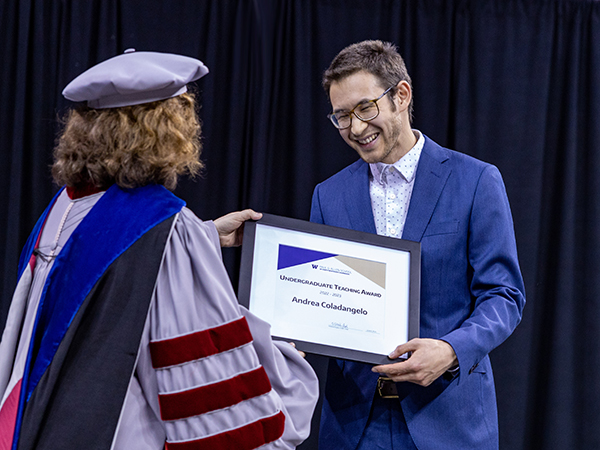
Andrea Coladangelo is an Assistant Professor at the Allen School of Computer Science & Engineering , University of Washington , co-leading the Quantum group and contributing to the Theory and Crypto groups. He coordinates the NSF-funded Quantum@UW REU program , fostering undergraduate research in quantum information. Previously, he was a postdoctoral researcher at UC Berkeley and the Simons Institute , advised by Umesh Vazirani , following a PhD in Computer Science at Caltech under Thomas Vidick . His academic journey began with a B.A. in Mathematics from Oxford and a Master in Mathematics from Cambridge . He co-founded qBraid , a platform for quantum computing education. Research Interests : Andrea explores the intersection of quantum computation and cryptography , focusing on foundational questions in entanglement , quantum correlations , and quantum learning theory . His work investigates quantum pseudorandomness , device-independent security , quantum algorithms , and quantum copy-protection , often leveraging computational assumptions to bridge quantum information theory with cryptographic applications. Scientific Awards : 2025 Google Research Scholar Program Award in Quantum Computing 2023 CSE Undergraduate Teaching Award for his course on quantum computation 2019 Best Student Paper Award at QIP Teaching & Outreach : Andrea designed and taught CSE 434: Intro to Quantum Computation (Spring 2023, 2024, 2025), CSE 534: Quantum Information and Computation (Autumn 2023), and CSE 599C: Quantum Learning Theory (Winter 2025). He also delivered lectures at the 22nd Bellairs Crypto Workshop (2024) and led a quantum programming tutorial using qBraid . Labs & Teams : As co-leader of the Quantum group at the Allen School, he collaborates with researchers in Theory and Crypto , advancing quantum computing through interdisciplinary projects and educational initiatives.
Priyanka Raina is an Assistant Professor of Electrical Engineering at Stanford University, with a courtesy appointment in Computer Science. She leads the Stanford Accelerate research group, focusing on domain-specific hardware architectures and agile hardware-software co-design. Her work emphasizes high-performance, energy-efficient accelerators for emerging technologies. Education: B.Tech. from IIT Delhi (2011), M.S. and Ph.D. from MIT (2013/2018). Postdoctoral experience includes NVIDIA Research (2018) and Amazon Visiting Academic (2023–present). Awards include the Sloan Research Fellowship (2024), NSF CAREER Award (2023), and Terman Faculty Fellowship (2018). Research Interests: Domain-specific architectures, near-memory computing, design productivity, and machine learning acceleration. Her group develops frameworks like AHA (Agile Hardware) for efficient accelerator design and compilers. Awards: Over 10 major awards, including best paper recognitions at VLSI, MICRO, and JSSC. Active roles as Associate Editor for IEEE JSSC and Program Chair for IEEE Hot Chips (2020). Advising & Teaching: Supervises multiple PhD and MS students in hardware design, CGRAs, and ML accelerators. Teaches VLSI design courses (EE271/272/372) and oversees independent studies in embedded systems and chip design. Labs & Collaborations: Affiliated with Stanford PORTAL Center, AHA Center, and SystemX Alliance. Projects include MINOTAUR (edge AI accelerator), Amber (CGRA-based SoC), and EMBER (RRAM macros).
Prof. Dr. Thomas Brinkhoff is Chair of the Institute Board and Chair of Geoinformatics at Oldenburg University of Applied Sciences. He leads the Institute for Applied Photogrammetry and Geoinformatics (IAPG) and contributes to institutions like the Association for the Promotion of Geoinformatics in Northern Germany (GiN e.V.) and the Oldenburg Research and Development Institute for Computer Science (OFFIS e.V.). Education: Diploma in Computer Science (Informatik), Universität Bremen (1990) Doctorate in Computer Science (Dr. rer. nat.), Ludwig Maximilian University of Munich (1994) Brinkhoff's research spans geodatabase systems, spatiotemporal data processing, geosensor analytics, and location-based services. His work addresses Volunteered Geographic Information (VGI), web-based geospatial visualization, and mobile data integration, with applications in traffic management and forensic science. Recent projects include ProSaDi (Digital Provenance and Collection Research) and contributions to the Laboratory for optical 3D metrology . He has served on program committees for ACM SIGSPATIAL (2002-2019), AGILE conferences (2010-2025), and editorial boards of journals like GeoInformatica and TGIS. Notable Lectures: 2024: Forensic applications of tachograph data 2023: Geoinformatics in homicide investigations 2022: Spatiotemporal analysis for sustainability projects 2015: Open geodata standards at FOSSGIS 2014: Mobile sensor data processing
Bo Li is an Associate Professor at the University of Illinois at Urbana-Champaign, affiliated with the Siebel School of Computing and Data Science. Her research focuses on trustworthy machine learning, emphasizing robustness, privacy, and security in AI systems. She leads the Secure Learning Lab (SL²), exploring adversarial attacks and defenses across digital and physical domains. Key contributions include foundational work on adversarial examples, robust learning frameworks, and privacy-preserving techniques. Her academic roles include advisory board positions at the Center for Artificial Intelligence Innovation (CAII) and membership in the Information Trust Institute (ITI). She collaborates with institutions like the Advanced Digital Science Center (ADSC) and the Quantum Information Science and Technology Center (IQUIST). Notable recognitions include the IJCAI Computers and Thought Award (2022), MIT Technology Review's 35 Innovators Under 35 (2020), and multiple best paper awards. Recent work addresses AI safety through frameworks like ShieldAgent and AutoRedTeamer, aiming to enhance system resilience against adversarial threats. Her research spans theoretical guarantees, practical defenses, and ethical AI deployment. Students advised include Chulin Xie, Linyi Li, and Boxin Wang, who have received prestigious fellowships such as the IBM PhD Fellowship and Rising Stars in ML Awards. Advising: Guides PhD students in adversarial ML, privacy, and security. Labs/Teams: Secure Learning Lab (SL²), collaboration with ALERT program. Grants/Funding: NSF CAREER Award, Amazon/Google Faculty Awards, and industry partnerships.
Kaiyuan Yang is an Associate Professor in the Department of Electrical and Computer Engineering at Rice University, leading the Secure and Intelligent Micro-Systems (SIMS) Lab. His research focuses on low-power integrated circuits and bioelectronic implants for applications like the Internet of Everything and medical devices. He holds a B.S. from Tsinghua University (2012) and M.S./Ph.D. degrees from the University of Michigan (2017). Research Interests: Low-power digital/analog/mixed-signal systems Bioelectronics and implantable devices Hardware security and PUF design Mixed-signal computing and emerging materials Recent work emphasizes magnetoelectric-powered implants, secure backscatter communication, and in-memory computing architectures. His publications span top venues like IEEE ISSCC, IEDM, and ACM MobiCom. Awards: 2022 NSF CAREER Award 2022 IEEE Top Picks in Hardware Security 2016 IEEE SSCS Predoctoral Achievement Award Dr. Yang serves on editorial boards for IEEE TVLSI and program committees for ISSCC/CICC. His lab develops miniature, secure, and energy-efficient systems for healthcare and IoT applications.
Prof. Ramakrishna Gokaraju is a Professor and Graduate Chair in the Department of Electrical and Computer Engineering at the University of Saskatchewan. His academic journey includes roles as Assistant Professor (2003), Associate Professor (2009), and full Professor (2015). He holds a B.E. from NIT Trichy (1992), M.Sc. and Ph.D. from the University of Calgary (1996, 2000). His research focuses on power system protection, smart grids, and sustainable energy systems, including small modular reactors (SMRs) and renewable integration. He has advised 8 PhD and 25+ Master’s students, with over 80 publications in top journals/conferences. Dr. Gokaraju’s honors include the Izaak Walton Killam Memorial Scholarship (1998–2000) and the Professor of the Year Award (2008). He has held visiting roles at the University of Manitoba (2009–2010), IIT Kanpur (2018), and institutions in Australia and India. His work emphasizes high-speed digital relaying, PMU-based solutions, and transient stability protection. Current research includes wind generator modeling, SMR integration, and energy storage systems for remote communities. His technical contributions span fault location algorithms, grid resilience enhancement, and GPU-based optimization for transport systems. Ongoing projects explore hybrid energy systems combining SMRs with renewables. Lab affiliations include the Power Systems Research Group at the University of Saskatchewan, focusing on smart grid innovation and sustainable energy solutions.
Dean Eckles is an Associate Professor of Marketing at MIT Sloan School of Management and serves as an Associate Director of the MIT Institute for Data, Systems, and Society (IDSS). He is also affiliated with the MIT Schwarzman College of Computing through the Institute for Data, Systems & Society and its Statistics and Data Science Center. Additionally, he leads the analytics research area at the Initiative on the Digital Economy and organizes the annual Conference on Digital Experimentation (CODE@MIT). His educational background includes a BA in philosophy, BS and MS in cognitive science, MS in statistics, and PhD in communication, all from Stanford University. Prior to joining MIT, Eckles worked as a scientist at Facebook, where he contributed to areas including News Feed, messaging, advertising, tools for randomized experiments, and survey methods. He previously held research positions at Nokia and Yahoo. Eckles's research primarily focuses on social influence mediated by interactive technologies, examining how communication technologies mediate, amplify, and direct social influence. His work spans multiple specific areas including social interactions, contagion, and interventions in networks; experimental design and inference in networks; and methods for causal inference. His research often combines social science with advanced statistical methods. His notable publications include research on long ties in social networks and their relationship to economic prosperity, how network structure affects social contagions, and algorithmic transparency in social media platforms. His work has appeared in prestigious journals including PNAS and Nature Human Behaviour, and he has provided expert testimony before the US Senate on algorithmic ranking. Long ties, disruptive life events and economic prosperity (PNAS) Long ties accelerate noisy threshold-based contagions (Nature Human Behaviour) Algorithmic transparency and assessing effects of algorithmic ranking (Senate testimony) Eckles actively shares his research through social media platforms including Bluesky, Twitter, and Mastodon, as well as through his blog and contributions to the Gelman et al. blog. His work bridges academic research with practical applications in technology and policy.
Gilbert Fridgen is Full Professor in Digital Financial Services and holder of the PayPal-FNR PEARL Chair at the University of Luxembourg's Interdisciplinary Centre for Security, Reliability and Trust (SnT). He leads the FINATRAX research group focusing on blockchain, digital identity, and sustainable digital solutions. His research explores decentralized technologies in finance, energy systems, and public administration. Current projects investigate blockchain applications in industrial demand response, NFT markets, EU digital identity wallets, and DeFi institutional adoption. Prof. Fridgen examines the intersection of technology with regulatory frameworks and user behavior in energy and financial systems. He collaborates extensively with industry partners including PayPal and Spuerkeess. Prof. Fridgen actively contributes to EU digital policy discussions, particularly regarding the European Digital Identity Wallet framework and decentralized finance governance.
Yu-Ru Lin is an Associate Professor at the School of Computing and Information, University of Pittsburgh, and serves as Research & Academic Director at the Institute for Cyber Law, Policy and Security (Pitt Cyber). She leads the Pitt Computational Social Dynamics Lab (PICSO Lab) and holds secondary appointments in Political Science, Computer Science, and the Intelligent Systems Program. PhD in Computer Science from Arizona State University Postdoctoral research at Harvard University and Northeastern University Her research focuses on computational approaches for: Networked social dynamics High-dimensional social information summarization Trust and distrust propagation Misinformation detection Policy diffusion analysis Recent publications span 2014-2020, covering: Social media crisis response Graph visualization techniques Policy diffusion patterns Misinformation mitigation Temporal topic modeling Scientific support includes: National Science Foundation (NSF) awards Minerva/ONR funding AFOSR grant for distrust modeling DARPA Understanding Group Biases program As director of PICSO Lab, she leads interdisciplinary research teams on: Digital accountability Urban mobility patterns Health informatics via crowdsourcing Trust-influence dynamics
Ajit Rajwade is a Professor at the Department of Computer Science and Engineering , Indian Institute of Technology Bombay. His research spans Artificial Intelligence , Compressed Sensing , and Medical Imaging , with affiliations to the Centre for Machine Intelligence and Data Science and the Koita Centre for Digital Health . Education : PhD in Computer and Information Science and Engineering, University of Florida (2010) MSc in Computer Science, McGill University (2004) BTech in Computer Engineering, University of Pune (2002) His research interests focus on intelligent data acquisition, particularly in neural network analysis , graph signal processing , and medical imaging . He develops compressed sensing algorithms for inverse problems like tomography and MRI reconstruction , alongside applying group testing to pandemic response. Scientific awards include the Prof. S. P. Sukhatme Award (2024) and Departmental Teaching Excellence (2019). His publications demonstrate expertise in image restoration , noise modeling , and epidemiological algorithms . He has advised PhD students like Sabyasachi Ghosh and Jerin Geo James , with a focus on computationally efficient methods in medical imaging and machine learning .
Min Yen Kan is an Associate Professor and Vice Dean of Undergraduate Studies at the National University of Singapore's School of Computing, Department of Computer Science. With a PhD from Columbia University (2002), he leads the Web Information Retrieval / Natural Language Processing Group (WING.NUS) and serves as ACL Ethics Committee co-chair. His research spans Natural Language Processing , Large Language Models , Digital Libraries , and Information Retrieval , with specific focus on scientific discourse analysis, fact verification, and multimodal systems. Current projects include Scholarly Document Information Extraction (TRL 6), Task-Oriented Dialogue Systems (TRL 4), and Recommendation Systems (TRL 5). Recent publications reveal strong trends in LLM limitations (bias, hallucination, evaluation), conversational recommendation systems , and misinformation detection . His work consistently bridges theoretical NLP with real-world applications in digital libraries and scientific communication. Award highlights include: CIKM 2019 Best Paper Award ACL Distinguished Service Awards Vannevar Bush Best Paper Award (JCDL 2012) ACM Distinguished Speaker designation Kan mentors PhD students with placements at Google and USTC, and serves as associate editor for Information Retrieval and survey editor for Journal of AI Research . His lab WING.NUS develops practical tools like SciWING for scientific document processing and FANG for fake news detection. Media engagements include commentary on AI regulations in Southeast Asia and workforce implications in the AI era.
Florian Tramèr is an Assistant Professor in the Department of Computer Science at ETH Zurich, Switzerland, leading research at the intersection of machine learning security, privacy, and AI safety. His work focuses on identifying and mitigating security vulnerabilities in machine learning systems, particularly in large language models and other AI systems. Tramèr's primary research interests include adversarial machine learning, membership inference attacks, privacy-preserving AI, and the security implications of large language models. His work has significantly advanced our understanding of how machine learning models memorize training data, how this memorization creates privacy risks, and how to evaluate the robustness of machine learning systems against various attacks. His recent publications demonstrate a strong focus on practical security challenges in deployed AI systems, including data extraction from language models, adversarial attacks against generative AI, and developing more rigorous evaluation methodologies for machine learning security. Tramèr's research has been published in top venues including ICLR, NeurIPS, ICML, and IEEE Security & Privacy. Tramèr is actively collaborating with leading researchers in the field including Nicholas Carlini, Matthew Jagielski, and Javier Rando, contributing to important initiatives like the International AI Safety Report. His work bridges theoretical security concepts with practical implications for real-world AI deployment.
Prof. Dr. Frank Ulbrich is a Lecturer and Programme Director for the BSc Business Administration at the Lucerne School of Business (HSLU). He holds a PhD in Business Administration from the Stockholm School of Economics. His academic career spans roles at universities in Sweden, the UK, Canada, and Switzerland, alongside IT & Management consulting experience. Research focuses on management education, project management, information management, and organizational change. He has published extensively in areas like shared services, digital transformation, and curriculum development. Notable awards include multiple Emerald Literati Awards and a Fellowship from the Higher Education Academy. Education: PhD in Business Administration (Stockholm School of Economics) Affiliations: Institute of Business and Regional Economics at HSLU Teaching Subjects: Academic Methods, Higher Education Management, Project Management, Digital Transformation Recent presentations include discussions on bridging academia-industry gaps, curriculum integration of SDGs, and data-driven learning strategies. His work emphasizes aligning education with labor market needs and advancing evidence-based teaching practices.