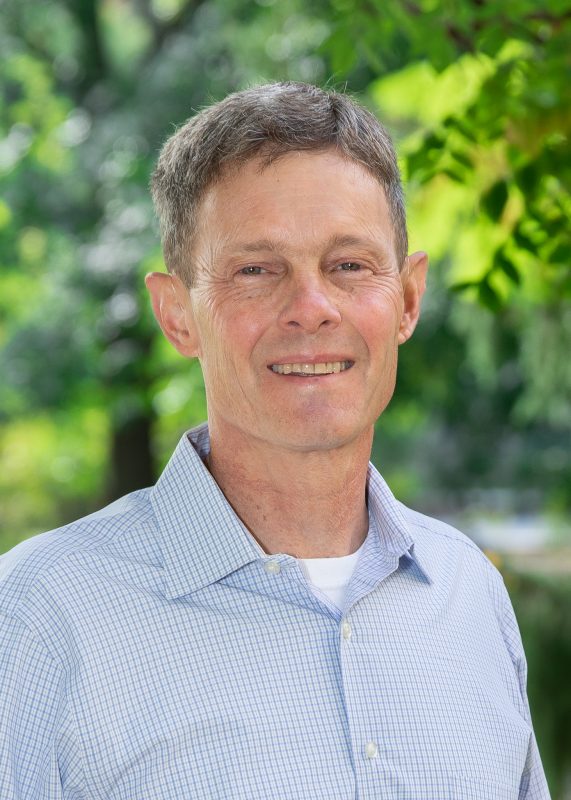
Randolph H. Wynne is a Professor in the Department of Forest Resources and Environmental Conservation at Virginia Tech, part of the College of Natural Resources and Environment. He holds a B.S. from the University of North Carolina (1986), M.S. (1993), and Ph.D. (1995) from the University of Wisconsin-Madison. His research focuses on remote sensing applications in forestry, natural resource management, ecological modeling, and earth system science. He co-authored the textbook Introduction to Remote Sensing , now in its sixth edition, and leads the Interdisciplinary Graduate Education Program in Remote Sensing at Virginia Tech. Key research themes include forest carbon management, LiDAR-based canopy structure analysis, and integration of satellite data into decision support systems. His work spans NASA-funded projects on forest management and USDA initiatives in digital soil mapping. Recent publications emphasize Landsat time-series analysis, lidar applications in forest ecology, and climate change impacts on forest productivity. Awards: Estes Memorial Teaching Award (ASPRS), Award in Forest Science (Society of American Foresters), NASA New Investigator (2001). Grants: Over $1.7M in funding from NASA, USDA NRCS, and the Forest Nutrition Cooperative. Labs/Teams: Director of Virginia Tech’s Interdisciplinary Remote Sensing Program and affiliated with the Center for Environmental Applications in Remote Sensing (CEARS).
Marion K. Matters-Kammerer is a Full Professor of Electrical Engineering at Eindhoven University of Technology, leading research in terahertz (THz) and millimeter-wave systems. She holds positions in the Center for Wireless Technology, THz Electronics and Integration Lab, and RF Sensing & Communication Lab. Her expertise includes integrated circuits, antenna design, and power amplifier systems. She has led EU projects like 3DmicroTune and ULTRA, and co-authored over 70 journal/conference papers with 13 US patents. Education: MSc in Physics from École Normale Supérieure (Paris) and TU Berlin (1999), PhD in Physics from RWTH Aachen (2007). Past roles include Senior Scientist at Philips Research (1999–2011) and Guest Professor at RWTH Aachen (2009–2010). Research focuses on THz spectroscopy, mm-wave integrated circuits, and energy-efficient wireless systems. Key projects involve THz biosensing, 60 GHz sensor networks, and co-integration of photonics and electronics. Her work addresses UN SDGs like affordable and clean energy, and industry-academia collaboration via NXP Smart Mobility projects. Recent articles highlight advancements in mm-wave power amplifiers, waveguide integration, and radar signal processing. Grants include €2.5M for TeraIBs (2025–2028) and €1.8M for Future Wireless Interfaces (2024–2029). Labs include THz Electronics Lab and RF Sensing Team, advancing sensor and communication technologies.
Professor Minh N. Do is the Thomas and Margaret Huang Endowed Professor in Signal Processing & Data Science at the University of Illinois at Urbana-Champaign (UIUC), with primary appointment in the Department of Electrical and Computer Engineering. He holds multiple affiliate appointments across campus including with the Coordinated Science Laboratory, Beckman Institute for Advanced Science and Technology, Department of Bioengineering, Department of Computer Science, Institute for Genomic Biology, College of Medicine, and School of Computing and Data Science. Additionally, he serves as Director of the joint VinUni-Illinois Smart Health Center and holds an Honorary Vice-Provost position at VinUniversity. Professor Do received his B.Eng. in Computer Engineering (First Class Honors) from the University of Canberra, Australia in 1997, followed by his Dr.Sci. in Communication Systems from the Swiss Federal Institute of Technology Lausanne (EPFL) in 2001. His educational journey was marked by exceptional achievement, earning the University Medal from the University of Canberra and a Silver Medal from the 32nd International Mathematical Olympiad. Professor Do's research focuses on developing new multidimensional signal processing tools with applications across several domains. His primary research interests include smart health, data science, computational imaging, and signal processing. His work spans biomedical imaging, machine learning, computer vision, and robotics, with particular emphasis on geometric image representations, integrating image formation and processing, and image processing from multiple sensors. His research bridges theoretical investigations with practical applications, creating impactful solutions in healthcare, diagnostics, and AI systems. His recent publications demonstrate a consistent trajectory toward multimodal AI systems, robust learning frameworks, and healthcare applications. Professor Do's work increasingly integrates signal processing with deep learning approaches to address challenges in medical imaging, cross-modal transfer, and real-world deployment of AI systems. His research shows strong emphasis on practical applications with societal impact, particularly in healthcare diagnostics and smart health technologies. Professor Do's scientific achievements have been recognized with numerous prestigious awards: Member of the National Academy of Artificial Intelligence (2025) Fellow of Asia-Pacific Artificial Intelligence Association (2023) Thomas and Margaret Huang Endowed Professor, UIUC (2020-present) Fellow of IEEE (2014) Young Author Best Paper Award, IEEE Signal Processing Society (2008) CAREER award from the National Science Foundation (2003) Best Doctoral Thesis Award from EPFL (2001) As an educator, Professor Do has taught numerous courses spanning digital signal processing, probability, data science, and image processing. His teaching excellence has been recognized with multiple "Teachers Ranked as Excellent" awards at UIUC. He also maintains active industry connections through tech-transfer efforts, having co-founded Personify and served as Chief Scientist of Misfit. His leadership extends to administrative roles, having served as Vice-Provost for VinUniversity during 2020-2021. Professor Do leads research initiatives at the intersection of signal processing and healthcare applications, with particular focus on the Smart Health Center collaboration between UIUC and VinUniversity. His lab develops innovative solutions for medical diagnostics, point-of-care testing, and neurological assessment using advanced signal processing and AI techniques.
Daswin De Silva is a Full Professor of AI and Analytics at La Trobe University, Australia, and Deputy Director of the Centre for Data Analytics and Cognition (CDAC). He also holds an Adjunct Professor position at Lulea University of Technology, Sweden. His expertise spans AI ethics, algorithm development, and applications in healthcare, energy, and education. He leads major initiatives like the La Trobe Energy AI Platform for net-zero emissions and the OptusU AI Micro-credentials program. Education: PhD in AI (Monash University, 2011). Awards include the Australian Awards for University Teaching (2021), Vice-Chancellor’s Teaching Award (2019), and Mid-Career Research Excellence Award (2018). Editor of five journals including IEEE Transactions on Industrial Informatics and Springer Discover AI. Research focuses on generative AI, ethical AI systems, and vector symbolic architectures. Recent work includes AI applications in healthcare diagnostics, energy efficiency, and smart cities. He has secured AU$14M in research funding and supervised 15 PhD completions with 10 current students. Leadership roles include Deputy Chair of La Trobe’s Research & Graduate Studies Committee and chairmanship of IEEE committees on Responsible AI and Web/Information Systems. Keynote speaker at global conferences like IEEE HSI, INDIN, and ETFA. Media engagements include ABC News, Forbes, and The Conversation.
Wilson W. Wong is a Professor in the Department of Biomedical Engineering at Boston University's College of Engineering. His research focuses on synthetic biology and engineering cellular therapies, particularly CAR T and CAR-NK cells for cancer, diabetes, and vaccine applications. He leads the Wilson Wong Lab, developing genetic circuits for precise control of cell functions through molecular, chemical, and optogenetic tools. Key achievements include FDA-approved drug-gated circuits, light-inducible recombinases, and saRNA platforms for reduced immunogenicity. Education: PhD in Chemical Engineering (UCLA), B.S. in Chemical Engineering (UC Berkeley). Awards include the Allen Distinguished Investigator Award (2022), NAE German-American Frontiers Invitee (2021), and NIH Director’s New Innovator Award (2013). He collaborates with institutions like MIT and Harvard on lung regeneration projects through the Allen Distinguished Investigators program. Research Highlights: Logic-gated CAR therapies, optogenetic cell patterning, and saRNA-based vaccines Lab Members: Supervises students including Cristina, Huishan, Josh, and Justin Letendre Grants: Allen Foundation, NSF CAREER Award, NIH funding His work bridges synthetic biology with clinical translation, emphasizing spatiotemporal control of cell functions for regenerative medicine and oncology. Recent breakthroughs include multiplex light-inducible circuits and saRNA modifications enhancing therapeutic efficacy.
Prof. Athina Tzovara is a Professor at the University of Bern, leading the Cognitive Computational Neuroscience (CCN) research group within the Institute of Computer Science (Faculty of Science) with a dual affiliation in the Department of Neurology (Faculty of Medicine). Her research integrates computational modeling, machine learning, and neural recordings to study cognitive processes and neurological conditions. Key areas include sleep dynamics, coma prognosis, AI-driven healthcare solutions, and neural mechanisms underlying consciousness. Education: BEng in Electrical & Computer Engineering (National Technical University of Athens, 2009), PhD in Neuroscience (University Hospital Centre Lausanne, 2012). Postdoctoral roles at University of Zurich and University College London preceded her current position. Research focuses on: (1) Sleep-wake disorders using EEG and causal inference approaches, (2) Predictive neural coding models for auditory processing in coma patients, (3) Ethical AI frameworks for automated medical diagnostics, and (4) Data-driven phenotyping of neurological conditions. Recent work emphasizes translating computational neuroscience insights into clinical tools - such as EEG-based coma outcome prediction and bias-aware sleep scoring algorithms. Her lab collaborates internationally on initiatives like SPHYNCS (narcolepsy cohort study) and Brain Mappers for open neuroscience communication. Advocates for inclusive scientific practices through gender bias mitigation strategies and multilingual dissemination efforts. Active in Open Science initiatives like Open Humans platform development.
Sjoerd van der Heide is a University Researcher at Eindhoven University of Technology, affiliated with the Electrical Engineering department and the Electro-Optical Communication group. His work focuses on advanced optical communication systems, with expertise in quantum key distribution, digital signal processing, and space-division multiplexing. Education: MSc in Optical Communication Systems (2017), thesis titled Low-complexity pre-compensation and advanced modulation techniques for high capacity intensity-modulated direct detection systems , supervised by Prof. C.M. Okonkwo. Research interests include: Quantum cryptography over free-space and fiber links GPU-accelerated real-time optical receivers Mode-division multiplexing techniques Holography-based fiber device characterization Atmospheric turbulence compensation Statistical modeling of mode-dependent loss Recent publications demonstrate trends in Continuous-variable QKD integration Co-propagation of classical and quantum signals Neural network applications for transmission High-capacity SDM systems Real-time GPU-based signal processing Off-axis digital holography techniques Scientific awards include: ECOC 2018 Student Paper Award Optica Student Paper Award (2022) OECC 2019 Best Paper Award Active in experimental validation of transmission systems, with collaborations on multi-core fiber implementations, turbulence generators, and software-defined optical receivers. Currently involved in the Zwaartekracht ECO project for integrated nanophotonics research.
Ingrid Moerman is a part-time Professor at Ghent University and a staff member at the Internet Technology and Data Science Lab (IDLab), a core research group of imec embedded within Ghent University and the University of Antwerp. She coordinates mobile and wireless networking research and leads a team of over 30 researchers at Ghent University, with extensive involvement in European and national funding initiatives. She received her Electrical Engineering degree (1987) and Ph.D. (1992) from Ghent University. Her research spans collaborative networks, cognitive radio, software-defined radio, IoT, LPWAN, and high-density wireless access, emphasizing experimentally-supported development of next-generation wireless systems with practical implementations in spectrum management and real-time control. Recent publications (2024-2025) reveal a strong pivot toward AI-integrated wireless networking, featuring OFDMA scheduling innovations, Wi-Fi 6/7 interference mitigation, and time-sensitive networking for industrial applications. Key trends include 5G/6G convergence, vehicular communication enhancements, and digital twin frameworks for network observability, reflecting her focus on mission-critical industrial use cases. Her accolades include: 9 Best Paper Awards 2 FWO Prizes (Research Foundation - Flanders) IMEC Prize of Excellence 2001 MSc Thesis Award (as promoter) Best Demo/Exhibit Award at ICT 2013 DARPA Spectrum Collaboration Challenge Prize ($750,000) She has coordinated major EU projects (FP7/H2020: CREW, WiSHFUL, eWINE, ORCA) with industry partners, securing substantial funding for experimental wireless research. Her grant portfolio emphasizes collaborative innovation in spectrum sharing and neutral-host architectures for multi-operator environments. At IDLab, she directs advanced wireless testbeds supporting real-world validation of technologies like openwifi and White Rabbit, with active experimentation in time-sensitive networking and spectrum collaboration for industrial IoT deployments.
Dr. Utku Yavuz is an Assistant Professor in the Biomedical Signals and Systems Department at the TechMed Centre. His expertise spans neuromuscular physiology, wearable sensor technologies, and clinical monitoring systems. He holds a PhD in Biomedical Engineering from Ege University, complemented by earlier degrees in Physics Engineering (Hacettepe University) and Biophysics (Hacettepe University). Research Focus: Motor unit physiology, neuromuscular modeling, and clinical applications of wearable sensors. Key Areas: Spinal motor neuron behavior, electromyography (EMG), and translational technologies for diabetes and musculoskeletal health. Dr. Yavuz’s work bridges neuroscience and engineering, addressing challenges in prosthetic design, real-time neuromuscular signal decoding, and improving clinical decision-making through sensor data analysis. Recent studies include optimizing wearable glucose monitors and analyzing muscle-tendon dynamics in amputees. His research outputs span 43 publications, with contributions to high-impact journals like BMC Digital Health and IEEE Sensors Journal . Collaborations include institutions focused on biomechanics, robotics, and clinical informatics. Advising: Supervised 1 graduate project, though specific advisee names are not listed. Active in academic activities such as thesis examinations and conference presentations.
Martin Ingvar is a Senior Professor at Karolinska Institutet's Department of Clinical Neuroscience, affiliated with the Pain and Brain Imaging research group led by Karin Jensen. He holds a Medical Degree from Lund University (1984) and a Doctor of Medical Science degree (1982), specializing in experimental neurological research. His research focuses on knowledge processes in healthcare, integrating cognitive science, information theory, and medical informatics to develop clinical information systems that enhance patient care. He leads the Vinnova Demonstrator project (2023–2027) on multi-use health data and has held prominent roles such as Dean of Research at Karolinska Institutet (2010–2013) and Board Chair of Swelife (2013–2017). Ingvar’s academic career includes leadership positions like Deputy Head and Head of the Department of Clinical Neuroscience (2004–2010), and directorships of facilities like the Karolinska MR Center (1998–2022). His grants span topics like psychiatric prediction systems, chronic pain mechanisms, and healthcare data innovation. He has contributed to over 400 publications, emphasizing brain imaging, psychiatric disorders, and health informatics. Key contributions include pioneering work on the National MEG Center and advancing integrative medicine. His research bridges clinical neuroscience with societal health challenges, emphasizing data-driven solutions for healthcare systems.
Guillaume A SARTORETTI is an Assistant Professor in the Mechanical Engineering Department at the National University of Singapore (NUS), part of the College of Design and Engineering. He specializes in distributed/decentralized coordination of multi-agent systems, with a focus on robotics, stochastic modeling, and reinforcement learning. His work spans applications in multi-robot systems, articulated robots, and swarm intelligence. Joined NUS in 2019 after a postdoctoral fellowship at Carnegie Mellon University (CMU) and a PhD from EPFL. Education: PhD in Robotics (EPFL, 2016); MSc and BSc in Mathematics/Computer Science (University of Geneva). Research interests include: Multi-agent pathfinding Decentralized control policies Swarm intelligence Reinforcement learning applications in robotics Recent publications emphasize scalable solutions for multi-agent systems, traffic signal control, and safe robotic exploration. His 2018 MFI postdoctoral fellowship recognized work on distributed reinforcement learning for pathfinding. Current projects involve bio-inspired locomotion and collaborative learning frameworks for heterogeneous robots.
Aftab Ahmad is a Professor in the Department of Computer Science at the City University of New York (CUNY), specializing in cybersecurity and machine learning applications. He holds a Doctor of Science from George Washington University. His research focuses on developing machine learning algorithms for cyber threat intelligence (CTI) and public health prediction, along with designing secure generative deep learning models resistant to reverse-engineering. Key research areas include: Cybersecurity frameworks and privacy-preserving architectures Generative adversarial networks (GANs) with embedded security features Biomedical signal analysis and human body channel modeling Secure wireless protocols for critical infrastructure His publication trends emphasize: Privacy metrics and data protection mechanisms Smart grid and IoT security Neuroscience-inspired machine learning models Wireless network vulnerability assessments No scientific awards or grants were explicitly mentioned in the provided texts. He teaches advanced courses in computer security and network forensics at undergraduate and graduate levels. No advising relationships or lab affiliations were detailed in the available information.
Shweta Jain is a Professor in the Department of Mathematics and Computer Science at John Jay College of Criminal Justice, part of the City University of New York (CUNY). She holds dual roles as Graduate Faculty in the Digital Forensics and Cyber Security program and Doctoral Faculty in Computer Science at CUNY's Graduate Center. With a Ph.D. in Computer Science from Stony Brook University (2007), her expertise spans Cybersecurity, Blockchain, Wireless Networks, and Software Development. Education Background: Ph.D. Computer Science, Stony Brook University, 2007 M.S. Computer Science, Stony Brook University, 2005 B.E. Electronics and Telecommunication Engineering, Indian Institute of Engineering Science and Technology (IIEST) Shibpur, 2005 Research Interests: Cybersecurity frameworks and digital forensics Blockchain applications in social systems Wireless network protocols and security Perceptual hashing for image authentication Network vulnerability analysis Notable Achievements: Recipient of 2014 IEEE Region-1 Award for Outstanding Teaching Senior Member of IEEE Over 30 peer-reviewed publications and patents in networks, forensics, and distributed systems Advising & Grants: Guided multiple student research projects in network security and forensics Developed innovative tools like E-Witness for digital evidence preservation Contributed to NSF-funded projects on wireless simulation realism Labs & Teams: Director of the Cybersecurity Research Lab at John Jay College Collaborates with WINLAB at Rutgers University on wireless protocols
Dr. Paul Ruvolo is a Professor of Computer Science at Olin College in Needham, MA. His research focuses on developing assistive technologies for people with sensory and motor impairments, leveraging machine learning, robotics, and computer vision. He holds a Ph.D. and M.S. in Computer Science and Engineering from the University of California San Diego, and a B.S. in Computer Science from Harvey Mudd College. Key research areas include creating systems that learn through imitation and experience, such as navigation aids for the visually impaired and educational tools for orientation and mobility. He leads projects like Co-Designing Assistive Apps with Students Who Are Blind, emphasizing participatory design. His work integrates Bayesian statistics, numerical optimization, and linear algebra to solve complex sensorimotor tasks. Education: Ph.D., Computer Science and Engineering, UC San Diego M.S., Computer Science and Engineering, UC San Diego B.S., Computer Science, Harvey Mudd College Awards: NSF IGERT Fellowship for 'Learning and Vision in Humans and Machines' Recent publications highlight innovations in AR navigation systems, smartphone-based SLAM for indoor environments, and educational tools for blind users. His work bridges computational methods with real-world accessibility challenges, emphasizing interdisciplinary collaboration and user-centric design. Dr. Ruvolo’s lab, linked at occam.olin.edu , focuses on assistive technologies. He actively contributes to Teach Access and other initiatives promoting inclusive technology education. His research has applications in robotics, healthcare, and educational technology.
Prof. Dr.-Ing. André Jakob is a faculty member at Berlin University of Technology , affiliated with the Department VII - Electrical Engineering - Mechatronics - Optometry. His academic role spans teaching and research in digital signal processing, audio technology, and acoustics. Digital Signal Processing Audio Technology Acoustics Active Noise Control His research focuses on active noise control , simulation of moving sound sources , and audio signal processing , with applications in robotics, building acoustics, and medical devices. Publications include advancements in anti-noise window systems , sound source localization , and acoustic measurement techniques . His recent work explores real-time auralization for educational robotics and nonlinear acoustic modeling with neural networks. The 15 most recent articles demonstrate a consistent focus on acoustic simulation , active control systems , and sound propagation modeling , with conference contributions at DAGA, NAG-DAGA, and international acoustics events. Topics range from dental drill noise reduction to active sound design in musical instruments , reflecting interdisciplinary applications. He supervises numerous Master's and Bachelor's theses in areas like real-time signal processing, deep learning for sound recognition, and virtual acoustics. His lab at TU Berlin explores multi-loudspeaker systems , acoustic beamforming , and active noise cancellation for both industrial and consumer applications.