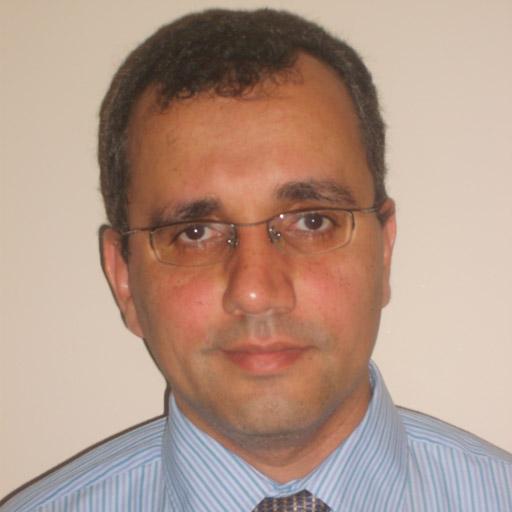
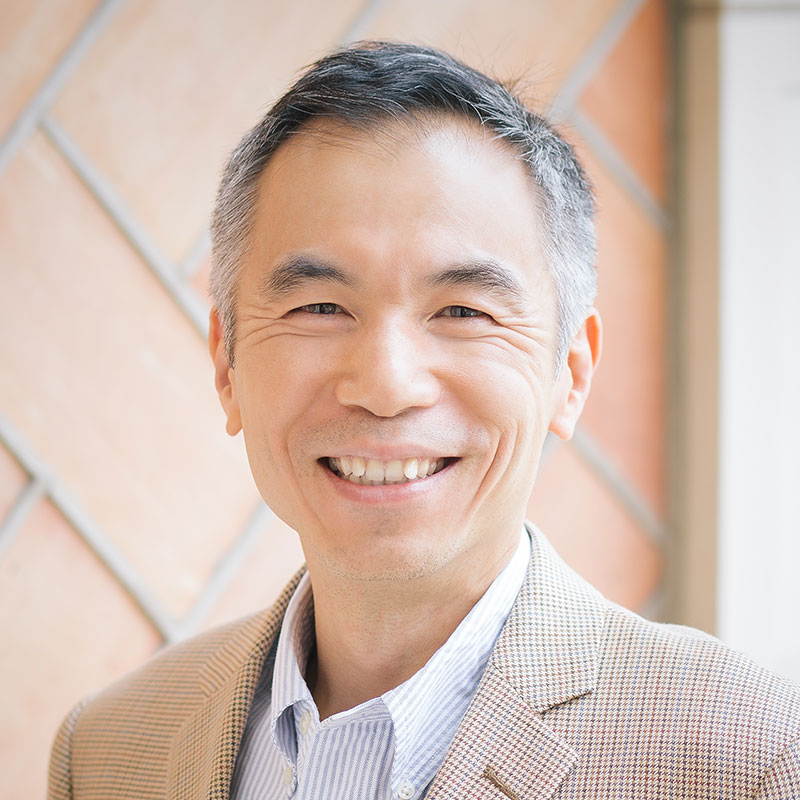
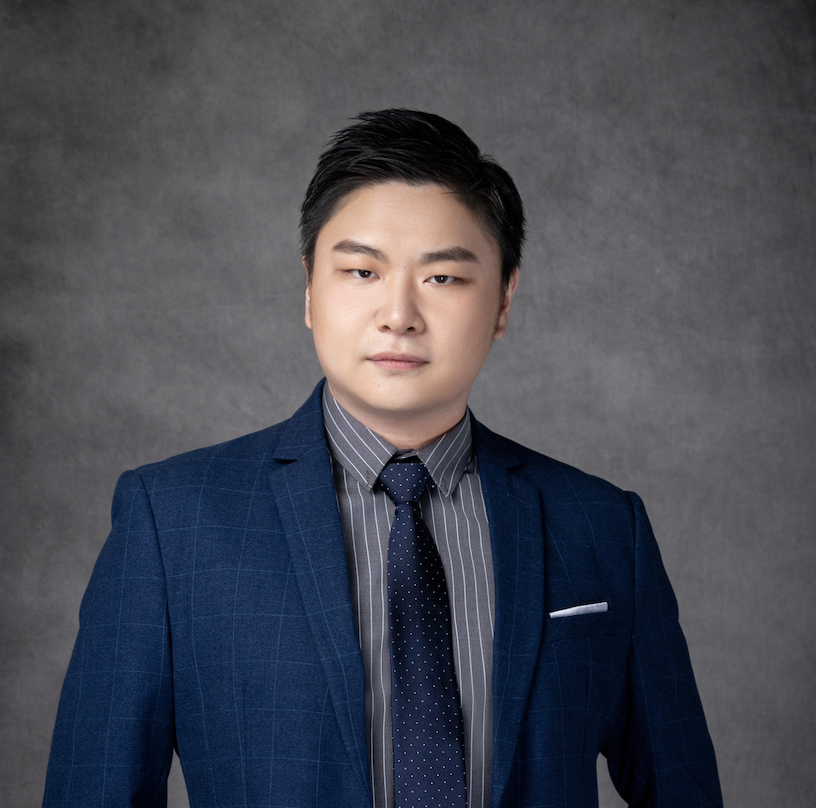
Amr Youssef is a Professor at the Concordia Institute for Information Systems Engineering, Concordia University. His research focuses on applied cryptography, network security, cyber-physical systems security, blockchain, and privacy. He has contributed extensively to securing smart grids, IoT devices, and web applications through cryptographic protocols and machine learning-driven solutions. His work addresses critical challenges in cybersecurity, including e-voting systems, fault-tolerant differential protection, and privacy-preserving communication protocols. He explores vulnerabilities in modern systems such as SSO permissions, JavaScript exploits, and stalkerware tools, while developing frameworks like MEGR-APT for APT detection and TEE-Receipt for non-repudiation. Youssef’s research integrates interdisciplinary approaches, combining cryptography with AI (e.g., vision transformers for power quality analysis) and leveraging trusted execution environments (TEE) for secure computing. His projects often involve collaboration with industrial standards (e.g., IEC 61850), emphasizing practical implementations in real-world systems.
Massimo Piccardi is a Professor of Natural Language Processing (NLP), Computer Vision, and Machine Learning at the University of Technology Sydney (UTS) , where he has been since 2002. He currently serves as the Head of the School of Electrical and Data Engineering and leads the Big Data Analytics program at the Global Big Data Technologies Centre. His research focuses on advancing NLP, machine learning applications in healthcare, and cybersecurity in IoT systems. He has authored over 200 journal papers and conference proceedings, secured significant ARC and CRC grants, and holds the IEEE Computer Society Distinguished Contributor Award (2022). Education & Professional Roles: Joined UTS in 2002, progressing from Associate Professor (2002–2007) to Professor (2008–present). Serves as Associate Editor for IEEE Transactions on Big Data and Editor for Artificial Intelligence in Medicine. Active in professional societies including IEEE, ACL, and ALTA (President, 2023–2024). Research Interests: Core areas include NLP (translation, summarization, adversarial attacks), healthcare informatics (clinical NLP, health service analysis), and cybersecurity (IoT security, privacy-preserving systems). Cross-cutting themes include generative models, cross-lingual systems, and ethical AI. Grants & Projects: Principal Investigator on ARC Discovery/Linkage projects and CRC grants. Recent projects include controllable machine translation (Amazon), privacy-preserving digital agriculture, and STEM innovation (ASTRID project with NBN Co). Labs & Collaborations: Leads the UTS Global Big Data Technologies Centre, collaborating on projects like adversarial NLP attacks, medical machine translation, and secure IoT frameworks.
James C. Hoe is Professor of Electrical and Computer Engineering at Carnegie Mellon University (College of Engineering). He is on sabbatical at MangoBoost and directs research in computer architecture, reconfigurable computing, and high-level hardware design. Education Ph.D., Electrical Engineering and Computer Science, MIT (2000) M.S., Electrical Engineering and Computer Science, MIT (1994) B.S., Electrical Engineering and Computer Science, UC Berkeley (1992) Research Interests Professor Hoe’s work spans computer architecture , reconfigurable computing , FPGA architectures , and high-level hardware synthesis . His group created the CoRAM abstraction for virtualized FPGA computing and leads efforts in power-efficient accelerators, in-network computing, and security-oriented FPGA systems. Scientific Awards IEEE Fellow (2013) Intel Outstanding Researcher Award (2021) Research Funding & Projects Intel / VMware Crossroads 3D-FPGA Academic Research Center – co-leading exploration of FPGA roles in future datacenters. DARPA BRASS program ($2.7 M, 4 years) – ensuring long-lived software systems remain robust to resource changes. Pigasus open-source IDS – world’s fastest FPGA-accelerated intrusion-detection system (100 Gb/s on one server). Labs & Teams He heads activities within the Computer Architecture Lab at Carnegie Mellon (CALCM) , supervising graduate researchers on CoRAM++, SPIRAL autotuning, and FPGA overlays for stream processing.
Nirupam Roy is an Assistant Professor at the Department of Computer Science, University of Maryland, College Park, and Director of the iCoSMoS research lab. His work bridges wireless networking, mobile computing, and acoustic sensing with applications in IoT, localization, healthcare, security, and wearables. Research Focus: Wireless Networking & Mobile Sensing Awards: Best paper award, MobiSys 2022 Best demo award, MobiSys 2021 CSL Ph.D. Thesis Award, UIUC 2019 Students: Nakul Garg, Yang Bai, Irtaza Shahid, Harshvardhan Takawale, Aritrik Ghosh, Ayushi Mishra, Sumbul Zehra, Justin Goodman Grants: NSF CAREER award (2023), Meta Research Award (2023)
Geng Yuan is an Assistant Professor at the University of Georgia's School of Computing, specializing in AI systems, energy-efficient deep learning, and hardware-software co-design. His work bridges machine learning algorithms with emerging hardware technologies like superconducting circuits and ReRAM. He holds a Ph.D. in Computer Engineering from Northeastern University (2023) and a Master's in Electrical & Computer Engineering from Syracuse University (2016). Doctor of Philosophy (Ph.D.) in Computer Engineering, Northeastern University (2023) Master of Science (M.S.) in Electrical & Computer Engineering, Syracuse University (2016) Bachelor of Science (B.S.) in Electrical Engineering, Beijing University of Technology (2014) His research focuses on optimizing deep learning systems for edge computing and mobile platforms through techniques like model compression, sparse training, and hardware-aware neural architecture search. Recent projects include adapting large language models via hybrid-grained pruning and developing ultra-low-power AQFP circuits for binary networks. Geng Yuan's publications span top venues like NeurIPS, CVPR, ICML, ICLR, ISCA, and DAC, with notable awards including a Best Paper Award at ICLR Workshop 2021, Spotlight Papers at ICLR 2023 and NeurIPS 2021, and a Design Contest 1st Place at ISLPED 2020. Best Paper Award (ICLR Workshop'21) Spotlight Paper Award (ICLR'23, NeurIPS'21) Design Contest 1st Place (ISLPED'20) Best Paper Nomination (DATE'21, ISQED'18) He actively recruits Ph.D., Master's students, and interns to his research group, focusing on advancing AI systems through interdisciplinary approaches combining machine learning, computer architecture, and electronic design automation.
Giacomo Indiveri is a dual Professor at the Faculty of Science of the University of Zurich and the Department of Information Technology and Electrical Engineering of ETH Zurich . He serves as the Director of the Institute of Neuroinformatics at both institutions. Indiveri holds an M.Sc. in Electrical Engineering (1992) from the University of Genoa and a Ph.D. in Computer Science (2004) from the same university. Primary Affiliation: University of Zurich (Faculty of Science, Institute of Neuroinformatics) Secondary Affiliation: ETH Zurich (Department of Information Technology and Electrical Engineering) Indiveri's research bridges neuroscience , computer science , and machine learning to develop neuromorphic cognitive systems . His work focuses on spike-based learning , recurrent neural networks , and analog/digital circuit design for real-time sensory-motor systems . He integrates emerging memory technologies into fault-tolerant event-based architectures, enabling brain-inspired computing paradigms in applications like robotics and medical monitoring. His recent publications emphasize neuromorphic hardware for epileptic seizure detection , spiking neural networks in robotic painting , and scalable processors with on-chip learning . These works explore biologically plausible neurons , delay lines , and memory arrays for temporal processing, with applications in healthcare , edge computing , and adaptive control . Scientific Awards & Recognitions: 2021 IEEE Biomedical Circuits and Systems Best Paper Award Senior Member of IEEE Society ERC Fellow with three European Research Council grants Indiveri's group at the Institute of Neuroinformatics develops event-based systems for real-world validation of brain-inspired computing. His work includes multi-core processors , feedback optimizers , and dynamic routing architectures , supported by grants for advancing neuromorphic technologies .
Professor Andrew Chadwick is a leading scholar in political communication and digital media studies at Loughborough University, where he directs the Online Civic Culture Centre (O3C). He holds a BSocSc from Birmingham, MSc and PhD from the London School of Economics. His research focuses on hybrid media systems, disinformation dynamics, and digital politics. Key contributions include conceptualizing hybrid media events and analyzing misinformation in personal messaging platforms. His work has been recognized with prestigious awards, including the APSA Best Book Award. He supervises numerous PhD students exploring topics like social media influence, public opinion, and digital disinformation. Current projects include the Leverhulme-funded Everyday Misinformation Project examining numerical disinformation on messaging apps. His media engagements span BBC Radio 4 to The Washington Post. Research highlights include studies on misinformation warnings' ineffectiveness, vaccine hesitancy, and the role of celebrities in political representation. O3C serves as a hub for interdisciplinary research on digital civic culture. Chadwick’s academic leadership includes roles in editorial boards for top journals and international conference keynotes.
Di Zhu is a Presidential Young Professor in the Department of Materials Science and Engineering at the National University of Singapore (NUS). He holds a B.Eng. from Nanyang Technological University and M.Sc./Ph.D. from MIT, both in Electrical Engineering. His postdoctoral research at Harvard focused on lithium niobate integrated photonics and superconducting detectors. He previously worked as a research scientist and PI at A*STAR's Institute of Materials Research and Engineering (IMRE). Research Interests : Integrated quantum photonics, superconducting detectors, nonlinear optics, and nanofabrication. His group develops scalable quantum photonic devices using lithium niobate and superconducting materials, emphasizing applications in quantum computing, communication, and sensing. Awards : National Research Foundation (NRF) Fellowship Harvard Quantum Initiative (HQI) Postdoctoral Fellowship MIT Jin-Au Kong Thesis Award Advising & Recruitment : Actively recruiting postdocs, PhD students, and interns in areas like integrated photonics, quantum optics, and superconducting detectors. Positions include work on thin-film lithium niobate, quantum simulation, and microwave-optical transduction. Group website: dizhulab.org .
Naresh R. Shanbhag is the Jack Kilby Professor in the Department of Electrical and Computer Engineering and the Coordinated Science Laboratory at the University of Illinois at Urbana-Champaign. He serves as Director of the Systems on Nanoscale Information fabriCs (SONIC) Center and held the D.J. Gandhi Distinguished Visiting Professorship at IIT Mumbai from 2015-2020. Previously, he was a visiting faculty member at National Taiwan University (2007) and Stanford University (2014). Dr. Shanbhag received his doctorate from the University of Minnesota (1993) in Electrical Engineering. From 1993 to 1995, he worked at AT&T Bell Laboratories as the lead chip architect for AT&T's 51.84 Mb/s transceiver chips over twisted-pair wiring for Asynchronous Transfer Mode (ATM)-LAN and very high-speed digital subscriber line (VDSL) chip-sets. His research focuses on the design of energy-efficient machine learning, communications, and signal processing systems on resource-constrained embedded platforms. He explores fundamental trade-offs between energy efficiency, latency and accuracy of decision-making systems implemented in nanoscale technologies, with applications to computer vision, biomedicine, automatic target recognition, and imaging. His work spans four primary focus areas: Resource-efficient Machine Learning for the Edge, In-memory Computing (IMC), Energy-efficient High Data Rate Communications, and Shannon-inspired Statistical Error Compensation (SEC). Analysis of his recent publications reveals a strong emphasis on in-memory computing architectures (SRAM, MRAM, RRAM) for machine learning acceleration. His work consistently addresses energy-accuracy trade-offs, with increasing attention to security aspects of hardware implementations and applications to MIMO signal processing and edge AI systems. His research demonstrates a progression from theoretical foundations to practical silicon implementations. 2024 Semiconductor Research Corporation Innovation Award 2018 Semiconductor Industry Association/Semiconductor Research Corporation University Researcher Award 2018 IEEE International Symposium on Circuits and Systems Best Paper Award 2006 IEEE Fellow 1996 National Science Foundation CAREER Award Professor Shanbhag has mentored over 50 graduate students who now work at leading technology companies including Qualcomm, Amazon, Nvidia, Intel, and Apple. His research has been generously supported by the National Science Foundation, DARPA, AFRL, Semiconductor Research Corporation, Texas Instruments, Sandia National Laboratories, and industry partners including IBM, GlobalFoundries, and Intel Corporation. He led the Alternative Computational Models research theme (2006-2012) and was the founding Director of the SONIC Center (2013-2017), a 5-year multi-university center funded by DARPA and SRC. Currently, he leads research themes in the SRC and DARPA funded JUMP 2.0 Program's Center for Co-Design of Cognitive Systems and the Center for Ubiquitous Connectivity, and in the NSF IUCRC Center for Advanced Semiconductor Chips with Accelerated Performance (ASAP). As Director of the Systems on Nanoscale Information fabriCs (SONIC) Center, Professor Shanbhag leads a multidisciplinary team exploring novel computing paradigms for the nanoscale era. His group has benchmarked an extensive collection of in-memory computing and digital accelerator IC designs, maintaining a publicly available IMC benchmarking repository of metrics extracted from published IC prototypes. His research philosophy integrates concepts from information theory, statistical signal processing, detection and estimation, VLSI architectures, and digital and analog integrated circuits to develop energy-efficient systems from algorithms to silicon implementations.
Martin Z. Bazant is the E. G. Roos (1944) Professor of Chemical Engineering and Professor of Mathematics at the Massachusetts Institute of Technology (MIT), holding the Digital Learning Officer role in the Department of Chemical Engineering. His research focuses on mathematical modeling of electrochemical systems, transport phenomena, and applied mathematics, with significant contributions to battery technology and electrochemical energy storage. He is affiliated with MIT’s Department of Mathematics and the MIT Energy Initiative (MITEI), leading initiatives like the Center for Battery Sustainability and D3BATT. Education: Ph.D. from Harvard University (1997), M.S. and B.S. from the University of Arizona (1993, 1992). His work bridges theory and application, addressing challenges in lithium-ion batteries, solid-state systems, and electrolyte dynamics. Notable achievements include pioneering studies on coupled ion-electron transfer mechanisms and phase separation in battery materials. He is an elected member of the National Academy of Engineering (2025) and a Fellow of the Electrochemical Society (2023). As an educator, he develops MOOCs on transport phenomena and contributes to digital learning initiatives. His research group explores advanced battery diagnostics, machine learning for materials science, and environmental applications of electrochemical processes. Key collaborations include startups like Lithios, Inc., and leadership roles in professional societies such as the International Electrokinetics Society.
Andres Lucero is Associate Professor of Interaction Design at Aalto University's Department of Art and Media, specializing in human-computer interaction for mobile devices and interactive surfaces. His research integrates human-computer interaction, design methodologies, and playful interfaces. He holds a PhD from Eindhoven University of Technology and has industry experience from Nokia, where he led user-centered design projects as Senior Researcher. Research explores tangible interfaces, social wearables, museum experience design, human-AI collaboration, and cross-cultural co-design approaches. Recent projects investigate conversational agents in design processes, persona generation workflows, and freeform interactive devices. Dr. Lucero received the Honourable Mention Award at MUM 2020 for innovative interaction research. His work advances design methods through first-person perspectives, AI integration, and novel interaction paradigms.
Yimin D. Zhang is an Associate Professor in the Department of Electrical and Computer Engineering at Temple University's College of Engineering, where he leads the Advanced Signal Processing (ASP) Lab. His research spans statistical signal processing, array processing, radar, wireless communications, and convex optimization. Research Interests: Dr. Zhang's work focuses on cutting-edge signal processing techniques including compressive sensing, sparse arrays, time-frequency analysis, and robust beamforming. These are applied to radar systems, satellite navigation, assisted living, and wireless networks. His research addresses core challenges in target localization, direction-of-arrival estimation, and spectrum-efficient joint radar-communication systems. The recent publications highlight a strong trend in exploiting sparsity, virtual arrays, and deep learning to enhance resolution and robustness in radar and communication systems. Themes include multi-frequency processing, low-rank matrix recovery, and optimized OFDM waveforms for dual-function systems. Scientific Awards: 2016 IET Radar, Sonar and Navigation Premium Award 2017 IEEE Aerospace and Electronic Systems Society Harry Rowe Mimno Award 2018 IEEE Signal Processing Society Young Author Best Paper Award (coauthor) Advising and Grants: Dr. Zhang has served as Principal or Co-Principal Investigator on over $6 million in research funding from the NSF, AFRL, ONR, and DARPA. While student advisees are not listed, his leadership of the ASP Lab suggests active mentorship of graduate researchers. He contributes extensively to the academic community as an associate editor for IEEE Transactions on Signal Processing and editor for Signal Processing journal, and serves on key IEEE technical committees. Labs and Teams: He directs the Advanced Signal Processing (ASP) Lab at Temple University, which focuses on developing novel algorithms for real-world applications in radar, communications, and navigation. Previously, he led the Wireless Communications and Positioning Lab and the RFID Lab at Villanova University.
Professor Kim Eun-hee is a faculty member in the Department of Defense Systems Engineering at Sejong University, specializing in advanced radar technologies and signal processing. Her work bridges theoretical research and practical applications in defense systems. Ph.D. in Mechanical Engineering (2004), KAIST M.Sc. in Engineering (1996), KAIST B.Sc. in Precision Engineering (1994), KAIST Her research focuses on radar system design, including airborne active phased array radar, automotive radar, broadband noise radar, and over-the-horizon radar. She explores waveform optimization, MIMO architectures, and signal processing algorithms to enhance radar performance in complex environments. Publications highlight her expertise in MIMO radar configurations, Doppler-insensitive waveforms, and machine learning integration for signal analysis. She leads industry-academic collaborations with organizations like Hanwha Systems and LIG Nex1. She contributes to technical committees, including the Sensor and Signal Processing Division of the Korean Society of Military Science and Technology. Her laboratory (Defense Radar Technology Laboratory) focuses on radar design, signal processing, and sensor integration.
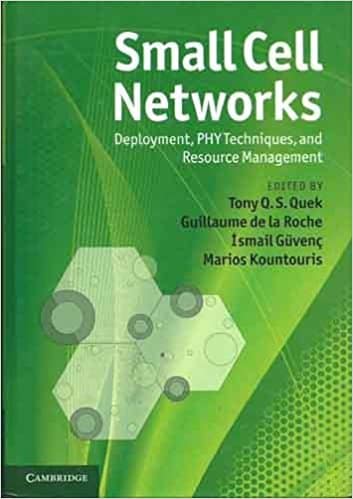
Dr. Ismail Guvenc is a Full Professor in the Department of Electrical and Computer Engineering at North Carolina State University. He holds an IEEE Fellowship and is a Senior Member of the U.S. National Academy of Inventors. His research focuses on 5G/6G wireless systems, UAV communications, heterogeneous networks, and spectrum management. He leads the NSF AERPAW project and serves as the NC State Site Director for the NSF BWAC I/UCRC center. Dr. Guvenc has authored/co-edited four books and holds over 30 U.S. patents. Education: Ph.D. in Electrical Engineering, University of South Florida (2006) Master's in Electrical and Computer Engineering, University of New Mexico (2003) Bachelor's in Electrical Engineering, Bilkent University, Turkey (2001) Research Interests: Dr. Guvenc’s work spans UAV communication systems, 5G/6G networks, spectrum sensing, and machine learning for network optimization. He emphasizes experimental validation through platforms like AERPAW, focusing on drone-based networks, radio dynamic zones, and testbed-driven innovation. His contributions address challenges in UAV localization, interference management, and energy-efficient networks. Grants & Leadership: PI and Director of NSF AERPAW (2019–Present) NC State Site Director for NSF BWAC I/UCRC (2019–Present) Recipient of NSF CAREER Award (2015) and NC State Faculty Scholar Award (2021) Publications & Awards: He has authored over 130 peer-reviewed papers and contributed to standardization efforts. His awards include the R. Ray Bennett Faculty Fellow Award (2019) and the USF Outstanding Dissertation Award (2006). Labs & Teams: Dr. Guvenc directs research in the ECE’s wireless communications group, leveraging AERPAW’s experimental capabilities to advance UAV networks and 6G technologies. His team collaborates with industry and government on spectrum policy and autonomous systems.
Hossam Hassanein is a Professor and Director of the School of Computing at Queen's University. He received his B.Sc. in Electrical Engineering from Kuwait University in 1984, M.Sc. in Computer Engineering from the University of Toronto in 1986, and Ph.D. in Computing Science from the University of Alberta in 1990. He joined Queen's University School of Computing in 1999 and has established himself as a leading researcher in telecommunications and networking. Dr. Hassanein's research interests span wireless sensor networks, mobile ad hoc networks, edge computing, Internet of Things (IoT), radio resource management, and data-centric networks. His seminal contributions include pioneering work on WSN planning, load-balanced routing protocols, and energy-efficient network designs. He has championed research in IoT, developing frameworks for smart spaces that use contextual information to enhance IoT applications in healthcare, transportation, and infrastructure. His recent publications (2023-2025) demonstrate a strong focus on cutting-edge areas including extreme edge computing, vehicular networks, and AI/ML integration in networking. Research trends show increasing emphasis on practical applications in telesurgery, digital twins, and industrial IoT, addressing challenges in resource allocation, task offloading, and real-time processing in constrained environments. Dr. Hassanein has received numerous recognitions for his work: Fellow of the IEEE Queen's University School of Graduate Studies Award for Excellence in Graduate Student Supervision (2015) Multiple best paper awards from top international conferences As founder and director of the Telecommunications Research Lab (TRL), Dr. Hassanein has supervised over 75 students who have made substantial contributions in academia and industry. The TRL is one of Queen's largest research groups with extensive international collaborations. Dr. Hassanein has successfully attracted significant research funding from government and industry sources in the competitive telecommunications field. The Telecommunications Research Lab has developed innovative platforms including SPROUTS, a rugged sensor platform used in mining, steel manufacturing, and smart-grid monitoring. TRL's work has had significant impact in WSN planning, data dissemination, and resource reuse in wireless networks, with contributions featured in IEEE Wireless Communications Magazine.