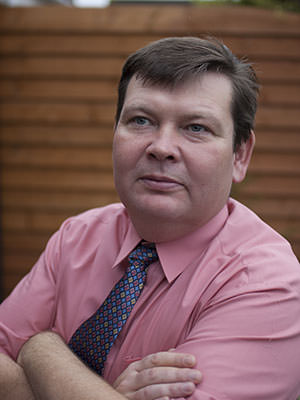
Fergus Cuthill is a Researcher at the School of Engineering, University of Edinburgh , currently serving as the FastBlade Manager and Senior Experimental Officer at the FASTBLADE Structural Composites Research Facility. His work focuses on instrumentation, control systems, and mechanical testing for renewable energy applications. PhD: Mechanical Engineering (Snow Mechanics), University of Edinburgh (2017) MEng: Mechanical Engineering, University of Edinburgh (2013) His research explores structural testing , fatigue analysis , and hydraulic systems , particularly for tidal and wave energy devices. Recent projects include regenerative testing methods and anomaly detection frameworks using machine learning. Key trends in his publications include full-scale structural testing , energy recovery systems , and digital twin development . Collaborations span Scottish Funding Council, Rosyth Royal Dockyard, and Wave Energy Scotland. Notable projects: Digital Facility (2022–2025) Contributions to 22 research outputs and datasets on mechanical fatigue and wave energy Cuthill's work bridges materials science and renewable energy engineering , focusing on reducing energy costs through advanced testing technologies.
Associate Professor Torsten Lehmann is a faculty member in the School of Electrical Engineering and Telecommunications at the University of New South Wales (UNSW). He holds the position of Associate Professor in Microelectronics and maintains an active research program focused on advanced circuit design for biomedical applications and cryogenic systems. His work spans multiple disciplines at the intersection of electronics engineering, biomedical technology, and quantum computing interfaces. Dr. Lehmann's research interests encompass several cutting-edge areas of microelectronics: Solid-state circuits and systems CMOS circuits at cryogenic temperature Ultra low-power CMOS design Bio-medical microelectronics Cochlear implants and vision prostheses High-performance analogue circuits in deep sub-micron CMOS His recent publication record demonstrates a strong focus on neural interfaces and optrode technology, with significant contributions to the development of optical neural stimulation and recording systems. Over the past five years, his research has increasingly concentrated on optrode arrays, biopotential sensing, and charge-balanced stimulation techniques for neural applications. His work bridges the gap between traditional electronic circuit design and emerging biomedical applications, particularly in vision and hearing prostheses. A consistent theme throughout his publications is the development of specialized circuits for challenging environments, whether ultra-low temperatures for quantum computing or implantable medical devices requiring extreme power efficiency. Dr. Lehmann has made significant contributions to the field of microelectronics for biomedical applications, particularly in the development of circuits for vision prostheses and neural stimulation systems. His work on cryogenic circuits for quantum computing interfaces represents an important bridge between traditional electronics engineering and emerging quantum technologies. His research group appears to be actively involved in several collaborative projects related to neural engineering and biomedical implants, working with colleagues across UNSW and with clinical partners. The lab likely focuses on the design and testing of specialized integrated circuits for challenging applications where conventional electronics face significant limitations.
Prof. Dr. sc. Antonio Petošić is a Full Professor at the Department of Electroacoustics, Faculty of Electrical Engineering and Computing, University of Zagreb. He serves as Deputy Head of the Department and leads the Laboratory for Determining Properties of Complex Materials Using Acoustic Methods (LOSKSAM). His research spans transformer acoustics, wind turbine noise, building acoustics, ultrasound transducers, and noise barriers. Department: Electroacoustics Academic Rank: Professor Email: antonio.petosic@fer.unizg.hr His work includes modeling wind turbine noise under varying meteorological conditions, exploring HVAC noise, and developing beamforming algorithms for acoustic cameras. He contributes to open-access educational materials in acoustics through the Acoustics Knowledge Alliance project. Research interests include: Transformer noise localization using adaptive beamforming Electromechanical characterization of piezoceramics Urban soundscape perception influenced by avian vocalizations Genetic algorithm optimization for noise barriers and FPGA systems Sound insulation measurement uncertainties He has developed laboratory exercises in electroacoustics and digital audiotechnics while maintaining active collaborations in biomedical ultrasound and smart city noise reduction.
Murilo da Silva Baptista is a Reader at the Institute for Complex Systems and Mathematical Biology , within the School of Natural and Computing Sciences at the University of Aberdeen . He has been with the university since 2009, initially as a Senior Lecturer and promoted to Reader in 2014. He is actively accepting PhD students in Physics, Mathematics, and Engineering, and his research is internationally recognized in the fields of complex systems and chaos theory. His research focuses on understanding the relationship between function—such as information processing, collective behavior, and synchronization—and structure in large networked complex systems. He applies analytical methods, data science, nonlinear time series analysis, and machine learning to model systems in neuroscience, smart engineering, and Earth sustainability. He is a leading scientist in chaos-based communication, demonstrating how chaotic signals can enable smart and secure wireless and underwater communication systems. His work includes theoretical developments in phase definition in chaotic oscillators, chaos-based cryptography using Poincaré return times, and the discovery of phenomena like Collective Almost Synchronization, which enhances machine learning for EEG signal prediction. His recent publications (2023–2025) span a wide range of applications, including chaotic image and 3D model encryption, UAV surveillance using chaotic paths, causal feature selection in health systems, modeling neurological disorders, and socio-environmental analysis in Brazil. These works reflect a strong trend toward applying nonlinear dynamics and network science to real-world engineering, biomedical, and societal challenges. Scientific Contributions and Recognition: Proved a conjecture on the analytical calculation of Poincaré first return times using unstable periodic orbits. Contributed foundational work to chaos-based cryptography. Proposed a formula linking mutual information to Lyapunov exponents, supporting the Infomax theory of brain evolution. Discovered the phenomenon of Collective Almost Synchronization in complex networks. Demonstrated that causality is a space-time phenomenon, not purely temporal. Advising and Research Support: He is currently supervising PhD students in Physics, Maths, and Engineering, indicating active mentorship. His research is supported by analytical developments and data-driven modeling. He leads work on optimal wireless chaos communication, synapse modeling, brain network changes post-surgery, and socio-economic causality in Brazil. His collaborations span institutions in the USA, Brazil, Germany, and Portugal. Labs and Research Groups: He is affiliated with the Institute for Complex Systems and Mathematical Biology at Aberdeen, a hub for interdisciplinary research in nonlinear dynamics, network theory, and their applications across physical, biological, and social systems.
Dmitriy Dubovitskiy is a Part-Time Lecturer and Honorary Research Fellow at De Montfort University, affiliated with the School of Engineering and Sustainable Development within the Faculty of Computing, Engineering and Media. His work bridges computer science and healthcare, focusing on innovative solutions for cancer diagnosis and biomedical imaging. PhD in Computer Science, De Montfort University (UK), in collaboration with Bauman Moscow State Technical University Specialization: Digital Image Processing, Object Recognition using Fractal Geometry and Fuzzy Logic Dr Dubovitskiy's research centers on the mathematical modeling of natural structures using advanced pattern analysis techniques. He applies fractal geometry , fuzzy logic , and machine learning to develop automated systems for skin and cervical cancer screening , cytopathology , and industrial quality control . His interdisciplinary approach spans biology, pharmacology, physics, and engineering. The trend in his publications shows a consistent focus on biomedical image analysis , particularly in oncology and diagnostics. His work emphasizes automated decision-making , real-time recognition , and portable or web-based screening platforms . Key themes include texture classification, convex hull algorithms, and optical machine vision, with increasing integration of AI and mobile technologies. His scientific awards reflect excellence in both research and innovation: Commercialising Award, DIT Hothouse (2011) Microsharp Limited Prize for Best Research (2003) INTAS Research Grant (06-1000013-9357) Multiple Best Presentation/Poster Awards (2001–2004) Overseas Students Research Award (2000–2003) Dr Dubovitskiy has advised on several externally funded and industrial research projects, including collaborations with Oxford University , Trinity College Dublin , and companies like Microsharp Limited and MoleTest (UK) Ltd . He secured the INTAS grant and contributed to technology commercialization efforts. He teaches Dynamics and Control and mentors through consultancy. He is an active member of the British Machine Vision Association (BMVA) , MIET , and the Cambridge Knowledge Transfer Network . He is associated with the Centre for Engineering Science and Advanced Systems (CESAS) at DMU, where he contributes to research in intelligent systems and advanced computing. His work often involves interdisciplinary teams focused on translating academic research into practical healthcare and industrial applications.
Neil Parry is an Honorary Visiting Professor of Vision Science at the University of Bradford's Faculty of Life Sciences and Head of the Ophthalmic Electrodiagnostic Service at Manchester Royal Eye Hospital's Vision Science Centre. He holds roles as Treasurer of the International Colour Vision Society (ICVS) and is a State-registered Clinical Scientist (SRCS). Education and Qualifications: BSc (Hons) Human Biology (1984, University of Surrey), PhD in Human Brain Electrophysiology (1992, Victoria University of Manchester), and Clinical Scientist registration (HPC #CS02686). Research Interests: Focus on electroretinography (ERG), macular pigment (MP) measurement, and color vision mechanisms. Key studies include cone-isolating ERGs, silent substitution techniques for photoreceptor analysis, and MP's role in AMD prevention. Research also explores peripheral color appearance, reaction times, and tablet-based visual testing. Methodological Expertise: Specializes in ERGs, VEPs, contrast sensitivity, and clinical electrophysiology. Skilled in software tools like Delphi, Visual Basic, and C. Professional Contributions: Active in ARVO, ICVS, and the British Society for Clinical Electrophysiology of Vision. Collaborates with institutions globally, including Moorfields Eye Hospital, University of Erlangen, and SUNY. Publications: Over 80 peer-reviewed articles, including seminal work on AMD's electrophysiological markers and macular pigment's protective role. Recent studies analyze dark adaptation in early AMD and genetic variability in albinism.
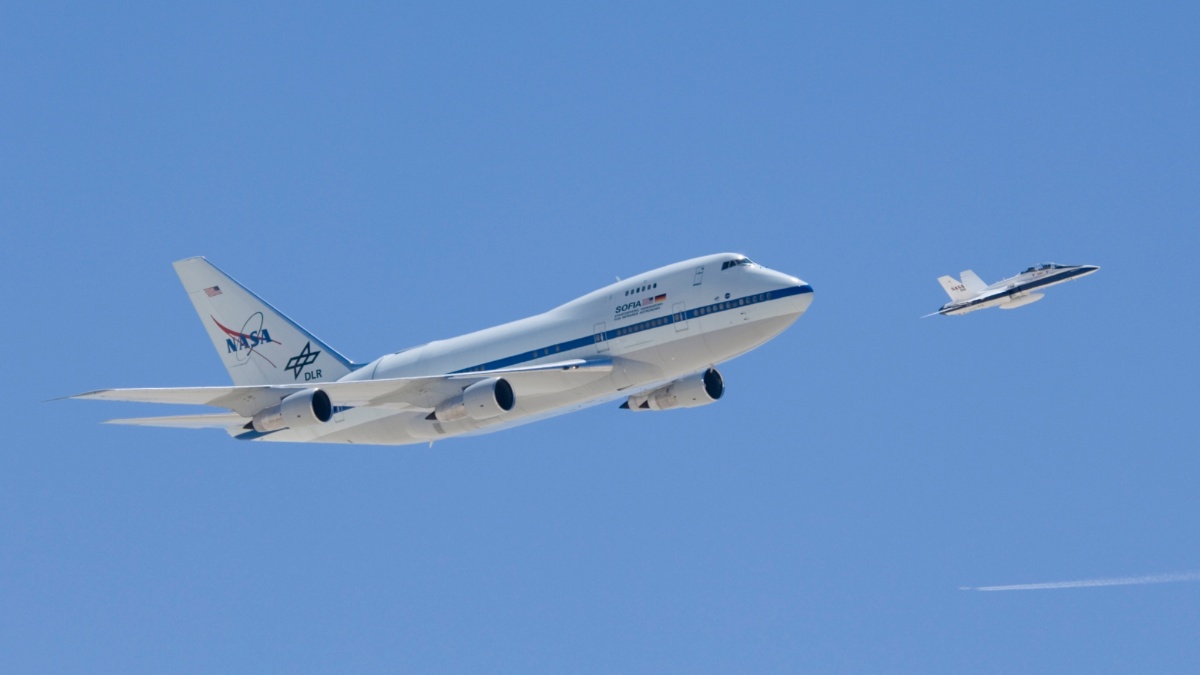
Professor Jörg F. Wagner Professor Wagner holds the Chair of Flight Metrology at the University of Stuttgart's Faculty 6: Aerospace Engineering and Geodesy. His research integrates flight measurement technology, structural dynamics, gyroscopic systems, and experimental mechanics, emphasizing the synergy between theoretical modeling and experimental validation. Key areas of focus include: Aircraft-based astronomy (SOFIA telescope) Historical preservation of gyroscopic instruments Integrated motion measurement for flexible structures Biomechanics and navigation systems Interdisciplinary projects combining mechatronics and space engineering Recent work emphasizes the SOFIA telescope's structural performance optimization, MEMS sensor applications in navigation, and digital preservation of historical gyroscopes via 3D modeling. His team collaborates on large-scale astronomical projects like MICADO for the Extremely Large Telescope (ELT). Scientific contributions span over 25 years, with publications addressing vibration control, inertial technology heritage, and pedagogical innovation in engineering education.
Prof. Dr. Markus Kley is a Professor at Aalen University in the Faculty of Mechanical Engineering and Materials Science, where he serves as the contact person for the Institute for Drive Technology Aalen (IAA). His research and teaching focus on drive technology and waste heat utilization, with a strong emphasis on applied mechanical engineering and system diagnostics. He is actively involved in research projects related to electrified powertrains, condition monitoring, and machine learning applications in mechanical systems. His research interests include vibration analysis, digital twin development, sensor integration, efficiency modeling of electric drive units, and fault detection in electromechanical systems. He applies machine learning and simulation techniques to improve the performance and reliability of drive systems, particularly in off-highway and special vehicles. His work bridges mechanical engineering with data science, focusing on real-world industrial applications. The trend in his recent publications (2019–2022) shows a strong focus on intelligent condition monitoring, using vibration data and machine learning for fault diagnosis in bearings and gearboxes. He also investigates efficiency optimization in electrified transmissions and develops digital twins for motor and drivetrain simulation. His work frequently appears in engineering conferences and journals related to mechanical systems, measurement technology, and applied computing. Prof. Kley collaborates with researchers across Germany and has contributed to numerous peer-reviewed publications and conference proceedings. While no scientific awards are explicitly mentioned, his sustained research output and leadership in projects indicate recognition in his field. He advises students on theses and dissertations and leads research projects in drive technology. His work involves experimental validation, simulation, and industrial collaboration, particularly in the development of advanced drivetrain components and diagnostic systems. He is affiliated with the Institute for Drive Technology Aalen (IAA), which serves as a hub for applied research in mechanical drive systems, partnering with industry to develop innovative solutions in power transmission and energy efficiency.
Pål Halvorsen is a Professor at the Department of Computer Science within the Faculty of Technology, Art and Design at Oslo Metropolitan University. He works at the intersection of computer science and applied domains, with a particular focus on multimedia systems, distributed computing, and healthcare applications. Specializes in distributed multimedia systems Active in AI-driven forensic psychology applications Conducts research on medical imaging and diagnostics Develops sports analytics datasets and tools Works on communication and distributed systems His research spans several key areas of computer science, particularly focusing on multimedia systems and their applications in healthcare, sports analytics, and forensic psychology. He leads projects involving AI-driven child avatars for investigative interview training, develops datasets for medical and sports applications, and explores innovative approaches to image analysis and time-series data processing. Recent publications demonstrate strong activity in applying computer vision and deep learning to medical diagnostics, particularly in gastrointestinal tract analysis and ophthalmology. His work on sports analytics includes creating comprehensive datasets for ice hockey and soccer, while his forensic psychology research focuses on AI-enhanced interview training for child abuse investigations. Halvorsen collaborates extensively across disciplines, working with researchers in psychology, medicine, and sports science. His projects often involve developing novel tools for data analysis, including approaches to multimodal data handling, visual deep learning verification, and AI-enhanced prompt generation techniques.
Ersin Korkmaz is an Associate Professor in the Department of Civil Engineering at Kırıkkale University , specializing in Transportation Engineering . His academic journey includes dual bachelor's degrees from Erciyes University (Electrical and Civil Engineering, 2011-2012), a master's degree in 2016, and a doctorate in 2019. Expertise in optimization algorithms (flower pollination, differential evolution, YOLO-based models) Research focuses on transportation energy demand, smart traffic systems, and UAV-based intersection analysis Developed hybrid AI control systems for signalized intersections Contributor to bibliometric studies in banking and accounting sectors His work bridges civil engineering and computational methods, with recent publications analyzing traffic safety, energy forecasting, and infrastructure optimization. Notable trends include integration of metaheuristic algorithms for transportation modeling and applications of drone imaging in urban mobility.
Arif Tanju Erdem serves as Professor of Computer Science and Vice Rector for Academic Affairs at Ozyegin University, Istanbul. He joined the university in 2009 after 18 years at Eastman Kodak Research Laboratories and as CTO of Momentum, A.S., a digital media technologies company he co-founded. His leadership roles include Dean of the School of Engineering (2014-2018) and Head of Computer Science Department (2012-2014). His academic credentials feature: Ph.D. in Electrical Engineering, University of Rochester (1990) M.S. in Electrical Engineering, University of Rochester (1988) Dual B.S. degrees in Electrical & Electronics Engineering and Physics, Boğaziçi University (1986) Erdem's research centers on digital video processing and computer graphics with expanding applications in computer vision and machine learning. His foundational work in bispectrum analysis and video compression evolved into modern applications including face recognition systems, augmented reality tracking, and sensor fusion. Current investigations focus on overcoming data labeling challenges in biometric systems and developing robust motion tracking solutions for immersive technologies. Analysis of his recent publications (2012-2023) reveals three dominant research trajectories: (1) Advancements in face recognition using curriculum and semi-supervised learning techniques, (2) Precision sensor fusion for augmented reality through IMU-camera calibration and occlusion handling, and (3) Educational technology innovations through gamified learning systems. His work consistently bridges theoretical signal processing with practical implementations in medical monitoring, entertainment, and education. Professional service highlights include ISO-MPEG committee membership (1991-1998), IEEE Signal Processing Society leadership roles across Rochester, Turkey, and Region 8 chapters, and editorial contributions to Signal Processing: Image Communication. He has organized major conferences including the 3DTV Conference (2011) and IEEE Turkey Signal Processing Conference (2012).
Dr. Shlomi Haar is a Senior Lecturer in Cognitive Neuroscience at the University of Surrey and an Honorary Senior Lecturer at the Department of Brain Sciences, Imperial College London. He also serves as the Movement Data and Living Lab Lead at the UK Dementia Research Institute Care Research and Technology Centre since 2023. Education: BSc, Biomedical Engineering (Ben-Gurion University, 2007-2011) MSc, Biomedical Engineering (Ben-Gurion University, 2010-2012) PhD, Brain and Cognitive Sciences (Ben-Gurion University, 2013-2017) Dr. Haar investigates neurobehavioural mechanisms of human movement in health and disease, with a focus on Parkinson's disease (PD) and Deep Brain Stimulation (DBS). His interdisciplinary research bridges engineering, neuroscience, and data science to develop Real-World Motor Neuroscience approaches through: Novel sensor technology Adaptive AI models Ecologically valid motor learning paradigms Digital biomarkers for neurodegeneration Closed-loop therapeutic systems Explainable neural network architectures His recent 2023-2025 publications demonstrate trends in: Applying embodied VR for motor rehabilitation Quantifying cerebellar role in PD Developing AI-driven biomarkers from EEG/fMRI Validating markerless motion capture for clinical use Understanding motor variability in PD and DBS Improving clinical outcome measures for long-term trials Scientific awards include: Royal Society – Kohn International Fellowship (2017-2020) Edmond and Lily Safra Research Fellowship (2020-present) Dr. Haar leads the Haar Lab at Surrey, focusing on: Developing digital biomarkers for motor conditions Integrating robotics and VR in motor rehabilitation Creating adaptive closed-loop therapies for PD Quantifying individual differences in motor learning Translating lab findings to real-world applications Collaborations with Milbotix Ltd and SERG Technologies Ltd
Christian Germain is a Professor of Computer Science at Bordeaux Sciences Agro, an engineering school specializing in agronomy. He focuses on information technologies and their applications to agriculture and environmental science, conducting research in image analysis at the IMS laboratory. His work spans remote sensing, embedded agricultural imaging, and digital tool development for vineyards. Key Roles: Co-holder of the AgroTIC business chair (29 corporate sponsors), Scientific Director of DigiLab (open platform for wine-growing experiments). Research Themes: Remote sensing, agricultural imaging systems, covariance pooling in machine learning, and texture analysis for material science. His recent publications highlight collaborations with industry and academic partners, emphasizing applications in vineyard health monitoring, carbon composite modeling, and vine disease detection. Germain’s team utilizes CNNs, Gaussian mixture models, and SAR imaging techniques to advance agricultural and materials engineering. He has contributed to international conferences and journals, integrating computational methods with real-world agricultural challenges, including proximal sensing for crop management and 3D microstructure simulation.
Mehmet Can Yavuz is an Assistant Professor at Işık University's Faculty of Engineering and Natural Sciences, Department of Computer Engineering. As Principal Investigator of the Multimedia Lab, he bridges machine learning with artistic expression through projects like Arky Multimedia, ConvergedMachine, and Duyukoru. His research spans biomedical imaging, human-computer interaction, and cross-modal analysis of multimedia storytelling. 2019-2023: PhD in Computer Science & Engineering, Sabancı University 2010-2016: MS in Physics, Boğaziçi University 2006-2010: BS in Physics, Işık University 2004-2010: BS in Electrical-Electronics Engineering, Işık University Current research explores: Advanced machine learning architectures (Variational Contrastive Learning, Cross-D Convolution) Biomedical imaging applications for disease detection Computational analysis of dramatic/literary works through graph theory and sentiment analysis AI-driven threat detection systems using sensor fusion Creative technology intersections in multimedia production His lab develops frameworks for: Noisy data processing in semi-supervised learning Cross-dimensional knowledge transfer Ensemble approaches in 2D/3D medical imaging Temporal-sentiment analysis of urban events Document embedding-based character analysis Projects include: ARKY MULTIMEDIA - Combining creative exploration with ML DUYUKORU - Machine learning-enhanced sensor threat detection CONVERGEDMACHINE - Multimodal ML research repository He oversees the Işık University Multimedia Lab , which integrates medical image computing with animation production, pushing boundaries in both scientific and artistic domains.
Dr. Tomislav Medić is a Lecturer and PostDoc at the Department of Civil, Environmental and Geomatic Engineering, ETH Zurich. His research focuses on advanced geospatial technologies, particularly terrestrial laser scanning (TLS) applications in deformation monitoring, sensor calibration, and precision agriculture. MSc in Geodesy and Geoinformation, University of Zagreb, Croatia PhD in Geodesy, Bonn University (IGG), Germany Dr. Medić’s research spans geomatics, remote sensing, and sensor engineering. Key areas include TLS radiometric calibration, point cloud processing for 3D displacement analysis, and multispectral LiDAR applications in agriculture. He contributes to improving geodetic measurement accuracy through innovative calibration strategies. His recent publications emphasize TLS integration with RGB data for geomonitoring (2025), hyperspectral scanning for fruit quality assessment (2024), and calibration field design for panoramic scanners (2023). Articles demonstrate expertise in error modeling, multi-sensor fusion, and environmental monitoring applications. At ETH Zurich’s Geosensors and Engineering Geodesy (GSEG) group, he leads the Alpine Measurement Lab collaboration project. He also participates in PhenoRob, a cluster of excellence in robotics and phenotyping for sustainable crop production at Bonn University.