Martino Banchio is an Assistant Professor at the Department of Economics of Bocconi University and an Affiliate of the Innocenzo Gasparini Institute for Economic Research (IGIER). He concurrently serves as a part-time Research Scientist at Google Research. His work bridges microeconomic theory, market/ mechanism design, and computer science. His PhD thesis earned an honorable mention in the 2023 ACM SIGecom Doctoral Dissertation Award. Research interests focus on market design, industrial organization, and computer science applications in economics. Notable contributions include studies on credible auctions, AI-driven collusion, and dynamic pricing mechanisms. He frequently publishes in top venues like the ACM Conference on Economics and Computation (EC) and the ACM Web Conference (WWW). His awards include the Research Paper Competition at MIT Sloan Sports Analytics Conference 2020 and the Exemplary AI Track Paper Award. His research explores cutting-edge topics such as AI ethics in market design and algorithmic game theory, reflecting a strong interdisciplinary approach. No student advising records are explicitly listed. His work bridges academic theory and industry applications, as seen through collaborations with Google Research and affiliations with leading economic institutes.
Dr. Joanne M Leach is a Research Fellow at the University of Birmingham's Department of Civil Engineering within the School of Engineering. Her work focuses on urban liveability, sustainability, and resilience, emphasizing transdisciplinary collaboration and the science of team science. She holds a PhD in Civil Engineering from the University of Birmingham (2020) and earlier degrees in Design Management (MSc, Salford) and International Business (BSc, Trinity University). Dr. Leach has extensive experience in EPSRC-funded projects, including the Liveable Cities Programme Grant (£6M) and the UK Collaboratorium for Research on Infrastructure and Cities (UKCRIC). Her research integrates infrastructure, urban planning, and wellbeing, with notable contributions to policy consultations, media engagements, and international collaborations. Key projects include the Healthy Low-Carbon Transport Hub (2025–present) and the Road to Net Zero initiative (2024–present). Education: PhD in Civil Engineering, University of Birmingham (2020) MSc (Distinction) in Design Management, University of Salford (2010) BSc (Hons) International Business with Mathematics, Trinity University (1995) Research Interests: Dr. Leach's work bridges urban sustainability, infrastructure resilience, and transdisciplinary methodologies. She develops diagnostic tools to assess urban challenges and communicates findings to policymakers. Her recent focus includes low-carbon transport, net-zero urban systems, and the role of infrastructure in wellbeing. She has contributed to high-impact publications and won awards for her work on urban design creativity and sustainable solutions. Awards: 2015 Reed Mallik Prize for Best Paper in Proceedings of the ICE 2020 Richard Trevithick Fund Prize Advising & Grants: Dr. Leach has led or contributed to over £20M in EPSRC-funded projects, including Liveable Cities (£6M) and Designing Resilient Cities (£3M). She advises on policy commissions, such as Future Urban Living (House of Lords) and National Infrastructure Commission (NIC) projects. Her collaborative networks span over 20 UK universities and 200+ industry/government bodies. Labs & Teams: She is integral to UKCRIC and the Centre for Urban Wellbeing at Birmingham, fostering innovation in urban systems through labs like PLEXUS (UKCRIC Pump-Priming Project) and the Urban Living Birmingham pilot.
Susanne M. Jaeggi is a Professor of Psychology at Northeastern University, with additional affiliations in the Bouve College of Health Sciences and the College of Arts, Media, and Design. Her research focuses on cognitive training, executive functions, and individual differences in cognition across the lifespan. She holds PhDs in Cognitive Psychology and Neuroscience from the University of Bern (Switzerland), and completed postdoctoral work in Cognitive Neuroscience at the University of Michigan. Her work has been funded by NIH, NSF, IES, ONR, and the Advanced Education Research and Development Fund (AERDF). She leads the Working Memory & Plasticity Lab , which develops interventions to improve working memory and executive functions, and co-leads the Brain Game Center for Mental Fitness and Well-Being , creating evidence-based brain fitness tools. Jaeggi’s research emphasizes understanding mechanisms of cognitive improvement through training, including neuroplasticity and individual variability. Key areas include cognitive aging interventions, gamification, sensory-cognitive interactions, and the impact of socioeconomic factors on academic achievement. Her work integrates behavioral experiments, neuroimaging, and digital health technologies to address real-world challenges in education and healthcare. Recent studies explore music/art-based interventions, brain stimulation (e.g., tDCS), and scalable cognitive assessments. Collaborations span disciplines, with publications addressing topics like neural correlates of training, motivational features in interventions, and cross-modal perception. Her labs emphasize translating findings into public-facing tools, such as freely accessible brain fitness apps. Current projects include optimizing interventions for ADHD populations and leveraging digital platforms for global mental fitness.
Kurt Sengul is a Macquarie University Research Fellow (MQRF) in the School of Communication, Society and Culture. He holds a PhD in Media and Communications from the University of Newcastle (2022). His research focuses on media populism, far-right movements, and critical discourse analysis, with projects exploring the nexus between media and far-right politics in Australia. He has taught at the University of Sydney and University of Newcastle, specializing in political communication, social media, and digital cultures. Research interests include far-right communication strategies, media populism's impact on democracy, critical discourse studies, and anti-gender movements. His work examines topics like far-right humor, online radicalization via platforms like X/Twitter Spaces, and the discursive construction of victimhood. He has published in journals such as Critical Discourse Studies , Television & New Media , and Communication Research and Practice . Professional roles include serving as NSW Representative for ANZCA and secretary of APSA’s Queer Caucus. Media engagements include commentary for The New York Times , The Guardian Australia , and The Sydney Morning Herald . His forthcoming monograph Far-Right Populism in Australia (Bloomsbury) explores communication and discourse strategies of Australian far-right groups.
Dongming Xu is an Associate Professor in Business Information Systems at the University of Queensland Business School. She holds a PhD from the City University of Hong Kong in Information Systems and has established herself as a prominent researcher in the field of information systems with over 100 publications in top-tier journals and conference proceedings. Her educational background includes a PhD from City University of Hong Kong in Information Systems, though specific details about earlier degrees are not provided in the available text. Dr. Xu's research focuses on the confluence of information technology use and innovation, with particular emphasis on IT entrepreneurship, social media applications in business contexts, and business intelligence systems. Her work explores how information systems influence society and business performance, with applications spanning disaster management, eFinance, eHealth, and knowledge management. She combines theoretical model building with laboratory and field experiments, often developing prototype systems to validate her research. Her publication record demonstrates consistent high-quality output across multiple domains of information systems research, with recent work emphasizing digital disruption, platform ecosystems, social media in disasters, healthcare technology, and micro-learning applications. Her research shows a clear trajectory from foundational work on intelligent agents and decision support systems toward contemporary topics in digital transformation and platform-based innovation. Associate Editor, Information & Management Associate Editor, Journal of Electronic Commerce Research Associate Editor, Australasian Journal of Information Systems Dr. Xu has supervised numerous PhD students to completion, with research topics spanning digital disruption, IT startup development, social media in disasters, conceptual modeling, and environmental management. She has received multiple research grants, including current funding for 'Empowering Australia's Visual Arts via Creative Blockchain Opportunities' (2023-2026) and past projects on 'Smart micro learning with open education resources' (2018-2022). Her research has been supported by various agencies including the Hong Kong Government Research Grant Council, The National Natural Science Foundation of China, The University of Queensland, and City University of Hong Kong. She leads research in several key areas including IT entrepreneurship, business intelligence systems, and social media applications across multiple domains. Her work often involves developing innovative systems such as web-service-agent-based family wealth management systems, decision support systems for securities exception management, and knowledge management systems for disaster management.
Agnes Lugo-Ortiz serves as Associate Professor of Latin American Literature in the Department of Romance Languages and Literatures at the University of Chicago's Division of the Humanities. Her scholarly profile centers on nineteenth-century Latin American literatures and Caribbean cultural histories within transatlantic frameworks of modernity, with particular emphasis on slavery, visual culture, and archival epistemology. Her educational foundation includes a PhD from Princeton University (1990), followed by teaching appointments at Northwestern University and Dartmouth College before her tenure at Chicago. Her research trajectory examines cultural politics through lenses of national identity formation, anti-colonial projects, and diasporic community reconfigurations, notably through decades of affiliation with the Recovering the U.S. Hispanic Literary Heritage Project. Lugo-Ortiz's current book project "The Plantation Gaze: Slavery and Visual Culture in Colonial Cuba (1727–1886)" interrogates the imbrication of visual culture with plantation slavery, analyzing diverse artifacts from religious performances to medical treatises. Her co-edited volume "Slave Portraiture in the Atlantic World" and co-founding of the Working Group on Slavery and Visual Culture (2016) demonstrate her leadership in visual studies of enslavement, recently expanded through the digital exhibit "Palimpsests: Visual Idioms of Enslavement in the Nineteenth-Century and Their Afterlives". Her scholarly impact is recognized through awards including the Latin American Studies Association Prize for Best Essay in Nineteenth-century Studies and the Premio Alejandro Tapia y Rivera. Prestigious fellowships from Ford Foundation, Mellon Foundation, Franke Institute, and Clark Art Institute have supported her research. As co-founder and co-editor of the anti-colonial digital journal "Categoría Cinco. Revista de Política y Cultura", she actively engages Puerto Rican decolonial politics. Her editorial service spans PMLA and University of New England Press publications, while advisory roles include the Recovering the US Hispanic Literary Heritage Project and Hemispheric Institute of Performance and Politics. She maintains robust institutional engagement through affiliations with Chicago's Center for Latin American Studies, Center for Gender and Sexuality Studies, and Center for Race, Politics, and Culture.
Mimi O'Neill is a Senior Lecturer in Music at the University of Lincoln and an Associate Lecturer at the University of York, where she serves as Programme Leader for the MA Music, Marketing and Management. She holds a PhD in Music Psychology (2022) from the University of York, specializing in the social dynamics of live music audiences. Her research focuses on music psychology, emotion, empathy, and quantitative methods, particularly exploring intra-audience effects in classical concerts and digital music experiences. Education: PhD (Music Psychology, University of York, 2022), MA (Music: Music Psychology, University of York, 2017), BA (Music, University of York, 2016). Research contributions include work on audience behavior in live concerts, music listening during the pandemic, and empathy’s role in emotional responses to music. She co-led the Experimental Concert Research and Digital Concert Experience projects, funded by the Volkswagen Foundation. Awards include the Vice-Chancellor’s teaching award (2020). Teaching: Leads undergraduate modules like Introduction to Music Psychology and postgraduate courses on music performance psychology and market research. She directs the York Music Psychology Group and previously led the MA Music Psychology pathway.
Emily Chiang is a researcher at Aston University’s Aston Institute for Forensic Linguistics , part of the Communication and Culture faculty. She holds a PhD (2019) and MA (2016) from Aston University, focusing on rhetorical move analysis in forensic contexts, and a BA from Oxford Brookes University (2009). Her work examines linguistic expressions of identity in online criminal spaces, including dark web communities and self-styled ‘paedophile-hunting’ groups. She employs tools like speech act theory to inform law enforcement strategies, with a focus on language variation over time. Education: PhD: Rhetorical Moves and Identity Performance in Online Child Sexual Abuse Interactions (Aston University, 2019) MA: Chatroom Groomers as Discourse Communities (Aston University, 2016) BA: Oxford Brookes University (2009) Research Interests: Chiang’s research bridges forensic linguistics and criminology. She analyzes how offenders and vigilante groups construct identity digitally, including dark web criminal communities, paedophile-hunting groups, and linguistic shifts in offender interactions. Her work aims to enhance undercover police practices through linguistic insights. Recent Trends in Publications: Her recent work emphasizes dark web offender identity dynamics, linguistic strategies in membership requests, and forensic applications of language stability analysis. She also critiques discourses in the seduction industry and vigilante group rhetoric. Awards and Grants: None explicitly listed. Labs/Teams: Active within the Aston Institute for Forensic Linguistics. Collaborations include researchers on child sexual abuse discourse and digital forensic analysis.
Likoebe Maruping is a Professor of Computer Information Systems and Director of the Ph.D. program at Georgia State University's J. Mack Robinson College of Business. He is a member of the Center for Digital Innovation and serves as a senior editor for MIS Quarterly , having previously held editorial positions at Information Systems Research and the Journal of the Association for Information Systems . Previously, he taught at the University of Arkansas and the University of Louisville. Education: Ph.D. in Information Systems, University of Maryland, Robert H. Smith School of Business B.S. in Information Systems, University of Maryland, Robert H. Smith School of Business B.S. in International Business, University of Maryland, Robert H. Smith School of Business Maruping's research spans digital innovation , open source software development , agile methodologies , and team collaboration in dispersed settings . His work explores how leadership styles, particularly empowering leadership , can mitigate stress and improve performance in software development teams. He examines governance in digital platform ecosystems and investigates the relationship between digital technologies and social justice, as evidenced by his 2024 MIS Quarterly special issue contribution. His research often employs multilevel analysis approaches to connect micro and macro phenomena in information systems. Maruping's recent publications reveal a strategic shift toward examining AI innovation frameworks, platform ecosystem governance, and the social implications of technology. His 2025 work on AI innovation contrasts with traditional IT innovation through patent analysis, while his research on digital skill visibility in open source communities demonstrates practical applications of theoretical frameworks. These publications consistently bridge academic rigor with practical business implications. Editorial Recognition: Senior Editor, MIS Quarterly Former Associate Editor, Information Systems Research Former Associate Editor, MIS Quarterly Former Senior Editor, Journal of the Association for Information Systems As Ph.D. program director and former CIS department Ph.D. coordinator, Maruping has advised numerous doctoral students. His leadership extends to strategic program development, curriculum innovation, and enhancing recruitment of diverse doctoral candidates. He frequently leads workshops on multilevel theorizing, as evidenced by his 2023 workshop at Hong Kong Baptist University. His research has been supported through collaborations with major institutions and has influenced both academic discourse and industry practices in information systems management. Maruping is actively engaged with the Center for Digital Innovation at Robinson College of Business, which serves as his primary research hub. His work often involves cross-institutional collaborations with researchers from leading universities worldwide, reflecting the global nature of contemporary information systems research.
John Wawrzynek is a Professor of Electrical Engineering and Computer Sciences at the University of California, Berkeley. He is affiliated with the Department of Electrical Engineering and Computer Sciences in the College of Engineering and serves as Co-Director of the Berkeley Wireless Research Center and Co-PI of the CONIX Research Center, one of the six centers in the Joint University Microelectronics Program sponsored by DARPA. Dr. Wawrzynek received his B.S. in Electrical Engineering from SUNY, Buffalo (1977), M.S. in EE from the University of Illinois, Urbana/Champaign (1979), and Ph.D. in Computer Science from Caltech (1987). Before joining the Berkeley faculty in 1988, he worked as a consultant at Schlumberger Palo Alto Research. His research focuses on Computer Architecture, Reconfigurable Computing, Wireless Systems, and Integrated Circuit and System Design . His work spans both theoretical foundations and practical implementations, with particular emphasis on FPGA-based computing systems, reconfigurable architectures, and wireless communication systems. His research group has made significant contributions to the field of reconfigurable computing, including the development of the Garp architecture and various tools for reconfigurable computing systems. Analysis of his recent publications (2022-2025) reveals continued focus on reconfigurable computing, FPGA design, wireless networking, and formal methods for hardware verification. His work shows an evolution from traditional computer architecture towards specialized hardware acceleration, machine learning for EDA, and wireless systems research, with particular emphasis on SAT sampling, differentiable computing, and efficient FPGA implementation of neural networks. DAC's Most Influential Paper Award (2025) NSF Presidential Young Investigator (PYI) (1989) Charles Lee Powell Fellowship (1985) NASA Certificate of Recognition (1983) Rensselaer Engineering and Science Medal (1975) Professor Wawrzynek has advised numerous graduate students throughout his career, many of whom have gone on to prominent positions in both industry and academia including Google, Xilinx, and MIT Lincoln Laboratory. His research has been supported by various grants from NSF, DARPA, and industry partners. He leads the Berkeley Wireless Research Center, which focuses on next-generation wireless communication systems and technologies, and is actively involved in the CONIX Research Center which explores connected intelligence at the network's edge.
Karina Gibert is a Full Professor at Universitat Politècnica de Catalunya (UPC), specifically at the Faculty of Computer Science of Barcelona (FIB) in the Department of Statistics and Operations Research. With a permanent teaching position since 1990, she contributes to research and education with a focus on Data Science, Artificial Intelligence, Explainable AI, and Ethics in AI. Full Professor, UPC (since 1990) PhD in Informatics Engineering Postgraduate in Higher Education Teaching Director and co-founder of IDEAI research center Dean of the Official Professional College on Informatics Engineering of Catalonia Active in bridging the gender gap in STEAM through multiple initiatives Her research focuses on extracting strategic knowledge from data and intelligent systems with ethical and explainable perspectives. She has led various projects including Diet4You for personalized diets, INSESS-COVID19 for social vulnerability analysis, Top Rosies Talent for female AI development, and ciutadanIA for AI culture promotion. Her work spans health, environment, sustainability, tourism, and social technology applications. As an editor of Environmental Modeling and Software journal and active academic, she contributes to international conferences, working groups, and research collaborations. Her service includes membership on various ethics and AI strategy committees and advisory boards. Women Tech Award 2023 National Informatics Engineering Award in Digital Dissemination 2022 Ada Byron Award 2022 Honorific Mention of Creu Casas award 2021 donaTIC 2018 Award Finalist at AMETIC Awards 2021 Finalist of European Social Services Awards 2021
Shiri Azenkot is an Associate Professor of Information Science at the Jacobs Technion-Cornell Institute, Cornell Tech, Cornell University, where she directs the Enhancing Ability Lab. She also serves as an affiliate faculty member in the Computer Science Department at the Technion--Israel Institute of Technology. Her research leverages artificial intelligence to design enabling systems that promote equity and improve quality of life for marginalized populations, with a current focus on visual impairments. Her educational background includes a PhD in Computer Science & Engineering from the University of Washington, advised by Richard Ladner and Jacob Wobbrock. Azenkot's research centers on intelligent interactive systems that enhance perception and ability for people with disabilities. She investigates perceptual abilities and behaviors to design novel systems for navigation, STEM learning, and socialization. Her work spans accessibility, human-computer interaction, and the application of AI/XR technologies to create inclusive solutions for blind and low-vision populations, addressing critical gaps in assistive technology. Recent publications reveal strong trends in developing real-time AI-powered assistive tools for low-vision users, accessible STEM education through tactile interfaces, and examining social dynamics of disability in digital spaces. Her work bridges technical innovation with deep user-centered design, particularly in XR accessibility through co-founded initiatives like XR Access. Scientific awards include: NSF CAREER Award NSF CRII Award 10-year Impact Award at MobileHCI Google Faculty Award Azenkot has advised students including Yuhang Zhao (now Assistant Professor at University of Wisconsin-Madison), Lei, and Danielle. Her research is funded by NSF, AOL, Verizon, and Facebook. She co-founded XR Access and leads the Enhancing Ability Lab, which conducts user studies and develops systems like Markit/Talkit and Livefonts. Current projects include XR accessibility REU programs and symposiums advancing industry-academia collaboration. She directs the Enhancing Ability Lab at Cornell Tech and co-leads XR Access, driving community initiatives to make augmented/virtual reality accessible while mentoring the next generation of accessibility researchers through funded REU programs and industry partnerships.
Natalia Villanueva-Nieves is an Assistant Professor in the Department of Chicana and Chicano Studies at Sonoma State University. Her interdisciplinary scholarship bridges literary studies, affect theory, and digital humanities, with a focus on Latinx, Chicanx, Central American, and Caribbean expressive cultures. Her academic background includes a doctoral degree in Chicana and Chicano Studies from the University of California, Santa Barbara, and a master’s in Comparative Literary Studies from Utrecht University. Dr. Villanueva-Nieves' research explores Latinx emotional geographies, transnational feminisms, hemispheric race studies, and digital storytelling. She investigates how affect, space, and racialization intersect in Latina narratives, particularly through relational and hemispheric frameworks. Her work emphasizes collective archives of care and hope in Latinx testimonial writing. Her recent publications reflect a strong trend toward interdisciplinary and public-facing scholarship, combining literary analysis with digital tools and social justice engagement. The articles span themes such as affective spaces, digital archives, transnational feminisms, and geocritical approaches to Latinx literature. Her scholarly work has appeared in Chiricú Journal , Ex-Centric Narratives Journal , Zócalo Public Square , American National Biography , Aztlán: A Journal of Chicano Studies , and edited volumes from UNAM and the University of Alcalá de Henares. Dr. Villanueva-Nieves is currently developing a digital monograph that uses interactive maps and digital storytelling to present Latinx testimonial writing as living archives. She is also completing her book The True Colors of Feeling Brown: Affect and Space in Latina Narratives , under contract with Palgrave in the Geocriticism and Spatial Literary Studies series.
Darshana Sreedhar Mini is an Assistant Professor in the Department of Communication Arts at the University of Wisconsin–Madison, where she teaches and conducts research at the intersection of feminist media, gender & sexuality studies, transnational media, migrant media, and South Asian screen cultures. She is also the Director for Media and Gender Justice at the 4W Initiative and holds affiliations with the Center for Southeast Asian Studies, Gender and Women’s Studies, Center for Visual Cultures, Center for South Asia, and the Havens Wright Center for Social Justice. Ph.D., Division of Cinema and Media Studies, University of Southern California M.Phil., Center for Studies in Social Sciences, Calcutta (CSSSC), India Dr. Mini’s research centers on Global Media Cultures, Transnational Cinemas and Migration, South Asian Cinema, and Feminist Media. Her work critically examines soft-porn cinema in India, media publics, censorship, labor in the entertainment sector, and migrant media practices. Her first book, Rated A: Soft-Porn Cinema and Mediations of Desire in India (UC Press, 2024), is a groundbreaking study that combines archival and ethnographic methods to explore the social and cultural impact of Malayalam soft-porn from the 1970s to the 2000s. Her second book project, Telegeographies of Indian Migration , investigates media flows between South Asia and Southeast Asia, focusing on colonial-era labor migration and its lasting effects on identity and community formation. Her recent publications span a diverse range of topics including South Asian pornographies, digital intimacy, anti-caste activism, #MeToo and intersectional feminism, transnational empathy in cinema, and media infrastructures. These works reflect a strong trend toward interdisciplinary, feminist, and decolonial scholarship that challenges dominant canons in film and media studies. Edward Cameron Dimock, Jr. Prize in the Indian Humanities, AIIS, 2024 Early Career Award, NCA, 2024 Race, Ethnicity and Indigeneity Fellow, IRH, UW-Madison, 2024 Byerly Award for Feminist Political Economy, ICA, 2023 First Book Award, The Center for Humanities, UW-Madison, 2022 SCMS Student Writing Award, 2017 Dr. Mini has been actively involved in academic service and leadership, including directing the Media and Gender Justice initiative, co-organizing seminars on migrant media, and contributing to feminist and anti-caste scholarship. Her research has been supported by prestigious grants from the Social Science Research Council (SSRC), American Institute of Indian Studies (AIIS), National Endowment for the Humanities (NEH), and the University of Wisconsin–Madison. She also leads a significant grant-funded project as Principal Investigator for the 'South Asian Film and Media Collection' at UW-Madison. She is a key member of several collaborative research environments, including the Center for Visual Cultures and Performance Studies (CVCPS), the Wisconsin Center for Film and Theatre Research (WCFTR), and the 4W Initiative, where she directs programming on media and gender justice. These affiliations reflect her commitment to interdisciplinary, socially engaged scholarship and the creation of inclusive academic communities.
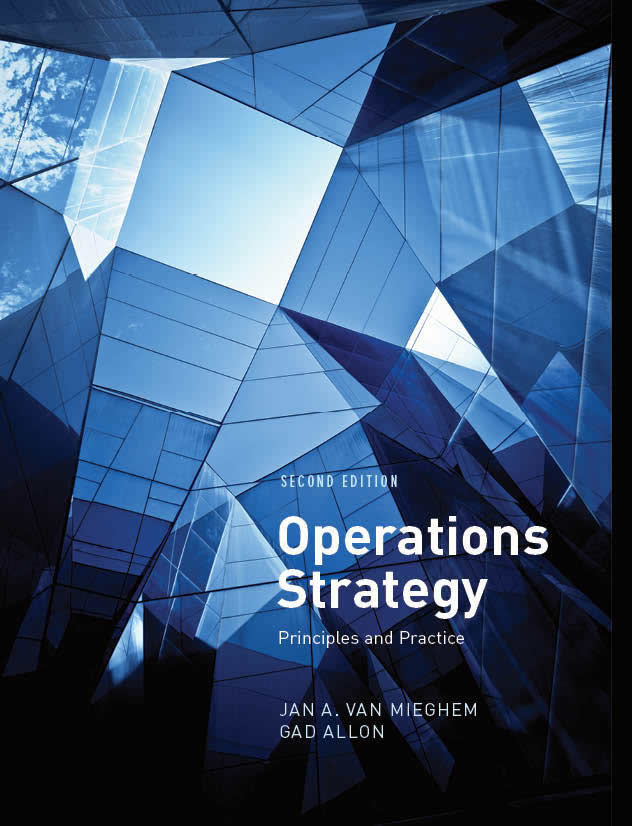
Jan A. Van Mieghem is the A. C. Buehler Professor and Professor of Operations at the Kellogg School of Management, Northwestern University. He also serves as a Professor by Courtesy at the McCormick School of Engineering and Applied Science. His research spans product, service, and supply chain operations, combining strategic and tactical perspectives with mathematical modeling, stochastic analysis, and empirical verification. Ph.D. in Business, Graduate School of Business, Stanford University (1995) MS in Electrical Engineering, Stanford University (1990) MS in Applied Sciences, KU Leuven, Belgium (1989) His research interests focus on operations strategy, supply chain optimization, and digital operations. He explores topics such as operational hedging, capacity investment, network flexibility, and the application of AI in inventory management. His work addresses healthcare operations, dual sourcing, and the interplay between collaboration and productivity in service networks. Recent research trends center on AI-driven inventory systems, dual sourcing under uncertainty, and healthcare resource allocation. He has authored over 60 academic articles and two textbooks: Operations Strategy: Principles and Practice and Managing Business Process Flows: Principles of Operations Management . 2023: First place in POMS College of Supply Chain Management Student Paper Competition 2020: Flexibility Excellence Award 2014: Wickham Skinner Award 2007: First MSOM Best Paper Award Van Mieghem has held leadership roles at Kellogg, including Deputy Dean (2023–present), Faculty Director of the Executive MBA program (2012–2017), and Chairman of the Department of Managerial Economics and Decision Sciences (2006–2009). He advises firms on operations strategy and management and has served on editorial boards of Management Science , Manufacturing & Service Operations Management , and Operations Research . He has mentored numerous Ph.D. students, including Audrey Bazerghi, Simrita Singh, Yangzi Jiang, and Dennis J. Zhang, who have secured academic and industry positions. His teaching spans operations management and strategy across MBA, Ph.D., and executive programs. Van Mieghem's work examines the intersection of operations strategy and execution, emphasizing financial value as a guiding metric. His empirical studies leverage real-world data from healthcare, manufacturing, and e-commerce to validate theoretical models and develop practical frameworks.