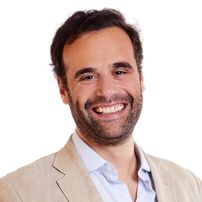
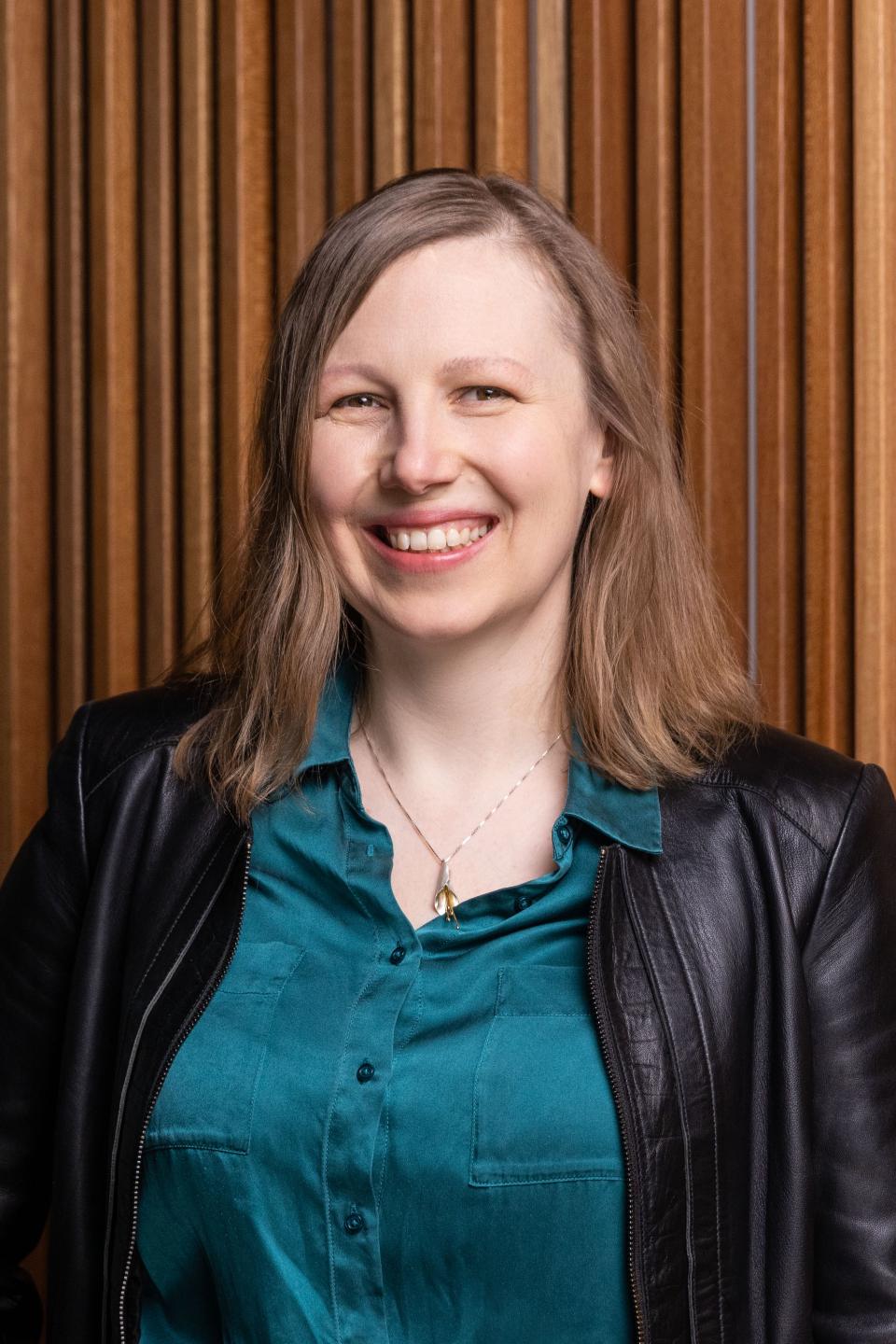
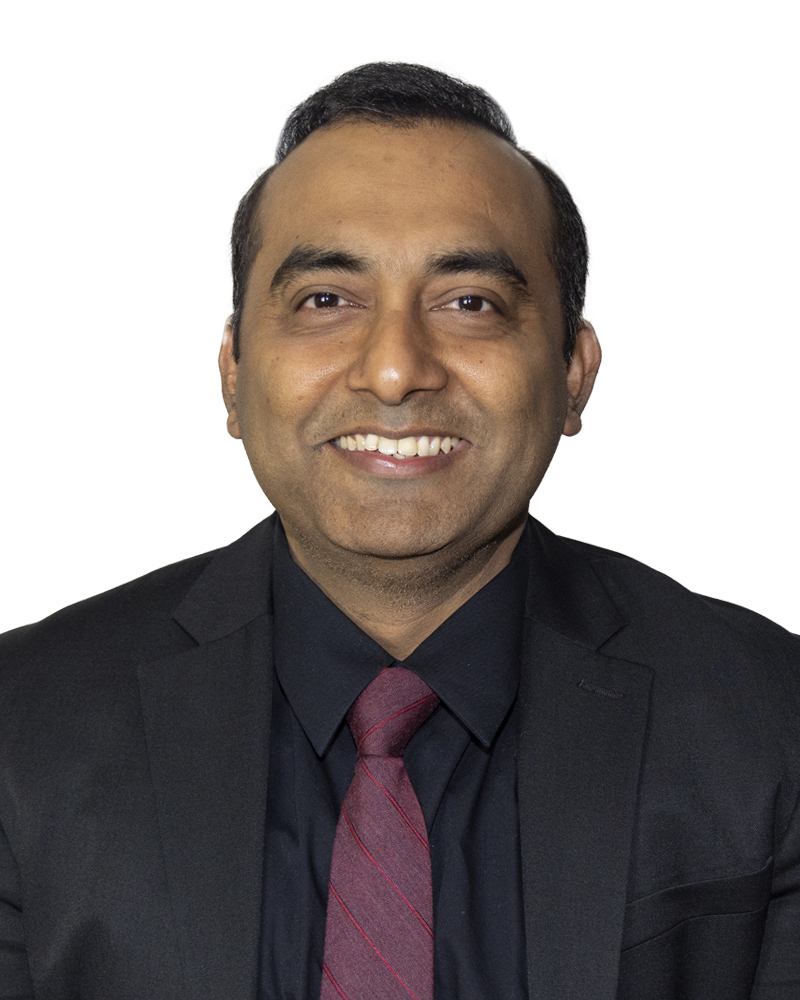
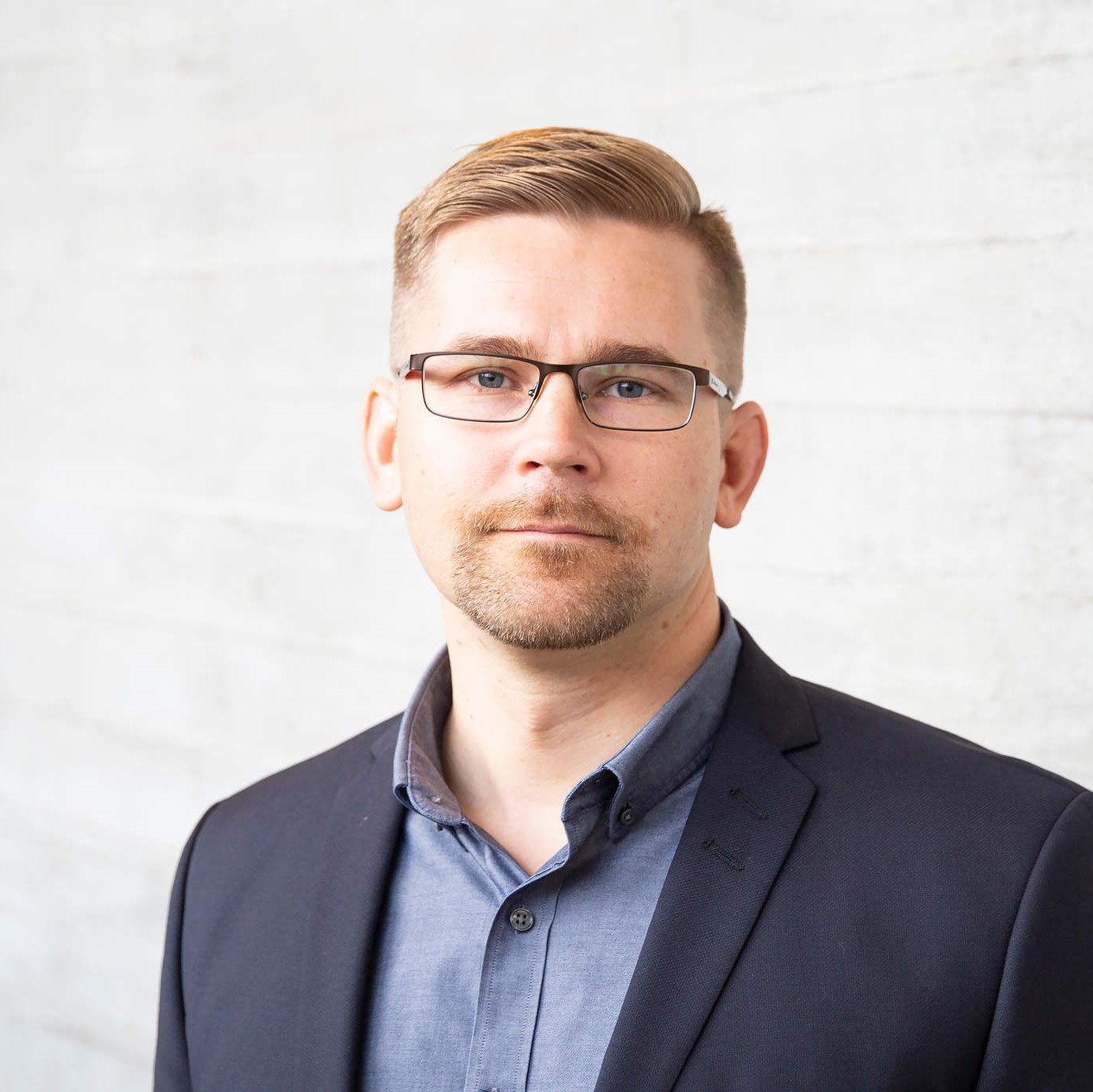
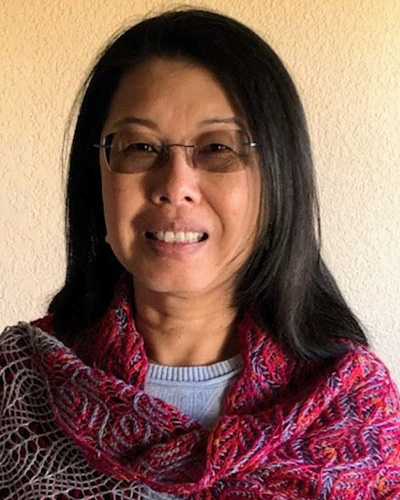
Felipe Pathé Duarte is an Assistant Professor at NOVA School of Law and Deputy Director of CEDIS, with expertise in Peace, Justice, and Security . He coordinates the Master's program in Law and Security and co-founded the NOVA War & Law Lab. His roles span academic, policy, and consultative domains, including positions at the European Commission's Knowledge Hub, UNODC, Council of Europe, and RTP television. PhD in Political Science and International Relations (Catholic University of Portugal) Master's in Cybersecurity and Governance (Catholic University of Portugal) Bachelor's in Political Science and International Relations (Catholic University of Portugal) Bachelor's in Philosophy (University of Coimbra) His research focuses on political violence , subversion , violent non-state actors , and the geopolitical implications of extremism . Recent articles address hybrid threats , disinformation campaigns , and social media radicalization . He has authored monographs on global jihadism and violent extremism in Portugal. Fulbright fellowship in the US National Security Policymaking program of the U.S. Department of State Duarte leads public policy reports on hybrid threats , radicalization , and international security , collaborating with institutions like CEPOL and the Higher Institute of Police Sciences and Internal Security.
Aliosha Alexandrov is a Professor of Marketing in the Department of Marketing at the College of Business, University of Wisconsin Oshkosh. He maintains an active role in institutional governance through committees including the Technology Steering Committee (2011-present), Globalization Committee (2015-2023), and COB Council (2017-2023), while advising the Marketing Club since 2013. His educational foundation includes a BS from the Technical University of Sofia, Bulgaria, and both an MS and Ph.D. from the University of Memphis (2007). Professor Alexandrov's research spans consumer behavior , brand management , and word-of-mouth dynamics , with notable investigations into brand interestingness, humor in environmental advertising, and retail adaptation to online competition. His work frequently employs contingency frameworks to examine how contextual factors like employment status or environmental uncertainty moderate marketing outcomes. Recent publications reveal a strong focus on digital transformation (QR code adoption, network analysis of WOM) and service management (CRM success, frontline employee concerns), while maintaining consistent exploration of brand-customer relationships across diverse contexts from city branding to event management curricula. As an academic contributor, he serves as a journal article reviewer for major publications and evaluates faculty development grant proposals for UW Oshkosh. His committee work demonstrates sustained engagement with technology integration, globalization initiatives, and business school strategic planning. Professor Alexandrov actively bridges theory and practice through consulting with the Business Success Center since 2015 and shaping curriculum development through his research on value co-creation in event management education.
Anna Wilbik is a Professor in Data Fusion and Intelligent Interaction at the Department of Advanced Computing Sciences, Faculty of Science and Engineering, Maastricht University (The Netherlands). Her research bridges data understanding and human-machine synergy in complex systems, focusing on multi-criteria decision making, explainable AI, and data fusion techniques. PhD in Computer Science (with honors), Systems Research Institute, Polish Academy of Science (2010) Postdoctoral Fellow, University of Missouri (2011) Stanford University TOP500 Innovators Program Alumnus Research Pillars: Intelligent human-machine interaction for joint decision making Data fusion methods for heterogeneous data integration Contextualized multi-criteria decision frameworks Fuzzy logic and linguistic summaries for explainability Federated learning systems Article Trends: Recent work focuses on intuitionistic fuzzy sets for knowledge-intensive processes, federated learning with uncertainty handling, and linguistic summarization techniques for interpretable AI. She actively explores explainability , collaborative business models , and driver behavior analysis through attention-based models. Professional Leadership: Vice-chair of IEEE Fuzzy Systems Technical Committee Organizer of IEEE World Congress on Computational Intelligence (2024)
Stefan Wildermann is a Professor at Friedrich-Alexander-Universität Erlangen-Nürnberg (FAU), where he leads the Reconfigurable Computing Group within the Chair of Computer Science 12 (Hardware-Software Co-Design) in the Department of Computer Science. He has maintained continuous research activity at FAU since 2006, progressing from researcher to his current leadership position. Dr. Wildermann earned his Diploma degree in Computer Science from FAU in 2006 and completed his doctorate (Dr.-Ing.) in Computer Science at the same institution in July 2012. His academic career has been entirely rooted at FAU, demonstrating a strong institutional commitment and progression through the ranks. His research spans multiple cutting-edge areas in computer science and engineering, with particular emphasis on reconfigurable systems and hardware-software co-design. Wildermann's work in edge computing explores efficient processing at the network periphery, while his research in organic computing investigates self-organizing systems that can adapt to changing environments. His expertise extends to optimization techniques for embedded systems, applying game theory principles and convex optimization methods to solve complex resource allocation problems. More recently, he has integrated reinforcement learning approaches to enhance system adaptability and performance. His teaching portfolio includes courses on event-driven systems, computer engineering fundamentals, embedded systems, and hardware-software co-design. Analysis of Wildermann's publication record from 2021-2025 reveals a strong focus on hardware acceleration, security, and embedded systems. His work demonstrates consistent evolution from foundational research in reconfigurable architectures toward practical applications in IoT, robotics, and secure computing. A significant portion of his recent work addresses near-data processing using FPGAs for database acceleration, while maintaining parallel research streams in side-channel security analysis and energy-efficient embedded systems design. His publications frequently appear in top-tier conferences including DATE, FPL, ASP-DAC, and HOST, reflecting strong recognition within the computer architecture and embedded systems communities. Wildermann has held significant leadership roles including Head of the Reconfigurable Computing Group since 2015 and previously served as Head of the Self-organizing Systems Group (2012-2015) and Lab Leader of the Automotive Lab within the Embedded Systems Initiative (2016-2020). His research has been consistently funded through multiple projects investigating invasive computing, reconfigurable architectures, and embedded systems design methodologies. Currently based in Room 02.116 at Cauerstr. 11, 91058 Erlangen, Wildermann continues to lead active research in the Hardware-Software Co-Design group, supervising projects that bridge theoretical computer science with practical hardware implementation challenges.
Priyanko Guchait is a tenured Full Professor and Program Director of the Doctorate in Global Hospitality Leadership (DGHL) at the Conrad N. Hilton College of Global Hospitality Leadership , University of Houston. His research focuses on organizational behavior, leadership, human resources, and service management in hospitality contexts, with over 75 peer-reviewed articles published. Education: B.E. in Mechanical Engineering, University of Pune, India M.S. in Hospitality Management, University of Missouri M.S. in Human Resources and Employment Relations Ph.D. in Hospitality Management, The Pennsylvania State University Research Interests include error management culture, psychological safety, service recovery performance, leader behavioral integrity, and AI’s impact on hospitality workers’ mental health. His work examines shame, forgiveness climate, and team dynamics in service environments. Article Trends show a focus on multi-level error management, human-robot collaboration in service recovery, diversity inclusion climates, and cross-cultural leadership studies. Recent papers explore AI ethics, pandemic response strategies, and emotional labor in hospitality roles. Awards & Honors Stephen Rushmore/HVS Research Excellence Award (2023, 2015) Donald Greenaway Excellence in Research, Teaching, and Service Award (2022) Best Paper Award, The Service Industries Journal (2023) ICHRIE Faculty Collegiality Award (2021) ICHRIE McCool Breakthrough Award (2021) Honored as 50-in-5 Scholar (2021) Provost’s Excellence Award (2015) Best Reviewer Awards (IJCHM 2016-2017) Committee & Editorial Roles include Associate Editor of IJCHM, Coordinating Editor of IJHM, and leadership positions at ICHRIE (President 2020-2021, Vice President 2019-2020). He has served on university curriculum, research, and Ph.D. selection committees.
Dr. Zilong Wang is a Senior Research Associate at the Department of Land Economy, University of Cambridge . His academic work focuses on the intersection of corporate finance, asset pricing, and real estate finance. Key Research Areas: Corporate Finance, Asset Pricing, REITs, Real Estate Valuation, Real Estate Fund Performance Funding Bodies: EPRA, IPF, INREV, ANREV His research explores sustainability in institutional investment practices, housing wealth effects on financial behavior, sovereign debt dynamics, and environmental justice. Current projects analyze green credit policies, pension fund strategies, and CSR in post-pollution recovery. Notable publication trends include: 2025: Sustainable finance, housing market constraints 2024: IMF programs, sovereign debt rescheduling 2023: Distress risk anomalies, REIT expansion strategies 2020-2022: Cryptocurrency portfolios, Asian real estate funds He teaches RM02 - Further topics in quantitative methods and maintains affiliations with the Cambridge Real Estate Research Centre .
Dharanidhar Dang serves as Assistant Professor in the Department of Computer Engineering at the College of AI, Cyber and Computing, The University of Texas at San Antonio (UTSA), where he advances hardware-centric artificial intelligence solutions through photonic and memristor technologies. Education Ph.D., Texas A&M University His research program bridges hardware innovation and biomedical applications, with primary focus on photonic computing architectures for real-time AI acceleration and memristor-based neuromorphic systems. He investigates critical challenges in hardware reliability (particularly degradation in memristor crossbars), energy efficiency in photonic accelerators, and co-design methodologies that optimize both algorithms and physical implementations. His biomedical work applies machine learning to macrophage biology, identifying predictive signatures for inflammatory diseases through computational immunology approaches. Analysis of his 2020-2025 publications reveals three dominant research trajectories: 1) Silicon photonic accelerators (P-ReTI, P-ReTiNA, SOFTONIC) targeting real-time and energy-efficient AI, 2) Memristor reliability frameworks addressing aging effects in deep learning hardware, and 3) Translational biomedical applications where machine learning deciphers macrophage behavior in inflammatory bowel disease and preterm infant lung conditions. This tripartite focus demonstrates exceptional versatility across hardware engineering and life sciences.
Kevin Hong is a Professor and Miami Herbert Centennial Endowed Chair at the University of Miami's Miami Herbert Business School , where he also serves as Associate Dean for Research. His work focuses on information systems and digital platform design. Current roles: Professor, Centennial Endowed Chair, Associate Dean for Research Email: yxh1034@miami.edu ORCiD: 0000-0002-0577-7877 Research Interests: Kevin Hong's work explores digital privacy, user engagement, and behavioral economics across online platforms. His studies examine: Temporal cues in online learning environments Privacy-enhancing designs in dating applications AI implementation in customer service Content generation incentives in knowledge platforms Labor dynamics in gig economy marketplaces Publication Trends: Recent studies demonstrate expertise in field experimentation, behavioral analytics, and platform economics. Key methodologies include: Randomized controlled trials Difference-in-differences modeling Large-scale observational studies
Nina Huang is a Professor in the Business Technology Department at the Miami Herbert Business School, University of Miami. Her research spans the intersection of information systems, digital platforms, and human behavior in online environments. Her primary research interests include Human-AI Interaction, Online Education and Knowledge Exchange, Online Matching Platforms, Online Healthcare, Future of Work, Social Media Analytics, Digital Commerce, and Online Content Platforms. Dr. Huang employs experimental methods to investigate how digital design features impact user behavior across various online contexts including dating platforms, labor markets, e-commerce, and healthcare systems. Analysis of Dr. Huang's recent publications reveals a strong focus on human-centered design of digital platforms, with particular attention to temporal cues in online learning, privacy-enhancing designs in social platforms, AI implementation in customer service, and information disclosure mechanisms in matching markets. Her work consistently combines rigorous experimental methodologies with practical implications for platform design. Dr. Huang's research has been published in top-tier information systems and operations management journals including Information Systems Research, MIS Quarterly, and Production and Operations Management. Her work demonstrates a pattern of impactful field experiments conducted in partnership with real-world platforms across multiple industries.
Bogdan Iancu is a University Lecturer in the Department of Information Technology at the Faculty of Science and Engineering, Åbo Akademi University. He holds a PhD and Docent qualification in Computer Science, with extensive expertise in artificial intelligence and computer vision applications, particularly in the maritime domain. His academic career spans numerous research projects and publications that bridge theoretical AI concepts with practical industry applications. Dr. Iancu's research focuses on AI applications in maritime technology, with special emphasis on object detection systems, security challenges in AI models, and sustainable technological solutions. He has developed benchmark datasets like ABOships and ABOships-PLUS that have become valuable resources for researchers in maritime computer vision. His work addresses critical challenges including adversarial attacks on object detection systems, as evidenced by his 2025 publication on TOG Adversarial Attacks in YOLO Models. The analysis of his recent publications reveals a clear progression from foundational dataset creation to advanced security analysis and neurosymbolic approaches that combine neural networks with symbolic reasoning. His research shows increasing sophistication in addressing real-world challenges in maritime AI systems, with particular attention to robustness, security, and practical implementation. Dr. Iancu actively participates in numerous research projects including EDISS (Engineering of Data-intensive Intelligent Software Systems), SMARTER (Sea4Value Smart Terminals), and DECATRIP (Decarbonizing Transport Corridors). These projects involve collaboration with industry partners across Finland and Europe, focusing on applying AI to solve real-world challenges in maritime transport, digitalization, and sustainability. He has contributed to the academic community through teaching courses in Artificial Intelligence, Data Science, and Graph Algorithms, and through active participation in the Finnish Artificial Intelligence Society. His work aligns with UN Sustainable Development Goals, particularly those related to industry innovation, infrastructure, and climate action through projects like DECATRIP that focus on decarbonizing transport corridors.
Jukka Sihvonen is an Assistant Professor at the Department of Accounting, Aalto University School of Business. His expertise spans financial accounting, digital transformation, and artificial intelligence in finance. He teaches and supervises master’s and doctoral programs in financial accounting, Big Data, and business technologies, and contributes to executive education. PhD in Finance (University of Vaasa, 2013) Visiting scholar at Norwegian School of Economics, Copenhagen Business School, Umeå University, Goethe University, European Central Bank, and Bank of Finland His research interests focus on digital transformation in accounting, AI applications, climate risk disclosures, cybersecurity, and servitization in business models. Recent publications address rare earth investments, LGBTQ+ policies, audit digitalization, and supply chain leadership. His 15 most recent articles highlight interdisciplinary trends in AI-driven finance, ESG compliance, and digital risk management. Key journals include European Accounting Review, International Review of Financial Analysis, and Industrial Marketing Management. Scientific Awards: Researcher of the Year (2021) Teacher of the Year (2022) AFAANZ Best Paper Award (2022) EFA Outstanding Paper Award (2011)
University of Illinois Urbana-ChampaignUnited States
Zahra Mohaghegh is a Professor and Donald Biggar Willett Faculty Scholar in the Department of Nuclear, Plasma, and Radiological Engineering at the University of Illinois Urbana-Champaign. She directs the Socio-Technical Risk Analysis (SoTeRiA) Research Laboratory , focusing on advancing risk science for complex systems like nuclear power plants, advanced reactors, civil aviation, and oil industries. Her work integrates probabilistic risk assessment (PRA), probabilistic physics of failure, human-system reliability, AI trustworthiness, uncertainty analysis, and risk-informed policymaking, supported by grants from DOE, NSF, NRC, and IAEA. Academic Positions: Professor (2025–present), Associate Professor (2020–2025), Assistant Professor (2013–2020), Part-Time Faculty at Beckman Institute (2015–present) Her research explores socio-technical systems through hybrid models combining technical systems with organizational factors, earning awards like the NSF Mid-Career Achievement Award and American Nuclear Society's Mary Jane Oestmann Professional Women's Achievement Award. She has contributed to U.S. National Academies committees on transport airplane risk assessment and Coast Guard compliance programs. Recent publications focus on spatiotemporal risk modeling, fire PRA advancements, human-digital twin interactions, and AI integration in nuclear safety. Her work emphasizes reducing false negatives in screening analysis, validating simulation models, and connecting safety with financial performance through probabilistic physics of failure. She actively collaborates with academia, industry, and regulators, including DOE's Carbon Free Power Project and OECD-NEA's NEST SMR initiative. Scientific Awards: National Science Foundation Mid-Career Achievement Award Dean's Award for Excellence in Research (Assistant and Associate levels) George Apostolakis Award in risk assessment American Nuclear Society Mary Jane Oestmann Professional Women's Achievement Award She serves on the Board of Directors for the International Association for Probabilistic Safety Assessment and Management (IAPSAM) and acts as a technical advisor to the U.S. National Academies on risk assessment methodologies.
Sue Hum serves as Professor of English in the Department of English at the University of Texas at San Antonio (UTSA), College of Liberal and Fine Arts, where she has held significant administrative roles including Undergraduate Advisor of Record and Assistant Dean of Assessment for the Quality Enhancement Plan. Her research critically examines intersections of race, gender, and digital media through visual rhetoric and quantitative literacy frameworks. She investigates how racialized gazes operate in cultural artifacts like Disney's Mulan while developing pedagogical approaches for integrating numerical reasoning into professional writing instruction, bridging theoretical composition studies with practical classroom applications. Publications reveal consistent thematic evolution from foundational work in Asian American rhetoric (2006-2010) toward contemporary explorations of quantitative literacy in technical writing (2017), demonstrating sustained engagement with critical race theory's application to writing pedagogy and digital communication environments. Scientific Awards: President's Distinguished Award for Core Curriculum Teaching (2015) As Undergraduate Advisor of Record, she guided English majors through degree requirements while contributing to institutional assessment through the Quality Enhancement Plan. Her teaching portfolio spans undergraduate courses in composition and popular culture to graduate seminars on race/rhetoric and e-composition theory, reflecting deep commitment to curriculum development across educational levels.
North Carolina Agricultural and Technical State UniversityUnited States
Dr. Yuhan Jiang is an Assistant Professor in the Department of Built Environment at North Carolina A&T State University's College of Science and Technology. He serves as the Founding Director of the HUD Center of Excellence for Innovation in Affordable Housing and Sustainable Communities (CIAHSC). Dr. Jiang leads a multidisciplinary research team focused on integrating robotics, artificial intelligence, and Building Information Modeling in construction operations and infrastructure management. Ph.D. in Civil Engineering from Marquette University M.M. in Construction Management from Guangzhou University Additional Construction Management degree from Guangzhou University Dr. Jiang's research primarily focuses on artificial intelligence applications in architecture, engineering, construction, and operations (AECO). His work integrates robotics and remote sensing for data collection, computer vision and machine learning for data processing, and BIM, GIS, and AR/VR for data visualization. His research enables more efficient construction operations, building inspection, and infrastructure management. Additionally, he has extensive experience in community redevelopment planning and complex systems simulation, including investigating urban village formation mechanisms. Analysis of Dr. Jiang's recent publications reveals a strong focus on applying drone technology, computer vision, and deep learning to construction and infrastructure challenges. His work spans multiple domains including façade modeling, pavement evaluation, sidewalk inspection, earthwork calculation, and 3D reconstruction. A consistent theme across his research is the development of automated systems that improve efficiency, accuracy, and safety in construction and infrastructure management through AI and robotics. N.C. A&T and CoST Junior Faculty Teaching Excellence Award 2024-25 N.C. A&T and CoST Rookie Researcher of the Year Award 2024 ASCE Journal of Architectural Engineering Best Paper Award 2022 ASCE CI & CRC Joint Conference Best Paper Award 2024 AAAS HBCU Making and Innovation Showcase 1st Place 2024 CoST SciTech Week Innovation Challenge awards (2023-2025) N.C. A&T Provost's Faculty Fellow (2023 & 2024) Dr. Jiang has successfully secured over $4.5 million in research funding as PI or Co-PI, including a $2.5 million HUD Center of Excellence grant. He has mentored students who won 1st and 3rd place in the 2023 & 2024 Sci-Tech Week Innovation Challenge competitions and 1st place at the 2024 AAAS HBCU Making and Innovation Showcase. His funded projects span AI-driven BIM education tools, smart farming with robotics, drone-based façade modeling, and digital twin applications for infrastructure management. As Founding Director of the HUD Center of Excellence for Innovation in Affordable Housing and Sustainable Communities (CIAHSC), Dr. Jiang leads a multidisciplinary team focused on innovative approaches to affordable housing and sustainable community development. His lab work integrates drone technology, computer vision, and AI to create practical solutions for real-world construction and infrastructure challenges.
Prof. Dr. Torsten-Oliver Salge is a University Professor and Co-Director of the Institute for Technology and Innovation Management (TIM) at RWTH Aachen University, where he heads the Innovation, Strategy and Organisation (ISO) Group since April 2013. He also serves as a Fellow of Cambridge Digital Innovation at the University of Cambridge, maintaining strong international academic connections. His work bridges theoretical organizational research with practical applications across multiple sectors. Salge completed his business administration studies across multiple European countries including Germany, France, Italy, and England. He earned both his Ph.D. and M.Phil. degrees from the University of Cambridge. His academic journey includes positions as interim professor at the University of Duisburg-Essen (2012-2013), junior professor at the Ruhr-University Bochum (2009-2012), and post-doctoral research associate at Cambridge (2009). His research focuses on organizational behavior in innovation contexts , particularly examining collaboration across disciplinary, organizational, and institutional boundaries. He investigates how organizations learn from performance feedback, approach problem-solving, and implement strategic HRM practices that enhance employee well-being. A distinctive feature of his work is the examination of technology legitimation, adoption processes, and payoff realization in complex organizational settings. His research combines behavioral and institutional perspectives to understand innovation processes. Analysis of Salge's publication record reveals a strong emphasis on healthcare innovation management, with numerous studies examining hospital information systems, infection control, and healthcare service improvement. His work often applies dynamic capabilities theory to innovation processes and demonstrates methodological sophistication through both quantitative and qualitative approaches. The publications show consistent contributions to top-tier management journals including Academy of Management Review , MIS Quarterly , and Journal of Product Innovation Management . Scientific Recognition: Nominated for European Research Paper of the Year 2016 (CIONET) Multiple Best Paper awards at Academy of Management conferences across various divisions Shortlisted for Strategic Management Society (SMS) Best Conference Paper Awards Recipient of prestigious scholarships including ESRC, DAAD, and Cambridge European Trust funding Recognized with the Knut Holt Best Paper Award from ISPIM Throughout his career, Salge has maintained active collaborations with organizations across healthcare, central government, and financial services sectors. His international scholarly network is evidenced by visiting appointments at universities in Auckland, Buenos Aires, Cambridge, Oxford, and Philadelphia. At RWTH Aachen, he leads an interdisciplinary team within the TIME Research Area, which comprises over 100 senior and junior researchers working at the intersection of innovation, technology management, marketing, and entrepreneurship. As Co-Director of the RWTH TIM institute, Salge oversees a research unit with approximately 30 doctoral candidates, 5 postdocs, and more than 20 student researchers. The institute maintains strong industry connections and focuses on strategic technology management, open innovation, innovation culture, organizational change, business model development, and customer-oriented value creation.