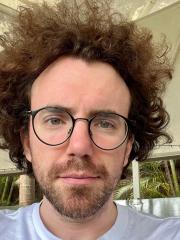
James Manning is a Lecturer in Digital Design at RMIT University's School of Design. His research focuses on game design, digital media, and cultural memory, exploring topics such as game preservation, livestreaming practices, and the intersection of play and technology. He is particularly interested in 'anarchaeological' approaches to defunct games and the documentation of everyday play practices. His teaching interests include game studies, interactive media, animation aesthetics, and design methodology. He actively supervises research in strategies for reflective shortform game design and has contributed to projects like the Astrosurf interactive dome experience. Key research themes include media archaeology, esports culture, and the sociocultural dimensions of digital games. His work bridges theoretical frameworks with empirical studies, examining how digital platforms shape media consumption and cultural production.
Professor George Buchanan is a leading researcher in human-computer interaction and digital libraries at RMIT University . His work bridges information science, digital humanities, and health informatics, focusing on usability in sensitive contexts like healthcare and misinformation. Deputy Dean, Research at RMIT University Former Director, University of Melbourne iSchool Research Interests: Digital information interaction Health and aging informatics Disinformation analysis Mobile interface design Digital library systems Key Contributions: Developed mobile web usability benchmarks, spatial hypertext tools, and thermal feedback interfaces. Currently seeking PhD students for 2025 projects on digital browsing and view change dynamics. Awards: Over twenty best paper awards and Honorary Life Fellow of the Royal Society of Arts. Advising: Accepting Masters/PhD supervision in information interaction and digital health domains.
Dr. Matthew Cipa is an Affiliate Research Fellow and Teaching Associate in Film and Television Studies at The University of Queensland's School of Communication and Arts. His work bridges film studies with philosophical inquiry, particularly exploring metaphysical dimensions of cinema and television. He holds a PhD in Metaphysical Film and Television from The University of Queensland (2020). Research focuses on philosophical analysis of film form, directorial auteurism, and representation of abstract concepts like empathy and existence. Notable projects include studies on Abel Ferrara's critical reception, autism portrayal in Being There/Phantom Thread, and metaphysical themes in films like EO and Au Hasard Balthazar. Published works include a 2024 monograph exploring metaphysical screen concepts and chapters in academic collections on Schiller's philosophy and directorial styles. His reviews engage with key texts in film philosophy and cognition theories. Teaching responsibilities include film theory and analysis courses within the School of Communication and Arts. Active in academic discourse through the Digital Futures Lab and scholarly collaborations with institutions like Edinburgh University Press and SUNY Press.
Helen Verran is a Professorial Research Fellow at Charles Darwin University's Northern Institute within the Faculty of Arts and Society. An accomplished ethnographer with a distinguished career spanning seven universities across four continents, she has dedicated her academic life to exploring cross-cultural knowledge work, particularly with Indigenous communities. Before joining Charles Darwin University, she spent twenty-five years teaching and researching in History and Philosophy of Science at the University of Melbourne, where she collaborated extensively with Yolngu Aboriginal knowledge authorities. University of Melbourne (25 years in History and Philosophy of Science) Nigeria (8 years in the 1980s working with Yoruba teachers) Charles Darwin University (current position at the Northern Institute) Verran's research centers on ethnographic approaches to knowledge production in an era dominated by numerics, algorithms, and big data. She investigates how first-person experience and Indigenous knowledge systems can inform policy and governance, preventing crucial aspects of human experience from being lost in purely quantitative approaches. Her work spans Indigenous knowledge traditions, philosophy of science, comparative philosophy, and decolonizing practices, with particular focus on Yolngu Aboriginal Australian knowledge systems and Yoruba knowledge from Nigeria. She has developed innovative 'Ground Up' research methods that enhance Indigenous sovereignties and has made significant contributions to Science and Technology Studies (STS), especially regarding numbers and enumeration in cross-cultural contexts. Her recent publications reveal a sustained engagement with decolonizing methodologies, museum epistemology, Indigenous knowledge systems, and the philosophical implications of cross-cultural knowledge exchange. Verran's work consistently examines the tensions between different knowledge systems while developing practical approaches for working across these differences respectfully. She has made notable contributions to understanding Indigenous mathematics and the role of numbers in different cultural contexts, as evidenced by her award-winning book 'Science and an African Logic' (2001). Vice Chancellor's Award for Research Impact (2023) International prizes for 'Science and an African Logic' (2001) Referenced in Wikipedia pages Verran actively supervises postgraduate research and shares her expertise through 'Espresso Yourself!' sessions for Higher Degree by Research students. Her current projects include 'Design and evaluation as strategies/practices for exploring organisational sustainability' and 'Hope and a Decolonising Pedagogy,' reflecting her commitment to developing practical applications of her theoretical work. She has established collaborative research frameworks with Indigenous communities in Arnhem Land, particularly focused on digital technologies, environmental management, and education in remote settlements. As an active participant in academic networks, Verran organizes conferences and workshops on STS and Indigenous methodologies, including the 'Making and Doing Top End Science and Technology Studies together' event in 2024. Her work contributes significantly to Sustainable Development Goals related to quality education, reduced inequalities, and peace, justice and strong institutions.
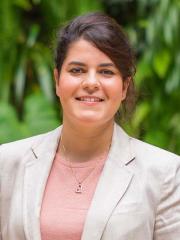
Prof Ghassan Beydoun is a Professor and Head of Discipline (Information Systems) at the School of Computer Science, University of Technology Sydney (UTS). He leads the Information Systems discipline and is affiliated with the Centre for Advanced Modelling and Geospatial Information Systems (CAMGIS). His research focuses on AI-driven systems, agent-based modelling, ontologies, and disaster management, with notable contributions to knowledge graphs, enterprise architecture, and IoT applications. Beydoun actively supervises Masters and PhD students in these domains. His research interests span metamodelling, agent systems, and AI applications in disaster management (e.g., flood, landslide, and earthquake risk assessment), health systems, and smart infrastructure. He has pioneered frameworks for reproducible machine learning solutions, digital identity systems, and cloud migration strategies. Beydoun’s work integrates interdisciplinary methods, such as bibliometric analysis for journal evolution and XAI for spatial hazard prediction. Recent publications highlight his expertise in AI for climate-induced hazard modelling, agent-based knowledge transfer mechanisms, and metaverse applications in education. His funded projects include AI-powered circular economy initiatives, smart beach safety systems, and health data querying frameworks. Beydoun collaborates with industry partners like CSIRO, Capsicum Business Architects, and Data Zoo, translating research into practical solutions for enterprise architecture, cybersecurity, and public health.
Professor Karin Verspoor is the Dean of the School of Computing Technologies at RMIT University in Melbourne, Australia. She previously held roles as Director of Health Technologies and Deputy Head of the School of Computing and Information Systems at the University of Melbourne, and as Scientific Director of Health and Life Sciences at NICTA's Victoria Research Laboratory. Her research focuses on applying artificial intelligence methods to biomedical discovery and clinical decision support, particularly through natural language processing of clinical texts and biomedical literature. Affiliations: RMIT University (STEM College), Australian Alliance for Artificial Intelligence in Health (Victorian Node Lead) Industry Experience: Intelligenesis/Webmind Corp., Applied Semantics, Los Alamos National Laboratory, National ICT Australia Research Interests: Artificial Intelligence in Medicine Biomedical Natural Language Processing Health Informatics Computational Biology Cheminformatics Her work emphasizes cross-modal data integration, EHR analytics, and AI-driven clinical tools to address challenges in healthcare outcomes, musculoskeletal disorders, and infectious disease surveillance. Advising & Grants: Supervises research on AI-based decision-making frameworks, EHR data quality, and chemical knowledge extraction. Leads projects funded by initiatives like CANAIRI (Collaboration for Translational AI in Healthcare). Labs & Collaborations: Co-founder of the Australian Alliance for AI in Health, advancing national AI healthcare policy and translational research.
Prof. Ping Yu is a Professor at the University of Wollongong's School of Computing and Information Technology, where she has held leadership roles such as Director of the Centre for Digital Transformation (2013–2020). Her work focuses on digital health, health informatics, and data-driven solutions for aged care, with collaborations involving the World Health Organization (WHO), NSW Health, and over 11 aged care providers. She has pioneered projects like the WHO’s eSTEPS platform and AI-driven analytics to optimize healthcare resources. Her research integrates socio-technical perspectives to address challenges in technology adoption and healthcare system improvements. Her research interests span data engineering, data quality, ontology development, and generative AI applications in healthcare. Key areas include extracting insights from unstructured health records, improving clinical decision-making, and enhancing patient outcomes through mHealth and telemedicine innovations. She also explores the impact of green spaces on healthy aging and disparities in healthcare access across regions. Prof. Yu has secured over $4.5 million in research funding, including significant grants from the Australian Research Council. She has mentored 29 postgraduate students to completion, emphasizing interdisciplinary research and practical implementation. Her awards include the prestigious 2022 Telstra Brilliant Women in Digital Health Award and the 2008 Don Walker Award for contributions to health informatics. Her advising and grants narrative highlights her role as a mentor and her success in securing competitive funding. Her work bridges academia and industry, with projects like improving pressure injury risk management in aged care using EHRs and analyzing agitation in dementia through AI. She contributes to education policy, including co-designing academic leadership programs and enhancing clinical informatics curricula in the AI era. Prof. Yu leads multi-disciplinary teams at UOW and collaborates with global institutions, focusing on labs and initiatives like the Appendicectomy Surgical Pathway Ontology (ASPO) and the 6A framework for hypertension management via mHealth. Her research emphasizes real-world impact, from reducing hospital readmissions to optimizing surgical workflows and improving public health communication strategies during crises.
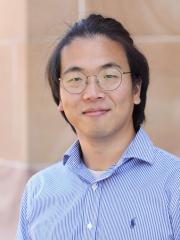
Dr. Sungyong Ahn is a Lecturer in Digital Media and Cultures at the School of Communication and Arts, University of Queensland, and an affiliate of the Centre for Digital Cultures & Societies. His research focuses on digital ontology, new materialism, and speculative (capitalist) realism, examining how smart technologies reshape human perception and governance. He holds a PhD in Media Studies from the University of Illinois at Urbana-Champaign. Education: Bachelor of Philosophy (Yonsei University), Master of Film and Television (Chung-Ang University), PhD in Media Studies (UIUC). His research investigates the interplay between technology, capitalism, and cultural production, particularly through the lens of the Internet of Things (IoT), quantum physics as cultural imagination, and French philosophy (Foucault, Deleuze, Badiou). Recent work includes analyzing IoT’s role in self-governance and the ontological anxieties of digital existence. Publications span journals like Media Theory , Journal of Cultural Economy , and Postmodern Culture . He is the author of Internet-ontologies-Things: Smart Objects, Hidden Problems, and Their Symmetries (2023). Available for supervision in media studies, digital cultures, and science/technology studies. Active in interdisciplinary collaborations, including the Centre for Digital Cultures & Societies.
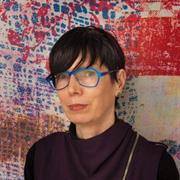
Professor Robyn Healy is the Associate Deputy Vice Chancellor (Learning and Teaching) and Head of the School of Fashion and Textiles at RMIT University. She holds a Professorial rank within the Department of Design and Social Context. Her career includes roles as Senior Curator at the National Gallery of Victoria and National Gallery of Australia, alongside extensive academic leadership. Her research focuses on fashion design, curatorial practices, museums, material culture, and practice-led research, with a PhD exploring new museum exhibition methodologies for fashion. She is a Category 1 research supervisor and leads a vibrant research team overseeing numerous PhD projects in fashion and design innovation. Education Leadership: Spearheaded restructuring of fashion programs to enhance cross-disciplinary studios and industry engagement. Professional Roles: Chair of IFFTI Research Sub-Committee, member of TEQSA accreditation panels, and advisor to national cultural institutions. Research Interests: Robyn’s work bridges fashion design, museology, and material culture with a focus on curatorial innovation and the phenomenology of wear. Her projects explore sustainable fashion practices, digital curation, and the intersection of fashion with health and technology. Awards: Centenary Medal (2013) for contributions to Australian fashion, and Gordon Darling Foundation Travel Scholarship. Supervision & Grants: Active in mentoring over 20 PhD and Masters candidates, with research projects addressing topics like sustainable textile methods, fashion curation in digital spaces, and biomimetic design. Engaged in collaborative grants exploring wearable health technologies and fashion’s environmental impact. Labs/Teams: Directs the School of Fashion and Textiles, fostering industry partnerships and innovative research initiatives in sustainable design and curatorial practices.
Professor Jennifer Whyte is a Professor and Director of the John Grill Institute for Project Leadership at the University of Sydney's School of Project Management (Faculty of Engineering). Her research focuses on project leadership, systems integration, digital transformation in construction, and future-making practices. She previously led the School of Project Management (2021-23) and holds a retained Professorship at Imperial College London's Department of Civil and Environmental Engineering. She is a Policy Fellow of the Institution of Civil Engineers, contributing to industry policy and advisory boards such as the UK Construction Leadership Council. Education: Holds a PhD and is a Fellow (FICE) of the Institution of Civil Engineers. Her work bridges academia and industry, emphasizing practical impact through tools like digital twins and visualization technologies. Current projects include the Alan Turing Institute's Data-Centric Engineering Programme (Grand Challenge III) and the EPSRC-funded VENTURA Project's Virtual Decision Room initiative. Research interests span infrastructure projects, innovation ecosystems, and leadership in complex environments. She actively supervises doctoral students exploring areas like risk management in construction and digital transformation in public institutions. Awards include recognition for policy contributions and leadership in project-based organizations. Grants include funding for Big Data-driven stakeholder engagement in mega-projects and collaborations on new energy technologies. Her global links include Imperial College London and ongoing partnerships with institutions in the UK and Australia.
Associate Professor Ida Asadi Someh is affiliated with the UQ Business School at The University of Queensland and serves as a research affiliate at the Centre for Information Systems Research (CISR) , MIT Sloan School of Management. She completed her PhD at The University of Melbourne in 2015, receiving the best PhD thesis award from the Melbourne School of Engineering and the Vice Chancellor’s PhD Prize . Her research spans business analytics , artificial intelligence , and data governance , focusing on the organizational and societal impacts of data and AI. Key areas include ethics of AI , privacy , accountability , and synergy in analytics systems . Recent publications highlight generative AI in business transformation, algorithmic fairness in public welfare systems, and data governance frameworks for ethical AI. Her work addresses digital transformation in both corporate and public sectors. Scientific awards include the best PhD thesis and Vice Chancellor’s PhD Prize at The University of Melbourne. She supervises PhD and Master’s students in data-driven organizations , privacy-preserving AI , and sepsis management through data .
Professor Trina Myers serves as the Head of School for the School of Information Technology at Deakin University's Faculty of Science Engineering and Built Environment. With extensive experience in academia and research leadership, she plays a pivotal role in shaping IT education and research directions at Deakin. She is also an active member of the Australian Council of Deans of ICT (ACDICT), having served as its immediate past President. Her educational background includes: Doctor of Philosophy in Computer Science from James Cook University Master of Business Administration from James Cook University Master of Information Technology from James Cook University Professor Myers' research focuses on semantic technologies, ontology engineering, Internet of Things, knowledge management, natural language processing, and human-computer interaction . Her work emphasizes interdisciplinary collaboration, bridging technology with fields such as healthcare, marine science, environmental conservation, and business. She has pioneered approaches in academagogy (academic gamification) to enhance online learning engagement, particularly for adult learners. Her IoT research has significant applications in healthcare space optimization, environmental monitoring, and resource management. Her recent publications demonstrate a strong trajectory in applying AI and IoT technologies to solve real-world problems, particularly in healthcare, education, and resource optimization. There's a clear pattern of interdisciplinary work connecting computer science with healthcare, education, and environmental science. Her research increasingly focuses on human-centered technology design, especially for vulnerable populations like adolescents with autism spectrum disorder. Her notable achievements include: Fellow of the Australian Computer Society (2023) Australian Awards for University Teaching (AAUT) Teaching Award (2020) Women in IT Professional Leadership Award Finalist (2020) Asia-Pacific International Triple E Entrepreneurial Educator of the Year Award (1st runner-up, 2020) Australian Computer Society, National Digital Disruptor ICT Educator of the Year (2019) Professor Myers actively supervises doctoral students across diverse research areas including gamification in language learning, brain tumor analysis using deep learning, AI in higher education, AI for refugee resilience, data integrity in edge environments, and quantum-driven satellite networking. She has secured significant research funding, including a recent grant for "Indiginizing ICT Curriculum: A Starter Framework for the Community of Practice" through the Australian Council of Deans of ICT. Her teaching philosophy emphasizes active learning methodologies, Process Oriented Guided Inquiry Learning (POGIL), blended learning, and collective intelligence approaches.
Dr Lynette Pretorius is a Lecturer at Monash University's School of Curriculum Teaching & Inclusive Education, where she has established herself as an award-winning educator and researcher. With extensive experience teaching across undergraduate, postgraduate, and graduate research levels, she supervises PhD students while weaving together interdisciplinary expertise to create inclusive and transformative learning environments. Her work spans multiple academic contexts while maintaining a consistent focus on compassionate, equitable education. Dr Pretorius's research centers on doctoral education, academic identity, student wellbeing, and AI literacy, with particular emphasis on creating more just and creative academic spaces. Drawing from autoethnography and qualitative methodologies, her work interlaces personal narratives with institutional systems to understand how lived experiences and academic structures shape one another. She champions pedagogies of care that prioritize wellbeing, justice, and student growth through reflexive, relational ethics and methodological transparency. Her recent publications reveal a growing focus on AI literacy in higher education, with multiple 2024-2025 works developing frameworks for responsible AI use, examining AI's decolonial potential, and exploring how generative AI transforms academic communication and research practices. Alongside this emerging AI focus, her longstanding work on doctoral education continues through writing groups, wellbeing research, and investigations into academic identity formation. Dr Pretorius has received significant recognition for her contributions, including: Dean's Award for Teaching Excellence (2022) Global Impact Grant (Student Success) (2022) Senior Fellow, Higher Education Academy (2021) Dean's Citation for Outstanding Contribution to Student Learning (2019) Dean's Award for Programs that Enhance Learning (2019) Her research leadership extends to multiple funded projects including 'Behind the Academic Curtain: Doctoral Students and the Hidden Rules of Academia' (2025-2026) and 'Learning about Academic Publishing through Collaborative Online International Learning' (2024-2025). She actively supervises doctoral students and has developed innovative approaches to research and teaching, particularly through her work on doctoral writing groups as transformative spaces. Dr Pretorius maintains a strong public scholarly presence through her Scholar's Way Blog, University Study Made Easy YouTube Channel, and the AI Literacy Lab. These platforms extend her research impact beyond traditional academic boundaries, reaching broader educational communities and providing practical resources for students and educators navigating contemporary academic challenges.
Dr. Madhushi Bandara is a Lecturer at the School of Computer Science, University of Technology Sydney (UTS), specializing in knowledge representation, complex system modeling, and data analytics. She leads the data management research stream at the UTS DigiSAS lab and is a core member of the Biomedical Data Science Laboratory within the UTS Australian Artificial Intelligence Institute. Her industry collaborations include Telstra, Cancer Australia, and Capsifi, focusing on AI integration in healthcare and finance. She coordinates the Business Information Systems major in UTS's Master of Information Technology program and convenes the Future Generation Enterprise Architecture Community of Practice. Education PhD in AI Systems Engineering, University of New South Wales (2020) BSc (Hons) in Engineering, University of Moratuwa, Sri Lanka (2015) Research Interests Madhushi's work bridges machine learning, knowledge graphs, and enterprise architecture to address challenges in data governance for SMEs, ESG metric management, and healthcare pathway analysis. Her research emphasizes translating cutting-edge AI into industry solutions through contextual domain knowledge integration. Scientific Awards UNSW-UTS Trustworthy Digital Society Scholarship Teaching & Leadership She teaches enterprise information systems, digital strategy, and AI for enterprises in UTS's online postgraduate programs. Her service roles include co-chairing tracks at the Australasian Conference on Information Systems and reviewing for Expert Systems with Applications.
Dr Tristen Jones is a Lecturer in the Master of Museum and Heritage Studies program at the University of Sydney, specializing in Australian Indigenous archaeology and heritage. Her work emphasizes rock art, cultural landscapes, material culture, and museum collections. Lecturer at University of Sydney PhD and MArchSci from Australian National University (ANU) Research Focus : Indigenous-led methodologies and collaborative partnerships with Australian Indigenous communities Rock art chronology, style, and social function in Arnhem Land Transformative potential of museum collections in disciplinary histories Material culture agency and cultural landscape analysis Scientific Awards : George Chaloupka Fellowship (2014) Australia Awards Endeavour Postdoctoral Fellowship (2017) National Geographic Society Research Award (2019) Key Projects : ARC Linkage Project (2020-2025) on Cape York Peninsula rock art Ubirr Rock Art Conservation (2020-2023) with Kakadu National Park International collaboration with University of Barcelona (2017)