Russ Algar is a Professor at the Department of Chemistry within the Faculty of Science at the University of British Columbia (UBC) . Holding a Canada Research Chair (Tier 2) in Biochemical Sensing since 2012 and a Michael Smith Foundation for Health Research Scholar since 2014, he leads the Algar Research Group , focusing on luminescent materials for bioanalysis, fluorescence spectroscopy, FRET networks, and point-of-care diagnostic devices. Ph.D. , University of Toronto (2010) M.Sc. , University of Toronto (2006) Hon.B.Sc. , University of Toronto (2005) His research spans luminescent materials , biochemical sensing , FRET-based probes , and smartphone-integrated diagnostic platforms . Recent work emphasizes quantum dot bioconjugates , supra-nanoparticle assemblies , and environmental nanoparticle interactions . Publications highlight innovations in time-gated spectroscopy , photonic logic gates , and sterically controlled enzymatic assays . Key trends in his work include quantum dot-based diagnostics (14% of recent articles), FRET network engineering (12%), point-of-care devices (10%), nanoparticle surface chemistry (9%), and single-molecule detection (8%). Collaborations extend to UBC's LASIR , Hudson Group , and TRIUMF . Canada Research Chair (2012-Present) Michael Smith Foundation Scholar (2014-Present) NSERC Postdoctoral Fellowship (2010-2012) UBC Chemistry Basic Skills Test developer Editorial Board : Analytical Chemistry Research , Chemosensors , Nano Reviews The group develops quantum dot-biomolecule conjugates for intracellular sensing and low-cost diagnostic tools . Current projects involve photonic molecular logic , bioconjugation chemistries , and single-molecule imaging systems . Funding comes from NSERC , Michael Smith Foundation , and Canada Research Chairs program.
Professor Harald Kosch serves as Vice President for Academic Infrastructure and IT at the University of Passau. Since 2006, he holds the Chair of Distributed Information Systems within the Faculty of Computer Science and Mathematics. He co-leads the tri-national IRIXYS research center (University of Passau, INSA Lyon, Università di Milano) and directs the German-French DFH/UFA Doctoral College. Current academic leadership roles Specialization in distributed systems and big data International research networks in digital innovation Recipient of French academic distinction His team develops tools for distributed information processing in multimedia and data-intensive applications, with applications in eHumanities and emergency logistics. Research emphasizes cross-border collaboration and technology transfer between academia and industry. Scientific distinctions include: Chevalier de l'Ordre des Palmes Académiques 2022 DFH Dissertation Prize (for Dr. Benjamin Planche) Active in EU digital strategy, Bavarian sustainability initiatives, and Franco-Bavarian AI competitions.
Tobias Lunte is a PhD student and research assistant at the University of Oldenburg's Department of Media Informatics and Multimedia Systems. His work focuses on assistive technologies for education, human-computer interaction (HCI), and multimodal interface design, particularly using gaze-tracking and augmented reality (AR) to address reading difficulties in children. He holds an M.Sc. in Engineering of Socio-Technical Systems (2020) and received the Best Thesis Award in Computer Science by OLDIES e.V. His research integrates real-time gaze behavior analysis to develop adaptive reading assistance tools, collaborating with parents, speech therapists, and educators. He also teaches courses on ethnographic methods, Gestalt principles in design, and quantitative evaluation techniques. In educational development, Tobias redesigned modules like Interactive Systems (BSc) and Human-Computer Interaction (MSc) into a cohesive HCI teaching framework. He pioneered a remote hardware-oriented Maker's Lab course during the 2020 digital semester, which was nominated for Best Course of 2019/20. His practical projects span physical computing, AR applications, and sensory notification systems for clinical environments. Scientific Awards: Best Thesis Award in Computer Science by OLDIES e.V. (2020) He supervises student projects in gaze-tracking, physical computing, and ARVR, including notable works like the Puzzle Box prototype, Sherlock AR game system, and Sensor Pet health reminder tool. His research combines technical innovation with pedagogical insights to create user-centered solutions across education and healthcare domains.
Mathias Polz serves as a University Assistant and Ph.D. Researcher at Graz University of Technology's Institute of Biomechanics, Austria. His academic journey spans from Bachelor's to Doctoral studies in Biomedical Engineering at the same institution, with concurrent appointments at the Medical University of Graz through collaborative projects since 2020. His educational background includes: B.Sc. Biomedical Engineering (2015-2020, TU Graz) M.Sc. Biomedical Engineering - Biomedical Device Design and Safety (2020-2021, TU Graz) Ph.D. Candidate in Biomechanics (2023-present, TU Graz) Ph.D. Candidate in Health Care Engineering (2023-2025, TU Graz) Polz's research centers on optoelectronic neurostimulation and tissue-inspired biomaterials , with significant contributions to wireless biomimetic stimulators for cellular activation. His work bridges materials science and mechanobiology , focusing on organic semiconductor interfaces for neural and cardiac applications. Recent projects like LOGOS-TBI demonstrate his expertise in light-activated organic semiconductors for cell culture characterization. Analysis of his 8 publications (2022-2025) reveals three dominant research streams: optoelectronic neural stimulation (40% of works), cardiac electrophysiology interfaces (30%), and biomaterial biointegration (30%). His methodology consistently combines in vitro models with computational analysis , frequently employing organic photovoltaic devices for precise cellular activation. His scientific recognition includes: Zagreb Neuroelectronics Symposium Best Poster Award (1st place, 2022) Initiative Gehirnforschung Research Grant (2024) BioTechMed Best Collaborative Paper Award (2024) BioEl Best Poster Award (3rd place, 2025) Polz actively contributes to collaborative research initiatives including the LOGOS-TBI project with Medical University of Graz and B. Braun Melsungen. His grant portfolio features the Initiative Gehirnforschung award supporting neuroelectronics development. Beyond research, he mentors through Graz's Sindbad Program and organizes Pint of Science Austria events, demonstrating commitment to academic outreach. He operates within TU Graz's Biomechanics research ecosystem, collaborating with the Center for Biomarker Research in Medicine and international partners like CREAX (Belgium). His current Ph.D. focuses on wireless biomimetic stimulators for optoelectronic cellular activation , building on prior work with organic photocapacitors for neuronal network stimulation.
Prof. DİDEM ÇATAL serves as Professor and Head of the Graphic Design Department at Canakkale Onsekiz Mart University's Faculty of Fine Arts since 2011, while holding additional roles including University Executive Board Member (2021-present) and Faculty Council Member. Her academic journey began with Competence in Art from Hacettepe University (2003-2008) where she completed her dissertation on children's e-books. Education: Competence in Art, Hacettepe University (2003-2008) Postgraduate: Hacettepe University (1992) Her research spans Social Sciences, Communication, Art, and Design Studies with specialized focus on digital design media. ÇATAL's work examines responsive web design, experimental typography, social media's impact on visual communication, and interactive e-catalog applications for educational institutions. She actively investigates how digital technologies transform traditional design practices and educational methodologies in fine arts. Analysis of her publication trends reveals consistent exploration of digital transformation in design fields, particularly focusing on interactive media applications (2023), pandemic-driven virtual exhibition adaptations (2021), and foundational typography research (2015-2020). Her work bridges theoretical design principles with practical implementations in educational and promotional contexts. YÖK Araştırma Bursu scholarship recipient (2011-present) ÇATAL has supervised three graduate theses including research on digitalization's impact on painting (2021), Turkish creation myth visualizations (2019), and motion graphics in new media design (2016). She coordinates multiple international projects including the 'Birlikte Sanatla' initiative (2024) and previously managed the university's Erasmus Program (2008-2021). Her leadership extends to international exhibitions and conferences, notably organizing the 7th Çanakkale Biennial 'Constellation' poster exhibition (2021) and participating in over 50 international design events including Dubai's International Fine Arts Conference (2023) and Poland's 'Plant - Perceptions II' exhibition (2022). She maintains active roles in professional organizations including the Communication Designers Professional Association and Istanbul Exlibris Society.
Nicolaj Siggelkow is the David M. Knott Professor of Management at the Wharton School, University of Pennsylvania, where he also serves as Vice Dean of the MBA Program and Co-Director of the Mack Institute for Innovation Management. His academic journey began with Economics studies at Stanford University, followed by an M.A. in Economics and a Ph.D. in Business Economics from Harvard University and Harvard Business School. His research focuses on the strategic and organizational implications of interactions among a firm's choices of activities and resources, particularly examining how firms develop and adjust their activities over time, how organizational design affects performance, and how interactions among activities create competitive advantage. His work employs diverse methodologies including field studies, econometric analysis, formal modeling, and simulation. Professor Siggelkow's recent publications reveal a clear trajectory toward digital transformation and connected strategies, with increasing focus on how technology enables continuous customer relationships and new business models. His work bridges traditional strategic management with emerging digital paradigms, particularly in healthcare, pricing of smart products, and generative AI applications. Administrative Science Quarterly Scholarly Contribution Award (2008) Fellow of the Strategic Management Society (2013) Multiple Wharton Teaching Excellence Awards spanning two decades Helen Kardon Moss Anvil Teaching Award (2010) Class of 1984 Award for highest teaching ratings (2004, 2006) The Wharton Award for contribution to student experience (2004) Professor Siggelkow serves on the editorial review boards of leading management journals including Administrative Science Quarterly, Organization Science, Strategic Management Journal, Strategic Organization, and Academy of Management Perspectives. He has developed influential frameworks like the Connected Strategy model and LIVA (Long-term Investor Value Appropriation) measure. His work with the Mack Institute for Innovation Management focuses on advancing knowledge about effective management of innovation risks and rewards, while his executive education programs help organizations implement strategic frameworks for competitive advantage. His research has been published in top-tier journals including Academy of Management Journal, Administrative Science Quarterly, Journal of Industrial Economics, Management Science, Organization Science, and Strategic Organization, demonstrating both theoretical rigor and practical relevance to business strategy.
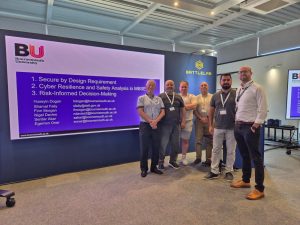
Professor Huseyin Dogan is a leading academic at Bournemouth University's Faculty of Science & Technology, specializing in Human-Computer Interaction and Digital Health . As Director of the Computing and Informatics Research Centre, he spearheads initiatives in Explainable AI , Assistive Technologies , and Systems Engineering . His work addresses critical challenges in healthcare equity through the NIHR Maternity Disparities Consortium and Maternal and Infant Health Equity Research Centre (MIHERC) , aiming to reduce inequalities via digital solutions. Engineering Doctorate (Loughborough University) MSc Human Computer Interaction with Ergonomics (University College London) BSc Computer Science (Queen Mary University of London) His research integrates AI , Cybersecurity , and Implementation Science to develop secure, equitable digital systems. Recent projects include: Digital tools for maternity health equity AI for police worker wellbeing Cyber resilience in defense systems Accessible authentication for disabled users Scientific recognitions include: 2025 IEEE Best Service Award 2025 IEEE Best Paper Award Google Research Funding (2025) As co-founder of the UK's first MSc Digital Health program, he shapes academic curricula while maintaining industry partnerships with organizations like Dstl, Google, and NHS Dorset.
Professor Shujun Zhang is a faculty member at the Department of Computer Science, Electrical Engineering and Mathematical Sciences, Western Norway University of Applied Sciences (HVL). He specializes in power electronics, electric drives, and microgrid systems with applications in maritime engineering, renewable energy, and battery technology. His work bridges academia and industry through collaborative projects and technical consultancy. Power Electronics Electric Drives Microgrid for Maritime Systems Renewable Energy Integration Digital Real-Time Control Systems His research focuses on developing state-of-the-art power conversion systems, including modular multilevel converters and hybrid propulsion systems. He leads projects with industry partners like Siemens Bergen and Norwegian Electric Systems AS, emphasizing hardware-in-the-loop testing and embedded programming. Recent publications highlight applications of power electronics in electric ferry charging systems, DC/AC converter design, and stability analysis of hybrid microgrids. His lab features advanced equipment: Modular Multilevel Converter Prototypes Typhoon HIL 604 DSP/FPGA Boards Permanent Magnet and Induction Motors Basic Line HIL Machines
Ryszard Szynowski is a researcher affiliated with WSB University , focusing on Security Studies and Safety Engineering (50% each). His work spans national defense, military administration, and crisis management, with extensive contributions to academic literature and Polish security policy development. He has supervised 33 promoted theses, indicating a strong mentorship role in shaping defense and security research. Affiliation: WSB University Research Interests: Security Studies, Safety Engineering, National Defense, Military Administration, Crisis Management His research explores historical evolution of military administration, comparative analysis of defense systems in Poland, Czech Republic, and Slovakia, and security challenges in educational institutions. He has contributed to conceptual frameworks for territorial defense forces and Polish-Ukrainian cross-border security collaboration. While his publications emphasize practical applications of security science and administrative integration, the absence of explicit scientific awards or a detailed educational background in the provided data limits further categorization. His work often bridges legal frameworks with operational needs in defense and emergency contexts.
Lucia Seminara serves as an Associate Professor in the Department of Naval, Electrical, Electronic, and Telecommunications Engineering (DITEN) at the University of Genoa's Polytechnic School. She teaches Electronic Devices, Sensors, and Sensing Systems for Master's programs in Electronic Engineering and Engineering for Natural Risk Management, while also contributing to Philosophy of Medicine for Philosophical Methodologies. As a member of the Joint Teacher-Student Commission, she bridges academic governance with pedagogical innovation in engineering education. Her research pioneers tactile sensing systems using piezoelectric polymers (PVDF) and electronic skin for robotics and prosthetics. She investigates indentation mechanics on soft electronic skin, grasping speed sensitivity, and hierarchical sensorimotor control frameworks for human-in-the-loop robotic hands. Key innovations include machine learning-based contact force estimation and electrotactile feedback systems that restore natural touch perception in prosthetic devices, addressing critical gaps in sensory substitution technology. Analysis of her 2021-2025 publications reveals escalating integration of machine learning with tactile sensing, particularly in symmetry detection for efficient haptic exploration and transdisciplinary human-in-the-loop applications. Recent work emphasizes real-world implementations like post-stroke rehabilitation systems and high-bandwidth human-machine interfaces, demonstrating a strategic shift from foundational sensor development toward clinically viable solutions with measurable user impact. Dr. Seminara's research lineage includes significant contributions to the Roboskin project (2013), which established large-area tactile sensor arrays for robotics. Her current work extends this foundation through investigations into viscoelastic properties, stress transmission modeling, and AI-driven tactile perception, positioning her at the forefront of intelligent electronic skin development with active collaborations across engineering, neuroscience, and clinical rehabilitation domains.
Aaron Snoswell is a Research Fellow at Queensland University of Technology (QUT), affiliated with the Faculty of Creative Industries, Education & Social Justice and the School of Communication. His work bridges technical AI development with social implications, focusing on ethical implementation of AI systems across multiple domains including healthcare, legal systems, and public policy. Snoswell's research interests span artificial intelligence, machine learning (particularly inverse reinforcement learning), AI ethics, automated decision-making systems, and the societal implications of AI technologies. His work demonstrates a consistent focus on making AI systems more transparent, accountable, and beneficial for society, with particular attention to healthcare applications, legal systems, and public understanding of AI technologies. Analysis of his most recent publications reveals a clear trajectory toward responsible AI deployment, with increasing focus on policy frameworks, public education about AI capabilities and limitations, and practical applications that address real-world problems in healthcare and justice systems. His work often combines technical AI development with critical social perspectives, reflecting an interdisciplinary approach that connects computer science with social sciences. Snoswell has been actively involved in policy submissions to governmental bodies including the Australian Senate Select Committee on Adopting Artificial Intelligence and responses to the G7 Guiding Principles for organizations developing advanced AI systems. His work with the ARC Centre of Excellence for Automated Decision-Making and Society (ADM+S) demonstrates his commitment to shaping responsible AI governance frameworks. He has established productive collaborations across multiple institutions and disciplines, working with researchers in communication studies, computer science, healthcare, and legal fields. His recent work on the GenAI Arcade project represents an innovative approach to public engagement with AI technologies through interactive learning environments.
Mohammad Zubair is a Professor in the Department of Computer Science at Old Dominion University's College of Sciences, specializing in high performance computing, digital libraries, autonomic computing, and peer-to-peer networks. His work bridges scientific computing and information systems with significant federal and industry collaborations. Education: Ph.D. in Computer Science, Indian Institute of Technology Delhi (1987) B.S. in Electrical & Electronics Engineering, University of Delhi (1981) Research Interests: Dr. Zubair's expertise centers on high performance computing for scientific applications and large scale data analytics. He develops scalable algorithms for scientific simulations (e.g., particle physics, structural health monitoring) and advances digital library systems through autonomic computing, collaborative classification, and metadata extraction. His work integrates parallel computing with domain-specific challenges in finance, physics, and digital preservation. Publication Trends: His recent publications (2017-2008) show strong focus on GPU-accelerated scientific computing (particle colliders, structural monitoring) and computational finance (binomial option pricing), while maintaining digital library research in collaborative classification and metadata extraction. The work increasingly addresses energy efficiency in cloud systems and leverages parallel architectures from multicore CPUs to GPUs. Scientific Awards: IBM Faculty Award (2006) IBM Faculty Award (2005) Grants and Funding: Dr. Zubair has secured over $800,000 in research funding since 2004, including projects like 'Design AMD Impl Scalable Opt Kernels for Lrg Sc Simu USN Fund3d On Emer' ($24,890, 2017-2018), 'Graduate Research Award Program On Public Sector Aviation Issues' ($35,519, 2016-2018), and foundational digital library work with the Library of Congress and NASA. He frequently collaborates with K. J. Maly and R. Mukkamala on autonomic systems and metadata extraction. Labs and Teams: His research integrates with ODU's high performance computing initiatives and digital library projects, particularly through collaborations with federal agencies (NASA, Library of Congress) and industry partners like IBM. Current work focuses on GPU-accelerated scientific simulations and energy-efficient cloud management systems.
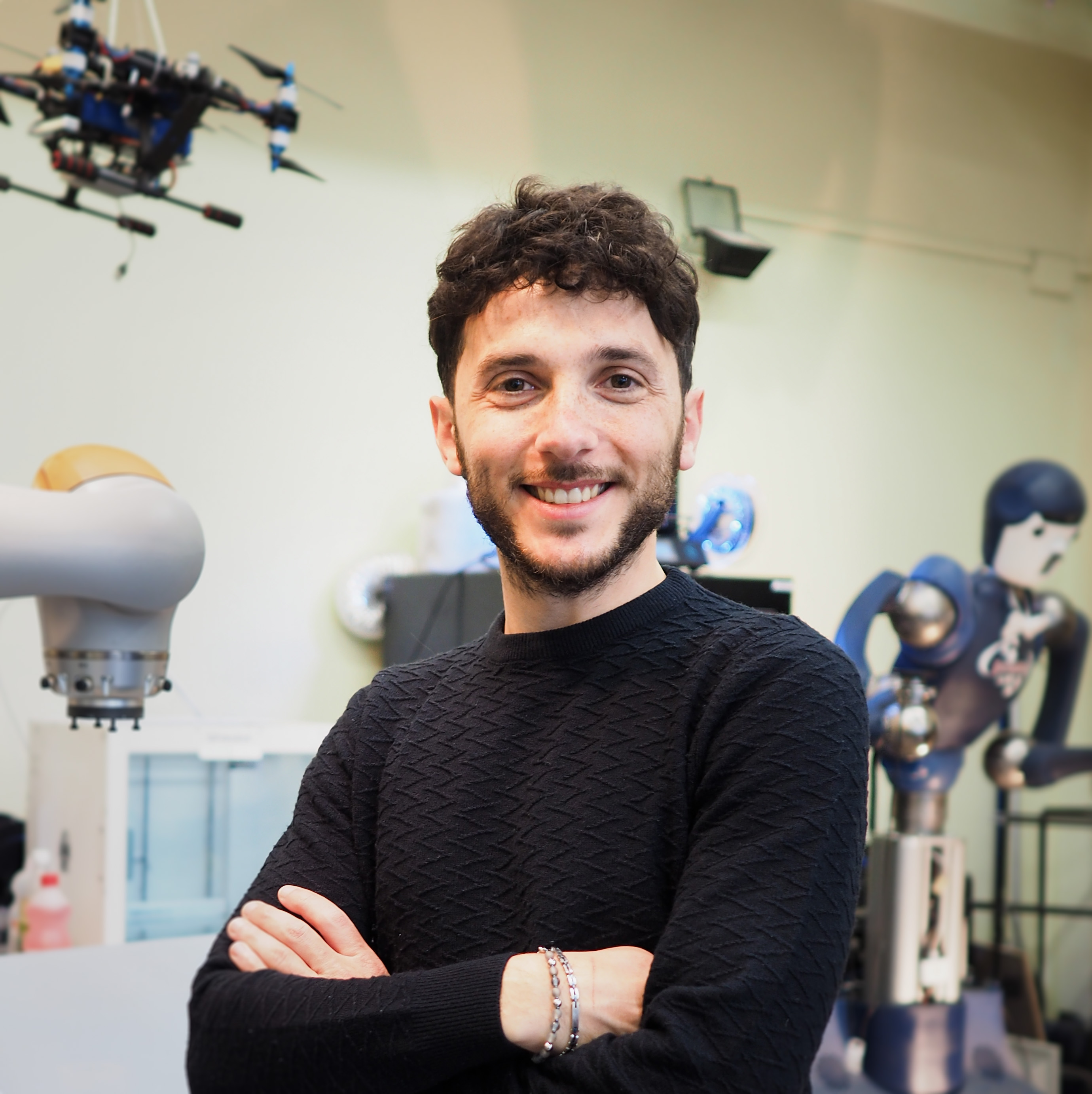
Mario Selvaggio is an Assistant Professor at the Department of Electrical Engineering and Information Technology, University of Naples Federico II. He actively contributes to robotics research through his involvement with PRISMA Lab and ICAROS , while co-founding spinoff companies BeyondShape and Herobots . His academic background includes a Ph.D. in Information Technology and Electrical Engineering (2020) under Prof. Bruno Siciliano, with previous degrees in Mechanical Engineering (2013, 2015). Ph.D. in Information Technology and Electrical Engineering (2020) Bachelor's and Master's in Mechanical Engineering (2013, 2015) His research interests focus on shared control/autonomy, robot teleoperation, passivity-based control, soft robotics, and robotic surgery. He has developed innovative solutions including: Shared-control teleoperation for soft growing robots Non-prehensile object transportation frameworks Advanced modeling of cable-suspended dual-arm systems Medical robotics with force-sensor equipped tools Virtual reality-based teleoperation architectures Recent publications (2021-2025) span topics from semi-autonomous aerial manipulation to cyber-physical measurement systems, with emphasis on human-robot interaction and industrial applications. He serves as Associate Editor for several IEEE conferences and journals. Scientific Awards IEEE RAS Technical Committee on Haptics grant ($2500, 2018) Second prize at Bioengineering Congress (2018) Finalist for 'Fabrizio Flacco' Best Paper Award (2020) Prof. Selvaggio teaches the Master's Course in Automation Engineering and Robotics (2024/2025) using Robot Operating System (ROS) curriculum. He actively collaborates with international research groups at IRISA/INRIA Rennes , Rainbow team , and University of California Santa Barbara (mechanical engineering department). His research combines theoretical advancements with practical implementations, demonstrated through extensive validation in simulated environments and real robotic platforms including KUKA LWR IIWA manipulators, dVRK systems, and humanoid platforms.
Prof. Dr. Yaşar Güneri ŞAHİN serves as the Dean of the Faculty of Engineering and Computer Sciences at Izmir University of Economics, where he also holds a professorship in the Department of Software Engineering. With over two decades of experience in both academia and industry, he has established himself as a prominent figure in software engineering, real-time systems, and educational technologies. His academic journey began with a Bachelor's degree in Computer Engineering from Middle East Technical University in 1994, followed by a Master's in Computer Education from Gazi University in 1999, and culminated with a Ph.D. in Industrial Technology from Gazi University in 2005. Prior to joining Izmir University of Economics in 2008, he served as a faculty member at Yaşar University starting in 2005, and before that, he gained nearly a decade of industry experience in high-level management roles overseeing numerous software projects for both public and private sectors. Prof. ŞAHİN's research spans several interconnected domains with a strong emphasis on practical applications. His work in software engineering focuses on project management methodologies, team building models for educational contexts, and database systems. In real-time systems, he has made significant contributions to forest fire detection technologies using innovative approaches like animal-based biological sensors and radio-acoustic sounding systems. His educational technology research addresses challenges in nursing education, special education for individuals with autism, and internet resource utilization by university students. Notably, his interdisciplinary approach bridges computer science with healthcare applications, particularly in medical informatics where he has developed public health information systems and tools for medical data entry. His scholarly output demonstrates a consistent trajectory of innovation across multiple domains, with particular concentration in the period from 2007-2013. While his early work focused on foundational software engineering concepts and database systems, his research evolved to address pressing societal challenges including forest fire detection, healthcare information systems, and educational technologies. This evolution reflects his ability to identify emerging technological needs and apply software engineering principles to diverse real-world problems. His contributions have been recognized through multiple prestigious awards: TÜBİTAK Scientific Publication Awards (2008-2012) İzmir University of Economics Scientific Publication Awards (2008-2011) As an academic advisor, Prof. ŞAHİN has supervised doctoral and master's theses on diverse topics including heart failure management, triage algorithms for multiple injuries, and software project selection metrics for small and medium enterprises. His administrative leadership extends beyond his deanship to include serving on juries for national art, design, and architecture competitions, as well as evaluating research projects for TEYDEB and TÜBİTAK. His grant activities include serving as a project reviewer and monitor for various technology development initiatives including "Bulut," "ARAGES," "SADE," and "SWH-ATLANTIS." Prof. ŞAHİN maintains an active research laboratory environment focused on real-time systems and software engineering applications. His work often involves interdisciplinary collaboration, particularly with medical professionals on health informatics projects and with education specialists on technology-enhanced learning initiatives. Current research directions appear to focus on the intersection of software engineering principles with healthcare applications and environmental monitoring systems.
Auxiliadora Sarmiento Vega is a full professor at the University of Seville 's School of Engineering within the Department of Signal Theory and Communications . With over two decades of research experience, her work bridges audio signal processing and biomedical applications, focusing on blind source separation, entropy-based methods, and machine learning for healthcare diagnostics. Research Pillars : Audio source separation, biomedical signal/image analysis, and virtual reality integration Key Projects : ACACIA (Signal Analysis), NEUBIAS (Bioimage Analysts Network), and multiple NIH-funded biomedical imaging initiatives Academic Contributions span 15+ years, with groundbreaking work in: Alpha-Beta divergence clustering algorithms EEG processing for motor imagery BCI systems Automated breast cancer grading from histological images Glaucoma and diabetic retinopathy diagnostics via retinal image analysis Virtual reality platforms for emotion analysis research She actively collaborates with institutions like the IEEE Women in Engineering (Spanish section secretary) and NEUBIAS network , while mentoring through outreach programs like g4g Day that empower young women in STEM.