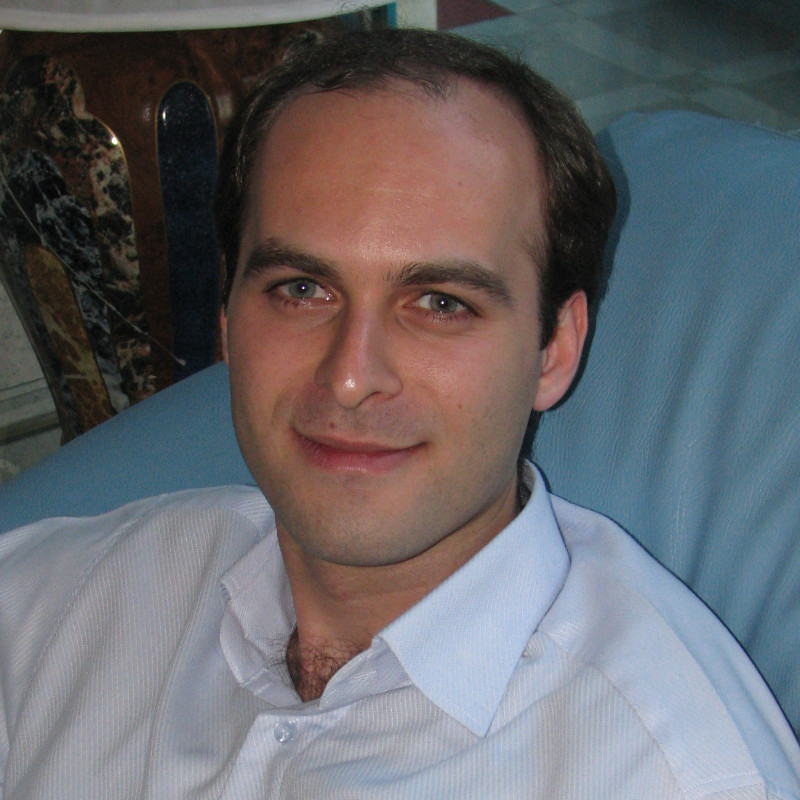
Miguel Perez is an Associate Professor at the Department of Mathematics, Faculty of Technology, Linnaeus University. His work focuses on integrating digital technologies into secondary mathematics education, with an emphasis on teacher-centered design systems and professional development. Current roles: Program Coordinator for the Subject Teacher Education Program (2023-2025), Deputy Head of the Department of Mathematics. Research areas: Mathematics education, educational technology, problem-solving pedagogy, and digital learning tools. His recent publications analyze praxeologies-in-action during problem-solving, the role of rituals in mathematical discourse, and maker education initiatives. Projects like "Differentierad integrering" and "Gemensam undervisningsmodell" aim to strengthen pedagogical practices through digital resources and collaborative models.
Stefan Nowak serves as Professor in the Department of Management and Innovation in Healthcare at Jerzy Kukuczka Academy of Physical Education in Katowice, Poland. His academic credentials include PhD and DSc (habilitation) degrees, with teaching responsibilities spanning Quality Management, Strategic Management, and Sustainable Development Engineering courses through 2025. His educational qualifications: PhD in Management Sciences DSc (habilitation) in Healthcare Systems Professor Nowak's research focuses on: Quality Management systems in tourism and healthcare Sustainable Development in supply chains Tourism Logistics optimization Waste Management innovation ERP/CRM system integration Religious pilgrimage infrastructure His work bridges theoretical frameworks with practical applications in public sector management, emphasizing environmental sustainability and operational efficiency. Analysis of his recent publications reveals consistent themes in sustainable tourism development, with increasing emphasis on digital transformation in waste management systems and pilgrimage site operations since 2015. His research demonstrates strong regional focus on Central European contexts while addressing global sustainability challenges. No scientific awards were documented in available sources. Professor Nowak actively supervises Master's and Diploma theses through coordinated seminars across multiple academic programs. While specific grant funding isn't referenced, his research output indicates sustained scholarly activity supported by institutional resources. He operates within standard university infrastructure without dedicated laboratory facilities, focusing on theoretical and applied management research through course development and thesis supervision.
Nima Honarmand is an Assistant Professor in the Department of Computer Science at Stony Brook University, where he co-directs the Computer Architecture Stony Brook (COMPAS) Lab . His research focuses on computer system design , particularly parallel computer architecture and operating systems . Education : Ph.D. in Computer Science from University of Illinois at Urbana-Champaign under Josep Torrellas. His work addresses challenges in deterministic replay of parallel programs to simplify debugging on multi-processor systems. Current research explores memory fencing, consistency models, and architectural extensions for reproducibility. Recent publications span conferences like ASPLOS, ISCA, PACT, and POPL, with emphasis on parallelism constraints , memory hierarchy optimization , and fault-tolerant systems . Awards include Best Paper at PACT 2011 and Best Paper Candidate at VTS 2007 . Teaching : Courses include Computer Architecture (CSE 502) and Operating Systems (CSE 306/CSE 506). Email : nhonarmand@cs.stonybrook.edu
David Kazmer is a Professor in the Department of Plastics Engineering at the University of Massachusetts Lowell's Francis College of Engineering. With a Ph.D. from Stanford University (1995) and prior roles in industry (GE Research & Development, GE Plastics), he specializes in advanced manufacturing processes, particularly polymer processing, additive manufacturing, and intelligent process control. Education: BS (Cornell, 1990); MS (Rensselaer Polytechnic, 1991); PhD (Stanford, 1995). His research focuses on plastics product and process design , additive manufacturing , polymer rheology , and multivariate process control , with over 300 publications and 20 patents. Key contributions include innovations in injection molding sensors, fused deposition modeling, and sustainable polymer processing. Recent Google Scholar publications (2025-2024) highlight advancements in shell deposition additive manufacturing , co-extrusion for graded foams , thermal contact resistance modeling , and recycled polyolefin processing . These works span polymer blends, composite materials, and energy-efficient manufacturing systems. Scientific awards include: Fellow, Society of Plastics Engineers (2011) ASME Kos Ishii-Toshiba Award (2012) Office of Naval Research Career Award (1997) Multiple Best Paper Awards (ASME, SPE) As an Associate Research Professor in Mechanical & Industrial Engineering at UMass Amherst, he bridges interdisciplinary research. His industry experience with GE and Synventive Molding Solutions informs practical process development. Current projects involve self-powered sensors, machine learning for extrusion optimization, and community-focused engineering education initiatives.
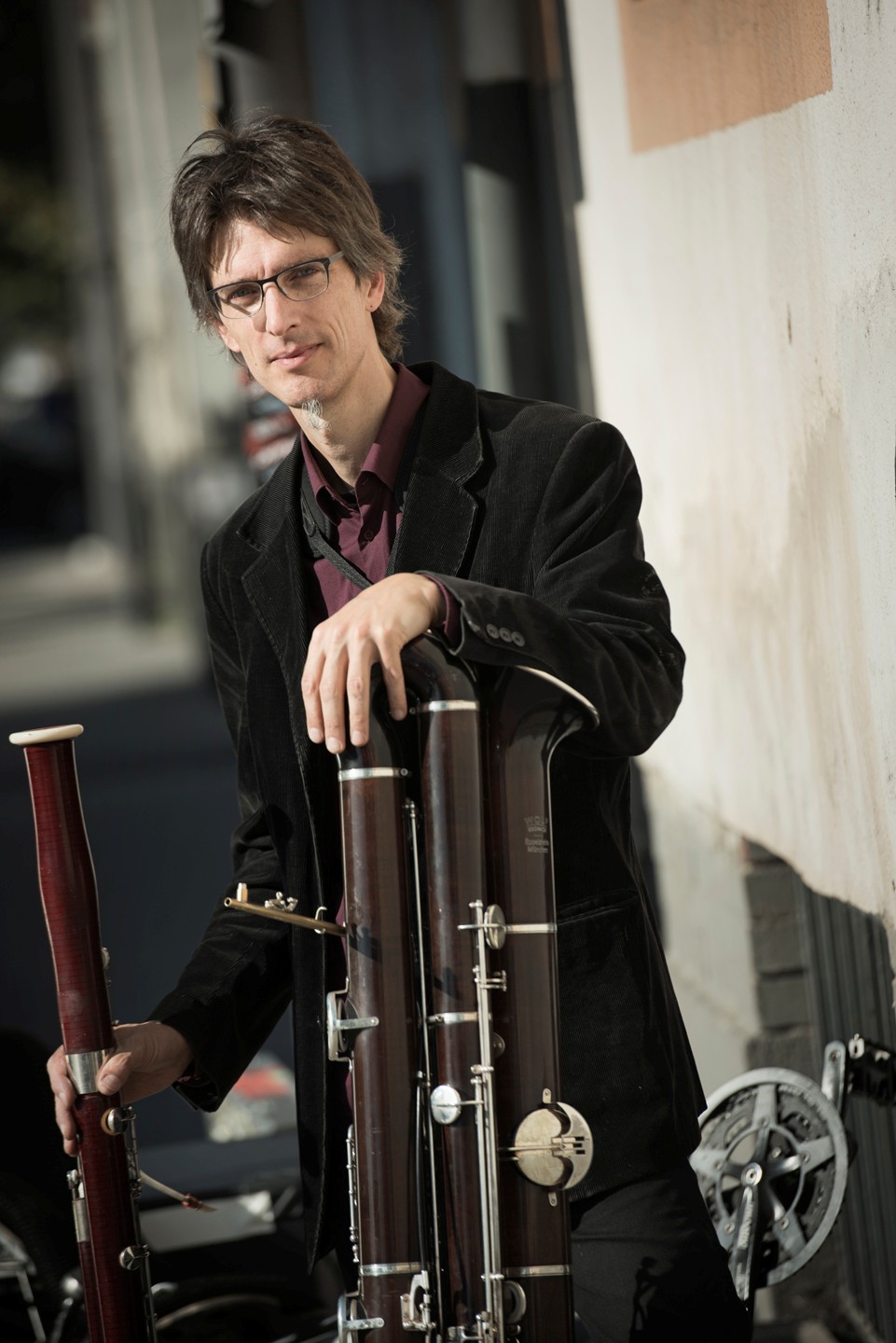
Professor Johannes Schwarz serves as Acting Professor for Contemporary Chamber Music at the University of Music Würzburg since April 2025. He maintains active teaching positions at the Frankfurt and Stuttgart Academies of Music, and regularly conducts workshops at international festivals including those in Lucerne and Darmstadt. As principal bassoonist with Ensemble Modern since 2003, he has established himself as a versatile performer working across diverse musical genres and collaborative projects. Professor Schwarz's research interests span contemporary chamber music performance, bassoon technique innovation, and the integration of live electronics with acoustic instruments. His work bridges traditional classical performance practices with experimental approaches, including free improvisation, period instrument performance, and cross-genre collaborations that extend to heavy metal and electronic music. He has pioneered new techniques for bassoon performance that have expanded the instrument's expressive capabilities in contemporary contexts. His artistic output demonstrates a consistent focus on expanding the bassoon repertoire through commissions and collaborations with leading contemporary composers. The development of the comprehensive digital sound collection for bassoon in 2018 represents a significant contribution to contemporary bassoon performance practice, influencing new compositions worldwide. His performance projects often incorporate multimedia elements, as evidenced by his solo music theater production 'UNA SOLO' (2018/19) and the 2023 performance 'Blow the Mausoleum' in Dessau. During his career, Professor Schwarz has held significant leadership roles including artistic director of the International Ensemble Modern Academy (2013-2018) and organizer of the international chamber music course for the Klangspuren Festival in Innsbruck (2008-2022), where he collaborated with renowned composers such as George Benjamin, Unsuk Chin, and Sofia Gubaidulina.
Professor Aki Tsuchiya is a leading academic at the University of Sheffield , holding joint appointments at the School of Economics and the School of Medicine and Population Health . With a PhD from Kyoto University, her career spans over two decades in health economics and normative economics research. PhD (Kyoto University) Joint Professor, School of Economics & School of Medicine and Population Health Research focus: Health economics, social welfare functions, equity in healthcare Her research explores preference elicitation for health and wellbeing, incorporating distributional concerns into social welfare functions, and normative economics of health. She leads projects like SIPHER (2024-2028) and HealthMod (2024-2028), focusing on system-science informed public health and economic evaluation methods. Recent publications analyze social preferences across the digital divide , equivalent income value sets for health interventions, and equity in child health valuation . Her work bridges theoretical and applied economics, emphasizing ethical resource allocation in healthcare. Contact: a.tsuchiya@sheffield.ac.uk
Elisabeth Gsottbauer is a Professor in Environmental Economics at the Free University of Bozen-Bolzano, where she serves as Director of the Competence Centre for Sustainability. She also holds affiliations as a Visiting Fellow at the London School of Economics' Grantham Research Institute, a Research Fellow at the University of Cambridge's C-EENRG, and at the University of Innsbruck. Education: PhD in Economics from Universitat Autònoma de Barcelona Her research focuses on applying behavioral economics to climate and environmental policy through field and survey experiments. Key areas include promoting sustainable consumption, evaluating policy instruments like carbon labels, and investigating the intersection of behavioral science with green innovation and climate communication. Her publications appear in top journals such as Nature Sustainability , Nature: Communications Earth & Environment , The Economic Journal , and Journal of Environmental Economics and Management . Notably, she received the 2025 Research Prize for Sustainability for her work on climate behavioral interventions. Elisabeth collaborates with industry (e.g., catering/restaurant chains), policy entities (Behavioral Insights Team-UK, Austrian/Swedish governments), and environmental NGOs (e.g., RSPB). She also contributes to open science initiatives and replication studies, and serves as Lead Author of the Austrian APCC report and Expert to the South Tyrol Climate Assembly. Her teaching spans multiple institutions, including courses on sustainable mobility, climate economics, and behavioral-environmental policy. She actively explores visual communication of climate science through exhibitions like 'Visualizing Klimawandel'.
Stephen Cottrell is Professor of Music at City, University of London, where he has held various leadership positions including Head of the conjoint Departments of Music and Culture & Creative Industries (2010-15) and Assistant Vice-President responsible for establishing the City Doctoral College (2019-22). Previously, he was Senior Lecturer and Head of the Department of Music at Goldsmiths College. His academic journey began with studies at the University of East Anglia, Guildhall School of Music and Drama, and Paris Conservatoire, followed by an M.Mus. in Ethnomusicology and PhD at Goldsmiths College, supported by a British Academy scholarship. His research spans ethnographic approaches to musicians and music-making within Western art music tradition, the study of musical instruments (particularly the saxophone), and musical performance analysis. Cottrell's scholarly output includes seven books, fourteen book chapters, twenty-nine conference papers, nineteen journal articles, twenty-nine performances, and thirteen other publications. His recent work includes the 2024 article 'Musical Instruments and Palimpsestic Identity' which explores the transtextual relationships between musical instruments through Gérard Genette's literary theory of palimpsests. Cottrell serves as a member of the AHRC Peer Review College and as an external assessor for the Hong Kong Research Grants Committee and the Irish Research Council. He has examined over 25 PhD theses and held external examiner appointments at multiple institutions. His research interests bridge ethnomusicology, organology, and performance studies, with a particular focus on the saxophone and Western art music traditions. Member of British Forum for Ethnomusicology executive committee (2005-2012) Member of Royal Anthropological Institute ethnomusicology committee Associate editor of Twentieth-Century Music (2008-13) Artistic advisor to Saxophone Classics record label As a supervisor, Cottrell has guided numerous PhD students through research on diverse topics including ethnographic studies of live classical music concerts, networked jazz performances, the history of the Hang/Handpan, and the Yehudi Menuhin School's legacy. His work demonstrates significant impact across academic, performance, and cultural sectors, with research that connects historical music practices with contemporary performance contexts.
Cynthia Ann Toth is the Joseph A.C. Wadsworth Distinguished Professor of Ophthalmology at Duke University, with additional appointments as Professor of Ophthalmology and Professor of Biomedical Engineering. Her extensive career has positioned her as a leading authority in vitreoretinal diseases and surgery, particularly in the development and application of optical coherence tomography (OCT) technologies for both adult and pediatric patients. She has made significant contributions to retinal imaging, with a special focus on retinopathy of prematurity and age-related macular degeneration. Joseph A.C. Wadsworth Distinguished Professor of Ophthalmology Professor of Biomedical Engineering Specialist in Vitreoretinal Diseases & Surgery Director of advanced imaging research programs Dr. Toth received her M.D. from Drexel University in 1983, followed by ophthalmology training at Geisinger Medical Center (1984-1987) and the University of California, Davis, School of Medicine (1989-1991). Her educational background provided the foundation for her pioneering work in retinal imaging technologies. Dr. Toth's research primarily focuses on advancing optical coherence tomography for clinical and surgical applications. Her work spans several critical areas including: development of handheld OCT devices for infant and pediatric imaging; intraoperative OCT for vitreoretinal surgery; OCT angiography for microvascular assessment; and application of OCT in retinopathy of prematurity and age-related macular degeneration. She has been instrumental in translating OCT technology from research settings to clinical practice, particularly for vulnerable patient populations like premature infants who require bedside imaging. Her publication record demonstrates a clear trajectory from foundational OCT technology development to sophisticated clinical applications. Recent work shows increasing integration of artificial intelligence, robotics, and novel optical clearing techniques with OCT systems. The research consistently bridges engineering innovation with immediate clinical needs, particularly in pediatric ophthalmology and retinal surgery. ARVO/Alcon Keynote (2022) Gertrude Pyron Award from American Society of Retina Specialists (2021) Scientific Achievement Award from Women in Ophthalmology (2019) Wacker Prize from Club Jules Gonin (2018) Paul Henkind Award and Lecture from Macula Society (2018) Rockefeller Foundation Academic Writing Residency (2017) As a mentor, Dr. Toth has guided numerous students and junior faculty in ophthalmic research, with particular emphasis on imaging technology development. Her research has been supported by significant grant funding from NIH and other organizations, enabling her team to develop innovative imaging approaches that have transformed clinical practice in retinal diseases. She has been particularly active in collaborative research efforts, often leading multi-center studies that establish standards for retinal imaging and diagnosis. Dr. Toth leads a multidisciplinary research team that includes ophthalmologists, biomedical engineers, computer scientists, and clinical researchers. Her laboratory focuses on developing next-generation imaging technologies that can be deployed at the bedside for infants and during surgery for precise guidance. The team has pioneered several handheld OCT systems specifically designed for pediatric use and has developed novel image processing techniques that extract maximum diagnostic information from OCT scans.
Kevin MICHENEAU is a Teacher-Researcher at CESI School of Engineering, affiliated with the LINEACT research laboratory in Guipavas, France. His work bridges building energy systems and experimental particle physics, focusing on data-driven optimization of smart buildings and dark matter detection. Education: PhD in Subatomic Physics, University of Nantes (2018): "Study of residual electrons in the XENON100 experiment" Master's degree in Research in Subatomic Physics, University of Nantes (2014) Research Focus: Dr. MICHENEAU develops advanced models for building energy performance with emphasis on occupancy behavior impact and smart control systems . His methodology combines sensor fusion and multi-objective optimization to balance energy efficiency with occupant comfort. Previously, he contributed to XENON dark matter experiments through signal reconstruction and background modeling. Publication Evolution: His research trajectory shows a strategic pivot from particle physics (2017-2019) to building energy systems (2024), applying rigorous data analysis techniques across domains. The 2024 MPC optimization study demonstrates transferable methodology from high-precision physics to sustainable engineering. Mentorship: Currently supervising PhD candidate BOURGOIN on "Towards modeling the impact of occupancy on the energy behavior of smart buildings" (2023-2026). Research Ecosystem: Member of the "Engineering and Digital Tools" team within LINEACT, teaching Computer Science, Mechanics, and Physics across preparatory and engineering cycles while contributing to PhD training at University of Nantes.
Professor Peter Quinn is a distinguished astrophysicist at the University of Western Australia , serving as Chairman of the Board at the International Space Centre and affiliated with the International Centre for Radio Astronomy Research (ICRAR) and the Office of DVC Research . He received his BSc(Hons) in Mathematics and Physics from the University of Wollongong in 1978 with the University Medal in Physics, and his PhD in astronomy and astrophysics from the Australian National University (ANU) in 1982. His research centers on galaxy formation and evolution , dark matter dynamics , and the Epoch of Reionization . He has pioneered computational astrophysics, particularly through the discovery of the Quinn-Goodman effect and contributions to the MACHO Dark Matter Search Project . He has led major initiatives in the European Southern Observatory (ESO) , including the Very Large Telescope (VLT) data flow system and the Astrophysical Virtual Observatory (AVO) project. His scholarly work spans radio astronomy , supercomputer simulations , and data-intensive science , with a strong focus on the Square Kilometre Array (SKA) and gravitational wave detection . His work has earned him several prestigious accolades including a NASA High Performance Computing Award and a Computerworld 21st Century Achievement Award . He is a Fellow of the Australian Academy of Science (FASA) and a Fellow of the Australian Institute of Physics (FTSE) . His research also extends to large-scale international infrastructure projects and planning for the Square Kilometre Array and gravitational wave observations . He has served as Division Head at ESO and as a Chief Investigator for numerous grants, including the Australian SKA Regional Centre and ICRAR core funding .
Afroditi Psarra is an Associate Professor of Digital Arts and Experimental Media (DXARTS) at the University of Washington, where she runs the DXARTS SoftLab. Her work bridges art, science, and technology with a focus on critical discourse in the creation of artifacts. She has presented her work at internationally renowned media art festivals such as Ars Electronica, Transmediale, CTM, Eyeo, Piksel, and WRO Biennale, as well as venues like Bozar, Onassis Stegi, EMST (Greek Museum of Contemporary Art), and Walker Art Center. Dr. Psarra's research centers on the art and science interaction with a critical discourse in the creation of artifacts. She is particularly interested in the use of the body as an interface of control, and the revitalization of tradition as a methodology of hacking existing norms about technical objects. Her practice builds on and extends the work of Cyber and Techno-Feminism(s) and the idea of female (and feminized) bodies as matrices of information. Her educational background includes a Ph.D. from Complutense University of Madrid, Spain (2014). Her recent publications and projects demonstrate a consistent exploration of wearable technology, e-textiles, physical computing, and sound art. Psarra's work often examines the intersections of technology with gender, embodiment, and cultural critique, particularly through her investigations of voice assistants, RF technologies, and bodily interfaces. She frequently collaborates with other artists and researchers across disciplines to create interactive installations and performances that challenge conventional technological paradigms. Dr. Psarra's scholarly output spans multiple domains including human-computer interaction, media art, performance studies, and critical technology studies. Her work consistently addresses themes of technological embodiment, materiality, and the politics of interface design across her various projects from voice assistant subversion to RF ecology explorations. 2019 Bergstrom Award for Art & Science Mellon Faculty Fellow 2019-20 As an educator, Dr. Psarra teaches courses in mechatronic art, material and cultural bias in algorithmic systems, and special topics in digital arts. She has mentored numerous students through their creative research projects and has been involved in various interdisciplinary initiatives at the University of Washington, including collaborations with the Systems Biology program. Her teaching emphasizes hands-on experimentation, critical making, and the exploration of technology through artistic practice. Dr. Psarra leads the DXARTS SoftLab, which serves as a research space for exploring soft materials, electronics, and interactive systems. The lab supports projects that bridge traditional craft techniques with digital technologies, particularly focusing on e-textiles, wearable computing, and embodied interaction. Under her direction, the SoftLab has become a hub for interdisciplinary research that combines art, engineering, and cultural critique.
Dr. Abraham Zhang is a Senior Lecturer in Supply Chain Management and Technology at the Adam Smith Business School, University of Glasgow, which he joined in August 2023. Prior to his current position, he held academic appointments at the University of Stirling, University of Essex, AUT University, University of Waikato, and Nanyang Technological University. His academic journey began with a PhD in Logistics and Supply Chain Management from the University of Hong Kong, following industry experience as a production supervisor in Singapore and a Lean management consultant serving the Asia-Pacific region. Dr. Zhang's research interests span circular economy and supply chain management, carbon neutral logistics, environmentally and socially sustainable operations, and logistics enabling technologies including Blockchain, IoT, and AI. He has been internationally recognized for his expertise on circular economy and sustainability, particularly in circular supply chain management. His work has been instrumental in conceptualizing circular supply chain management as the integration of circular thinking in supply chain practices. He has led significant research projects including the NZD$10.9 million 'Āmiomio Aotearoa – A circular economy for the wellbeing of New Zealand' project. His scholarly contributions demonstrate a clear trend toward circular economy applications in supply chain management, with significant focus on China's environmental policies and waste management systems. The publications reveal increasing integration of digital technologies like Blockchain in sustainable supply chain solutions, with growing emphasis on empirical studies of circular economy implementation in real-world contexts. Stanford 2% Club of the world's top-cited scientists since 2023 Annual Review Award (Essex Business School, 2022) Emerging Researcher Award (AUT University, 2018) Outstanding Reviewer Recognition (International Journal of Production Economics, 2018) Best Published Manuscript Award (Maritime Policy & Management, 2016) Dr. Zhang has supervised four PhD students to completion and numerous Master's students, with research aligned with his expertise in circular supply chains and sustainable operations. His grant portfolio includes leadership of the NZD$10.9 million Endeavour Fund project 'Āmiomio Aotearoa' and several substantial Chinese National Science Foundation grants totaling over RMB¥780,000. He serves as Associate Editor for Business Strategy and the Environment and on the Editorial Board of Transportation Research Part E, reflecting his significant contributions to the field.
Christof Migone is an Associate Professor in the Department of Visual Arts at Western University within the Faculty of Arts and Humanities. He holds a Ph.D. from New York University (2007), an M.F.A. from Nova Scotia College of Art and Design (1996), and a B.A. from Concordia University (1991). Ph.D., New York University, 2007 M.F.A., Nova Scotia College of Art and Design, 1996 B.A., Concordia University, 1991 Migone's research focuses on the intersections of sound, voice, language, and the body within performance contexts. His work explores themes of intimacy, complicity, and endurance, often pushing boundaries between artistic disciplines. He has developed a distinctive approach that blends theoretical inquiry with artistic practice, particularly in the realm of sound art where he examines how voice and language function beyond conventional communication. His practice spans performance, installation, writing, and curation, creating a rich ecosystem of artistic engagement that extends beyond traditional academic boundaries. His publications and artistic output demonstrate a consistent exploration of sonic phenomena and their relationship to embodiment and social dynamics. Over his career, Migone has evolved from early radio and performance works to increasingly complex installations and collaborative projects that investigate the materiality of sound and its cultural implications. His recent work shows a maturation of themes around water, voice, and collaborative processes, particularly evident in his ongoing 'Swan Song' series with Marla Hlady and the 12-year 'You And I Are Water Earth Fire Air Of Life And Death' project. Exhibition Award for 'Volume: Hear Here' (2013) Exhibition Award for 'Seripop: Landscapes Events Reproducted' (2012) Michael Kirby Memorial Prize for Distinguished Doctoral Dissertation (2007) Migone has received commissions from prestigious institutions including the Tate Modern, Kunstradio, Centre for Art Tapes, and New Adventures in Sound Art. He is known for mentoring emerging artists through his curatorial projects and has collaborated extensively with fellow artists including Marla Hlady, Alexandre St-Onge, and others. As a founding member of Avatar (Québec City) and co-founder of Squint Press with Alexandre St-Onge, Migone has been instrumental in building artistic communities and platforms for experimental work. Currently, he is developing a 12-year curatorial project that demonstrates his commitment to long-term artistic exploration. His practice spans performance, installation, writing, and curation, creating a rich ecosystem of artistic engagement that extends beyond traditional academic boundaries. Through his work with the Blackwood Gallery and other institutions, Migone has established himself as a significant figure in Canadian and international sound art communities.
Christina Wikström serves as Associate Professor in the Department of Applied Educational Science at Umeå University and Project Manager for Sweden's national higher education admissions test (SweSAT). Her academic work centers on validity issues in educational testing systems and admissions processes across multiple institutional contexts. Her research focuses on test design and validity, particularly regarding higher education selection mechanisms. She extends this expertise to specialized domains including police recruitment assessment, where she examines constructs like empathy and perspective-taking. Key areas encompass educational measurement theory, standardized testing applications, and the interplay between cognitive and non-cognitive factors in selection systems. Analysis of her 2016-2025 publications reveals consistent emphasis on educational assessment validity, with growing exploration of cross-context applications. Recent work demonstrates methodological rigor in comparing self-reported versus objective measurements and addressing equity considerations in test-based selection processes. Scientific Awards: No awards were documented in the source materials. Advising and Grants: No information regarding student supervision or research funding was provided in the available texts. Wikström contributes to the Measurement in Behavioral Sciences research group and led the "Perspective-taking in future police officers" project (2017-2020), which investigated training effects on cognitive empathy in law enforcement candidates through controlled experimental design.