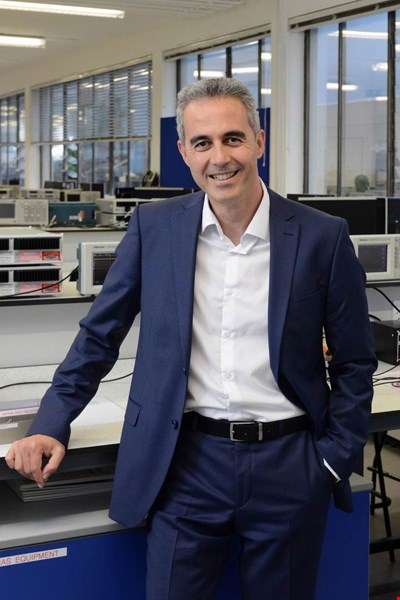
Shanti KrishnanView profile
Senior Lecturer
Dr. Shanti Krishnan is a Senior Lecturer in the School of Engineering at Swinburne University of Technology, where she conducts interdisciplinary research at the intersection of physics, engineering, and cybersecurity. Her work spans fundamental physics experiments and practical industrial applications. Her research focuses on nuclear and plasma physics , particle physics , and astronomical sciences , with key contributions to muon tomography for monitoring mining infrastructure, dark matter detection via the SABRE South experiment at the Stawell Underground Physics Laboratory, and instrumentation development for the W. M. Keck Observatory. She also explores cybersecurity in Industry 4.0 , particularly through digital twin technologies and anomaly detection in cyber-physical systems. Her recent publications highlight advancements in muon-based navigation for space exploration, cosmic ray-based cybersecurity systems, and simulation of dark matter detectors. These works demonstrate a strong trend toward applying particle physics principles to real-world engineering and security challenges. Dr. Krishnan has received multiple grants, including external funding from HILT CRC Limited and internal grants from Swinburne University, supporting projects such as impact-driven learning materials for net zero in heavy industries and digital twin applications for blood product manufacturing. Development of Impact driven learning materials for net zero in heavy industries – HILT CRC Limited (2025) Rapid Scenario Testing using digital twin for sustainable and scalable manufacturing of blood products – Swinburne University (2024) A Dynamic In-bed Weight Monitoring System for Aged Care Facilities – Cloud Burst Software Pty Ltd (2023) She is actively supervising PhD students, including a project on using digital twins and machine learning to detect cyber-attacks in Industry 4.0 manufacturing systems. Her work is supported by collaborations with institutions such as Caltech, UC Observatories, ANU, and W. M. Keck Observatory, reflecting a strong international research network. Dr. Krishnan leads and contributes to multidisciplinary research teams focusing on detector development, secure industrial systems, and sustainable manufacturing. Her lab and project teams integrate physics, engineering, and data science to solve complex real-world problems.