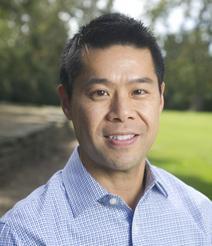
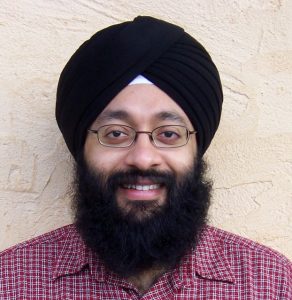
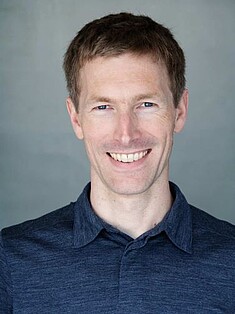
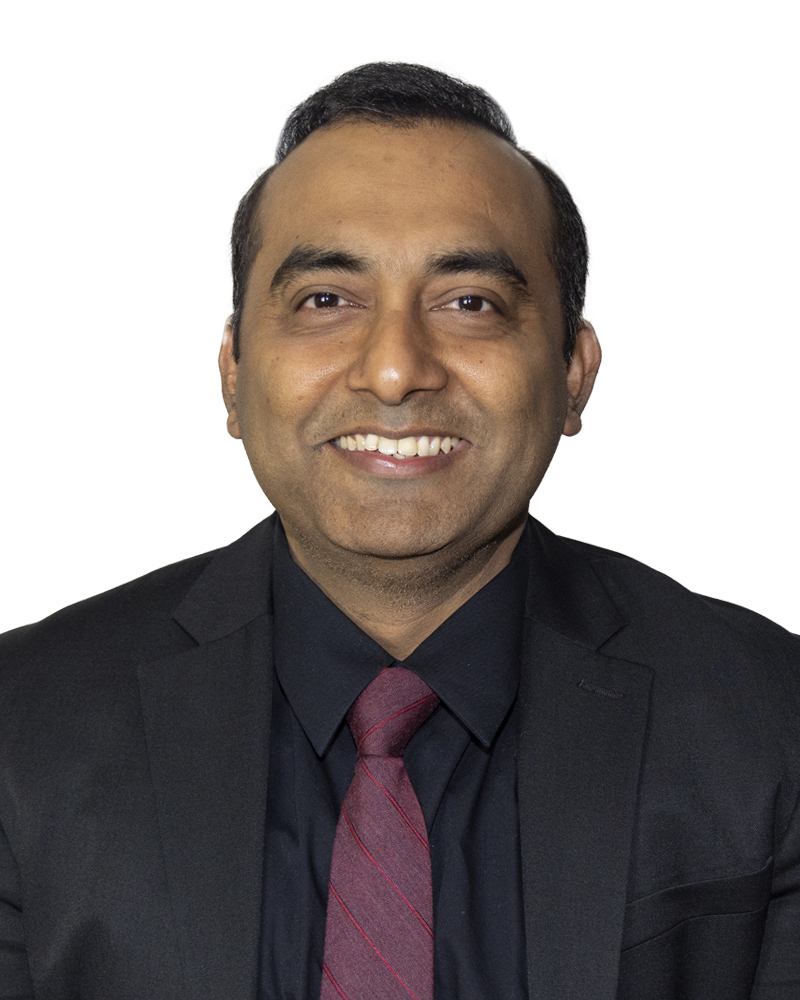
Dr. Erik Linstead is an Associate Professor and Senior Associate Dean at Chapman University, affiliated with the Fowler School of Engineering, School of Pharmacy, and George L. Argyros College of Business and Economics. His expertise spans Machine Learning, GPU Programming, Autism Spectrum Disorder, Assistive Technologies, Predictive Analytics, and Virtual Reality. Education: Bachelor of Science, Chapman University Master of Science, Stanford University Ph.D., University of California, Irvine Dr. Linstead's research integrates machine learning with diverse domains, including autism treatment, environmental monitoring, and software engineering. His recent publications focus on coral reef health, land surface temperature trends, and embedded machine learning systems. His scholarly work includes collaborations in remote sensing, medical informatics, and neurodiversity support. Articles highlight his interdisciplinary approach, applying AI to ecological challenges (e.g., Red Sea coral reefs, Nile Basin droughts) and human-centered technologies (e.g., VR therapy for autism, medication adherence analysis).
Lori Graham-Brady is a Professor in the Department of Civil and Systems Engineering at Johns Hopkins University's Whiting School of Engineering. She serves as Vice Dean for Faculty and directs the Center on AI for Materials in Extreme Environments (CAIMEE), while also holding secondary appointments in Mechanical Engineering and Materials Science and Engineering. Her research focuses on stochastic mechanics, multiscale modeling, and machine learning applications for understanding material variability under extreme conditions. Research areas include probabilistic mechanics, AI-driven materials design, and fragmentation modeling. Leadership roles: Director of CAIMEE, former Director of Center for Materials in Extreme Dynamic Environments, founding Director of HT-MAX, and founding Associate Director of HEMI (2012-2024). Education: PhD in Civil Engineering and Operations Research from Princeton University. Her recent work emphasizes AI for multiscale mechanics, error propagation in material characterization, and digital microstructure generation. Publications highlight stochastic modeling of ceramics, composites, and metals under impact and high-strain-rate loading. Scientific awards include the Presidential Early Career Award, Huber Civil Engineering Research Prize, and Fellowships in ASCE EMI and USACM. She led NSF IGERT programs and serves as Associate Editor for the ASCE Journal of Engineering Mechanics.
Dr. Kevin Gee is a Professor in the School of Education at the University of California, Davis, specializing in the School Organization & Educational Policy emphasis area. He serves as Director of the School Policy, Research, and Action (SPARC) Center and is a Faculty Research Affiliate with the Center for Poverty & Inequality Research. As a 2020-25 Chancellor's Fellow, Dr. Gee leads research initiatives focused on vulnerable youth populations and educational policy impacts. His work bridges education, public health, and social welfare systems to address structural inequities affecting children's development and academic success. Dr. Gee's educational background includes: Ed.D., Harvard Graduate School of Education, Quantitative Policy Analysis in Education (2010) Ed.M., Harvard Graduate School of Education, International Education Policy (2006) M.P.I.A., University of California, San Diego, Pacific & International Affairs (cum laude, 2004) B.A., University of California, Berkeley, City & Regional Planning (magna cum laude, 1994) Dr. Gee's research centers on the critical intersection between health and education systems, examining how schooling can influence children's well-being. He investigates policies addressing adverse childhood experiences including bullying, food insecurity, abuse, and neglect. His work employs rigorous quantitative methods including Hierarchical Linear Modeling, longitudinal analysis, and experimental/quasi-experimental designs. Dr. Gee focuses particularly on vulnerable populations such as children with disabilities, Asian American and Pacific Islander youth, and those involved in the child welfare system, seeking data-driven solutions to educational inequities. Analysis of Dr. Gee's recent publications reveals a strong focus on educational equity, with particular attention to vulnerable student populations. His work spans school absenteeism patterns, bullying and hate speech against AAPI youth, food insecurity impacts, and health-related educational outcomes. The research demonstrates increasing interdisciplinary collaboration, particularly with public health researchers, and shows a growing emphasis on pandemic-related educational disruptions and their disproportionate impacts on marginalized communities. Dr. Gee's notable scientific awards include: National Academy of Education (NAEd)/Spencer Postdoctoral Fellowship (2015) Foundation for Child Development (FCD) Young Scholars Program Award (2014-2017) UC Davis Hellman Fellowship (2015-2016) Chancellor's Fellowship (2020-2021) Outstanding Faculty Award, Asian Pacific American UC-Systemwide Alliance (2023) Distinguished Visiting Scholar, Advanced Research Collaborative, CUNY (2022) Dr. Gee serves as Principal Investigator for multiple significant grants, including the Heising-Simons Foundation project on districtwide family engagement strategies and chronic absenteeism (2024-2026), and the UC Davis SEED funding for research on how Asian American and Pacific Islander youth confront bullying. He also serves as Co-Investigator on the AAPI Data Grant examining school climate influences on bullying experiences. His grant portfolio demonstrates strong interdisciplinary collaboration, particularly between education and public health researchers, with a consistent focus on generating actionable insights for educational policymakers and practitioners. As Director of the School Policy, Research, and Action (SPARC) Center at UC Davis, Dr. Gee leads a research team focused on generating data-informed insights about underserved and overlooked youth in educational policy. The center's work specifically supports Asian American and Pacific Islander youth who have experienced bullying, children with chronic absenteeism, and child welfare-involved youth who have experienced maltreatment. The SPARC Center collaborates with various California school districts and state agencies to translate research into practical policy recommendations and implementation strategies.
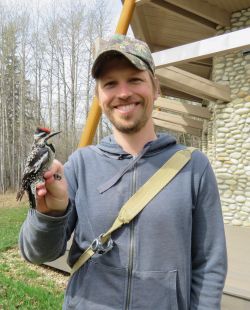
Brian Weeks is an Associate Professor in the School for Environment and Sustainability at the University of Michigan, where he joined as an Assistant Professor in 2019. His research focuses on understanding how species and communities respond to human-induced environmental changes, with particular emphasis on avian systems. Weeks leads an active research group that integrates museum specimen-based work, genomics, and field studies to investigate biodiversity responses to global change. Weeks' research interests span evolutionary ecology, climate change biology, and biodiversity conservation. His work primarily examines how bird species and communities have responded to environmental change through morphological adaptations. He combines museum-, field-, and lab-based approaches to study evolutionary processes across multiple scales, from macroevolutionary patterns in the Solomon Islands to contemporary changes in North American migratory birds. His lab has developed innovative methods like Skelevision for high-throughput measurement of functional traits from museum skeletal specimens. His publication record shows a strong focus on climate-driven morphological changes in birds, with recent work demonstrating how warming temperatures drive size reductions while simultaneously increasing wing length. His research has revealed that smaller-bodied species change at faster rates, and that migration timing shifts are decoupled from morphological changes. Weeks' lab also investigates biodiversity-ecosystem functioning relationships and extinction risk prediction. Packard Fellowship in Science and Engineering (2022) Ecological Society of America's George Mercer Award (2022) Katma Award, American Ornithological Society ISI Highly Cited paper (2021) Weeks advises multiple PhD and Master's students, and his lab collaborates extensively with researchers across institutions. His work has received significant media attention, with coverage in Science, The Wall Street Journal, The Washington Post, BBC News, and numerous international outlets. His research on birds shrinking due to climate change achieved an Altmetric score higher than 99.98% of papers tracked, reflecting its substantial scientific and public impact.
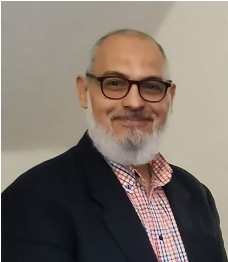
Hossam Hewidy is a Senior University Lecturer in Urban and Regional Planning at Aalto University's Department of Architecture, where he serves as Head of Major in Architecture for the Master’s Programme and Head of the Minor in Urban and Regional Planning. With dual expertise as an architect and urban planner, he bridges professional practice and academic research in Nordic urban contexts. His educational background includes a DSc, MSc, and BA in Architecture. Research interests span multicultural planning, placemaking, power dynamics in planning, spatial justice, land use and climate change mitigation, planning education, and public libraries as urban hubs. His work critically examines immigrant entrepreneurship, ethnic retail landscapes, and spatial justice through Helsinki case studies. Recent publications (2021-2025) reveal three dominant trends: (1) Analysis of public libraries as social infrastructure across Nordic cities, (2) Investigation of spatial justice in Helsinki planning competitions and immigrant spaces, and (3) Exploration of urban resilience through Finnish regional development frameworks. His scholarship consistently centers marginalized voices in planning processes. Hewidy's scientific recognition includes: Best Diploma Thesis Grant by OSKARI VILAMON RAHASTON (2020) for supervising Heta Seppälä's urban metabolism research Lappset Prize (2018) for supervising award-winning landscape architecture thesis He has secured funding from the Academy of Finland, Finnish Ministry of Environment’s Neighbourhood Renewal Programme, BEMINE consortium, and EU regional instruments. As AESOP Executive Committee member and GPEAN Secretary, he shapes global planning education standards while leading curriculum development for post-pandemic mixed-modality teaching in architecture studios. His departmental leadership extends to evolving the Architecture Major and Urban Planning Minor programs, with current focus on integrating climate resilience into spatial planning education and examining public libraries as critical social infrastructure in urban transformation.
Dr Pengpeng Hu is a Senior Lecturer in Fashion Technology at the Department of Materials, The University of Manchester, UK. His research focuses on geometric deep learning, 3D human body reconstruction, point cloud processing, and smart textiles, bridging fashion technology with biomedical and engineering applications. Associate Editor: IEEE Transactions on Neural Networks and Learning Systems, IEEE Transactions on Automation Science and Engineering Academic Editor: PLOS ONE Editorial Board Member: Scientific Reports Programme Chair: 25th UK Workshop on Computational Intelligence Area Chair: 35th British Machine Vision Conference His work advances vision-based measurement systems, wearable technology, and 3D scanning for clothing and healthcare. Recent publications include innovations in MXene-based electronic textiles, 4D hand measurement extraction, and anthropometric analysis from depth images. Recipient of the Emerald Literati Award for an outstanding paper in 2019 Dr Hu accepts self-funded PhD students in areas like 3D human reconstruction, point cloud processing, and smart textiles. His editorial roles and conference leadership highlight his influence in computational intelligence and machine vision communities.
Dr. Matt Castle is a Researcher affiliated with the University of Cambridge , specializing in interdisciplinary approaches to food security and plant sciences. He serves as the Head of Bioinformatics Training and Head of PSLS Biostatistics Initiative within the Department of Plant Sciences . His work spans multiple domains, including plant disease modelling, infectious disease dynamics, and global governance of food systems. Research Themes: Modelling for Food Security, Plant Disease Modelling, Food Landscapes, Political Economy of Hunger His recent publications highlight expertise in ecological and agricultural modelling, with a focus on: Aflatoxin contamination in maize Urban forest pest dynamics Climate-driven range expansions Size-structured ecosystem resilience While his work intersects with food supply chains, land resources, and health, no specific scientific awards or student advisement details were listed in available public records.
Montek Singh serves as an Associate Professor and Associate Chair for Academic Affairs in the Department of Computer Science at the University of North Carolina at Chapel Hill. His research focuses on high-performance and energy-efficient digital systems with particular emphasis on asynchronous and mixed-timing circuit design. Dr. Singh received his Ph.D. in Computer Science from Columbia University in 2002 and his B.Tech. in Electrical Engineering from IIT Delhi, India, in 1993. His primary research interests span high-performance and low-power digital systems, with specialization in asynchronous or clockless and mixed-timing integrated chip design. His work encompasses circuit design methodologies, CAD tools for automated synthesis, analysis and optimization techniques. He has also explored applications in energy-efficient mobile graphics hardware, secure chip design for computer security, and design challenges in emerging computing technologies. His research has practical applications in industry, with work transferred to companies including IBM, Boeing, and Handshake Solutions. Analysis of Dr. Singh's publications reveals a strong focus on asynchronous circuit design spanning two decades. His work covers fundamental pipeline architectures (MOUSETRAP), high-speed asynchronous systems, latency-insensitive design methodologies, and practical applications in graphics hardware and mobile devices. The research demonstrates consistent innovation in making asynchronous design more practical for real-world implementation while addressing performance, power efficiency, and testing challenges. His notable scientific achievements include: Best Paper Award at the 6th IEEE Intl. Symp. on Adv. Res. in Async. Circ. and Syst. (ASYNC-2000) Best Paper Finalist at the 8th IEEE Intl. Symp. on Async. Circ. and Syst. (ASYNC-02) Dr. Singh has secured significant research funding including participation in the DARPA CLASS Program (led by Boeing) in 2005, where he collaborated with Philips/Handshake Solutions to develop an industrial-strength automated synthesis flow for high-speed asynchronous systems. His research has strong industry connections and practical applications, with technology transferred to major companies including IBM and Boeing. He has also organized major academic events such as the International Symposium on Asynchronous Circuits and Systems 2009 (ASYNC 2009) at UNC Chapel Hill. Dr. Singh leads research in asynchronous systems design with connections to industry partners and practical applications. His work has been featured in prominent media outlets including The New York Times, International Herald Tribune, and Technology Review Magazine, highlighting the significance of clockless design approaches as traditional synchronous design approaches face limitations.
Michael Gadermayr serves as a Senior Lecturer and Head of the Research Group within the Department of Information Technologies and Digitalisation at Salzburg University of Applied Sciences. Based at Campus Urstein (Room 423), he can be contacted via michael.gadermayr@fh-salzburg.ac.at or +43-50-2211-1341. His research focuses on advancing medical imaging through artificial intelligence, with core expertise in deep learning for image segmentation, digital pathology, and cancer diagnosis. Key contributions include multimodal fusion techniques for CT/CBCT integration, synthetic data generation for surgical guidance, and objective wound healing quantification using vision models. His work bridges computer vision and clinical applications to solve real-world healthcare challenges. Analysis of his 15 most recent publications reveals a dominant trend toward leveraging synthetic data and multimodal fusion to enhance segmentation accuracy in oncology and surgical contexts. Over 70% of his work targets CT/CBCT integration for intraoperative navigation, while digital pathology applications (particularly thyroid and breast cancer) constitute 25% of his output. Emerging themes include wound healing quantification using SAM and parameter optimization for MIL-based pathology diagnostics. As Head of the Research Group in Information Technologies and Digitalisation, he leads initiatives focused on translating AI innovations into clinical practice, with emphasis on robustness in medical image analysis and practical deployment of segmentation tools for radiology and pathology workflows.
Prof. Thomas H. Kolbe serves as Chair of Geoinformatics at the Technical University of Munich (TUM), where he leads research in spatial, temporal, and semantic modeling of urban environments. His work focuses on developing foundational frameworks for 3D/4D city models, digital twins, and smart city applications through international standardization efforts including CityGML and IndoorGML. His research spans virtual city modeling, urban system simulation, and GIS integration with emerging technologies. Current projects emphasize AI-driven urban scenario generation, semantic streetspace modeling, and IoT integration in digital twin ecosystems. Recent publications demonstrate strong interdisciplinary connections between computer vision, urban planning, and geospatial data science, with particular emphasis on practical implementations of 3D city models for sustainability challenges. Prof. Kolbe actively contributes to professional organizations including the Round Table GIS eV (as Chairman since 2013) and the Munich Data Science Institute (as core member since 2021). His leadership extends to the Leonhard Obermeyer Center for digital methods in the built environment and the Hans Eisenmann Forum for agricultural sciences. His work bridges theoretical geoinformatics with practical urban applications through numerous collaborative projects with municipal governments and industry partners.
Priyanko Guchait is a tenured Full Professor and Program Director of the Doctorate in Global Hospitality Leadership (DGHL) at the Conrad N. Hilton College of Global Hospitality Leadership , University of Houston. His research focuses on organizational behavior, leadership, human resources, and service management in hospitality contexts, with over 75 peer-reviewed articles published. Education: B.E. in Mechanical Engineering, University of Pune, India M.S. in Hospitality Management, University of Missouri M.S. in Human Resources and Employment Relations Ph.D. in Hospitality Management, The Pennsylvania State University Research Interests include error management culture, psychological safety, service recovery performance, leader behavioral integrity, and AI’s impact on hospitality workers’ mental health. His work examines shame, forgiveness climate, and team dynamics in service environments. Article Trends show a focus on multi-level error management, human-robot collaboration in service recovery, diversity inclusion climates, and cross-cultural leadership studies. Recent papers explore AI ethics, pandemic response strategies, and emotional labor in hospitality roles. Awards & Honors Stephen Rushmore/HVS Research Excellence Award (2023, 2015) Donald Greenaway Excellence in Research, Teaching, and Service Award (2022) Best Paper Award, The Service Industries Journal (2023) ICHRIE Faculty Collegiality Award (2021) ICHRIE McCool Breakthrough Award (2021) Honored as 50-in-5 Scholar (2021) Provost’s Excellence Award (2015) Best Reviewer Awards (IJCHM 2016-2017) Committee & Editorial Roles include Associate Editor of IJCHM, Coordinating Editor of IJHM, and leadership positions at ICHRIE (President 2020-2021, Vice President 2019-2020). He has served on university curriculum, research, and Ph.D. selection committees.
Professor Dingxuan Zhou is a distinguished academic serving as Professor and Head of School of Mathematics and Statistics at The University of Sydney, joining the institution on August 29, 2022. He is also a member of The Net Zero Institute and has held significant editorial positions, including editor-in-chief of the journal "Analysis and Application" of "Mathematical Foundations of Computing" and serving on the editorial boards of over ten international journals. Educational Background: BSc in Mathematics from Zhejiang University, China (1988) PhD in Mathematics from Zhejiang University, China (1991) Professor Zhou's research spans learning theory, neural networks, wavelet analysis, and approximation theory, with his current focus on the theory of deep learning. His work aligns with the Faculty of Science Research Strengths in Complex Systems, Precision and Digital Health, Data and Decisions, and National Security. His research demonstrates a consistent progression from foundational mathematical theory to cutting-edge applications in machine learning and artificial intelligence, with particular emphasis on understanding the theoretical underpinnings of neural networks and deep learning systems. His extensive publication record reveals a strong trend toward distributed learning frameworks, approximation theory for neural networks, and the mathematical foundations of deep learning. Recent work focuses on federated learning, transformers, physics-informed neural networks, and the theoretical analysis of over-parameterized networks, reflecting the evolving landscape of machine learning research with increasing emphasis on theoretical guarantees and practical applications. Scientific Awards: Humboldt Research Fellowship (1993) Fund for Distinguished Young Scholars from the National Science Foundation of China (2005) Highly-cited Researcher by Thomson Reuters/Clarivate Analytics (2014-17) World's Top 2% Scientist by Stanford University (2021, 2022, 2023) Professor Zhou has demonstrated exceptional leadership in research and mentorship, having conducted over 40 research grants as Principal Investigator, supervised more than 20 PhD students, and co-organized over 20 international conferences. His collaborative approach is evident in his extensive co-authorship network across multiple institutions globally. He has also served in significant administrative roles including Head of Department of Mathematics (2006-12), Associate Dean of School of Data Science (2018-22), and Director of the Liu Bie Ju Centre for Mathematical Sciences (2019-22) at City University of Hong Kong.
Ajay B. Limaye is an Assistant Professor in the Department of Environmental Sciences at the University of Virginia. His research spans terrestrial and planetary landscapes, focusing on fluvial geomorphology, quantitative stratigraphy, and planetary surface processes. He employs remote sensing, geospatial analysis, numerical modeling, and laboratory experiments to study river dynamics, sedimentary deposits, and climate records on Earth, Mars, and Titan. His work integrates NSF and NASA-funded projects, including the development of a Landscape Evolution Laboratory with a 7m×3m experimental basin for controlled landscape modeling. His research explores feedbacks between landslides and ecology in central Virginia, Martian deltaic deposits, and submarine channel systems. He teaches courses in geomorphology, planetary geology, and fundamental geosciences. NSF CAREER Award (2023) : "GLOW: Sequencing rivers with machine learning and bioinformatics" Keck Institute Fellowship (2010) : High-resolution stratigraphy of Mars polar deposits Recent publications analyze braided river dynamics (e.g., Brahmaputra-Jamuna River), meander bend geometry, landslide-vegetation interactions, and planetary hydrology. His experimental work on autogenic fluvial terraces and turbidity maximum zones in estuaries demonstrates interdisciplinary methodological rigor.
Bogdan Iancu is a University Lecturer in the Department of Information Technology at the Faculty of Science and Engineering, Åbo Akademi University. He holds a PhD and Docent qualification in Computer Science, with extensive expertise in artificial intelligence and computer vision applications, particularly in the maritime domain. His academic career spans numerous research projects and publications that bridge theoretical AI concepts with practical industry applications. Dr. Iancu's research focuses on AI applications in maritime technology, with special emphasis on object detection systems, security challenges in AI models, and sustainable technological solutions. He has developed benchmark datasets like ABOships and ABOships-PLUS that have become valuable resources for researchers in maritime computer vision. His work addresses critical challenges including adversarial attacks on object detection systems, as evidenced by his 2025 publication on TOG Adversarial Attacks in YOLO Models. The analysis of his recent publications reveals a clear progression from foundational dataset creation to advanced security analysis and neurosymbolic approaches that combine neural networks with symbolic reasoning. His research shows increasing sophistication in addressing real-world challenges in maritime AI systems, with particular attention to robustness, security, and practical implementation. Dr. Iancu actively participates in numerous research projects including EDISS (Engineering of Data-intensive Intelligent Software Systems), SMARTER (Sea4Value Smart Terminals), and DECATRIP (Decarbonizing Transport Corridors). These projects involve collaboration with industry partners across Finland and Europe, focusing on applying AI to solve real-world challenges in maritime transport, digitalization, and sustainability. He has contributed to the academic community through teaching courses in Artificial Intelligence, Data Science, and Graph Algorithms, and through active participation in the Finnish Artificial Intelligence Society. His work aligns with UN Sustainable Development Goals, particularly those related to industry innovation, infrastructure, and climate action through projects like DECATRIP that focus on decarbonizing transport corridors.
Meghan Balk is a Postdoctoral Fellow with the Evolution and Paleobiology Group at the Natural History Museum, University of Oslo. Her work combines museum collections and trait databases to investigate how inter- and intra-specific traits change across time and space. She is passionate about digitizing museum data and enabling FAIR data principles for continued exploration of data-driven science across evolutionary biology and ecology. Balk received her Ph.D. from the University of New Mexico in 2017 with a concentration in Interdisciplinary Science through the Department of Biology. She earned her B.S. from the University of California, Davis in 2010 in the Department of Evolution, Ecology, & Biodiversity, with a minor in Paleobiology through the Department of Geology. Her academic journey reflects a strong foundation in both biological sciences and geological perspectives on evolutionary processes. Her research employs both micro- and macroscopic approaches to understand abiotic and biotic drivers of phenotypic evolution. She investigates within and among lineage phenotypic evolution using fossil and modern records of organisms like bryozoans. Her work on abiotic drivers examines body size changes in species like the bushy-tailed woodrat across geological time, while her research on biotic drivers explores predator-prey relationships in the fossil record, particularly focusing on species like Otodus megalodon. She utilizes machine learning and computational approaches to extract morphological trait data from specimen images. Balk's publication record demonstrates expertise across evolutionary biology, paleontology, ecology, and computational approaches. Her recent work focuses on developing FAIR and modular workflows for image-based knowledge discovery in the emerging field of imageomics. She has made significant contributions to understanding body size evolution across geological time, predator-prey relationships in the fossil record, and promoting open science principles for trait-based research. Her work bridges traditional paleontological methods with cutting-edge computational techniques. Balk is actively involved in several research projects including ROCKS PARADOX (Dissecting the paradox of stasis in evolutionary biology) and Machine-readable Nature (MaNa). She collaborates with researchers across institutions to create ontologies and workflows for trait data, such as the Functional Trait Resource for Environmental Studies (FuTRES) project and the Biology-Guided Neural Networks project. She teaches courses including Foundational Open Science Skills workshop, Git for Mere Mortals webinar, and R Basics Crash course, emphasizing the importance of reproducible research practices.