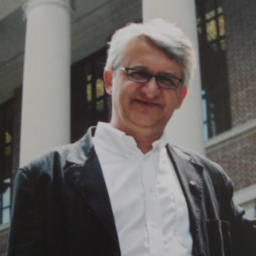
Thea Williamson is an Assistant Professor in the Department of English at Old Dominion University’s College of Arts & Letters. A bilingual literacy educator and former teacher of multilingual learners in Miami, New York City, Austin, and Maryland’s Eastern Shore, she focuses on writing as a tool for thinking, creative expression, and social change. Her teaching emphasizes critical theories like decolonization and critical race theory to explore literacy pedagogy and adolescent learning. Education Ph.D. in Curriculum & Instruction, University of Texas at Austin (2018) M.Ed. in Curriculum & Instruction, University of Texas at Austin (2012) B.A. in Spanish & Comparative Literature, Haverford College (2004) Research Interests Williamson investigates the sociopolitical dimensions of English Language Arts in culturally and linguistically diverse secondary schools, combining critical race theory, translanguaging, and discourse analysis. Her work highlights linguistic justice, anti-oppressive writing pedagogies, and the role of literacy in resolving alienation in educational spaces. Publication Trends Her recent publications explore critical race curriculum analysis, translanguaging in ELA classrooms, and adolescent writing identity. Key themes include racial equity in literature teaching, multimodal literacy engagement, and the role of self-reflection in empowering multilingual students.
Dr. Ian Sturrock is a Senior Lecturer in Games, Animation & Visual Effects at Teesside University, within the Department of Computing & Games. He is actively involved in teaching across undergraduate, postgraduate, and foundation levels, and contributes to the university's Arts Research Group. His academic work spans game design, narrative theory, and digital innovation, with a strong focus on motivation and world-building in games. His research interests include: Game narrative and narratology Transmedia storytelling and world-building Player motivation and identity Cybersecurity awareness through games The cultural impact of role-playing games Dr. Sturrock's recent publications explore innovative frameworks for measuring game motivation and examine how transmedia narratives can promote social justice. His work often bridges academic theory with practical game design, emphasizing interdisciplinary approaches. He has led the Innovate UK-funded project 'HackEscape,' which uses game mechanics to teach cybersecurity. His research has been published in journals such as Gamevironments and Analog Game Studies , and he has contributed to educational syllabi collections on game design pedagogy. He is currently accepting PhD students and has supervised research in game studies. Dr. Sturrock was previously affiliated with the University of Hertfordshire, where he served as Partnership Manager for the Creative Enterprise degree and contributed to the Media Research Group, co-organizing the first international Game of Thrones Conference in 2017. His professional engagements include media contributions on video game adaptations and the success of Games Workshop, reflecting his public-facing scholarship. He is an active researcher with a growing body of peer-reviewed work in digital games and narrative.
Laurier Turgeon is Professor of Ethnology and History and holds the Canada Research Chair in Ethnological Heritage at Université Laval, Quebec, Canada. He is a leading scholar in cultural and intangible heritage, with extensive international collaborations, including visiting positions at Harvard University and the MIT Media Lab. He directs the Laboratory for Ethnological and Multimedia Inquiry (LEEM) and has held leadership roles at the Institute of Cultural Heritage (2005–2012) and the interuniversity research center CELAT (1994–2000). Canada Research Chair in Ethnological Heritage Professor, Department of Ethnology and History, Université Laval Director, Laboratory for Ethnological and Multimedia Inquiry (LEEM) Editor-in-Chief, Ethnologies journal Co-director, Encyclopedia of the Cultural Heritage of French America His research focuses on the socio-political dimensions of cultural heritage, including transmedia narratives, food heritage, digital documentation, and the role of communities in heritage practices. He has pioneered innovative digital inventories of intangible heritage in partnership with Quebec’s Ministry of Culture and has led public exhibitions such as Manger Ensemble on Quebec’s food heritage. His work bridges academic research, public engagement, and policy development. The analysis of his recent articles reveals a strong thematic focus on critical heritage studies, with attention to borders, rights, ownership, and the political uses of heritage. His publications explore the tensions between formal heritage regimes and informal cultural practices, the role of art and media in heritage appropriation, and the spatial and territorial dimensions of cultural meaning-making. There is a consistent interdisciplinary approach, integrating anthropology, geography, law, and political theory. His scientific recognition includes: The Summit International Award for Creative Media—Visionnary Award (2014) Prix de l’Office de la langue française du Québec—Solutions mobiles (2014) Prix Marius Barbeau (2016) Laurier Turgeon actively mentors emerging scholars and collaborates with interdisciplinary teams. He has secured major grants for digital heritage projects and leads the development of mobile applications and online encyclopedias to democratize access to cultural knowledge. His future work continues to emphasize community-based heritage, digital innovation, and the global challenges of heritage preservation in a rapidly changing world. He leads the Laboratory for Ethnological and Multimedia Inquiry (LEEM), which specializes in multimedia documentation of intangible heritage, digital archiving, and public dissemination of research through exhibitions, mobile apps, and online platforms. The lab fosters collaboration between researchers, communities, and cultural institutions.
Charles Smith is a Professor of Political Studies at St. Thomas More College, University of Saskatchewan. He specializes in Canadian political economy, provincial politics, and labour law, with a focus on workers' rights, the Charter of Rights and Freedoms, and the intersection of law and class struggle. His research spans historical analysis of Canadian labour movements, modern legal challenges faced by unions, and the political economies of Canadian provinces. Education: Ph.D. in Political Science from York University. His work emphasizes critical engagement with neoliberalism's impact on labour rights and the evolving role of the Canadian state in regulating industrial relations. Research Interests: Labour history, provincial politics, constitutional law applications to labour rights, and the socio-political dynamics of Western Canada. His analysis often critiques legal frameworks that constrain workers' collective freedoms, advocating for a more equitable interpretation of Charter rights for unions. Publications Trends: Recent work focuses on Saskatchewan's political developments (2025 paper), historical labour legislation (2024), and digital-age workplace boundaries (2022). Earlier publications analyzed back-to-work laws (2020), anti-union legal architectures (2018), and landmark strike cases like the Pepsi Strike (2014). His 2017 book Unions in Court co-authored with Larry Savage remains a seminal text on constitutional labour rights. Awards: SSHRC Insight Development Grant (2012-2014) Teaching & Grants: Taught courses on public law, political economy, and Canadian democracy. His grants supported research into provincial political transformations and the socio-political impacts of austerity policies. Active in curriculum development around social justice and the common good. Labs/Teams: Co-editor of Labour/Le Travail , Canada's leading labour studies journal. Collaborates extensively with scholars like Larry Savage, Tom McIntosh, and Andrew Stevens on projects examining workers' legal rights, neoliberalism, and Western Canadian politics.
Dana L. Alden is a Professor at the University of Hawai`i at Manoa's Shidler College of Business, specializing in sustainable marketing, healthcare consumer decision-making, brand management, and cross-cultural consumer behavior. She serves as the Editor-in-Chief of the Journal of Sustainable Marketing and has been recognized with multiple awards for teaching, research, and service. PhD in Marketing and International Business, University of Texas, Austin (1990) MBA in Marketing with Honors, University of Hawai`i at Manoa (1984) MA in Public Affairs with Honors, University of California at Santa Barbara (1977) BA in Environmental Studies with Honors, University of California at Berkeley (1973) Her research focuses on sustainable marketing practices, health care consumer decision-making, brand management, and cross-cultural consumer behavior. She has pioneered frameworks for participatory marketing communication campaigns, developed culturally targeted patient decision aids, and explored the impact of social norms on environmental choices. A review of her publications reveals a consistent emphasis on cross-cultural dynamics, sustainable practices, and healthcare decision-making. Her work spans journals in marketing, international business, and medical decision-making, reflecting interdisciplinary expertise in bridging marketing theory with real-world health and sustainability challenges. Dennis Ching Teaching Award (2018) Professor of the Semester Award (2017) Best Professor of the Semester - Undergraduate Core Course (2015) Kaizen Service Award (2015) Award for Outstanding Short Course in SEM (2014) Shirley M. Lee Research Award (2013) As an educator, Alden has taught foundational courses like Principles of Marketing and specialized offerings such as Sustainable Marketing and International Cross-Cultural Consumer Behavior. She has also led healthcare executive programs in Honolulu, Tokyo, Nagoya, Kobe, Taipei, Hanoi, and Vietnam, integrating marketing principles into public health contexts.
Paulo Mendes Pinto is a Researcher at Lusófona University , where he coordinates the Science of Religions area and leads the REC-XXI project on Religions, Education, and Citizenship. He has directed the Master’s and Bachelor’s programs in Religious Studies and serves as a Director of Advanced Islamic Leadership Training and Editorial Director of Lusófona University’s publications. His work bridges interreligious dialogue , state-religion relations , and cultural heritage projects with institutions like the Presidency of the Republic Museum and Calouste Gulbenkian Foundation . Education: PhD in Cultural Studies (University of Aveiro, 2021), Master’s in Pre-Classical History and Culture (University of Lisbon, 2001), Bachelor’s in History (University of Lisbon, 1997). His research focuses on religious freedom in Portugal, Jewish heritage , Islamic patrimony , and education for sustainability in museums and libraries. Through projects like MUBIESUS and Database of Islamic Heritage in Portugal , he explores intersections of critical pedagogy , environmental justice , and cultural diversity . His recent articles analyze symbolism in religious rituals , urban spirituality , and political uses of religious discourse . He is actively involved in public science initiatives, collaborating with the European Academy of Religions (founded in 2017) and the World Parliament of Religions (Ambassador, 2015–2018). No formal awards are listed, but his leadership in projects like the Mapping of the Neves e Sousa Collection and Community Engagement Against Radicalization underscores his institutional impact.
Chrisanthi Avgerou is Professor of Information Systems at the London School of Economics and Political Science (LSE), affiliated with the Department of Management Science and Technology in the School of Business. She chairs IFIP Technical Committee 9 on Social Implications of Information Technology and serves as Associate Editor for Information Systems Research Journal and The Information Society Journal. Her educational background includes: Ph.D. in Information Systems, London School of Economics, 1989 M.Sc. in Computer Science, Loughborough University of Technology, 1978 B.Sc.(Hons) in Mathematics, University of Athens, Greece, 1977 Professor Avgerou's research examines ICT's relationship with organizational transformation and socio-economic development, with emphasis on critical perspectives and developing country contexts. Her work bridges technical implementation with social theory, exploring power dynamics in socio-technical change and institutional barriers to ICT adoption. She pioneered studies on computers in developing countries through IFIP WG 9.4 leadership (1996-2003). Analysis of her 1998-2007 publications reveals consistent focus on three interconnected domains: (1) socio-technical change in organizations using institutional theory, (2) ICT's role in development contexts through critical policy analysis, and (3) philosophical foundations of information systems research. Her editorial work in The Oxford Handbook of ICT (2007) synthesizes global perspectives on digital transformation. Her scientific recognition includes: Fellow of the British Computer Society Fellow of the Association for Information Systems She coordinates the BSc Information Systems and Management program for the University of London External Programme and teaches Social Study of IS (IS470) and Information Society, Theory and Policy (IS412/478). Her research is conducted through LSE's Information Systems and Innovation Group, which examines technology's societal impacts through interdisciplinary collaboration. She currently organizes the Human Choice and Computers conference series, advancing discourse on technology ethics.
Dr. Hameed Chughtai is an Associate Professor at Lancaster University Management School, where he conducts critical research on decolonial approaches to information systems and the engagement of marginalized populations with technology. His work spans multiple research centers including the Academy for Gender and Social Justice, the Pentland Centre for Sustainability in Business, and the Centre for Technological Futures. Dr. Chughtai's research focuses on critical and decolonial approaches to technology, with particular interest in how marginalized populations such as Indigenous Peoples interact with information technologies. His methodological approach emphasizes fieldwork and ethnographic methods to examine ethical aspects of technology, body, marginalization, decolonization, and Indigenous scholarship. His work challenges conventional information systems research paradigms by centering local contexts and marginalized perspectives. His recent publications reveal a strong trend toward decolonizing information systems research, with increasing focus on ethical considerations in technology, particularly regarding generative AI applications and the experiences of marginalized communities. His work bridges theoretical frameworks from postcolonial studies, critical theory, and information systems to create more inclusive and contextually relevant research approaches. Associate Editor at the Information Systems Journal Senior Editor at The Electronic Journal of Information Systems in Developing Countries Chair of IFIP Working Group 9.5 Guest Senior Editor for special issues on Decoloniality in IS Research (2022-2024) Guest Senior Editor for special issues on Addressing Refugees and Migration Issues (2024-2026) As a dedicated supervisor, Dr. Chughtai mentors postgraduate research students in critical and interpretive research related to digital technologies, focusing on ethical technology, marginalization, and decolonial approaches to information systems.
Jeffrey K. Mullins is an Assistant Professor in the Department of Information Systems at the Sam M. Walton College of Business, University of Arkansas. His research explores the intersection of emotion, cognition, and ethics in information systems, with a focus on how digital technologies blur boundaries between work and play through gamification and metaverse development. Ph.D. in Information Systems, University of Arkansas Director of Ph.D. Program, Walton College Research interests span: Emotion and cognition in digital environments Ethics of biometric and gamification technologies Metaverse development and Web3 transitions Work-life convergence in IS-enabled contexts His publications in MIS Quarterly , Journal of Business Ethics , and Journal of the Association for Information Systems reflect these themes. Recent work examines AI biometrics policy and immersive learning applications. 2024 Walton College Executive MBA Teacher of the Year 2020 ACM SIGMIS Doctoral Dissertation Award 2016 Outstanding Lecturer Award With over a decade of IT experience at a Fortune 100 firm, he teaches graduate courses in IT management and multivariate analysis while maintaining certifications like ERPsim Level 2 Training.
Jennifer Richards serves as a Research Assistant Professor at Northwestern University's School of Education and Social Policy, Evanston, IL. Her work bridges science education research and K-12 classroom practice through research-practice partnerships focused on teacher learning and responsive pedagogy. Her educational background includes: PhD in Science Education, University of Maryland (2013) MEd in Secondary Science Education, University of Maryland (2008) BA in Biology and Political Science, University of Delaware (2006) Richards' research examines responsive learning environments that center students' ideas and experiences, alongside teacher practice dynamics across contexts. She employs discourse analysis and situative perspectives to investigate how teachers develop responsiveness to student thinking, particularly in science education settings. Her collaborative approach involves co-designing professional learning with educators to foster equitable classroom practices. Analysis of her 2020-2025 publications reveals consistent focus on teacher noticing, video-based professional development, and responsiveness mechanisms. Key trends include developing tools for analyzing classroom discourse (e.g., framing analysis lite), examining aesthetic dimensions of teaching, and exploring how teachers learn from self-captured classroom videos across mathematics and science contexts. No scientific awards were documented in the provided materials. Richards actively cultivates research-practice partnerships (RPPs) with school districts, evidenced by projects like expanding understanding of video-mediated teacher learning. While specific grant details are absent, her collaborative publications (e.g., Thompson et al., 2019 on networked PLCs) demonstrate sustained engagement with educational institutions to improve teaching practices. She collaborates extensively with scholars like Miriam G. Sherin in the Learning Sciences community, contributing to professional learning communities and video analysis initiatives. Her current work involves studying mechanisms for teacher learning from classroom video, though no dedicated lab name is specified in the materials.
Prof. Dr. Christina Raasch is Professor of Digital Economy at Kühne Logistics University (KLU) and holds a joint appointment with the Kiel Institute for the World Economy (IfW) . Since 2017 she has led research and teaching on how digitalization reshapes innovation processes, enterprise crowdfunding, and customer-driven disruptive innovation. Education Habilitation (Dr. habil.) in Business Administration, Hamburg University of Technology (TUHH), 2012 PhD in Management, University of Erlangen-Nuremberg, 2006 MSc (lic. oec.) in Economics & Management, University of St. Gallen (HSG), 2002 Visiting Researcher, MIT Sloan School of Management, 2010-2012 Research Interests Prof. Raasch’s work centers on digital transformation of innovation . She investigates how firms leverage digital technologies—ranging from AI to crowdfunding platforms—to enhance idea generation, evaluation, and implementation. Core themes include: Open & User Innovation: understanding when and how users become valuable innovators inside and outside firms. Disruptive Innovation Dynamics: analyzing whether disruptive ideas stem from users or producers under varying environmental conditions. Enterprise Crowdfunding: designing decentralized decision-making systems that mitigate hierarchy-induced biases. Publication Trends Her 70+ publications reveal a systematic exploration of demand-side innovation . Early work modeled welfare impacts of user innovation; recent studies use large-scale field data from Siemens and other multinationals to uncover cognitive and social biases in idea evaluation. A consistent thread is bridging micro-level behavioral insights with macro-level policy and strategy implications. Scientific Awards & Honors Fellow of the Open and User Innovation (OUI) Society Host of the 2023 OUI Conference at KLU Research Funding & Industry Collaboration Current grants exceed €2 million and include: FabCity-Citizen Extension (2025-2026) – decentralized urban innovation funded by the German Federal Ministry of Education and Research. EvaluationShirking (2024-2026) – idea evaluation biases in collaboration with a global industrial manufacturer. Idea Evaluation in Democratized Innovation (2019-2023) – DFG-funded project on enterprise crowdfunding design. Labs, Teams & Knowledge Transfer Prof. Raasch leads the Open & User Innovation Research Group at KLU, supervising doctoral researchers and managing industry partnerships with firms in automotive, high-tech, and logistics sectors. She regularly contributes to policy panels and media outlets such as Harvard Business Manager and Springer Professional .
Prof. Dr. Nina Zschocke is Professor of Art History with a focus on 'Digital Aesthetics' at the Karlsruhe University of Arts and Design (HfG Karlsruhe) since April 2024. Previously, she served as senior research associate and lecturer at the Department of Architecture at ETH Zurich until 2023, and as a research associate at the Institute of Art History at the University of Zurich from 2005. She maintains strong connections with the ZKM | Center for Art and Media in Karlsruhe through collaborative projects and lecture series. Her educational background includes studies in art history, ethnology, and classical archaeology at the University of Cologne, where she earned her doctorate in 2004 with a dissertation on 'irritation' in art reception. She furthered her academic work as a DFG visiting scholar at University College London and Columbia University in New York. Zschocke's research centers on the intersection of art history, digital aesthetics, and materiality, with particular emphasis on how computational processes reshape artistic production and reception. Her work explores the material dimensions of digital media, algorithmic authority, and unconventional computing paradigms. She investigates how traditional art historical frameworks can be adapted to address contemporary digital practices and the physical manifestations of computational processes in artistic contexts. Her publications and symposia reveal consistent engagement with digital materiality, examining how digital processes manifest in physical form and how traditional art historical methods apply to contemporary computational practices. Recent work focuses on 'unconventional computing' - exploring alternative physical substrates for computation beyond standard silicon-based systems, and questioning the dominant paradigms of digital technology. Zschocke has organized numerous significant academic events including the 'Conversations on Art and Media' lecture series (2025), 'Dirty Computers' seminar week (2024), 'Digital Matters Symposium' (2024), and the long-running 'Don18 - Conversations on Art and Architecture' (2006-2022). These events demonstrate her commitment to creating interdisciplinary dialogue platforms that bridge art, architecture, media theory, and computational practices. Her academic leadership extends to doctoral program development, having co-designed the SNSF doctoral program 'ProDoc Art&Science' (2008-2014) and the 'Doctoral Program in the History and Theory of Architecture' at ETH Zurich (2012-2015). She has taught at multiple institutions including the University of Fribourg, Bremen University of the Arts, and Bern University of the Arts, establishing herself as a significant figure in European art and media theory education.
Armin Grunwald serves as Head of the Institute for Technology Assessment and Systems Analysis (ITAS) at Karlsruhe Institute of Technology (KIT) and Head of the Office of Technology Assessment at the German Bundestag (TAB). Since 2007, he has held the Chair of Philosophy and Ethics of Technology at KIT's Institute of Philosophy, building on his previous professorship at the University of Freiburg (1999-2007). His leadership positions include membership in the German Ethics Council, the National Advisory Board for Repository Search, and the Science-Policy Advisory Board of ETH Zürich. Grunwald's research focuses on the theory and practice of technology assessment, ethics of technology, sustainability concepts, and digital transformation. His work explores humanity's relationship with technology, particularly examining how digitalization challenges human self-understanding and autonomy. He investigates philosophical questions surrounding artificial intelligence, anthropocentrism in the Anthropocene, and the ethical dimensions of technological progress. His extensive publication record demonstrates consistent scholarly output across multiple disciplines. Recent work shows increasing focus on AI ethics, the philosophical implications of digital transformation, and technology assessment methodologies for addressing grand societal challenges. His publications span philosophical analyses, empirical studies on technology implementation, and policy-relevant assessments for governmental bodies. Grunwald has supervised numerous doctoral students across interdisciplinary fields including energy transition, AI governance, urban sustainability, and technology ethics. His leadership extends to directing major research initiatives through ITAS, which serves as Germany's parliamentary technology assessment body providing scientific advice to the Bundestag on emerging technologies and their societal implications.
Lilly Shanahan is an Associate Professor at the Department of Psychology , University of Zurich (UZH), and an Adjunct Professor of Psychology and Neuroscience at the University of North Carolina at Chapel Hill. She leads the Risk & Resilience Research Area and co-directs the z-Proso International Research Network . Her affiliations include the Jacobs Center for Productive Youth Development , the International Max Planck Research School on the Life Course , and Duke University's Center for Developmental Epidemiology . Her research focuses on: Social and biological risk factors for depression and anxiety Long-term developmental consequences of childhood mental/physical health issues Intersection of mental and physical health in adolescence Gender differences in developmental psychopathology Substance use and decision-making dynamics Recent publications analyze maternal mental health impacts, cannabis use trajectories, hormonal biomarkers, and digital mental health interventions. Scientific awards include a NICHD Postdoctoral Fellowship. She collaborates extensively with longitudinal cohort studies like the Zurich Project on Social Development and Great Smoky Mountains Study.
Haley De Korne is a Professor at the University of Oslo's Institute for Literature, Area Studies and European Languages within the Faculty of Humanities. Her academic work spans the intersections of linguistics, education, and anthropology, focusing on multilingual education contexts with particular attention to minoritized and indigenous languages. Dr. De Korne holds a PhD in Educational Linguistics from the University of Pennsylvania, an MA in Applied Linguistics from the University of Victoria, and a BA (Hons) in Combined Social Sciences from Durham University. Her academic journey reflects a strong foundation across multiple disciplines that inform her interdisciplinary approach to language research. PhD Educational Linguistics, University of Pennsylvania, USA MA Applied Linguistics, University of Victoria, Canada BA Hons Combined Social Sciences, Durham University, UK Her research interests focus on critical language awareness among teachers, social change imaginaries in multilingual regions, and pedagogies for language reclamation. She specializes in minoritized languages in education, multilingual education policy and pedagogy, language politics, indigenous language reclamation & revitalization, and language ideologies, with specific expertise in Isthmus Zapotec (Mexico) and Anishinaabemowin (US & Canada). Her methodological approach combines ethnography and interactional sociolinguistics within linguistic anthropology. Analysis of Dr. De Korne's recent publications reveals a consistent focus on language revitalization, particularly examining how educational contexts can support or hinder minoritized language maintenance. Her work increasingly addresses global North-South perspectives on language education, with attention to place-based pedagogy and critical language awareness. A significant thread throughout her research examines translanguaging practices and how they challenge traditional monolingual approaches to language education. Her scholarship demonstrates strong community engagement, particularly with Zapotec-speaking communities in Mexico. Dr. De Korne serves on the editorial board of Multilingua - Journal of Cross-cultural and Interlanguage Communication (2023-2025) and is an active member of the Norwegian Academy for Young Researchers (2021-2025). She also chairs the American Association of Applied Linguistics Committee for Online Education and Outreach Webinar subcommittee. Member, Norwegian Academy for Young Researchers (2021-2025) Editorial board member, Multilingua Journal (2023-2025) Chair, AAAL Committee for Online Education and Outreach (2023) Partner, Multilingualism in Transitions Research Project (2021-2025) Affiliated researcher, MultiNor Research Group At the University of Oslo, Dr. De Korne teaches courses including MULTI 4150 Project-based research in multilingualism, NOAS 4102 Additional language learning in socio-cognitive and sociocultural perspectives, and several linguistics courses on language acquisition, multilingualism, and research methods. She also leads PhD courses on communication in multilingual workplaces and revitalization of indigenous and minority languages. Her current research projects include FOSTERLANG (Indigenous language resilience), Language and culture maintenance in Wilamowice, and Linguistics and Sustainability.