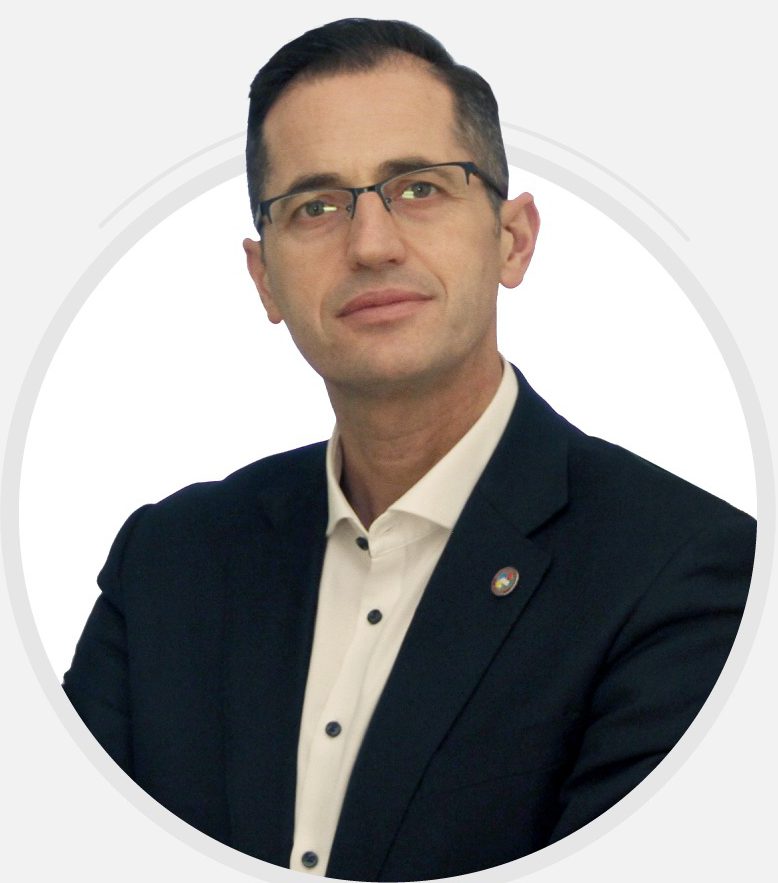
Lordan Kondić is a Lecturer at Algebra Bernays University with over 27 years of professional experience in marketing, sales, and management. He specializes in brand management, customer relationship management (CRM), and digital marketing strategies, bridging practical expertise with academic teaching. University: Algebra Bernays University Academic Rank: Lecturer His research focuses on social media engagement , user interaction with brands , and digital marketing trends . Recent publications explore brand engagement models, minimalistic design in marketing communications, and the impact of social media on brand equity. His work emphasizes practical applications in B2B/B2C environments. He holds an MBA from the Faculty of Economics in Zagreb and is currently a PhD candidate there. His academic journey aligns with his consultancy work in media, telecommunications, and tourism sectors, where he applies innovative marketing strategies and rebranding frameworks.
Marcia Håkansson Lindqvist is a researcher at Mid Sweden University's Department of Education (UTV), with expertise in digitalization in education, teacher shortage, and school leadership. She contributes to projects like European Education Policy Network and HIMUV (Sustainability in Mid Sweden University Everyday Life) , focusing on organizational development and lifelong learning. Her research spans Technology-enhanced learning environments Professional development frameworks Artificial intelligence applications in education Comparative studies on teacher shortages in Nordic countries She has published extensively in journals like Journal of Educational Administration and British Journal of Educational Technology . Recent work explores AI integration in school leadership, hybrid work-integrated learning models, and cross-sector collaboration for special needs education. She collaborates with researchers across Scandinavia and contributes to edited volumes on leadership identity and digital competence.
Professor Emma Parry is a Professor of Human Resource Management and Group Head of the Changing World of Work at Cranfield School of Management, Cranfield University. She is a recognized expert in Human Resource Management (HRM) and plays a leading role in several global research projects including Cranet, a worldwide network of over 40 business schools conducting comparative HRM research, and 5C, a global research project involving around 30 academic institutions examining cultural and age differences in attitudes towards careers. Professor Parry joined Cranfield University in 2002 as a Research Fellow within the Human Resource Research Centre. She holds a PhD and an MSc in Applied (Occupational) Psychology, both from Cranfield. Her educational background has provided a strong foundation for her research in human behavior at work and HRM practices. Professor Parry's research focuses on the impact of the changing external context on managing people, particularly examining technological advancement, age demographics and generational diversity, and national context. She has also conducted extensive research on human capability within defense contexts. Her scholarly contributions include authoring "Managing People in a Contemporary Context" (Routledge) and editing six other books. She serves as Editor in Chief of the International Journal of Human Resource Management (IJHRM) and Series Editor for "The Changing Context of Managing People" book series (Emerald). Professor Parry's recent publications demonstrate a strong focus on global HRM trends, generational differences at work, the impact of technology on employment, and career development across different national contexts. Her work often takes a comparative approach, examining how HR practices and career trajectories vary across cultural and institutional settings. She has been particularly active in researching the impact of the COVID-19 pandemic on careers and the implications of emerging technologies for the future of work. Fellow of the British Academy of Management (FBAM) Academic Fellow of the Chartered Institute of Personnel and Development (CIPD) Honorary Fellow of the Institute for Employment Studies Visiting Research Fellow at Westminster Business School President of the Executive DBA Council (EDBAC) Elected member of the British Academy of Management (BAM) Council Professor Parry teaches on graduate and executive programs in Human Resource Management, Talent Management, Organizational Behavior, and Research Methods. She has advised numerous PhD students and has secured research funding from various organizations including the Defence Science and Technology Laboratory (Dstl), Home Office, Chartered Institute of Personnel and Development (CIPD), Society for Human Resource Management (SHRM) Foundation, Forces in Mind Trust, and Department for International Development (DFID). Her work bridges the gap between academic research and practical application, making significant contributions to both scholarly knowledge and organizational practice in the field of HRM.
Prof. Dr. Andrea Dreyer is a full-time Professor of Art and its Didactics at the Bauhaus University Weimar , where she has served since 2013. She is Vice Dean for Strategic Development within the Faculty of Art and Design and actively participates in academic governance, including roles in graduation committees, teacher training advisory boards, and curriculum commissions. Her research focuses on teacher professionalization, architectural pedagogy, and digital art education, emphasizing interdisciplinary approaches and qualitative social research methodologies. First and Second State Examination for Teaching at Grammar Schools in Art Education and Social Studies (1994–2000, 2004–2006) Andrea Dreyer’s publications span topics such as Bauhaus-inspired pedagogy, urban-rural spatial education, and digital integration in art teaching. She has led initiatives like DigiProSMK and Denkraum.Bauhaus , and her work often bridges art, architecture, and societal transformation. She has served as Dean of Studies and Vice-Rector for Studies and Teaching at Bauhaus University, advocating for phase-transcendent teacher networks and reflective professional practices. Her recent articles address participatory architectural psychology, interdisciplinary curriculum design, and digitalization in art education. Despite extensive committee involvement and editorial contributions, no specific scientific awards are highlighted in the provided texts. She mentors students and collaborators within the kunst:pädagogik | netz:werk platform and maintains active partnerships with institutions like the Thuringian Ministry of Education and Friedrich-Schiller University Jena.
Antonio Terrón Barroso is a predoctoral researcher at the University of Barcelona's ADHUC Research Centre (Theory, Gender, Sexuality) and UNESCO Chair on Women, Development, and Cultures. He holds a Postgraduate Certificate in Social Science Research (Aston University), Master's in Teaching (PGCE, King Juan Carlos University), dual Bachelor's degrees in Translation Studies (University of Granada) and Communication (Open University of Catalonia), and a Tourism Diploma (University of Granada). Research Focus: Gender violence discursive normalization in 19th-century peninsular women's press through digital humanities methodologies. Key subfields include national/gender identity construction via literature and cinema, multilingual translation dynamics, and transnational reception studies. Teaching Experience: International roles at University of Birmingham (Spanish Teaching Fellow), Panthéon-Assas University (Spanish Lecturer), Aston University (Spanish/Translation Teaching Assistant), Cardiff University (Spanish Associate Tutor), and University of Massachusetts Amherst (Hispanic Studies Visiting Teaching Associate). Scientific Awards: FPI Predoctoral Researcher Contract (MINECO) Key Collaborations: Working with Dr. Elena Losada Soler and Dr. María Xesús Lama López on the Género, violencia y representación project. Affiliated with the consolidated research group 'Women's Creation and Thought' (2021 SGR 01097).
Suzanne Mason is a Professor of Emergency Medicine at the School of Medicine and Population Health , University of Sheffield, and a Consultant in Emergency Medicine at Sheffield Teaching Hospitals Trust. Her career spans over three decades, with a focus on evaluating complex interventions in urgent and emergency care, particularly for older adults and frail populations. Education: MBBS (1990), FRCS, FFAEM, MD (Emergency Medicine) Key Research Areas: Emergency care systems, clinical decision-making, geriatric emergency care, health informatics, and multi-centre mixed-methods studies Her research has directly influenced emergency care delivery, including studies on exit block in EDs , trauma networks , and digital ambulance records . She has led major projects such as Connected Health Cities (2016–2018) and RADOSS (risk prediction for seizures). Grants include £1.4 million from NIHR and £692,206 from the Department of Health . Scientific awards include an MD from Royal College of Surgeons Research Fellowship and leadership roles in NIHR-funded initiatives . She has pioneered collaborative models for ambulance services , care home integration , and frailty screening in EDs. Her work bridges clinical practice, policy evaluation, and digital innovation, with over 150 publications and mentorship in BMJ Open and Emergency Medicine Journal editorials.
Dr. Yasmina El Chami is a Lecturer in Architectural Humanities at the University of Sheffield's School of Architecture and Landscape, where she has been employed since 2022. She also serves as the School Decolonial Lead. Her academic credentials include a BArch from the American University of Beirut (2010), an MPhil in Architecture and Urban Design from the Architectural Association London (2013), and a PhD in Architecture from the University of Cambridge (2022). Her research explores colonial/imperial histories and built environment production, focusing on informal imperial actors in the 19th-20th centuries. Current projects examine American campus-building in the post-WWI Eastern Mediterranean and missionary architecture in Ottoman Lebanon. Primary interests include: colonial urban development, geopolitical architecture, missionary networks, material culture in imperial contexts, and decolonial methodologies in architectural education. Her scholarly work demonstrates consistent focus on architectural geopolitics in Middle Eastern contexts, with recent publications emphasizing missionary institutions and informal imperialism. Article topics range from American missionary campuses in Beirut to Jesuit architectural projects, reflecting sustained interest in cross-cultural architectural exchange. Awards and Fellowships: Graham Foundation Research Grant (2023) Cambridge International Scholarship (2017-20) Scouloudi Junior Fellowship (2020-21) Hawksmoor Essay Medal (2020) Global Urban History Fellowship (2022-23) Presbyterian Historical Society Fellowship (2020) At Sheffield, she leads undergraduate humanities modules and the MArch Dissertation program. She secured a £7,500 grant to establish a UK-wide Decolonial Architecture Network (2022-23), resulting in a workshop. Current initiatives include implementing decolonial learning outcomes across curricula and conducting faculty development activities.
Dr. Olga Oleinikova is an Associate Professor and Director of the Social Impact Technologies and Democracy Research Hub (SITADHub) within the School of Communication at the University of Technology Sydney (UTS), Australia. Internationally recognized for her contributions to research and social impact, she has been named among Forbes Top 40 Global Ukrainians and Forbes 30 Under 30 Asia. She was also a finalist for the Australian Council of Humanities, Arts and Social Sciences (CHASS) Future Leader Award. Her educational background includes a PhD in Sociology from the University of Sydney (2016), with prestigious research fellowships at Oxford University's European Studies Centre (2018-2019), Charles University in Prague (2023-2024), and the WZB Berlin Social Science Center (2015). Dr. Oleinikova's research focuses on migration studies (particularly Eastern European migration to Australia), democracy studies, diaspora politics, and social impact technologies. Her work examines life strategies of migrants navigating displacement, democratic performance in Ukraine and Europe, and the intersection of technology and democracy. She has developed a theoretical framework distinguishing between 'achievement life strategies' and 'survival life strategies' among migrants from crisis regimes. Her publication portfolio includes several acclaimed works, with her most recent book 'New Eastern European Migration to Australia: From Ukraine, Czech Republic and Hungary' (Palgrave, 2023) examining new migration patterns. Her research demonstrates consistent focus on Eastern European migration, diaspora politics, and democratic development, with increasing attention to technology's role in democratic processes. Forbes Top 40 Global Ukrainians Forbes 30 Under 30 Asia CHASS Future Leader Award Finalist Visa People's Choice Award Anthill 30 Under 30 Winner Dr. Oleinikova has secured over $3 million in funding for social and commercial initiatives. She serves on several nonprofit boards, acts as an advisor to the Australia-Ukraine Chamber of Commerce, and mentors through the 1991 Open Data Incubator and Future Schools Australia. She founded the SITAD Visiting Fellowship Program, supporting Ukrainian early-career researchers and postgraduate students. Her media reach is substantial, with expert commentary featured in BBC News, Bloomberg, ABC News, CNA, The Conversation, Politico, SBS, and KyivPost, reaching an estimated 9.1 million people. She has delivered more than 30 keynote and invited talks at leading institutions worldwide. SITADHub, which she founded and directs, is a dynamic networked research center with 170 associates across 16 countries actively researching democracy, human-computer interaction, and global mobility, with a focus on Ukraine and broader Eastern Europe. The hub conducts unique research and maintains university partnerships throughout Europe and the Asia Pacific, including with WZB Berlin Social Science Research Centre, University of Oxford, and University of Sydney.
Martin Carlsson-Wall is a Full Professor at Stockholm School of Economics (SSE) in the Department of Accounting within the House of Governance and Public Policy. He serves as Center Director for both the Center for Municipality Governance and the Center for Security and Resilience. In 2024, he was named "The Linder Chair in Sports and Business," the first Chair at SSE on Sports and Business topics. Since 2017, he has been Program Director for the MSc in Accounting, Valuation and Financial Management, and in 2015, he founded the Center for Sports and Business, which now includes 40 faculty members and has strategic partnerships with major Swedish sports organizations across football, hockey, golf, and skiing. Martin Carlsson-Wall's research focuses on accounting in sports organizations and accounting in inter-organisational relationships across both private and public sectors. His work extensively examines management control systems , particularly in contexts of innovation , growth companies , and risk management . His research often takes a qualitative approach, investigating how accounting practices function in extreme situations (such as the Swedish migrant crisis), high-intensity organizations (like football clubs), and during organizational change processes. Analysis of Professor Carlsson-Wall's recent publications reveals a strong thematic focus on the intersection of accounting practices with sports management and public sector administration. His work demonstrates how management control systems adapt to different organizational contexts, from football clubs to technology firms and public administration during crises. A recurring theme is how accounting practices mediate tensions between different stakeholder interests and how they evolve in response to organizational challenges. His research methodology typically employs in-depth case studies that examine accounting as a social practice rather than merely a technical function. Professor Carlsson-Wall has received significant recognition through his appointment as "The Linder Chair in Sports and Business" in 2024, establishing the first dedicated research position at SSE focusing on the business aspects of sports. As an educator, Professor Carlsson-Wall serves as Program Director for the MSc in Accounting, Valuation and Financial Management and teaches several key courses including BE901 Hybrid Organizations: Value Creation and Strategy at the bachelor's level, and course 3313 Investments and Value Creation in Global Sports (which he directs) and course 3302 Management Control at the master's level. He also supervises master's theses in Accounting and Financial Management. In Executive Education, he teaches on management control, costing, performance management, transfer pricing, investment management, and financial analysis through both open programs and customized corporate offerings. Professor Carlsson-Wall founded and directs the Center for Sports and Business, which has grown to include 40 faculty members and established partnerships with major Swedish sports organizations. He also leads the Center for Municipality Governance and the Center for Security and Resilience, demonstrating his commitment to applying accounting and management control research to practical governance challenges in both public and private sectors.
Prof. Blerim Rexha is a full professor at the University of Prishtina's Faculty of Electrical and Computer Engineering, Kosovo. With a Ph.D. in Computer Engineering from Vienna University of Technology (2004), he has led research in cybersecurity, blockchain, machine learning, and electronic voting systems. His teaching portfolio includes data, computer, and internet security courses. Education : Ph.D. in Computer Engineering (Vienna), Electrical Engineer MSc (Prishtina), specialized certifications in software engineering, biometrics, and .NET programming. His research spans cybersecurity (DDoS mitigation, face authentication attacks), blockchain applications (electronic voting bridges, transaction privacy), and machine learning integration (boosted trees for intrusion detection, LSTM for vulnerability scanning). He has contributed to cloud security through novel encryption methods and AI-driven attack detection. Recent publications focus on energy efficiency in cloud vs on-premises systems, XGBoost/CatBoost/LightGBM comparisons for network security, and blockchain bridges for e-voting. His work has addressed privacy preservation in video data, SMS encryption, and eID card pseudo-profiles. Awards include the 2024 Marin Barleti Prize for academic contributions and Best Paper Awards in election security (2015) and Kosovo website vulnerabilities (2013). Honors : Marin Barleti Prize (2024) Cyber Security Ambassador (2018) ICT Academician of the Year (2016) Best Paper Awards (2015, 2013) As academic advisor to the KosovaCyberTeam , he mentors students like Korab Keqekolla and Abian Morina. His leadership extends to Kosovo's Cyber Security State Training Center curriculum development and jury roles in Albanian ICT Awards .
Eduardo Viana da Silva is an Associate Teaching Professor and Portuguese Program Coordinator at the University of Washington, affiliated with the Henry M. Jackson School of International Studies and Department of Spanish & Portuguese Studies. He received his Ph.D. (2014) and M.A. (2006) from University of California, Santa Barbara (UCSB) and Brigham Young University respectively, with additional certifications in language teaching and ACTFL OPI testing. His research focuses on Environmental Activism in Arts Open Educational Resources (OER) Critical Pedagogy Luso-Brazilian literature and culture Global Citizenship education Language curriculum development . The Bate-Papo OER textbook project, supported by UW Libraries and the Center for Global Studies, demonstrates his commitment to accessible education. Recent collaborations with Brazilian institutions highlight his environmental research in the Amazon and Pantanal regions. His work spans virtual exchanges, cybersecurity language training, and heritage language pedagogy. Scientific Awards 2020 Language Teacher of the Year (WAFLT) As a certified OPI examiner and active member of MLA, ACTFL, and AATSP, he bridges language instruction with broader educational initiatives. His courses range from elementary Portuguese (PORT 103, 105) to advanced cultural studies (PORT 365), reflecting his interdisciplinary approach.
Prof. Dr. Heinz Streib is Professor of Practical Theology/Religious Education at the University of Bielefeld, affiliated with the Faculty of History, Philosophy and Theology and Department of Theology and Diaconal Studies. He directs research at the Research Center for Interdisciplinary Religious Studies specializing in Biographical Religious Studies, and is recognized as an expert in fundamentalism, religious psychology, spirituality, youth religion, and biographical approaches to religious experience. 1995: Habilitation (Venia Legendi in Practical Theology), University of Frankfurt 1989: Doctor of Philosophy (Ph.D.), Emory University, Atlanta 1984: Master of Sacred Theology (STM), Yale University, New Haven 1980: 2nd Protestant Theological Service Examination, Church of Württemberg 1977: 1st Protestant Theological Service Examination, University of Tübingen 1970: Abitur Streib's research centers on empirical studies of contemporary religion and spirituality, xenophobia and inter-religious prejudice, religious development theory, religious styles and schemata, psychology of religion, biographical analysis, deconversion, and deinstitutionalized religion. His work uniquely bridges theological inquiry with psychological and sociological methodologies, emphasizing longitudinal and mixed-method approaches to understanding religious transformation across the lifespan. He has developed influential frameworks for analyzing religious styles and faith development trajectories. Analysis of Streib's 15 most recent publications reveals a strong focus on deconversion processes, religious style transformation, and the psychological dimensions of xenophobia/xenosophia. His work increasingly employs mixed-method and longitudinal designs, combining quantitative analysis with in-depth biographical interviews. Recent research demonstrates particular attention to refugee attitudes, mystical experience measurement, and the developmental pathways between egocentric and xenocentric religious orientations. Editor-in-Chief, International Journal for the Psychology of Religion (since 2017) Former Editor-in-Chief, Archive for the Psychology of Religion (2008-2016) Member, American Psychological Association (APA) Member, International Association for the Psychology of Religion (IAPR) Member, International Seminar on Religious Education and Values (ISREV) Member, Society for the Scientific Study of Religion (SSSR) Streib's academic leadership extends through his editorial roles and professional memberships. His research methodology emphasizes biographical approaches combined with quantitative analysis, particularly through faith development interviews. The Research Center for Interdisciplinary Religious Studies serves as the primary hub for his ongoing investigations into religious transformation, with particular attention to deconversion trajectories and the psychological dimensions of religious openness. His current work increasingly addresses contemporary social challenges related to migration and interreligious understanding.
Xavier Casanovas Combalia is a Professor at the IQS School of Engineering (Ramon Llull University) and holds the Chair of Ethics and Christian Thought . With dual doctorates in Philosophy (University of Barcelona) and Mathematics (Polytechnic University of Catalonia), he previously served as director of the Center d'Estudis Cristianisme i Justícia (2014-2021). His research focuses on political theology , philosophical anthropology , and technoethics , with an emphasis on sustainability, economics, and ethics. Research Trends: His recent publications examine the crisis of progress narratives , post-secular spirituality , and ethical implications of AI . Projects like MobilePressure address digital well-being in families, while the SEE (Sustainability, Economics, and Ethics) initiative explores broader socio-ethical frameworks.
Stephen Holmes serves as Senior Lecturer in Theology at the University of St Andrews' School of Divinity, where he has established himself as a prominent scholar in historical and systematic theology with particular expertise in Baptist and Reformed traditions. His academic profile demonstrates significant engagement with the Centre for Higher Education Research and active participation in postgraduate supervision, with 14 supervised works documented in his profile. Holmes maintains professional connections with numerous religious organizations including the Baptist World Alliance (2025-2030) and the European Baptist Federation (2023-2028). Dr. Holmes' research interests span systematic and historical theology, with a particular focus on the development of Reformed and Baptist theological traditions from the sixteenth to nineteenth centuries. His work centers on the history of the doctrine of God, especially Trinitarian thought, while also extending into practical theology, philosophical theology, and patristics. Current research directions include seventeenth-century General Baptists (particularly Matthew Caffyn), eighteenth-century Particular Baptists (including editing Andrew Fuller's sermons), constructive Trinitarian theology, and methodological approaches to systematic theology using the extent of atonement as a test case. Analysis of his recent publications reveals a consistent focus on Baptist identity, ecclesiology, and historical theological development, with increasing attention to contemporary applications of traditional doctrines in digital contexts (as evidenced by his 2023 article on online Eucharist). His scholarship demonstrates deep engagement with primary historical sources, including recent deciphering of Andrew Fuller's shorthand sermons, and maintains relevance to current theological debates about gender, ministry, and sacramental practice. Chair of Theology and Public Policy Advisory Committee of the Evangelical Alliance (2007) Member of Doctrine and Worship Committee, Baptist Union of Great Britain (2004) As an academic supervisor, Holmes has guided 14 postgraduate research projects, including doctoral work on Ukrainian Baptist ecclesiology. His external consultancy work demonstrates significant impact beyond academia, serving Christian denominations and charitable organizations including the British and Foreign Bible Society, Evangelical Alliance, Baptist Union of Great Britain, and Churches Together in Great Britain and Ireland. He has secured research funding from notable sources including The Russell Trust and John Templeton Foundation for projects on Andrew Fuller's shorthand sermons and the Encyclopedia of Theology. Dr. Holmes maintains active scholarly networks through the Centre for Higher Education Research at St Andrews and participates in international theological discourse through organizations like the Baptist World Alliance and European Baptist Federation, contributing to both academic and practical theological conversations through invited talks, conference presentations, and editorial work.
Alan Bairner is a Professor of Sport and Social Theory at Loughborough University, where he has been since 2013. Previously, he held the same title at the University of Ulster for 25 years. His expertise spans sport nationalism, globalization, and social theory. He leads modules including PSB015 and PSC023, focusing on ideologies, celebrity, and place in sport. Education: MA (Hons) in Politics from the University of Edinburgh, PGCE in History/Modern Studies from Moray House College, and a PhD from the University of Hull. Academic Roles: Past President of Loughborough UCU branch; co-author of seminal works like Sport, Sectarianism and Society in a Divided Ireland and editor of Routledge Handbook of Sport and Politics . His research explores sport in divided societies, nationalism, and cultural identity. Notable studies include Chinese football fandom, global wushu strategies, and the role of sport in postcolonial contexts. He is affiliated with the Edinburgh Critical Studies of Sport group and has contributed to policy debates on sport governance and anti-doping compliance. Bairner’s work critically examines sport’s intersections with politics, identity, and globalization, emphasizing its role in shaping and reflecting societal structures.