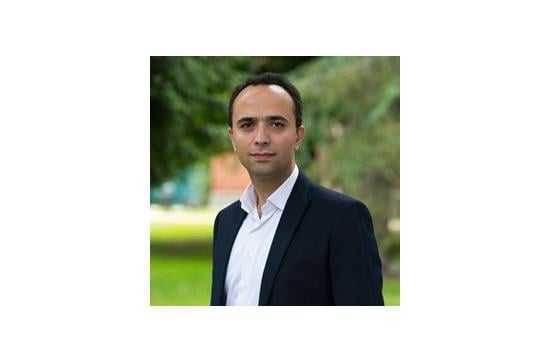
Professor Anne Keegan is a Full Professor of International Human Resource Management at University College Dublin (UCD), leading the HRM and Employment Relations Group within the School of Business. She previously held roles at the Amsterdam Business School and Erasmus University Rotterdam, and completed her PhD at Trinity College Dublin. Her research focuses on HRM in online labor platforms, gig economies, project-based organizations, and institutional/paradox theories. Education: Bachelor of Arts (BA), Trinity College Dublin Doctor of Philosophy (DPhil), Trinity College Dublin Research Interests: HRM in digital labor platforms and gig economies Institutional complexity and paradox theory applications HR practices in project-based organizations Career dynamics in non-traditional work environments Awards: EGOS Award in Honour of Max Boisot (2014) Van der Schroeff Award for Best Lecturer (2013) Professional Activities: Editorial Board roles for International Journal of Human Resource Management and International Journal of Project Management Committee memberships: UCD Academic Council, Faculty Promotions Committee, Widening Participation initiatives Keynote speaker at NEON Annual Conference (2019) Grants: UCD School Funded Research Account (2024-2027) Labs/Teams: Leading research on algorithmic management, platform ecosystems, and gig economy ethics through collaborative international projects.
Dr. Kevin N. Cawley is Senior Lecturer in Korean Studies and Director of the Irish Institute of Korean Studies at University College Cork since 2011. He is a founding member of the 'Society for the Study of Pre-modern Asia' at the University of Oxford and serves as editor of Korean Philosophy for the Stanford Encyclopedia of Philosophy. Originally from County Armagh, Ireland, he completed his undergraduate degree at Trinity College Dublin in French and Irish, and earned his Masters and PhD in Korean Studies from the University of Sheffield. Dr. Cawley's research focuses on Korea's intellectual history, examining philosophical and religious traditions through contemporary critical theory. His work explores the interplay between Buddhism and Neo-Confucianism, Christianity and Neo-Confucianism in the late 18th/early 19th century, and the complexities of translating religious concepts across East Asian languages and cultures. He has developed a unique methodological approach adapting Jacques Derrida's 'de-construction' to address inter-cultural translational challenges. His research also extends to gender and sexuality, ethnicity and identity in Korean contexts. His publications demonstrate significant scholarly impact, particularly his 2019 book Religious and Philosophical Traditions of Korea which reached No. 5 on Amazon's 'hot new releases' in religion and spirituality. His recent work has focused on transnational East Asian studies, Catholicism in pre-modern Korea, and contemporary Korean soft power. The publications show consistent engagement with both historical Korean thought and its contemporary relevance across multiple disciplines including religious studies, philosophy, gender studies, and cultural studies. Scientific Awards and Recognition: Korea Foundation Award for Korean Studies Language Program 2022-2024 Academy of Korean Studies: SEED Program - $120,000.00 One Asia Foundation Lecture Series: $40,000.00 Korea Foundation Fellowship for Korean Studies 2015-2017 $90,000.00 Dr. Cawley has secured over €400,000 in research funding throughout his career and has served as editor for multiple academic journals including the Irish Journal of Asian Studies and Asian Ethnicity . He has organized numerous international conferences, including the North American Korean Philosophy Association Annual Conference at UCC. His media engagement includes regular interviews with RTE, BBC, and Korean media outlets on Korean affairs, demonstrating his role as a public intellectual bridging academic scholarship and public understanding of Korea.
Dr. Caroline Murphy is an Associate Professor of Employment Relations and Director of the MSc in HRM at the Department of Work and Employment Studies , Kemmy Business School , University of Limerick . She is also an Associate Research Fellow at the ESRC-funded DIGIT Centre for Digital Futures at Work, focusing on workplace technology and labor rights. PhD in Trade Union Organizing (2011) , University of Limerick Masters in International Tourism , University of Limerick Research Interests span job quality, precarious employment, digital transformation of work, gender equality in labor markets, formal and informal care work, and employee representation. Her work addresses challenges in the long-term care workforce and sustainable work practices. Recent Publications highlight workplace digitalisation in SMEs, gender diversity in governance, and rural employment dynamics. Themes include labor equity, technology integration, and policy analysis. Scientific Awards : Faculty Teaching Development Award (2016) Industrial Relations Research Trust Research Scholar Award (2009) Activities include membership in the Athena Swan Committee and directing the Reconciling Employment and Eldercare Together Research Network. She has collaborated with the International Labour Organisation and Financial Services Union.
Dr. Edoardo Celeste is an Associate Professor of Law, Technology and Innovation at Dublin City University's School of Law and Government. He leads the Erasmus Mundus Master in Law, Data and Artificial Intelligence (EMILDAI) and serves as Deputy Director of the Dublin European Law Institute. PhD, University College Dublin Law degrees: University of Rome 'La Sapienza', University of Paris II 'Panthéon-Assas', King’s College London His research focuses on digital rights, constitutionalism in digital contexts, and the intersection of law, technology, and sustainability. He coordinates the DCU Law and Tech Research Cluster and co-founded the Digital Constitutionalism Network. Recent publications examine digital sovereignty, AI sustainability, and constitutional responses to social media exclusion. His 2022 book Digital Constitutionalism: The Role of Internet Bills of Rights (Routledge) established him as a leading voice in the field. Irish Research Council Early Career Researcher of Year Award (2022) Principal Investigator for Cross-Border Data Protection Network (IRC/ESRC funded) Facebook Research grant for Digital Constitutionalism: Content Governance Standard project He supervises PhD students in digital rights, data protection, platform regulation, and digital sustainability while holding affiliations with the ADAPT Centre and UCD Centre for Human Rights.
Noelle Higgins is an Associate Professor in Law at Maynooth University. She previously held academic roles at the Irish Centre for Human Rights (NUI Galway), the School of Law and Government (DCU), and served as Teaching and Learning Innovation Lead at ATU. Her academic qualifications include Master's degrees in Irish and Law, a Higher Diploma in Education, and a PhD from NUI Galway on 'Wars of National Liberation and Self-Determination.' Her research focuses on international human rights law, international humanitarian law, and international criminal law, with a current emphasis on cultural rights and cultural cleansing. She co-leads WG3 of the COST Action K-Peritia (cultural expertise in law) and is part of the Horizon2020 'ReCreating Europe' project on digital copyright law. She previously led an IRCHSS-funded project on international peace mediation. Her recent publications explore cultural heritage protection, indigenous rights, and the intersection of law and climate change. She has contributed extensively to legal education research, advocating for experiential learning tools like moot courts and field trips. Education: PhD (NUI Galway), LLM (International Human Rights Law), MA (Irish), Higher Diploma in Education Awards: None explicitly listed, but recognized for contributions to legal education and international law research Grants: Horizon2020 (2020), IRCHSS (2010) Labs/Teams: Member of the COST Action K-Peritia and ReCreating Europe Consortium.
Colm McLaughlin is a Professor of Employment Relations at the UCD School of Business. He serves as Vice-Principal for Equality, Diversity and Inclusion at the College of Business, Co-Director of the UCD Centre for Business and Society (CeBaS), and UN Principles for Responsible Management Education (PRME) Coordinator. He holds a PhD from the University of Cambridge and has held academic roles at the University of Auckland and postdoctoral positions at Cambridge, alongside industry experience in local government and hospitality. Education : BA and MComm (University of Auckland), PhD (University of Cambridge). Research Interests : Comparative employment relations, institutional regulation, gender equality, training systems, and low-paid work. Professional Appointments : Research Associate at Cambridge’s Centre for Business Research, Visiting Fellow at the University of Sydney and Victoria University Wellington. His recent research focuses on immigration policy as a skills supply mechanism in liberal market economies, trade union legitimation politics, and reflexive regulation frameworks. He has examined how ideational power resources shape labour relations and contributed to debates on corporate social responsibility and sustainable HRM practices. His work bridges theory and practice, particularly in case method pedagogy reform. Colm has received multiple awards, including the AMLE Best Article Winner (2017), Academy of Management Dark Side Case Competition Winner (2013), and University Teaching Excellence Awards (2020). His publications appear in prestigious journals such as Industrial Relations , Journal of Industrial Relations , and Academy of Management Learning and Education . He has served on editorial boards for Industrial Relations: A Journal of Economy and Society and Journal of Industrial Relations , and held leadership roles in committees like BITCI Leadership for Sustainability and the SDG Engagement Working Group.
Dr. P.J. White is a Senior Lecturer and Research Director at the Department of Humanities and designCORE at South East Technological University (SETU). He also holds adjunct roles at McMaster University (Adjunct Full Professor) and the McMaster Institute for Research on Aging, Canada. His expertise lies in Product and Service Design, with a focus on Aging, Co-Design, and Interdisciplinary Research. Education: PhD in Product Design (Maynooth University, 2012), National Diploma in Industrial Design (2002), and a Bachelor’s in Industrial Design (2002). Research interests include aging-related design, participatory design methodologies, and addressing the digital divide in aging populations. Key projects involve health services co-design (HSE), dementia standards development (NSAI), and global collaborations in Uganda and Mozambique. Notable awards include the Gerontological Society of America David A. Peterson Award (2020) and design accolades from the Institute of Designers Ireland (2002, 2015). He supervises PhD students and has led funded projects like the SFI-supported labor market digital tools initiative. As SETU’s representative in Carlow’s Age Friendly Alliance, he bridges academia and policy. His work spans 53 publications, including high-impact journal articles and conference contributions.
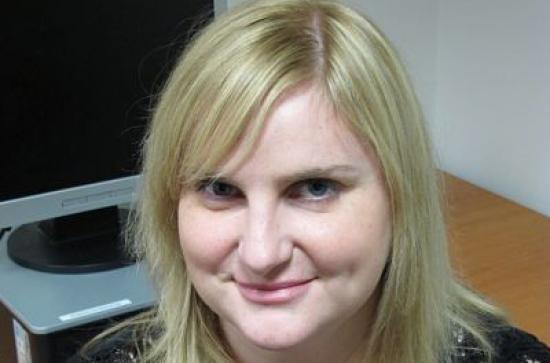
Gaye Stephens serves as Assistant Professor in the School of Computer Science and Statistics at Trinity College Dublin, where she is a core member of the Centre for Health Informatics alongside Dr. Lucy Hederman and Prof. Mary Sharp. She actively contributes to institutional governance as a board member of the Irish Platform for Patient Organisations, Science and Industry (IPPOSI) and serves on the school's research ethics committee. Her research centers on patient-centered health informatics with focus areas including Electronic Health Record design , citizen engagement methodologies (such as Citizen Juries and Think-ins), and scalable information models for healthcare integration. She pioneers approaches that position patients as central stakeholders in health data governance, addressing critical challenges in digital health literacy, informed consent frameworks, and interoperability between legacy and emerging health technologies. Analysis of her recent publications reveals consistent focus on knowledge engineering for healthcare , with particular emphasis on temporal data modeling in knowledge graphs (2024-2025), nurse knowledge elicitation through serious games (2023-2024), and novel methodologies like the WICKED framework for capturing clinical wisdom (2022-2023). Her work consistently bridges technical informatics with human-centered design principles. Stephens actively contributes to national health informatics infrastructure through memberships in: Royal Academy of Medicine of Ireland Council of Clinical Information Officers National Standards Authority of Ireland Health Informatics Group Health Informatics Society of Ireland (including Nursing and Midwifery group) e-Health Ireland ECOSYSTEM working group She supervises across undergraduate, MSc (Health Informatics and Global Health), and PhD programs while leading client-based final year projects. Her teaching portfolio includes Introduction to Health Informatics, Information Modeling, Connected Health, and Electronic Health Record Architectures, with research advising spanning health data governance and patient engagement projects. Stephens co-leads the Knowledge and Data Engineering Group's Health Informatics research stream, focusing on semantic interoperability, adaptive hypermedia systems, and novel engagement models for health data governance. Her current projects emphasize citizen-centered EHR architectures and interdisciplinary approaches to healthcare data integration.
Alireza Keshavarz is an Assistant Professor/Lecturer in Marketing at Maynooth University Business School. He holds a PhD in Management Sciences (Marketing) from HEC, Paris. His research focuses on strategic marketing, salesforce management, and compensation dynamics, particularly examining gender pay gaps and salesforce mobility. He is affiliated with organizations such as AMA, EMAC, CNRS Lab GREG-HEC, and Labex ECODEC. His teaching spans marketing analytics, sales management, and business analytics across undergraduate, graduate, and MBA programs. Education: PhD in Management Sciences (Marketing), HEC Paris Research Interests: Sales Force Management Compensation and Incentives Sales Force Mobility Digital Literacy B2B Marketing Strategic Marketing Ambidexterity Recent Research Trends: Recent work emphasizes the interplay between salesforce structures, organizational strategies, and labor market dynamics, with a focus on gender disparities and incentive systems. Professional Contributions: Member of the Editorial Board for Journal of Business Research Regular presenter at conferences like AMA, EMAC, and INFORMS Labs/Teams: No specific labs or collaborative teams explicitly noted in available data.
John Byabazaire is a Research Fellow at the School of Computer Science, University College Dublin (UCD). He holds a PhD in Computer Science from UCD (2024), following a BSc (Gulu University, 2013) and MSc (Waterford Institute of Technology, 2018). His research focuses on IoT systems for data collection, remote sensing, AI-driven end-to-end system management, and fog analytics. He has held academic roles including Assistant Lecturer at Gulu University (2018–2019) and teaching roles at UCD since 2019, including Occasional Lecturer and Senior Teaching Assistant. His research spans smart agriculture, data quality in IoT, and education technology. Notable contributions include frameworks for yield mapping in precision agriculture, trust-based data validation in IoT, and machine learning approaches for livestock health monitoring. He has secured grants like the National ICT Initiatives Support Program (Uganda Government, 2019–2020). Teaching includes courses on cloud computing, web development, and distributed systems. His articles emphasize IoT data quality, agricultural analytics, and educational technology innovation. He actively promotes technology adoption in African education and agriculture sectors through collaborative projects.
Dr. John O'Sullivan is a Professor in the School of Communications at Dublin City University (DCU), part of the Faculty of Humanities and Social Sciences. He has been teaching since 1996, specializing in journalism, media theory, and technology's societal impact. His research focuses on journalism practice, digital media, news audiences, and media ethics, particularly through projects like the EU-funded ReMED initiative examining news media in Ireland. He has held leadership roles, including Chair of the MA in Journalism program and Vice-President of the Journalism Studies Section at ECREA. His academic background includes extensive experience in newspaper editing and digital media initiatives. Research interests span media formats/platforms, participatory journalism, and the interplay between technology and democracy. He has supervised PhD students exploring digital news strategies, Southeast Asian journalism norms, and social media's democratic role. O'Sullivan's work bridges traditional and digital media, emphasizing post-digital journalism's challenges and opportunities. Publications span peer-reviewed journals like Journalism and Digital Journalism , addressing topics such as news consumption, algorithmic impact, and participatory methodologies. He has contributed to international conferences and research networks, including COST Actions on audience transformations and Eastern European media studies. His teaching emphasizes professional journalistic values in evolving media landscapes.
Katherine Fama is a tenured Assistant Professor of American Literature in the School of English, Drama and Film at University College Dublin (UCD). She holds leadership roles including Deputy Head of School (2024–2027), former Director of Graduate Research (2021–2024), and Co-Director of the Fictional Spaces research substrand under UCD’s Thresholds of Knowledge research initiative. She co-founded the Single Lives Research Group and helped establish the International Singles Studies Association (ISSA). Her work bridges literary studies, feminist theory, architectural criticism, and creative pedagogy. Dr. Fama earned her PhD in English and American Literature from Washington University in St. Louis in 2013, with a certificate in American Culture Studies. She also holds an MA from New York University and a BA from Swarthmore College. Her postgraduate training includes a Digital EDI Ambassador Badge and participation in the Research Supervisor Support and Development programme at UCD. Her research centers on singleness, architecture and narrative, feminist theory, sexuality studies, and the history of emotions in modern American literature. She explores how domestic spaces shape identity, particularly for single women, and investigates the emotional and material dimensions of literary form. Her book project, The Architecture of Singleness , examines early 20th-century novels, domestic architecture, and the figure of the single woman in America. Her interdisciplinary approach is reflected in collaborations across film, media, and studio arts. Her recent publications span journals such as Emotions: History, Culture, Society , MELUS , Studies in American Naturalism , and Journal of Modern Literature . She co-edited Single Lives: Modern Women in Literature, Culture, and Film (Rutgers University Press, 2022), and her work increasingly integrates creative practice, including printmaking and community art projects focused on environmental regeneration. College of Arts and Humanities Teaching Excellence Award (2024) Marie Skłodowska-Curie Research Fellow Volkswagen Foundation Postdoctoral Fellow NEH Research Fellow W.M. Keck Foundation Fellow Everett Helm Visiting Fellow Katherine Fama supervises PhD and MA students, including Chloe Green, whose research examines illness in the contemporary workplace novel. She founded the Graduate Futures workshop to support PhD candidates in academic and non-academic career development. Her funded research projects include 'Architecture and Narrative: The Built Environment in Modern Culture' and 'Print Exchanges: Site-specific Creative-Critical Responses to Extractivist Landscapes'. She has received grants from the NEH, Winterthur Museum, Huntington Library, Smith College, and the Marie Curie programme. She co-directs the Fictional Spaces substrand of the Thresholds of Knowledge research strand and collaborates with Dr. Jorie Lagerwey on the Single Lives Research Group. She is also active in the UCD Centre for Gender, Feminisms & Sexualities and has held leadership roles in the Irish Association for American Studies.
Liadh Kelly is an Assistant Professor in the Department of Computer Science at Maynooth University's Faculty of Science & Engineering. She supervises PhD students in applied artificial intelligence, focusing on intelligent search, ubiquitous computing, and multimodal information access. She is affiliated with the ADAPT SFI Research Centre, SFI Centre for Research Training in Foundations of Data Science, and Human Health Institute. BSc in Computer Science MSc (Research) in Computer Science PhD in Computer Science Her research explores context-sensitive retrieval and evaluation methodology in AI-driven systems. Key areas include ubiquitous computing for personal data analysis, deep learning classification for mental wellness indicators, and multimodal lifelogging integration. Recent publications focus on urban mental wellbeing classification , contextual cue analysis , and AI-driven health search systems . Articles address smart city applications , consumer health search , and cross-lingual medical retrieval . Professional roles include Doctoral Consortium Chair at ECIR 2023 and Programme Committee member for SIGIR and ICWSM conferences. She leads grants for 4-year PhD studentships with stipend and fee coverage.
Assoc. Prof. Nhien An Le Khac is an Associate Professor at the School of Computer Science, University College Dublin. He serves as Programme Director for the MSc in Forensic Computing & Cybercrime Investigation, which has trained over 1,500 law enforcement officers globally. His research focuses on cybersecurity, digital forensics, AI security, and secure healthcare IT systems. He holds a PhD from Institut National Polytechnique de Grenoble (France) and has supervised 9 PhD students. His work includes pioneering contributions to electromagnetic side-channel analysis (EM-SCA) for IoT forensics, blockchain forensics, and AI-based fraud detection. Education: BSc/MSc: Vietnam National University, Ho Chi Minh City PhD: Institut National Polytechnique de Grenoble, France Professional Certificate in University Teaching & Learning: UCD Research Interests: Cybersecurity, Digital Forensics, AI Security, Machine Learning, Cloud Computing, Big Data Analytics, Healthcare IT Security. Recent Article Trends: Focus on EM-SCA for IoT device forensics, illicit Bitcoin transaction tracking, and cross-device ML portability. His work bridges theoretical AI advancements with practical forensic applications, emphasizing privacy preservation and explainable AI. Awards & Recognition: World’s Top 2% Scientists (2024) UCD Teaching Excellence Awards (2022, 2018) Best Paper Awards at Elsevier, AI-2022, and DFRWS conferences Grants & Advising: Principal Investigator on grants like Cloud Atlas, CERBERUS, and Urban ARK. Advised 9 PhD students who now work in academia/research globally. Active in funding initiatives like ML-Labs (SFI-funded). Labs & Teams: Leads ASEADOS Lab and maintains datasets like EM-SCA and InSDN. Collaborates globally on forensic frameworks and cybersecurity tools.
David Mangan is an Assistant Professor at Maynooth University's School of Law & Criminology , with adjunct professorships at Osgoode Hall Law School and Université Catholique Lyon. He holds a Ph.D. and has served as Associate Professor and Deputy Associate Dean (International) in Canada and the UK. His research spans labour/employment law , contract law , and privacy law , focusing on information technology's impact on workplaces. Degree : BA(Hons), B.Ed., J.D., LL.M., Ph.D. Editorial Roles : Associate Editor of the European Labour Law Journal; Co-Editor of Global Workplace Law & Policy. Consultancy : Legal expert for the Israel Public Policy Institute, Portuguese Confederation of Employers, and Law Commission Ontario. His labour law research examines digitalization of work, platform economy challenges, and privacy in employment relationships. Current projects include the Privacy@Work study (2021-2023) and a Land Steiermark Fellowship (2025) in digital law. He supervises Ph.D. students through Advance CRT and chairs a dual degree program with Université Catholique Lyon. Recent article trends highlight his work on GDPR implications in employment, remote work regulation , and platform worker rights . Notable contributions include comparative analyses of European and transatlantic labour law frameworks, focusing on technological disruptions. Awards & Grants : Land Steiermark Fellowship in Digital Law (2025) ERC Grant (€1.5M) for ResPecTMe project (2022-2025)



/prod01/channel_3/media/tcd/scss/headshots/Gaye-Stephens-BW.jpg)