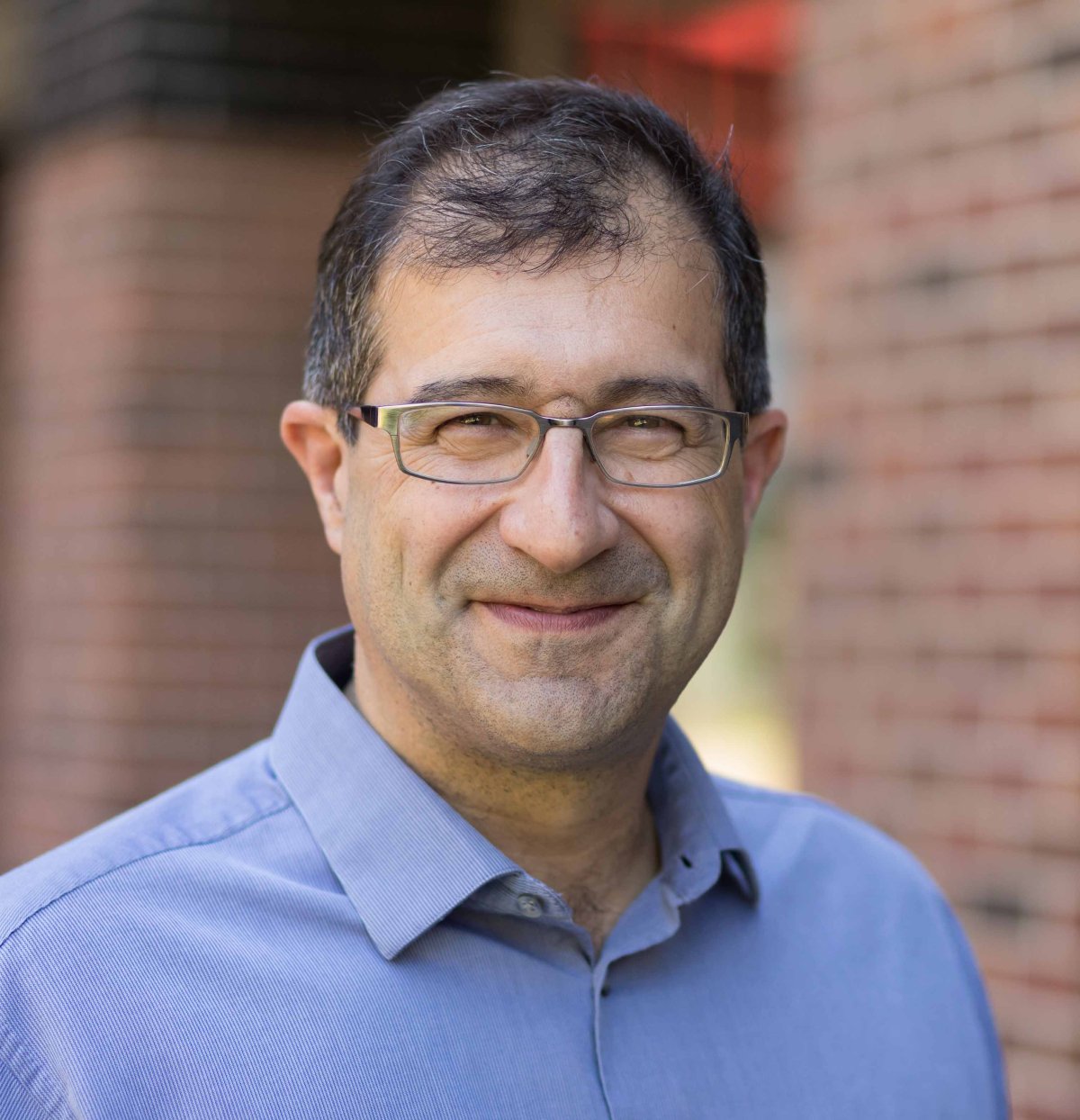
Jenny Han Lin is an Assistant Professor at the University of Utah's Kahlert School of Computing. Her research focuses on computational fabrication, particularly the intersection of computer science, textiles, and mathematics. She holds a PhD from Carnegie Mellon University (2024) and a B.E. from MIT, dual-degree in Computer Science and Molecular Biology. Prior to her current role, she was a postdoctoral scholar under Cem Yuksel at the University of Utah, and advised by James McCann during her PhD. Her research interests include algorithmic textiles, robotic fabrication, and mathematical modeling of knitting/crochet processes. Notable work includes applying knot theory to formalize knit object equivalence and developing machine knitting compilers. She actively mentors students interested in graphics, textiles, and mathematical applications in fabrication. Recent publications emphasize textile automation and fabrication planning, with applications in both robotics and computer graphics. Her work on Artin Braid Group representation for knitting machines received recognition as a finalist for the Best Conference Paper at ICRA '21. Jenny has contributed to academic service through roles like organizing SIGBOVIK (a satirical conference fostering early academic writing) and running TechNights STEM outreach. She has co-chaired the SIGBOVIK organizing committee (2019-2022) and developed educational materials for algorithmic textiles through guest lectures at CMU and UW.
Jenny Han Lin is an Assistant Professor at the University of Utah's Kahlert School of Computing. Her research focuses on computational fabrication, particularly leveraging knot theory and low-level computer representations to advance textile manufacturing and real-world phenomenon modeling. She completed her PhD in Computer Science at Carnegie Mellon University under James McCann, preceded by a B.E. in Computer Science and Molecular Biology from MIT. Her work bridges computer graphics, robotics, and mathematics, with notable contributions to machine knitting compilers, braid group theory applications, and crochet representation. She has been a postdoctoral scholar at the University of Utah and taught courses at CMU and the University of Washington. Lin actively promotes textile fabrication through initiatives like Knitout Office Hours and served as SIGBOVIK organizing committee chair (2019-2022), creating an award-winning conference website. Lin's research has been recognized with a finalist award at ICRA 2021. She collaborates widely, mentoring students in interdisciplinary projects at the intersection of computing and physical fabrication.
Dan Sui is a Professor in the Department of Energy and Petroleum Engineering at the University of Stavanger, within the Faculty of Science and Technology. His research is centered on drilling automation, digitalization, artificial intelligence, machine learning, data analytics, modeling, optimization, and control systems in petroleum and geothermal energy contexts. His research interests span drilling automation, AI, machine learning, data processing, modeling, optimization, simulation, control system design (including model predictive control, PID, Kalman filters), advanced drilling technologies, drilling event detection, geothermal drilling, and digital twin development. He actively contributes to the development of smart drilling systems and data-driven models for real-time decision support. The recent publications (2020–2025) highlight a strong trend in applying reinforcement learning, deep learning, and data-driven modeling to drilling optimization, ROP prediction, well path design, and subsea control. These works are published in high-impact journals such as SPE Journal , Journal of Petroleum Science and Engineering , and Applied Sciences , as well as in proceedings from ASME and IADC/SPE conferences, indicating a strong presence in both petroleum and mechanical engineering domains. Automatic calibration of directional drilling control Multi-agent reinforcement learning for waterflooding PI controller tuning using Deep Q-Learning Safe operating envelope for directional drilling Neural network optimization for ROP prediction Real-time ROP trend analysis Well path optimization with Bezier curves Anti-collision trajectory design Automated drilling algorithms on lab rigs Subsea shuttle tanker depth control While no specific scientific awards are listed, his extensive publication record and involvement in AI and digital twin projects reflect significant recognition in the field. He advises students and collaborates on research involving laboratory-scale drilling automation systems, hybrid test environments, and smart drilling robots, contributing to both theoretical and applied advancements. His work includes development of algorithms for autonomous drilling agents, feature selection for kick detection, and experimental studies on drillstring dynamics. Dan Sui is a key contributor to the OpenLab project, a modern drilling digitalization infrastructure, and leads research in data quality improvement, downhole data correction, and sensor data reconstruction using recurrent neural networks. His lab-based work includes designing autonomous small-scale drilling rigs and testing machine learning algorithms for incident detection, showcasing a strong integration of experimental and computational research.
Alain Borel is a Lecturer and Research Data Management Specialist at École Polytechnique Fédérale de Lausanne (EPFL), affiliated with the Scientific Information Service (SISB-SOAR) and EDCH-ENS teaching unit. His work bridges academic research and information science, with a focus on research data management, computational chemistry, and MRI contrast agent development. Role : Lecturer in data management for chemical sciences Affiliation : EPFL Library's SOAR (Scientific Information Service) Expertise : Molecular modeling, EPR spectroscopy, programming (Python, JavaScript, Fortran), and FAIR data principles His research interests span Scientific Data Management (including dataset organization, naming conventions, and repository systems), Molecular Modeling of transition metal complexes using classical MD and DFT methods, and MRI Contrast Agent Development through analysis of gadolinium complexes' magnetic properties. He has contributed to tools like MarcXimiL for library record deduplication and ChemCalc for chemical infrastructure. Key article trends show continuous contributions to data management frameworks (2025-2019) alongside inorganic chemistry research (2009-2002) focused on gadolinium-based MRI agents, paramagnetic relaxation, and zero-field splitting phenomena. Alain Borel's technical and pedagogical work is evident in publications covering: Data Management : Decision trees, Zenodo communities, README templates Chemical Research : Gadolinium complexes, relaxivity, DFT calculations Library Science : UDC automation, bibliographic record comparison He teaches courses on Research Data Management in Chemistry and Information Literacy for Chemists , emphasizing practical data organization and scientific communication.
Professor Carole M. Cusack is a distinguished scholar in Religious Studies at the University of Sydney's Faculty of Arts and Social Sciences. She has been teaching in the Studies in Religion department since 1989, becoming a full-time staff member in 1996, and currently holds the position of Professor of Religious Studies. Her extensive academic career includes significant administrative roles such as Pro-Dean (Teaching and Learning) for 2013-2014, Director of Academic Support and Development, Associate Dean (Undergraduate), and Degree Director of the Bachelor of Arts. Professor Cusack's educational background includes a Bachelor of Arts (Honours) in Religious Studies and English Literature from the University of Sydney (1986), a PhD in Studies in Religion (1996), and a Master of Education (Educational Psychology) (2001). Her academic journey reflects a deep commitment to both religious scholarship and educational theory. Her research spans a remarkably diverse range of religious phenomena, with particular expertise in medieval European religion, religious conversion, medieval and modern Paganism, contemporary religious trends, alternative spiritualities, and new religious movements. Professor Cusack has made significant contributions to the study of Western esotericism, European mythology, religion and new media, pilgrimage and tourism, witchcraft and magic, and contemporary Christianity. Her interdisciplinary approach bridges historical, sociological, and anthropological perspectives on religion. Professor Cusack's extensive publication record reveals consistent engagement with both historical religious traditions and emerging spiritual movements. Her work demonstrates a particular interest in the intersection of religion with literature, media, and popular culture. She has published extensively on invented religions, religious conversion, and the adaptation of religious traditions in modern contexts. Her research shows a consistent pattern of exploring the boundaries between established religious traditions and alternative spiritualities, often with attention to how these phenomena are represented in media and popular culture. Vice-Chancellor's Award for Excellence in Higher Degree Research Supervision (2010) CHASS Excellence in Research Higher Degree Supervision Award (2006) Faculty of Arts Excellence in Teaching Award (2004) Professor Cusack has supervised numerous research postgraduates and Honours students across diverse topics including medieval religion, New Age studies, European mythology, religious conversion, religion and new media, Pagan Studies, pilgrimage and tourism, witchcraft and magic, new religious movements, contemporary Christianity, and civil religion. She has served on eleven journal editorial boards as of 2018, demonstrating her significant standing in the academic community. Her leadership extends to various university initiatives and professional associations, including the Australia and New Zealand Association for Medieval and Early Modern Studies, the Sydney Society for Scottish History, and the British Association for the Study of Religion. Professor Cusack maintains active engagement with international scholarly networks, particularly with the University of Edinburgh where she has taken Special Studies Program Leave and taught on exchange. Her work with the Religious Studies Project as a Trustee and her regional directorship of the 'Australian Religions and Spiritual Traditions' Special Project for the World Religions and Spirituality Project demonstrate her commitment to collaborative, international scholarship in religious studies.
Damien Rohmer is a Professor of Computer Science at École polytechnique , Institut Polytechnique de Paris. He leads the VISTA research team at LIX (CNRS UMR 7161) and serves as Deputy Director of LIX since 2024. Current PhD supervisions with ANR/CIFRE funding Open-source tool development for computer graphics education Editorial roles in SCA, MIG, SIGGRAPH conferences His research spans 3D modeling , real-time animation , and user-interactive simulation , with applications in entertainment, medical sciences, and design. Key sub-areas include: Character motion retargeting Multi-scale natural phenomenon simulation Field-based implicit modeling Wearable technology visualization Gesture-controlled animation systems Recent publications in SIGGRAPH , Eurographics , and SCA earned multiple Best Paper/Poster awards in 2024-2025. He co-develops the CGP library for educational 3D programming and maintains community resources for French computer graphics institutions.
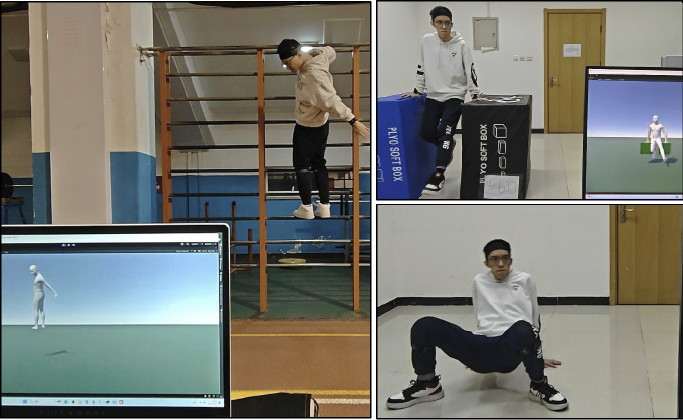
Feng Xu is an Associate Professor at the School of Software, Tsinghua University, Beijing, China. His research bridges computer science , medicine , and neuroscience , focusing on interdisciplinary applications in 3D vision, digital health, and human motion capture. Education : Ph.D. in Automation (2007-2012) and B.S. in Physics (2003-2007), both from Tsinghua University. Research Interests : 3D Vision, Computer Graphics, Digital Health, Physics-based Modeling, and Real-time Human Motion Tracking. His work explores 3D vision and graphics through applications like IMU-based motion capture , NeRF editing , and facial geometry reconstruction . Recent publications emphasize integrating physics-aware models with deep learning for real-time performance, particularly in healthcare contexts such as mediastinal neoplasm diagnosis and radiology report generation . Notable contributions include the EditableNeRF framework for topology editing and Transformer IMU Calibrator for dynamic sensor calibration. His work has received the Best Student Paper Award at IEEE ICME 2019 . Contact : Email: xufeng2003@gmail.com Email: feng-xu@tsinghua.edu.cn
Jes Frellsen is an Associate Professor in the Department of Applied Mathematics and Computer Science at the Technical University of Denmark (DTU), affiliated with the Cognitive Systems research group. His office is located at Richard Petersens Plads, Building 321, 2800 Kongens Lyngby. Research Focus: Dr. Frellsen's work spans machine learning theory and applications, with core expertise in: Probabilistic modeling (latent variable models, Gaussian processes) Computer vision (image segmentation, geometry-aware algorithms) Generative AI (energy-based models, neural representations) Scientific applications (protein structure prediction, news recommendation systems) His research emphasizes uncertainty quantification and handling incomplete data. Advising & Projects: Currently supervising 5 PhD students on projects including: Machine learning for single-cell sequencing analysis AI-driven natural product discovery Digital twins for 3D concrete printing Inverse catalyst design via deep generative models Implicit neural representations for incomplete data
Damien Rohmer is a Professor of Computer Science at École Polytechnique, Institut Polytechnique de Paris, where he serves as Director of LIX (Computer Science Laboratory UMR CNRS 7161). He leads the VISTA research team and coordinates the Image, Vision and Learning specialization at École Polytechnique. His research focuses on Computer Graphics, particularly 3D Modeling, Deformation, and Animation of virtual content, with emphasis on real-time, interactive, and user-controlled approaches. His work spans multiple application domains including entertainment (Animation Cinema, VFX, Video Games, AR/VR), Natural Sciences (Medical, Biology), and Design & Fabrication (Fashion, CAD, Architecture). Rohmer's research can be organized into four main axes: Interactive Shape & Animation Design, Efficient Visual Simulation, Implicit Surfaces & Field-Based Modeling, and Character Animation and Deformation. His publications demonstrate consistent contributions to top-tier conferences including SIGGRAPH, Eurographics, SCA, and MIG. His recent work shows trends toward more expressive character animation, real-time contact handling, and multi-agent systems. There's a clear progression from foundational techniques in sketch-based modeling to more complex systems addressing natural phenomena and character behavior in realistic environments. Best Paper Award, Honorable Mention, at Eurographics 2025 Best Short Paper Award at MIG 2024 Best Poster Award at MIG 2024 Third place in the jFIG 2024 Best Paper Award Best Poster Award, Honorable Mention, at SCA 2024 Best Presentation Award, Honorable Mention, at SCA 2024 Rohmer actively supervises PhD students with funding from ANR and CIFRE programs. He has developed several open-source libraries including CGP (Computer Graphics Programming library) and Velocity Skinning for real-time cartoon-like deformation. His teaching includes specialized courses in Computer Animation and 3D Graphics, with a commitment to open educational resources. He leads the VISTA research team at LIX, focusing on interdisciplinary collaborations across computer science, medical sciences, mathematics, and design disciplines.
Dr. George Gregoriou serves as Associate Professor at the Department of Engineering, School of Sciences and Engineering, University of Nicosia, where he also holds the position of Academic Vice President for Regulatory Affairs at the Rectorate and is a Member of the Senate. His educational background includes a BSc (Summa Cum Laude) in Electrical Engineering from the University of South Alabama (1986), and MSc and PhD degrees in Electrical Engineering from Drexel University (1992). His early career included positions as Research Assistant Professor at Drexel University (1992-1993) and Post-doctoral Research Associate at the University of North Carolina at Chapel Hill (1993-1995). Dr. Gregoriou's research spans multiple domains in engineering and healthcare technology, with recent focus on RFID systems for healthcare applications. His work bridges signal processing, medical imaging, and educational technology, demonstrating strong interdisciplinary capabilities. He has published extensively in IEEE journals and conferences, particularly in nuclear medicine imaging and wireless healthcare systems. His research publications show a clear evolution from foundational work in medical imaging and signal processing toward applied healthcare technology solutions, particularly RFID systems for hospital environments. Recent publications demonstrate practical implementations of wireless technologies in real healthcare settings with emphasis on system design, installation, and evaluation metrics. Senior Member, IEEE Senior Member, IEEE Computer Society Senior Member, IEEE Signal Processing Society Senior Member, IEEE Communication Society Senior Member, IEEE Engineering in Medicine and Biology Society Dr. Gregoriou has secured significant research funding as co-investigator on five research grants totaling over €5 million from the National Institutes of Health and Cyprus Research Promotion Foundation. He served as national delegate for COST B21 action on Physiological Modeling of MR Image Formation and has reviewed for prestigious IEEE conferences including the International Conference on Electronics, Circuits, and Systems. His work contributes to Sustainable Development Goal 3 (Good Health and Well-being) through healthcare technology innovations.
Prodromos Daoutidis is a College of Science and Engineering Distinguished Professor in the Department of Chemical Engineering and Materials Science at the University of Minnesota, where he also serves as Director of Graduate Studies for the MS in Data Science program. His research bridges systems engineering, process control, and sustainability through innovative applications of network science and data-driven methodologies. With over 25 years of academic leadership, he has established himself as a leading figure in process systems engineering with significant contributions to industrial applications. Dr. Daoutidis' research focuses on three interconnected themes: complexity (network approaches to control of complex process networks), data (data-driven control methods and learning approaches), and energy (sustainable production of power, fuels, and chemicals). His group has pioneered network science applications for distributed control of large-scale plants, developed DeCODe software for automatic decomposition of optimization problems, and created RING software for automated reaction network generation in biomass conversion. Current research emphasizes green ammonia systems for sustainable agriculture and energy storage, microgrid optimization, and brain network analysis through process systems engineering principles. His recent publications demonstrate strong trends toward integrating renewable energy systems with chemical processes, particularly through ammonia-based energy storage solutions. The research spans from fundamental control theory to practical implementation in industrial settings, with increasing emphasis on sustainability applications. His work shows a clear trajectory toward solving complex energy-water-food nexus challenges through systems engineering approaches. Computers and Chemical Engineering 2020 Best Paper Award Elected 2nd Vice Chair of CAST Division of AIChE Best Survey Paper in Journal of Process Control (2014-2016) Featured in Yale Environment 360 article on ammonia Research cited in Forbes article on sustainable agriculture Dr. Daoutidis has advised numerous PhD students including Victoria Jones (2024), Hanchu Wang (2023), and Ilias Mitrai (2023), with several alumni now faculty members at institutions like University of Texas and North Carolina State University. His research has been supported by significant grants focusing on sustainable energy systems, process control innovations, and systems engineering applications to biological networks. The Daoutidis Group maintains active collaborations with industry partners, farming communities, fertilizer producers, and utility cooperatives to translate research into practical solutions. The research group operates at the intersection of chemical engineering, control theory, and sustainability science, with facilities supporting both theoretical development and practical implementation of control systems. Current projects involve close collaboration with neuroscientists to apply process systems engineering methods to brain network analysis, demonstrating the cross-disciplinary impact of the group's methodological approaches.
Jason Callahan is a Professor of Mathematics at St. Edward's University's School of Natural Sciences , where he has been affiliated since 2009. He serves as President of the Faculty Senate and Chair of the MAA Texas Section . Research & Teaching: Dr. Callahan specializes in topology, knot theory, and mathematics education . His work spans theoretical mathematics (knot groups, Kleinian groups) and applied fields (population modeling, Markov chain analysis for game theory). He teaches diverse courses including Abstract Algebra, Applied Statistics, and Calculus series, with a focus on undergraduate research mentorship. Awards & Grants: MAA Texas Section Ron Barnes Distinguished Service to Students Award (2018) Presidential Excellence Research Grants (2021, 2014) NSF IUSE grant for 'LLCAL Project' ($1.6 million, 2015-2021) Dean's Faculty Excellence Award for Research (2015) Advocacy: Dr. Callahan coordinates student research presentations at national conferences (Joint Mathematics Meetings, MAA MathFest) and serves on multiple academic organizations including the American Mathematical Society and Council on Undergraduate Research.
Prof. Nassir Navab is a full professor and director of the Chair for Computer Aided Medical Procedures & Augmented Reality at the Technical University of Munich (TUM) School of Computation, Information and Technology. He leads the Medical Augmented Reality summer school series and is a member of Academia Europaea. Education: Mathematics and Physics, Computer Engineering and Systems Control, PhD at INRIA/Paris XI Professional History: Postdoctoral research at MIT Media Lab; Distinguished Member of Technical Staff at Siemens Corporate Research (1993–2003); Full Professor at TUM since 2003 Leadership Roles: Board Member of MICCAI (2006–2012, 2014–2017); Editorial Board Member of IEEE TMI, MedIA, IJCV His research focuses on bridging medicine and computer science through Computer Vision , Medical Augmented Reality , and Robot-Guided Surgery . He pioneered digital surgical workflow modeling (2005) and robotic imaging (2012), with over 100 patents and 90,926 citations (h-index 129). Recent publications highlight AI-driven medical imaging trends, including ultrasound-CT registration , reinforcement learning for robotic sonography , and semantic scene graphs for operating room modeling . Collaborations span institutions like Johns Hopkins University and cover applications in ophthalmology , oncology , and orthopedic interventions . MICCAI Enduring Impact Award 2021 IEEE ISMAR Career Impact Award 2024 IEEE ISMAR 10 Years Lasting Impact Award 2015 Siemens Inventor of the Year 2001 16 Best Paper Awards at MICCAI He mentors teams advancing medical AI and surgical robotics , with labs like CAMP and NARVIS. His work also emphasizes medical education , including courses on Computer Science for Medical Students and Innovation in Healthcare .
Marc Geers is a Full Professor in the Department of Mechanical Engineering at Eindhoven University of Technology (TU/e), leading the Mechanics of Materials research group. His work bridges solid mechanics, multi-scale modeling, and computational homogenization, focusing on advanced materials like metamaterials, energy materials, and additive manufacturing systems. Research Themes: Multi-scale mechanics, metamaterials, computational homogenization, micromechanics, and deformation analysis of metals and composites. Leadership: Chairs TU/e’s multi-scale lab, serves as Editor-in-Chief of the European Journal of Mechanics A/Solids , and leads the European Mechanics Society EUROMECH since 2019. Recent publications emphasize additive manufacturing , metamaterial design , and multi-physics homogenization , leveraging machine learning and finite element methods. His team explores applications in fusion-reactor shielding , MEMS , and hygroscopic paper networks . Grants & Awards : Structurally funded by ERC (Advanced Grant), NWO (STW, FOM), EU, and M2i. Elected to KNAW (2022) and Koninklijke Hollandsche Maatschappij der Wetenschappen (2012).
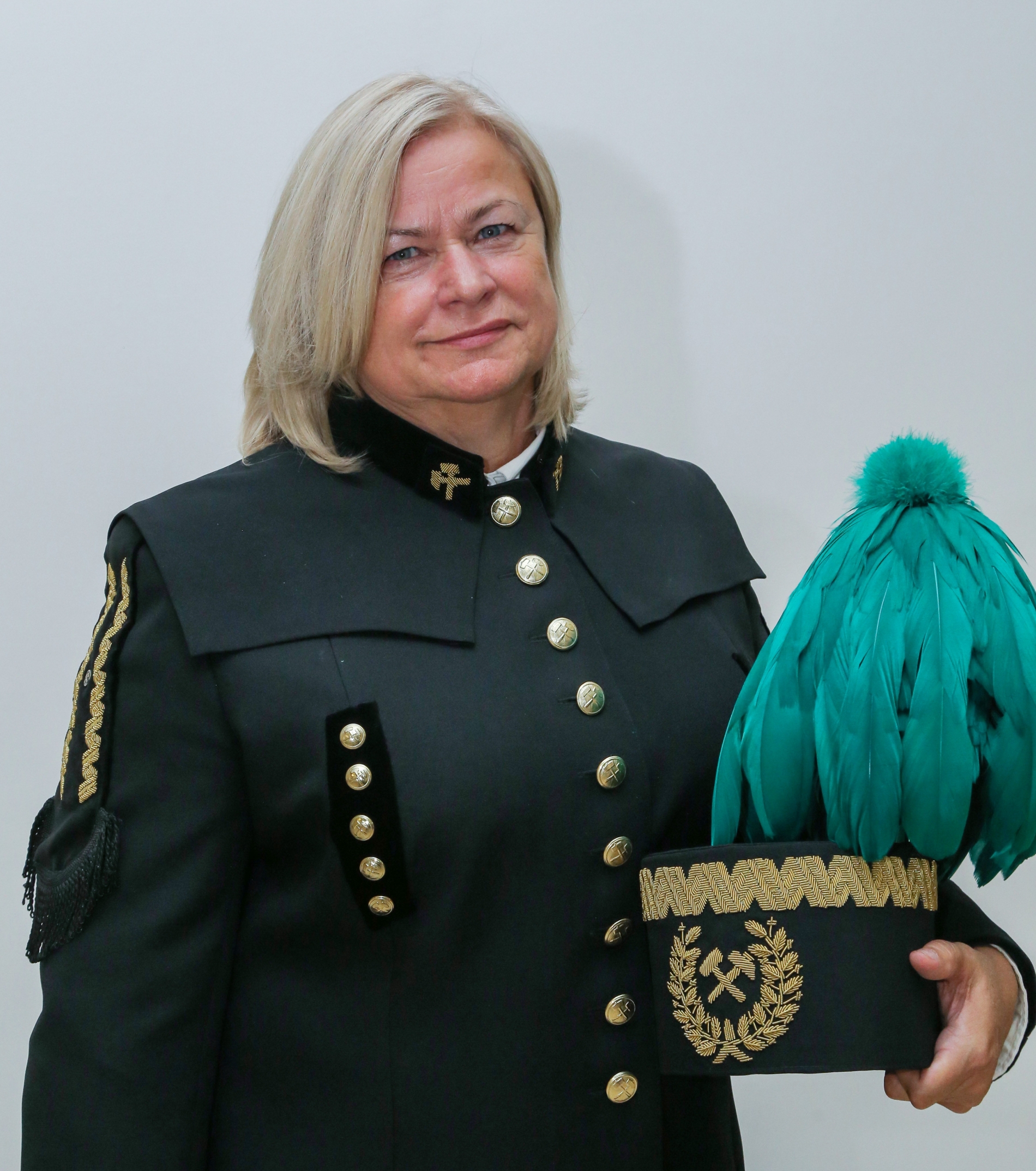
Joanna Bac-Bronowicz serves as an Associate Professor at Wrocław University of Science and Technology within the Faculty of Geoengineering, Mining and Geology. Her primary affiliation is with the Department of Geodesy and Geoinformatics, where she conducts research on geospatial modeling and cartographic applications. She maintains active office hours through both physical and virtual (Zoom) channels. Her research focuses on spatio-temporal data modeling , cartographic generalization , and topographic database integration . Key interests include GIS-based environmental analysis, urban green space assessment, and spatial data infrastructure development. She has pioneered methodologies for integrating national geospatial registers and developing multi-resolution topographic databases. Analysis of her 15 most recent publications reveals strong emphasis on Geometric simplification techniques for cartographic features Urban ecosystem service evaluation using 3D geoportals Integration of LiDAR and remote sensing in smart city frameworks Topographic influences on precipitation patterns Her work consistently bridges theoretical cartography with practical applications in environmental management. Professional recognition includes membership in key national bodies: National Council of Geodesy and Cartography of the Surveyor General of Poland Council of Spatial Information Infrastructure at Minister of Development and Technology Founding member and President (since 1999) of the Association of Polish Cartographers She manages significant research projects including 'Methodology and procedures for integration, visualization, generalization and standardization of reference databases' and has authored over 130 publications. Her work with the Lower Silesian Spatial System demonstrates applied expertise in regional geospatial infrastructure. Current laboratory activities center on the Geocentrum facility (building L-1, room 372) where she develops advanced visualization techniques for spatio-temporal datasets using GIS environments. Her team specializes in converting national geospatial registers into actionable environmental conflict analysis tools.