Thorsten Chmura is a Professor in the Department of Economics at Nottingham Business School, Nottingham Trent University. His work focuses on experimental and behavioral economics, utilizing laboratory and field experiments to address real-world challenges. He maintains collaborations within NTU’s Applied Economics and Policy Research Group, Public Service Management Research Group, and international partnerships across Europe, China, and the US. Chair of Industrial Economics at University of Nottingham (previous) Director, Centre for Research in the Behavioural Sciences (previous) PhD in Economics and Physics from University of Bonn Research interests span behavioral economics, experimental economics, game theory, and traffic modeling. His work examines decision-making under risk, wage discrimination, and behavioral responses in complex systems. Recent publications explore AVOD streaming economics (2024), social trading herding (2022), and toll road choice dynamics (2014). Key article trends include: Behavioral responses in financial markets Risk attitudes across 30 countries Cultural value impacts on loyalty programs Traffic flow simulations Game theory applications in coordination problems Experimental validation of economic theories
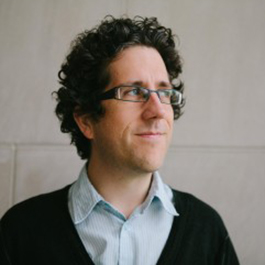
Matt Easterday is an Assistant Professor in the Learning Sciences Department at Northwestern University's School of Education and Social Policy, co-directing the Delta Lab. He holds a PhD in Human-Computer Interaction from Carnegie Mellon University (2010), preceded by an MS in the same field and a BA in Psychology and Mathematics from Reed College. His research focuses on technology-enhanced civic education, aiming to develop evidence-based tools that foster informed citizenship capable of addressing societal challenges like climate change and inequality. Core areas include deliberation systems, cognitive games for policy analysis, and platforms like The Loft and NextGenIL for collaborative civic innovation. Easterday's work emphasizes design research methodologies, bridging theory and practice through frameworks like the 'Design Risks Framework' and 'Research Slices.' His projects integrate iterative design, participatory governance, and scalable learning networks to address real-world policy problems. Awards: Siebel Scholar, Searle Center Fellow, Ver Steeg Advising Award Labs/Teams: Delta Lab (civic tech innovation), The Loft (online learning platform) He advocates for human-centered design in education, advancing tools like Critiki for formative feedback and StandUp for professional coaching in project-based learning.
Retsef Levi is the J. Spencer Standish (1945) Professor of Operations Management at the MIT Sloan School of Management, affiliated with the MIT Operations Research Center. He co-directs the Leaders for Global Operations (LGO) Program. His work focuses on data-driven decision models for healthcare systems, supply chain optimization, and risk management. Levi holds a PhD in Operations Research from Cornell University and has led industry collaborations with major hospitals and organizations like the FDA and Walmart Foundation. Education: PhD in Operations Research, Cornell University, 2005 Bachelor’s in Mathematics, Tel-Aviv University, 2001 Research Interests: Levi’s research addresses complex decision-making under uncertainty in healthcare, supply chains, and logistics. Key areas include food safety analytics, risk-based sampling, and predictive modeling for zoonotic diseases. He designs algorithms for inventory control, appointment scheduling, and healthcare resource allocation. Articles Overview: Recent work spans AI-driven epidemiological models, supply chain cybersecurity, and agricultural market interventions. His articles emphasize practical applications of operations research in healthcare and public health. Awards: NSF Career Grant INFORMS Optimization Prize (2008) Wagner Prize (2013) Harold W. Kuhn Award (2016) Advising & Grants: Advised 10 PhD students and 34 master’s students. Led multi-million-dollar projects like the Walmart Foundation initiative for China’s food safety. Active in hospital process optimization and FDA risk management contracts. Labs & Teams: Runs MIT’s Food Supply Chain Analytics and Sensing Initiative, collaborating with global partners on predictive risk tools and healthcare analytics.
Mark Crowley is an Associate Professor in the Department of Electrical and Computer Engineering at the University of Waterloo , with a cross-appointment in the Cheriton School of Computer Science . He is actively involved in the Waterloo Artificial Intelligence Institute (WAII) , the Waterloo Institute for Complexity and Innovation (WICI) , and serves as National Secretary for the Canadian Artificial Intelligence Association (CAIAC) , coordinating the Canadian Conference on AI . Research interests span the theoretical and applied aspects of Reinforcement Learning , Deep Learning , Manifold Learning , and Ensemble Methods . His work addresses challenges in domains with spatial dynamics, multi-agent systems, and uncertainty, particularly in Computational Sustainability (forest fire management, sustainable forestry), Autonomous Driving , Medical Imaging , and Material Design . Recent research focuses on integrating causal modeling with generative representation learning to improve out-of-distribution robustness in motion forecasting applications. Key publications include foundational work on ChemGymRL environments for safe chemical process reinforcement learning, Generative Causal Representation Learning for robust forecasting, and collaborative work on multi-advisor reinforcement learning in multi-agent settings. He co-authored a textbook Elements of Dimensionality Reduction and Manifold Learning (Springer, 2023) with Prof. Ali Ghodsi and Prof. Fakhri Karray. Teaching includes graduate and undergraduate courses in Algorithm Design , Computational Intelligence , Reinforcement Learning , and Data Modeling at the University of Waterloo since 2018. His research group has produced several notable graduates including Benyamin Ghojogh (2021), who continued as a postdoc until 2022.
Richard Eberhardt serves as Program Manager for the MIT Game Lab and instructor for MIT Game Lab classes at the Massachusetts Institute of Technology, where he aligns research projects with staff, equipment, and funding while mentoring student game development initiatives. His operational leadership supports the lab's mission to advance game literacy through interdisciplinary collaboration. His academic credentials include: Bachelor of Arts from the College of William & Mary Serious Games MA Certificate from Michigan State University Professional certifications: Certified Scrum Master PMI Agile Certified Practitioner Eberhardt's research investigates historical representation in games, analyzing how mechanics model historical systems and which narratives are amplified or marginalized in gaming communities. His scholarship spans serious games for mental health awareness, educational applications of VR/AR technologies, and inclusive game jam methodologies, consistently addressing public literacies through civic systems and emotional intelligence frameworks. Analysis of his 2013-2023 publications reveals sustained focus on game-based educational tools across STEM and humanities domains. His work pioneers VR simulations for photonics education, examines historical accuracy in commercial games, and develops inclusive frameworks for collaborative design events. This output demonstrates strategic integration of game mechanics with learning objectives while addressing representation gaps in historical gaming. Notable recognition includes an award for elude , the depression awareness game developed in 2010 for patients' support networks. As a mentor, Eberhardt directs student projects like elude and hosts game jams fostering community collaboration. His Agile-certified project management approach facilitates resource allocation across educational initiatives, though specific grant details remain undisclosed in available materials. The MIT Game Lab operates as his primary research ecosystem, connecting students, faculty, and community partners to explore games' transformative potential in education and social contexts through its Civic Systems, Media & Emotional Intelligence pillar.
Aniello Murano is a Professor of Computer Science at the Department of Electrical Engineering and Information Technologies , University of Naples Federico II. He serves as Scientific Director of the ASTREA (Automated Strategic Reasoning) Laboratory and leads cutting-edge research in Artificial Intelligence, Strategic Reasoning, Multi-Agent Systems , and Formal Verification . Research Interests : Strategic reasoning under perfect/imperfect information, specification/verification/synthesis of reactive systems, temporal/modal logics, automata theory, parity games, game theory, mechanism design, and formal languages. Notable Projects : PNRR Research Unit Coordinator (2023-2025) on Resilient AI, PRIN 2020 Unit Coordinator (RIPER: Resilient AI-Based Self-Programming and Strategic Reasoning), H2020-MSCA SEAL (Principal Coordinator). Awards & Honors : JPMorgan Faculty Research Award (2022), Royal Society Award (2016), Best Paper PRIMA (2015), INDAM Project Leader (2023), Italian Scientific Habilitation (2017-2018). Students & Postdocs : Supervised 6 PhD students (e.g., Silvia Stranieri, Vadim Malvone) and mentored postdocs such as Munyque Mittelmann and Bastien Maubert. Laboratory : Leads ASTREA Lab, focusing on automated strategic reasoning and resilient AI systems.
Iris D. Tommelein serves as the Roy W. Carlson Distinguished Professor in the Civil and Environmental Engineering Department at the University of California, Berkeley's College of Engineering, where she directs the Project Production Systems Laboratory (P2SL). A globally recognized pioneer in Lean Construction, she has revolutionized architecture-engineering-construction (AEC) practices through research, industry workshops, and leadership since co-founding the Lean Construction Institute in 1997. Her educational foundation spans multiple disciplines: Ph.D. in Civil Engineering (Construction Engineering and Management), Stanford University, 1989 M.S. in Computer Science (Artificial Intelligence), Stanford University, 1989 M.S. in Civil Engineering (Construction Engineering and Management), Stanford University, 1985 B.S. (5-year degree) in Civil Engineer-Architect, Vrije Universiteit Brussel, Belgium, 1984 Professor Tommelein's research centers on transforming construction processes through Lean principles and digital innovation . Her work pioneers takt planning for workflow reliability, industrialized construction for labor and sustainability challenges, and mistakeproofing to eliminate errors. She integrates digital twins , AI , and optimization to develop practical decision-support systems for supply chains, logistics, and production management. Recent focus includes modular offsite construction and Industry 4.0 applications. Analysis of her 2023-2025 publications reveals intensifying research on takt planning maturity models and industrialized construction feasibility , with growing emphasis on mass timber automation and visual management systems. Her work consistently bridges lean theory with practical implementation across megaprojects, subcontracting networks, and heavy civil engineering. Her exceptional contributions have earned: Lean Pioneer Award (Lean Construction Institute, 2015) National Academy of Construction induction (2019) PPI Technical Achievement Award (2022) Robert B. Harris Award (University of Michigan, 2024) ASCE Construction Management Award (2024) - first woman recipient in 51 years Through the P2SL, she leads industry-collaborative research on production system design, mistakeproofing frameworks, and digital transformation. Her grant-funded projects develop assessment tools for industrialized construction adoption and takt planning methods adaptable to diverse project types. She actively mentors graduate students and drives knowledge transfer via workshops and the annual Construction Innovation Day. The Project Production Systems Laboratory (P2SL) operates as a global hub for construction innovation, partnering with owners, contractors, and suppliers to implement lean production systems. Current initiatives include developing serious games for mistakeproofing training, optimizing work density methods for heavy civil projects, and creating digital twins for real-time construction management.
Konstantinos Pelechrinis is an Associate Professor in the Department of Informatics and Networked Systems at the University of Pittsburgh's School of Computing and Information. He holds a Ph.D. in Computer Science from the University of California, Riverside. His research focuses on network science, urban informatics, and sports analytics. He has been recognized with the Army Research Office Young Investigator Award for his contributions. Education: Ph.D. in Computer Science, University of California, Riverside Research Interests: Urban mobility patterns and infrastructure analysis Sports performance quantification and strategy Data-driven decision-making in transportation systems Network science applications in social and urban systems His recent work explores topics such as implicit biases in sports refereeing, anomaly detection in NFT markets, and optimizing bike-sharing systems using predictive models. He also investigates urban infrastructure resilience through projects like the Epui platform for experimental urban informatics. Awards: Army Research Office Young Investigator Award He contributes to academic outreach through courses like TELCOM2125 (Network Science and Analysis) and collaborates on initiatives like the Healthy Ride Pittsburgh bike-sharing study. His lab focuses on bridging theoretical models with real-world urban and sports datasets.
Mehrdad Nojoumian is an Associate Professor at Florida Atlantic University's College of Engineering and Computer Science, specializing in Security, Privacy, Trust, and Human-Autonomy Interaction. His research bridges computer science with FinTech and autonomous systems, focusing on cryptographic protocols, blockchain, and IoT security. PhD, University of Waterloo (Computer Science, 2012) MSc, University of Ottawa (Computer Science, 2007) BSc, Islamic Azad University (Computer Engineering, 2002) His research explores privacy-preserving mechanisms in autonomous systems, trust modeling in blockchain, and cross-disciplinary applications of cryptography. Recent work includes patents on adaptive driving modes and ongoing studies on IoT vulnerabilities and autonomous coordination. Notable awards include the Excellence and Innovation in Undergraduate Teaching Award (2023), NAI Induction (2022), and multiple Best Paper Awards . His publications span journals like Information and Computation and conferences such as GameSec and IEEE Blockchain . He mentors graduate students in cybersecurity bootcamps, high school outreach programs, and collaborative research projects funded by NSF , ARO-AFOSR , and AFRL . His lab emphasizes diversity and inclusion, particularly supporting underrepresented groups in STEM.
Prof. Dr. Frank T. Piller is a University Professor and Co-Leader of the Institute for Technology and Innovation Management (TIM) at RWTH Aachen University, where he also serves as Academic Director of the Executive MBA program at RWTH Business School. He leads a research team of approximately 30 doctoral students, 5 postdocs, and over 20 student researchers within the TIME Research Area of the School of Business and Economics. His educational background includes a doctoral degree in Operations Management from the University of Würzburg (1999) and a Habilitation degree from TUM Business School (2004) on "Innovation and Value Co-Creation." Prior to joining RWTH Aachen in 2007, he was a Research Fellow at MIT Sloan School of Management and faculty at TUM Business School. Prof. Piller is recognized as one of the world's leading experts in customer-centered value creation, specializing in mass customization, personalization, and customer co-creation. His current research focuses on how established companies can transform in response to disruptive business model innovations, with particular emphasis on digital transformation (Industry 4.0), AI-augmented innovation, and sustainable business models. He is particularly known for his work on innovation ecosystems, platform-based business models, and stakeholder-oriented technology development. His recent publications demonstrate a clear trajectory toward integrating artificial intelligence with traditional innovation management frameworks, exploring how AI transforms manufacturing systems, innovation processes, and business models. His work increasingly addresses the challenges of digital transformation in established industries while maintaining focus on customer co-creation and mass customization principles. His scientific achievements have been recognized with numerous awards: Co-Creation Award of the PDMA Nomination for "Innovating Innovation" Prize by Harvard Business Review and McKinsey "Lecturer of the Year" by Executive MBA students at TU Munich RWTH Aachen Rector's Prize for Excellent Teaching (since 2010) Grant for innovative "Flipping the Classroom" teaching concept ERC Synergy Grant for SAFER Grid project (2025-2031) Prof. Piller maintains an extensive research network spanning academia and industry. He collaborates with numerous corporations including 3M, Adidas, BASF, EON, J&J, P&G, Siemens, and Vodafone, as well as many technology startups across Europe and North America. As a co-founder, supervisory board member, and investor in innovative startups, he actively transfers research into practice. His research has received significant funding, most notably the prestigious ERC Synergy Grant for the SAFER Grid project. He leads the Technology and Innovation Management Group (TIM) within the TIME Research Area at RWTH Aachen, which comprises over 100 senior and junior researchers working at the intersection of innovation, technology management, marketing, and entrepreneurship. The institute is a leading European research institution for strategic, behavioral, and computer-supported technology and innovation management.
Christos Gatzidis serves as Executive Dean of Bournemouth University's Faculty of Science and Technology since October 2023, overseeing six departments including Computing and Informatics, Creative Technology, and Psychology. Previously Deputy Dean (2021-2023) and Head of Creative Technology Department (2016-2021), he was appointed Professor in Creative Technology in November 2019. The Faculty leads five REF Units of Assessment and secures funding from AHRC, NIHR, and Innovate UK for research spanning digital healthcare, gaming technologies, and cultural heritage applications. His educational qualifications include: PhD in Information Science, City University London (2010) PG Cert in Research Degree Supervision, Bournemouth University (2010) MA in Computer Animation, Teesside University (2003) BSc (Hons) in Computer Studies (Visualisation), University of Derby (2002) Professor Gatzidis specializes in computer graphics with research spanning virtual reality, serious games, and digital healthcare applications. His work bridges technical innovation and practical implementation, particularly in mindfulness prototypes for healthcare and stroke rehabilitation systems. Current projects focus on the multidisciplinary application of gaming technologies in medical contexts, emphasizing user experience and therapeutic outcomes through collaborations with industry partners. His publication record (2014-2025) demonstrates evolving expertise from foundational computer graphics research in terrain generation and deformation to applied work in healthcare, cultural heritage, and music education. Key trends include virtual reality for therapeutic mindfulness, usability studies in mobile gaming, and digital cultural presentation techniques, reflecting a trajectory toward socially impactful technological solutions with strong industry translation. No scientific awards are documented in the provided information. He has supervised PhD students and secured competitive research funding, including two Innovate UK Knowledge Transfer Partnerships. His principal investigator role in a virtual reality mindfulness prototype project exemplifies his approach to translating academic research into practical industry solutions, with current focus on expanding knowledge exchange activities to support the University's civic engagement mission. As Executive Dean, he leads faculty-wide research strategy across six departments, fostering interdisciplinary collaborations particularly in digital healthcare and cultural heritage. His personal research integrates computer graphics expertise with clinical applications through partnerships with healthcare providers and technology companies, driving innovation in therapeutic VR systems and educational gaming platforms.
Jim Diamond is a researcher at Johns Hopkins University, specializing in digital media and learning with a focus on educational games to enhance K–12 education. His work employs design-based research methods to develop technologies that promote learner agency in real-world settings. He holds a BA and EdM from Boston University, and a PhD from New York University. His research addresses history, social studies, civics, STEM, computational thinking, and disciplinary literacy. Funding sources include the National Science Foundation, MacArthur Foundation’s HASTAC Initiative, Gates Foundation, and Robin Hood Learning + Technology Fund. No specific advising or lab affiliations are noted in the provided text.
Ivon Arroyo is a Professor in the Department of Teacher Education & Curriculum Studies (TECS) at the University of Massachusetts Amherst. Her research focuses on integrating novel technologies into math and computational thinking education, emphasizing affective and metacognitive states. She develops intelligent tutoring systems, such as COVES, which personalize learning in real-time and utilize facial expression recognition to enhance engagement. Her work on WearableLearning explores embodied, physically active multiplayer games for K-12 classrooms, leveraging mobile devices and wearable technologies to create immersive learning experiences. Dr. Arroyo holds an Ed.D. (2003) and M.S. (2000) from UMass Amherst and a B.S. from Universidad Blas Pascal in Argentina (1995). She has been recognized with multiple awards, including Best Paper Awards at the 2009 International Conference on Artificial Intelligence in Education and the 2010 Educational Data Mining Conference, a Fulbright Fellowship (1996), and a 1994 undergraduate prize for computer vision research. Her research interests span interdisciplinary areas such as Learning Sciences , Computer Science , Data Science , and Psychology . She prioritizes culturally responsive pedagogical agents and cross-cultural studies in educational technology, particularly in Argentina, India, and the U.S. Her projects often address challenges in developing countries, including localization of tutoring systems to Spanish. Advising and grants are central to her work, with grants like the NSF CAREER Award (2020) supporting embodied math classrooms. She collaborates on teacher dashboard frameworks and explores ethical AI integration in education. Her labs focus on creating tools that merge computational innovation with theoretical learning science principles, emphasizing real-world applications like the WearableLearning Cloud Platform.
Thomas Michael Sattich is an Associate Professor at the University of Stavanger , affiliated with the Faculty of Social Sciences and Department of Media and Social Studies . His research focuses on geopolitical implications of sustainability transitions, particularly energy policy interdependence and EU-China relations. PhD in Political Science and Economics Expertise in qualitative methods, mixed methods (cluster analysis), and data visualization Lead researcher on EU-funded digital climate negotiation simulation projects His recent publications examine renewable energy geopolitics, industrial policy competition, and sustainability education frameworks. Methodologically, he specializes in Qualitative Comparative Analysis (QCA) and network analysis, contributing to debates on energy security and regional cooperation.
Rika Hanamitsu is a Professor at the School of Social Sciences, Waseda University, where she teaches courses related to intercultural communication studies. She holds a Doctor of Philosophy degree from Waseda University and is also affiliated with the Center for International Education and the Global Education Center at the university. Education: Doctor of Philosophy from Waseda University Affiliations: Center for International Education, Global Education Center Her research focuses on intercultural communication and applied linguistics, particularly examining how cultural stereotypes, identities, and communication styles are represented in media and literature. She has conducted extensive research on Allen Say's works and their cultural implications, analyzing how they depict multicultural experiences and identity formation. Professor Hanamitsu's educational activities include teaching various courses including 'Seminar III (Intercultural Communication Studies)', 'Exploring Cultures through Film', 'Inter-Cultural Communication', 'Freshman Seminar', and 'Intercultural Communication' in both fall and spring semesters of 2025. Her teaching emphasizes the use of films as educational tools for intercultural understanding and literacy development. She has participated in overseas activities such as attending the Summer Institute of Intercultural Communication at Hope College, University of Michigan in 2002. Her social activities include intercultural communication training using games to develop communication skills, which she has conducted since 2011. International Presentations: 35th IBBY World Congress (2016), Summer Institute of Intercultural Communication (2002) Domestic Conferences: Japan Association for Language Education & Technology, Japan Association of College English Teachers, Japan Society of English Usage and Style Research Projects: Cultural Comparison of Conflict Scenes in Movies and Their Treatment (2005)