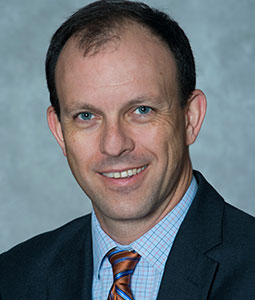
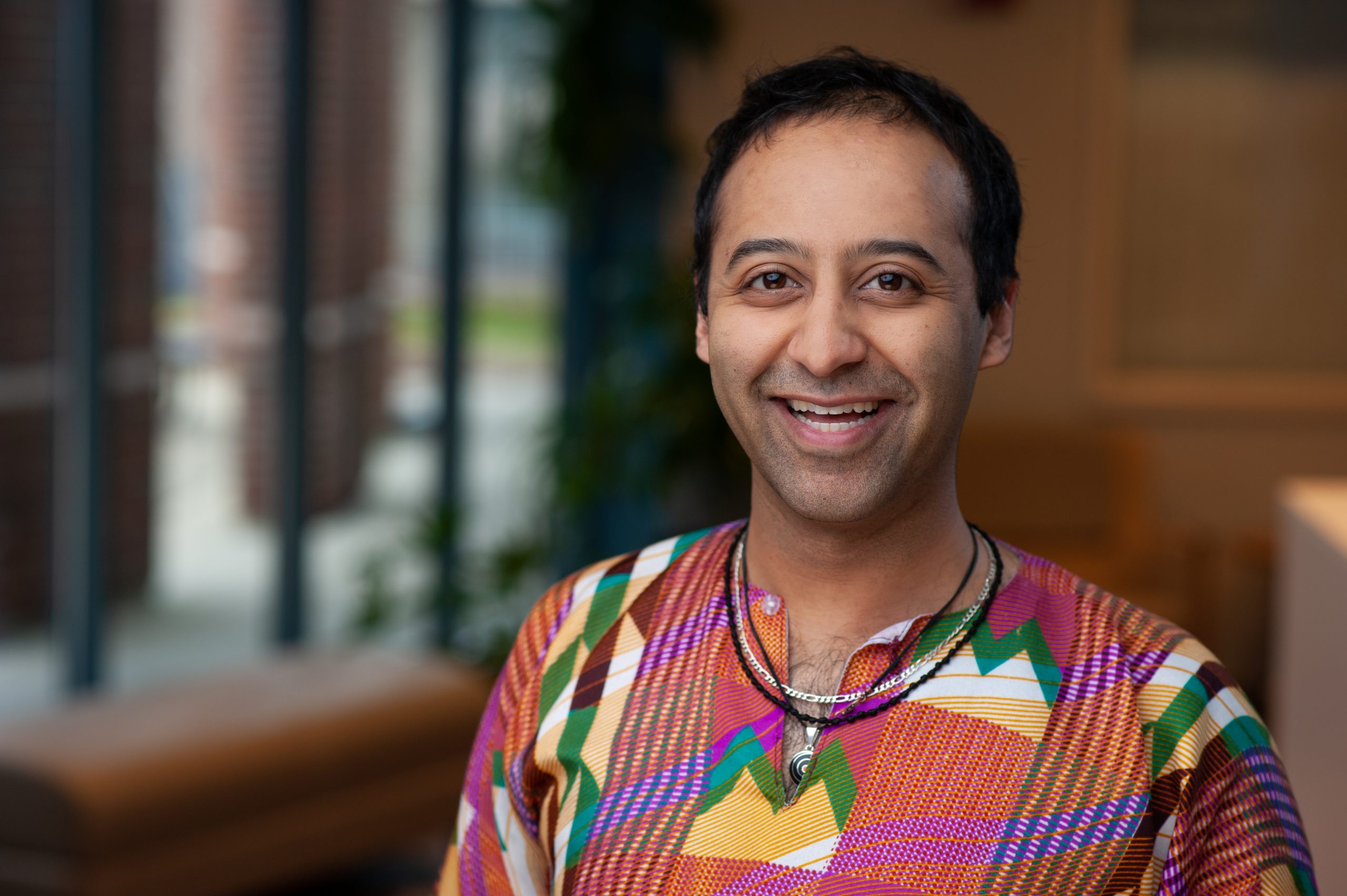
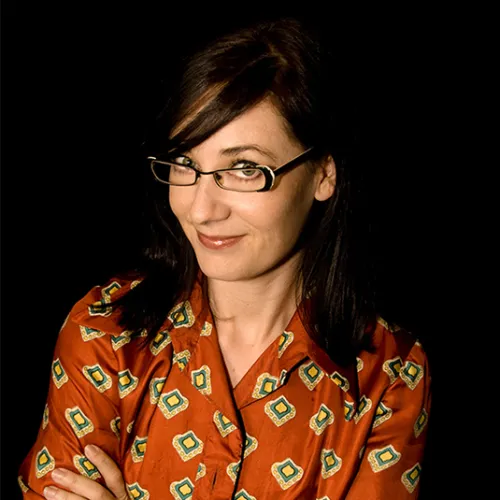
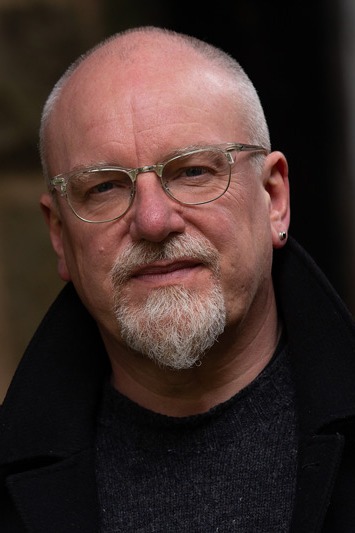
Christoph Wagner is a Lecturer in Lighting at the Royal Conservatoire of Scotland, where he has been employed since 2012. He holds a PhD (part-time) in scenography jointly from the Royal Conservatoire of Scotland and the University of St. Andrews, focusing on technological advancements in lighting design and archival methodologies since 1960. His research involves the Francis Reid Archive, Glyndebourne Opera archives, and practitioner interviews. Education: Graduated with distinction from Queen Margaret University College in Edinburgh, completed a Postgraduate Certificate in Teaching Higher Arts Education, and is pursuing his PhD. Research interests revolve around the intersection of technology and lighting design, particularly how innovations shape artistic expression and archival practices. He explores how historical lighting techniques are preserved and revived through modern digital tools, with a focus on operatic productions and archival documentation. Professional work includes lighting design for diverse theatre genres (devised theatre, cabaret, corporate events) across international stages, including the Tron Theatre, Soho Theatre, Tokyo Metropolitan Theatre, and The Arches. Notable projects include Hamlet , Victory , One Green Bottle , and collaborations with comedians like Eddie Izzard and Catherine Tate. His technical contributions are praised for enhancing dramatic storytelling through lighting, such as creating atmospheric tension in How To Act Around Cops and guiding audiences through narrative journeys in Victory .
Stacy Holman Jones is a Professor of Theatre and Performance in the School of Languages, Literatures, Cultures and Linguistics at Monash University. With over 23 years of academic experience, she has developed an international reputation for leadership in performance studies, particularly in feminist and queer theory, new materialist research, and critical arts-based methodologies. Her educational background includes a PhD in Communication/Performance Studies from the University of Texas at Austin (2001), an MA in Communication from California State University Sacramento (1996), and a BA in Humanities (1988). Professor Jones's research focuses on performance as socially, culturally, and politically resistive and transformative activity. She is a recognized leader in critical autoethnography and has published over 100 articles, book chapters, and editorials, as well as authored, co-authored, and edited 14 books including the influential Handbook of Autoethnography (2013, 2021) and Queering Autoethnography (2018). Her work spans cultural critique, social inclusion, education, resilience building, designing for social impact, and enhancing health and wellbeing among minoritarian communities. Analysis of her recent publications reveals a strong trajectory toward creative ecological approaches to mental health, collaborative autoethnographic methods, and innovative design for social impact. Her research increasingly integrates performance studies with mental health applications, particularly in educational settings, while maintaining strong connections to queer theory, new materialisms, and critical autoethnography. International Congress of Qualitative Inquiry's Special Career Award National Communication Association's Distinguished Service Award in Performance Studies Janice Hocker Rushing Early Career Research Award Organization for the Study of Communication, Language, and Gender Feminist Teacher/Mentor Award Over the Rainbow Recommended Book List for Queering Autoethnography (2019) International Congress of Qualitative Inquiry Qualitative Book Award, Honourable Mention (2020) Multiple Good Design Awards for 'The Tomorrow Party' (2024) Professor Jones has been part of 3 successful ARC applications totaling $1,353,604, including as Lead CI for DP200102876 Staging Australian Women's Lives (2020-2023). She is currently accepting PhD students with supervision interests in theatre and performance studies, social change and social justice, and health and wellbeing research. She serves as the founding editor of Departures in Critical Qualitative Research and has been actively involved in professional organizations including serving as President of the International Congress of Qualitative Inquiry (2015-2018). Her current research activities include multiple collaborative projects such as 'Playing Transitions - Settling and Belonging in School together' (2024-2027), 'Learning Creates: Tomorrow Party' (2024), and 'Canopy: Creative partnerships for policy advocacy in Climate and Health' (2024), demonstrating her commitment to interdisciplinary, impact-focused research that bridges theory and creative practice.
Kerrie Reading is a Senior Lecturer in Drama at Bath Spa University's Bath School of Music and Performing Arts. She joined the institution in 2022, following a 15-year freelance career as a theatre practitioner and prior academic roles at Cardiff Metropolitan University. Education : PhD (2017), MPhil (2013), and MDrama (2007) from Aberystwyth University, University of Birmingham, and University of Kent respectively. Kerrie's research explores the body as a site of performance , with a focus on trauma and somatic practices . Her work bridges site-specific performance , community theatre , and archival studies . Key themes include: Oral histories and archives Applied theatre in urban spaces Devised theatre methodologies Embodied knowledge in performance Post-COVID community engagement Historical efficacy of performance spaces Her recent publications examine grassroots theatre adaptation, performative archives, and site-specific practices. Current projects emphasize trauma-informed somatic techniques and rural futures through performance. Awards : Fellow of Advance HE (FHEA). Professional Memberships : Advance HE.
Professor Scott Palmer is a distinguished academic at the University of Leeds, serving as Professor of Light and Performance within the School of Performance and Cultural Industries (Faculty of Arts, Humanities and Cultures). With over 30 years of teaching and management experience in Higher Education, he was a founder member of the School in 2001 and has held numerous senior management roles including Interim Head of School, Director of Student Education (2019-2022), Director of Enterprise and Knowledge Transfer, and Programme Manager for BA (Hons) Performance Design for over a decade. In 2017-18, he was appointed to an Excellence and Innovation Fellowship at the Leeds Institute for Teaching Excellence & Innovation. PhD (Leeds) - Light, Scenography and the Choreography of Space Cert. Education (Manchester) BA Hons. Drama (Wales) Professor Palmer is a leading international advocate for scenography as an intellectual discipline. His research focuses on light, darkness and atmosphere in performance, designing for audience experience, and since 2017, the field of XR (Extended Reality). His influential monograph Light: Readings in Theatre Practice (Palgrave Macmillan, 2013) significantly contributed to establishing scenography as a scholarly field, exploring how light has influenced staging practices throughout history. He has co-edited major works including Scenography Expanded (Bloomsbury 2017) and the groundbreaking Contemporary Performance Lighting (2023), the first critical anthology focused specifically on performance lighting. His recent publications reveal evolving research trends from historical analyses of light in theatre to contemporary explorations of XR, immersive environments, and audience experience. Keywords across his work consistently emphasize scenography, audience experience, light design, and the integration of digital technologies in performance. His sub-field specializations span historical lighting techniques, immersive theatre practices, site-specific performance, 360-degree environments, and the theoretical frameworks connecting technological innovation with theatrical expression. Excellence and Innovation Fellowship at the Leeds Institute for Teaching Excellence & Innovation (2017-18) Research impact highlighted by AHRC as an exemplar case study Contributions to BBC Radio 3's Illuminating the Stage (broadcast December 25, 2017) Professor Palmer has supervised numerous PhD candidates and led collaborative student projects resulting in public performances including Pandora's Box (2009), Dream/Play (2010), Just Before Dawn (2011), Into the Dark (2012), Blood Wedding (2013), The Dreaming (2015), The Waiting Room (2017), and Within This House (2018). His research has been supported by significant grants including the AHRC-funded Projecting Performance (2006-08), UKRI-funded Surround Stories (XR Stories), and AHRC-funded Bridging the Gaps exploring Mixed Reality Performance of Chinese Opera. He plays an active role in international scholarly communities as co-convenor of the IFTR Scenography Working Group (2013-16), inaugural member of the TaPRA Scenography Working Group, and contributor to OISTAT Education and History and Theory Commissions. Professor Palmer is a member of the PLACE, Practice as Research, and Participation Research Groups at Leeds, and was co-instigator of the Leeds-based Performing Light Network. His SignalSpace web resource, developed with colleague Maria Kapsali, explores digital creativity and mobile phone applications in performance contexts. He regularly presents research outcomes at international conferences including IFTR, TaPRA, ICIDS, and ZipScene, demonstrating his commitment to advancing both theoretical understanding and practical applications of performance design.
Peter Duffy is a Professor and Head of the Master of Arts in Teaching (MAT) program in Theatre Education at the University of South Carolina's College of Arts and Sciences, Department of Theatre and Dance, where he also serves as Director of Undergraduate Studies. With an MFA from the University of North Carolina at Greensboro (2007) and an Ed.D. from the University of South Carolina (2014), he prepares graduate students to become drama teachers while offering courses in drama-based pedagogies and arts integration. His educational background includes: MFA, University of North Carolina at Greensboro, 2007 Ed.D., University of South Carolina, 2014 Duffy's research centers on teaching and learning , devising new works in community settings , cognition and the arts , culturally responsive pedagogies , and performed research . As a director and former public-school teacher, education director, and New York City teaching artist, his work bridges theory and practice through participatory and embodied methods. His research emphasizes drama-based approaches to education and arts integration across curricula, with national and international recognition for innovative pedagogical frameworks. Analysis of his 2014-2024 publications reveals a dominant focus on research-based theatre , theatre of the oppressed , and embodied cognition within educational contexts. His work consistently addresses teacher education and culturally responsive practices through innovative methodologies like ethnodrama and duoethnography. A recurring theme explores drama as a tool for examining social issues and enhancing learning in K-12 and teacher training environments, often incorporating qualitative-quantitative integration and community-based applications. His scientific achievements include: AATE’s Win Wright Special Recognition award (2013) Outstanding Theatre Educator Award from the South Carolina Theatre Association (2017) Garnet Apple Award for teaching excellence at the University of South Carolina (2017) Duffy serves as Director of Research for the International Drama/Theatre Education Association (IDEA) and is an active AATE member. His advising focuses on preparing future drama educators through the MAT program, while his publications like the 2019 book "Drama Based Research: Provocations of Practice" and the widely adopted ethnodrama "ReformED" demonstrate significant scholarly impact. Though specific grants aren't detailed, his extensive international collaborations and research output suggest robust external funding. Through partnerships with IDEA and community organizations, Duffy develops drama-based educational programs that enable students and educators to explore complex social and educational issues through performance. His work extends to national initiatives like "ReformED", which uses teacher interviews to examine educational evolution and supports National Teacher's Day observances across U.S. institutions.
Kyoko Shinozaki is a Professor at the Paris Lodron University of Salzburg, serving as Chair of both the Department of Sociology and Human Geography and the Devision of Sociology. Her research focuses on global and translocal sociological perspectives, emphasizing comparative sociology between Europe and Asia, migration dynamics, racism, intersectionality, sustainability, and socio-ecological transformation. She actively explores regional development in peripheral areas and creativity’s role in human-nature interactions. Her work bridges multiple disciplines, integrating findings from migration studies, policy analysis, and environmental sociology. Recent publications highlight themes like climate policy (e.g., land use and SDGs), institutional whiteness, and academic internationalization. She supervises theses requiring detailed proposals and contributes to interdisciplinary initiatives like the Postmigrantische Studien series. Shinozaki’s academic leadership includes organizing conferences and editing volumes on migration and sustainability. Her research often critiques institutional structures, advocating for intersectional and reflexive methodologies. Office: Room 26A (next to HS 387).
Kimberley McLeod is an Associate Professor in the School of Theatre, English, and Creative Writing at the University of Guelph. Her work bridges political performance, participatory media, and digital culture. She holds a PhD from York University, an MA from the University of Alberta, and a BAH from Queen’s University. Dr. McLeod’s research focuses on how live performance and new media intersect to foster political engagement. Her current book project, *Performing Digital: Publics, Politics and Participation* (MQUP), examines performance theory and critical media studies. She also explores satire’s role in Canadian political discourse and co-edits the *Views & Reviews* section of *Canadian Theatre Review*. Her practice-based research includes projects like *The Haven Project*, a food-security podcast collaboration with the Arrell Food Institute. Her teaching emphasizes contemporary performance practices, including devising and digital performance. Recent research projects interrogate gender norms in digital assistants like Siri and Alexa, and Indigenous knowledge-sharing in the digital age. Her work has been presented in Canada, Ukraine, Belgium, and the UK.
Dr. Asif Majid is an Assistant Professor of Theatre and Human Rights at the University of Connecticut's College of Liberal Arts and Sciences, where he merges academic research with performance practice to explore racial identities, community-based theatre, and sociopolitical transformation. His work intersects performance ethnography with Islamic identity studies, focusing on marginalized communities through improvisational methods and participatory techniques. PhD in Anthropology, Media, and Performance from University of Manchester MA in Conflict Resolution from Georgetown University BA in Interdisciplinary Studies: Global Peace Building and Conflict Management from UMBC Dr. Majid's research engages performance ethnography to examine: Intersections of Islam and theatre Community-based devising practices Postcolonial identity performance Racial anxiety in urban spaces Refugee trauma narratives Decolonial museum practices His recent publications examine asylum seeker narratives through cassette shop performances (2024), trauma responses in refugee theatre (2024), and power dynamics in drama workshops with British Muslim youth (2024). His work traces neoliberal influences on performance institutions (2020) and explores Egyptian revolutionary graffiti practices (2018). The 2024 publications emphasize embodied identity performance, while earlier works (2015-2020) focus on conflict transformation and participatory methodologies. Dr. Majid previously served as: Mellon/ACLS Public Fellow at San Francisco Arts Commission Lab Fellow at The Laboratory for Global Performance and Performance
Mildred Lewis is an Assistant Professor at Chapman University 's Wilkinson College of Arts, Humanities, and Social Sciences , specializing in English . Her academic work intersects with creative practice through playwriting, screenwriting, and multimedia projects. Education: Bachelor of Arts, Oberlin College Master of Arts, University of California, Los Angeles Master of Fine Arts, University of California, Los Angeles Lewis explores interdisciplinary arts through works addressing domestic violence , cultural identity , and social justice . Her projects span theatre , film , and digital media , including the Humanitas' PLAY LA residency and Playground-LA collaborations. Recent works examine urban dynamics , historical memory , and gender roles , with productions at major festivals like Outfest Fusion and Rockford New Play Festival . Her research connects classical mythology with contemporary social issues . Awards & Recognitions: L.B. Williams Award, New Circle Theatre (2021) Grand Jury Award, Fusion Theatre (2022) Finalist/semi-finalist in multiple playwriting festivals (2013-2022) Competitively selected for 2017-8 Writers' Pool
Dr. Shila Ghazanfar is an Australian Research Council DECRA Fellow at the University of Sydney, Faculty of Science. She is an expert in statistical and computational analysis of spatial transcriptomics and single-cell RNA-seq data, with a focus on developing bioinformatic approaches for integrating complex biological datasets across various omics modalities. Her educational background includes: Undergraduate studies in statistics and statistical bioinformatics at The University of Sydney PhD in statistics and statistical bioinformatics at The University of Sydney Royal Society Newton International Fellowship at The University of Cambridge under Dr. John Marioni in computational biology Dr. Ghazanfar's research interests center on developing statistical bioinformatic and biomedical data science approaches for meaningful integration of complex and high-dimensional biological datasets. Her multidisciplinary expertise spans statistics, statistical bioinformatics, and computational biology, enabling her to devise strategies to jointly model processes generating diverse data sources. Her work aligns with the University of Sydney Faculty of Science Research Strengths in Complex Systems, Precision and Digital Health, and Data and Decisions. Analysis of her recent publications (2021-2025) reveals strong focus areas including spatial transcriptomics infrastructure development, single-cell data integration methodologies, and applications in cancer research and cardiovascular biology. Key trends show progression from foundational method development to increasingly sophisticated multi-modal integration approaches, with significant emphasis on creating open-source computational tools for the research community. Her scientific recognition includes: Australian Research Council DECRA Fellowship Royal Society Newton International Fellowship Dr. Ghazanfar actively mentors research students, including Angel GUAN working on melanoma immunotherapy research. Her grant portfolio demonstrates substantial research support: 2023: Statistical Bioinformatics for Single Cell, Spatial and Multiomic Biotechnologies (Faculty of Science) 2022: Defining spatiotemporal mechanisms for peripheral nerve regeneration (Partnership Collaboration Award) 2022: Multiscale data integration for single cell spatial genomics (Chan Zuckerberg Initiative) Australian Research Council DECRA for statistical approaches in spatial genomics As a member of the Charles Perkins Centre, Dr. Ghazanfar participates in interdisciplinary research addressing complex health challenges through computational biology approaches, with collaborations spanning multiple domains from basic science to clinical applications.
Megan Alrutz is a full Professor and Associate Chair in the Department of Theatre and Dance at the University of Texas at Austin. She specializes in Drama and Theatre for Youth and Communities and oversees the UTeach Theatre program. Her expertise spans creating interdisciplinary performance for stage and screen, storytelling, and drama-based pedagogy. Education: Arizona State University, Rutgers University Academic Rank: Professor Department: Theatre and Dance University: University of Texas at Austin Her research integrates applied theatre , digital storytelling , devising , and dramaturgy to engage young audiences and address social justice themes. She has pioneered theatre for the very young (ages 2-6) and collaborated with award-winning screenwriter Mo Willems. Alrutz co-founded the Center for Imagining and Performing Justice and co-directs programs like Patchwork Stories and the Performing Justice Project . She has authored or co-authored three books and contributed to journals like Research in Drama Education and Youth Theatre Journal . Contact: Email: malrutz@austin.utexas.edu Phone: 512-232-6383 Location: WIN 2.164
Professor Richard Chew is Director of the Arts Academy at Federation University Australia's Camp Street Campus. A composer, pianist, and baritone, he has held academic roles at University of South Australia, Elder Conservatorium of Music, and Federation University Australia since 2018. His work spans orchestral, operatic, and interdisciplinary music-theatre forms, with commissions from English National Opera, Welsh National Opera, and international festivals. PhD in Communication Studies (UniSA, 2014) Master of Music Performance Studies (Royal College of Music London, 1991) Associate Researcher at Lythrum Press and Australian Music Centre Chew's research focuses on contemporary composition practices, blending opera, music theatre, and devised performance. His work integrates visual arts (e.g., Ford Madox Brown's painting), literature (Gerard Manley Hopkins, Michael Ende), and social justice themes. Notable projects include the oratorio Stari Most (commissioned for Salisbury Cathedral's 750th Anniversary) and founding the vocal ensemble The Shout, described by The Times as a blueprint for 21st-century choral singing. Recent publications include chamber works for Inscape Piano Trio and adaptations like Momo (2022). His music is characterized by transparent melodic lines, jazz-inflected harmonies, and collaborations with institutions such as the Art Gallery of Ballarat, Creative Victoria, and the National Theatre (London). Awards include the Royal College of Music's President's Rose Bowl and multiple international performances at venues including Southbank Centre and Her Majesty’s Theatre.
Dr. Margaret Ames is a Senior Lecturer in Theatre and Performance at the Department of Theatre, Film, and Television Studies , Aberystwyth University . Her work focuses on the intersection of performance, disability, and Welsh cultural contexts, particularly through long-term collaborations with the Cyrff Ystwyth Dance Company . Education: BA (University of London), MA (University of Wales), Graduate Diploma (University of Surrey), PhD (Aberystwyth University, 2017) Research Interests: Margaret specializes in creating inclusive dance-theatre practices that center individuals with learning disabilities. Her projects explore embodied action, gestural communication, and how disability performance navigates cultural, spatial, and digital boundaries. She co-led an AHRC-funded project on 'Challenging Liquid Place' and contributes to international dialogues on disability and theatre. Research Trends: Recent publications emphasize digital performance adaptations (e.g., 'Zoom Days'), cross-cultural disability practices ('Optimistic Becomings'), and gestural innovation in dance theatre. Collaborations with companies like Speckled Egg Dance Company highlight resilience and aesthetic redefinition in inclusive arts. Students: Supervised a Master of Philosophy project and mentored doctoral research on performance aesthetics. Lab & Teams: Co-founded the Cyrff Ystwyth Dance Company , integrating practice-based research with community engagement. Active in the IFTR Performance and Disability Working Group and the Nordic Network for Disability Research .
Piotr Woycicki is a Lecturer in Theatre and New Media at Aberystwyth University's Department of Theatre, Film, and Television Studies, where he has been employed since 2013. Prior to this position, he lectured at the University of Exeter and Lancaster University. He holds a PhD (2010), MA (Res), and BA (Hons) from Lancaster University, along with PGCTHE and FHEA qualifications. Woycicki's research focuses on the intersections between political and aesthetic theory, particularly the work of Lyotard, Deleuze, and Rancière, and contemporary intermedial performance practice. His primary areas include post-cinematic theatre, neuroaesthetic approaches to performance analysis, and the historical relationship between scientific discourse and deconstructions of the essentialist human subject in theatre. He is an active member of the Intermediality Working Group within the International Federation for Theatre Research (IFTR). His recent scholarly output demonstrates a strong trend toward digital performance, virtual reality applications in theatre, and the integration of AI technologies with traditional performance practices. Woycicki's work increasingly explores how emerging technologies can transform theatrical experiences while maintaining critical engagement with political and philosophical frameworks. His publications span performance theory, digital scenography, and practice-as-research methodologies, with particular emphasis on diffractive dramaturgies and interoceptive experiences in VR environments. Scientific Awards and Recognition: AHRC network grant award as Principal Investigator for 'Theatre, A.I. and ludic technologies' (2021-2022) Prestigious/honorary/advisory position to an external body (2022) Woycicki serves as an editor for Body, Space & Technology journal and has organized significant events including the 'Performing A.I.: Stage, Sound and Screen' workshop at Aberystwyth Arts Centre. He has collaborated extensively with performance companies including Imitating the Dog, director Pete Brooks, Lucy Gough, and David Ian Rabey on numerous international projects. His creative practice extends to composing chamber music and orchestral works, with performances at Casa da Musica in Oporto, Portugal. As a principal investigator for the AHRC-funded 'Theatre, A.I. and ludic technologies' network, Woycicki has established a research laboratory exploring the intersection of humanist discourses and emerging technologies. This initiative has organized multiple symposia addressing humanist perspectives on AI, disruptions in cultural contexts, and immersive embodied experiences through VR and inclusive futures.
Jerker Westin is an Associate Professor and Senior Lecturer in Computer and Information Science at Dalarna University's School of Information and Engineering. His work focuses on developing sensor-based technologies and computational methods to improve Parkinson's disease management. He specializes in motor state quantification, algorithmic dosing optimization for levodopa treatment, and wearable sensor systems. His research integrates biomedical engineering, computer science, and clinical neuroscience. Notable contributions include devising motion sensor indices for motor fluctuations and creating algorithms for personalized levodopa administration. He collaborates across disciplines to advance telemedicine frameworks and home-based assessment tools for neurodegenerative disorders. Over 70+ publications demonstrate his expertise in sensor systems for movement analysis, pharmacokinetic modeling of levodopa, and digital biomarkers for Parkinson's progression. His work emphasizes translating technical innovations into clinical practice to enhance patient care.