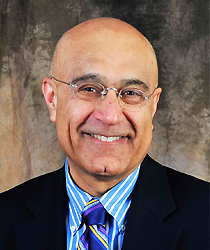
Dr. Alireza Nili is a Senior Lecturer in Service Science at QUT's School of Information Systems within the Faculty of Science. His expertise spans digitization of customer-centric services, AI/chatbots, IoT/IIoT, and sustainable technologies. He holds a PhD from Victoria University of Wellington and has coordinated large-scale courses like IT Systems Design (IFB103), achieving top teaching scores. Nili's research focuses on service ecosystems, trust in digital services, and public/retail sector innovations. He has secured over $1.4M in industry grants for projects involving Cisco, Amazon, and Services Australia. His awards include the 2023 Educator of the Year and multiple top conference paper recognitions. Nili supervises PhD students at Level 3 mentoring status and contributes to major conferences as track chair/associate editor. Research highlights include frameworks for chatbot governance, IOT in agriculture, and AI ethics. His work appears in IEEE Software , Communications of the ACM , and MIT Sloan Management Review . Current projects address consumer trust in AI technologies and spatial data systems. Nili's interdisciplinary approach combines design science with empirical methodologies to bridge theory and practice in digital service innovation.
Dr. Thijs Broekhuizen is an Associate Professor at the University of Groningen's Faculty of Economics and Business, specializing in Innovation Management & Strategy. He currently serves as Scientific Director of the University of Groningen Business School, Coordinator of the Northern-Netherlands Innovation Monitor, and Programme Director of the Executive MBA. His research focuses on digital transformation, value creation in innovation, and digital business models, with interdisciplinary insights bridging strategy, innovation, and digitalization. Education: PhD in Marketing (University of Groningen, 2006) MSc in Marketing (University of Groningen, 2001) Research Interests: Broekhuizen explores value appropriation in technology-driven contexts, digital business models, and strategic responses to disruptive technologies. His work emphasizes SMEs' digital transformation challenges, organizational identity during technological change, and AI-driven innovation management. Key areas include digital platforms, motion picture industries, and social media dynamics. Grants & Projects: TALENT4S3 (€165K, Interreg 2024-2028) SIRM (€189K, Interreg 2023-2027) NWO-funded studies on construction industry profitability and online customer journeys Awards: Best Paper Award at ISoF 2021 Best Short Paper Award Nomination 2021 Teaching & Leadership: Broekhuizen teaches strategy and digitalization in executive programs and has led the MScBA and EMBA initiatives. His educational roles include Programme Director of the Executive MBA (Energy Transition, Health, Sustainable Business Models tracks) and member of the Groningen Digital Business Centre. Labs/Teams: He coordinates the Northern-Netherlands Innovation Monitor (surveying 10,000+ SMEs) and collaborates with the Groningen Digital Business Centre to advance digital strategy research.
Wenping Wang is a Professor in the Department of Computer Science & Engineering at Texas A&M University, part of the College of Engineering. His research focuses on computer graphics, computer vision, geometric modeling, and visualization. He holds Fellowships from ACM and IEEE, and has received notable awards including the 2021 AsiaGraphics Outstanding Technical Contributions Award and the 2017 John Gregory Memorial Award. Wang's educational background includes a Ph.D. from the University of Alberta and M.Eng. and B.Sc. degrees from Shandong University. His work spans advancements in neural implicit surfaces, 3D reconstruction, and medical imaging applications such as orthodontic treatment prediction. He has authored numerous influential papers in top-tier conferences like SIGGRAPH and journals like ACM Transactions on Graphics. His research interests emphasize bridging geometric modeling with machine learning, particularly in neural rendering, surface parameterization, and medical visualization. Recent projects include developing frameworks for automatic tooth alignment and high-fidelity 3D geometry generation. Wang's contributions have significantly impacted both theoretical foundations and practical applications in computer graphics.
Paul Taele is an Instructional Assistant Professor and Deputy Lab Director in the Sketch Recognition Lab at Texas A&M University's Department of Computer Science & Engineering. He holds a Ph.D. (2019), M.S. (2010), and dual B.S. degrees in Computer Science and Mathematics from the University of Texas at Austin (2006). His research focuses on sketch recognition, haptics, and intelligent interfaces for education and accessibility, with notable work in mid-air gesture recognition, educational sketching tools, and assistive technologies for disabilities. He has contributed to projects like Kanji Workbook , Hashigo , and HaptiMoto , and has published over 50 peer-reviewed articles across venues like CHI, IUI, and AAAI. Taele has received awards including the NSF Student Travel Grant (2014) and Ford Foundation Honorable Mention (2015). He teaches courses in capstone design, programming, and sketch recognition, and mentors students across all academic levels through strict eligibility criteria for research collaborations. Education : Ph.D. Computer Science, Texas A&M University (2019) M.S. Computer Science, Texas A&M University (2010) B.S. Computer Science & Mathematics, University of Texas at Austin (2006) Concentration in Mandarin Chinese, National Chengchi University (2007) Research Interests : Taele's work bridges HCI and AI to create accessible educational interfaces. His projects emphasize: Sketch Recognition : Developing algorithms for mid-air gestures, children's developmental assessments, and language learning Accessibility : Haptic systems for visually impaired learners and algebra education Educational Tech : Intelligent tutoring systems for music, math, and East Asian languages Awards & Grants : EAAI-20 Travel Grant (2020) Ford Foundation Dissertation Honorable Mention (2015) NSF East Asia-Pacific Summer Institutes (2013, 2012) Royce E. Wisenbaker Fellowship (2009) Lab & Teams : Director of the Sketch Recognition Lab (SRL) and collaborator with global institutions like Singapore Management University and National Taiwan University. Active in organizing workshops like SketchRec at IUI conferences.
Dr. Vasileios Stavropoulos is the Associate Dean, Higher Degree Research at RMIT University's Department of Health and Biomedical Sciences. His research focuses on behavioral addictions, digital phenotyping, and the psychological impacts of digital media, particularly in gaming and social media contexts. He supervises numerous research projects addressing topics like cyber-phenotyping via text mining, disordered gaming, and the interplay between digital media and mental health. Key research interests include the psychological mechanisms underlying problematic gaming and social media use, network analysis of addiction symptomologies, and the role of user-avatar bonds in behavioral disorders. His work integrates machine learning and behavioral science to predict and analyze addictive behaviors. Dr. Stavropoulos has published extensively on gaming disorder, social media addiction, and the mental health implications of digital media use. His collaborations span clinical psychology, public health, and computational methods, reflecting his interdisciplinary approach to addressing modern behavioral challenges. He is actively engaged in higher degree research governance at RMIT, overseeing doctoral programs and fostering innovation in research methodologies. His contributions include developing scales for measuring addiction behaviors and advancing longitudinal studies on mental health correlations with digital engagement.
Dr Anandadeep Mandal is an Associate Professor in Finance and the Scotcoin Distinguished Chair of Digital Finance at the University of Birmingham , within the Birmingham Business School and the Department of Finance . He is the founding director of the MSc Financial Technology programme and the Programme Director for the MBA (Distance Learning), demonstrating significant leadership in academic program development. Education: PhD in Probability Distribution Fitting, Cranfield University (2016) MRes in Management Science, Cranfield University (2012) MSc in Finance and Investments, Durham University (2008) Bachelor’s in Electronics Engineering Research Interests: Dr Mandal’s interdisciplinary research lies at the intersection of mathematical modelling, artificial intelligence, finance, and digital innovation . His work focuses on AI-enabled investment strategies , blockchain for financial transparency , ESG performance measurement , and the development of the Sustainable Efficiency Index (SEI) . He also pioneers AI applications in digital education , including a patent-pending platform for automated grading of multi-modal student submissions using ensemble AI methods. Publication Trends: His recent scholarly output spans high-impact journals and conferences, reflecting a strong focus on digital finance , climate and social media analytics , cryptocurrency regulation , and AI in financial forecasting . His work combines advanced data science techniques with real-world policy and financial applications, particularly in sustainability and public health. Scientific Awards: No specific awards are mentioned in the provided text. Advising and Grants: Dr Mandal has secured over £2 million in research funding from sources including UKRI, UoB QR Funding, and industry partners. While specific students are not listed, his role as programme director and research leader suggests active mentorship. His research has direct policy impact through collaborations with the NHS Trusts , NIHR , and the UK Government . Labs, Teams, and Impact: Dr Mandal leads a research agenda that bridges academia and public policy. His work extends beyond the university through public engagement at science festivals, outreach for young learners, and expert contributions to UK Parliamentary consultations on AI, sustainability, and financial innovation. He is a key figure in advancing digital finance education and research at the University of Birmingham.
Claudia Schwabe is a Professor in the Department of World Languages and Cultures at Utah State University, within the College of Humanities and Social Sciences. She holds a Ph.D. in German Studies from the University of Florida and has been teaching at USU since 2012. Her academic work bridges German language, literature, and cultural studies with a strong focus on fairy tales and folklore in both historical and contemporary contexts. Education: Ph.D., German Studies, University of Florida, 2012 M.A., Teaching Business Education, Georgia College & State University, 2005 B.A., International Business Administration, Northumbria University, UK, 2003 B.A., International Administrative Management, Accadis, Germany, 2003 Her research centers on 18th- and 19th-century Romantic literature, literary and folk fairy tales (Kunstmärchen), East German cinema, German Orientalism, and the adaptation of fairy tales in new media and popular culture. She explores how traditional narratives are transformed across media and cultures, especially in American television and film. Her teaching reflects this interdisciplinary approach, covering German language, literature, film, business German, and translation. Her recent scholarly publications reveal a strong trend in analyzing the cultural and political significance of fairy tales, particularly in DEFA films and modern adaptations like Grimm and Once Upon a Time . She has published monographs, edited volumes, and peer-reviewed articles with leading presses and journals in folklore and German studies, demonstrating sustained scholarly impact. Scientific Awards and Honors: Faculty Undergraduate Advisor of the Year Award, LPCS, USU (2015) Ed Glatfelter Service Award, LPCS, USU (2016-2017) Nominations for Dean’s Giraffe Award (2016, 2018) Nominations for Researcher of the Year (2016, 2017) Travel Awards from College of Humanities and Social Sciences and Center for Women and Gender Studies (2014) Graduate Student Teaching Award, University of Florida (2010) Grinter Fellowship, University of Florida (2008–2010) Claudia Schwabe has been actively involved in academic service, grant writing (participant in grant proposal seminar), and mentoring. She has served as a faculty advisor and contributed to curriculum development, particularly in interdisciplinary folklore and fairy-tale pedagogy. Her editorial work on volumes like New Approaches to Teaching Folk and Fairy Tales highlights her leadership in shaping scholarly discourse. She has also reviewed books for major journals, contributing to peer evaluation in her field. While no formal lab or research team is mentioned, her work is deeply collaborative, involving co-edited volumes, co-authored entries, and invitations to contribute to high-impact academic projects. Her ongoing research suggests continued exploration of fairy tales in global media, pedagogy, and cultural politics.
Professor Lucy Kimbell is Professor of Contemporary Design Practices at Central Saint Martins, University of the Arts London, where she convenes the Policy Futures Studio. She is Co-Director of the Sustainable Transitions through Democratic Design Doctoral Network funded by the EU Marie Curie programme and serves as Visiting Professor at University of Ulster and Honorary Adjunct Professor at RMIT University. Her work bridges design practice, public policy, and social innovation across multiple international contexts. Professor Kimbell's educational background includes a PhD in Design from Lancaster University (2013), an MA in Computing in Art and Design from Middlesex University (1996), and a B. Engineering in Design and Appropriate Technology from the University of Warwick (1989). Her academic journey reflects a consistent integration of technical, creative, and social perspectives. Kimbell's research focuses on service design, social design, and design for policy, with increasing emphasis on sustainable transitions and democratic innovation. She explores how design methods can address complex societal challenges, particularly through transdisciplinary approaches that connect creative practice with public policy contexts. Her work examines the role of design in government, professional services, and community settings, with particular attention to AI readiness in professional service firms and antimicrobial resistance policy in India. She has pioneered frameworks for measuring design's social and environmental value, notably through the Design Value framework developed with the Design Council. Her recent publications demonstrate a clear trajectory toward understanding design's role in public policy, sustainable transitions, and democratic innovation. The research shows increasing integration of practice-based research methods with policy development, emphasizing transdisciplinary collaboration and the application of design thinking to complex societal challenges. There's a notable focus on developing frameworks for measuring design's social and environmental value and advancing democratic innovation through design practice. Notable recognitions include: AHRC Research Fellow in Policy Lab in the Cabinet Office (2014-15) Principal research fellow at University of Brighton (2013-15) Clark Fellow in Design Leadership at Said Business School, University of Oxford (2005-10) Professor Kimbell supervises transdisciplinary PhD research connecting design with public policy, with six completions to date including four UAL-KCL joint studentships. She examines PhDs internationally and serves on the supervisory board for the PhD in Service Design for Public Sector at Sapienza University, Rome. Her grant portfolio includes major projects funded by EU Marie Curie, AHRC, ESRC, and Creative Europe, totaling millions in research funding for design-led approaches to societal challenges, including the Sustainable Transitions through Democratic Design Doctoral Network (2024-28) and the AHRC Design & Policy Research Network (2022-23). She previously directed UAL's Social Design Institute (2019-2022), which brought together university expertise in design for society through capacity building, joint research, publications, and public events. Her collaborative work extends to knowledge exchange projects with Design Council, Department of Work and Pensions, Northern Ireland Social Care Council, and Bite Back 2030, demonstrating her commitment to applying design thinking to real-world policy and social challenges.
Professor Merje Kuus is a distinguished political geographer at the Department of Geography , Faculty of Arts , University of British Columbia . Her work bridges political geography , international relations , and sociology to examine knowledge production in policy-making contexts. PhD from Syracuse University (1999) WSET Level 3 Award in Wine holder Active in Arctic Circle's Mission Council on the GlobalArctic Research focuses on expertise in diplomatic practices , with empirical specializations in European Union and Arctic governance . She also explores geographical imaginaries in wine production , connecting policy analysis to cultural geography. Key publications include: Geopolitics and Expertise: Knowledge and Authority in European Diplomacy (Wiley Blackwell, 2014) Geopolitics Reframed: Security and Identity in Europe’s Eastern Enlargement (Palgrave Macmillan, 2007) Ashgate Research Companion to Critical Geopolitics (co-edited, 2013) Recent scientific awards include: Fulbright Fellowship Killam Fellowship SSHRC Canada grants Her supervision portfolio spans climate governance, disaster response expertise, and transnational policy networks, with completed PhD theses on topics ranging from Vancouver's climate governance to Arctic resource governance .
Susana Mourato is Professor of Environmental Economics at the Department of Geography and Environment at the London School of Economics and Political Science (LSE). She joined LSE in 2008 after ten years at Imperial College London. In 2021, she became the Vice President and Pro-Vice Chancellor (Research) at LSE. She also holds positions as Visiting Reader at Imperial College London and Honorary Senior Fellow at CSERGE (University of East Anglia). Professor Mourato is an expert in environmental economics and the application of economic valuation techniques to measure environmental change and social value. Professor Mourato's research focuses on valuing natural wealth and creating markets for ecosystem services, perceptions and preferences for low-carbon energy technologies, environmental valuation methods and applications, and the relationship between life satisfaction and the environment. Her work spans the fields of environmental economics, wellbeing economics, and behavioral environmental economics. She has conducted extensive research on ecosystem services, wildlife conservation, air and water pollution, chemicals, climate change, low carbon technologies, and cultural heritage, testing and applying economic valuation techniques to these diverse areas. Her recent publications show a strong trend toward integrating behavioral economics with traditional environmental valuation techniques. She has published extensively on the links between subjective wellbeing and environmental quality, as well as the application of economic valuation methods to inform environmental policy. Her work often involves interdisciplinary collaborations across economics, ecology, and social sciences, with significant policy impact through government advisory roles and international organizations. Member of Culture & Heritage Capital Advisory Board (UK Department for Digital, Culture, Media & Sport) Associate of the Grantham Research Institute on Climate Change and the Environment Former Academic Director of LSE Summer School Former Head of Department (2017-2020) Professor Mourato has worked on more than 45 research projects and consultancies for research councils, government, industry, charities, and international organizations. She currently leads projects for the OECD evaluating the impact of chemicals on IQ, for LSE Middle East Centre estimating preferences for climate change policies in the Gulf Region, and for water conservation in Kuwait. Her research has informed policy development in multiple countries and international contexts.
Carolina Matos is a Professor at City, University of London's School of Communication & Creativity, specializing in media studies, gender politics, and communications research with a particular focus on Brazil and Latin America. Her scholarly work bridges academic inquiry with practical advocacy, especially in the areas of sexual and reproductive health rights (SRHR), feminist media studies, and democratic processes in the Global South. Dr. Matos's research interests span several interconnected domains: Gender politics and feminist media studies, with particular attention to Brazilian and Latin American contexts Sexual and reproductive health and rights (SRHR) communications and advocacy across global contexts Media democratization and public service broadcasting in Brazil and Latin America Digital activism and online networks for social change and gender equality Health communication in the age of misinformation, particularly regarding women's health in politically polarized environments Journalism's role in democratic processes and political transitions Her recent publications (2021-2025) demonstrate a clear trajectory toward examining how marginalized communities, particularly women in the Global South, navigate complex media landscapes around reproductive health. Her methodology frequently employs focus group research designed to empower participants while gathering insights on media consumption and interpretation. She has conducted significant research in partnership with NGOs like Reprolatina in Brazil and Open Arms in Florida, examining how disadvantaged communities process health communications in contexts of political polarization and misinformation. Dr. Matos has made substantial theoretical contributions through both foundational and recent works: Her book "Globalization, gender politics and the media" (2016) examines changing media representations in relation to feminist movements globally Her seminal work "Journalism and Political Democracy in Brazil" (2009) analyzes media's critical role in Brazil's democratization process following the military dictatorship She has conducted extensive comparative research on how NGOs communicate about SRHR across the Global North and South Her research on "New Brazilian feminism and online networks" (2017) documents the emergence of digital feminist activism in Brazil Her methodological approach consistently combines rigorous academic frameworks with practical applications, often utilizing mixed methods including content analysis, discourse analysis, and participatory research techniques designed to center marginalized voices while advancing scholarly understanding of media, gender, and power dynamics.
N. Rich Nguyen is an Assistant Professor in the Department of Computer Science at the University of Virginia (UVA), where he joined in August 2018. He's part of the School of Engineering and Applied Science and is on a teaching track , focusing on making machine learning accessible and engaging for all students. Research and Innovation: Rich Nguyen's research interests include biomedical image analysis , machine learning , and computer science education . He aims to reinvent instructional activities to make them adaptive and engaging by incorporating art and music elements to help everyone learn coding. Notable research contributions include: Floodwatch : A system for flood monitoring using crowdsourced images TuneScope : A digital music creation tool combining SoundScope and Snaps! technology CAD Library : Open-source design tools for educators AI for early sepsis detection : Highlighted in UVA Today Teaching Accomplishments: Before UVA, Rich taught computer science courses at UNC Charlotte for four years to a total of 1,458 students. At UVA, he teaches several courses including: CS 4774: Machine Learning (multiple semesters) CS 2501: Machine Learning for All (launched in Fall 2021) SYS 6016 / SDS 6050: Deep Learning CS 2150: Data and Program Representation (multiple semesters) CS 6316: Machine Learning (Graduate Level) CS 2910: CS Education Practicum (for Teaching Assistants) He previously taught at UNC Charlotte: ITCS 1600: Computing Professionals ITCS 2600: Computing Professionals for Transfer Students ITCS 4156: Introduction to Machine Learning ITCS 2215: Design and Analysis of Algorithms Academic Achievements: Rich Nguyen has received several notable awards and grants: Google Faculty Award for Machine Learning Education with TensorFlow (2019) Best Paper Award at IEEE BigDataSE (2022) Best Poster Award at SITE Conference (2022) CCI Faculty Innovation Award (2018) NSF grants for Smart and Connected Communities (2022) and Computational Thinking (2021) 3 Cavaliers Grant on Coding and Music (2021) Student Mentorship: Rich has mentored numerous students and teaching assistants who have achieved recognition. Notable students include: Joy Qiu - Published in Clinical Infectious Diseases Louisa Edwards and Zach Boner - Invited to Ken Ono Podcast Mike Ferguson - Winner of CS Louis T. Rader Undergraduate Teaching Award He has also served as faculty advisor for HooHacks (UVA's hackathon) and co-founded CharlotteHack at UNC Charlotte. Labs and Collaborations: Rich Nguyen leads the ML4VA (Machine Learning for Virginia) initiative, engaging students in project-based learning to apply machine learning to real-world problems affecting Virginia communities. He collaborates with institutions for symposiums on smart cities, particularly with ASEAN universities, and has partnered with Premier Healthcare for hackathons and with Glen Bull on educational technology projects.
Mohammad Modarres is the Nicole J. Kim Eminent Professor at the University of Maryland within the A.J. Clark School of Engineering. He serves as Director of the Center for Risk and Reliability (CRR) and is a Professor of Nuclear Engineering in the Department of Mechanical Engineering. Dr. Modarres co-founded the world's first degree-granting graduate curriculum in reliability engineering at the University of Maryland and has established himself as an international expert in reliability and risk analysis. Dr. Modarres received his educational credentials from prestigious institutions: B.S. in Mechanical Engineering from Tehran Polytechnic M.S. in Mechanical Engineering from MIT M.S. and Ph.D. in Nuclear Engineering from MIT Dr. Modarres' research spans multiple critical areas in engineering risk and reliability. His primary interests include probabilistic risk assessment, uncertainty analysis, probabilistic physics of failure, and probabilistic fracture mechanics. His work encompasses both experimental investigations and sophisticated probabilistic model development. He has made significant contributions to materials degradation science, prognosis and health management systems, and nuclear safety analysis. His research bridges theoretical developments with practical applications in complex engineering systems, particularly in nuclear power and aerospace sectors. Analysis of Dr. Modarres' recent publications reveals a strong trend toward integrating advanced data science techniques with traditional reliability engineering. His work increasingly incorporates machine learning, deep learning, and entropy-based approaches to solve complex problems in prognostics and health management. There's a clear focus on multi-unit systems, particularly in nuclear power applications, and a growing emphasis on data-driven methodologies for remaining useful life estimation and failure prediction. His research maintains a strong foundation in probabilistic methods while embracing cutting-edge computational approaches. Dr. Modarres has received numerous prestigious honors and awards throughout his distinguished career: Nicole Y. Kim Eminent Professorship in Engineering Minta Martin Professorship in A.J. Clark School of Engineering University of Maryland Distinguished Scholar-Teacher (2019) Tommy Thompson Award for outstanding lifetime contributions to nuclear safety (American Nuclear Society) Fellow, American Nuclear Society Fellow, Institute of Electrical and Electronics Engineers (IEEE) Life Fellow of IEEE 1996 Maryland Inventor of the Year Award (in Information Sciences) FDA Commissioner Special Citation for Contributions to Risk Assessment Methods (2004) 2008 International Research Leadership Award (Society for Reliability Engineering, Quality and Operations Management) Honorary Doctorate from Universidad Da Vinci de Guatemala As the founding director of the Center for Risk and Reliability, Dr. Modarres has built a world-renowned program that has awarded over 500 Ph.D. and master's degrees. His research has been supported by significant grants from government agencies and industry partners, particularly in nuclear safety, aerospace reliability, and critical infrastructure protection. He has mentored numerous students who have gone on to become leaders in reliability engineering across various industries. His center collaborates extensively with the International Atomic Energy Agency (IAEA) and other international organizations on risk assessment methodologies. The Center for Risk and Reliability (CRR), which Dr. Modarres directs, serves as a hub for multidisciplinary research in risk and reliability engineering. The center has recently renovated its facilities to enhance collaboration among researchers from different engineering disciplines. CRR maintains strong partnerships with industry leaders including Amazon Lab126 (as evidenced by their collaboration on device durability research) and has been instrumental in advancing probabilistic risk assessment tools used in nuclear power plant safety analysis. The center hosts regular seminars, workshops, and international conferences, positioning itself at the forefront of risk and reliability research globally.
Michael Lepech is a Professor of Civil and Environmental Engineering and Senior Fellow at the Woods Institute for the Environment at Stanford University. His research focuses on integrating sustainability into civil engineering through quantitative assessment and multi-scale modeling, particularly via the Sustainable Integrated Materials, Structures, Systems (SIMSS) framework. He also leads the Stanford Center at the Incheon Global Campus (SCIGC) in South Korea, exploring smart city technologies for urban sustainability. Education : PhD in Civil and Environmental Engineering (2006), MBA in Finance and Strategy (2008) from the University of Michigan. Research Areas : Sustainable infrastructure design, biopolymer composites, life cycle assessment, digital twinning, smart city technologies, and multi-physics deterioration modeling. Leadership : Director of SCIGC, advancing research on smart and sustainable urban environments in Songdo, South Korea. His recent publications focus on biopolymer-bound composites, traffic signal optimization, and life cycle sustainability analysis. He has received recognition as a Senior Fellow at Stanford’s Woods Institute for environmental research.
Professor Dinusha Mendis is a leading academic in Intellectual Property and Innovation Law at Bournemouth University, where she serves as Director of the Centre for Intellectual Property Policy and Management (CIPPM). Her expertise bridges copyright law with emerging technologies like 3D printing, AI, blockchain, and the Metaverse, informed by extensive research and consultation with entities such as the European Parliament, UKIPO, and corporations like HP and Chanel. She holds a PhD from Edinburgh University and has authored seminal works on the intersection of technology and IP. BSc in Law from Aberdeen University LLM and PhD from Edinburgh University Called to the Bar of England and Wales Her research focuses on copyright challenges in immersive environments , AI-generated content regulation , and blockchain/NFTs . She led major studies for the European Commission and UKIPO , including the first peer-reviewed work on 3D printing and IP. Her 2019 co-edited book with Stanford and QUT scholars established foundational frameworks for additive manufacturing legal analysis. Recent publications highlight AI copyright disputes (2024 The Conversation ), NFT legal ambiguities (2022), and pandemic-era 3D printing (2020). Trends show increasing emphasis on decentralized IP systems and machine learning's impact on creative industries . Scientific Awards & Grants JSPS Visiting Professorship (2023) Daiwa Anglo-Japanese Foundation Grant (2024) EU Commission Research Funding (2020) AHRC Grant for 3D Jewellery Study (2017) As a PhD supervisor, she mentors researchers on AI copyright (Benjamin White), crypto-art (Bahar Dagli), and music creation law (Elizabeth Bailey). She contributes to global IP policy through the World Economic Forum's Metaverse Governance Team and EU IPR Enforcement Projects .