Professor Edward Palmer is a faculty member in the School of Education at the University of Adelaide, serving as Director of the Unit of Digital Education and Training and Acting Deputy Head of School. His research focuses on technology's role in education and training, particularly in virtual/extended realities, AI-driven assessment, and personalized learning approaches. He has secured over $3 million in funding from government and industry partners, with projects addressing AI ethics, VR applications in medical training, and MOOC design. Education & Roles: Holds academic leadership positions and directs digital education initiatives. Research: Investigates AI in education, VR for situational awareness, and innovative assessment methods. Active in collaborative projects with industry and defense sectors. Grants & Funding: Secured significant grants for ventures in AI ethics, VR training simulations, and digital health hubs. Labs/Teams: Leads the Unit of Digital Learning and Society, collaborating with postdocs like Daniel Lee on AI and VR projects. His work emphasizes practical applications, such as medical procedure training in VR and adaptive learning systems. He mentors HDR students and postdocs in AI-driven training scenarios and digital education innovation.
Amir R. Nejad is a Professor at the Department of Marine Technology, NTNU, and leads the Marine Energy Systems and Autonomics (MESA) research group. He chairs the EAWE WindEurope Scientific Track Committee and co-founded the Drivetrain Technical Committee at the European Academy of Wind Energy (EAWE). He is also involved in ISO committees, editorial boards of journals like Wind Energy Science , and contributes to standards for offshore wind energy. Education: Ph.D. in Marine Technology, NTNU (top 10% international ranking) M.Sc. Subsea Engineering, University of Aberdeen (Distinction) B.Sc. Mechanical Engineering, Tehran University (Honors) Research Interests: Focus on stochastic and reliability-based design, dynamic modeling of electro-mechanical systems, fault detection, and condition monitoring in marine and offshore renewable energy applications. Key areas include wind turbine drivetrains, floating offshore systems, and digital twin technology. Awards: 2x Best Lecturer, NTNU (2015-2016, 2019-2020) Best Poster Award, Torque Conference 2016 Nowitech Ph.D. Fellowship, 2012-2015 Advising & Grants: Supervises Ph.D. students in drivetrain design and offshore systems. Leads projects on marine system dynamics and vibration through the MD Lab. Collaborates with industry on drivetrain testing and reliability. Labs & Teams: Director of the Marine System Dynamics and Vibration Lab (MD Lab), fostering innovation in offshore renewable energy systems and digital twin applications.
Alois Jungbauer is a full Professor and Head of the Institute of Biochemical Engineering at the University of Natural Resources and Life Sciences Vienna (BOKU), within the Department für Biotechnologie und Lebensmittelwissenschaften. He is a leading expert in bioprocess engineering, with a focus on downstream processing, continuous manufacturing, and sustainable biopharmaceutical production. Doctorate, University of Natural Resources and Life Sciences Vienna Habilitation, 1991 His research interests center on advanced purification technologies for biologics, including monoclonal antibodies, viral vectors, virus-like particles (VLPs), and gene therapy products. He is a pioneer in continuous integrated biomanufacturing, real-time process monitoring, and the development of platform processes for non-mAb proteins. His work integrates computational modeling, digital twins, and process intensification to improve efficiency and reduce environmental impact. He has made significant contributions to affinity chromatography, membrane adsorbers, and non-chromatographic separation methods. Recent publications highlight trends in continuous downstream processing, water conservation, in-situ buffer preparation, and the purification of complex biomolecules like secretory IgA and VLPs. His work spans both fundamental biophysical studies and industrial applications, reflecting a strong industry-academia interface. His scientific awards include: ISMR Thermo Fischer Award for Affinity Technologies (2011) Bia Separations Award (2000) Fulbright Award, Austrian-American Fulbright Commission (1996) Award of Japanese Society for Promotion of Science (1994) Golden Award 93 Professor Jungbauer actively supervises university theses and leads a dynamic research group. He has delivered numerous lectures and keynotes worldwide, indicating active engagement in knowledge transfer. His research is supported by ongoing projects and collaborations, with a strong emphasis on environmental and economic modeling of bioprocesses. He is affiliated with the Institute of Biochemical Engineering at BOKU, a hub for innovation in bioprocessing and industrial biotechnology.
Patrik Hilber is a Professor at KTH Royal Institute of Technology, working in the Division of Electromagnetic Engineering and Fusion Science within the School of Electrical Engineering and Computer Science (EECS). He serves as Deputy Director of First and Second Cycle Education at EECS and heads the QED AM research group. He is also a board member of YH-electrical engineering. Research Interests: His research focuses on reliability engineering, asset management, maintenance optimization, and smart grid technologies in electric power systems. Key areas include transmission and distribution systems, dynamic line and transformer rating, wind power integration, multiobjective optimization, condition monitoring, and data quality in power systems. He applies advanced modeling and data-driven approaches to improve power system planning, operation, and resilience. The recent trends in his publications (2020–2025) highlight a strong emphasis on dynamic rating technologies (DLR and DTR), data quality and machine learning applications in outage analysis, reliability-centered planning for wind farms and distribution systems, and the integration of renewable energy and electric vehicles. His work bridges theoretical modeling with practical utility applications. Teaching and Academic Leadership: He is examiner and course responsible for several degree projects in electrical engineering, power systems, and energy innovation. He also teaches courses on reliability evaluation, asset management, and innovation in electric power engineering. Publications and Books: He has authored a book titled Reliability Analysis and Asset Management Applied to Power Distribution (2014) and a book chapter on cable segment replacement optimization. His scholarly output includes numerous peer-reviewed articles in leading journals such as IEEE Transactions on Power Systems , Reliability Engineering & System Safety , and Applied Energy . Education: He holds a Ph.D. (2008), a Licentiate degree (2005), and an M.Sc. (2000), all from KTH. He became a Docent (Associate Professor) in 2014.
Dr. Matteo Montecchi is a Senior Lecturer (Associate Professor) in Marketing at King’s Business School, King’s College London, where he also serves as Theme Lead for Sustainable Consumption at the Centre for Sustainable Business and Programme Director for the Strategic Marketing (Open Executive) programme. He teaches core modules such as Consumer Behaviour, Digital Marketing, and Research Methods, and leads executive education initiatives. Previously, he was a Senior Lecturer at the London College of Fashion, University of the Arts London, and has held visiting positions at Milan Politecnico, Università Cattolica del Sacro Cuore, and Università Federico II. Montecchi earned his PhD in Marketing from King’s College London, an MRes in Marketing from Birkbeck College, an Executive Master in Marketing and Sales from SDA Bocconi and ESADE, and a Bachelor’s in Business Economics from the University of Modena and Reggio Emilia. He also holds a PgCert in Academic Practice and is a Fellow of the Higher Education Academy (FHEA). His research focuses on the digital transformation of marketing, particularly the role of artificial intelligence and blockchain in enhancing transparency and trust. He investigates ethical engagement with diverse consumer groups, inclusion, and corporate responsibility, with a special interest in marginalized communities. His work integrates consumer behavior, digital interactions, and decision-making with technological innovation, offering actionable insights for sustainable and responsible business strategies. The most recent 15 publications reflect a strong trend in AI in retail, brand transparency, consumer trust, ethical data use, voice technologies, and social sustainability. His research spans journals in marketing, psychology, interactive marketing, and business ethics, demonstrating interdisciplinary impact. Scientific Awards: KingsCAT: Capture and Analysis Tool for Social Media Research at King’s College London (2024) – Recognized as part of a collaborative team for advancing digital research infrastructure and media analysis. Montecchi is actively involved in PhD supervision and is accepting new students. He has led research projects using social media analytics (KingsCAT) and has contributed to strategic debates on grand challenges in marketing. His work connects academic research with real-world managerial applications, particularly in digital strategy and ethical innovation. He is a key contributor to interdisciplinary research through tools like KingsCAT, which supports collaborative social media analysis, and his publications often involve co-authorship with experts in data science, psychology, and organizational behavior.
John G. Bullock is a Professor in the Department of Political Science at Northwestern University. His research focuses on political psychology, public opinion, and methodological issues in political science. He teaches courses including Introduction to American Politics (undergraduate lecture), Political Behavior (graduate seminar), Political Psychology (undergraduate lecture), Public Opinion and Representation in the United States (undergraduate seminar), and Quantitative Causal Inference (graduate seminar). Dr. Bullock's research interests span several interconnected domains: Political Psychology : Examining how partisanship affects factual beliefs and political decision-making Public Opinion : Studying political knowledge measurement, the influence of elite cues, and attitudes toward redistribution Methodology : Developing rigorous approaches to mediation analysis, survey design, and causal inference Political Behavior : Investigating how voters process information and respond to party cues His publication record demonstrates a consistent focus on methodological rigor, particularly in survey design and causal inference. Bullock has made significant contributions to understanding partisan bias in factual beliefs (showing such differences may be more illusory than real), the measurement of political knowledge (demonstrating how response options affect knowledge estimates), and the challenges of mediation analysis (arguing conventional approaches are fundamentally flawed). His recent work has expanded to examine leadership competence in government, particularly through his analysis of the U.S. response to the COVID-19 pandemic. Dr. Bullock maintains an active scholarly presence through his personal website and GitHub profile, where he shares academic tools including R packages and LaTeX classes. His work appears consistently in top political science journals including the American Political Science Review, Journal of Politics, and British Journal of Political Science.
Matthew Stephenson is a Lecturer at Flinders University's College of Science and Engineering, specializing in Artificial Intelligence applications for games. He leads the Data for Decisions initiative within the Factory of the Future Transdisciplinary Hub, focusing on AI-powered scenario generation for smart digital twins. Additionally, he is a member of IRL CROSSING, an international lab studying human-autonomous agent teaming dynamics. PhD in Computer Science (Australian National University, 2019) B.Sc.(Hons) in Computer Science (University of Canterbury, 2015) His research applies AI, Machine Learning, and Data Science to game domains, including intelligent agent development for physics-based environments, procedural content generation, and game analytics. He also investigates deceptive behaviors in multi-agent systems and leverages games as testbeds for real-world AI solutions. Recent publications focus on large language models for game benchmarking, physical reasoning challenges, and evolutionary game generation. Scientific awards include an honourable mention at Foundations of Digital Games (FDG'18). He supervises students in procedural generation, game AI, and physics-based task creation, with teaching roles in computational intelligence and neural networks courses.
Prof. Dr. Lena Wessel is a Mathematics Education faculty member at the Department of Mathematics Didactics, Faculty of Electrical Engineering, Computer Science and Mathematics, University of Paderborn. She leads teacher training programs and participates in university governance as elected Faculty Council member. Research Focus: Her work centers on comprehension-oriented mathematics instruction at secondary/vocational levels, emphasizing language development, continuity in curriculum design (spiral principle), and digital mathematics tools. As DZLM network partner, she develops professional development programs for secondary educators. LiaNMU project (scalar products, plane reflections) VioLa project (digital discussion formats) LLV.HD project (cross-university learning networks) Key Contributions: She has coordinated major projects like MESUT (language-supported fraction understanding) and LaMaVoC (language in vocational mathematics). Her 2024 publications analyze language-integrated pedagogy and algebraic concept unification in teacher training.
Alison Baker is a Senior Lecturer at the University of East London within the School of Childhood and Social Care. She specializes in Education and teaches modules on inclusion, Primary English, children's literature, and reflective practice in Primary Teaching. PhD candidate researching white working-class children in children's fantasy fiction Areas of expertise: Social class representation, reading for pleasure, inclusive pedagogy Research Focus: Investigates how social class portrayal in fantasy literature impacts children's reading engagement, with particular attention to working-class disempowerment in fictional narratives. Her work bridges literary analysis with educational practice through projects like the UEL Goodreads discussion group. Key Publications: Contributions on social class in Harry Potter, children's comics, and critical reading pedagogy. Notable works include analyses of social capital in fantasy fiction and the use of social media for teacher development. External Roles: Served as Children's Programme Coordinator at Eastercon 2019 (Ytterbium) and currently sits on the Editorial Board of the Journal of Historical Fiction.
Barak Ariel is a Professor of Experimental Criminology at the Institute of Criminology, University of Cambridge. He holds a PhD in Criminology from Hebrew University of Jerusalem, an LLM (Hebrew University), LLB (Academic Centre of Law & Business), MA in Criminology (Hebrew University), and BA in Psychology (University of New York). Since 2008, he has been affiliated with the Jerry Lee Centre of Experimental Criminology and teaches on the MSt in Applied Criminology and Police Management. Academic Rank: Professor of Experimental Criminology Key Affiliations: University of Cambridge, Jerry Lee Centre of Experimental Criminology Education: PhD, LLM, MA, LLB, BA Dr. Ariel specializes in experimental criminology, evidence-based policing, and the role of technology in crime prevention. His research focuses on evaluating policing strategies through randomized controlled trials (RCTs), particularly in areas such as body-worn cameras, domestic abuse hotspots, and interventions to reduce violence against women. He has advised police departments and governments across the UK, USA, Latin America, and Europe. His recent publications highlight trends in global crime dynamics, the impact of police interventions on offender behavior, and the use of machine learning for crime forecasting. These works span subfields including hot spots policing, procedural justice, victim-offender overlaps, and network analysis of organized crime. Scientific Awards : Academy of Experimental Criminology Young Experimental Scholar Award European Society of Criminology Young Criminologist Award Fellow of the Division of Experimental Criminology As Chair of the Division of Experimental Criminology (2019–2021), Dr. Ariel has contributed to advancing methodological rigor in criminological research. He has conducted extensive evaluations of police-led interventions, including trials on body-worn cameras, victim communication strategies, and data-driven approaches to domestic homicide prevention. His work bridges academic research with practical policing reforms, emphasizing the importance of empirical evidence in criminal justice policy.
Associate Professor Lizzie Muller serves as Director of Research in the School of Art & Design at the University of New South Wales. An accomplished curator and researcher, she specializes in audience experience and interdisciplinary collaboration, with a particular focus on the future of museums as sites of knowledge production. Her research bridges curatorial practice with theories and methods from participatory design and interaction design, developing audience-centered curatorial methodologies and innovative approaches to audience research. Her work extends to preservation and archiving, particularly experiential documentation and oral histories of media art. Co-author of Curating Lively Objects: Exhibitions Beyond Disciplines (Routledge Museum Studies Series, 2022) Elected Councillor of the Sydney Culture Network Co-founder of the bi-monthly Sydney Culture Data Salon with Keir Winesmith Muller's research output demonstrates a consistent trajectory exploring the intersection of art, science, and technology through major international exhibitions including Human Non Human (Powerhouse Museum, 2018/19) and A Working Model of the World (staged across UNSW Galleries, Parsons School of Design, and University of Dundee). Her recent work focuses on art-science collaborations, deep time history through the ARC Centre for Excellence in Australian Biodiversity and Heritage, and the development of audience-centered curatorial frameworks. Scientific Awards: 2024 ADA Deans Award for Excellence in Higher Degree Supervision Muller leads significant research initiatives as Chief Investigator on multiple ARC-funded projects including the ARC Linkage project Curating Third Space: The Value of ArtScience Collaboration and SSHRC-funded research on The Living Effect and Curating Lively Objects . She has supervised numerous PhD and MFA candidates, with a special focus on curatorial practice-based research, and currently serves as Program Director of the Master of Curating and Cultural Leadership at UNSW Art & Design.
Alex John London is the K&L Gates Professor of Ethics and Computational Technologies at Carnegie Mellon University, where he also serves as co-lead of the K&L Gates Initiative in Ethics and Computational Technologies, Director of the Center for Ethics and Policy, and Chief Ethicist at the Block Center for Technology and Society. His work spans multiple institutions, including affiliations with the Center for Bioethics and Health Law at the University of Pittsburgh. Dr. London earned his Ph.D. in Philosophy from the University of Virginia, followed by a post-doctoral fellowship at the University of Minnesota's Center for Bioethics. He joined Carnegie Mellon University in 2000 and has established himself as a leading scholar in ethics at the intersection of technology, medicine, and policy. His academic journey includes being a Visiting Scholar at Harvard University's Program in Ethics and Health. Professor London's research spans ethical and policy issues surrounding novel technologies in medicine, biotechnology and artificial intelligence, methodological issues in theoretical and practical ethics, and cross-national issues of justice and fairness. His work in AI ethics critically examines structural obstacles to safe and effective technologies, challenges conventional notions of algorithmic bias, and questions requirements for explainability in medical contexts. His foundational work on clinical equipoise and the 'integrative approach' to risk assessment has shaped research ethics guidelines globally. He has made significant contributions to international research ethics, particularly regarding justice, responsiveness to host community health needs, and post-trial access. Professor London's scholarly output demonstrates a trajectory toward addressing the ethical challenges of emerging technologies, with increasing focus on justice-led approaches to AI innovation, accountability frameworks, and the sociotechnical dimensions of healthcare AI systems. His work increasingly addresses how AI can be designed to respect human dignity while navigating complex ethical terrain in healthcare settings. New Directions Fellowship from the Andrew W. Mellon Foundation (2005, 2010) Hastings Center Fellow (2011) Elliott Dunlap Smith Award for Distinguished Teaching (2016) Distinguished Service Award from the American Society of Bioethics and Humanities (2017) As an educator, Professor London teaches courses on ethical theory, bioethics, ethics and AI, and research ethics. His influential textbook 'Ethical Issues in Modern Medicine' (8th edition) is one of the most widely used resources in medical ethics education. His book 'For the Common Good: Philosophical Foundations of Research Ethics' (2022) provides a comprehensive framework for understanding research ethics as serving the common good. Professor London has advised numerous students and mentored early-career researchers in bioethics and technology ethics. His policy work extends to multiple national and international organizations including the World Health Organization Expert Group on Ethics and Governance of AI, the National Academy of Medicine Action Collaborative, and the U.S. National Science Advisory Board for Biosecurity. Professor London leads several significant research initiatives, including serving as co-leader of the ethics core for the NSF AI Institute for Collaborative Assistance and Responsive Interaction for Networked Groups (AI-CARING). His Center for Ethics and Policy at CMU serves as a hub for interdisciplinary research addressing pressing ethical challenges in technology and healthcare. He is actively involved in shaping policy through his membership on the steering committee of the AAAI/ACM Conference on Artificial Intelligence, Ethics and Society (AIES) and his co-chair role in the U.S. National Academies planning committee on computational modeling of biological agents.
Prof María Noriega-Sánchez is Professor of Spanish and Translation Studies at the University of Cambridge, Faculty of Modern and Medieval Languages and Linguistics, and a Fellow and Director of Studies in Modern and Medieval Languages at Sidney Sussex College. She has been teaching at Cambridge since 2008, specializing in Spanish language instruction from ab initio to advanced levels, translation studies, and contemporary Hispanic culture. Her research centers on innovative approaches to language pedagogy, particularly the role of translation as the 'fifth skill' in language acquisition. Prof Noriega-Sánchez has pioneered methods that integrate translation into language learning processes, challenging traditional approaches that often exclude translation from foreign language teaching. Her work explores how new technologies can enhance collaborative learning environments and develop effective language teaching materials. Prof Noriega-Sánchez's scholarly output reveals significant trends in translation pedagogy and multimodal communication. Her publications demonstrate a consistent exploration of how translation functions as both a teaching methodology and cognitive process in language acquisition. She has been instrumental in establishing translation as an essential component of language learning, bridging theoretical insights with practical classroom applications. Highly Commended in the Innovative Teaching category of the Cambridge SU Student-Led Teaching Awards (May 2023) As Director of Studies at Sidney Sussex College since 2009 and former Undergraduate Tutor (2015-2020), Prof Noriega-Sánchez has guided numerous students through their academic journeys. She has developed innovative Spanish language curricula at Cambridge, created interactive teaching materials for the Open University, and contributed to the 'Spanish at Your Fingertips' project developed by the University of Cambridge Language Centre in partnership with BBC Worldwide. Prof Noriega-Sánchez co-founded the Cambridge Conversations in Translation research group at CRASSH (2015-2018) and serves as Co-Convener of the Cambridge Translation Studies Network. Her collaborative work with Ángeles Carreres and other scholars has significantly influenced translation pedagogy both nationally and internationally, establishing her as a leading voice in the field of language education and translation studies.
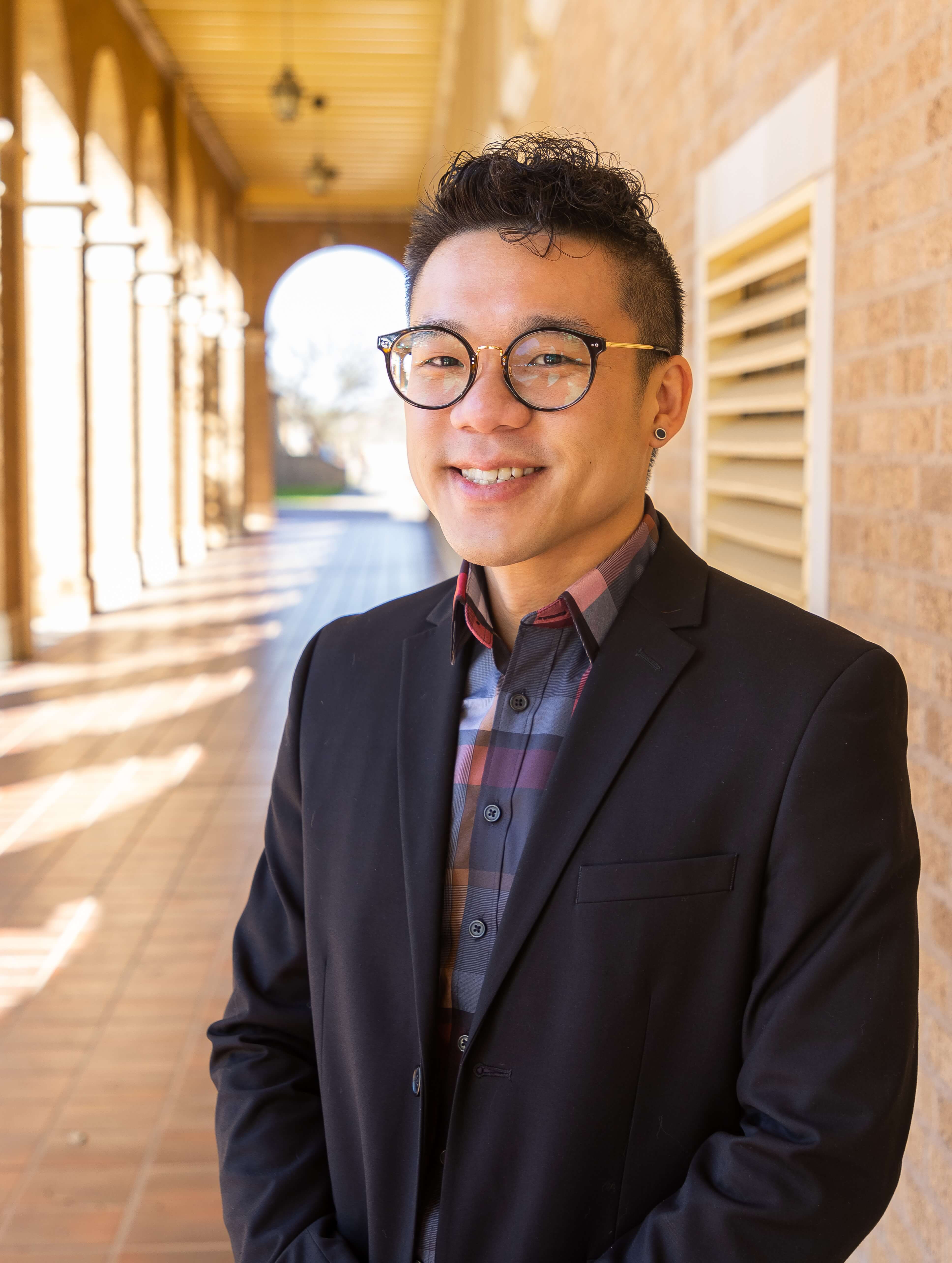
Jason Tham is an Associate Professor and Assistant Chair in the Department of English at Texas Tech University, where he teaches undergraduate and graduate courses in UX research, information design, instructional design, and digital rhetoric. His research focuses on design thinking, user experience, emerging technologies, and technical communication pedagogy. He directs the UX Research Lab and serves as faculty sponsor for the TTU Society for Technical Communication Student Chapter. PhD in Rhetoric & Scientific & Technical Communication, University of Minnesota (2019) MA in English: Rhetoric & Writing, St. Cloud State University (2014) MS and BS in Mass Communication, St. Cloud State University Tham's research explores the intersection of design thinking, immersive technologies, and equitable pedagogy. Current projects include studies on AI user experience, collaborative writing in virtual reality, and the social justice implications of design thinking methodologies. He has received awards such as the Ellen Nold Award for Computers and Composition, TTU's Excellence in Research Award, and the Frank R. Smith Outstanding Article Award. Tham serves as Vice President of the Council for Programs in Technical and Scientific Communication and will assume the editorship of Computers and Composition in 2025.
Björn Ross is a Lecturer in Computational Social Science at the University of Edinburgh's School of Informatics, where he is affiliated with the Institute for Language, Cognition and Computation. He serves as Director of the SMASH research group and is part of the management team for the Centre for Doctoral Training in Natural Language Processing (CDT in NLP). His educational background includes: PhD (2019) from the University of Duisburg-Essen MSc in Computer Science (2016) from the University of Münster Exchange year (2014-2015) at the University of Strasbourg BSc in Information Systems (2013) from the University of Münster Ross's research focuses on computational social science, particularly using natural language processing, social network analysis, and agent-based modeling to study social media phenomena. His work examines misinformation, hate speech, bot activity, and the ethical implications of computational methods. He also investigates how social media can be leveraged for social good, especially in crisis communication contexts. A significant portion of his recent research addresses bias and fairness issues in AI systems, particularly regarding marginalized communities and LGBTQ+ identities. His work spans both technical development of computational methods and critical examination of their societal impacts. Analysis of his recent publications reveals a strong trend toward examining bias in AI systems, particularly regarding marginalized communities. His work spans multiple methodologies including computational analysis of social media data, development of NLP techniques, and critical examination of AI ethics. He frequently collaborates across disciplines, working with researchers in computer science, social sciences, and healthcare domains. His professional recognition includes: Best Paper Award at the Hawaii International Conference on System Sciences (HICSS) in 2018 Associate Editor for Business & Information Systems Engineering Active membership in professional organizations including AIS, ACL, and ACM Ross currently supervises multiple PhD students including Agostina Calabrese, Eddie Ungless, Sandrine Chausson, Wendy Zheng, Seraphina Goldfarb-Tarrant, and Mahmoud Ibrahim. At the University of Edinburgh, he teaches courses such as 'Text Technologies for Data Science' and 'Evidence, Argument and Persuasion in a Digital Age,' reflecting his expertise at the intersection of computational methods and social implications.