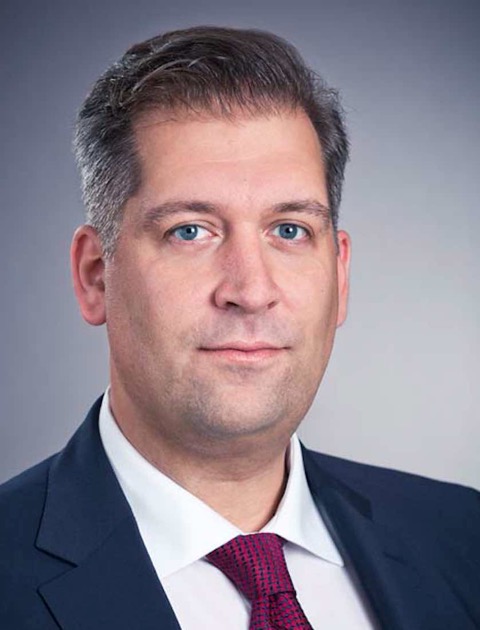
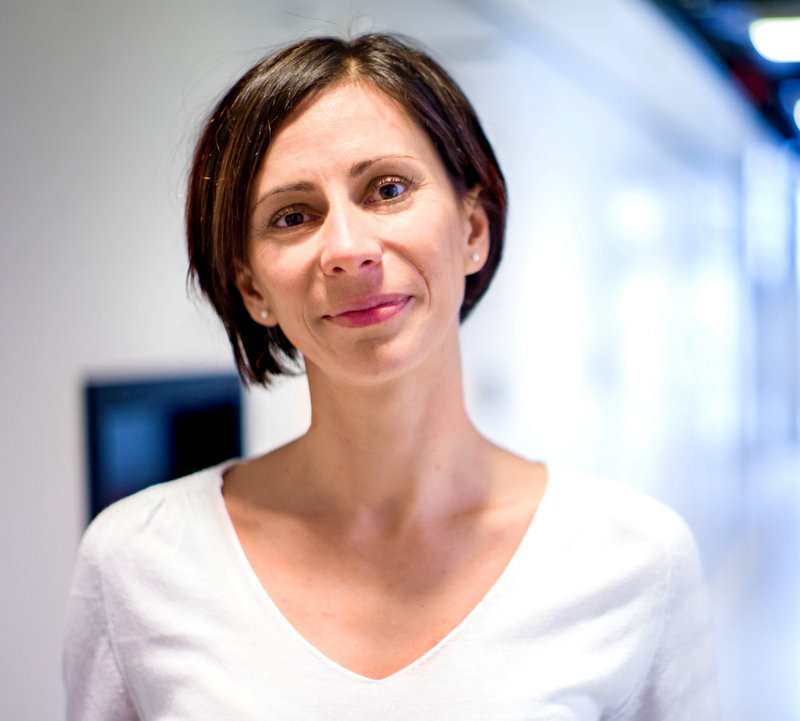
Oleksandr Kapranov is an Associate Professor of English at NLA University College's Teacher Education program. His work intersects discourse analysis, climate change communication, and English language teaching (ELT), with a focus on sustainable development education and intercultural communication. Research areas include political speeches (e.g., Keir Starmer, Rishi Sunak), corporate disclosures (Bank of England, Vedanta Resources), and media framing (Greenpeace branches, King Charles III). Key pedagogical interests: digital competence, beginner EFL training, and discourse markers in academic writing. His recent publications analyze climate change discourse through syntactic structures, metonymy, modality, and evidentiality, emphasizing institutional and political narratives. While no formal awards are listed, his work spans interdisciplinary collaborations with NGOs, governments, and universities.
Cecilie Schou Andreassen is a Professor at the Department of Clinical Psychology, University of Bergen . She specializes in behavioral addictions , including workaholism, social media addiction, and substance use interactions. Email: cecilie.andreassen@uib.no Visitor Address: Alrek Health Cluster, Årstadveien 17, 5009 Bergen Research Focus: Andreassen's work examines the psychosocial antecedents of addictive behaviors, with emphasis on personality traits , workplace dynamics , and digital platform interactions . Her research spans cross-cultural validation studies and longitudinal health outcomes related to technology and substance misuse. Article Trends (2017-2022): Analyzing 15 recent publications reveals a consistent focus on addiction scale validation , social media epidemiology , and workaholism's health impacts . Key themes include measurement invariance , digital-chemical addiction comorbidity , and psychological withdrawal mechanisms . Scientific Contributions: Co-developer of Bergen Work Addiction Scale Creator of Bergen-Yale Sex Addiction Scale Leadership in behavioral addiction epidemiology Recipient of Norwegian Research Council grants Advising & Collaborations: While no direct advisees are listed, Andreassen collaborates extensively with international researchers in work psychology , social media studies , and public health . Her work involves partnerships with Nottingham Trent University , Yale University , and National Competence Service for Sleep Disorders . Labs & Teams: Affiliated with the Department of Clinical Psychology and previously with the Department of Social Psychology at University of Bergen, she contributes to national health registry studies and cross-occupational research on addiction patterns.
Taina Bucher is a Professor at the Department of Media and Communication, University of Oslo, specializing in algorithmic studies, digital infrastructure, and human-machine communication. She leads the Screen Cultures research group and serves as Principal Investigator for HumAIn , a five-year humanities hub reimagining AI (2024-2029). Research Focus: Her work examines Algorithmic power and politics Cultural imaginaries of digital technology Temporalities of algorithmic media Feminist epistemologies in digital contexts Monitorial citizenship in platform societies Publications: Bucher has authored two monographs: Facebook (Polity Press, 2021) and IF…THEN: Algorithmic Power and Politics (Oxford University Press, 2018). Her recent articles explore facial recognition systems, algorithmic temporality, and digital divides. Academic Background: PhD in Media Studies (University of Oslo, 2012), MSc in Culture & Society (London School of Economics, 2007), with visiting scholar appointments at The New School, Ryerson University, and New York University. Teaching: She supervises and teaches topics including Digital infrastructure Algorithm studies Screen cultures Media theory Critical data studies Digitalization of public sectors Editorial Roles: Active on editorial boards for Journal of Communication , New Media & Society , and Information, Communication & Society .
Aleksander Madsen is a Researcher at the University of Oslo (UiO), affiliated with the Department of Sociology and Human Geography under the Faculty of Social Sciences. His primary research interests include social stratification, immigrant assimilation in labor markets, welfare state policies, and statistical methods. He holds a PhD from Oslo Metropolitan University and an MA from UiO. Education: PhD in Sociology, Centre for the Study of Professions, Oslo Metropolitan University (2014–2018) MA in Sociology, University of Oslo (2013) His research explores labor market integration of immigrants, gender disparities in male-dominated workplaces, and the impact of education-occupation mismatch on health outcomes. He has conducted longitudinal studies on long-term sickness absence and labor market trajectories using sequence analysis. Dr. Madsen has held postdoctoral and research positions at UiO and NIFU, and was a visiting scholar at Stanford University's SCANCOR (2024) funded by the Fulbright Foundation. His work spans interdisciplinary collaborations, including projects on workplace diversity, ethnic stratification, and policy evaluations. Awards: U.S. - Norway Fulbright Foundation Grant (2023–2024) His research group affiliations include the Social Inequalities and Population Dynamics team and the ORGMIGRANT project, investigating work organizations and immigrant assimilation. Recent publications address residential networks among immigrants, workplace ethnic diversity, and women’s attrition from male-dominated sectors.
Maj Schian Nielsen is a Senior Research Librarian at the University Library of the University of Agder. Her work focuses on multilingualism, crosslinguistic awareness, and German language pedagogy. She is affiliated with the research groups 'Media and Communication Studies' and 'Multilingualism in Society and Education (MUSE).' University of Agder Research Groups: Media and Communication Studies, MUSE Her research explores how multilingual awareness can enhance grammar instruction in German third-language (L3) teacher education programs across Denmark and Norway. Recent publications analyze curriculum structures, educational materials, and the integration of generative AI tools like ChatGPT in multilingual education contexts. Scientific output trends reveal a focus on: Cross-linguistic pedagogy L3 German acquisition Grammar teaching methodologies AI applications in language learning Teacher training for multilingual classrooms Systemic Functional Linguistics (SFL) frameworks She has not been publicly recognized with scientific awards listed in the available data.
Thomas Michael Sattich is an Associate Professor at the University of Stavanger , affiliated with the Faculty of Social Sciences and Department of Media and Social Studies . His research focuses on geopolitical implications of sustainability transitions, particularly energy policy interdependence and EU-China relations. PhD in Political Science and Economics Expertise in qualitative methods, mixed methods (cluster analysis), and data visualization Lead researcher on EU-funded digital climate negotiation simulation projects His recent publications examine renewable energy geopolitics, industrial policy competition, and sustainability education frameworks. Methodologically, he specializes in Qualitative Comparative Analysis (QCA) and network analysis, contributing to debates on energy security and regional cooperation.
Ola Andres Erstad is a tenured Professor and Dean of the Faculty of Educational Sciences at the University of Oslo , with over three decades of academic leadership and research excellence. Specializing in Digital Literacy , Educational Technology , and Learning Sciences , his work bridges formal/informal learning and explores the sociocultural impacts of digital platforms on education. Academic Tenure: Professor (2008–present), Visiting Professor (UC San Diego, 2010–2011) Leadership: Institute Director (2015–2020), National PhD School Leader (2012–2014) Research Themes include: Digital Competence: Analyzing consequences of digitalization on youth education Learning Lives: Tracking cross-contextual educational trajectories in Groruddalen Platformization: Investigating digital platforms' impact on pedagogical structures Recent Publications (2022–2025) focus on dialogic learning in polarized societies, digital family ecosystems , and multimodal literacy . His international collaborations span Portugal, Denmark, and the U.S., with projects funded by NFR , COST Actions , and Science Europe . Currently leading the PlatFams initiative, Erstad explores cross-generational digital integration.
Malgorzata Agnieszka Cyndecka is a Professor at the Faculty of Law, University of Bergen (UiB) , where she specializes in EU/EEA state aid law and data protection/GDPR. She is affiliated with SLATE (Centre for the Science of Learning & Technology) and serves as a member of the Norwegian Data Protection Board. Since 2019, she has been Associate Editor of the European State Aid Law Quarterly . She also holds an Associate Professor II position at the University of Oslo and contributes to interdisciplinary research on AI, privacy, and education. University: University of Bergen School: Faculty of Law Academic Rank: Professor Email: malgorzata.cyndecka@uib.no Affiliations: SLATE, Norwegian Data Protection Board, Council of Europe Expert Group on AI and Education Her research centers on EU/EEA state aid rules —particularly their application in tax, energy, and education sectors—and data protection law , with a focus on GDPR compliance in AI-driven educational technologies. She has led and contributed to major projects such as the Norwegian Data Protection Authority’s Sandbox for Responsible AI (AVT project), where she provided legal guidance on processing student data, and UiB’s DIGI courses, where she co-developed DIGI113 on Privacy and GDPR. Her work bridges legal theory with practical policy, influencing national and international frameworks on digital rights and public aid. The analysis of her recent publications reveals a strong focus on the evolution of state aid jurisprudence , especially the Market Economy Operator Principle (MEOP), burden of proof in aid cases, and sustainability in public support. Concurrently, her interdisciplinary work explores AI and privacy challenges in education , anonymization of unstructured data under GDPR, and ethical implications of algorithmic decision-making. Her contributions span legal doctrine, policy recommendations, and public commentary. Scientific Awards: European State Aid Law Quarterly PhD Award (2012–2016) for best doctoral dissertation in state aid law Advising and Grants: She supervises master’s students in EU/EEA law, data protection, and GDPR. She has been involved in externally funded projects including the Norwegian Data Protection Authority’s Sandbox for Responsible AI, the ENDO4P project (aimed at personalized endocrinology treatment via EU Horizon funding), and the Clean Up Project (Machine Learning for Anonymisation of Unstructured Personal Data) at the University of Oslo. She has also coordinated collaborations with Media City Bergen for law and technology education. Her teaching includes course leadership in JUS2302, JUS3502, JUS2303, JUS3503, and DIGI113. Labs and Teams: She is a key member of SLATE (Centre for the Science of Learning & Technology) at UiB and participates in multiple research groups including the Research Group for Information and Innovation Law. She contributes to interdisciplinary teams working on digital competence, AI ethics, and data governance in education and health. She is also active in the Academy for Young Researchers (AYF) and leads the EU and EEA Law Issues Committee in the Norwegian branch of the International Commission of Jurists (ICJ).
Ronny Scherer is Center Director and Professor at CEMO (Center for Educational Measurement) and Deputy Director at CREATE (Center for Research on Equality in Education) at the University of Oslo's Faculty of Educational Sciences. His work bridges educational measurement, assessment, and evaluation with a focus on research syntheses and complex sampling surveys. Dr. Scherer's research spans two interconnected domains: substantive areas including digital divides, equity and equality in education, and measurement of complex cognitive skills (such as complex problem solving, adaptability, computational thinking, and executive functioning); and methodological areas focusing on advanced meta-analytic techniques, multilevel structural equation modeling, and spatial analysis of complex survey data. His work frequently utilizes international large-scale assessment data from PISA, ICILS, TIMSS, PIRLS, PIAAC, and TALIS. His publication record demonstrates a clear trajectory toward increasingly sophisticated meta-analytic approaches, with recent work focusing on second-order meta-analyses, AI-assisted screening methods, and advanced techniques for handling complex survey data. His research consistently addresses critical educational challenges related to equity, digital literacy, and measurement of 21st century skills. Dr. Scherer has secured significant research funding for projects including ARISE (Academic resilience in mathematics and science among vulnerable students), DiDiRes (Digital inequalities in education), and ADAPT21 (Educational assessments of the 21st century: Measuring and understanding students' adaptability in complex problem solving situations). Co-director of CREATE (Centre for Research on Equality in Education) since 2023 Professor of Educational Assessment and Measurement at CEMO since 2019 Extensive experience with international large-scale assessments including ICILS, TALIS, and PIAAC As an educator, Dr. Scherer teaches advanced courses in measurement models, multilevel models, meta-analysis, and equity in education. He actively supervises graduate students interested in his research areas and has developed numerous workshops on structural equation modeling and meta-analytic methods for international audiences.
Crina Damsa is a Professor at the Department of Education, University of Oslo. Her research focuses on collaborative learning, interdisciplinary learning, and the role of digital technologies (including AI) in knowledge work and education. She leads projects like Unpacking collaboration: Multimodal analysis and combined method designs and Learning Ecologies in Higher Education , and is involved in research groups such as HEDWORK and LIDA. PhD in Educational Research, University of Oslo (2013) MSc in Learning Design and Technology, Utrecht University (Netherlands) BA in Language and Literature, Babes-Bolyai University (Romania) Her work examines sociocultural and sociomaterial aspects of learning, with a focus on student-centered environments, design-based research, and multimodal learning analysis. She supervises PhD students and contributes to methodological advancements in learning sciences. Editorial roles: Area Editor for Learning in Context , member of editorial boards for journals like Journal of the Learning Sciences and Frontline Learning Research Projects: Academic Hospitality in Interdisciplinary Education (AHIE) , Digital Integration of Video Assessment (DIVA) , Digital Tracing of Collaborative Learning (DigiT) , Global Teacher Education (GatherED)
Tine Kristin Jensen is a Professor of Clinical Psychology at the University of Oslo's Department of Psychology, with a part-time affiliation at the Norwegian Centre for Violence and Traumatic Stress Studies. She specializes in child trauma, PTSD treatment, and developmental psychology, focusing on interventions for youth exposed to violence, disasters, and terrorism. Dr. Jensen co-leads major trauma-focused cognitive behavioral therapy (TF-CBT) implementation projects across Europe and conducts research on unaccompanied refugee minors and digital mental health interventions for war-affected children. Education: Cand. psychol. (University of Oslo, 1986) Approved specialist in clinical psychology (Norwegian Psychological Association, 1996) Dr. Psychol. (PhD, University of Oslo, 2005; thesis: Suspicions of Child Sexual Abuse) Her research interests span trauma treatment efficacy, post-traumatic stress symptom dynamics, and cultural influences on psychological recovery. She has pioneered studies on parental experiences of terrorism (e.g., Utøya attack survivors) and developed digital tools like apps to complement TF-CBT for adolescents. Dr. Jensen also addresses systemic challenges in child mental health services, including therapist burnout and resource allocation. Recent work explores social media literacy's role in youth mental health and evaluates stepped-care models for trauma survivors. She collaborates internationally with institutions like Drexel University and Denver University, contributing to global PTSD treatment guidelines. Key projects include: Implementation of TF-CBT in Norwegian child mental health clinics Treatment outcomes for unaccompanied asylum-seeking minors Longitudinal studies on terror survivors' mental health Development of trauma-focused interventions for online abuse victims Dr. Jensen actively contributes to Nordic psychology policy as a journal editor and sits on scientific committees for organizations like ECOTS. Her work bridges clinical practice, research, and public health policy to improve care for traumatized children and families.
Tae Eun Kim is an Associate Professor in Maritime Safety Management at UiT The Arctic University of Norway, working within the Department of Technology and Security. Her research, teaching, and industrial collaboration focus on maritime safety and human factors, with particular expertise in maritime safety management, accident analysis, Maritime Autonomous Surface Ships (MASS), and human factors in maritime operations. Dr. Kim's research spans four interconnected domains: maritime safety management and leadership, maritime accident and casualty analysis, Maritime Autonomous Surface Ships (MASS), and human factors in maritime operations. She has developed assessment instruments like the Safety Leadership Self-Efficacy Scale (SLSES) and conducted STAMP-based causal analyses of maritime accidents. Her work on MASS addresses safety challenges in mixed navigational environments and examines leadership competencies for autonomous shipping operations. Her human factors research explores how technological advancements impact navigators' performance, crew dynamics, and safety outcomes, including gender parity issues in the maritime industry. Dr. Kim's publication record reveals a strong focus on the intersection of maritime safety, technology, and human performance. Her recent work increasingly addresses autonomous shipping technologies, with numerous publications on AI decision transparency, learning analytics in maritime simulator training, and multi-modal data analysis for nautical skill development. She has conducted systematic reviews on simulator training approaches and scenario design, contributing significantly to methodology development in maritime education and training. Her research demonstrates a clear trajectory toward integrating emerging technologies with traditional maritime safety practices as the industry transitions toward greater automation. Dr. Kim is actively involved in several significant research projects, including the i-MASTER EU Horizon Europe Research and Innovation Project, the REFRAME project, and the SPRICE project (Multidisciplinary approach for spray icing modelling). She is a member of both the Advanced Maritime Ship Operations research group and the Maritime Safety Science (MARSCI) Research Group, demonstrating her commitment to collaborative research in maritime safety science. Dr. Kim teaches several specialized courses at UiT, including SVF-3206 Safety Management and Accident Investigation, TEK-3014 Navigation Technology, MFA-2100 Maritime Digitalization, MFA-8010 Maritime HTO (Human-Technology-Organisation) and Innovation, and MFA-2018 Maritime Administration and Leadership. Her teaching portfolio reflects the interdisciplinary nature of her expertise, bridging engineering, safety science, and organizational behavior in maritime contexts.
Norwegian University of Science and TechnologyNorway
Festo Kayima is an Associate Professor in Chemistry Didactics at the Department of Teacher Education, Faculty of Social and Educational Sciences, Norwegian University of Science and Technology (NTNU). His research focuses on science teacher education, classroom knowledge, and pedagogical strategies in chemistry. Doctorate in Chemistry Education (2018, University of Bergen) Master’s in Science Education (2020, NTNU) Kayima’s research projects include developing science teacher trainees’ professional knowledge through reflective practice, enhancing scientific literacy, and integrating sustainability into chemistry education. He leads the Erasmus+ project STEMkey (2020–2023), emphasizing graduate attributes and key skills for educators. His recent publications (2025) with Springer explore pedagogical themes like chemical knowledge, outdoor teaching, and technology integration. These works align with broad keywords such as Science Education, Curriculum Development, and Experiential Learning, with subfields spanning digital tools, sustainability, and misconceptions in chemistry. Co-supervised Kristine Fjelldal Sunde’s thesis on teacher questioning in labs He contributes to research groups Naturfaglig Literacy i Skole og Lærerutdanning and ScienceHumanities , bridging interdisciplinary approaches in education. His teaching includes courses like Science as a School Subject (MGLU4211) and Teacher Education: Teaching Chemistry (PPU4626).
Norwegian University of Science And TechnologyNorway
Oscar Amundsen is a Professor of Organization Studies at the Department of Education and Lifelong Learning within the Faculty of Social and Educational Sciences at NTNU. His research focuses on organizational change, employee-driven innovation (EDI), leadership, and organizational culture. He teaches in Master’s programs in 'Learning in Work Life and Society' and 'Management and Organisation', as well as the PhD program in Educational Science. His research emphasizes practical application of academic knowledge to improve organizations across public, private, and voluntary sectors. Key themes include fostering innovation through cultural transformation, leadership practices, and employee engagement. His recent book How to Become a Dream Organization (2025) outlines strategies for leaders to cultivate innovative and attractive workplaces. Amundsen has led research groups such as COOL (Conditions for Learning and Innovation in Higher Education and Work), COIN (Collaboration and Innovation), and LAS (Learning in Work Life and Society). His work bridges theory and practice, with publications in journals like International Journal of Learning and Change and Journal of Knowledge Management . He has authored multiple books on organizational change, innovation management, and leadership, many translated into Danish and Swedish. His outreach activities include media contributions (articles in Aftenposten , Adresseavisen , etc.), podcasts, and collaborative projects with organizations. He emphasizes translating academic insights into actionable strategies for real-world organizational challenges.
Bjørg Dale is a Professor at the Department of Health and Nursing Sciences at the University of Agder, Norway. She is affiliated with the Center for Care Research, South and holds a PhD in Nursing Science from the University of Oslo (2009) for her work on compensatory care in older adults. Education: PhD in Nursing Science (2009), University of Oslo Clinical experience: Nurse and leader in municipal and specialist health services since 1978 Research Focus includes ageing research, elderly care, municipal health services, and holistic patient processes. Her work emphasizes transitions between hospital and home care, nursing competence, and self-care among older adults. Publication Trends show a focus on nursing competence in municipal acute care, psychometric validation of healthcare instruments, telemedicine applications, and quality of life in elderly populations. Key methodologies include cross-sectional and qualitative studies. Collaborations span institutions like the University of Oslo and South Eastern Norway Regional Health Authority. She contributes to nursing education reform and policy discussions on elderly care challenges. Contact: Email bjorg.dale@uia.no | Office: C4060, Jon Lilletuns vei 9, 4879 Grimstad, Norway