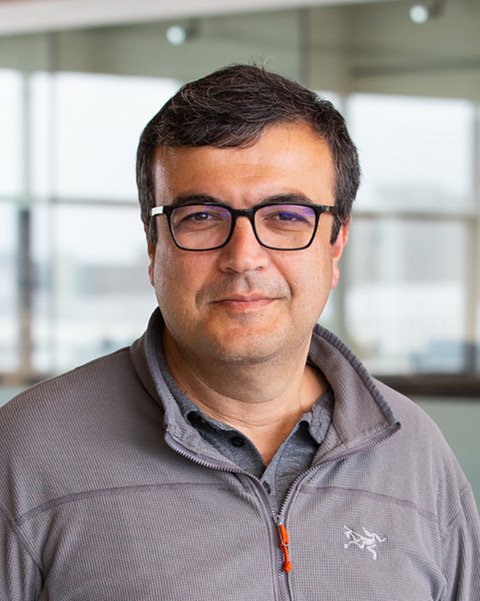
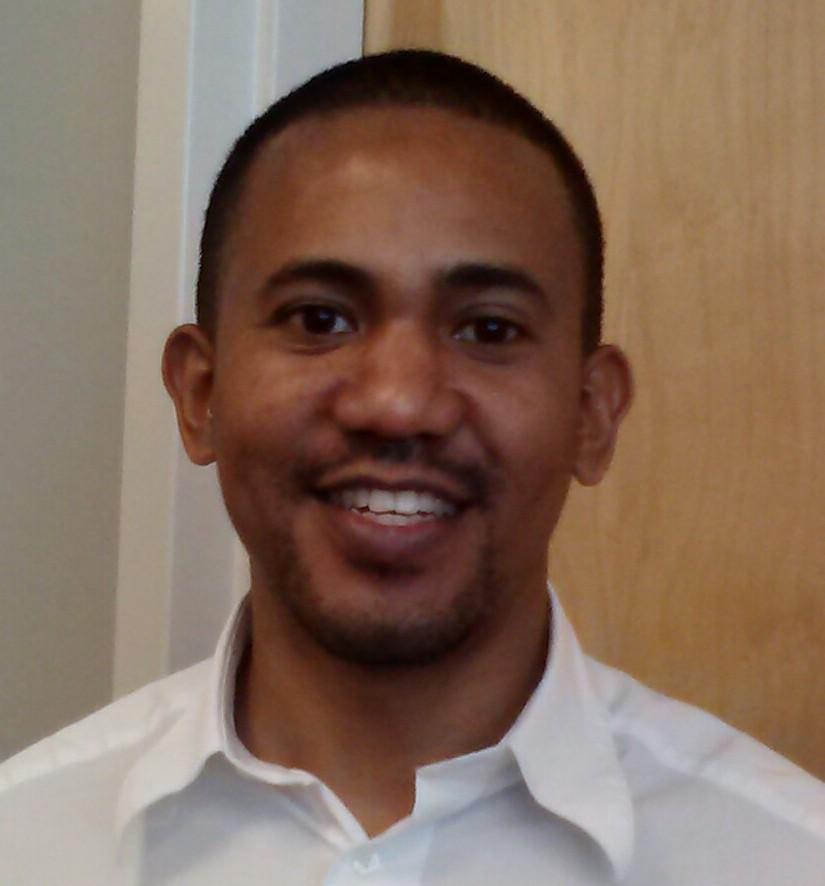
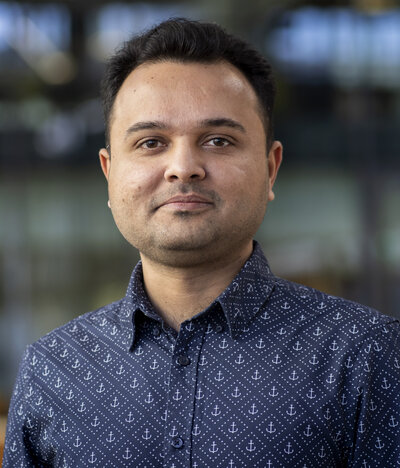
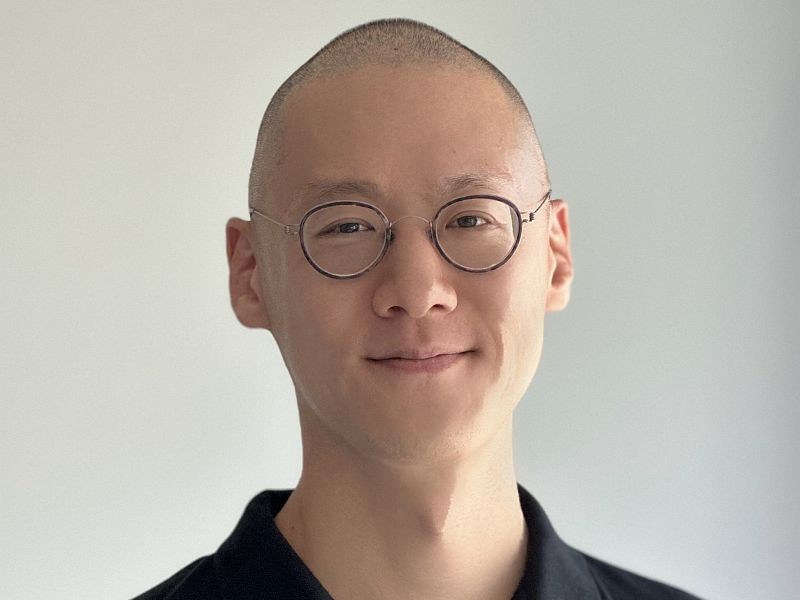
Bobby Lee Townsend Sturm JR is an Associate Professor at KTH Royal Institute of Technology, leading the MUSAiC project (ERC-2019-COG). He holds a PhD in Electrical and Computer Engineering from UC Santa Barbara (2009), followed by postdoctoral research at LAM, Paris 6, and academic roles at Aalborg University and Queen Mary University of London. His research focuses on AI ethics in music, generative AI for music, and folk music preservation. Current roles at KTH include teaching and supervising in Machine Learning, Music Informatics, and AI Ethics. He has pioneered AI music generation challenges (e.g., 2020 Double Jigs Challenge) and investigates societal impacts of AI on traditional music cultures. His work bridges technical innovation with cultural and ethical considerations, addressing issues like data colonialism, algorithmic bias, and human-AI collaboration in creative contexts. Education: PhD (UCSB, 2009), Postdoc (Paris 6), Academic appointments at Aalborg University (2010–2014) and Queen Mary University (2014–2018) Key Projects: MUSAiC (ERC), Virtual Session System for Irish Music, Traditional Music Dataset Analysis Teaching: Courses in Machine Learning, Music Acoustics, and ICT Innovation Publications span peer-reviewed journals and conferences, emphasizing ethical AI, music generation, and interdisciplinary research in MIR (Music Information Retrieval). He actively collaborates with musicians, anthropologists, and technologists to ensure culturally informed AI development.
Ozgur Yilmaz is a Professor in the Department of Mathematics at the University of British Columbia (UBC). He is the Director of the Pacific Institute for the Mathematical Sciences (PIMS) and has held roles such as Interim Deputy Director at PIMS and Deputy Director at the Banff International Research Station (BIRS). His research focuses on applied harmonic analysis, signal processing, compressed sensing, and seismic signal processing. Education: PhD in Applied and Computational Mathematics from Princeton University (2001), B.Sc. in Mathematics and Electrical Engineering from Boğaziçi University (1997). Research Interests: Mathematical problems in analog-to-digital conversion, blind source separation, sparse approximations, compressed sensing, and their applications in seismic exploration. He has contributed to advancements in sigma-delta quantization, low-rank matrix recovery, and compressed sensing algorithms. Funding: Recipient of NSERC Discovery Grants, UBC Data Science Institute grants, and leadership in collaborative research groups (CRGs) on high-dimensional data analysis and applied harmonic analysis. His work bridges theoretical mathematics with practical applications in signal processing and AI-driven medical imaging. Students and Postdocs: Supervised numerous PhD and MSc students in areas like compressed sensing, seismic data reconstruction, and machine learning. Current advisees include Aaron Berk and Xiaowei Li. Former students hold positions at academic institutions and tech companies. Labs and Collaborations: Affiliated with UBC’s Data Science Institute (DSI), Centre for Artificial Intelligence Decision-making and Action (CAIDA), and the Institute of Applied Mathematics (IAM). Collaborates on projects integrating AI with scientific discovery, such as retinal biomarker identification using deep learning.
Ajay Kapur serves as Associate Provost for Creative Technologies and Director of the Music Technology program (MTIID) at California Institute of the Arts. With an interdisciplinary background spanning computer science, electrical engineering, and music, he bridges technological innovation with artistic expression through leadership in academic programs and entrepreneurial ventures. His research centers on symbiotic human-machine interaction for artistic creation, particularly exploring computer improvisation with humans through Indian Classical music frameworks. This manifests in developing programmable mechatronic instruments, sensor-based interfaces, and AI-driven systems for musical expression. His work extends traditional techniques while creating new performance paradigms like the globally touring Machine Orchestra and KarmetiK Orchestra. Kapur's recent publications reveal evolving expertise from music robotics to blockchain applications, with significant focus on NFT systems, tokenization, and immersive environments. His scholarly output demonstrates consistent innovation at the intersection of artistic practice and emerging technologies. As an educator and entrepreneur, he has co-founded companies in edtech and AI while authoring foundational texts like Digitizing North Indian Music and Introduction to Programming for Musicians and Digital Artists . His performances at venues including LACMA, Singapore Arts Festival, and the 2010 Winter Olympics showcase practical applications of his research.
Craig A. Chin is an Associate Professor in the Department of Electrical Engineering at Kennesaw State University. He holds a Ph.D. and M.S. in Electrical Engineering from Florida International University (2006, 2001) and a B.S. in Electrical and Computer Engineering from the University of the West Indies (1995). Research Interests: Digital Signal Processing for Biomedical Applications Machine Learning in Biomedical Signal/Image Analysis Wireless Body Area Networks (WBANs) for Healthcare Network Security in Resource-Constrained Environments Biometric Authentication for Wireless Sensor Networks Innovations in Engineering Education (Cooperative/Active Learning, Humanities Integration) Article Trends: His publications (2001–2019) focus on Biomedical Signal Processing (EMG/Eye-Gaze Integration, Stress Detection), WBANs for mHealth , and Engineering Education Pedagogy . Recent work (2013–2019) emphasizes Cooperative Learning Strategies and Wireshark-based Network Security Labs . Academic Contributions: Craig has taught courses such as Biometrics, Data Communications, Biomedical Instrumentation, and Medical Electronics. He actively explores future research on biometric-driven security for Body Area Sensor Networks and active learning strategies in online education.
Professor JC Ji is a distinguished academic at the School of Mechanical and Mechatronic Engineering at the University of Technology Sydney (UTS), where he was promoted to Professor on January 3, 2025, after serving as an Associate Professor since January 1, 2016. He serves as the Theme Research Director at the Centre for Audio, Acoustics and Vibration (CAAV) at UTS and is an active member of the Faculty of Engineering and Information Technology. Professor Ji holds a PhD in Mechanical Engineering from Australia and a Graduate Certificate from UTS, along with CPEng NER certification from Engineers Australia since 2018. Professor Ji's research spans multiple interdisciplinary areas with significant practical applications. His primary research interests include Dynamics, Vibration and Vibration Control (focusing on wind turbine dynamics, rotor-bearing systems, and vibration isolation); Machine Condition Monitoring and Asset Management (specializing in fault diagnostics, prognostics, and digital twin-based modeling); Renewable Energy and Sustainability (particularly in vibration-based energy harvesting and battery circular economy); Mechanical and Vehicle Systems; Robotic and Multi-Agent Systems; and Ecological Systems. His work demonstrates a strong integration of theoretical foundations with practical engineering solutions for real-world problems. Analysis of Professor Ji's recent publications reveals a clear research trajectory focused on advanced vibration control systems, condition monitoring techniques, and digital twin applications. His work increasingly integrates machine learning with traditional mechanical engineering approaches, particularly in bearing and gear health management. A significant portion of his recent research focuses on quasi-zero stiffness vibration isolators using innovative structural designs including origami-inspired mechanisms. His publications show strong international impact with numerous high-citation articles in top mechanical engineering journals. Stanford University's World's Top 2% Scientists List for both career-long impact and single-calendar year impact in 2023 and 2024 CPEng NER Chartered Engineers certification from Engineers Australia (2018-present) Professor Ji actively supervises research students and has secured substantial funding for his work, including multiple ARC Discovery and Linkage Projects. He serves as an Associate Editor for Mechanical Systems and Signal Processing (Q1 journal), Journal of Vibration and Control (Q2 journal), and International Journal of Bifurcation and Chaos (Q2 journal). He is also an active assessor for ARC grant applications since 2007 and for international funding bodies including Hong Kong RGC, Belgium FNRS, and New Zealand MBIE. His industry collaborations include projects with Zip Heaters, Alstom Transport, and Coal Services Health and Safety Trust. As Theme Research Director at the Centre for Audio, Acoustics and Vibration (CAAV) at UTS, Professor Ji leads a research team focused on advancing vibration control technologies and their applications. His laboratory work includes developing innovative vibration isolators, condition monitoring systems for industrial machinery, and energy harvesting technologies. The research group maintains strong connections with industry partners to ensure practical implementation of their theoretical advancements.
Professor Michael Clarke is a distinguished academic at the University of Huddersfield , serving as Director of IRiMaS (Interactive Research in Music as Sound) and holding leadership roles including former Dean of the School of Music, Humanities and Media and Dean of the Graduate School . His career spans over three decades at Huddersfield, where he has pioneered innovative software for music composition, pedagogy, and analysis. Education: PhD in Music (Durham University), MTC in Teaching (UCL Institute of Education) Clarke's research focuses on composition , particularly in live interactive works , and the development of software like Max/MSP for musicological analysis and sound synthesis. His work intersects with UN Sustainable Development Goals , emphasizing technological innovation in education and cultural preservation. Recent publications highlight his contributions to interactive aural analysis and fluid corpus manipulation tools. Clarke has secured major funding, including a €2.5m ERC Advanced Grant for IRiMaS and AHRC grants for collaborative projects. Awards include the National Teaching Fellowship (2011) and multiple European Academic Software Awards . Scientific Awards: National Teaching Fellowship (2011) European Academic Software Awards (record 3 wins) As a Principal Investigator , he has led projects with Prof Peter Manning and Dr Frédéric Dufeu, while actively supervising PhD students and contributing to REF assessments.
Petr Motlicek is a Lecturer at the École polytechnique fédérale de Lausanne (EPFL) in the Institute of Electrical Engineering. His research focuses on speech and audio processing technologies. At the Laboratoire de l'IDIAP, he conducts interdisciplinary work bridging engineering and cognitive science. His primary research interests include digital speech coding algorithms and auditory perception models. His work examines how signal processing techniques can integrate knowledge about sound production and human auditory perception. Dr. Motlicek has supervised multiple PhD students including Kumar Shashi, Dey Subhadeep, He Weipeng, and Zuluaga Gomez Juan Pablo. He teaches the course Digital Speech and Audio Coding which covers state-of-the-art techniques in the field.
Ming Li is a Professor of Electrical and Computer Engineering at Duke Kunshan University's Division of Natural and Applied Science, and a Principal Research Scientist at the Digital Innovation Research Center. He holds an adjunct position as a Professor at Wuhan University's School of Computer Science. His research focuses on audio/speech processing, multimodal behavior signal analysis, and applications in autism spectrum disorder diagnosis. Li has over 200 publications and serves on editorial boards of journals like IEEE Transactions on Audio, Speech and Language Processing. Education: Ph.D. in Electrical Engineering from the University of Southern California (2013). Awards include the IBM Faculty Award (2016), ISCA 5-Year Best Paper Award (2018), and Youth Achievement Award (2020). He leads initiatives in anti-spoofing countermeasures, voice conversion, and speech synthesis. Recent Courses: Random Signals and Noise Speech Recognition Data Science Key Research Contributions: Development of datasets like KunquDB, TMCSpeech, and systems for speaker verification, deepfake detection, and autism diagnosis tools. His work bridges signal processing with clinical applications, leveraging AI for social interaction improvement in neurodiverse populations.
Aaqib Saeed is an Assistant Professor in the Department of Industrial Design at Eindhoven University of Technology. His research focuses on Human-Centric AI, Federated Learning, Self-Supervised Learning, and Audio Understanding, with applications in Personal Health. He holds a PhD (cum laude) from TU/e and an MSc (cum laude) from the University of Twente. Education: PhD in Computer Science (cum laude), TU/e (2021) MSc in Computer Science (cum laude), University of Twente (2018) Research Interests: Development of robust federated learning frameworks for decentralized data Self-supervised learning for audio and physiological signal analysis AI-driven solutions for healthcare monitoring Key Contributions: DeltaMask: Reducing communication overhead in federated fine-tuning FedNS: Mitigating noisy decentralized data in federated learning Labeling Chaos to Learning Harmony: Handling label noise in FL Professional Experience: Visiting Industrial Fellow, University of Cambridge (2023) Research Scientist, Philips Research (2019–2023) Research Internships: Google Research, TNO/EIT Digital Awards: UT Scholarship (MSc) Cum Laude awards for both PhD and MSc Labs/Teams: EAISI Health, EAISI Foundational, Computational Design Systems.
Jonas Beskow is a Professor and Head of Division at the Division of Speech, Music and Hearing at KTH Royal Institute of Technology. His research focuses on multimodal interaction, speech synthesis, robotics, and human-robot interaction. He leads the Learning style variation in nonverbal behaviour for social robots and agents project as part of Digital Futures, a cross-disciplinary research center. His work involves developing social robots like the Furhat head and advancing technologies for gesture synthesis, audio-driven motion, and adaptive intelligent systems. He holds roles as Co-PI for the Advanced Adaptive Intelligent Systems (AAIS) and Adaptive Intelligent Homes (AIH) projects. His research spans robotics, computer graphics, and clinical applications such as dementia detection through multimodal patient behavior analysis. Beskow also contributes to educational initiatives, supervising courses in computer science and engineering, including degree projects in machine learning and systems engineering. Publications highlight innovations in gesture generation, speech-driven animation, and socially-aware robotics. Collaborations with institutions like Stockholm University and RISE Research Institutes drive interdisciplinary solutions. His work bridges artificial intelligence, human-computer interaction, and assistive technologies, emphasizing ethical and societal impacts of emerging digital systems.
Dr. Bon Woo Koo is an Assistant Professor at the School of Urban and Regional Planning , Toronto Metropolitan University. His expertise lies in geospatial urban analytics, walkability, and GIS applications, focusing on urban design for public health equity and innovative data science tools. He holds a PhD in City & Regional Planning from Georgia Institute of Technology, a Master’s in Landscape Architecture from Seoul National University, and a Bachelor’s in Interior Design from Kookmin University. Education: PhD in City and Regional Planning, Georgia Institute of Technology Master of Landscape Architecture, Seoul National University Bachelor of Interior Design, Kookmin University Research Interests: Dr. Koo investigates urban environments’ impact on health and well-being, equity in environmental amenities (e.g., tree canopies), and advanced GIS techniques. He develops automated audit methods for walkability and explores spatial modeling for urban sustainability. His work bridges data science with policy, contributing to CDC health surveillance and smart city initiatives. Publications: His research appears in journals like Landscape and Urban Planning , Environment and Behavior , and Health and Place , with a focus on walkability audits, urban tree equity, and audio-based pedestrian sensing. Recent work addresses post-pandemic mental health and broadband equity strategies. Professional Engagement: He has advised the CDC’s technical panel on leveraging big data for health policy, presented at conferences like the Association of Collegiate Schools of Planning, and collaborated with institutions like Universitas Gadjah Mada and the Atlanta Regional Commission.
Sami Äyrämö is an Associate Professor at the Faculty of Information Technology , University of Jyväskylä. His research bridges machine learning and health science , focusing on innovative applications in biomechanics , medical imaging , and exercise physiology . Specializes in automated scoring systems for medical diagnostics Pioneer in domain-specific transfer learning for healthcare data Develops synthetic data for wellbeing sector innovation His work spans colorectal cancer tissue analysis , ACL injury risk modeling , and dementia detection from speech , with recent studies applying cluster analysis and deep learning to sports biomechanics challenges. Current projects include the WellbeingDataLab initiative for synthetic exercise data, and collaborations with the Computational Data Science Research Group on spectral imaging and health analytics.
Prof. Dr. Angelika Braun is a full Professor of Phonetics at the University of Trier since October 2009, with a career spanning forensic phonetics, sociophonetics, and cross-cultural speech analysis. She previously held roles at the Bundeskriminalamt (Wiesbaden/Düsseldorf) and Philipps-Universität Marburg, where she habilitated in Phonetics and Speech Processing (2000). Her work bridges academic research with forensic practice. Research Focus: Her Sociophonetics (language and emotions, gender-specific speech) Forensic Phonetics (speaker identification, voice analysis) Contrastive and Hawaiian Phonetics Speech prosody and toxin effects (smoking, alcohol) Intercultural dubbing studies Academic Contributions: Over 15 recent articles explore voice quality, emotional speech, forensic age estimation, and cross-cultural dubbing effects. Key conferences include Interspeech, International Congress of Phonetic Sciences, and ISCA. Her work appears in journals like Forensic Linguistics and The Phonetician . Scientific Honors: Fellow of the American Academy of Forensic Sciences (AAFS) Founder Member and former Chairperson of the International Association for Forensic Phonetics (IAFP) Life-Member of the International Phonetic Association (IPA) Leadership roles in ISPhS and GAL Practical Impact: Developed the Almeida-Braun Transcription System for dialect analysis and contributed to forensic audio enhancement protocols (e.g., Rodney King case). Serves as reviewer for Language and Speech , Forensic Linguistics , and JIPA . Collaborates on longitudinal studies of vocal aging and speaker identification.
Benjamin Hayes is a research scientist at Sony Computer Science Laboratories Paris and a PhD candidate in Artificial Intelligence and Music at Queen Mary University of London's Centre for Digital Music (C4DM). His research focuses on neural audio synthesis, generative models, and perceptual aspects of sound design. He has held internships at Spotify, Sony CSL, and Bytedance, and previously worked as a music producer and lecturer in Electronic & Produced Music at the Guildhall School of Music & Drama. His work bridges digital signal processing, deep learning, and creative sound exploration. Education: PhD in AI and Music (Queen Mary University of London), Master’s/Undergraduate qualifications not explicitly stated but inferred from professional roles. Research Interests: Neural audio synthesis, differentiable digital signal processing, timbre perception, generative models, and psychoacoustics. Current project explores perceptually motivated deep learning approaches for sound synthesis, emphasizing semantic associations in timbre. Professional Experience: Over 10 years in music production, internships at leading tech firms, and academic collaborations across institutions like IRCAM, CNRS, and KTH. Key Contributions: Developed frameworks for end-to-end sound synthesis, addressed challenges in unordered neural network targets, and pioneered gamified systems for crowdsourcing timbre semantics (e.g., timbre.fun). Active in conferences such as ICLR, ICASSP, and DMRN workshops.
Dr. Ke Chen is a Senior Lecturer in the School of Computer Science at The University of Manchester, leading the Machine Learning and Perception (MLP@UoM) Lab. His research focuses on machine learning, deep learning, reinforcement learning, and their applications in intelligent systems, computer vision, and audio/speech processing. He has supervised over 50 PhD students and holds editorial roles in journals like Neural Networks and IEEE Transactions on Neural Networks . Dr. Chen has received awards such as the NSFC Distinguished Principal Young Investigator Award (2001) and JSPS Research Award (1993). Education: PhD in Computer Science (1990), with academic positions at institutions including Peking University, The Ohio State University, and Kyushu Institute of Technology. His professional activities include roles in IEEE Computational Intelligence Society committees and external examiner roles at universities like Essex. Research interests span computational cognitive systems, biometric authentication, and video game AI. Key contributions include advancements in deep architectures, reinforcement learning, and speaker-specific feature extraction. His lab, MLP@UoM, explores topics like explainable AI and transfer learning. Recent publications (2024) include work on goal-conditioned reinforcement learning and bias-resilient algorithms. He is actively involved in international conferences, serving as a keynote speaker and program committee member.