Selim Awad is a Professor in the Department of Electrical and Computer Engineering at the University of Michigan-Dearborn's College of Engineering and Computer Science. He specializes in digital signal processing and electrical engineering education. Teaching Areas: Electrical Engineering Developed multimedia MATLAB courses for educational purposes Focus on integrating software tools like MATLAB, Simulink, and LabVIEW into engineering curriculum Research and Teaching Contributions: His work emphasizes engineering education tools and curriculum development. He has created comprehensive MATLAB tutorials covering fundamentals, graphics, programming environments, and numerical operations. Grants: Received funding from Ameritech for MATLAB distance learning courses. His educational materials include animated PowerPoint lectures with audio instructions, designed for both online and local delivery systems.
Hafiz Malik is a Professor in the Department of Electrical and Computer Engineering at the University of Michigan - Dearborn within the College of Engineering and Computer Science . His research focuses on automotive cybersecurity, deepfakes, sensor security, IoT security, and multimedia forensics, with funding from the National Science Foundation, National Academies, Ford Motor Company, and Marelli, Inc. Ph.D., Electrical and Computer Engineering, University of Illinois at Chicago (2006) M.S., Electrical and Computer Engineering, University of Illinois at Chicago (2004) B.S., Electronics and Communication Engineering, University of Engineering and Technology, Lahore, Pakistan (1999) His research interests span Computing and Networks , Cybersecurity , Data Science , Machine Learning , and Robotics . He has published over 150 articles in peer-reviewed journals and conferences. His recent work trends include automotive cybersecurity , deepfake detection , and sensor security , reflecting his expertise in cyber-physical systems and information fusion . UM-Dearborn 2022 Distinguished Research Award College of Engineering and Computer Science 2020 Excellence in Research Award Malik also leads the Information Systems, Security, and Forensics (ISSF) Laboratory and is involved in organizational leadership for the Dearborn Artificial Intelligence Research Center and the Global Foundation for Cyber Studies and Research .
Dr. Xiao Zhang is an Assistant Professor in the Department of Computer and Information Science at the University of Michigan-Dearborn's College of Engineering and Computer Science. He leads the Trustworthy AIoT Lab (TAI Lab) and advises the Immersive Computing Club. Previously, he was a Postdoctoral Associate at Duke University and holds a Ph.D. from Michigan State University, M.S. from Northwestern Polytechnical University, and B.E. from Taiyuan University of Technology. Education: Ph.D. in Computer Science and Engineering - Michigan State University M.S. - Northwestern Polytechnical University B.E. with Honors - Taiyuan University of Technology Dr. Zhang's research focuses on next-generation wireless systems with emphasis on mobile computing, AIoT, cyber-physical systems, and AI-assisted sensing/localization. His work explores spatial-temporal diversities in Optical Wireless Communication (OWC) to enable secure, location-aware communication for IoT and human-centered computing. Applications include LiFi, V2X networks, underwater navigation, digital health, smart cities, HCI, and AR/VR. Recent publications demonstrate a strong focus on optical communication systems (OWC, LiFi), drone technology, IoT security, and AI-assisted sensing. Trends include innovations in 3D optical connections, adversarial defense for audio systems, radar-based point cloud generation, and federated learning solutions for heterogeneous IoT environments. Awards & Grants: 2025: IHP Research Engagement, OE Review/Creation Grants, Creative Teaching Fund 2024: NSF I-Corps, RAG Grant 2023: Dissertation Fellowship (MSU) 2022: Travel Fellowship (MSU) 2019-2023: Multiple Graduate Fellowships 2016-2018: Postgraduate Scholarships 2013-2015: National/University Scholarships Dr. Zhang advises 10+ students across multiple levels including PhD candidate Deniz Acikbas, MS students Ashwin Sarvadey, Jaskirat Sudan, Rohit Raval, and Nishaant Madhankumar, and undergraduate researchers including NSF STEM Scholars Christian Nwobu, Fatima Qasem, and Fatima Mohammed. His TAI Lab focuses on trustworthy AI-driven IoT systems.
Dr. David John is a Lecturer in Creative Technology at Bournemouth University. His research spans virtual reality, cloud computing, cultural heritage visualization, and human-computer interaction, with a focus on cognitive styles and expressive communication. Education: PhD in Multimedia and Telecare Systems (2002), MSc in Software Engineering (1994), PGCE in Research Supervision (2010). His work includes cloud migration frameworks, immersive archaeological visualizations (e.g., Dudsbury Hillfort, New Forest), and emotion-aware systems. Recent projects explore collaborative cultural heritage authoring and AR applications. Grants include Heritage Lottery Fund support and internal university research assistantships. He supervises PhD candidates in topics spanning networked instruments, cloud frameworks, and terrain generation. Public Engagement: Organized Creative Technology Research Group seminars, contributed to New Forest Digi Arch initiatives, and presented at international conferences (CAA-UK, Eurographics).
Patrick Blättermann is a Researcher at Hochschule Düsseldorf (University of Applied Sciences) within the Faculty of Media . His work spans academic supervision, software development, and scientific investigations in signal processing and machine learning. Research Interests : Machine Learning, Digital Signal Processing, Data Analysis, Deep Learning, and Signalverarbeitung (Signal Processing). Teaching : He supports lectures, supervises bachelor's and master's theses, and manages practical projects. Collaborative Work : He acts as a second examiner (Zweitprüfer) for numerous theses across Media Engineering , Audio and Video , and Media Informatics , focusing on AI integration in creative industries, audio analysis, and immersive technologies. Technical Expertise : His contributions include developing software for audio feature extraction, designing low-latency filters for in-ear monitoring systems, and creating tools for spatial audio analysis. His work bridges theoretical research with practical applications in media technology.
Adam Borecki is a Lecturer and Director of Music Technology at the Hall-Musco Conservatory of Music, Chapman University . Holding a Bachelor of Music (2012) from Chapman University and a Master of Music in Composition (2015) from University of Southern California, he bridges composition, performance, and technology. Education: BM, Music Composition & Guitar Performance, Chapman University (2012) MM, Music Composition, USC (2015) Professional Roles: Music Technology Director, Chapman University (2019-present) Instructor, Hall-Musco Conservatory of Music His research interests span: Electroacoustic composition with live processing Multimedia performance systems integrating projection/lighting Music technology pedagogy Virtual ensemble recording techniques Interdisciplinary collaborations with dancers/poets His creative output shows recent focus on real-time audio-visual integration (2024), environmental soundscapes (2024), and historical reinterpretation projects (2024). Notably, he pioneered a 13-camera live-streamed production connecting Los Angeles and Warsaw (2021). Scientific Recognition : 2014 Fellowship for community outreach concerts Featured in Los Angeles Times for Tuesdays@Monk Space performance Selected for National Gallery premiere (2024) As recording engineer , Borecki founded recording.LA , serving institutions like USC Thornton Symphony , Colburn School , and LA Philharmonic . His technical expertise includes FAA Part 107 certified drone operation and multi-camera live streaming.
Eva Cheng is an Associate Professor at the University of Technology Sydney, currently serving as Head of the School of Professional Practice and Leadership. Her work spans technical research in Multimedia Signal Processing and Computer Vision , alongside transformative efforts in Engineering Education , Humanitarian Engineering , and Gender Equity in STEM . She actively collaborates with organizations like the IEEE and Engineers Without Borders Australia. Key research trends include innovations in Light Field Imaging , Acoustic Systems , and Inclusive Pedagogy . Her funded projects address topics such as Trustworthy Digital Societies , Edge Computing for Industrial Acoustics , and Equitable Work Integrated Learning . Recently, she has focused on technologies for Aquatic Eco-Neurotoxicology and Primary School STEM Outreach . As a Senior Tutor in the Centre for Audio, Acoustics and Vibration and member of the Perceptual Imaging Lab (PiLab), Eva bridges technical and educational domains. She mentors through Engineers Without Borders, advocates for disability inclusion in work placements, and integrates Aboriginal design epistemologies into engineering curricula.
Louena Shtrepi is an Associate Professor at the Polytechnic University of Turin, Italy, affiliated with the Department of Energy 'Galileo Ferraris' and the Future Urban Legacy Lab (FULL). She holds architecture degrees from Politecnico di Torino and Politecnico di Milano, an Alta Scuola Politecnica diploma (2010), and a PhD in Metrology (2015). Research Focus: Applied acoustics, particularly room and building acoustics, acoustic materials, simulation techniques, and measurement uncertainties. Her work emphasizes human-centric methodologies, sustainable design, and immersive audio-visual systems for perceptual testing. Teaching: Instructs graduate courses on Engineering of Sound Systems (Cinema & Media Engineering) and Exhibit Design: Light, Sound, Climate (Design & Visual Communication), with a focus on integrating acoustic solutions into early architectural design. Publications: Over 120 co-authored works, including studies on metamaterials, BIM-integrated acoustic analysis, virtual reality validation for speech intelligibility, and sustainable building envelope systems. Awards: Newman Medal (Acoustical Society of America), EEA Best Paper Award (2012), Premio Amedeo Giacomini (2012), Young Scientist Grant (Inter-Noise 2012), Premio Barducci (2013), ISRA Best Papers Award (2013). Collaborations: Member of AIA, EAA Technical Committee, and ASA; involved in EU-funded and national research projects like SILENCE (acoustic metamaterials for MRI noise cancellation) and SUPERIMPOSITION.
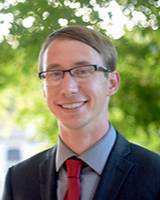
Ulysse Teller Masao Côté-Allard is an Associate Professor in the Department of Informatics at the University of Oslo, Faculty of Mathematics and Natural Sciences. He is affiliated with the Section for Autonomous Systems and Sensor Technologies and actively contributes to the INtroducing personalized TReatment Of Mental health problems using Adaptive Technology (INTROMAT) project. Institution: University of Oslo School: Faculty of Mathematics and Natural Sciences Department: Department of Informatics Section: Autonomous Systems and Sensor Technologies Email: utmcote-allard@its.uio.no, u.t.m.cote-allard@its.uio.no His primary research interests lie at the intersection of artificial intelligence and biomedical applications, with a strong emphasis on machine learning, deep learning, reinforcement learning, and human-computer interaction. His work focuses on developing intelligent systems for healthcare, particularly in myoelectric control for prosthetics, gesture recognition using wearable sensors, and digital mental health solutions for conditions like bipolar disorder. He investigates how multimodal physiological signals (EMG, PPG, IMU) can be leveraged to enhance human-robot interaction and enable early detection of mood changes. The trends in his recent publications (2020–2025) reveal a consistent focus on adaptive and intelligent systems for rehabilitation and mental health. His work spans biomedical signal processing, assistive robotics, affective computing, and AI-driven health monitoring. He frequently employs deep learning and reinforcement learning techniques to build resilient, context-aware systems that improve human-machine collaboration in clinical and assistive contexts. While no specific scientific awards are mentioned in the provided text, his extensive publication record in top-tier journals such as IEEE Transactions on Neural Systems and Rehabilitation Engineering, IEEE Access, Sensors, and Bipolar Disorders highlights significant scholarly contributions. He is actively involved in advising and research leadership, particularly within the INTROMAT project, which aims to personalize mental health treatment through adaptive technology. His collaborative work includes numerous co-authored publications with researchers across institutions, indicating strong interdisciplinary engagement and grant-funded research activities. Ulysse Teller Masao Côté-Allard is a key contributor to research teams focused on autonomous systems, sensor technologies, and digital mental health. He is involved in the INtROMAT project, which integrates AI and wearable sensing to advance personalized mental healthcare.
Akito van Troyer is an Associate Professor of Electronic Production and Design at Berklee College of Music , with expertise in music technology , interactive media design , sound synthesis , and machine learning in musical applications . He holds a Ph.D. in Media Arts and Sciences from MIT (2018), an M.S. in Media Arts and Sciences from MIT (2012), an M.S. in Music Technology from Georgia Institute of Technology (2010), and a B.A. in Interdisciplinary Studies for Multimedia from the University of Hawaii (2008). Research Focus His work bridges technology, art, and AI to develop creative tools and immersive experiences. Research themes include auditory sensory augmentation , generative audiovisual systems , and collaborative digital performance . He has pioneered interactive musical instruments and AI-driven sound processing . Publications & Trends Award-winning publications span human-computer interaction (CHI 2023), novel electronic instruments (NIME 2017), and creative algorithmic systems (Computer Music Journal 2011). Subfields include GAN-based sound synthesis , physical computing for music , and networked performance environments . Honors & Collaborations Bill Mitchell Design Award (2017) People’s Choice Award at Guthman Competition (2017) ACM Best Artwork Award (2011) His collaborative projects demonstrate interdisciplinary integration of technology, art, and AI , often pushing boundaries in musical interaction and sensory design .
Dr Stuart Middleton is an Associate Professor at the University of Southampton, affiliated with the School of Electronics and Computer Science within the Faculty of Engineering and Physical Sciences. He is a member of the Agents, Interaction and Complexity research group, the Centre for Machine Intelligence, and the Centre for Democratic Futures. His research focuses on Natural Language Processing (NLP), particularly information extraction and human-in-the-loop NLP, with applications in law enforcement, defence, mental health, and environmental science. His research interests include Natural Language Processing , Information Extraction , Human-in-the-loop NLP , Active Learning , Adversarial Training , Rationale-based Learning , and Argument Mining . He specializes in scenarios with limited or fragmented data, developing methods for few/zero-shot learning, graph-based models, and multimodal analysis. His work spans domains such as mental health, digital ethics (e.g., sharenting), defence, and climate science. The recent publications highlight a strong trend in applying NLP to societal challenges, including mental health monitoring through social media, ethical AI, multimodal argumentation in political debates, and climate data analysis. His work combines technical innovation in prompt engineering, summarization, and graph-based modeling with real-world impact. AI for defence: readiness, resilience and mental health (2024) Extraction and summarization of suicidal ideation evidence (2024) Sharenting and social media properties (2024) Implementing responsible innovation (2024) ConversationMoC: mood change detection (2024) Dr Middleton is actively involved in PhD supervision and academic leadership as Deputy Director of the UKRI MINDS Centre for Doctoral Training. He supervises multiple PhD students working on NLP and AI projects. He has secured research funding from ESRC and EPSRC for projects such as ProTecThem2.0 , SafeSpacesNLP , and GloSAT . He leads the Natural Language Processing modules COMP3225 (UG) and COMP6253 (PG) and mentors students in NLP research. He is a Fellow of The Alan Turing Institute and a member of the EPSRC peer review college, contributing to national research strategy and evaluation. His research is conducted within interdisciplinary teams, including collaborations with criminologists, social scientists, and environmental researchers. He is part of the Agents, Interaction and Complexity group and contributes to the Centre for Machine Intelligence and Centre for Democratic Futures , focusing on AI systems that interact meaningfully with humans and society.
Björn Thor Jónsson is a Doctoral Research Fellow at the RITMO Centre for Interdisciplinary Studies in Rhythm, Time and Motion, affiliated with the Department of Informatics (IFI) under the Faculty of Mathematics and Natural Sciences at the University of Oslo. His work focuses on applying evolutionary algorithms and quality diversity search methods to create systems for unbounded sonic discovery. Current Role: Doctoral Research Fellow at RITMO Centre Institution: University of Oslo Projects: Evolutionary Sound Exploration, Modeling and Robots, Musical Human-Computer Interaction Björn investigates how generative models, when pushed beyond prompted boundaries, can yield novel sound designs and rhythmic structures. His research leverages evolutionary algorithms to build 'sound innovation engines' capable of discovering diverse audio patterns through compositional pattern-producing networks and audio graphs. The three recent publications from 2024 demonstrate applications of quality diversity algorithms in audio synthesis, sound object discovery, and creative system design. These works connect evolutionary computation with practical sound engineering challenges, exploring methods for sonic exploration that combine algorithmic diversity with human interaction. Evolutionary Algorithms Audio Synthesis Quality Diversity Search Compositional Pattern Producing Networks Musical Innovation Interactive Sound Systems Jónsson's research integrates computational creativity with audio engineering through projects like synth.is and kromo.synth.is , which explore evolutionary sound discovery. He has presented at international conferences and contributed to journals like the Journal of The Audio Engineering Society.
Emmanouil Benetos is a Reader in Machine Listening and Director of Research at Queen Mary University of London's School of Electronic Engineering and Computer Science. He co-leads the School's Machine Listening Lab and is affiliated with the Centre for Digital Music, Centre for Intelligent Sensing, Digital Environment Research Institute, and Centre for Multimodal AI. His research focuses on computational audio analysis applied to music, urban sounds, and bioacoustics. Key areas include machine listening, self-supervised learning, audio representation frameworks, and multimodal AI. Current projects involve resource-efficient audio processing and large language model integration for acoustic tasks. Recent publications highlight advancements in music source separation, lyrics transcription, graph neural networks for audio, and acoustic identification systems. His work bridges machine learning with real-world applications in music technology, environmental monitoring, and audio-language models. Royal Academy of Engineering / Leverhulme Trust Research Fellow Turing Fellow at the Alan Turing Institute Royal Academy of Engineering Research Fellow As academic service, he serves as Secretary for the International Society for Music Information Retrieval (ISMIR), chair of the IEEE Technical Committee education subcommittee, associate editor for IEEE/ACM Transactions and EURASIP Journal, and Deputy Director for the UKRI Centre for Doctoral Training in Artificial Intelligence and Music (AIM).
John Natzke is a Professor and Chair of the Department of Electrical Engineering & Computer Science at George Fox University. He joined the institution in 1995 after completing his PhD in Electrical Engineering at the University of Michigan. Education: BS in Electrical Engineering, Milwaukee School of Engineering (1985) MS in Electrical Engineering (Microwave Engineering), Marquette University PhD in Electrical Engineering, University of Michigan (1994) His research focuses on antennas, high-frequency challenges in wireless devices, and electromagnetic radiation phenomena using numerical methods. He also explores audio electronics, digital signal processing, magnetics, and robotic systems. At George Fox, he teaches courses in electromagnetics, microwave engineering, analog electronics, communication systems, and digital signal processing. He contributes to the engineering undergraduate research program and is affiliated with the Radiation Laboratory at the University of Michigan. John is a member of professional societies including IEEE, Eta Kappa Nu (HKN), Sigma Xi (ΣΞ), and ASEE. Outside academia, he enjoys cross-country skiing, hiking, and gardening. His wife, Amy, is a professional violinist, and they have three children.
Abdellah Touhafi is a Professor at the Faculty of Engineering Technology, Department of Electronics and Informatics at Vrije Universiteit Brussel (VUB) in Brussels, Belgium. With an extensive research portfolio spanning nearly three decades, his work focuses on embedded systems, sensor networks, and FPGA technologies with applications in environmental monitoring and smart cities. His current research activities include leading multiple projects related to low-carbon technologies, health technologies, and sustainable sensing systems. Dr. Touhafi's research interests center around Field Programmable Gate Arrays (FPGA), wireless sensor networks, acoustic sensing, and machine learning applications for environmental monitoring. His work bridges hardware engineering with practical applications in smart city infrastructure, water quality monitoring, and sustainable sensing technologies. He has developed innovative approaches for hardware-assisted security mechanisms in environmental monitoring systems and has explored the integration of triboelectric sensors for self-powered sensing applications. His publication record shows consistent output with 154 research outputs, including recent articles in Sensors journal and conference papers at IEEE events. His h-index of 19 (with 1,433 citations) reflects significant impact in his fields of expertise. Current projects include DESTINY (Low-carbon solutions), GEAR (future health technologies), and ILSF 2024 (acoustic mapping). NSIS3: DESTINY: Low-carbon solutions and technology for a new future (2024-2029) OZR4208: Bilateral cooperation for joint PhD VUB-USMBA (2023-2027) IOF3016: GEAR: Future health technologies (2021-2025) BRGEOZ445: ILSF 2024 - This is the Sound of "ME" (2024) IOFACC12: Tech4Health (2024-2025) Dr. Touhafi actively supervises students and has served on PhD committees, including for projects related to sustainable public lighting and environmental monitoring systems. His research group has produced datasets like the AMIVU Acoustic Map Imaging VUB-ULB Dataset, demonstrating practical applications of his theoretical work. He regularly participates in conferences including IEEE events and has organized workshops on industrial electronics.


%20/ulusse-/ulysse-cote-allard.jpg)