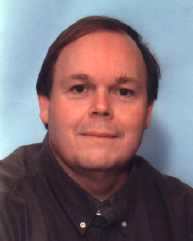
Professor Bruce N. Walker holds a joint appointment in the School of Psychology and School of Interactive Computing at Georgia Institute of Technology, within the College of Sciences. His research focuses on human-centered technology design, emphasizing accessibility, auditory displays, and human-AI interaction. He leads the Sonification Lab, pioneering multimodal interfaces and inclusive technology solutions. He earned his Ph.D. in Human Factors and Human-Computer Interaction from Rice University in 2001. Research Interests: Trust in technology, accessible interfaces, sonification, AI-human collaboration, and HCI in non-traditional environments. Current projects include the AccessCORPS VIP initiative to enhance course accessibility and studies on automated vehicle interaction. Awards: Best Paper Award at AudioMostly 2014 for auditory weather reports research. Active in professional organizations like the International Community for Auditory Display and Human Factors and Ergonomics Society. Teaching: Courses include Research Methods for Human Factors, Sensation and Perception, and HCI Foundations. Supervises interdisciplinary teams in the Sonification Lab R&D Studio and AccessCORPS VIP. Labs/Teams: Sonification Lab (multimodal data exploration) and AccessCORPS (disability-inclusive course design). Collaborates on international projects like the Mwangaza initiative for learners with vision impairment in Kenya.
Valeria Bruschi is a Researcher at the Department of Information Engineering (DII) within the Faculty of Engineering at Università Politecnica delle Marche (UNIVPM) in Ancona, Italy. Her academic profile was last updated on April 13, 2024, and she maintains her office at the Engineering Faculty on via Brecce Bianche, with contact information including phone +39 071-220-4486 and email v.bruschi@staff.univpm.it. Dr. Bruschi's research spans multiple domains within audio and signal processing, with particular expertise in spatial audio systems, automotive human-computer interaction, and biomedical signal applications. Her work bridges theoretical signal processing techniques with practical implementations across diverse fields including automotive safety systems, hearing aid technology, sleep medicine, and agricultural monitoring. She has made significant contributions to head-related transfer function (HRTF) processing, real-time audio enhancement algorithms, and innovative monitoring systems that utilize acoustic signals for various applications. Analysis of Dr. Bruschi's recent publications reveals a strong trajectory in developing practical audio processing solutions with real-world applications. Her work shows increasing integration of machine learning techniques with traditional signal processing approaches, particularly in areas like driver monitoring systems, snoring detection and cancellation, and spatial audio rendering. A notable trend is her focus on creating lightweight, real-time implementations suitable for embedded systems and practical deployment scenarios, while maintaining high performance standards. Her research consistently demonstrates interdisciplinary collaboration, connecting audio engineering with fields as diverse as automotive safety, sleep medicine, and agricultural technology. Dr. Bruschi actively contributes to advancing audio engineering through her research on equalization techniques, noise reduction systems, and immersive audio technologies. Her work on pulse compression techniques for hearing aid distortion measurement represents an important contribution to audiological assessment methodologies. Her publication record demonstrates consistent scholarly output with increasing impact across multiple application domains, reflecting her ability to translate theoretical signal processing concepts into practical engineering solutions.
Maxwell Tfirn is a Lecturer and Director of Creative Studies at Christopher Newport University , Department of Music, Theatre and Dance, where he teaches Music Composition, Sound Synthesis, and Music Technology. His research focuses on real-time recursive compositions and data sonification for scientific analysis. PhD in Composition and Computer Technologies - University of Virginia M.A. in Music Composition - Wesleyan University His work bridges music composition with bacterial behavior studies through NSF-funded research on Data Sonification of Bacterial Chemotaxis . Notable performances include works at ICMC, SEAMUS, and Subtropics Music Festival. Collaborations with ensembles like Jack Quartet and Loadbang highlight his impact in contemporary music circles. Key Trends in Publications: Articles span real-time algorithmic compositions, sensor-based live performance tools, and interdisciplinary sonification projects merging microbiology with auditory analysis. Subfields include neural network integration, audiovisual data mapping, and glitch-based performance aesthetics. Scientific Awards: Best Use of Sound (Academic) - ICAD (2023) Research Collaborations: National Science Foundation grant exploring bacterial chemotaxis sonification. Mentorship roles include advising students at Christopher Newport University and contributing to experimental music festivals globally.
Mark Gotham is a Senior Lecturer in Cultural Computation at King’s College London’s Department of Digital Humanities. He holds a unique position bridging STEM and the humanities, with prior roles as an Assistant Professor of Computer Science at Durham University and a Professor of Music Theory at Technische Universität Dortmund. His research focuses on computational methods for music theory, corpus creation, and accessibility. Gotham completed a Ph.D. in Music Theory at the University of Cambridge, an MMus in Composition at the Royal Northern College of Music, and a First-Class Bachelor’s in Music from the University of Oxford. His work spans computational musicology, including projects like the OpenScore initiative, which digitizes and opens music scores. He is affiliated with King’s Computational Humanities Research Group and the Centre for Digital Culture. Gotham’s compositions, such as the award-winning CD *Utrumne est Ornatum*, blend theoretical rigor with creative expression. He collaborates with institutions like Deutsche Telekom on projects like *Beethoven X* and leads the Music Computing Lab at King’s. Gotham’s research emphasizes interdisciplinary approaches, using computational tools to explore musical structures and democratize access to music theory. His contributions include frameworks for aligning symbolic music, standards for harmonic analysis, and pedagogical innovations in music education.
Pedro R. M. Inácio is an Associate Professor at the University of Beira Interior (UBI) , where he teaches information assurance, cybersecurity, and computer simulation courses in undergraduate and graduate programs. He serves as Pro-Rector for the Digital University and Data Protection Officer at UBI, and leads the Cross Cutting Skills Lab and the Network Security research group at Instituto de Telecomunicações. His work bridges academia and industry, including a PhD at Nokia Siemens Networks Portugal.
Tom Mitchell is a Professor of Audio and Music Interaction at the University of the West of England (UWE), Bristol . As leader of the Creative Technologies Laboratory , his research focuses on interactive technologies for creative expression, blending computer science, music, and artificial intelligence. He is the principal investigator for the UKRI Future Leaders Fellowship project "Sensing Music Interactions from the Outside-In" and co-investigator for the Bridge , a £3M creative technology facility. His research spans digital musical instrument design , GPU-accelerated audio processing , and sonification of scientific data . Recent work includes accessibility improvements in virtual environments, AI-driven DMI development, and interdisciplinary collaborations like the MiMU Gloves with Imogen Heap. He also contributes to robotics teleoperation through auditory feedback systems. Selected publications highlight trends in GPU acceleration for audio , generative AI in musical contexts , and human-robot collaboration via sonification. As a software developer , he specializes in C++ and the Juce library , with applications in live performance systems and scientific visualization projects like Soma and danceroom Spectroscopy . UKRI Future Leaders Fellow Active in AHRC and WECA-funded projects Best paper nominations at EvoMUSART and International Faust Conference Mitchell collaborates with institutions including the Bristol Robotics Laboratory , Computer Science Research Centre , and Pervasive Media Studio . His work bridges academic research with commercial applications through ventures like May Productions and x-io Technologies.
Assoc. Prof. Dr. Yıltan Bitirim is a faculty member at the Computer Engineering Department of Eastern Mediterranean University in North Cyprus. With over two decades of academic experience, he has served in various roles including Vice Chair (2014-2022), Academic Affairs Coordinator (2025-), and committee member for ABET assessment, curriculum development, and faculty recruitment. Current academic rank: Associate Professor Active administrative roles: Senate Member (2023-), Information Technology Commission Member (2023-) Professional memberships: ACM, IEEE Senior Member, Cyprus Turkish Chamber of Computer Engineers Research Interests focus on four primary areas: Information Retrieval Systems – evaluating search engine effectiveness and reverse image search performance Machine Learning – applied to emotion classification, gender recognition, and medical diagnosis Data Mining – used in Turkish word-stemming analysis and user behavior studies Biometrics – specializing in hand/wrist/palm vein recognition systems and voice-based identification Publications demonstrate consistent contributions across disciplines, with recent works (2023-2025) emphasizing: Deep learning applications in biometric authentication Advanced emotion recognition systems Medical AI for diabetes management and retinopathy diagnosis Biometric spoof detection mechanisms Turkish language processing challenges Recommendation system innovations Awards & Recognition : Research Incentive Awards (2020, 2021) Best Paper Award at ICIW 2007 IEEE Senior Member status As an educator, he has supervised numerous thesis committees and taught foundational courses in computer engineering, including CMPE 112 and CMPE 342. His certifications (MCTS, MCITP) reflect technical expertise in Microsoft technologies.
Mayank Goel serves as an Assistant Professor in the Software and Societal Systems Department (S3D) at Carnegie Mellon University's School of Computer Science. His research bridges computer science and societal impact through practical sensing systems that leverage existing environmental devices for health monitoring and human-computer interaction without requiring hardware modifications. Dr. Goel specializes in mobile computing, signal processing, and machine learning to develop unobtrusive health technologies applicable to real-world scenarios. His core research areas include passive activity recognition for chronic disease management (particularly multiple sclerosis), privacy-preserving acoustic sensing, smartwatch-based clinical interventions for post-operative care, and equitable healthcare systems for global development contexts. He emphasizes end-to-end solutions through close collaboration with medical professionals and designers to ensure immediate deployability outside laboratory environments. Analysis of his 2024-2025 publications reveals a strong interdisciplinary focus spanning computer science, biomedical engineering, and clinical practice. Key trends include longitudinal digital phenotyping for neurological conditions, on-device privacy preservation in activity recognition, and multimodal procedural assistance systems. His work consistently addresses real-world challenges in sensor placement flexibility, user adoption barriers, and equitable access to medical technologies. No scientific awards were mentioned in the available documentation. Information regarding student advising, research grants, or laboratory affiliations was not specified in the provided materials, though his publication record indicates active collaboration with medical professionals and bio-engineers for clinical validation of health technologies.
Professor Dinh Phung is the Head of the Department of Data Science & AI at Monash University. His research focuses on machine learning, deep learning, generative AI, and robust AI systems. He has authored over 250 publications, with applications in NLP, computer vision, digital health, and cybersecurity. Phung holds a PhD and BSc(Hons) in Computer Science from Curtin University. He leads major projects like 'Can Machines Unlearn?' and 'Trustworthy Generative AI', funded by the Australian Research Council and the Department of Defence. Education: Doctor of Philosophy, Computer Science, Curtin University (2005) Bachelor of Science (Honours), Computer Science, Curtin University (2001) Research Interests: Machine learning, deep learning, and generative models Optimal transport and Bayesian methods Robust and trustworthy AI Applications in digital health, cybersecurity, and autism research Key Projects (2023–2029): Can Machines Unlearn? (2025–2029): Safety in AI Trustworthy Generative AI (2024–2026): Foundation models Robust Machine Learning via Optimal Transport (2023–2025) Awards and Grants: Australian Research Council grants for AI safety and robustness Department of Defence funding for robust learning systems Collaborations: Global partnerships in AI ethics, cybersecurity, and healthcare. Active advisory roles, including with the Victorian Parliamentary Library.
Mark F. Bocko is a Professor of Electrical and Computer Engineering and Physics at the University of Rochester, serving as Chair of the Department of Computer and Electrical Engineering since 2004. He holds a BA from Colgate University and advanced degrees (MS/PhD) in Physics from the University of Rochester. His research spans superconducting digital electronics, quantum computing, music signal processing, and smart sensor systems. Notable awards include the Excellence in Undergraduate Teaching Award (1991, 2002) and Professor of the Year (2002). His research groups focus on high-frequency digital signal processing using Josephson junctions, quantum coherence in superconducting circuits, and applications in music technology such as internet-based real-time musical collaboration. Collaborations include work with the Eastman School of Music and local industries on sensor networks and wireless technologies. Key contributions include developing GHz-rate analog-to-digital converters, quantum bit control systems, and music encoding algorithms. His NSF-funded projects explore internet2 applications for musical interaction and physical modeling in music systems.
Professor Adrian Hilton is a distinguished faculty member at the University of Surrey, serving as Director of the Centre for Vision, Speech and Signal Processing (CVSSP) and Director of the Surrey Institute for People-Centred AI. He is affiliated with the School of Computer Science and Electronic Engineering and leads the Visual Media Research Lab (V-Lab). His research focuses on pioneering next-generation 4D computer vision technologies that enable machines to understand and model dynamic real-world scenes. Key areas include 3D/4D shape capture, computer vision, machine learning, graphics, and animation for applications in sports analysis, film/TV production, virtual reality, and medical imaging. His work bridges the gap between real and computer-generated imagery, with notable contributions in volumetric capture, motion capture, and free-viewpoint video. Hilton's recent publications demonstrate a strong trend toward multimodal integration, particularly combining audio and visual processing for spatial audio applications, while advancing 4D reconstruction techniques for human performance capture. His work increasingly incorporates transformer architectures and neural rendering techniques for improved illumination estimation, shadow modeling, and multi-view consistency. Scientific Awards and Recognition Two EU IST Innovation Prizes Manufacturing Industry Achievement Award Royal Society Industry Fellowship (2008-2011) Royal Society Wolfson Research Merit Award in 4D Vision (2013-2018) Fellow of the Royal Academy of Engineering (FREng) Fellow of the International Association for Pattern Recognition (FIAPR) Fellow of the Institution of Engineering and Technology (FIET) Hilton actively mentors PhD and post-doctoral researchers through his leadership of CVSSP, which has a grant portfolio exceeding £31M and comprises 170 researchers. He has successfully commercialized several technologies, including systems used by the BBC for sports commentary visualization. His research collaborations span major industry partners including BBC, BT, Sony, Framestore, and The Foundry. He co-founded the G3 Games forum and the CVMP Conference on Visual Media Production, demonstrating strong engagement with the creative industries. Current research projects include the S3A Programme Grant in Future Spatial Audio and InnovateUK's ALIVE project for 360 video reconstruction.
Christof Weiß is a Professor for Computational Humanities at the CAIDAS / Institute of Computer Science, Julius-Maximilians-Universität Würzburg (JMU), Germany. He serves as Head of the DFG-funded Emmy Noether group on Computational Analysis of Music Audio Recordings: A Cross-Version Approach. His academic journey includes previous positions as Visiting Researcher at University Télécom Paris (2021), Visiting Lecturer at Karlsruhe University of Music (2020, 2021), and Research Assistant at International Audio Laboratories Erlangen (2015-2022) and Fraunhofer Institute for Digital Media Technology (2012-2015). His educational background encompasses a PhD in Media Technology from University of Technology Ilmenau (2017), Concert Diploma in Composition from Würzburg University of Music (2012), Physics Diploma from University of Würzburg (2012), and Music Diploma in Composition from Würzburg University of Music (2011). This unique combination of technical and artistic training forms the foundation of his interdisciplinary research approach. Weiß's research operates at the critical intersection of computer science and musicology, developing novel computational methods for analyzing musical structures in audio recordings. His work bridges technical audio processing with musicological insights, creating methodologies for tonal analysis, key estimation, and cross-version comparison of musical performances. His approach combines deep learning techniques with music theory to extract meaningful patterns from large music corpora, enabling new forms of musicological corpus studies that were previously impossible. His recent publications reveal a clear research trajectory toward integrating advanced machine learning with fundamental musicological questions. The consistent theme across his work involves analyzing classical music structures through computational lenses, with particular emphasis on cross-version consistency in performances, tonal complexity measurement, and developing datasets that support computational musicology. His publications span both highly technical audio processing journals and musicology-focused venues, demonstrating his commitment to bridging these disciplines. Best paper award at the 4th conference on Computational Humanities Research (CHR), 2023 KlarText award for science communication of the Klaus Tschira Foundation, 2018 2nd prize at Festival Pablo Casals composition competition, Prades (France), 2013 Youth Cultural Advancement Award (Kulturförderpreis) of the city of Amberg, Germany, 2011 As principal investigator of the DFG Emmy Noether group, Weiß leads a multidisciplinary research team investigating computational analysis of music audio recordings through a cross-version approach. His research has secured significant funding including the prestigious Emmy Noether program, supporting doctoral and postdoctoral researchers working on various aspects of music information retrieval and computational humanities. His collaborative network spans institutions across Europe, including University Télécom Paris, Queen Mary University of London, and multiple German research centers. Weiß leads the Computational Humanities research group at CAIDAS, which focuses on developing computational methodologies for music analysis with particular emphasis on classical repertoire. The lab creates specialized datasets (including the Wagner Ring Dataset and Schubert Winterreise Dataset), develops algorithms for structural music analysis, and applies these tools to address musicological questions that require computational scale and precision. Their work bridges the gap between technical audio processing capabilities and humanities research questions, creating new pathways for understanding musical structure and evolution.
Paolo Prandoni is a Lecturer at École Polytechnique Fédérale de Lausanne (EPFL) in the School of Computer and Communication Sciences (IC). He serves as a Scientist in the Audiovisual Communications Laboratory (LCAV) and teaches in the SSC-ENS and SIN-ENS units, focusing on signal processing theory and practical applications in audiovisual communications. He earned his PhD from EPFL after completing all prior education there, driven by childhood fascination with long-distance telephony. His doctoral work established foundations in communication systems that continue to inform his research. Prandoni's research spans audio/image processing, machine learning for media analysis, and DSP education. Key areas include computational photography (e.g., spectral imaging, stained glass rendering), speech quality assessment via transfer learning, music information retrieval (e.g., fingering prediction), and audience analytics through his company Quividi. His work consistently bridges theoretical signal processing with real-world implementation. Recent publications reveal a strategic shift toward machine learning integration in signal processing tasks, particularly non-intrusive speech assessment and lensless imaging reconstruction. Simultaneously, he advances DSP pedagogy through MOOC development and hands-on teaching tools using off-the-shelf hardware, emphasizing accessibility and practical skill development. No scientific awards are documented in the provided materials. He has advised PhD student Thanikachalam Niranjan (thesis: Image Based Relighting of Cultural Artifacts , 2016) and teaches Communication Systems and Computer Science courses. His educational impact extends through the open-access textbook Signal Processing for Communications (2008) and tools like MultiPub for maintainable online classes. Industry engagement includes Quividi co-founding (2006) and ongoing CSO role in attention analytics. As a core LCAV laboratory member, he collaborates on interdisciplinary projects including cultural heritage digitization, embedded signal processing systems, and real-time audience measurement, leveraging EPFL's infrastructure for both academic and commercial applications.
Prof. Wim Desmet is a full professor at the Faculty of Engineering Science and head of the Department of Mechanical Engineering at KU Leuven . His research focuses on advanced modeling techniques for mechanical systems, including: noise and vibration control in automotive and industrial systems computational acoustics and interval field uncertainty modeling metamaterials for broadband vibroacoustic performance AI-driven diagnostic systems in renewable energy and manufacturing Current research projects address challenges in electric vehicle drivetrains, wind turbine monitoring, and multi-physical digital twin development. He actively contributes to academic governance as: Managing Director of KU Leuven Head of Subdivision HIST Chair of multiple executive committees Member of 15+ academic and administrative councils
Laura Barnes is a Professor in the Department of Systems and Information Engineering at the University of Virginia, and Associate Director of the Link Lab. She directs the Sensing Systems for Health Lab, focusing on technology-enabled health solutions. Her academic background includes a B.S. in Computer Science from Texas Tech University (2003), and M.S. (2007) and Ph.D. (2008) in Computer Science from the University of South Florida. Research interests span wireless health , human-machine interfaces , biomedical data sciences , and machine learning applications . Current projects include wearable sensor systems for mental health monitoring, clinician-patient communication frameworks (CommSense), and mobile interventions for anxiety reduction. Funding sources include NIH, National Institute of Aerospace, and the U.S. Army. Recent publications emphasize real-time monitoring , digital phenotyping , and context-aware interventions . Key themes include leveraging large language models for health analysis, developing scalable mobile sensing frameworks, and addressing health equity through technology. Labs/Teams : Sensing Systems for Health Lab, Link Lab Grants : NIH-funded projects on medication adherence and sleep disturbance analysis