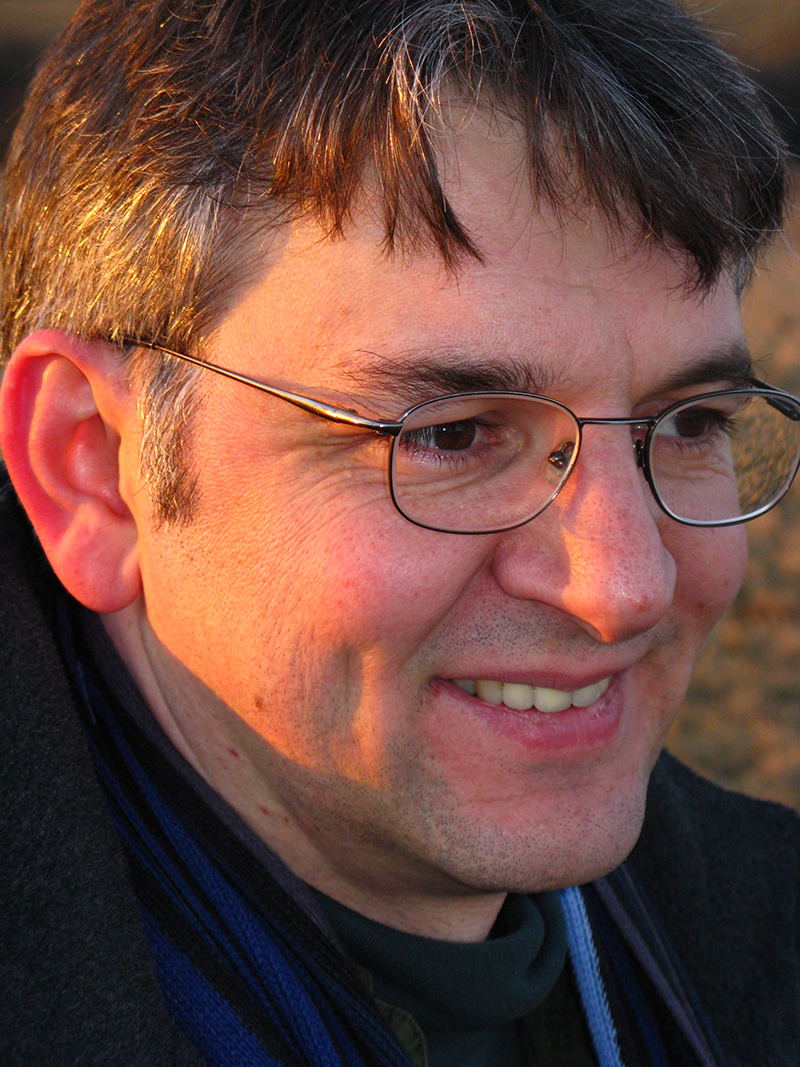
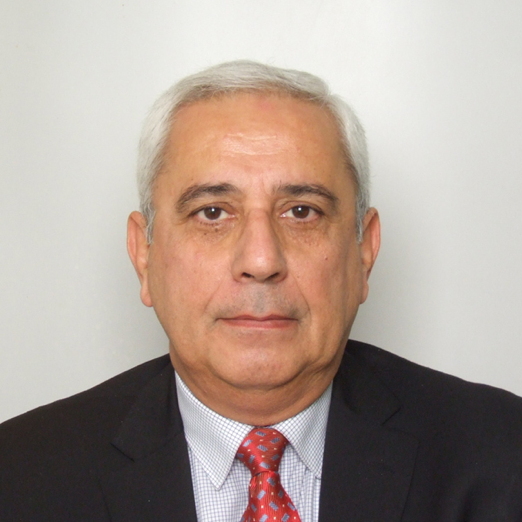
Dr. Alexander H de Vries is a lecturer and post-doctoral researcher at the Faculty of Science and Engineering , University of Groningen , Netherlands. His work focuses on Molecular Dynamics of membranes and proteins, utilizing computational models to study biomolecular systems. Research Areas : Physical Chemistry, Computational Biophysics, Self-Assembly Processes, Force Field Development, Nanotube Formation, and Membrane Dynamics Notable Contributions : Key publications on the MARTINI force field , nanotube self-assembly, and membrane protein delivery systems using nanodiscs Recent work includes high-resolution simulations of supramolecular fiber formation and coarse-grained modeling of organic materials. Collaborates extensively with international researchers in biomolecular simulation and nanotechnology fields.
Jörg Libuda is a Professor at the Chair of Interface Research and Catalysis , Friedrich-Alexander-University Erlangen-Nürnberg . His work bridges materials chemistry , electrocatalysis , and molecular solar thermal systems , focusing on solid catalysts with ionic liquid layers (SCILLs) , atomic layer deposition , and model catalyst systems . Research Areas: Catalysis, Ionic Liquids, Surface Science, Energy Storage, Nanoparticle Stability His 2025–2024 publications analyze trimetallic PtNiMo/C catalysts , molecular solar thermal systems with electroswitchable catalysis , and supraparticle catalysts for ultralow noble metal loadings . Key trends include ionic liquid modifiers to enhance electrocatalytic selectivity , atomic layer deposition on oxide surfaces , and metal-support interactions in Pd-Rh catalysts . No explicit scientific awards are listed in the provided text. His group investigates model electrocatalysts under ambient-pressure conditions , redox-mediated bond cleavage , and CO permeability in ionic liquid films. The summary underscores his contributions to energy conversion , catalyst stabilization , and surface molecular engineering .
Jae Chul Kim is an Assistant Professor and Associate Chair in the Department of Chemical Engineering and Materials Science at Stevens Institute of Technology's Charles V. Schaefer School of Engineering. His research program focuses on next-generation battery materials and solid-state electrochemistry. Key research themes include: Novel electrode architectures for lithium/sodium/potassium-ion batteries Solid-state electrolyte development Materials synthesis and characterization Advanced manufacturing techniques His publications cover fundamental materials chemistry, computational design, and practical battery applications, with emphasis on improving energy density, safety, and fast-charging capabilities. Recent work explores antiperovskite electrolytes, manganese-rich cathodes, and 3D-printed battery components.
Harald Johan Walderhaug is a Professor of Environmental Sciences at the University of Oslo, affiliated with the Department of Chemistry under the Faculty of Mathematics and Natural Sciences. He holds a Ph.D. in Physical Chemistry from Lund University (1985) and has been a permanent faculty member since 1995. His research focuses on molecular dynamics and transport in organized fluid systems, with particular emphasis on NMR methods applied to polymers, colloids, gels, and microemulsions. He teaches courses such as KJM1130 (Physical Chemistry I), KJM5500 (Surface and Nanochemistry), and KJM-Mena3300 (Physical Chemistry III). His work spans over three decades, with publications analyzing polymer diffusion, surfactant behavior, and complex liquid structures using advanced NMR techniques. Notably, he has contributed to studies on block copolymer micelles, microemulsion systems, and polyurethane formulations for rocket propellants. Walderhaug serves as Secretary General of the Norwegian Chemical Society and has been a key contributor to understanding colloidal systems and molecular transport mechanisms. His research often bridges physical chemistry with applications in materials science and environmental chemistry.
Jon Otto Fossum is a Professor in the Department of Physics at the Norwegian University of Science and Technology (NTNU), Faculty of Natural Sciences. His research focuses on soft and complex condensed matter physics, particularly experimental studies of clay minerals and nanomaterials. Position: Professor Institution: NTNU Department: Physics Research Interests: Fossum investigates the physical properties of clay-based nanomaterials, including CO2 capture, intercalation processes, and self-assembly of colloidal particles. His work spans fundamental physics of nanoscale systems to applied technologies like electromagnetic shielding and drug delivery systems. Publication Trends: His recent articles highlight experiments with synthetic clays, graphene suspensions, and machine learning applications. Topics include CO2 interactions in nanolayered materials, structural coloration, and electromagnetic interference shielding using nanocomposites. Teaching & Supervision: He has advised multiple doctoral dissertations and master's theses, including projects on Pickering emulsions, electric field-induced structuring, and clay-stabilized emulsions. Laboratory: Leads the Soft and Complex Matter Lab , focusing on nanomaterials and their environmental/technological applications.
Erika Eiser is a Reader in Soft Matter Physics at the University of Cambridge, where she leads research on DNA-driven colloidal self-assembly, hydrogels, and microrheology. She previously served as an Assistant Professor at the University of Amsterdam after postdoctoral work at institutions in Montpellier and Grenoble. Eiser holds a PhD in soft matter physics from the Weizmann Institute (Israel) and a physics degree from the University of Konstanz (Germany). Her research explores: Colloidal systems : DNA-functionalized particles, kinetic assembly pathways, and emulsion rheology. Biomaterials : Hydrogel formation, protein aggregation suppression, and polysaccharide composites. Advanced characterization : Microrheology, diffusing-wave spectroscopy, and non-equilibrium molecular dynamics. Recent publications (2021–2025) focus on DNA nanotechnology, colloidal dynamics, and responsive materials, with applications in biosensing, photonics, and biomedicine. Trends include experimental/theoretical studies of self-organization, transport in soft matter, and design of functional nanocomposites. No scientific awards are listed in available sources. Eiser directs a research group at Cambridge investigating colloidal crystallization, DNA hydrogels, and optofluidic control. Collaborative projects span European institutions, including work on polymer nanocomposites and thermophoretic forces.
Garry Rumbles is an Adjunct Professor at the University of Colorado Boulder and a Research Fellow at the National Renewable Energy Laboratory (NREL) , where he has worked since 2001. His research focuses on the fundamental science of solar energy conversion in organic and hybrid systems, particularly charge generation and electron transfer processes in conjugated polymers and nanostructured materials. He leads the development of time-resolved microwave conductivity (TRMC) as a key spectroscopic tool for studying charge dynamics. His work spans collaborations with institutions like Imperial College London and NIST , with a focus on nanoscale photophysics and interfacial charge transfer . Recent publications highlight his expertise in hybrid perovskites , carbon nanotube heterojunctions , and microstructure-dependent charge transport . He has supervised numerous graduate students and postdoctoral researchers, including Justin Earley , Josh Carr , and Leo Romanetz . Scientific Awards : Fellow of the Royal Society of Chemistry (CSci, CChem, FRSC) . Notable Techniques : TRMC, femtosecond transient absorption, terahertz spectroscopy, and time-resolved X-ray absorption.
Maria Peressi is a Full Professor in the Department of Physics at the University of Trieste, holding significant leadership roles including Delegato per la Didattica in the Head's Office, and serving as a member of the Department's Board, Departmental team for Quality Assurance, Boards of Studies, and Doctoral Studies Boards for Physics cycles XXIX through XXXIII. Her primary research focus lies in Theoretical and Computational Condensed-Matter Physics, specifically leading the "Electronic Structure of Materials: Theory and Simulation" research group. Her work involves theoretical modeling and computational approaches to understand and predict properties of low-dimensional systems, liquids, colloids, semiconductors, and semi-metals. Professor Peressi's research demonstrates a strong integration of computational methods with experimental validation through collaborations with the TASC Laboratory of the Istituto Officina dei Materiali (CNR) and the ELETTRA Laboratory. Analysis of her recent publications (2023-2025) reveals a dual research trajectory: fundamental materials science focused on graphene and 2D materials, single-atom catalysts, and metal-organic frameworks; and physics education research examining teaching methodologies and teacher development. Her materials science work shows particular expertise in electronic structure calculations, surface science, and the physics of metal-organic interfaces, while her educational research contributes significantly to understanding physics pedagogy and teacher improvement metrics. National Centre for HPC, Big Data and Quantum Computing (Active) finanziamento assegno di ricerca annuale Fondazione Carigo (Active) Simultaneous electrical control of spin and valley polarization in van der Waals magnetic materials (SECSY) (Active) QUBOP - QUest for BOron Phosphide (Active) Assegnazione 2021 a progetto MAECI SERBIA (Completed, where she served as Principal Investigator) Professor Peressi actively contributes to doctoral education and curriculum development within the Physics Department. Her research group employs advanced computational resources for materials modeling, working at the intersection of theoretical physics, materials science, and computational science. She maintains strong collaborative relationships with experimental groups, enabling the practical application of theoretical predictions and the explanation of complex experimental results through computational modeling. Her laboratory work focuses on theoretical modeling of materials properties at the atomic and electronic levels, with particular emphasis on surface phenomena, 2D materials, and single-atom systems. This research has implications for catalysis, nanotechnology, and advanced materials design, bridging fundamental science with potential technological applications.
Professor Brendan Kennedy is a distinguished academic in the field of Chemistry at The University of Sydney, where he has been a faculty member since 1998. He holds the position of Professor of Chemistry within the School of Chemistry, Faculty of Science, and is also a member of The University of Sydney Nano Institute, reflecting his interdisciplinary research approach that bridges chemistry, materials science, and nanotechnology. His educational background includes: B.Ed. Melbourne SC Ph.D. from Monash University Postdoctoral Fellow positions at Oxford University and ANU Professor Kennedy's research focuses on Solid State and Materials Chemistry, with particular expertise in Crystallography using X-ray and Neutron Scattering techniques. His work centers on the Structure and Bonding in Metal Oxides, investigating complex phenomena such as structural phase transitions in perovskite oxides, heavy metals in inorganic hosts, valence states in mixed 3d and 4d oxides, and oxides for solid state memory devices. His research aligns with the Faculty of Science Research Strengths in Molecules to Materials, Critical Minerals and Materials, and Next Generation Materials. He has made significant contributions to understanding the delicate balance of ionic size and covalency in cations that leads to rich behavior in metal oxide systems. Analysis of Professor Kennedy's extensive publication record reveals a sustained focus on advanced materials characterization, particularly using diffraction techniques to understand structure-property relationships in complex oxides. His work spans from fundamental studies of crystal structures to applied research on materials for energy applications, catalysis, and electronic devices. There's a clear progression toward more sophisticated structural analysis techniques and a growing interest in functional materials with specific technological applications, particularly evident in his recent publications on photocatalysis, energy storage, and ferroic properties. His notable scientific achievements include: AINSE Gold Medal for Research Excellence (2003) ANZAAS 2005 Liversidge Lecturer Professor Kennedy actively mentors the next generation of researchers, currently supervising students working on projects including "Oxides for Energy Application," "Rare earth-free high-performance magnets," and "Bi-functional catalyst synthesis and water management system in unitised regenerative fuel cells (URFCs)." His research program is supported by significant grants that enable advanced materials characterization using synchrotron and neutron facilities, providing students with access to world-class instrumentation and collaborative networks. As a member of The University of Sydney Nano Institute, Professor Kennedy collaborates with researchers across disciplines to develop novel materials with applications in energy, electronics, and environmental technologies. His laboratory utilizes state-of-the-art diffraction and spectroscopy techniques to probe materials at the atomic level, contributing to fundamental understanding that informs technological innovation. His extensive publication record spanning over two decades demonstrates consistent productivity and leadership in the field of solid-state chemistry and materials science.
FRANCO SCARSELLI is a Full Professor at the University of Siena, affiliated with the Department of Information Engineering and Mathematical Sciences. His primary research focuses on Graph Neural Networks (GNNs), machine learning applications in IoT, blockchain, bioinformatics, and medical imaging. He has contributed extensively to the theoretical foundations of GNNs, including their expressive power and VC dimensions. His teaching roles include courses on Advanced Machine Learning for the Master's program in Artificial Intelligence and Automation Engineering, as well as Information Systems for undergraduate Management Engineering students. He has been actively involved in curriculum development since at least 2021/2022. Research highlights include interdisciplinary work on agrifood supply chain traceability using IoT and blockchain, molecular property prediction with GNNs, and semantic analysis of diffusion models. Key collaborations involve institutions like the University of Siena and industry partners in smart logistics and healthcare. His publications span over two decades, with recent contributions emphasizing the theoretical underpinnings of GNN architectures and their applications in dynamic graphs, medical diagnostics, and industrial fault detection. He has also pioneered open-source tools like GNNKeras for graph neural network implementations.
Peter M. Hoffmann is an Adjunct Professor in the Department of Physics and Astronomy at Wayne State University's College of Liberal Arts and Sciences, with secondary appointments in the College of Engineering and Biomedical Physics program. His research focuses on molecular machines, nanoconfined liquids, and biophysics, employing advanced atomic force microscopy (AFM) techniques. PhD in Materials Science, Johns Hopkins University M.S. in Physics, Southern Illinois University Vordiplom (BS equivalent) in Physics & Mathematics, Technische Universität Clausthal Hoffmann's experimental work investigates how molecular motors extract order from chaos through Brownian ratcheting mechanisms. His team has developed cutting-edge AFM methodologies to study nanomechanical properties of confined water films, ionic effects on liquid ordering, and biomolecular interactions at the single-molecule level. Recent publications focus on graphene oxide fluid dynamics, mechanochemical solvation effects, and advanced AFM data analysis techniques. His research bridges soft matter physics, biophysics, and materials science through interdisciplinary approaches. Scientific recognition includes: National Science Foundation CAREER Award Wayne State Presidential Excellence in Teaching Award Richard Barber Faculty Award Sultana N Nahar Excellence in Teaching Award Abel Wolman Fellowship Studienstiftung des deutschen Volkes Fellowship Hoffmann's educational initiatives include co-authoring the textbook Quantitative Understanding of Biosystems and leading the $3M NSF IUSE grant to transform STEM education through evidence-based pedagogy. His lab actively mentors graduate students like Zachary Auner, Gobin Acharya, and Ramesh Tripathi, working at the intersection of physics and biological systems.
Aslı Çakır is an Associate Professor in the Department of Metallurgy and Materials Engineering at Mugla Sitki Kocman University, Turkey. Her academic journey includes a B.Sc. in Engineering Physics from Ankara University (2000), M.Sc. in Physics from Bogazici University (2009), and a Ph.D. in Physics from Mugla Sitki Kocman University (2015). Key research areas: Heusler alloys , shell ferromagnetism , phase transformations , high-entropy alloys , and magnetic shape memory materials . She has contributed to understanding magnetic field effects on precipitate formation, exchange bias , and thermal stability in functional alloys. Recent publications focus on Ni-Mn-Sn , Ni-Mn-Ga , and Cu50Mn45Al5 systems. Her work involves collaborations with international institutions and utilizes techniques like neutron diffraction , Density Functional Theory , and ferromagnetic resonance . She has served as a jury member for graduate theses and as an editor for journals like Journal of Alloys and Compounds . Scientific Awards : International Academic Collaboration (2021), Rare-Earth-Free Magnet Material Development (2017) Projects : TÜBİTAK 1001 (2022-2024), BAP (2017-2020), TÜBİTAK (2007-2008)
Jan Rusz is Professor at the Department of Physics and Astronomy, Uppsala University, specializing in Materials Theory. His research focuses on theoretical aspects of electron microscopy, magnetism, and electronic structure of materials, with particular emphasis on advanced spectroscopic techniques and their theoretical foundations. His primary research interests include: Theory of inelastic electron scattering and dynamical electron diffraction Electron energy loss near-edge structure (ELNES) and electron magnetic circular dichroism (EMCD) X-ray and optical spectroscopies including XMCD, Kerr effect, and Faraday rotation Electronic structure calculations of strongly correlated electron systems Magnetism, magneto-crystalline anisotropy, and exchange interactions Theory of two-dimensional angular correlation of electron-positron annihilation radiation Professor Rusz's recent publications demonstrate a strong focus on advancing electron microscopy techniques for atomic-scale magnetic and vibrational measurements. His work bridges theoretical modeling with experimental applications, particularly in developing methods to visualize magnetic moments and phonon modes at unprecedented resolution. His research has appeared in top-tier journals including Nature, Nature Materials, and Physical Review Letters, reflecting significant impact in the field of materials physics and electron microscopy. His research group appears to collaborate extensively with experimentalists to develop and validate new methodologies in electron microscopy, particularly for measuring magnetic properties at the nanoscale and atomic scale. The work has implications for developing new magnetic materials and understanding fundamental aspects of magnetism in condensed matter systems.
Nasser Darabiha is a Professor of Exceptional Class at CentraleSupélec's EM2C Laboratory. His career includes significant leadership roles such as Director of the Franco-Brazilian LIA (CNRS) Energy and Environment since 2016, President of the Technical Committee of GENCI, and membership in the Scientific Council of FRAE (Foundation for Research in Aeronautics and Space). Previously, he served as Director of the EM2C Laboratory (2002–2009), Dean of the Ph.D. School at École Centrale Paris (2011–2012), and Head of the Department of Energy (2005–2008). Education: Habilitation, Polytechnic Institute of Toulouse (1994) Ph.D. in Combustion, École Centrale Paris (1984) M.S. in Energy, École Centrale Paris (1981) Specialization Diploma in Energy, École Centrale Paris (1980) B.S. in Mechanical Engineering, Sharif University of Technology, Iran (1975) Research Focus: Darabiha's expertise spans theoretical/numerical modeling of combustion phenomena (laminar/turbulent flames, soot reduction, chemical kinetics tabulation) and experimental methods (laser diagnostics, signal processing). His work advances fundamental understanding of reactive flows in aerospace propulsion, energy systems, and pollutant mitigation. Publication Trends: His recent articles predominantly explore advanced combustion modeling techniques (LES/DNS), soot/PAH dynamics, plasma-assisted ignition, and alternative fuel chemistry. Computational fluid dynamics, particularly lattice Boltzmann methods and chemical mechanism optimization, feature prominently alongside experimental validations of high-pressure combustion systems. Awards & Honors: Officer in the Order of Academic Palms (2012) Knight in the Order of Academic Palms (2005) Leadership & Advising: He directs the Franco-Brazilian LIA consortium and has supervised numerous Master/PhD students. His grants include leadership of large-scale computational projects through GENCI. He established the EM2C Laboratory as a leading combustion research facility during his directorship. Laboratories & Teams: Leads research groups at EM2C Laboratory focusing on turbulent combustion modeling, plasma ignition, and soot formation. Collaborates internationally through the Franco-Brazilian LIA on sustainable energy solutions.
NAKAYAMA Masanobu serves as Professor in the Department of Life and Applied Chemistry at Tokyo Institute of Technology, leading research in solid-state battery materials. His work integrates computational modeling, machine learning, and experimental electrochemistry to develop advanced energy storage solutions, with particular focus on ionic conduction mechanisms and interface engineering in next-generation batteries. His academic foundation includes: Bachelor of Engineering in Chemical Engineering (Tokyo Institute of Technology, 1997) Master of Science in Chemical Engineering (Tokyo Institute of Technology, 1999) Doctor of Engineering in Applied Chemistry (Tokyo Institute of Technology, 2004) Professor Nakayama's research spans solid-state ionics, electrochemistry, and materials informatics, emphasizing the application of neural network potentials for molecular dynamics simulations. His group pioneers AI-driven approaches to predict ionic conductivity, optimize electrode materials, and understand degradation mechanisms in lithium/sodium-ion batteries. Current projects address critical challenges in sustainable battery development, including cobalt-free cathodes and chloride-based solid electrolytes. Analysis of his 2024 publications reveals a strong trend toward integrating deep learning with experimental validation to accelerate materials discovery. Key themes include atomic-scale simulation of battery interfaces, machine learning prediction of ionic conductivity, and development of sustainable electrode architectures with enhanced energy density. His significant contributions have been recognized through: Japan Ceramic Society Academic Award (2021) MEXT Young Scientist Award (2014) Nagai Science and Technology Foundation Academic Award (2013) Takagawa Memorial Solid-State Chemistry Award (2009) Tokyo Institute of Technology Engineering Young Researcher Award (2008) Tedashima Memorial Research Award Doctoral Thesis Award (2005) Professor Nakayama actively mentors graduate researchers in interdisciplinary projects combining computation and experiment. His group secures competitive funding from Japanese research agencies including JSPS and NEDO, supporting collaborations with industry partners on solid-state battery commercialization. Current grants focus on AI-accelerated materials discovery and interface engineering for all-solid-state batteries. Based in the Environmental Ceramics Field at Tokyo Tech, his laboratory employs advanced characterization techniques including in situ XPS alongside neural network potential simulations. The team maintains strong industry partnerships for translating fundamental research into practical battery technologies, with recent work emphasizing sustainable materials design and manufacturing scalability.