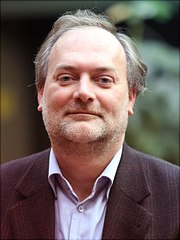
Dr. Frederieke Miesner is a Postdoc in Permafrost Research at the Alfred Wegener Institute (AWI) in Potsdam. Her work focuses on long-term monitoring, soil temperature dynamics, and numerical modeling of submarine permafrost. She specializes in inverse problem approaches to reconstruct historical climate conditions using permafrost borehole data. Her research integrates field observations with advanced computational models to understand Arctic cryosphere processes and their climate feedbacks. Current affiliation: Alfred Wegener Institute, Potsdam Site Department: Permafrost Research Research interests include subsea permafrost dynamics, thermal diffusion processes in Arctic sediments, and the vulnerability of permafrost carbon pools. She leads data management for permafrost long-term observatories and collaborates on global-scale Earth system models (e.g., MPI-ESM). Key contributions include developing the Submarine Permafrost Map (SuPerMAP) and advancing CryoGrid community models. Her fieldwork spans Arctic regions like the Lena River Delta (Russia) and Mackenzie Delta (Canada), focusing on riverbed permafrost interactions and subaquatic thermal regimes.
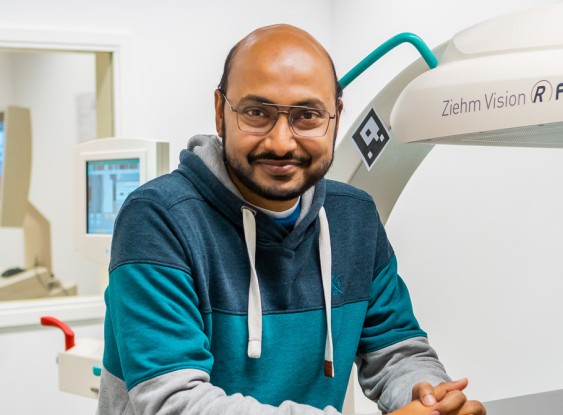
Dr. Christian Bock is a biophysicist and Head of the Integrative Ecophysiology section at the Alfred Wegener Institute (AWI). He leads the in vivo NMR laboratory and the Systemic Physiology group, focusing on biophysical processes in marine organisms. His research integrates MRI/spectroscopy techniques to study acid-base regulation, muscle bioenergetics, and cardiovascular systems under environmental stressors like ocean acidification and warming. Key affiliations include the Biosciences division within AWI, with a focus on marine biogeochemistry and ecophysiology. His work spans from cellular to organismal scales, applying advanced imaging and metabolic profiling methods. Recent studies explore impacts of climate change on marine species, including invasive parasites, bivalve physiology, and primate neuroanatomy. Technical expertise includes NMR spectroscopy, diffusion MRI, and metabolic profiling, with emphasis on non-invasive monitoring of marine organisms. His contributions bridge biophysics with ecological and evolutionary questions, particularly in polar and coastal ecosystems.
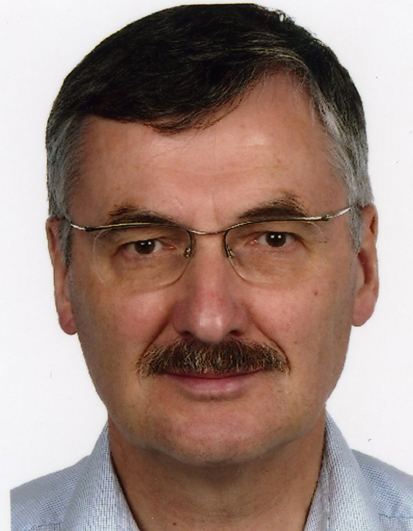
Prof. Dr. Philipp Fischer is a Professor at the Alfred Wegener Institute Helmholtz Centre for Polar and Marine Research, leading the AWI Center for Scientific Diving and the 'In situ ecology' research group. He heads the COSYNA group on underwater observatories and is the AWI-PI for projects ACROSS and MOSES. His work focuses on fish behavior, underwater acoustics, and Arctic marine ecosystems, with a strong emphasis on observational technologies and long-term monitoring. Research interests include the ecological impacts of climate change, kelp forest dynamics, and methane fluxes in marine environments. He coordinates interdisciplinary projects integrating sensor networks and data science platforms like Renku for sustainable marine research. Fischer’s leadership in scientific diving and observatory infrastructure development underscores his role in advancing Arctic and North Sea observational capabilities. Key contributions include the COSYNA coastal observing system and advancements in cabled Arctic observatories. His research bridges biogeochemical processes, technological innovation, and climate adaptation strategies in polar and temperate marine systems.
Xianta Jiang is a research-focused academic at Simon Fraser University's School of Computing Science, specializing in rehabilitation engineering and biomedical computing. With a prolific publication record spanning from 2006 to 2025, Jiang has established expertise in force myography, prosthetic control systems, and human-computer interaction for medical applications. Jiang's research interests center on biomechanics, wearable sensor technologies, and surgical training systems. Their work bridges computer vision with rehabilitation engineering, particularly in facial image processing applications for medical contexts. Recent publications demonstrate a strong focus on diffusion models and generative AI techniques applied to medical image restoration and prosthetic control. The research trajectory shows a clear evolution from fundamental biomechanics research (early work on ankle joint power estimation and gait analysis) to more complex applications involving AI-driven prosthetic control and facial image processing. The 2023-2025 publications reveal a strategic pivot toward leveraging advanced computer vision techniques for medical applications. Jiang collaborates extensively with M. Stella Atkins, Bin Zheng, and Carlo Menon, forming a core research group at Simon Fraser University focused on biomedical computing applications. This collaborative network spans multiple publications in high-impact venues including IEEE Transactions, Sensors, and Frontiers journals.
Suren Jayasuriya is a highly active faculty-level researcher in computer vision and computational imaging, with 79 refereed publications (2014-2025) in leading venues such as CVPR, ICCV, ECCV, NeurIPS, IEEE TPAMI and ACM TOG. His work integrates physics-based models with modern machine learning to tackle problems like non-line-of-sight imaging, atmospheric turbulence removal, neural 3D reconstruction, and speech enhancement, while also advancing STEM education through AI. Education & Affiliation: No explicit institutional details are contained in the supplied DBLP extract; however, the sustained publication record and extensive student mentoring indicate a tenured or tenure-track professorship within an engineering or computing department. Research Interests: Jayasuriya’s interests sit at the intersection of computer vision, computational photography, and physics-based machine learning . He develops algorithms that exploit optical and acoustic phenomena for tasks such as seeing around corners, correcting atmospheric distortion, and reconstructing 3D scenes from sparse sonar or radar data. Additional threads include energy-efficient tracking, robust speech processing, and AI-supported pedagogical innovation. Publication Trends: Across the 15 most recent works (2022-2025) his papers exhibit a clear thematic arc: neural representations for multimodal fusion (camera-sonar, radar-vision), unsupervised video restoration under atmospheric turbulence, attention-driven non-line-of-sight tracking, and evaluation of large multimodal models for perceptual reasoning. These contributions simultaneously advance core vision methodologies and demonstrate interdisciplinary applications spanning robotics, environmental monitoring, underwater perception, and education. Students & Mentoring: Jayasuriya has advised an active cohort of graduate researchers who appear repeatedly as co-authors, including Sreenithy Chandran, Ripon Kumar Saha, Albert W. Reed, Joshua D. Rego, Dehao Qin, Jianwei Zhang, Odrika Iqbal, Sameeksha Katoch, Md. Farhan Tasnim Oshim, and Shenbagaraj Kannapiran, among others. Scientific Awards: No awards are listed in the supplied extract; the awards field is left empty. Labs & Teams: While specific laboratory names are not disclosed, the collaborative scope—encompassing hardware-software co-design, field deployments, and educational outreach—suggests he leads or co-leads a research group with access to specialized imaging and robotics facilities.
Dandan Yang is a prolific researcher with publications spanning multiple disciplines including Fractional Calculus , Control Systems , Neural Networks , and Biomedical Engineering . Collaborating extensively with researchers like Chuanzhi Bai, Jianfei Huang, and Zhang Chen, her work appears in journals such as Axioms , IEEE Access , and Communications in Nonlinear Science , as well as conferences like ISCID and CyberC. Research Interests include: Stochastic and fractional differential equations Neural network stability analysis Biomedical signal processing Network dynamics and influence modeling Time-series causal inference Notable collaborations address problems in spacecraft attitude control, biomedical diagnostics, and fractional evolution equations. While no formal academic rank or institutional affiliation is explicitly stated in the provided data, her 15+ peer-reviewed publications since 2007 indicate active faculty-level research contributions.
Fadi Al Machot is an active researcher in artificial intelligence and machine learning, focusing on applications in human activity recognition, emotion detection, and sensor-based systems. His work often explores zero-shot learning, deep learning frameworks, and the integration of symbolic knowledge into neural networks. Collaborations with co-authors such as Kyandoghere Kyamakya highlight interdisciplinary research in complex systems and adaptive technologies. Key research areas include: Human Activity Recognition (HAR), Emotion Recognition, Sensor Networks, Zero-Shot Learning, and Explainable AI. Recent contributions emphasize noise-resilient time series forecasting and transparent AI system development using ontologies and logical reasoning. Publications span prestigious journals like Sensors, IEEE Access, and Symmetry, with notable work in conferences such as WACV, COINS, and AVSS. His research bridges theoretical advancements with practical implementations in healthcare, transportation, and manufacturing domains.
Prof. Jens Struckmeier is a faculty member at the University of Hamburg, holding the position of Professor of Numerics within the Department of Mathematics, Faculty of Mathematics, Computer Science and Natural Sciences. His research focuses on applied mathematics, particularly numerical methods for partial differential equations, computational fluid dynamics, kinetic theory, and optimal control. He has contributed extensively to areas such as particle methods for the Boltzmann equation, finite-volume particle methods for conservation laws, and mathematical modeling of crystallization processes and thermal flows. His work often bridges theoretical developments with industrial applications, such as fire simulations in vehicle tunnels and polymer crystallization studies. Struckmeier's research interests include numerical analysis, kinetic theory, and the development of efficient algorithms for complex systems. He has authored or co-authored numerous publications, including books on hyperbolic partial differential equations and articles in journals like Journal of Computational Physics and Mathematical Models and Methods in Applied Sciences . His work on radiation models for low Mach number flows and optimal control of crystallization processes demonstrates interdisciplinary applications of mathematical modeling. Notable contributions include the finite-volume particle method for moving domains and kinetic schemes for granular flow equations (Savage-Hutter equations). He collaborates widely, with co-authors across institutions, and his research often addresses real-world challenges in engineering and physics. While no specific awards are listed, his sustained academic output reflects significant contributions to numerical mathematics and applied sciences.
Hao Gao is a Professor in the Department of Computer and Information Science at the University of Macau, Faculty of Science and Technology. His research spans computer vision, image processing, and machine learning with a particular focus on human pose estimation, 3D reconstruction, and optimization algorithms. He maintains strong collaborative ties with Nanjing University of Posts and Telecommunications in China, reflecting a dual institutional affiliation that enhances his research impact across Greater China. His research interests center on computer vision and artificial intelligence, with significant contributions in human pose estimation, 3D reconstruction, point cloud processing, and optimization algorithms. Dr. Gao's work on skeleton-based action recognition, scene flow estimation, and neural rendering techniques has established him as a leading researcher in these specialized areas. His recent work on GaussianHead for high-fidelity head avatars and lifespan age synthesis demonstrates his ability to bridge theoretical advances with practical applications in digital human representation. Dr. Gao's publication record shows a clear evolution from foundational work on artificial bee colony algorithms to cutting-edge research in neural rendering and 3D vision. His recent publications (2023-2025) demonstrate a strong focus on human-centric computer vision problems, including pose estimation, motion prediction, and medical applications for Parkinson's disease assessment. The interdisciplinary nature of his work connects computer vision with healthcare applications, autonomous systems, and virtual reality. Dr. Gao has mentored numerous graduate students who have become productive researchers in their own right, including Haolun Li, Jiucheng Xie, and Jian Xiong who frequently appear as co-authors on his publications. His research group has secured funding for projects related to human motion analysis, medical image processing, and autonomous driving perception systems. His laboratory focuses on advancing computer vision techniques for human understanding, with recent projects including skeleton-based action recognition systems, Parkinson's disease assessment tools, and high-fidelity digital avatar creation. The team maintains strong industry connections, particularly in applications related to autonomous vehicles and medical diagnostics.
Anirban Mukhopadhyay is a leading researcher in Medical AI at TU Darmstadt, Germany, heading the Medical & Environmental Computing (MEC-Lab). His work focuses on developing AI systems for image-guided diagnosis and surgery. He collaborates with RACOON, a consortium of 38 German hospitals, and hosts the AI-Ready Healthcare podcast. His research spans neural cellular automata (NCA), federated learning, and medical image segmentation. Key projects include: MEC-Lab : Specializes in assistive AI for healthcare, emphasizing bio-inspired algorithms and low-power device applications. RACOON : Combats COVID-19 through AI-driven radiology collaboration among German hospitals. Publications : Over 100 peer-reviewed papers on medical imaging, surgical robotics, and AI ethics, with a focus on NCA-based solutions and federated learning frameworks. Research interests emphasize: Medical image segmentation (e.g., Med-NCA , GAUDA ) Continual learning for evolving medical data AI ethics and human-AI collaboration in clinical settings His work bridges theoretical advances (e.g., NCA) with practical applications in surgery, radiology, and pathology. Recent trends show a focus on edge computing, robustness in AI systems, and interdisciplinary collaboration with clinicians.
Prof. Dr. Tatiana Landesberger von Antburg serves as Professor and Vice Director of Scientific Domain 1 (Theory of Data and Simulation Science) at the Center for Data and Simulation Science (CDS), University of Cologne, leading the Visual Analytics research group within the Institute of Computer Science. Her pioneering work in interactive visualization and visual analytics tackles complex datasets including graphs, movement data, biomedical information, time series, and multivariate data. She develops integrated systems combining machine learning and interactive interfaces to support decision-making across transportation, finance, journalism, and healthcare domains, with particular emphasis on real-world applications in epidemiology and earth sciences. Recent publications (2019-2021) reveal a strong trajectory toward healthcare applications, especially hospital infection control through pathogen transmission analysis, alongside foundational contributions to multilayer network visualization. Her work consistently bridges theoretical innovation with practical implementation in high-impact fields like epidemiology and climate science. Major recognitions include: 2015 Academia Europaea Burgen Scholar Award 2014 IEEE Transactions on Visualization and Computer Graphics Best Reviewer Award IEEE VAST Best Paper Honorable Mention (2020) She directs significant research initiatives funded through: IMfESS – Intelligent Methods for Earth System Sciences RISK Principe – Risk prediction for infection control in hospitals SANE WarmWorld – Exascale Earth System Modeling Her Visual Analytics group actively mentors students and postdoctoral researchers while collaborating internationally on interdisciplinary projects. The laboratory specializes in creating interactive tools for complex data exploration, with ongoing expansion into exascale computing applications for climate modeling and pandemic response systems.
Dr. Lukas Niebel is a researcher at the Applied Mathematics Münster: Institute for Analysis and Numerical Analysis within the Department of Mathematics and Computer Science at the University of Münster. His work focuses on advanced topics in partial differential equations, kinetic theory, and numerical analysis. He is affiliated with the Faculty of Mathematics and Computer Science and contributes to research areas such as fractional differential equations, maximal regularity, and nonlocal PDEs. His research interests include the analysis of kinetic equations, hypoelliptic operators, and the development of mathematical frameworks for complex systems. Dr. Niebel’s recent work explores fundamental solutions to Kolmogorov-Fokker-Planck equations with rough coefficients, steady-state phenomena in inviscid fluids, and regularity theory for weak solutions of PDEs. His studies often combine analytical techniques with numerical methods to address challenges in applied mathematics. Contact information includes his office at room 120.009 and secretary Claudia Giesbert (+49 251 83-33792). His research trends reflect a deep engagement with both theoretical PDE analysis and practical applications in fluid dynamics and kinetic theory.
Dr. Markus Tempelmayr is a researcher at the Applied Mathematics Münster: Institute for Analysis and Numerical Analysis, part of the Department of Mathematics and Computer Science at the University of Münster. His work focuses on stochastic analysis, regularity structures, and numerical methods for partial differential equations. He contributes to advancing theoretical frameworks for stochastic PDEs and their applications in fluid dynamics and nonlinear systems. Research Interests: Dr. Tempelmayr specializes in stochastic estimates for complex systems, including thin-film equations with thermal noise and quasilinear equations. His recent work explores diagram-free approaches in regularity structures and Malliavin calculus applications. These efforts aim to bridge abstract mathematical theory with computational methods for solving high-dimensional and stochastic problems. Publications Trends: His articles emphasize developing novel analytical tools for stochastic processes and PDEs, particularly through regularity structures and tree-free methodologies. This reflects a commitment to advancing both the theoretical underpinnings and practical numerical techniques in applied mathematics. Labs/Teams: He is affiliated with the Analysis and Numerics research group, collaborating on projects related to stochastic PDEs and their numerical treatment.
Rudi Reinhardt is a researcher affiliated with the Chair of Astronomy at the University of Würzburg. His work focuses on astrophysical modeling of gamma-ray emissions, particularly the estimation of gamma-ray flux and morphology from annihilating positrons within the Local Bubble. He employs spatial modeling, Monte Carlo simulations, and differential equations in his research. His current location is Building 31 (Physik Ost), Room 01.009. Research interests include cosmic ray propagation, galactic structure analysis, and computational techniques applied to astrophysical phenomena. His recent work involves collaborations with groups like AG Siegert and utilizes data from instruments such as COSI SMEX. Contact information includes an email address and affiliations with the Emil-Fischer-Straße 31 campus in Würzburg. No academic awards or grants are explicitly listed in the provided materials.
Prof. Volker Schmidt is a Professor of Applied Probability and Statistics at Ulm University's Institute of Stochastics (since 1992). His research focuses on stochastic geometry, spatial statistics, and their applications in materials science, energy systems, and geo-risks. He has supervised numerous PhD students and authored/co-authored influential books and over 150 articles. Education: PhD (Dr. rer. nat.), Technical University of Freiberg, 1979 Habilitation in Mathematics, 1991 Research Interests: Prof. Schmidt develops stochastic models for analyzing complex spatial data, including 3D microstructure analysis of materials, spatial risk modeling of tropical cyclones, and stochastic networks. His work bridges mathematics with interdisciplinary fields like engineering, physics, and environmental science. Grants & Collaborations: Lead multiple BMBF-funded projects on battery materials and stochastic modeling Cooperative projects with industries (e.g., MunichRe, France Telecom) International collaborations (e.g., University of Queensland, Charles University) Awards: Scientific Prize of the Polish Secretary of Education (2000) Merckle Research Prize (2005) Labs/Teams: Active in the Ulmer Zentrum für Wissenschaftliches Rechnen (since 2006) and leading interdisciplinary research groups in stochastic geometry and materials science.