Christoph Bostedt holds dual appointments as a Professor of Physical Chemistry at the Ecole Polytechnique Fédérale de Lausanne (EPFL) and as Head of the Laboratory for Synchrotron Radiation and Femtochemistry (LSF) at the Paul Scherrer Institut (PSI). He leads strategic operations for the LSF, managing five research groups and overseeing four beamlines at the Swiss Light Source and the Alvra Endstation at SwissFEL. His research focuses on ultrafast x-ray science, including single-shot imaging, non-linear x-ray spectroscopy, and femtosecond pump-probe techniques. He collaborates globally on initiatives like the Athos project, aiming to advance ultrafast x-ray technologies. Bostedt has over 150 publications and is a Fellow of the American Physical Society, recipient of the Röntgen Prize. Education: Ph.D. from the University of Hamburg with research at Lawrence Livermore and Berkeley National Laboratories. Prior roles include leadership at Argonne National Laboratory and SLAC National Accelerator Laboratory. Research Interests: Single-particle imaging and coherent diffraction X-ray free-electron laser applications Ultrafast dynamics in nanoparticles and molecular systems Non-linear x-ray spectroscopy Time-resolved x-ray pump-probe methods Awards: Fellow of the American Physical Society Röntgen Prize (University of Giessen) Labs & Projects: Spearheads the Athos beamline project at SwissFEL, developing the Maloja endstation for ultrafast x-ray studies. Oversees the Laboratory for Femtochemistry and collaborates on advanced imaging techniques for nanoscale science.
Dr. Shin-Tson Wu is a UCF Trustee Chair Professor in Optics & Photonics at CREOL, The College of Optics and Photonics. His research focuses on augmented and virtual reality systems, including microdisplays (mini-LEDs, micro-LEDs, OLEDs), optical systems (lightguides, diffractive optics), and materials (liquid crystals, quantum dots, perovskites). He earned his Ph.D. in Physics from the University of Southern California and BS from National Taiwan University. Awards include the SID Lawrence Tannas Award (2025), Optica/IS&T Edwin H. Land Medal (2022), and SPIE Maria Goeppert-Mayer Award (2022). He has authored over 690 journal papers, 330 conference papers, and 100 patents, with an h-index of 114. His work spans academic leadership roles, including founding editor of the IEEE/OSA Journal of Display Technology. Current graduate students include Luke Benoit, Po-Sheng Chiu, Yuqiang Ding, and Shruti Jayaprakash Saiji. Notable alumni include Qian Yang, Zhiyong Yang, and En-Lin Hsiang. His research group explores cutting-edge AR/VR technologies, emphasizing optical efficiency and material innovation.
Markus Schmidt is a Professor of Fiber Optics at Friedrich Schiller University Jena and serves as Head of the Research Department of Fiber Photonics at the Leibniz Institute for Photonic Technologies (IPHT), where he leads the Hybrid Fibers work group. He previously held a team leadership position at the Max Planck Institute for the Science of Light (2006–2012) and conducted research at Imperial College London (2011). His research integrates fiber optics and photonics for applications in biophotonics, optofluidics, plasmonics, and nonlinear optics. Key innovations include 3D nanoprinted holograms for remote focus control, liquid-core fibers for stable supercontinuum generation, and fiber-integrated platforms for nanorheology and quantum spectroscopy. His work bridges materials science and applied photonics , enabling advancements in telecommunications, environmental monitoring, and bioanalytics. Scientific awards and student mentorship details are not explicitly mentioned in the provided texts. His email is markus.schmidt@leibniz-ipht.de .
Sanne Cottaar is a researcher at the Department of Earth Sciences, University of Cambridge, specializing in seismology and deep Earth structure. Her work integrates seismic waveform analysis, mineral physics, and geodynamic modeling to investigate mantle plumes, ultra-low velocity zones (ULVZs), and core-mantle boundary dynamics. Key research areas include: Seismic imaging of deep Earth heterogeneity Core-mantle boundary and mantle transition zone structure Multidisciplinary approaches with mineral physics and geodynamics Development of seismic tools like BurnMan for thermodynamic modeling Public engagement through educational initiatives such as Deep Earth Explorers Her recent publications focus on mapping ULVZs using Sdiff and Pdiff waves, resolving mantle plume origins, and benchmarking seismic methods against geodynamic constraints. She actively supervises doctoral projects in seismology and deep Earth dynamics.
Professor John L Provis is a leading expert in cement materials science at the University of Sheffield 's School of Chemical, Materials and Biological Engineering. He also holds a Visiting Professor position at Luleå University of Technology's Building Materials division. PhD in Chemical Engineering (University of Melbourne) 2013 RILEM Robert L'Hermite Medal 2015 Honorary Doctorate from Hasselt University Editor-in-Chief of Materials and Structures His research focuses on alkali-activated materials and geopolymer binders for sustainable construction, with key themes in chemical speciation , waste immobilization , and novel cement systems for nuclear applications. Recent publications highlight 15 representative articles spanning topics: Radiation-resistant cementitious matrices Geopolymer synthesis for heavy metal containment Thermodynamic modeling of binder systems Corrosion mechanisms in alkali-activated concretes Low-carbon cement alternatives Microstructural analysis via advanced spectroscopy Scientific Recognition : RILEM Robert L'Hermite Medal recipient Hasselt University Honorary Doctorate Editorial leadership roles in major journals Contact: j.provis@sheffield.ac.uk | Sir Robert Hadfield Building, University of Sheffield
Xi Ling is an Associate Professor in the Department of Chemistry and Materials Science & Engineering at Boston University. They lead the Ling Group, which focuses on the fundamental science and applications of nanomaterials, particularly 2D van der Waals materials. Their research integrates synthesis, characterization via advanced spectroscopy, and device development for energy conversion and chemical sensing. The group utilizes facilities at the Photonics Center for cutting-edge materials analysis. Education: B.A. in Chemistry (Lanzhou University, 2007); Ph.D. in Physical Chemistry (Peking University, 2012). Research emphasizes interdisciplinary approaches to synthesize novel 2D crystals, investigate their physical properties through Raman and photoluminescence spectroscopy, and engineer flexible, transparent devices. Recent publications highlight innovations in strain engineering, ferroelectricity modulation, and exciton dynamics in materials like NiPS3 and GaSe. Students gain expertise applicable to academia and industry roles in semiconductor manufacturing, materials engineering, and instrumentation. The group’s work bridges foundational science and practical applications, addressing challenges in nanoelectronics and sustainable energy technologies.
Nicholas Antipa is an Assistant Professor at the University of California San Diego's Jacobs School of Engineering, in the Electrical and Computer Engineering department. His research focuses on the co-design of optical systems and algorithms to develop advanced computational imaging systems, leveraging innovations in 3D printing, sensors, machine learning, and AI. He holds a PhD in Computational Imaging from UC Berkeley and previously worked at the Lawrence Livermore National Lab on optical metrology for the National Ignition Facility. His work includes pioneering projects like the DiffuserCam and Miniscope3D, which enable high-dimensional optical signal capture and 3D microscopy. Education: PhD in Computational Imaging, UC Berkeley (2020) MS in Optics, University of Rochester Institute of Optics BS in Optical Science and Engineering, UC Davis Research Interests: Computational imaging systems, single-shot high-dimensional optical capture, lensless imaging, and applications in neuroscience and marine science. His lab explores novel optical designs, compressed sensing, and AI-driven imaging techniques to push the boundaries of conventional systems. Scientific Awards: Best Paper at ICCP 2019, 2016 Best Demo at ICCP 2017 No. 2 in Optica 15 Top-Cited Articles (2020) Affiliations: Director of the Computational Imaging Systems Lab at UCSD. Collaborates with institutions like Lawrence Livermore National Lab and the Scripps Institution of Oceanography for projects in marine sediment mapping and underwater object detection. His lab emphasizes open-source tools, such as the DiffuserCam Raspberry Pi tutorial.
Douglas A. Loy is a full Professor at the University of Arizona with joint appointments in the Department of Materials Science and Engineering and the Department of Chemistry and Biochemistry, and additional affiliations with the BIO5 Institute and the School of Mining and Mineral Resources. A fifth-generation Arizonan, he earned his BS in Chemistry from the University of Arizona (1983), MS in Chemistry from Northern Arizona University (1986), and PhD in Organic Chemistry from the University of California, Irvine (1991). Before returning to academia he spent 14 years at Sandia National Laboratories and then led the Polymer and Nanomaterials Synthesis Team at Los Alamos National Laboratory. Research Interests Sol-gel & polysilsesquioxane chemistry: fundamental studies and unconventional routes to hybrid organic-inorganic materials. Tetrazine polymer chemistry: synthesis, click modification, and application in antioxidant foams and UV-stable sunscreens. 3-D printing of glasses & ceramics: additive manufacturing of micro-optics, multi-refractive-index glass objects, and transparent devices using silica and silsesquioxane resins. Energy & biomaterials: new materials for energy storage, polymer-ceramic bone scaffolds, and smart packaging films. Across more than 70 recent publications (2012-2025), the dominant themes are advanced additive manufacturing of specialty glasses and ceramics, design of photochemically stable sunscreen systems, and development of multifunctional polymer-ceramic composites for biomedical and energy applications. The work integrates molecular-level organic synthesis with macro-scale materials processing, enabling applications ranging from holographic micro-optics to lunar in-situ resource utilization. Scientific Awards & Recognition While specific honors are not listed in the provided text, Loy is described as a “distinguished member of technical staff” at Sandia National Laboratories, indicating prior recognition for his research achievements. Funding & Collaborative Teams At the University of Arizona his group pursues federally and industrially funded projects spanning NSF, DOE, and NASA programs, particularly in advanced manufacturing and energy materials. He collaborates closely with the BIO5 Institute for biomedical applications and with the School of Mining and Mineral Resources for resource-based materials research. No explicit student lists are included in the text. Laboratory & Facilities Loy’s laboratories are located in Mines and Metallurgy 338B at the University of Arizona, equipped for sol-gel synthesis, polymer processing, and state-of-the-art 3-D printing instrumentation including multi-photon lithography systems for micro-optics fabrication.
Professor Paul Midgley is a leading academic in Materials Science at the University of Cambridge's Department of Materials Science and Metallurgy, serving as Professor since 2007 and Head of Department from 2018–2020. He is a Fellow of Peterhouse College and holds multiple prestigious awards, including the Royal Society Fellowship and the Ernst Ruska Prize. Education: PhD in Physics (University of Bristol, 1991), MSc (Distinction) in Semiconductor Materials (1988), BSc (Hons) Physics (1987). Administration: Director of the Wolfson Electron Microscopy Suite, and active on various University committees including Research, Teaching, and REF. His research focuses on advanced electron microscopy techniques such as convergent beam diffraction, electron tomography, and nanostructure analysis, with applications in nanoscale materials science and 3D reconstruction using compressed sensing. He has pioneered methods like precession electron diffraction and multi-dimensional electron microscopy, contributing to fields like plasmonic nanoparticles and catalytic materials. Key Research Themes: Electron crystallography, nanomaterial characterization, energy materials, and defect analysis in perovskites. Midgley has delivered over 20 invited/plenary lectures globally, including at EUROMAT, the Welch Symposium, and the John Cowley Memorial Lecture. His grant income exceeds £16M as Principal Investigator. Labs/Teams: Leads the Wolfson Electron Microscopy Suite and collaborates internationally on microscopy advancements and materials innovation.
Cheuk Wai Tai is a Senior Staff Researcher at Stockholm University's Department of Environmental and Materials Chemistry since 2009. He manages the transmission electron microscopes and sample preparation equipment at the Electron Microscopy Center and serves as Section Editor for the Journal of Electronic Materials. His work focuses on quantitative structure characterization in functional materials research, particularly within nanoscience and nanotechnology contexts. Education: Ph.D. in Applied Physics, The Hong Kong Polytechnic University, 2004 M.Phil. in Applied Physics, The Hong Kong Polytechnic University, 2001 M.Sc. in Physics, The Chinese University of Hong Kong, 1998 B.Sc. (Hons) in Engineering Physics, The Hong Kong Polytechnic University, 1997 Dip. in Mechanical Engineering (Computer Aided Engineering), Institute of Vocational Education (formerly Haking Wong Technical Institute), Hong Kong, 1992 His research centers on structure-property relationships in functional materials through advanced electron microscopy techniques. Current specializations include Pair Distribution Function (ePDF) & Diffuse Scattering, Energy Materials characterization, and EM sample preparation methodology development. The group maintains strong focus on translating structural data into functional performance metrics for nanomaterials. Recent publications (2013-2019) demonstrate consistent emphasis on electron microscopy applications for energy storage materials (batteries, photocatalysts) and functional ceramics. Key trends include structural disorder analysis in piezoelectrics, development of quantitative TEM methods like SUePDF, and nanoscale characterization of electrocatalyst surface phases. His work bridges materials chemistry with advanced imaging techniques. Scientific recognition includes: Fellow of The Royal Microscopical Society (U.K.) Senior Member of IEEE Marie Curie Fellowship (2007-2009) from European Commission Sir Edward Youde Memorial Fellowship (2003/2004) from Hong Kong S.A.R. Government He teaches Solid State Chemistry (KZ7003) and leads Introduction to Analytical Electron Microscopy (KZ8009), having previously taught Advanced Transmission Electron Microscopy (KZ8010) before 2011. Major grants supporting his work include: "Quantitative structural characterisation using 3D electron-based pair distribution function" (Swedish Research Council) "A Multidimensional Toolkit for Modern Electron Microscopy" (Swedish Foundation for Strategic Research) "Mitigating Ni-rich Li-ion cathode side-reactions" (Swedish Energy Agency, Co-applicant) He leads the Cheuk-Wai Tai group within Stockholm University's chemistry department and oversees operations at the Electron Microscopy Center, where his team develops and applies advanced characterization techniques for functional materials research.
David A. Muller serves as the Samuel B. Eckert Professor of Engineering in the School of Applied and Engineering Physics at Cornell University and co-directs the Kavli Institute at Cornell for Nanoscale Science. His research group focuses on developing quantitative electron microscopy methods to understand materials properties at the atomic scale, with particular emphasis on sustainable energy applications and quantum materials. Muller's laboratory utilizes some of the world's highest resolution electron microscopes housed in specially designed, environmentally isolated rooms. Muller received his undergraduate education at the University of Sydney and earned his Ph.D. in Physics from Cornell University in 1996. Between 1997 and 2003, he was a member of the technical staff at Bell Laboratories, where he applied his expertise in imaging single atoms and atomic-scale spectroscopy to determine the physical limits of transistor miniaturization. In 2003, he returned to Cornell as a faculty member, where he has since established himself as a leader in advanced electron microscopy techniques. Muller's research spans multiple frontiers in materials science, with particular focus on understanding how electronic-structure changes at the atomic scale control macroscopic behavior in diverse systems like turbine blades, fuel cells, and transistors. His current work emphasizes the physics of renewable energy materials, atomic-scale control of materials to create electronic phases that cannot exist in bulk, and developing hardware and algorithms for 'big data' acquisition from high-bandwidth pixelated electron microscope detectors. His group's work bridges theoretical physics and experimental techniques, requiring researchers who can think in both real and reciprocal space while considering both fundamental principles and practical applications. Analysis of Muller's recent publications reveals a strong trend toward advancing electron ptychography and 4D-STEM techniques for atomic-scale imaging. His group has pioneered methods for 3D atomic-scale metrology, strain mapping, and imaging of radiation-sensitive materials. The research spans applications from semiconductor technology to quantum materials and energy storage systems, demonstrating the versatility of his microscopy approaches across multiple scientific domains. Top 100 Young Innovator by Tech Review Magazine (2003) Burton Medal from Microscopy Society of America (2006) Ernst Ruska Prize of German Society for Electron Microscopy (2021) John Cowley Medal from International Federation of Societies for Microscopy (2023) Fellow of American Physical Society Fellow of American Association for the Advancement of Science Fellow of Microscopy Society of America Muller has mentored an extensive group of students and postdocs who have gone on to successful careers in academia and industry. His former students hold faculty positions at institutions including Rice University, University of Southern California, Seoul National University, Colorado School of Mines, and the University of Michigan, among others. His research has been supported by substantial grants, including a $22.5M NSF grant that accelerates materials discovery. The Muller lab maintains close collaborations with the Kavli Institute at Cornell and PARADIM (Platform for the Accelerated Realization, Analysis, and Discovery of Interface Materials). The Muller lab operates at the forefront of electron microscopy, housing specialized instrumentation including high-resolution transmission electron microscopes in environmentally isolated rooms. The group collaborates extensively with other research teams at Cornell and worldwide, focusing on understanding materials atom by atom. Current research directions include applying machine learning to electron microscopy data analysis, developing cryogenic techniques for studying low-melting-point materials, and exploring quantum phenomena in engineered materials systems.
F. Levent Degertekin is a Regents' Entrepreneur and the George W. Woodruff Chair in Mechanical Systems and Professor at the George W. Woodruff School of Mechanical Engineering at Georgia Institute of Technology. His office is located in Love Building, room 311B, and his contact email is levent.degertekin@me.gatech.edu. Dr. Degertekin's academic journey includes a Ph.D. in Electrical Engineering from Stanford University (1997), an M.S. in Electrical Engineering from Bilkent University, Turkey (1991), and a B.S. in Electrical Engineering from Middle East Technical University, Turkey (1989). Dr. Degertekin's research focuses on micromachined ultrasonic devices and systems for medical applications, particularly in intravascular ultrasound imaging, therapeutic ultrasound, and acousto-optical sensors for MRI. His work spans from fundamental research on novel transduction methods to complete catheter-based imaging systems close to commercialization. He has made significant contributions to capacitive micromachined ultrasonic transducers (CMUTs), developing diffraction grating based optomechanical sensing methods now commercialized by Silicon Audio, novel atomic force microscopy imaging probes, and micromachined ultrasonic ejector structures for cell transfection commercialized by OpenCell Technologies. His research integrates acoustics, optics, and their combinations for various medical applications, utilizing conventional microfabrication (MEMS) and integrated circuit technologies. The Degertekin lab exposes students to applied physics, electrical, mechanical and biomedical engineering, biology, and biomimetic systems, providing them with thorough theoretical and experimental education in acoustics and optics while learning interdisciplinary research. Dr. Degertekin's work has received significant media attention, including coverage in IEEE Spectrum, Wired Magazine, The New York Times, and Fox Business News, highlighting innovations such as handheld ultrasound probes, MRI safety sensors, and minimally invasive cardiac imaging technologies. IEEE Fellow for 'Contributions to micromachined ultrasonic and optomechanical transducers and systems,' 2022 IEEE UFFC Society Inaugural Carl Hellmuth Hertz Ultrasonic Achievement Award, 2014 George W. Woodruff School Outstanding Achievement in Commercialization and Entrepreneurship Award, 2024 National Science Foundation CAREER Award, 2004-2009 Whitaker Foundation Biomedical Engineering Research Grant Award, 2001 66 US and 6 International Patents Dr. Degertekin has mentored numerous students who have gone on to make significant contributions in the field. Several of his students have received IEEE Ultrasonics Symposium Best Student Paper Awards, including Jeff McLean (2003), Sheng-Yu Peng (2006), Rasim O. Guldiken (2005 and 2007), and Toby Xu (2014). His research has been supported by various grants including the NSF CAREER Award and Whitaker Foundation grant. His work has led to multiple commercial ventures including Silicon Audio and OpenCell Technologies. The Degertekin Group at Georgia Tech focuses on transducers and systems for medical imaging and sensing, with current projects including capacitive parametric transducers, acousto-optic sensors for MRI, novel transducer methods for focused ultrasound in the brain, microsystems for intravascular and intracardiac ultrasound imaging, and CMUT-on-CMOS systems for IVUS imaging.
Kaye Morgan is a Research Fellow at Monash University's School of Physics within the Faculty of Science. She holds a Hans Fischer Fellowship at the Technische Universität München (TUM), hosted by Prof. Franz Pfeiffer. Her research focuses on phase contrast X-ray imaging (PCXI), particularly its application in biomedical research and translation to compact imaging systems for clinical use. Educated at Monash University, she earned her PhD in 2011, followed by a Discovery Early Career Researcher Award (2012–2015) from the Australian Research Council. She is also a Veski Victorian Postgraduate Research Fellow, combining her roles at Monash with visits to TUM supported by her Hans Fischer Fellowship. Her research interests include developing PCXI methods for non-invasive imaging of soft tissues, such as lung and airway dynamics, and optimizing imaging techniques to minimize radiation exposure. Key projects include assessing cystic fibrosis treatments via airway surface hydration analysis and improving X-ray source accessibility for clinical applications. Notable achievements include pioneering single-grid phase imaging techniques and contributing to high-speed imaging of biological dynamics. Her work has been recognized with awards like the 2014 Tall Poppy Young Scientist Award and the 2011 Australian Synchrotron Thesis Medal. Morgan collaborates across disciplines, working with biomedical researchers to advance imaging technologies for respiratory health. Her publications span journals like Scientific Reports, Optics Letters, and the American Journal of Respiratory and Critical Care Medicine.
Distinguished Professor Dayong Jin is a leading academic in nanotechnology and biomedical engineering at the University of Technology Sydney (UTS). He holds roles including Director of the Institute for Biomedical Materials and Devices (IBMD), ARC Laureate Fellow, and Chair Professor at Southern University of Science and Technology (China). His research focuses on photonics, luminescent materials, and their applications in healthcare, including cancer detection, rapid diagnostics, and super-resolution microscopy. Key innovations include 'Nano Torch' technology for disease detection and 'Super Dots' nanocrystals for imaging and anti-counterfeiting. Education: PhD from Macquarie University (2007). Leadership: Established UTS's IBMD and multiple research hubs, including the ARC IDEAL Research Hub and Australia-China Joint Research Centre. Research Interests: Transforming nanophotonics into diagnostic tools, rapid antigen tests (e.g., for COVID-19), and biomedical devices. His work bridges physics, engineering, and biology to address global health challenges. Awards: Australian Museum Eureka Prize (2015), Prime Minister's Prize for Science (2017), ARC Laureate Fellowship (2021), and Fellow of the Australian Academy of Technology and Engineering. Grants: Overseeing funded projects on quantum biotechnology, deep-tissue imaging, and nanoscale thermometry. Active in interdisciplinary collaborations, including with Chinese institutions. Labs/Teams: Leads IBMD, the ARC IDEAL Hub, and the UTS-SUSTech Joint Research Centre, fostering innovation in wearable biomaterials and point-of-care technologies.
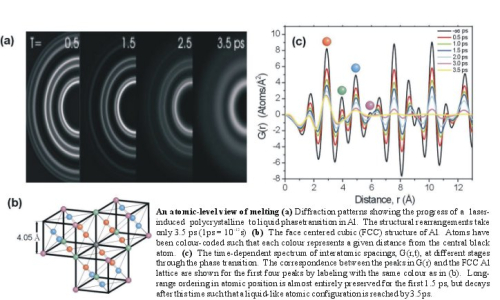
Bradley J. Siwick is an Associate Professor in the Department of Chemistry at McGill University, holding the Canada Research Chair in Ultrafast Science (Tier II). He specializes in developing ultrafast electron-based techniques to study atomic and molecular dynamics in materials and chemical systems. His work bridges chemical physics, materials science, and condensed matter physics, focusing on structural dynamics, phase transitions, and nonequilibrium states. Education: B.A.Sc. (Engineering Physics, University of Toronto, 1997), M.Sc. (Physics, 1998), Ph.D. (Physics, 2004). Postdoctoral training at FOM-AMOLF Amsterdam (2004–2006). Awards: NSERC Doctoral Prize (2005). Research interests include ultrafast electron diffraction/scattering, electron-phonon coupling, and imaging transient structural changes. Techniques developed in his lab combine electron microscopy with ultrafast laser spectroscopy to observe atomic motions on femtosecond timescales. Key areas of study are phase transitions in materials (e.g., VO₂, cuprates), nanocomposites, and extreme states of matter using facilities like the Advanced Laser Light Source (ALLS). Recent articles highlight advances in momentum-resolved phonon dynamics, polaron formation, and ultrafast imaging of 2D materials. His lab, based in Otto Maass and Rutherford buildings, collaborates on frontier projects in nonequilibrium materials science. Advising: Leads the Siwick Research Group, focusing on graduate students in chemical physics and materials science. Grants: Supported by NSERC and Canada Research Chairs funding. Labs and facilities: Otto Maass 25 laboratory and ALLS (Varennes, Quebec) for high-power laser experiments.