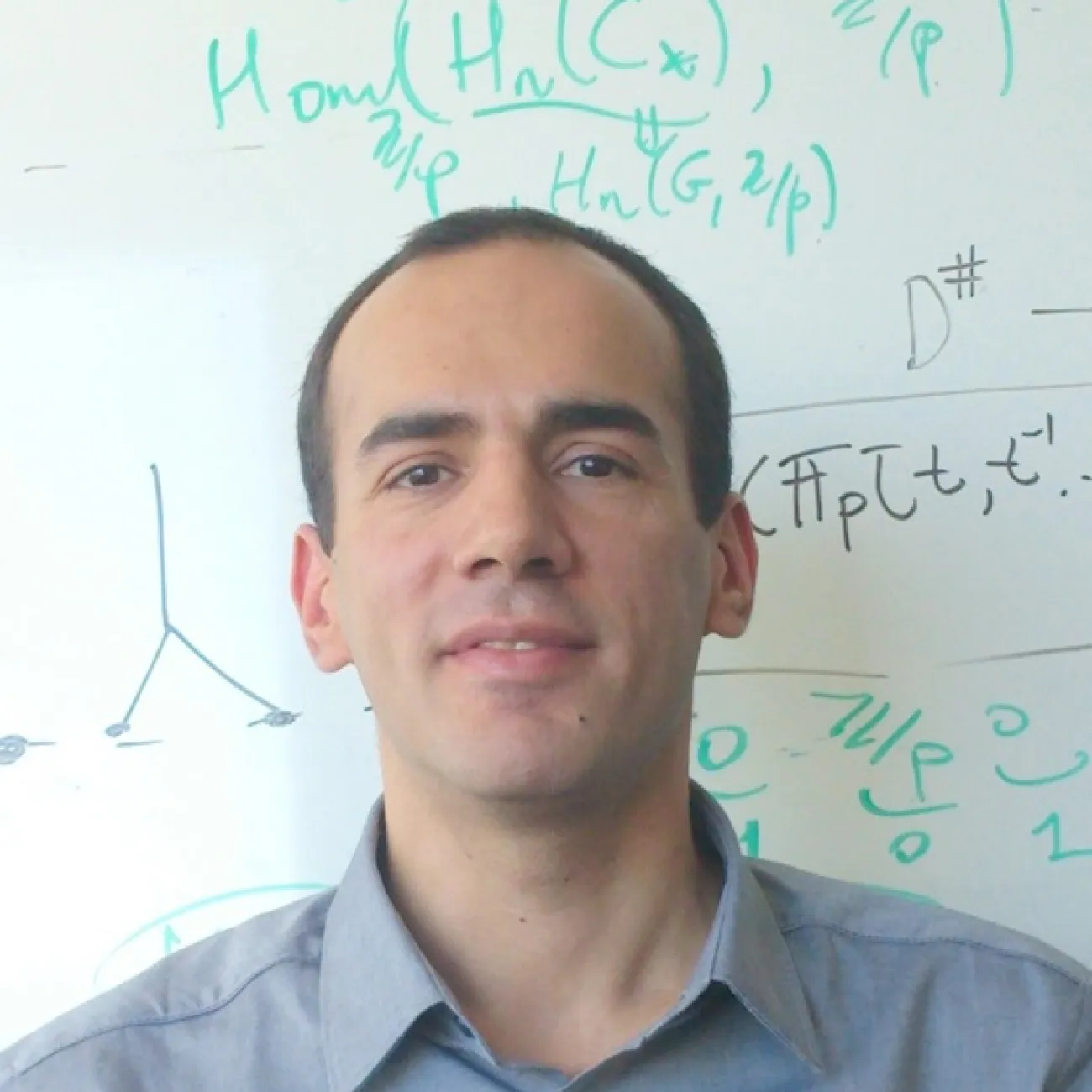
Emily BayerView profile
Assistant Professor
Emily Bayer is appointed as Assistant Professor of Neural Science and Biology at New York University, commencing January 2026. Her research program investigates neural mechanisms of visceral sensation and behavioral outputs, with emphasis on fertility status and sex differences using C. elegans and D. cerebrum (zebrafish) models. Her educational background includes: Ph.D. in Biological Sciences, Columbia University (2019) B.S. in Biology/German, Muhlenberg College (2014) Dr. Bayer's research explores how internal bodily sensations (visceral sensation) modulate behavior and environmental interaction, focusing on molecular and anatomical sex differences in neural circuits. Her lab examines how fertility status influences behavior through genetic and neural mechanisms, revealing conserved principles of neural circuit organization. Key approaches include C. elegans genetics, zebrafish neuroimaging, and behavioral analysis to dissect how reproductive state and sex converge in brain function. Analysis of her recent publications (2025-2016) demonstrates a cohesive focus on sexual dimorphism in neural development and behavior, with increasing integration of genomic and connectomic methodologies. Her work spans molecular genetics, neural circuit mapping, and behavioral phenotyping, consistently highlighting sex-specific differences in neural wiring and function across model organisms. Her scientific recognition includes: Research Fund for Excellent Junior Researchers (University of Basel, 2025) Jane Coffin Childs Memorial Fund for Medical Research Fellowship (2021-2023) Dr. Bayer has secured competitive fellowships supporting her independent research program. Her lab establishes innovative frameworks for studying visceral sensation-behavior relationships, with current work emphasizing monoaminergic signaling in experience-dependent neural plasticity and the role of conserved transcription factors in sexually dimorphic development. Future directions include expanding to vertebrate models to investigate evolutionary conservation of these mechanisms. She leads a research team utilizing C. elegans and zebrafish to dissect neural circuits underlying internal sensation, with particular focus on how fertility signals modulate social and mating behaviors through sex-specific neural pathways.