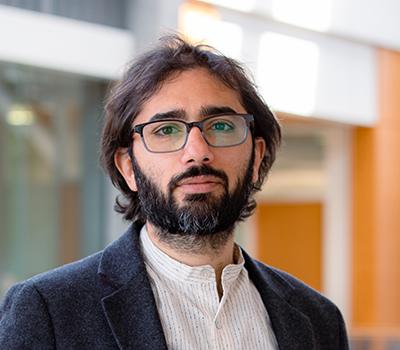
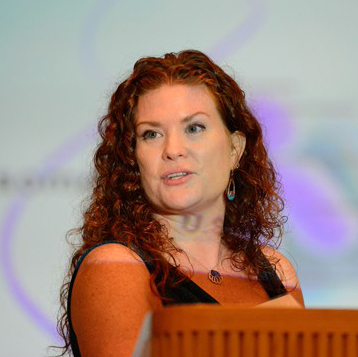
Tony Stillfjord is an Associate Professor at the Centre for Mathematical Sciences, Lund University, Sweden. He previously held postdoctoral positions at the Max Planck Institute for Dynamics of Complex Technical Systems and Chalmers/University of Gothenburg. Ph.D. and MSc in Numerical Analysis from Lund University Funded by WASP (Wallenberg AI, Autonomous Systems and Software Program) Research Interests : Numerical methods for partial differential equations, splitting schemes, stochastic optimization, and large-scale differential Riccati equations. His work focuses on developing low-rank approximations and robust optimization algorithms. Recent Publications highlight advancements in Lie/Strang splitting for operator-valued Riccati equations, stochastic descent methods, and GPU-accelerated splitting schemes. Software Contributions : Developed DREsplit (MATLAB package for differential Riccati equations) and BST20_CODE for stochastic optimization experiments. Contact : Office at MH:562E, Lund University. Email: tony.stillfjord@math.lth.se . URL: tonystillfjord.net
Jason Shahin is an Assistant Professor at the Department of Medicine , Faculty of Medicine and Health Sciences , McGill University . He serves as an Investigator at the Research Institute of the McGill University Health Centre (RI-MUHC) , specifically within the Translational Research in Respiratory Diseases Program . His academic and clinical work bridges critical care medicine and respiratory medicine at the McGill University Health Centre (MUHC) . Research Focus: Dr. Shahin specializes in risk prediction in intensive care units (ICU) , with particular emphasis on prediction tools for complex populations , including the chronic critically ill and potential organ donors . His work integrates clinical data science with translational approaches to improve ICU outcomes. Article Trends: His publications span critical care medicine , sepsis , mechanical ventilation , and organ donation . Recent studies focus on machine learning applications , probiotics in infection prevention , and blood conservation strategies in ICU settings. Key Collaborations: He contributes to large-scale trials like the LOVIT , PROSPECT , and FORECAST studies, collaborating with networks such as the Canadian Critical Care Trials Group and REVA Network .
Elena Grigorescu is an Adjunct Associate Professor in the Department of Computer Science at Purdue University, where she has been a faculty member since Fall 2012. Her research program spans theoretical computer science with a focus on foundational algorithmic challenges in large-scale data processing and computational limits, maintaining strong connections to cryptography, communications, and optimization applications. Her educational background includes a PhD from the Massachusetts Institute of Technology (MIT), establishing her expertise in rigorous theoretical frameworks. Professor Grigorescu's research emphasizes designing algorithms that operate in sublinear time or space for massive datasets, analyzing complexity of error-correcting codes and lattices, and exploring information-theoretical computation limits. Current investigations integrate differential privacy with learning-augmented techniques to solve online optimization problems, network design challenges, and data stream processing bottlenecks. Her work bridges abstract theory with practical implementations in cryptographic systems and quantum computing paradigms, demonstrating consistent innovation in algorithmic foundations. Analysis of her recent publications (2022-2025) reveals a dominant focus on sublinear-time algorithms, particularly at the intersection with differential privacy and machine learning augmentation. Key contributions include novel spanner constructions for network design, privacy-preserving clustering frameworks, and breakthroughs in trace reconstruction and coding theory. A pronounced trend shows increasing integration of learning-based predictions to enhance classical online algorithms for packing/covering problems while maintaining theoretical guarantees, alongside sustained contributions to error-correcting code analysis and graph-theoretic foundations. No specific scientific awards or major fellowships were documented in the provided materials, though her publication record in premier venues like STOC, FOCS, and APPROX/RANDOM indicates significant peer recognition. Professor Grigorescu actively mentors graduate students in theoretical computer science research, guiding investigations in sublinear algorithms, complexity theory, and coding theory. Her collaborative projects involve interdisciplinary teams across institutions, focusing on cryptographic applications and quantum information theory, though specific grant details were not included in the source texts. Ongoing work suggests expansion into quantum algorithm design and privacy-preserving machine learning frameworks. While dedicated laboratory facilities were not specified, her research operates within Purdue's theoretical computer science group, leveraging university-wide computational resources and fostering collaborations through conference participation and workshop organization.
Dr. Yazhen Zhu is an Assistant Professor and Research Pathologist at the David Geffen School of Medicine , University of California, Los Angeles (UCLA). She is affiliated with the Crump Institute for Molecular Imaging and the Department of Molecular and Medical Pharmacology . In addition to her academic role, she co-directs the liquid biopsy laboratory at UCLA, where she leads translational research programs in cancer and prenatal diagnostics. Education: MD, Wuhan University (2005) PhD in Pathology, Fudan University (2010) Residency in Pathology, Guangdong Provincial Hospital of TCM (2012) Research Interests: Dr. Zhu’s research focuses on the development and clinical translation of liquid biopsy-based diagnostic platforms . Her work explores the potential of circulating rare cells and extracellular vesicles (EVs) for noninvasive cancer and prenatal diagnostics. She has pioneered the use of click chemistry and nanosubstrates to enrich tumor-derived EVs and circulating tumor cells (CTCs), enabling high-sensitivity detection of oncogenic mutations and gene expression profiles. Her translational programs involve close collaboration with clinicians across multiple departments at UCLA and Cedars-Sinai Medical Center. Scientific Contributions: Dr. Zhu has published extensively on novel diagnostic assays for hepatocellular carcinoma, prostate cancer, ovarian cancer, and placental disorders. Her work spans from single-cell profiling and spatial transcriptomics to CRISPR-based gene therapy , reflecting a broad and integrative approach to precision medicine. Research Collaborations & Labs: She co-directs the Liquid Biopsy Laboratory at UCLA, which serves as a hub for interdisciplinary research involving molecular imaging, pharmacology, and clinical pathology. The lab collaborates with departments such as Liver Transplant Surgery, Pancreatic Cancer Surgery, Thyroid Surgery, Medical Oncology, and Maternal-Fetal Medicine.
Christian Becker is an Associate Professor in the Department of Dermatology at the University of Münster, where he leads the Becker Research Group focused on "Adaptive and innate T cell Immunity." His work bridges immunology, dermatology, and vascular biology, with particular emphasis on understanding T cell responses in inflammatory conditions and thrombosis. Dr. Becker's research interests include: T cell function and differentiation Myeloid cell differentiation Nanoparticle-mediated tumor therapy Humanized mouse models Regulatory T cells in tissue repair Monocytes in chronic venous insufficiency His recent work has explored how cyclic adenosine monophosphate (cAMP) serves as a signaling messenger in immune regulation, how specialized regulatory T cells control venous blood clot resolution through SPARC, and how nanoparticle-based therapies can be used for melanoma treatment. His research combines molecular immunology with translational approaches to develop novel therapeutic strategies for inflammatory and thrombotic conditions. Dr. Becker has published extensively in high-impact journals including Nature Communications, Blood, and Circulation Research. His publication record demonstrates a consistent focus on the intersection of immunology and vascular biology, particularly examining how T cells and monocytes interact in thrombotic and inflammatory conditions across multiple disease contexts. His laboratory recently relocated from Mainz to Münster, where he continues to expand his research program. Dr. Becker actively mentors doctoral student Doğa Uncuer and master's student Friederike Pauline Neesen, and is seeking additional talented scientists to join his team.
Prof. Dr. Hartmut Ruhl is a Professor (chair) at the Faculty of Physics of Ludwig-Maximilians-Universität München (LMU Munich), with his office located at Theresienstrasse 37, Room A237 in Munich, Germany. He leads an active research group focused on high field physics and quantum electrodynamics, particularly investigating radiation reaction, vacuum effects, and strong field phenomena. Prof. Ruhl's research spans several cutting-edge areas of theoretical and computational physics. His primary interests include high field physics, quantum electrodynamics in strong fields, radiation reaction effects, vacuum polarization phenomena, and computational methods for solving complex physical systems. He has made significant contributions to understanding the Heisenberg-Euler effective Lagrangian, vacuum high harmonic generation, and the Trident process for electron-positron pair production. His work combines theoretical developments with advanced numerical simulations to explore physics in extreme electromagnetic field conditions. Prof. Ruhl's publication record demonstrates consistent focus on nonlinear quantum electrodynamics in strong fields. His work spans theoretical developments in radiation reaction, numerical methods for solving Heisenberg-Euler equations, and investigations of vacuum effects like high harmonic generation and pair production. A recurring theme is the exploration of quantum vacuum nonlinearities and their observable consequences in high-intensity laser-matter interactions. Prof. Ruhl actively supervises PhD students in high field physics, requiring profound knowledge in quantum transport theory and advanced programming. His group seeks candidates who have completed his courses in Relativistic Quantum Theory and Advanced Programming. He co-organizes the seminar 'Selected Topics in Computational Physics' with Prof. A. Scrinzi, serving as a platform for master's and PhD students interested in computational plasma physics. Prof. Ruhl is associated with the Advanced Simulation Center (ASC) at LMU Munich, as indicated by room locations in his teaching schedule. He collaborates closely with Prof. A. Scrinzi on computational physics topics and is involved with the PSC (Plasma Simulation Code) project. His research group develops specialized numerical solvers for nonlinear wave equations based on the Heisenberg-Euler effective Lagrangian, contributing to the understanding of quantum vacuum effects in extreme field conditions.
Prof. Dr. Katrien De Bock is a Full Professor and Deputy Head of the Department of Health Sciences and Technology at ETH Zurich. Her research focuses on angiogenesis, metabolic crosstalk in muscle microenvironments, and the impact of exercise on muscle regeneration. She leads a team investigating cellular interactions in skeletal muscle, particularly how metabolic signals regulate blood vessel growth and muscle repair. Key areas include understanding fibroadipogenic progenitors' role in muscle physiology, the role of histamine in exercise responses, and age-related muscle decline. Her work integrates molecular biology, single-cell transcriptomics, and computational approaches to dissect mechanisms underlying tendon pathologies, ischemic muscle injury, and metabolic adaptations to exercise. She supervises Master's programs in Human Movement Science and collaborates on projects involving muscle stem cell therapies and vascular engineering. Prof. De Bock also explores interventions like NAD+ precursors to counteract age-related sarcopenia and promotes translational research in regenerative medicine. Research Interests: Exercise-induced metabolic pathways in muscle repair Angiogenesis regulation in health and disease Hypoxia signaling in tendons and muscles Epigenetic modifications during tissue regeneration Stem cell fate determination in muscle microenvironments Notable Projects: Developing AI-driven histologic analysis for tendinopathy diagnosis Mapping the human brain vasculature at single-cell resolution Testing sulfur amino acid restriction to enhance exercise capacity
Charles Gillan is a Senior Lecturer at Queen's University Belfast's School of Electronics, Electrical Engineering and Computer Science, affiliated with the High Performance and Distributed Computing department and the Institute of Electronics, Communications & Information Technology. His research bridges HPC systems, AI applications in healthcare, and computational physics. Key projects include managing ICU patient care via neural networks, exascale-ready mathematical packages, and edge computing architectures. Research interests focus on high-performance computing (HPC), quantum computing, real-time data analytics, and electron-molecule scattering simulations. Notable contributions include developing microserver architectures for edge analytics and advancing AI-driven clinical decision support systems. Gillan has collaborated on interdisciplinary projects like food authenticity testing using spectroscopy and improving ventilator management in intensive care units. Publications span AI in healthcare, HPC system design, and computational methods for physics problems. He has secured funding for initiatives such as the KTP partnership with Foods Connected Ltd and the HANDHELD olfactory detection project. Gillan's work emphasizes practical applications of advanced computing across healthcare, engineering, and cybersecurity domains.
Aleksandra Slavković is a Professor of Statistics and Associate Dean for Graduate Education at Pennsylvania State University's Eberly College of Science. She holds a PhD in Statistics from Carnegie Mellon University (2004) and has held academic roles since 2004, including appointments at the Institute for Computational and Data Sciences and Penn State College of Medicine. Her research focuses on statistical data privacy, differential privacy, algebraic statistics, and applications in social and health sciences. She has authored over 50 peer-reviewed publications and serves on editorial boards of top journals like Journal of Privacy and Confidentiality and Annals of Applied Statistics . Slavković has received major honors including Fellowships from the Institute of Mathematical Statistics (2021) and American Statistical Association (2018). She leads initiatives to enhance graduate education, including the Science Achievement Graduate Fellows Program, and actively promotes diversity in STEM through her leadership roles. Her recent work emphasizes privacy-preserving techniques for genomic, healthcare, and network data, with contributions to synthetic data generation and secure multiparty computation protocols. Her academic service includes chairing ASA committees and advising at the National Academy of Sciences. She maintains collaborative ties with institutions like Cornell University and UC Berkeley through visiting scholar programs, and her research bridges statistics, computer science, and applied mathematics.
W. Patrick Hooper serves as Professor, Chair, and Majors Advisor in the Department of Mathematics at City College of New York, part of the City University of New York system. He maintains a dual appointment as Math Doctoral Faculty at the CUNY Graduate Center, where he holds office in Room 4217.02 and can be reached at 212-817-8567. Hooper completed his undergraduate studies in mathematics at the University of Maryland, where he participated in the Experimental Geometry Lab. He earned his PhD in 2006 from Stony Brook University under Yair Minsky, focusing on billiards in polygons and their connections to Teichmüller theory. Following approximately three years as a Boas Assistant Professor at Northwestern University, he joined City College in spring 2010. His research centers on dynamical systems defined by piecewise continuous maps that preserve geometric structure away from discontinuities. By studying piecewise continuous isometries, Hooper explores richer classes of dynamical systems that reveal novel phenomena beyond the constraints of continuous isometry groups. His work frequently connects to geometry through interval exchange maps and their relationship to Teichmüller theory, examining how discretization creates new dynamical behaviors bridging geometric and dynamical perspectives. Analysis of Hooper's publication record shows consistent advancement in understanding infinite translation surfaces and their ergodic properties, with recent work extending to prism geometries and stellar foliation structures. His research demonstrates increasing sophistication in connecting abstract dynamical systems to concrete geometric constructions, particularly through the lens of cube surfaces and periodic structures. Professor Hooper has mentored students including Kadar He, who recently advanced to the PhD program at CUNY's Graduate Center. His research has been presented at numerous international conferences including at the Hausdorff Institute in Bonn, Germany, and the Fields Institute in Toronto. The IT-ROCS REU program at CCNY, mentioned in August 2025 news, likely represents current undergraduate research initiatives he oversees. His mathematical image gallery showcases the visual dimension of his research, featuring eigenfunction curves, quasi-periodic truchet tilings, and the Necker cube surface, demonstrating how geometric visualization informs his theoretical work in dynamical systems.
Houssam Abbas is an Assistant Professor in the School of Electrical Engineering and Computer Science at Oregon State University. He holds a Ph.D. in Electrical Engineering from Arizona State University and has professional experience in SoC verification at Intel and postdoctoral research at the University of Pennsylvania. His work focuses on computational ethics for AI agents, design/verification of cyber-physical systems, and autonomous systems like self-driving cars and drones. Education: Ph.D., Electrical Engineering, Arizona State University (2015) M.Sc., Electrical Engineering, Arizona State University (2006) B.Eng., Computer and Communications Engineering, American University of Beirut (2004) Abbas' research integrates deontic logic for ethical obligations in AI, distributed verification techniques for autonomous systems, and fair control algorithms for aerial missions. He co-leads the F1/10 autonomous racing initiative and teaches hands-on courses on self-driving cars. Awards: 2022 NSF CAREER Award 2022 Grainger Foundation Frontiers of Engineering Symposium Participant Grants & Projects: NSF CCRI Grant for F1/10 Racecar platforms (with Penn and Clemson) FAA ASSURE project on UAV cybersecurity Lab/Teams: His work involves the Autonomous Systems Lab , focusing on ethical AI, robotics, and formal verification tools like the F1/10 platform.
Dr. Christopher Adams is an Assistant Professor of Tree Fruit Entomology at Oregon State University's Mid-Columbia Agricultural Research and Extension Center (MCAREC) in Hood River. His research focuses on managing pests of pear and cherry crops, including invasive species like spotted wing drosophila and brown marmorated stink bug. He holds a Ph.D. in Entomology from Michigan State University (MSU) and completed a postdoctoral fellowship there, where he developed IPM strategies for codling moth control through sterile insect release. His work emphasizes applied entomology, biocontrol, and grower collaboration. Education: Ph.D. in Entomology (Michigan State University, 2016) Post-doctoral Research Assistant (MSU Tree Fruit Entomology Lab, 2016–2019) Research Interests: Dr. Adams studies pest ecology, trapping techniques, and sustainable IPM solutions. His lab investigates the landscape ecology of pear psylla, X-disease vectors in cherries, and biocontrol methods for invasive species. He collaborates with growers and extension specialists to translate research into actionable field practices. Awards: Robert Driesbach Award (2016) Dr. Eugenia McDaniel Teaching Award (2013) ESA YouTube Award (2012) Teaching & Outreach: He mentors students in field research and extension activities, emphasizing hands-on learning. His teaching excellence has inspired students to pursue entomology careers. He contributes to OSU Extension guides on pest management and regularly presents at grower workshops. Labs & Teams: Leads the MCAREC Entomology Program, collaborating with regional stakeholders to address tree fruit pest challenges. Active in the Pacific Northwest codling moth task force and international IPM initiatives.
Abbas Momeni is a Full Professor in the Department of Mathematics & Statistics at Carleton University, affiliated with the School of Mathematics and Statistics. His research focuses on Partial Differential Equations, Nonlinear Analysis, and Optimal Mass Transportation. He actively supervises graduate and undergraduate students through programs such as Honours Projects (MATH 4905), NSERC USRA, and I-CUREUS, offering opportunities in optimization, differential equations, and optimal mass transportation topics. He holds a Ph.D. and maintains office hours at room 4249 HP. His professional affiliations include the American Mathematical Society (AMS), Canadian Mathematical Society (CMS), and Society for Industrial and Applied Mathematics (SIAM). Contact him via email for academic inquiries.
Rachel O'Neill serves as a Board of Trustees Distinguished Professor in the Department of Molecular and Cell Biology at the University of Connecticut's College of Liberal Arts and Sciences. Her research bridges molecular genetics, cytogenetics, and computational genomics to investigate fundamental mechanisms of genome stability and evolution across diverse eukaryotic species. Her primary research interests focus on retroelement transcription, centromere function, chromosome evolution, and species-specific genomic adaptations. O'Neill's lab pioneers telomere-to-telomere (T2T) genome assembly methodologies using next-generation sequencing technologies, establishing non-traditional model organisms including marsupials, monotremes, birds, marine species, plants, and insects for comparative genome biology studies. Human Telomere-to-Telomere Consortium Primate T2T Consortium Gibbon T2T Consortium Earth Biogenomes Project Ruminant T2T Consortium Fly T2T Consortium Deep Ocean Genomes Project Antarctic Genomes Consortium Colossal Foundation UConn’s Biodiversity and Conservation Genomics program O'Neill's recent publications (2021-2025) demonstrate leadership in large-scale genomics initiatives, with significant contributions to understanding centromere biology, sex chromosome evolution, and conservation genomics. Her work spans marsupial mole genomics, ruminant chromosome evolution, and epigenetic regulation of X-chromosome inactivation, reflecting her lab's broad impact across evolutionary biology, conservation, and fundamental genome science. Her laboratory actively trains students through cohort-based programs including the RaMP Cohort and Biodiversity and Conservation Genomics Program, securing substantial collaborative funding through multi-institutional consortia. The lab maintains strong infrastructure for advanced genome assembly and epigenomic analysis, with particular expertise in challenging repetitive regions and non-model organism genomics.
Prof. Karl Kunisch is the Scientific Director at RICAM (Johann Radon Institute for Computational and Applied Mathematics) and a Full Professor of Mathematics at the University of Graz, Austria. He has held academic positions worldwide, including visiting roles at Brown University, INRIA, and Technical University Berlin. His research focuses on Optimization and Optimal Control, Partial Differential Equations (PDEs), Inverse Problems, and their applications in mathematical imaging, medicine, and computational science. Education: 1975: Diploma Degree, Technical University of Graz, Austria 1975: Master Degree, Northwestern University, Evanston, Illinois, USA 1978: Ph.D. Degree, Technical University of Graz 1980: Habilitation, Technical University of Graz Research Interests: Prof. Kunisch’s work spans theoretical and applied aspects of optimal control, including stabilization of PDEs, infinite horizon control problems, and feedback design. He explores numerical methods for PDE-constrained optimization and their applications in medical imaging, cardiac electrophysiology, and machine learning. His projects also address shape optimization and mathematical models for fluid dynamics and quantum systems. Publications Trends: His recent articles emphasize feedback stabilization for nonlinear systems, sparse control approaches, and the intersection of optimal control with machine learning. Key themes include robust algorithms for uncertainty handling, efficient numerical methods for high-dimensional problems, and applications in biomedical engineering. Awards: Pro Scientia-Scholarship (1974–1977) Research Award of Theodor-Körner-Fonds (1979) Fulbright Travel Scholarship (1979/80, 1985) Max Kade Scholarship (1982–83) Japanese Society for the Promotion of Science Fellowship (1990) Christian Doppler Laboratory Fellowship (1992) Advising & Grants: Prof. Kunisch leads the Optimization and Optimal Control research group at RICAM and has directed projects on mathematical data science and inverse problems. His work involves collaborations with institutions globally and has been supported by grants from NASA, the European Union, and national funding bodies. He has advised numerous researchers, though specific student names are not listed here. Labs/Teams: Group Leader of the Group "Optimization and Optimal Control" at RICAM since 2004, contributing to interdisciplinary research in computational mathematics and its applications.