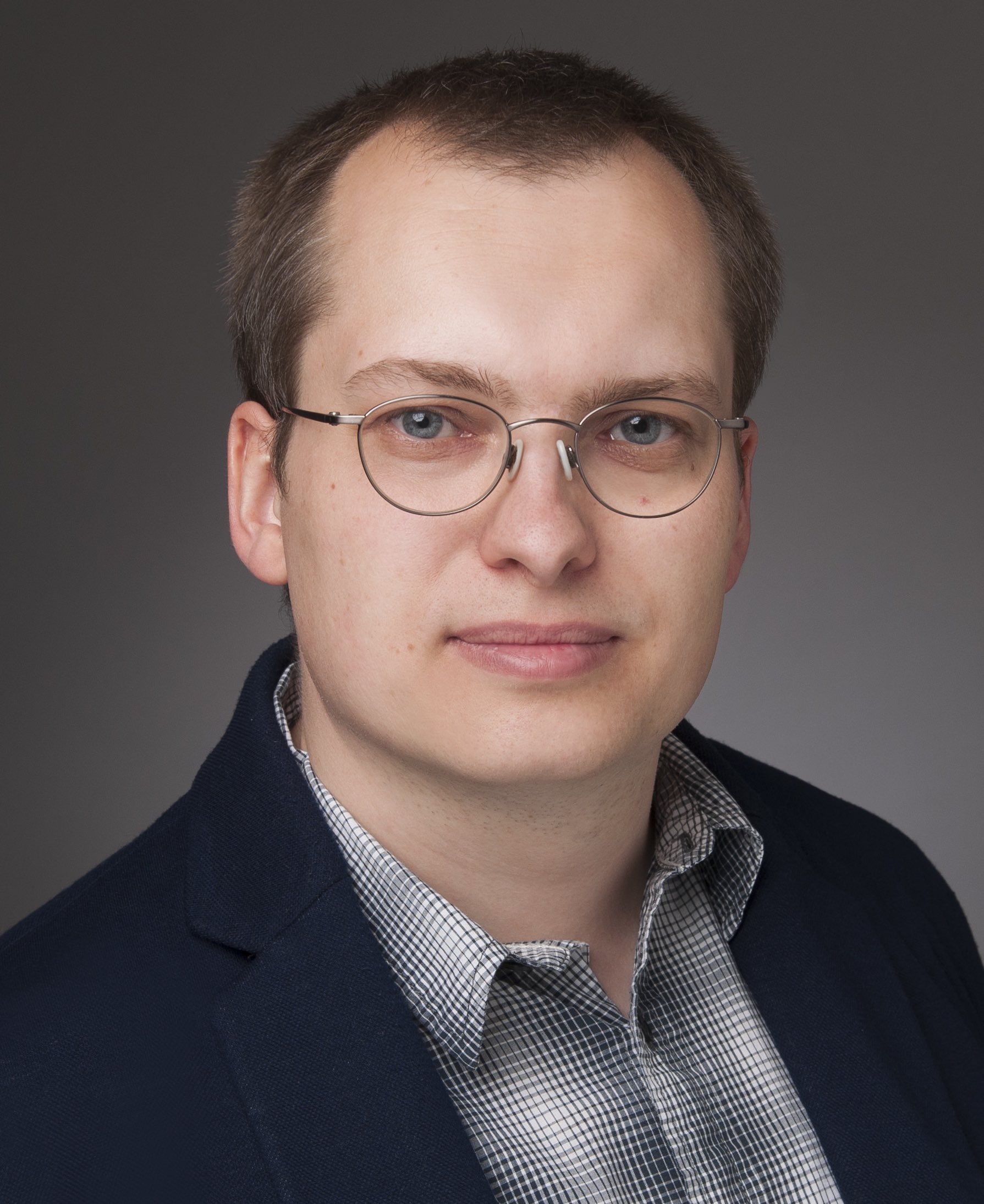
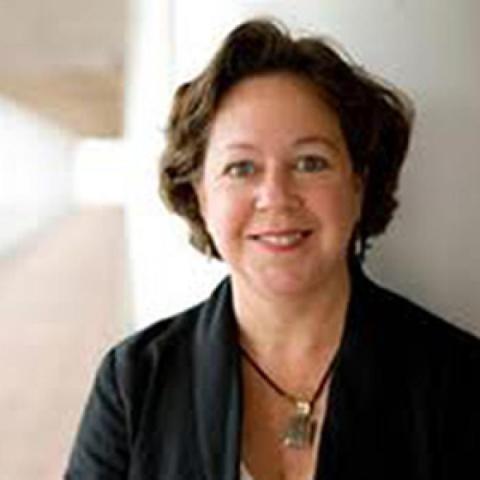
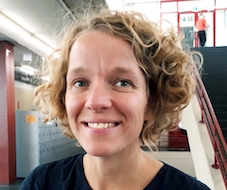
Jenni Marjokorpi is a University Lecturer in Finnish Language and Literature Didactics at the Department of Education, University of Helsinki. She holds a PhD in Educational Sciences from the University of Helsinki (2023) and a Master of Arts (2015). Her work focuses on disciplinary literacy, multilingual education, and the role of grammar in language learning. Key research themes include assessment tools for newly arrived students, dialogic pedagogy, and ethical approaches to teaching controversial topics. Recent projects include leading the 'Valu' project developing disciplinary literacy assessment tools for immigrant pupils, and the 'Difficult Topics and Dialogue in Education' initiative exploring classroom discourse dynamics. She has been a visiting scholar at Stockholm University (2024) and actively collaborates with European educational researchers. Her awards include the 2023 Kotikielen Seuran article prize and 2024 Työyhteisöteko award for team research excellence. Marjokorpi has held adjunct roles at Tampere University (2023) and Aalto University (2022-2023). Her research bridges theory and practice, often involving teacher communities in co-creating pedagogical solutions. Current interests include sociolinguistic aspects of education and the impact of pandemic-era teaching innovations.
Ryan Ka Yau Lai is a PhD candidate at the University of California, Santa Barbara (expected Spring 2025), and will join the University of Georgia as an Assistant Professor in their Department of Linguistics starting Fall 2025. He holds a Bachelor’s degree in General Linguistics and Statistics from the University of Hong Kong, where he contributed to psycholinguistics and phonology research at the Language Development Lab. His research focuses on the intersections of grammar, discourse, and prosody, employing computational and corpus-based methods alongside theoretical frameworks such as dialogic syntax, construction grammar, and Columbia School linguistics. Key research areas include Tibetan light verb constructions, Cantonese causative-resultative structures, and historical analyses of Literary Chinese. He emphasizes integrating quantitative methods, including latent class analysis, information theory, and algorithmic techniques like clustering, while advocating for interdisciplinary approaches to linguistics. His work bridges functionalist traditions with experimental and corpus-driven methodologies. Ryan has received a Humanities and Social Science Dissertation Grant (2024) and actively presents at conferences, including the Society for the Study of Indigenous Languages of the Americas and the Linguistic Society of America. He co-developed the rezonateR R package for discourse analysis. His future projects aim to advance model-based approaches in syntax and refine quantitative methods for linguistic data operationalization.
David Sanchez Jimenez is an Associate Professor in the Department of Humanities at City Tech CUNY, School of Arts & Sciences. He specializes in Spanish Applied Linguistics, focusing on academic discourse analysis, intercultural rhetoric, and Spanish language teaching. Ph.D., Universidad Antonio de Nebrija: Applied Linguistics (Teaching of Spanish as a Foreign Language) M.A., Universidad de Salamanca: Teaching of Spanish as a Foreign Language B.A., Universidad de Salamanca: Spanish Philology His research explores: Academic text composition by non-native Spanish postgraduate students Rhetorical functions of citations in academic writing Intercultural rhetoric and gender analysis Heritage language learners' written production Authorial voice construction and metadiscourse Politeness and persuasion in academic Spanish Recent publications analyze cross-linguistic citation patterns, metadiscourse in Spanish academic writing, and intercultural communication challenges. He teaches courses ranging from elementary Spanish to advanced academic communication for heritage speakers.
Prof. Dr. Ümit Güz serves as a full-time Professor in the Department of Electrical and Electronics Engineering at Işık University's Faculty of Engineering and Natural Sciences. With over two decades of academic experience, his expertise spans biomedical signal processing, speech technology, and machine learning applications. Education: Post-Doc (2006-2007): SRI International, Menlo Park, CA - Speech Technology and Research Laboratory Post-Doc (2007-2008): UC Berkeley, International Computer Science Institute PhD (1997-2002): Istanbul University, Electronics Engineering MSc (1995-1997): Istanbul University, Electronics Engineering BSc (1990-1994): Istanbul University, Electrical-Electronics Engineering Associate Degree (1988-1990): Yıldız Technical University, Computer Programming His research centers on multimodal biometric systems using ECG and speech signals, medical image compression techniques, and Turkish language processing. Key innovations include SYMPES speech modeling framework and quadtree-based energy pattern blocks for biomedical image compression. His work bridges theoretical signal processing with practical healthcare and security applications. Publication trends reveal consistent focus on biometric identification (fingertip ECG/speech fusion), efficient compression algorithms for medical data (ECG/EEG/images), and semi-supervised learning for Turkish sentence segmentation. Recent work emphasizes multi-view learning strategies and deep neural network integration in compression systems. Scientific Awards: J. William Fulbright International Fellow (Postdoc Scholar Program, USA) Overseas Postdoctoral Research Award (TÜBİTAK BİDEB, Turkey) Prof. Güz has supervised 9 master's theses and 2 PhD dissertations on biometric recognition, speech compression, and medical image processing. His research is supported by TÜBİTAK grants including Project No 107E182 (Turkish spoken language processing) and Project No 10A301 (ECG-based biometric recognition). He actively contributes to IEEE and IEICE as a longstanding member.
Vittorio Tantucci is a Senior Lecturer in Linguistics and Chinese Linguistics at the School of Social Sciences, Lancaster University . His research bridges theoretical and applied linguistics, focusing on pragmatics, cognitive linguistics, and cross-cultural communication. Research Interests: Intersubjectivity, theory of mind, facework, resonance in dialogue, grammaticalization, and pragmatic markers across typologically diverse languages. Methodology: Corpus-driven analysis, machine learning (R-based), typological comparisons, and questionnaire-based studies. His recent work explores linguistic imitation as engagement, empathy, and creativity indicators, particularly in Mandarin Chinese and other Sinitic languages. Articles focus on computational pragmatics, second language testing, online impoliteness reciprocity, and aspectual constructions in Chinese dialogue. Scientific Awards: Prize for research on Interpersonal Evidentiality PhD Supervision: Minyue Wang. He is affiliated with research groups including DisTex , Cognitive Linguistics Research Group , and UCREL .
Serenella Baggio is a Full Professor of Italian Language History at the Department of Literature and Philosophy of the University of Trento. She has been at the University of Trento since 2002, initially as Associate Professor and since 2021 as Full Professor. She coordinates the Italian Writing courses and has been a member of the doctoral school 'Le forme del testo' since 2002, while also supervising numerous master's and doctoral theses through double-degree programs with institutions like Technische Universität Dresden and University of Augsburg. Baggio earned her Bachelor's Degree from the University of Padua with a thesis on 'Color and Word between the Middle Ages and the Renaissance' (1978). She obtained her Postgraduate Diploma in Modern Philology (1987) and Doctorate in Romance and Italian Philology (1987), both from the University of Padua. Her academic journey included teaching Italian at the University of Würzburg (1979-1983) and in Italian high schools (1984-2001) before joining the University of Trento. Professor Baggio's research focuses on the language of non-literary texts and the comparison between literary and non-literary language from the origins to the 20th century. Her work spans multiple areas including: color terminology (cromonimia), artistic lexicon between Middle Ages and Renaissance, popular literature, popular writings (letters, diaries, memories from migration and WWI), medical vernacularizations, medieval lapidaries, Boccaccio's Decameron, medieval syntax, regional languages, linguistic atlases, language contact, and Trentino dialects. She has made significant contributions to the study of popular writing through archives like the Cinquetti Archive and psychiatric hospital archives in Trentino. Her research bridges historical linguistics with sociolinguistic perspectives, often focusing on marginalized voices and non-standard language varieties. Her recent publications (2019-2021) demonstrate continued engagement with historical linguistics, particularly focusing on WWI language documentation, Trentino's linguistic heritage, and the analysis of spoken language in historical texts. She has worked extensively with sound archives like the Phonogrammarchiv in Vienna, examining historical recordings of Italian dialects. Her publications show a consistent pattern of interdisciplinary work connecting linguistic analysis with historical, anthropological, and sociological perspectives. Baggio has coordinated significant research projects including an Erasmus program with UBO-Brest, France, and a DFG project with TU Dresden on Italian manuscript collections. Her work with IPRASE on monitoring linguistic competencies and with the Trentino Popular Writing Archive demonstrates her commitment to applied linguistics and community engagement. She has been actively involved in creating linguistic laboratories across Trentino through the 'Formare formatori' project and has contributed to the establishment of the Trentino Giscel group. Her collaboration with museums and cultural institutions, particularly on popular writings and historical archives, shows her dedication to making linguistic research accessible beyond academia. She has organized numerous conferences including 'Lingue naturali, lingue inventate' (2019) and 'Lingua franca, lingue franche' (2021), and has participated in academic radio programs like 'La lingua batte' (Radio3, 2017) and 'Zazà' (Radio3, 2020), demonstrating her commitment to public scholarship.
Heidi Brøseth is an Associate Professor in Norwegian Didactics at the Department of Teacher Education, NTNU. She holds a PhD and has served in various academic leadership roles, including membership in the Nordic network GRADIMO and the GrammaKiKK research group. Her research focuses on grammar didactics, generative grammar applications in education, and teacher training in linguistics. Notable awards include the SINTEF Prize for Pedagogical Excellence (2012/13) and recognition as a Merittert Underviser (NTNU). Educational background includes a Postdoctoral fellowship (2007–2009) and PhD studies (2003–2007) at NTNU. She has led projects like PROSJEKTIL (innovative teacher education) and KOSEN (comparative language analysis). Her teaching focuses on inquiry-based methods and Socratic dialogue to enhance students' grammatical reasoning. Research interests span grammar teaching methodologies, teacher knowledge assessment, and the cognitive foundations of linguistic structures. She has authored/co-authored textbooks such as Språket som system: Norsk språkstruktur (2019) and contributed to international conferences on grammar didactics. Current work emphasizes bridging theoretical linguistics with practical classroom applications. Publications highlight her analysis of textbook grammar terminology, student teacher misconceptions, and generative grammar frameworks in Norwegian education. She actively collaborates with Nordic institutions and has supervised multiple master’s theses on topics like possessive phrases in Norwegian as a second language and temporal aspects in deaf sign languages.
Marja Etelämäki is an Associate Professor at the University of Oslo , specializing in Nordic Languages . Her academic work focuses on the intersection of interaction and grammar, with particular emphasis on intersubjectivity, agency in interaction, and reference mechanisms. As a scholar, she teaches courses such as: RETKOM1102 - Text and Communication RETKOM2102 - Conversation Analysis RETKOM4122 - Conversation Analysis 1 SPR4110 - Language and Communication in a Multicultural Society LING4170 - Linguistic Specialization on Structure and Form NOR4100 - Scientific Theory and Method in Nordic Linguistics Her research explores how everyday interactions are structured through grammatical and pragmatic elements, particularly in Finnish. Key areas include: Intersubjectivity in conversational design Directive turn-taking and resistance negotiation Clause chaining for joint action formation Demonstrative pronouns as interactional tools Agency distribution in therapeutic communication Anticipatory completions in narrative contexts Recent publications (2021) examine collective identity formation, non-cooperative alignment strategies, and therapeutic discourse. She is a member of the Conversation Analysis and Interactional Linguistics research group and has contributed to Superlinguistics studies.
Sebastian Sauppe is a Senior Assistant and Ambizione Fellow at the University of Zurich's Department of Psychology, where he leads the research area 'Cognitive and Developmental Neuroscience of Language' within the Developmental Psychology: Infancy and Childhood unit. His work bridges language processing, cognitive neuroscience, and ontogenetic development, with fieldwork conducted on under-researched languages including Äiwoo in Solomon Islands. Education: Recipient of Max Planck Society's Otto Hahn medal for psycholinguistic dissertation work Current Roles: SNSF Ambizione grant holder, National Geographic Explorer Dr. Sauppe's research focuses on linguistic diversity and language processing , examining how grammatical structures interact with real-time comprehension and production. His work on incremental processing investigates neural mechanisms of sentence construction, while event cognition studies explore how language shapes semantic role representation. He also examines child development of language-cognition interfaces and interactive language use in social contexts. His methodology combines mobile EEG, eye-tracking, and behavioral paradigms across diverse linguistic environments. Analysis of his recent publications reveals strong emphasis on cross-linguistic validation of processing principles (particularly agent preference phenomena), neural correlates of syntactic variation, and methodological innovation in field psycholinguistics. His work consistently bridges theoretical linguistics with cognitive neuroscience, with increasing focus on developmental trajectories. National Geographic Explorer (awarded by National Geographic Society) Otto Hahn Medal (Max Planck Society for outstanding dissertation work) As an Ambizione grant holder, Dr. Sauppe leads independent research while mentoring junior researchers. His fieldwork in Solomon Islands demonstrates commitment to ecological validity and linguistic diversity. Current projects involve mobile EEG studies of language processing in naturalistic settings and cross-species comparisons of event cognition with great apes. His research group collaborates extensively across Europe and with field linguists worldwide, developing novel paradigms for studying language in under-documented contexts. Dr. Sauppe maintains active laboratory work at the University of Zurich while conducting periodic field expeditions. His team utilizes mobile neuroimaging equipment for cross-cultural studies and collaborates with primatology researchers on comparative cognition projects. The lab emphasizes methodological rigor in both controlled laboratory and naturalistic field settings.
Emily Zane is an Assistant Professor in the Department of Communication Sciences & Disorders at James Madison University (JMU), part of the College of Health Sciences (CHBS). Her research focuses on language acquisition, autism, and developmental language disorders. She holds a Postdoctoral Fellowship from Emerson College and advanced degrees from The Graduate Center, CUNY, and a B.A. from the University of Nevada, Las Vegas. Dr. Zane's work examines linguistic and social communication patterns in autistic individuals, including gaze behavior, pragmatic language use, and discourse processing. Her ReAL Lab (Research in Autism and Language Lab) explores how neurodivergent populations interact with social and linguistic contexts. Recent studies address topics like filler word usage, indirect request comprehension, and the relationship between mentalizing skills and communication. Her publications span 2013–2025, emphasizing neurodivergent communication dynamics and developmental language features. While no specific grants or awards are listed, her research consistently bridges clinical linguistics with cognitive and developmental psychology. Advising and student mentorship are integral to her academic activities.
Susan Staats, a Professor in the Department of Curriculum and Instruction at the University of Minnesota, is a cultural anthropologist whose work uniquely bridges mathematics education and linguistic anthropology. With a PhD in Cultural Anthropology from Indiana University (2003) and dual BS/MS degrees in Mathematics from Ohio State University, she applies interdisciplinary perspectives to enhance educational equity in mathematics classrooms. Key research contributions: Mathematical poetic discourse analysis Equity-focused concurrent enrollment pedagogy Social justice mathematics curriculum Her work has been recognized with the Janet Duffin Award (2018) and CEHD Distinguished Teaching Award (2019). She coordinates the College Algebra through Modeling course for over 4,000 underserved students and serves on editorial boards and curriculum advisory committees. Recent publications examine poetic methods in mathematics education, transgressive teaching in social justice contexts, and interdisciplinary approaches to mathematical discourse. Her service includes coordinating concurrent enrollment programs and contributing to the Council on Liberal Education. Major research themes: Dialogic mathematical discourse Equity in STEM education Interdisciplinary curriculum design Poetic analysis of classroom interactions Scientific awards: CEHD Distinguished Teaching Award (2019) Janet Duffin Award (2018) Excellence in Research Award (2016) Morse-Alumni Award (2013) Article of the Year Award (2009)
Shu-Ling Wu is an Associate Professor in the School of Languages and Linguistics at Southern Illinois University at Carbondale, specializing in Chinese language and cognitive linguistics research. She serves as Chinese Advisor and East Asian Section Head while directing the Foreign Language in the Professions (FLIT) program. Ph.D. in East Asian Languages and Literatures from University of Hawaii Previous teaching experience at University of Hawaii, Kapiolani Community College, Defense Language Institute, and West Point Her research focuses on Second language acquisition patterns Language testing and assessment methodologies Chinese linguistic structures and conceptualization Cognitive linguistics applications in language teaching Motion event expression development Pedagogical grammar innovations Recent publications examine Elicited imitation as proficiency measure Comparative analysis of English-Chinese parallel tasks Directional complement acquisition challenges Motion conceptualization across language groups Classical Chinese integration in modern instruction Bilingual aviation language training She has received ACTFL Research Priorities Initiative Grant CLTA Jiede Empirical Research Grant Language Learning journal funding Her teaching philosophy emphasizes cultural competence development and cross-linguistic dialogue, with notable textbook contributions including Mastering Advanced Modern Chinese through the Classics (2018) and Aviation Language in English and Chinese (2025).
John (Jack) Duff is a postdoctoral researcher at Saarland University’s Department of Language Science and Technology, working with Prof. Vera Demberg’s group on the ERC-funded project Individualized Interaction in Discourse since January 1, 2024. He will join UCLA’s Department of Linguistics as an Assistant Professor in Fall 2025. His research spans psycholinguistics, computational modeling, and cross-linguistic studies, particularly focusing on Santiago Laxopa Zapotec. Research Interests Psycholinguistics Computational Linguistics Discourse Analysis Pragmatics Cognitive Science Language Processing His recent publications highlight work on pragmatic reasoning, computational models of cognition, Zapotec language structures, and experimental analyses of comprehension dynamics. He earned his Ph.D. in Linguistics from UC Santa Cruz in 2023, advised by Pranav Anand and Amanda Rysling.
Cynthia Wall serves as the William R. Kenan, Jr. Professor in the Department of English at the University of Virginia, specializing in 18th-century British literature with particular expertise in Restoration-era studies, narrative theory, and spatial representation. Her scholarly contributions have fundamentally shaped understanding of landscape description, urban geography, and linguistic structures in early novels through award-winning monographs and extensive editorial work. Her academic foundation includes a Ph.D. in English from the University of Chicago (1992), an M.A. in English from the University of Chicago (1987), an M.A. in Philosophy from Northwestern University (1983), and a B.A. from St. Olaf College (1981). These interdisciplinary roots inform her distinctive approach bridging literary analysis with philosophical and spatial inquiry. Professor Wall's research centers on the intricate relationships between physical spaces and narrative forms in 18th-century Britain, examining how London's urban topography, domestic architecture, and linguistic punctuation shape literary meaning. Her work progressively evolved from broad spatial analyses in The Literary and Cultural Spaces of Restoration London to microscopic examinations of grammatical elements in Grammars of Approach , revealing how minute textual features construct ideological frameworks. Current projects investigate punctuation as narrative device and the politics of miniature objects, demonstrating her commitment to innovative methodological approaches within longue durée literary history. Her publication trajectory reveals a sophisticated scholarly maturation from foundational spatial studies to granular textual analysis, maintaining consistent focus on Defoe, Fielding, and Bunyan while expanding into punctuation studies and microhistory. This evolution mirrors broader disciplinary shifts toward close reading of 'small things' while retaining engagement with large-scale historical contexts of empire and urbanization. Her exceptional contributions have received significant recognition: Robert Lowry Patten Award for Best Contribution to Restoration and Eighteenth-Century Studies (2020) Shortlisted for Kenshur Prize for Best Book in Eighteenth-Century Studies (2020) Honorable Mention for James Russell Lowell Prize (2007) Multiple NEH Fellowships across three decades American Council of Learned Societies Fellowship Election to The Athenaeum Club, London Lewis Walpole Library Fellowship Professor Wall's research has been consistently supported by major funding bodies including the National Endowment for the Humanities, American Council of Learned Societies, and prestigious research libraries worldwide. These grants enabled extensive archival work at institutions like the Newberry Library and Huntington Library, facilitating her groundbreaking analyses of spatial and linguistic elements in 18th-century texts. Her editorial leadership on projects like The Eighteenth Centuries: Global Networks of Enlightenment further demonstrates collaborative scholarly impact beyond individual publications.
Sina Zarrieß is a Professor of Computational Linguistics at the University of Bielefeld, affiliated with the Faculty for Linguistics and Literature Studies. His research focuses on computational models of language use, with applications in natural language generation, dialogue systems, and language-vision integration. He leads the Computational Linguistics Bielefeld group and collaborates on interdisciplinary projects in ecology, hate speech analysis, and multimodal interaction. Research interests include language model architecture optimization, pragmatic reasoning in generation, and ethical NLP. He actively contributes to workshops such as ACL, EMNLP, and NLP4Ecology, publishing on topics like character-based LMs, gaze-driven hate speech detection, and visualization-oriented dialog systems. His work bridges theoretical linguistics with applied machine learning, emphasizing interpretability and real-world impact. Notable projects include developing BabyLM character-based models, studying gender-inclusive language benchmarks (SlayQA), and creating tools like VIST5 for adaptive visualization dialog. He explores how LMs encode linguistic principles like Maximize Presupposition! and investigates zero-shot learning for novel object categories. Current research trends show a focus on model efficiency (e.g., sentence selection for classification), multimodal grounding (e.g., scene context in visual tasks), and human-AI interaction dynamics (e.g., explanation effects on user perception). Despite prolific publishing, no specific scientific awards are mentioned in the provided materials. Advising and grants are not explicitly detailed, though his extensive co-authorship network indicates active mentoring. The Computational Linguistics Bielefeld group maintains open research directions in visual question answering, poetry generation diversity, and historical hate speech evolution studies.