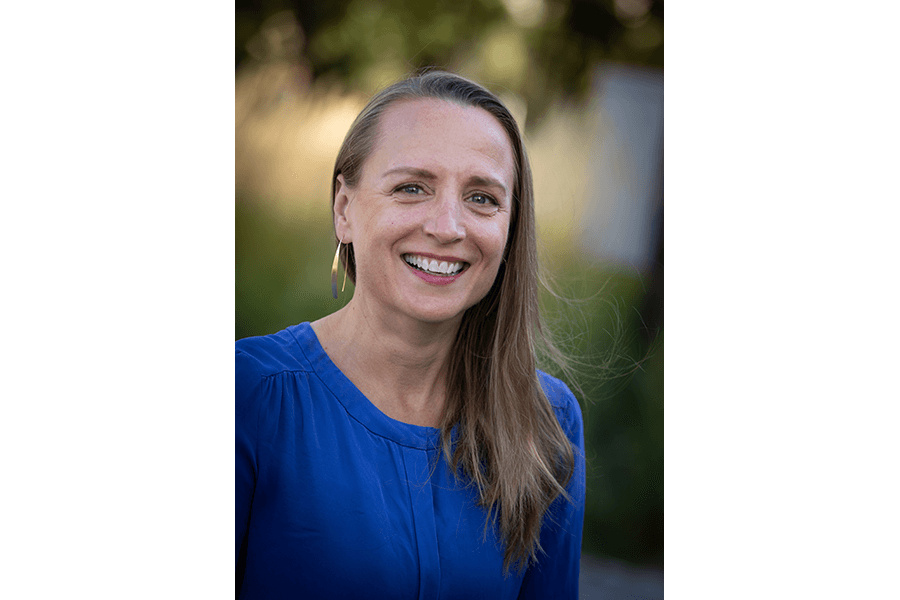
Chantal Pellegrini is a Lecturer and PhD student at the Chair of Computer Aided Medical Procedures (Prof. Navab) at Technical University of Munich (TUM). Her research focuses on Deep Learning applications in medical imaging, including explainable AI for radiology report generation and Vision-Language Models for clinical decision support. She actively contributes to the DHM, NARVIS Lab, and RobUSt research groups. Teaching responsibilities include courses such as 'Computer Aided Medical Procedures', 'Medical Augmented Reality', and 'Surgical Robotics'. She supervises student projects in medical AI and healthcare innovation, with recent projects involving multimodal report generation and graph pretraining for medical applications. Education: BSc/MSc Computer Science (TUM), current PhD student since 2022 Labs: DHM (German Heart Center), NARVIS Lab, RobUSt Robotics & Ultrasound Research Keywords: Medical Image Understanding, Radiology Reports, LLMs in Healthcare Her publications span surgical OR dataset development, reinforcement learning for clinical decisions, and explainable X-ray diagnosis systems. She mentors MA/BA students in medical AI and project management for healthcare applications.
HARADA Tatsuya is a Professor at the Research Center for Advanced Science and Technology (RCAS), University of Tokyo. His research focuses on intelligent robotics , real-world image processing , and human-informatics AI systems . Degree: PhD Research Themes: Harada investigates real-world intelligent information processing, fast image recognition and retrieval, and AI applications in pathology diagnostics. His work spans explainable AI systems for cancer analysis, tactile sensor integration for humanoid robots, and knowledge acquisition via dialog systems. Research Categories: His projects have been funded through multiple Japanese Ministry of Education, Culture, Sports, Science and Technology (MEXT) grants, including Grant-in-Aid for Scientific Research (A/B/C) and Innovative Areas programs. Specific projects include "Explainable AI diagnostic system for breast cancer" (2020-2021) and "Behavior Capture Suit with Motion Sensors" (2010-2013). Scientific Awards & Grants: Recipient of competitive JSPS grants for interdisciplinary research bridging robotics, computer vision, and medical diagnostics.
Shannon D. M. Moore is an Associate Professor at the Faculty of Education , University of Manitoba , where she teaches media education , social studies education , social justice pedagogy , and research methodologies. Her work critically examines the impacts of neoliberal reforms on public education, hockey culture , and gender-based sexual violence in schools. Education: 2014 — PhD, University of British Columbia 2008 — MA, University of British Columbia 2000 — BEd, University of British Columbia 1999 — BA, University of British Columbia Her research focuses on media literacies , neoliberalism , and creative pedagogies . Recent projects include the SSHRC-funded study We Interrupt this Programming , which analyzes institutional responses to gender-based violence, and co-planning the Hockey Conference 2025 in Winnipeg. She also serves as managing editor of the Manitoba Social Science Teachers' Association Journal and co-hosts the podcast Public Good . Recent publication trends include critiques of EdTech neoliberalism , education privatization , and homophobic/transphobic discourses in mainstream media. Her work bridges critical pedagogy with policy analysis and cultural studies , emphasizing the intersection of public education and social justice . Scientific Awards: Invited to testify before the House of Commons' Standing Committee on the Status of Women (2024) for her research on hockey culture and gendered violence Community & Leadership: As a founding member of People for Public Education and organizer of the Hockey Conference 2025, she advocates for systemic resistance to neoliberal education policies and works to amplify marginalized voices in educational discourse.
Dr. Benjamin Busam is a Senior Research Scientist at the Technical University of Munich , affiliated with the Chair for Computer Science Applications in Medicine under Prof. Nassir Navab. Starting September 2025, he will hold the Professorship for Photogrammetry and Remote Sensing at TUM. His career includes leadership roles at FRAMOS Imaging Systems and Huawei Research in London. Education: Mathematics (TUM), Mathematics and Physics (ParisTech, University of Melbourne), PhD in Mathematics (TUM, 2014) His research focuses on 3D computer vision , multi-modal sensor fusion , and their applications in collaborative robotics and augmented reality . He specializes in projective geometry , 6D pose estimation , and neural radiance fields , with a particular emphasis on photometrically challenging environments. Recent publications highlight advancements in 3D scene understanding , neural rendering , and medical imaging , often leveraging machine learning and vision-language models . His work has been recognized through awards like the EMVA Young Professional Award (2015) and Innovation Pioneer of the Year (2019) , along with multiple Outstanding Reviewer distinctions at leading conferences. Dr. Busam has supervised numerous PhD and MSc students on topics including 6D pose estimation , medical augmented reality , and robotic ultrasound , collaborating with institutions like MIT , École Polytechnique , and University of Padova .
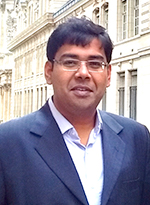
Auritro Majumder is Associate Professor of English at the University of Houston's College of Liberal Arts and Social Sciences, holding a courtesy appointment in the India Studies Program. His academic profile spans literary scholarship, critical theory, and intellectual history with a focus on non-Western perspectives. His educational background includes a Ph.D. in English from Syracuse University (2014), a Certificate in Critical Theory from Cornell University (2012), an M.A. (First Class) in English from Jadavpur University (2009), and a B.A. (First Class Honours) in English from Jadavpur University (2007). Majumder's research centers on peripheral internationalism and decolonial knowledge production , examining literary traditions across India, the Soviet Union, China, Latin America, and the United States. His work bridges literary theory , critical race studies , and global political movements , with particular emphasis on Bengali literature, caste-race intersections, and South-South cultural networks. His monograph Insurgent Imaginations: World Literature and the Periphery (Cambridge University Press, 2020) redefines world literature through non-Western frameworks. Analysis of his 15 most recent publications reveals consistent engagement with decolonial aesthetics , transnational solidarity , and subaltern epistemologies . His scholarship demonstrates interdisciplinary reach spanning literary studies, political theory, film criticism, and comparative intellectual history, with increasing focus on contemporary debates around planetary consciousness and peripheral modernities. His scientific recognition includes: Project Completion Grant, CLASS (2019) William Lee Pryor College Professorship (2018-2019) Research Progress Grant (2017) CLASS Research Funds (2016) New Faculty Summer Research Grant (2015) Majumder actively contributes to academic service as Executive Committee member of the Modern Language Association’s South Asian and South Asian Diasporic Language, Literature and Culture Forum, editorial board member for Mediations , jurist for the National Endowment for the Humanities, and reviewer for multiple international journals. He has lectured globally across North America, South Asia, Europe, and Brazil. His teaching portfolio includes courses on postcolonial literature, modern Indian literature, and graduate seminars in postcolonial theory. Current projects include a monograph titled The Global South in Literature and Theory and a co-edited anthology Cultures of the Cold War in South Asia .
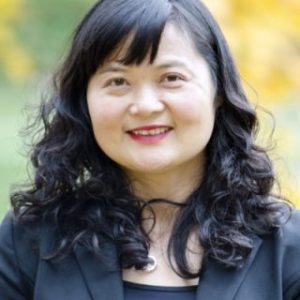
Guofang Li is a Professor in the Department of Language and Literacy Education at the Faculty of Education, affiliated with the Centre for Early Childhood Education & Research (CECER). Her work centers on bilingual development and literacy education within multicultural contexts, particularly focusing on Chinese-Canadian communities. Her research interests include: Early bilingual development Family literacy practices Early literacy instruction methodologies Early education for minority learners Teacher education for multilingual classrooms Analysis of her 2021-2025 publications reveals a concentrated focus on Chinese-Canadian children's bilingual development, examining home literacy environments, digital technology impacts, and pandemic-related disruptions. She consistently advocates for equity-focused approaches in superdiverse educational settings, emphasizing translanguaging practices and critical perspectives on linguistic justice. Scientific Awards: No awards explicitly mentioned in source materials Advising and Grants: No specific student names or grant information provided in source materials Labs and Teams: Centre for Early Childhood Education & Research (CECER): An interdisciplinary hub facilitating collaborative research between academics, educators, and community partners focused on advancing evidence-based early childhood education practices through longitudinal studies and community-engaged projects.
Shannon Bell is a Professor in Political Science at York University, working as a performance philosopher who integrates digital video technology with political theory. Her research examines intersections of cyberpolitics, aesthetics, and power through projects like 'Shooting Theory', which visualizes philosophical concepts through film. She has authored books including 'Fast Feminism' and 'Reading, Writing and Rewriting the Prostitute Body'. Current SSHRC-funded projects explore bioart and robotic art extremes, with residencies at Symbiotica (UWA) and international exhibitions. She teaches courses on modern political thought, technopolitics, and aesthetics. Educational background includes a PhD in Political Science from York University. Professional leadership includes directing the Resource Centre for Public Sociology.
Ola Andres Erstad is a tenured Professor and Dean of the Faculty of Educational Sciences at the University of Oslo , with over three decades of academic leadership and research excellence. Specializing in Digital Literacy , Educational Technology , and Learning Sciences , his work bridges formal/informal learning and explores the sociocultural impacts of digital platforms on education. Academic Tenure: Professor (2008–present), Visiting Professor (UC San Diego, 2010–2011) Leadership: Institute Director (2015–2020), National PhD School Leader (2012–2014) Research Themes include: Digital Competence: Analyzing consequences of digitalization on youth education Learning Lives: Tracking cross-contextual educational trajectories in Groruddalen Platformization: Investigating digital platforms' impact on pedagogical structures Recent Publications (2022–2025) focus on dialogic learning in polarized societies, digital family ecosystems , and multimodal literacy . His international collaborations span Portugal, Denmark, and the U.S., with projects funded by NFR , COST Actions , and Science Europe . Currently leading the PlatFams initiative, Erstad explores cross-generational digital integration.
Dr. Toshiyuki Nakamura is a Lecturer at the School of Culture, History & Language at The Australian National University. With a PhD in Applied Linguistics from Monash University, his research focuses on second language acquisition, particularly examining language learning motivation, multilingual identity, self-concept in language learning, and Japanese language education. His work often bridges sociocultural theory with practical educational applications. His scholarly activities include: Published studies in Japanese Studies and System journals Research exploring motivational frameworks in Australian and Korean contexts Application of Bakhtinian concepts to speech genre analysis in language acquisition Recent publications demonstrate consistent engagement with multilingual identity formation (73% overlap across works) and motivational dynamics (61% coverage). Despite limited citation counts (highest: 29 citations for 2019 study), his research outputs show sustained scholarly contribution from 2015-2024, including a 2019 monograph with Bloomsbury Publishing. Key research themes: Dialogic approaches to language motivation Self-image construction in multilingual contexts Speech genre analysis in educational settings Cross-cultural comparisons of language learning experiences Japanese language education in non-native contexts Life domain theory in second language acquisition
Raymond J. Mooney is a Professor in the Department of Computer Science at the University of Texas at Austin, where he has been a faculty member since 1987. He is the Director of the UT Artificial Intelligence Laboratory and affiliated with multiple research groups including the Machine Learning Research Group, UT Computational Linguistics Lab, and the UT Center for Computational Biology and Bioinformatics. He holds a B.S., M.S., and Ph.D. in Computer Science from the University of Illinois at Urbana-Champaign, where his thesis was supervised by Gerald DeJong. His research spans diverse areas in artificial intelligence, machine learning, and natural language processing: Natural Language Learning Connecting Language and Perception Statistical Relational Learning Information Extraction Transfer and Active Learning Abductive Reasoning Text Mining and Clustering Recommender Systems Knowledge-Base Refinement Recent publications highlight trends in grounded language processing, human-robot interaction, and multimodal reasoning. He has been recognized with prestigious fellowships including ACL (2014), ACM (2010), and AAAI (2005). Scientific awards: Fellow of the Association for Computational Linguistics (2014) Fellow of the Association for Computing Machinery (2010) Fellow of the American Association for Artificial Intelligence (2005) Classic Paper Award (2019) Best Paper Awards (2007, 2004, 1996) He teaches graduate courses like CS 371R: Information Retrieval and Web Search (Fall 2025) and CS 395T: Grounded Natural Language Processing (Spring 2025). His research labs include: UT Artificial Intelligence Laboratory Machine Learning Research Group UT Computational Linguistics Lab UT Center for Computational Biology and Bioinformatics
Professor Yvonne Rydin is Chair of Planning Environment and Public Policy at The Bartlett School of Planning, University College London (UCL), where she has been based since 2006. She currently holds a 50 % part-time appointment at UCL and previously spent 16 years at the London School of Economics in the Department of Geography and Environment. Education PhD in Urban and Regional Planning Studies, University College London (1984) BA (Hons) in Land Economy, University of Cambridge (1978) Research Interests Professor Rydin is an internationally recognised scholar in governing for sustainability. Her work spans urban green space management, community energy, retail planning, and post-growth urban futures. Conceptually, she mobilises network metaphors (including social capital) and discourse analysis to unpack governing processes, while also drawing on socio-technical studies to examine large-scale energy infrastructure. A long-standing strand of research interrogates knowledge production within planning, scrutinising classificatory systems such as BREEAM and sustainability indicators and exploring the implications of socio-materiality. Her forthcoming monograph Planning without Growth (Policy Press, 2025) extends her agenda on low-growth planning by investigating how embedded and new knowledges can support alternative local economic models. Research Outputs & Trends Since 2018 she has published extensively on post-growth planning, regulatory theory, digital tools in participation, and diverse economies. Recent articles in Planning Theory, Built Environment and Planning Practice & Research articulate critical perspectives on moving beyond pro-growth orthodoxies and re-tooling the planning profession. Scientific Awards & Recognition While no specific awards are listed, Professor Rydin has held numerous prestigious roles: member of the RAE 2014 panel, invited oral evidence to the House of Commons Environmental Audit Committee, participant in the Raynsford Review of Planning, and repeated evaluator for the Norwegian Research Council, Finnish Academy, ESRC and FORMAS. Advising & Grants She has supervised collaborative Engineering Doctorate (EngD) studentships with industrial partners BRE Global and Buro Happold (2011-2020), and co-taught on the MSc Sustainable Urban Development at Oxford University’s Department for Continuing Education (2014-2018). Labs & Teams Professor Rydin served as Director of the UCL Environment Institute (2010-2013) and leads teaching on the postgraduate module Planning for Sustainability and Inclusion alongside Dr Yasminah Beebeejaun.
Gavin Schwarz is a Professor and Head of School at the School of Management and Governance within the UNSW Business School . He specializes in organizational change , organizational failure and inertia , and the dynamics of virtual teams , with a focus on how organizations fail during change processes and how to develop applied strategies for change management . His work spans diverse sectors including healthcare, technology, and education, with publications in leading journals such as Academy of Management Learning and Education and Administrative Science Quarterly . Education : PhD in Management (University of Queensland), MPhil (Hons) in Management (University of Auckland), BA in Management and English (University of Auckland). Grants : 2020 Brock University grant for "University communication in times of COVID-19" , 2020 UNSW Medicine grant for "Translation and change: Embedding effective change management in health" , and earlier Australian Research Council and Gordon J. Samuels Fellowship awards. His research explores the development of knowledge in organizational theories , with an emphasis on collective responses to change , HR management during crises , and technology strategy . He has contributed to understanding organizational communication , team innovation , and structural inertia . His 15 most recent publications cover topics from AI’s role in organizational change to pandemic-driven research adaptation, with keywords spanning management science , behavioral economics , and digital transformation . Scientific Awards 2021-2023 : Outstanding Reviewer Awards (Academy of Management Review) 2017-2020 : Best Reviewer Awards (Journal of Organizational Behavior) 2019, 2013, 2011 : Best Paper Finalist/Awardee (Academy of Management divisions) 2007, 2006 : Editorial Board Excellence (Academy of Management Journal) and Gordon J. Samuels Fellowship As an active supervisor in organizational change and HR development , his work supports healthcare innovation and digital transformation. He serves as Editor-in-Chief for the Journal of Applied Behavioral Science and is on the editorial boards of Academy of Management Review , Journal of Management , and Journal of Organizational Behavior . Contact: g.schwarz@unsw.edu.au
Paul C. Adams is a Professor in the Department of Geography and the Environment at the University of Texas at Austin's College of Liberal Arts, where he has served as Director of the Urban Studies Program since 2003. His interdisciplinary work bridges geography, media studies, and communication, with a focus on digital media's sociospatial implications. Adams earned his Bachelor of Environmental Design from the University of Colorado-Boulder (1984) followed by an M.S. (1990) and Ph.D. (1993) in geography from the University of Wisconsin-Madison. His academic journey reflects a deep commitment to understanding spatial dimensions of human experience. His research explores geographical communications , place imagery in media , and digital disentanglement , with recent work examining geopolitical discourse, climate change communication, and refugee spatial experiences. As founder of the Association of American Geographers' Media Geography Specialty Group (now "Media and Communication"), he pioneered frameworks for analyzing how media shapes place perception and political subjectivity. Analysis of his 2021-2025 publications reveals three dominant trajectories: (1) Digital media's intimate politics through entanglement/disentanglement lenses, (2) Geopolitical discourse analysis applied to climate change and US-China relations, and (3) Spatial dimensions of forced migration and cultural landscape transformation. These intersect with subfields including media geography, political ecology, and digital humanities. Key honors include: Fulbright Research Fellowship to the University of Bergen (2010) Fulbright Fellowship to McGill University/University of Montreal (2001) Ander Visiting Professorship at Karlstad University (2016-2017) Adams teaches foundational courses including GRG 305 (This Human World) and URB 315 (Urban Studies Research Methods), alongside specialized seminars in media geography and political geography. His research has secured major funding including the Research Council of Norway's ViSmedia project (2015-2020), for which he held an Associate Professor II appointment at the University of Bergen. He leads the Media Geography Specialty Group and maintains active collaborations with scholars across Poland, Sweden, and Norway, driving international research on digital place-making and geopolitical discourse through collective publications and interdisciplinary projects.
Prof. Dr. Marco Rieckmann is a Professor of Higher Education Didactics with a focus on key competencies at the Department of Educational Sciences, Faculty of Education and Social Sciences, University of Vechta, Germany. He is also the Co-Chair of the UNESCO Chair ‘Physical Education and Sport Pedagogy for Sustainable Development’ at the University of Limerick since 2024. His work centers on education for sustainable development (ESD), transformative learning, and sustainable university development. His research interests include: Education for Sustainable Development (ESD) and Teacher Education Service Learning and Civic Engagement Curriculum Development for Sustainability Higher Education Governance and Institutional Transformation Digitalization and Serious Games in Sustainability Education Global Learning and Intercultural Education His recent publications and projects reflect a strong trend toward assessing the impact of sustainability education, developing innovative teaching formats (e.g., Minecraft-based learning), and fostering whole-institution approaches in schools and universities. He emphasizes participatory, transdisciplinary, and transformative methods to empower learners and institutions. Scientific awards and recognitions include: Best Doctoral Researcher of the Year 2008 (2nd place, Leuphana University) Innovative Teaching Award (2010) Multiple DAAD and ERASMUS guest lectureships UNESCO recognition for HOCH-N and LeNa projects (2018) Prof. Rieckmann actively advises and collaborates with students and researchers, leads major funded projects (e.g., IMP>ACT, Senatra, HOCH-N), and contributes to national and international policy development. He is a key figure in advancing sustainability in higher education through research, teaching, and institutional leadership. He leads and participates in various research labs and networks, including the UNESCO Chair, the LeNa network, the HOCH-N consortium, and multiple EU-funded projects focusing on co-learning labs, digital tools, and service learning for sustainability.
Ion Androutsopoulos is a Professor of Artificial Intelligence in the Department of Informatics at Athens University of Economics and Business (AUEB), where he also serves as Head of Department. He is founder and co-director of AUEB's Natural Language Processing Group and an Adjunct Researcher at the Digital Curation Unit and "Archimedes" Research Unit of the Research Centre "Athena". His research spans multiple dimensions of Artificial Intelligence with a focus on Natural Language Processing. Key interests include: Machine learning in NLP, particularly deep learning and large language models Question answering and retrieval augmented generation for document collections Dialog systems for new languages and knowledge domains Sentiment analysis and emotion recognition from text and speech Detecting toxic posts and disinformation online Image-to-text generation for medical diagnostics NLP applications in biomedical, legal, and financial domains His recent publications demonstrate strong activity across medical AI (particularly ImageCLEFmed Caption competitions where his group consistently ranks 1st-2nd), legal NLP (LexGLUE benchmark), financial NLP (EDGAR-CRAWLER), and multilingual challenges. His work shows increasing emphasis on large language models, explainability, and practical applications. Notable awards include: Top 2% scientist worldwide (Stanford University database, 2023) Multiple AUEB Excellent Teaching Awards (2017-18, 2021-22, 2023-24) Three consecutive BioASQ awards (2018-2020) Multiple 1st/2nd place rankings in ImageCLEFmed Caption competitions (2021-2025) He actively organizes major events including the Athens Natural Language Processing Summer School (AthNLP) and SemEval tasks. His group maintains strong industry and research collaborations, particularly in medical AI applications where they've developed systems that generate diagnostic captions from medical images with state-of-the-art performance.