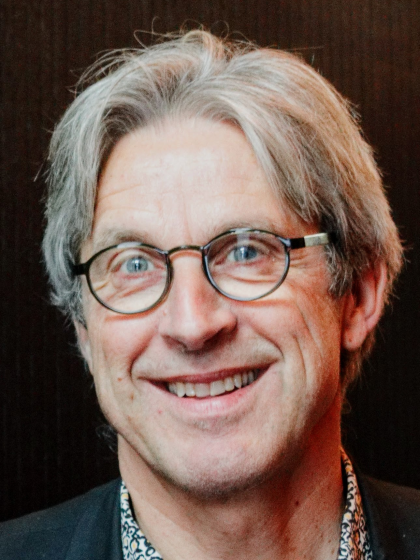
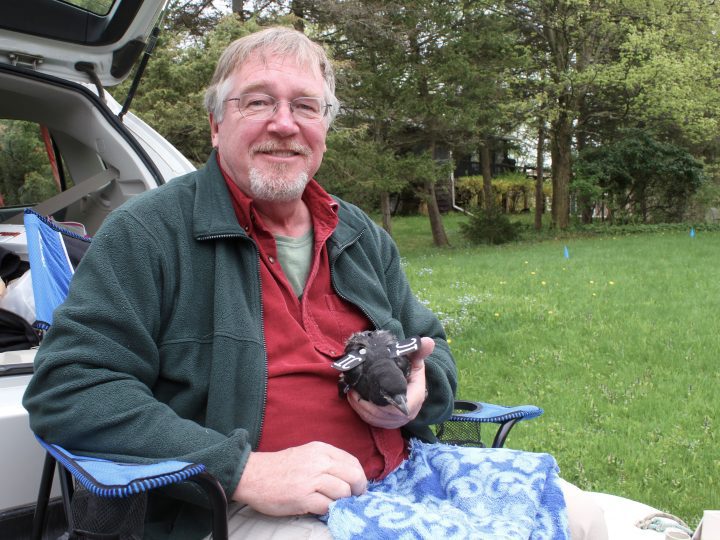
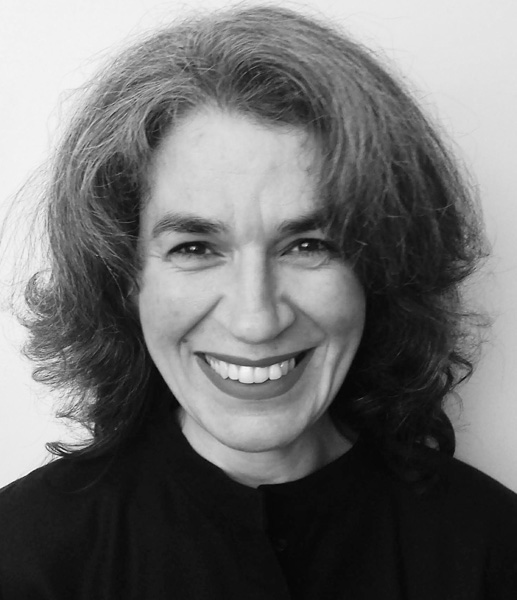
Dr. Bob de Jonge is an Associate Professor at the University of Groningen, affiliated with the Faculty of Arts and the Department of European Languages and Cultures. He holds a PhD in Spanish Language and Literature from Leiden University (1990) and has been active in academia since 1985. His research focuses on sociolinguistics, Romance language acquisition, and linguistic analysis, particularly in Spanish and Italian. He explores topics such as pronoun usage, language variation, and cognitive grammar frameworks. His work includes studies on variable pronoun use in Patagonian Spanish, sociocultural aspects of le and lo/la in Spanish, and the relevance of cognitive approaches to linguistic analysis. He has contributed to edited volumes on topics ranging from food terminology in Dutch to immigrant influences on language. His publications reflect a strong emphasis on empirical research and functional linguistics. De Jonge has organized international conferences and presented at events such as the 13th International Columbia School Conference. His research activities span collaboration with institutions in Argentina, Italy, and Mexico. He currently serves as Co-Director of the Faculty of Arts at Groningen and is actively involved in theoretical and empirical linguistics research groups.
Dr. Anahi Alba de la Fuente serves as an Associate Professor at Université de Montréal's Department of Literatures and Languages of the World. Her research focuses on language acquisition patterns, particularly in Spanish as a first and second language, examining bilingualism through psycholinguistic and sociolinguistic frameworks. She investigates morphosyntactic development across learner profiles including heritage speakers and L2/L3 learners. Her work explores critical intersections between theoretical linguistics and applied pedagogy, addressing how linguistic risk perception influences language teaching methodologies. Research employs experimental and corpus-based approaches to analyze tense/aspect systems, gender assignment, and relative clause structures across Romance languages. Awarded the 2020 Teaching Excellence Prize, Dr. Alba de la Fuente maintains active collaborations through ResearchGate and Google Scholar. Current projects examine heritage language maintenance in Montreal's multilingual context and pedagogical interventions for advanced Spanish learners.
Michael Becker is an Associate Professor and Undergraduate Advisor in the Department of Linguistics at the University of Massachusetts Amherst, specializing in phonological theory and experimental approaches to language. His research focuses on how speakers generalize patterns from existing words to novel forms, computational modeling of lexical systems, and documentation of endangered languages. He holds a Ph.D. in Linguistics from the University of Massachusetts Amherst. His primary research examines phonological organization of the lexicon through behavioral experiments and computational modeling, particularly investigating how speakers extend patterns to new words. Recent research explores prosodic patterns in diverse languages including Brazilian Portuguese, Cairene Arabic, Slovenian, and Kuikuro. His methodologies integrate experimental phonology with constraint-based grammatical frameworks to model language-specific and universal phonological patterns. Becker maintains collaborations with international researchers and indigenous communities for language documentation. His computational work includes developing the Sublexical Learner for modeling morphological productivity and Experigen for online linguistic experiments.
Antje Muntendam is an Associate Professor of Linguistics and Spanish at Florida State University (FSU), affiliated with the Modern Languages and Linguistics department. She holds a M.A. from Leiden University and a Ph.D. from the University of Illinois at Urbana-Champaign. Her roles include serving as Coordinator and Adviser of Linguistics at FSU, Affiliate Faculty at the Native American and Indigenous Studies Center, and Affiliated Member of the Heritage Linguistics Lab at Leiden University. Her research focuses on bilingualism, language contact, and prosody, with particular emphasis on Quechua-Spanish and Turkish-Dutch bilingual communities. She investigates cross-linguistic influence, code-switching, and intonation patterns in Andean and European contexts. Muntendam is co-founder of the international conference on Bilingualism in the Hispanic and Lusophone World (BHL). She currently leads a National Science Foundation-funded project (2024-2027) on Quechua and Spanish intonation in Andean language contact. Muntendam teaches courses such as Bilingualism in the Spanish-Speaking World , Psycholinguistics of Bilingualism , and Spanish Phonetics . Her work bridges syntax, sociolinguistics, and psycholinguistics, addressing topics like clitic placement, focus marking, and heritage language acquisition. Her publications span journals like Linguistic Approaches to Bilingualism and Bilingualism: Language and Cognition . Her academic contributions include co-editing volumes on Quechua stance and deixis and co-authoring studies on prosodic transfer and syntactic interfaces in bilingual contexts. She actively engages in interdisciplinary research, integrating experimental methods (e.g., eye-tracking) and comparative analyses of multilingual speech.
Kevin B. McGowan is an Associate Professor and Director of Graduate Studies in the Department of Linguistics at the University of Kentucky, affiliated with the UK Phonetics Lab and the Lewis Honors College. His research focuses on phonetics, speech perception, sociophonetics, and sound change, with a particular interest in how linguistic variation intersects with social and cognitive factors. He co-authored the third edition of English with an Accent , a seminal work on linguistic discrimination and sociolinguistic awareness. His work bridges experimental phonetics with sociolinguistic theory, emphasizing the role of listener expectations and language ideology in shaping perception. McGowan's contributions include studies on coarticulation timing, non-native speech perception, and the impact of socioindexical cues in noisy environments. He actively promotes open-access methodologies, as seen in projects like Wildcat Voices . His research highlights the interplay between linguistic structure and social meaning, advancing both theoretical and applied linguistics.
José A. Camacho is a Professor and Director of the School of Literatures, Cultural Studies and Linguistics at the University of Illinois at Chicago. His research focuses on syntax, bilingualism, and language contact phenomena, with particular attention to Spanish and indigenous languages like Shipibo. He has authored influential textbooks such as Introducción a la sintaxis del español (2018) and edited volumes like Exploring Interfaces (2019). His work bridges formal syntax with sociolinguistic concerns, examining heritage speaker grammars, null subject parameters, and morphosyntactic variation. Notable projects include studies on gender agreement in Shipibo-Spanish contact zones and adverb placement in heritage Spanish. Camacho has collaborated extensively with researchers on indigenous language maintenance in urban settings, as seen in Linguistic attitudes towards Shipibo in Cantagallo (2018). Publications span over three decades, with key contributions to syntactic theory (e.g., revisiting the null subject parameter) and bilingualism studies. His recent work explores paradigmatic uniformity in heritage grammars and the Big DP hypothesis in contact languages. Camacho serves as an editorial board member for major linguistics journals and has organized international workshops on bilingual morphology.
Evangelia Adamou is a Senior Researcher at the French National Centre for Scientific Research (CNRS) and a member of the Academy of Europe. Her research focuses on language contact, bilingualism, and endangered languages, employing experimental and corpus-based methods. She has conducted extensive fieldwork in the Balkans and Mexico, particularly on Romani and Indigenous languages. Education: MA, Aristotle University of Thessaloniki (1997) PhD, University of Paris 5 (2001) Habilitation, INALCO, Paris (2012) Research Interests: Adamou's work bridges sociolinguistics and psycholinguistics, examining phenomena such as nominal tense in Slavic dialects, contact-induced syntactic change in Romani, and spatial cognition among bilingual communities. She advocates for open science, co-developing the Pangloss Collection and CorTypo databases to document underdescribed languages. Grants & Projects: ANR-RSF 'Atlas of the Balkan Linguistic Area' (2022-2025) Riksbankens Jubileumsfond 'Romani Language Repertoires' (2019-2026) French-German EuroSlav2010 database (2010-2012) Advising & Editorial Roles: Adamou has supervised numerous PhD students (e.g., Cristian Padure, Erendira Calderon) and served as Associate Editor of Language (2022-2024). She co-edited the Routledge Handbook of Language Contact and contributes to journals like Glossa Contact . Labs & Collaborations: Her work integrates fieldwork with experimental methods, collaborating on projects like the NSF-funded 'Community-based Documentation of Lesser-studied Language Varieties' in Mexico and Chile.
Dr. Rūta Kazlauskaitė is an Associate Professor at the Institute of Regional Development of Šiauliai Academy (Vilnius University). She holds a PhD in Philology (Vilnius University, 2002) and has served in academic roles since 1994, including positions at Šiauliai Pedagogical Institute, Šiauliai University, and currently the Šiauliai Academy. Her research focuses on Lithuanian dialectology, phonetics, accentology, psycholinguistics, and language pedagogy. She has authored numerous publications, including works on dialect texts, language standardization, and poetic imagery. Recognized with the Young Scientists’ Thesis Laureate Diploma (2003), she actively contributes to the State Lithuanian Language Commission and language preservation initiatives. She also teaches at Šiauliai “Santarvė” Gymnasium.
Kevin Brown is an Associate Professor at Oregon State University with joint appointments in the College of Pharmacy (Department of Pharmaceutical Sciences) and College of Engineering (Chemical, Biological, and Environmental Engineering). As a complex systems scientist, his research examines biological networks using methodologies from machine learning, dynamical systems, and network theory. Education: B.S. Physics and B.A. Mathematics, Louisiana State University (1998) Ph.D. Theoretical Physics, Cornell University (2003) Helen Hay Whitney Foundation Fellow, Harvard University (2004-2007) Postdoctoral Scholar, UC Santa Barbara Physics (2007-2012) Research Focus: Dr. Brown investigates complex biological systems including gene/protein networks, neural systems, and cognitive processes. His pioneering 'Sloppy Models' theory analyzes parameter space geometry in nonlinear models, with applications spanning ecology, neuroscience, and atmospheric science. His work combines data-driven and model-driven approaches through interdisciplinary collaborations. Publication Trends: Recent works demonstrate strong emphasis on network science applications across biological and cognitive systems, including microbiome-host interactions, semantic network analysis, computational linguistics, and multi-omics integration. Publications frequently intersect machine learning, systems biology, and cognitive modeling. Awards: Helen Hay Whitney Foundation Fellowship (2004-2007) Laboratory: Leads the Brown Lab at OSU/OHSU College of Pharmacy focusing on complex systems research in systems biomedicine and cognitive science.
Dr. Sheila Embleton is a Distinguished Research Professor in Linguistics at York University with joint appointments in mathematics and linguistics. She served as Vice-President Academic & Provost at York University (2000-2009) and interim President of Laurentian University (2023). Her research spans historical linguistics, mathematical methods in linguistics, sociolinguistics, dialectology, and onomastics, with notable publications including Statistics in Historical Linguistics . Her work has been supported by SSHRC grants, focusing on dialectometry applications. Dr. Embleton holds degrees from the University of Toronto: PhD in Linguistics, MSc in Mathematics & Statistics, and BSc in Mathematics & Linguistics. She received additional certifications from European institutions in French, German, and Finnish linguistics. Research Interests: Mathematical linguistics, dialectometry (British, Finnish, Romanian), onomastics (personal/place names), Finnish literature, women and language, international education policy, and Canada-India academic relations. Her work integrates quantitative methods with sociolinguistic analysis. Awards & Honors: Fellow of the Royal Society of Canada Knight First Class of the Order of the White Rose of Finland Internationalization Leadership Award (CBIE) York University's Outstanding Contribution to Internationalization Fellow of the Bahamas Historical Society Continuing Senior Fellow, Massey College Professional Leadership: Former Secretary of the Royal Society of Canada (2015-2021), President of its Academy of Arts and Humanities, editorial board member for Diachronica and Word , and Chair of the Ontario Geographical Names Board. Significant contributions to international education include leading York's India Strategy and developing the Ontario-Maharashtra-Goa exchange program.
Josep Quer is an ICREA Research Professor at the Department of Translation and Language Sciences, Universitat Pompeu Fabra, leading the LSCLab. He holds a PhD from Utrecht University and has held roles such as Full Professor at the University of Amsterdam and Researcher at the University of Barcelona. His work focuses on theoretical linguistics, particularly sign languages, Romance languages, and Greek. Education: PhD in Linguistics, Utrecht University (1998) Master in Grammatical Theory, Universitat Autònoma de Barcelona (1993) Classics (Greek) Degree, University of Barcelona (1988) Research Interests: Sign language syntax/semantics Romance languages Greek linguistics Modality effects in language Grammar writing standards for sign languages Publications: Over 50 peer-reviewed articles in journals like Language , Lingua , and Sign Language & Linguistics . Recent work emphasizes methodological advancements in sign language research and cross-modal comparisons. Awards: Catalan Academy membership (2021), NIAS Fellowships (2021-2024), and APANSCE Prize (2006). Grants & Leadership: Coordinated EU H2020 project SIGN-HUB (2016–2020). Led development of Gramàtica bàsica de la llengua de signes catalana (2005) with GRIN research group. Served as journal co-editor and network chair for COST Action IS1006. Labs/Teams: Directs LSCLab and manages LSC corpus/lexicon projects under Institut d’Estudis Catalans.
Andrej A. Kibrik is Professor at the Department of Theoretical and Applied Linguistics of Lomonosov Moscow State University’s Philological Faculty, and concurrently serves as Director of the Institute of Linguistics and Head of the Department of Typology and Areal Linguistics at the Russian Academy of Sciences. A Corresponding Member of the Russian Academy of Sciences and member of Academia Europaea , he has held visiting appointments at the Max Planck Institute for Evolutionary Anthropology, University of Alaska Fairbanks, University of Oregon, University of Arizona, and UC Santa Barbara. Education 1979–1984: M.A. in Linguistics, Moscow State University, Philological Faculty 1984–1988: Ph.D. (Candidate of Science), Institute of Linguistics, Academy of Sciences of the USSR 2003: Doctor of Science dissertation, Institute of Linguistics, Russian Academy of Sciences Research Interests His work integrates linguistic diversity , field linguistics , and language & cognition through a functional-typological lens. Core themes include discourse structure , multimodality (prosody, gesture, sign language), corpus linguistics , and computational modeling . Empirically, he focuses on Athabaskan languages (especially Upper Kuskokwim), Caucasian , Turkic , West African , and Russian sign language , producing comprehensive grammatical descriptions and developing theoretical frameworks for non-discrete cognitive structures. Publications Trend Recent monographs and edited volumes (2009–2017) cluster around discourse analysis , corpus construction , and language documentation , with notable works on Ninilchik Russian and spoken-Russian corpora, reflecting an enduring commitment to combining empirical richness with cognitive-theoretical depth. Scientific Awards & Honors Russian Science Support Foundation Award (2008–2010) Alexander von Humboldt Foundation Scholarships (2000, 2006) Fulbright Scholarships (1995, 1996–1997) President’s Scholarship for Outstanding Young Scholars (1994) IREX Scholarships (1991, 1991–1992) Advising, Grants & Leadership He has supervised numerous MA and PhD students, including Ekaterina Èl’bert and Natalia Molchanova, whose diploma theses advanced his multimodal discourse experiments. Since 2011 he coordinates linguistics projects for the Russian Foundation for Basic Research . He served as President of the Interregional Association for Cognitive Studies (2012–2014) and is Editor-in-Chief of the longitudinal Encyclopedia “Languages of the World” . Laboratories & Teams At Moscow State University he heads the Center for Cognitive Studies within the Philological Faculty, fostering interdisciplinary research combining linguistics, psychology, and computational modeling.
Michał Németh is a Full Professor and Head of the Research Centre for Language Documentation at the Institute of Linguistics, Translation Studies, and Hungarian Philology at Jagiellonian University in Kraków. His academic career includes roles as an Alexander von Humboldt Foundation Postdoctoral Fellow (2015-2018) and positions at Adam Mickiewicz University in Poznań. He holds a habilitation (2020) and PhD (2011) in Linguistics. His research focuses on historical linguistics, specializing in Turkic languages (particularly Karaim), Hungarian etymology, and Slavic language influences. Key projects include the ERC-funded '(Re)constructing a Bible' initiative, which digitizes and analyzes Karaim Biblical manuscripts. He leads critical editions of Karaim texts and explores language contact phenomena in Eastern Europe. Notable achievements include ERC Starting Grant (2018), Humboldt Fellowships, and Rector Awards for scientific contributions. His work bridges philology, codicology, and digital humanities, creating semantic web platforms for linguistic data. He investigates Karaim dialect diversification, Slavic-Turkic loanword dynamics, and the sociohistorical context of minority languages. Research interests span Turkic historical phonology, etymology of Hungarian words, and documentation of endangered languages. He collaborates internationally on Karaim language preservation and has published extensively on linguistic methodology and manuscript analysis.
Dr. Stephen Lucek is an Assistant Professor in Linguistics at University College Dublin, School of Languages, Cultures and Linguistics. He holds a PhD from Trinity College Dublin and a Professional Certificate in University Teaching & Learning from UCD. His research focuses on linguistic variation and multilingualism in Ireland, particularly in educational contexts. PhD in Linguistics, Trinity College Dublin Professional Certificate in University Teaching & Learning, University College Dublin Stephen's research interests include sociolinguistics, Irish English, multilingualism, register variation, polydialectalism, and language ideologies. He employs cognitive and perceptual approaches, especially Conceptual Metaphor Theory and perceptual dialectology, to study how language reflects identity and social structure. His work often examines the impact of standard language ideology and accent discrimination in Irish secondary schools. The recent publications reflect a strong trend in raciolinguistics, language policy, and cognitive linguistics. His work analyzes public discourse on Twitter, media representations of Irish dialects, and presidential rhetoric, showing a broad methodological range from corpus analysis to qualitative interviews. Stephen has been a co-editor of Teanga: The Journal of the Irish Association for Applied Linguistics , contributing to the advancement of applied linguistics in Ireland. He has secured competitive research grants, including from the Irish Research Council, to study adolescents' language use and discrimination in schools. He actively supervises MA and PhD students and teaches modules such as Multilingualism, World Englishes, and Research Skills. He also coordinates several key courses and has been involved in public engagement through media appearances on topics like accentism, AI in grading, and language change among youth. Stephen has been involved in significant interdisciplinary collaborations, including with Vicky Garnett on dialect mapping and Garrett Phelan on the Free Thought FM art project, which explored class inequality and access to education in Dublin.
Jeff Tennant is an Associate Professor in the Department of French Studies at Western University, specializing in phonetics and sociolinguistics. He leads a SSHRC-funded project on Language Contact and Prosodic Variation in Ontario French. He has held key roles in academic governance, including Chair of the OCUFA Collective Bargaining Committee and Chief Negotiator for UWOFA during three contract negotiations. His accolades include the Profesor Invitado title from the University of Holguín, Cuba, Chevalier dans l’Ordre des Palmes Académiques from France, and the CAUT Distinguished Service Award. He currently oversees the 2020 Congress theme addressing colonialism and anti-Black racism. Educated at the University of Toronto (Ph.D., 1995), Tennant’s research focuses on prosodic systems, sociolinguistic variation in French-speaking communities, and language contact phenomena. His work bridges theoretical linguistics with applied sociolinguistics, examining how regional, social, and historical factors shape speech patterns. His recent publications explore prosodic rhythm in Franco-Ontarian speech, interphonology in English corpora, and second dialect acquisition in Colombian Spanish. These studies highlight his interdisciplinary approach, integrating quantitative phonetic analysis with sociolinguistic theory. Awards: Profesor Invitado (2023), Palmes Académiques (2020), CAUT Award (2018) Grants: SSHRC funding for Ontario French prosody research Leadership: Academic Convenor for 2020 Congress, OCUFA negotiations No specific labs or collaborative teams are mentioned, though his work engages international partners like the University of Holguín.